You've got twelve tabs open. Three of them are articles you meant to read. Two are research pages you'll definitely need again. One is a YouTube video you bookmarked six months ago and still haven't watched. Sound familiar? Chrome bookmarks weren't designed for this — they were designed for sites you visit regularly, not things you want to save once and come back to later.
The good news: there are several solid ways to save a tab in Chrome without touching the bookmark bar at all. Some are built right into the browser. Others are extensions that go further. This guide covers your real options — what each one does well, where each one falls short, and how to pick the right method for how your brain actually works.
The Built-In Chrome Options (No Extension Needed)
Chrome gives you a few native ways to hold onto a tab without using bookmarks. None of them are perfect, but they're worth knowing about before you install anything.
- Tab Groups: Right-click any tab and choose Add tab to new group. You can name the group, color-code it, and collapse it to keep your tab bar tidy. Tab groups persist across sessions if you don't close them, but they vanish the moment you close Chrome without syncing — and they don't help you find anything later by topic or keyword.
- Reading List: Click the bookmark icon in the address bar and choose Add to Reading List instead of Add bookmark. The Reading List lives in the bookmarks sidebar and is separate from your main bookmark folders. It's cleaner, but it's still a flat list with no visual context — just titles and URLs.
- Send to Your Devices: Right-click a tab and choose Send to your devices to push a link to another Chrome instance on your phone or laptop. Handy for one-off transfers, but it doesn't save anything — it's more like a text message than a filing system.
- Pinned Tabs: Right-click a tab and pin it. Pinned tabs stay open across sessions and shrink to just the site's favicon. Good for things you use constantly — bad for things you want to park and revisit weeks later, because a wall of favicons is just chaos with better intentions.
How to Save Tabs the Right Way: What Actually Works Long-Term
The fundamental problem with every built-in Chrome method is that they're all list-based and context-free. You save a URL; you get a URL back. There's no visual thumbnail, no note you wrote to yourself, no way to tag it by project or topic, and no search that works the way your memory does.
What actually works long-term is capturing pages as notes — not as links. The difference sounds small but it changes everything. When a saved item has a visual identity, a title you can edit, and a tag you assigned when the context was fresh, you'll actually find it again. When it's entry 847 in a flat bookmark list, you won't.
Here's the workflow that holds up over time:
- Capture immediately, while the context is clear. The moment you think "I'll want this later," save it. Don't leave the tab open as a reminder — that's how you end up with 40 tabs and decision paralysis about which ones actually matter.
- Add a tag or label at save time. Even one word — "recipes", "research", "client-X" — makes retrieval dramatically faster than scanning titles later.
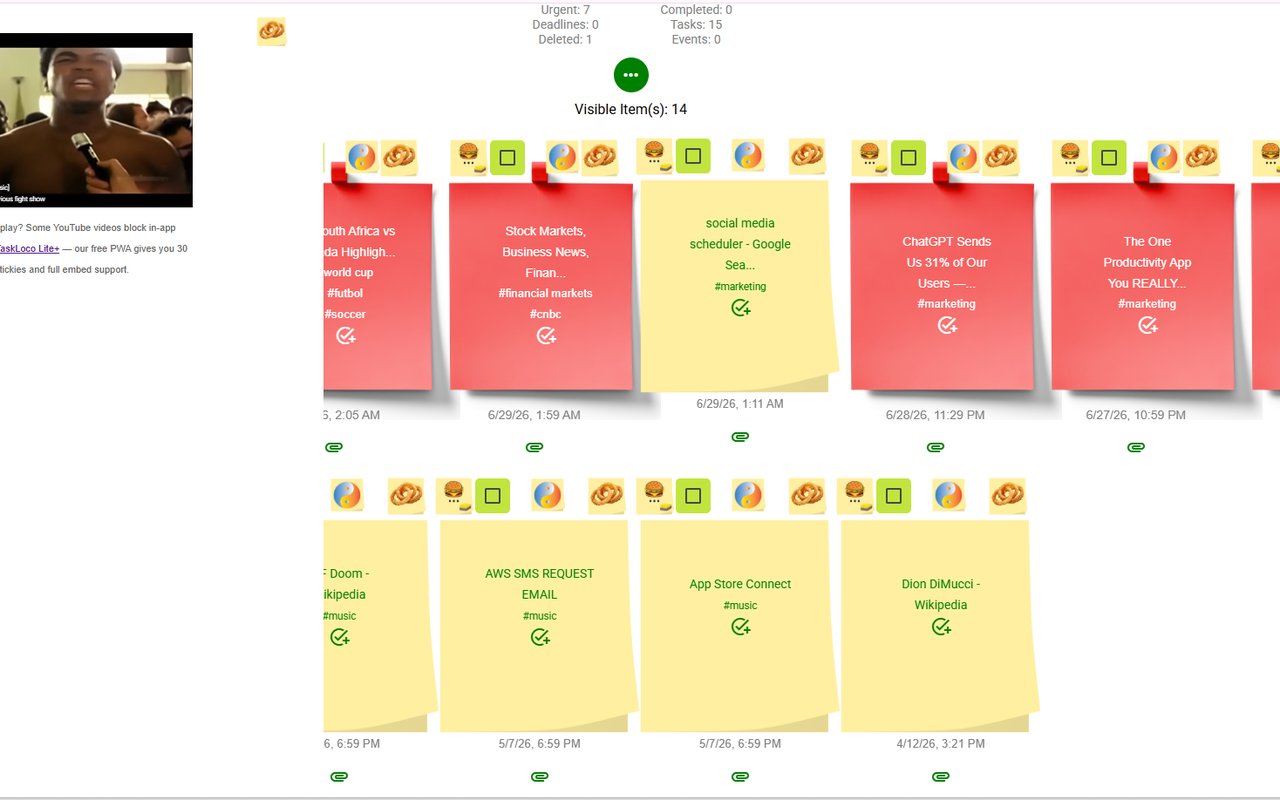
- Use a tool that shows you what you saved, not just a link. Visual notes, thumbnails, or card-style layouts let you scan saved items the way you'd scan sticky notes on a wall. Your brain pattern-matches visually much faster than it reads lists.
- Make sure it syncs. If you save something at your desk and can't see it on your phone twenty minutes later, the system has already failed you.
Why Web Clipper Extensions Beat Bookmarks for This Job
Browser bookmarks were built for navigation — returning to sites you visit often. Web clipper extensions were built for capture — saving things you discover once and want to find again. That's the core distinction, and it explains why so many people end up with a bookmark folder called "Read Later" that they never open.
The most common clipper in this space is the Evernote Web Clipper, which does a thorough job of saving full page content, screenshots, and formatted articles into Evernote notebooks. If you're already an Evernote power user, it makes sense. But if you just want to save a link fast without setting up notebooks and tags in a separate heavy app, it's overkill.
Notion's Web Clipper sends pages to a Notion database, which is excellent if your whole workflow lives in Notion — and a real friction point if it doesn't, because you're now managing two systems.
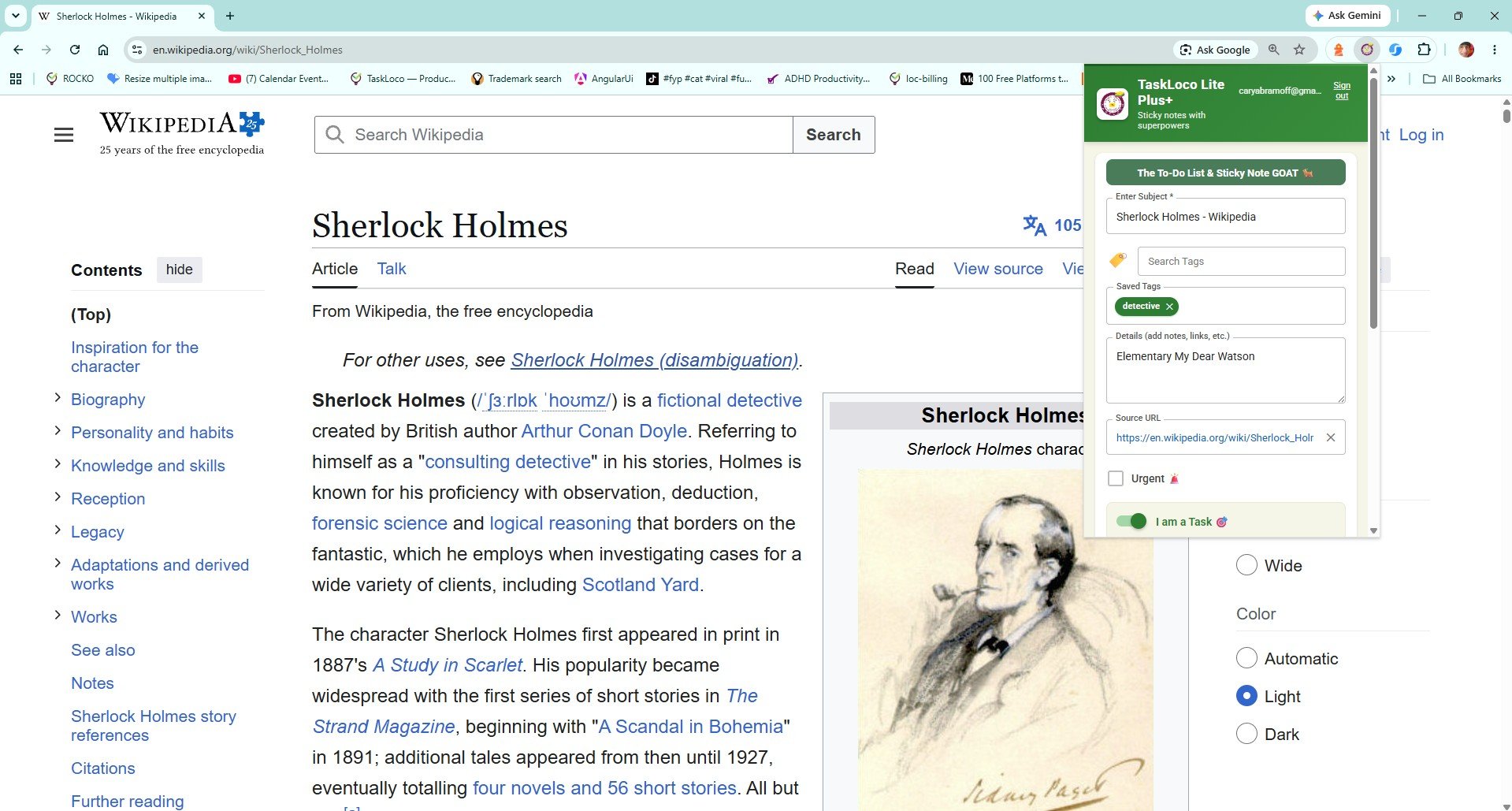
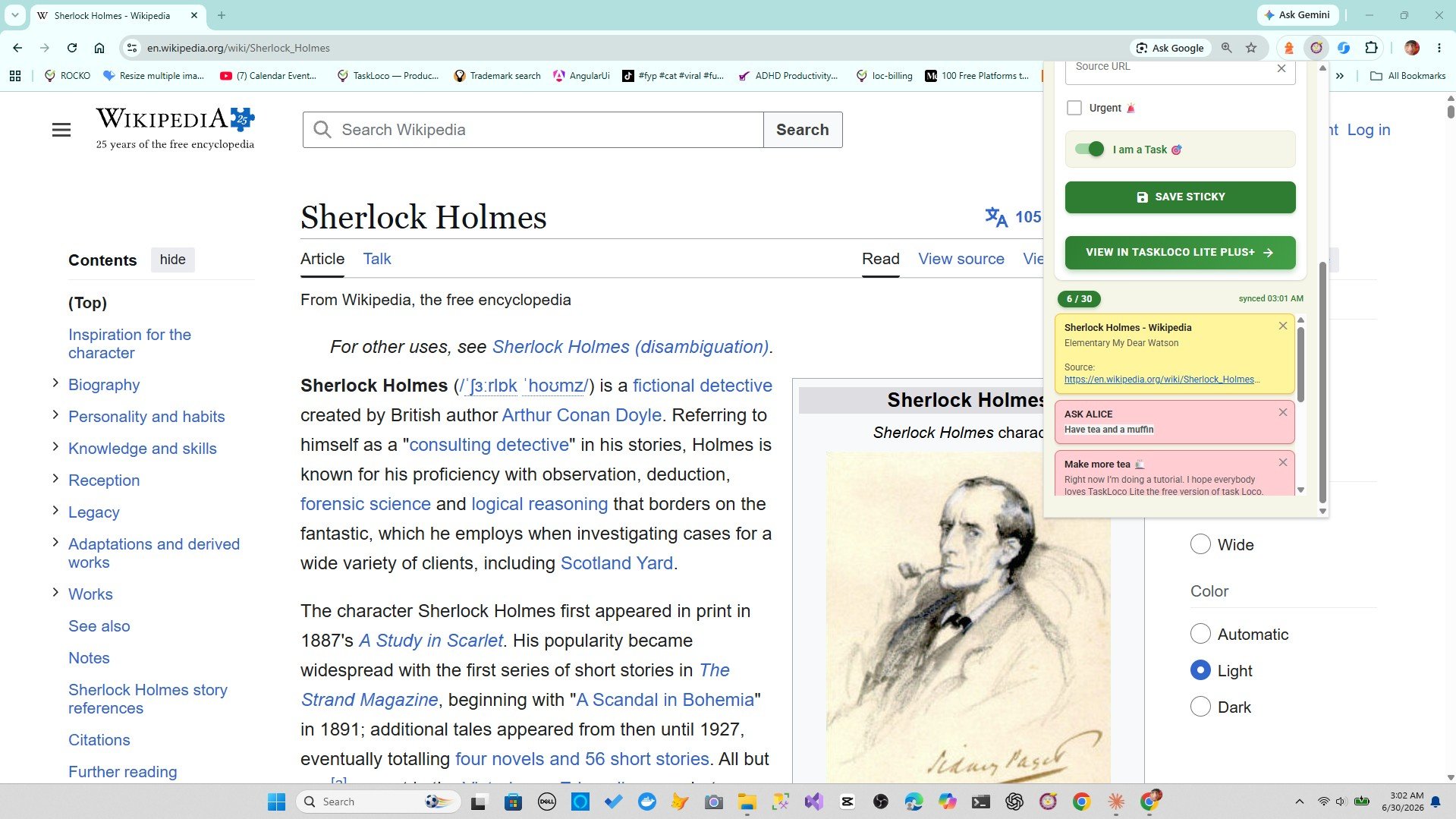
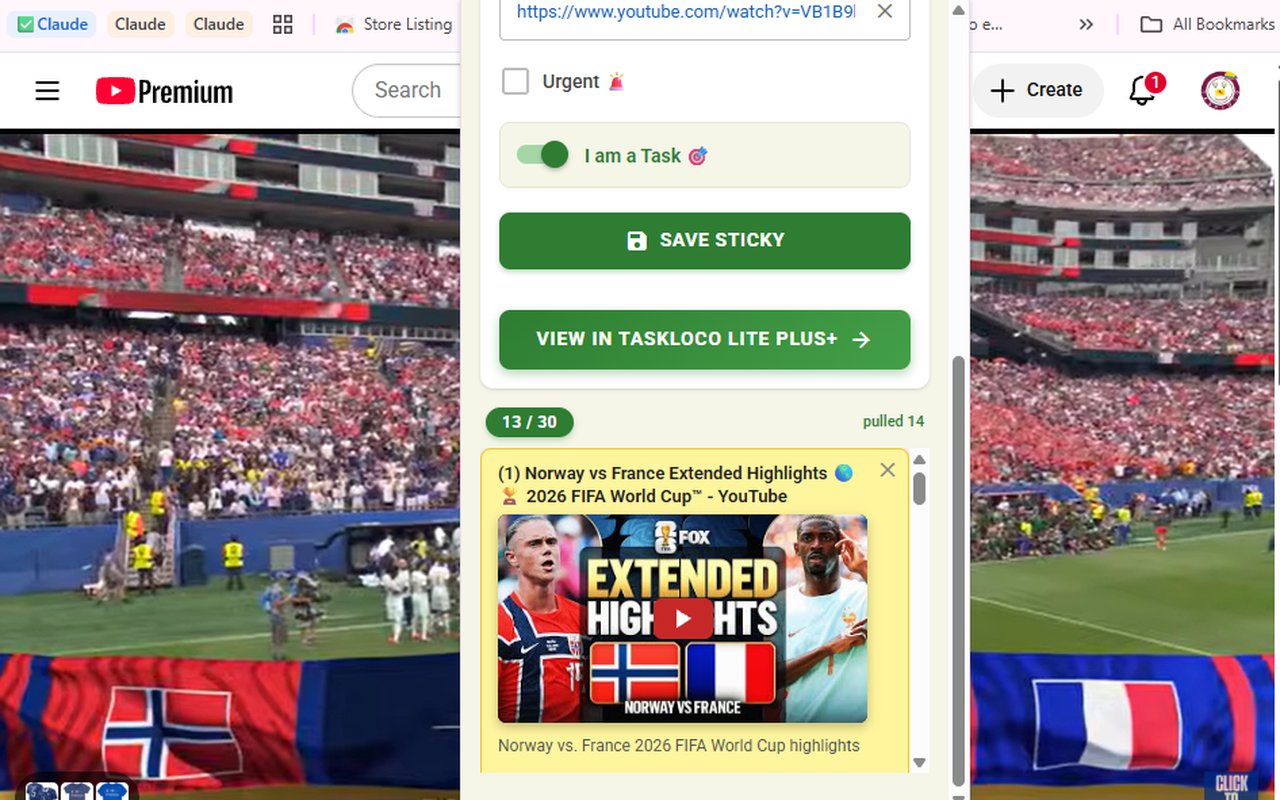
The Sticky Note Web Clipper by TaskLoco takes a different approach: one click on the toolbar icon saves the current page as a visual sticky note, with the title and URL already filled in. No form to complete, no destination to choose, no app to switch to. YouTube videos embed directly inside the note and play without leaving it. Notes sync automatically to TaskLoco, which you can reach from Chrome, desktop, iPhone, or Android. You can tag notes and search them — so finding something later is a keyword away, not a scroll through a flat list.
One Practical Way to Apply This: The Sticky Note Web Clipper
Here's what the actual workflow looks like. You're reading an article you want to come back to. Instead of leaving the tab open or hitting Ctrl+D to bookmark it, you click the Sticky Note Web Clipper icon in your Chrome toolbar. A note pops up with the page title and URL already in it. You can add a tag — or just hit save. That's it. The note lives in TaskLoco, synced to your phone, ready whenever you are.
For YouTube videos, it goes a step further: the video embeds inside the note itself. So when you come back to it later, you can watch it right there without hunting for the original tab or digging through your browser history.
The extension is free. Sign in with Google, click the toolbar icon, and your first clipped note is ten seconds away. TaskLoco has a free tier so you can use it without any payment involved.
- Install the Sticky Note Web Clipper from the Chrome Web Store — it's free
- Sign in with your Google account
- Open any tab you want to save
- Click the clipper icon — title and URL are auto-filled
- Add a tag if you want, or just save
- Find your saved notes on any device via TaskLoco
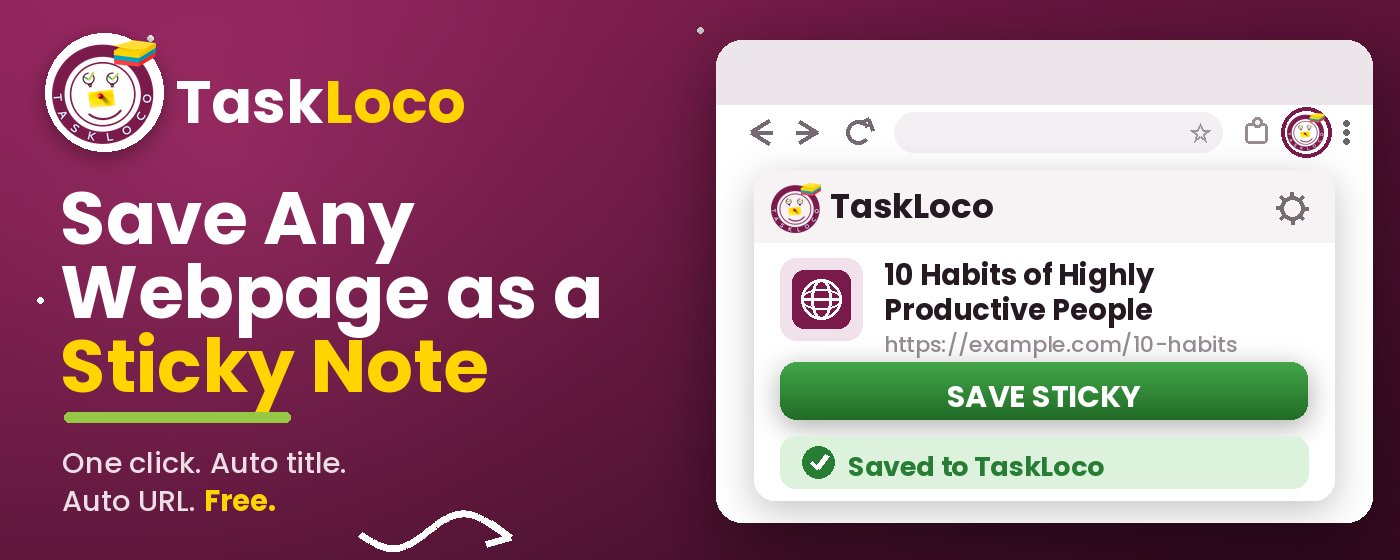
The Sticky Note Web Clipper is free. Install it from the Chrome Web Store, sign in with Google, and every page you clip becomes a sticky note you can find later.
Your clipped notes sync to TaskLoco across Chrome, desktop, iPhone, and Android — also free to start. No credit card to begin.
Get the Free Clipper
Sticky Note Web Clipper
- Free Chrome extension
- One-click save — any page, article, or video
- Title & URL auto-filled
- Tags & search
- Free forever
Synced to TaskLoco
- Sign in free with Google
- Your wall on Chrome, desktop, iPhone, Android
- YouTube videos embed & play in notes
- Visual sticky-note wall
- Free to start
Add It to Chrome — Free
One click saves any page, article, or YouTube video as a sticky note. Title and URL auto-filled.
Add to Chrome — FreeSee TaskLoco in Action
Frequently Asked Questions
Can I save a Chrome tab without adding it to my bookmarks?
Yes — several ways. Chrome's built-in Reading List, Tab Groups, and pinned tabs all let you hold onto a page without touching your bookmark bar. For something more useful long-term, a one-click web clipper like the Sticky Note Web Clipper saves the page as a visual note with the title and URL auto-filled, no bookmark folder required.
What's the difference between Chrome's Reading List and a web clipper?
Chrome's Reading List is a flat list of URLs — functional but minimal. A web clipper like the Sticky Note Web Clipper saves pages as visual sticky notes you can tag, search, and access across your devices. It's a meaningfully richer experience when you're saving more than a handful of things.
Does the Sticky Note Web Clipper work with YouTube videos?
Yes. When you clip a YouTube page, the video embeds inside the sticky note and plays directly there. You don't need to hunt for the original tab or browser history — the video is right inside your saved note.
Is the Sticky Note Web Clipper free?
Yes — the extension is completely free. Install it from the Chrome Web Store, sign in with Google, and start saving tabs as sticky notes right away. TaskLoco, where your notes sync, also has a free tier.
Will my saved tabs sync to my phone?
Yes. Notes clipped with the Sticky Note Web Clipper sync to TaskLoco, which you can access on iPhone, Android, and desktop — not just Chrome. So something you save at your desk is waiting for you on your phone without any extra steps.
What happens to pinned tabs when I close Chrome?
Pinned tabs generally reopen the next time you launch Chrome, but they depend on Chrome staying open and on your session persisting. If Chrome crashes or you're working across multiple devices, pinned tabs won't help. A clipped note in TaskLoco is permanent and device-independent.
How do I find something I saved weeks ago if I use a web clipper?
With the Sticky Note Web Clipper, you can tag notes when you save them and search by keyword later. That's a significant advantage over bookmarks or Tab Groups, where finding something old usually means scrolling through a list and hoping you remember the exact title.
Born in Brooklyn. Powered by AWS. Your data stays yours.
TaskLoco is available on iPhone, Android, Chrome, and every web browser.