You found the perfect weeknight pasta on one site, a birthday cake on another, and a brilliant marinade buried three pages deep in a food blog. By the time Sunday comes around, you have no idea where any of them are. Your bookmarks bar is a graveyard, your open tabs got wiped in a restart, and the recipe you actually wanted is somewhere in a screenshot folder you'll never search.
This is the real recipe problem — not the cooking, but the collecting. Cooking sites are deliberately fragmented. Every food blogger, magazine, and YouTube chef lives on a different domain, and none of them talk to each other. The solution isn't a single cooking app or a paid subscription to yet another recipe manager. It's a smarter way to clip and store from anywhere you browse.
The Real Problem with Saving Recipes Online
Most people default to one of three approaches: browser bookmarks, open tabs, or screenshots. All three fail in the same way — they strip the recipe of context, bury it somewhere hard to retrieve, and give you no visual signal about what you actually saved.
Browser bookmarks look organized until they aren't. The moment you've got thirty of them, a flat list of URLs like seriouseats.com/the-best-chili tells you nothing at a glance. You have to click each one to remember what it was. Bookmark folders help slightly, but most people never build that habit because it adds friction right at the moment you want to save fast.
Open tabs are even worse. They feel productive — you're "keeping it around" — but a browser restart, a crash, or just opening your laptop the next morning often wipes them. Tab hoarders know the specific dread of losing a week's worth of accumulated recipes in one accidental close.
The fix isn't complicated: you need a method that captures both the page and the link, requires almost no effort, and puts everything in one visual place you'll actually look at.
How to Build a Recipe Collection That Actually Works
Before you reach for any tool, the principle is simple: save at the moment you find it. The longer the gap between discovering a recipe and archiving it, the more likely it disappears. Any system that adds three steps between finding and saving will get abandoned by the second week.
Here's a practical method that works regardless of what tool you use:
- Save immediately, organize later. Don't wait until you have a clean folder structure in mind. Clip it now, tag it later. A tagged mess is recoverable. A lost URL is not.
- Keep links, not just screenshots. Images degrade in searchability. A URL lets you go back to the original page, check comments, find the author's updates, and print directly from the source.
- Use something visual. Recipe saving works best when you can scan thumbnails or note previews rather than read a list of text links. Your brain recognizes the lemon tart faster than it reads epicurious.com/recipes/food/views/classic-lemon-tart.
- Make sure it works on your phone. Most people browse recipes on mobile. If your save system only lives on your laptop, you'll reach for your phone in the kitchen and find nothing.
These principles point toward the same kind of tool: something that clips with one action, keeps the URL intact, shows you something visual, and syncs across devices.
One-Click Clipping with the Sticky Note Web Clipper
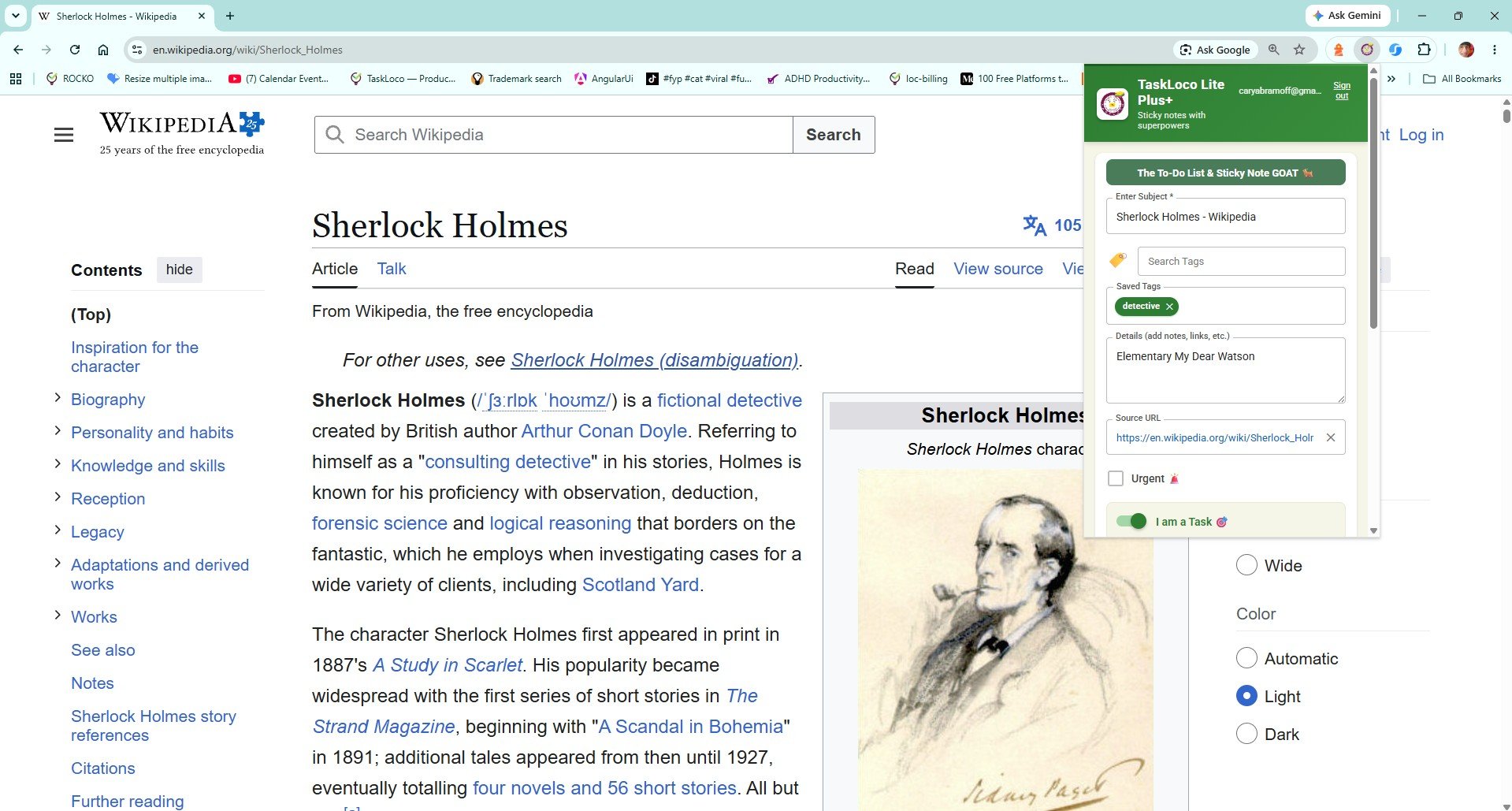
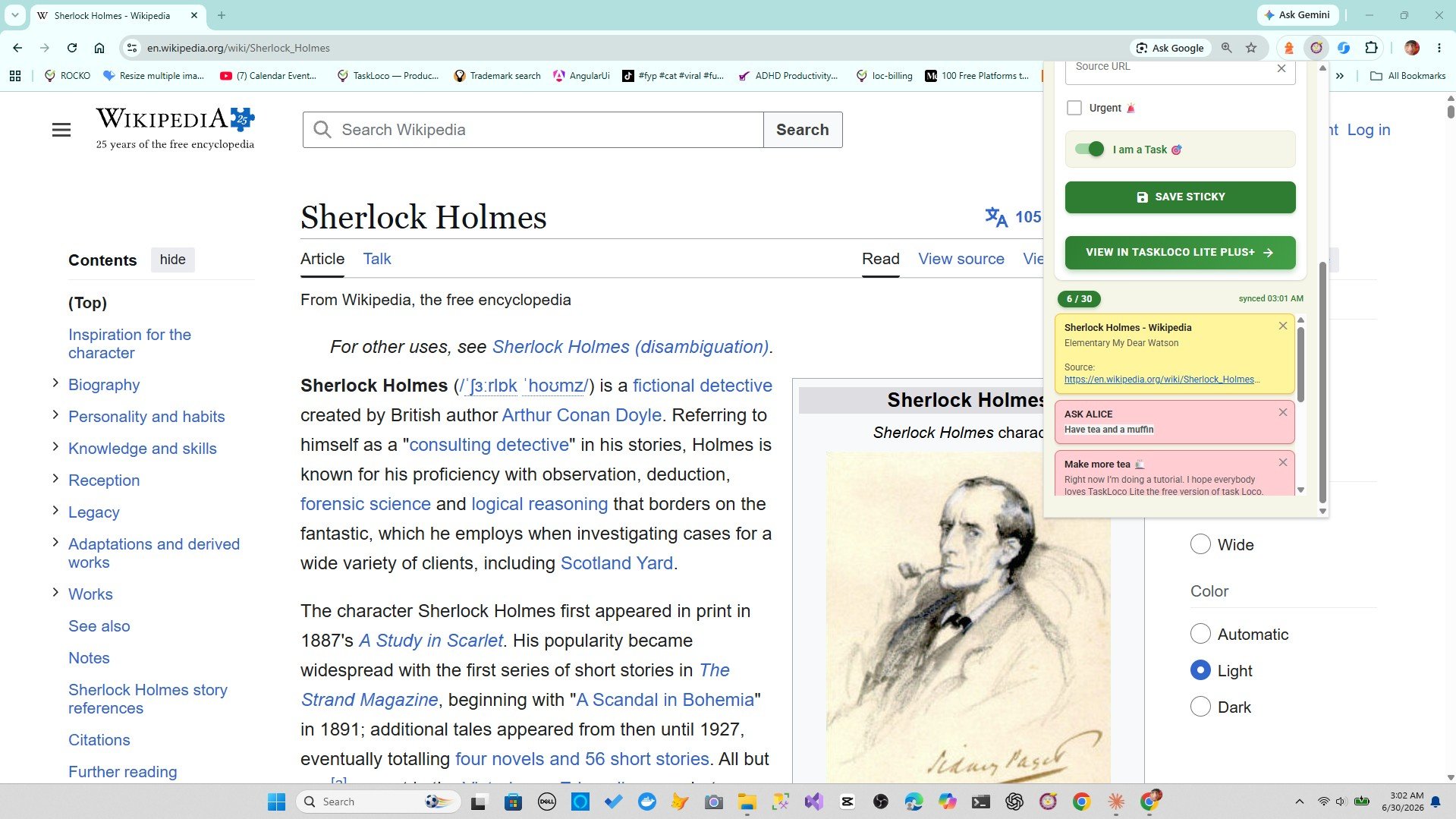
The Sticky Note Web Clipper is a free Chrome extension from TaskLoco. When you're on any recipe page — whether it's a major food magazine, a personal cooking blog, a YouTube recipe video, or a Reddit thread with a brilliant hack �� you click the toolbar icon once. The page title and URL are auto-filled into a sticky note. Done.
No form filling, no selecting text, no copying and pasting a link into a notes app. One click and you're back to reading.
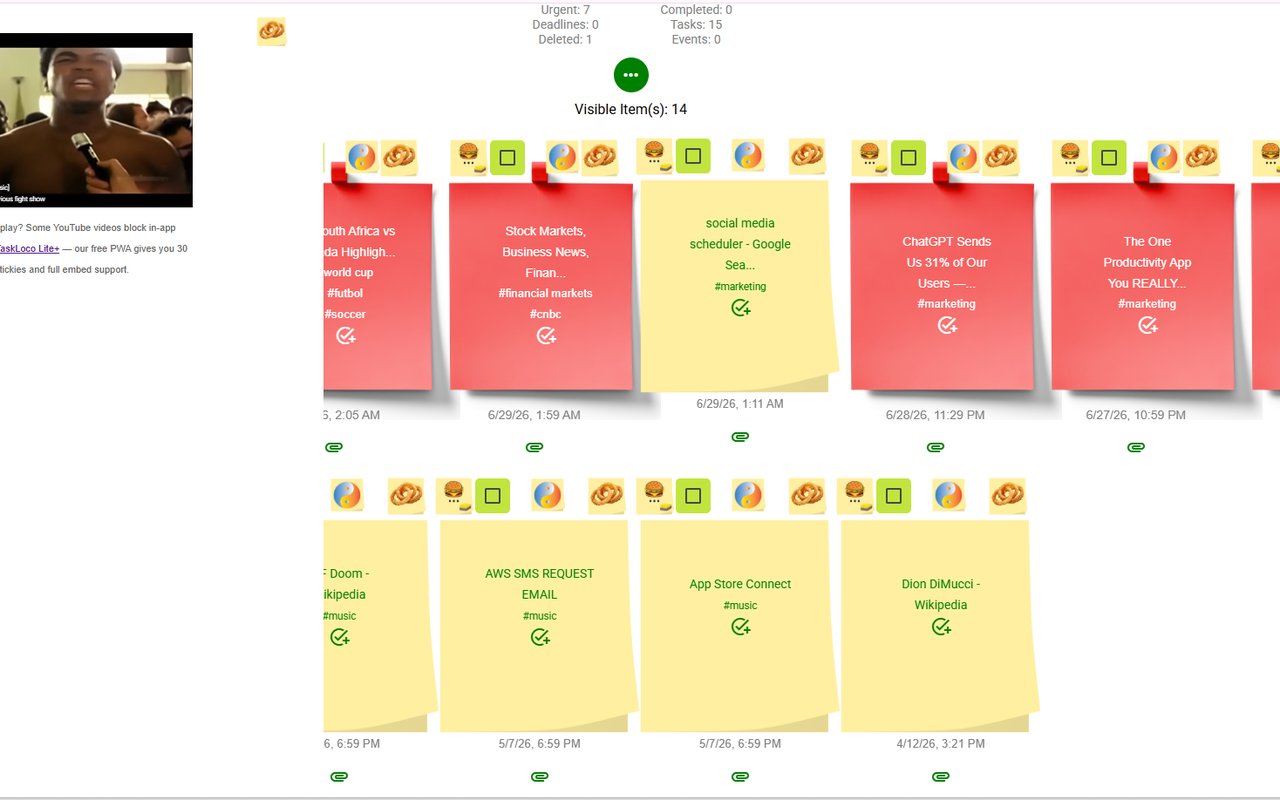
The notes live on your TaskLoco wall — a visual board where each saved recipe appears as its own sticky note you can scan at a glance. You can add tags like weeknight, vegetarian, or birthday, and search across everything you've clipped when you're standing in the grocery store trying to remember what was in that salad dressing.
Because TaskLoco syncs for free across Chrome, desktop, iPhone, and Android, the recipe you clip on your laptop at noon is waiting for you on your phone when you're shopping at 6pm. Sign in with Google — that's the only setup required.
It doesn't matter which cooking site the recipe lives on. AllRecipes, NYT Cooking, Smitten Kitchen, TikTok food accounts, Reddit's r/recipes, BBC Good Food — if it has a URL, the clipper saves it. Your collection is no longer tied to a single platform's ecosystem.
Organizing Your Saved Recipes So You'll Actually Use Them
Saving recipes is only half the problem. The other half is finding them when you're hungry and in a hurry. Here's how to make a clipped recipe collection genuinely useful rather than just a new kind of digital pile.
- Tag by occasion, not just cuisine. A tag like dinner-party is more useful than French when you're planning a menu at short notice. Think about how you'll search later, not how a cookbook would categorize things.
- Add a quick personal note. When you clip, take five seconds to add something like "swap cream for coconut milk" or "needs 2x the garlic." That note is invisible to a bookmark but invaluable a month later.
- Use search as your drawer. TaskLoco's search covers titles, URLs, and note content. If you clipped something and tagged it even loosely, you'll find it. Stop trying to maintain perfect folder hierarchies and start relying on search.
- Clip the video AND the written version. Many great recipes exist in both formats. Clip the YouTube video for technique reference and the blog post for exact measurements — they become two notes that sit side by side on your wall.
The goal is a collection that feels less like an archive and more like a living, browsable recipe wall. When you open it on a Thursday evening wondering what to cook, you should be able to scan it the same way you'd flip through a cookbook — except every single recipe came from somewhere you already know you liked.
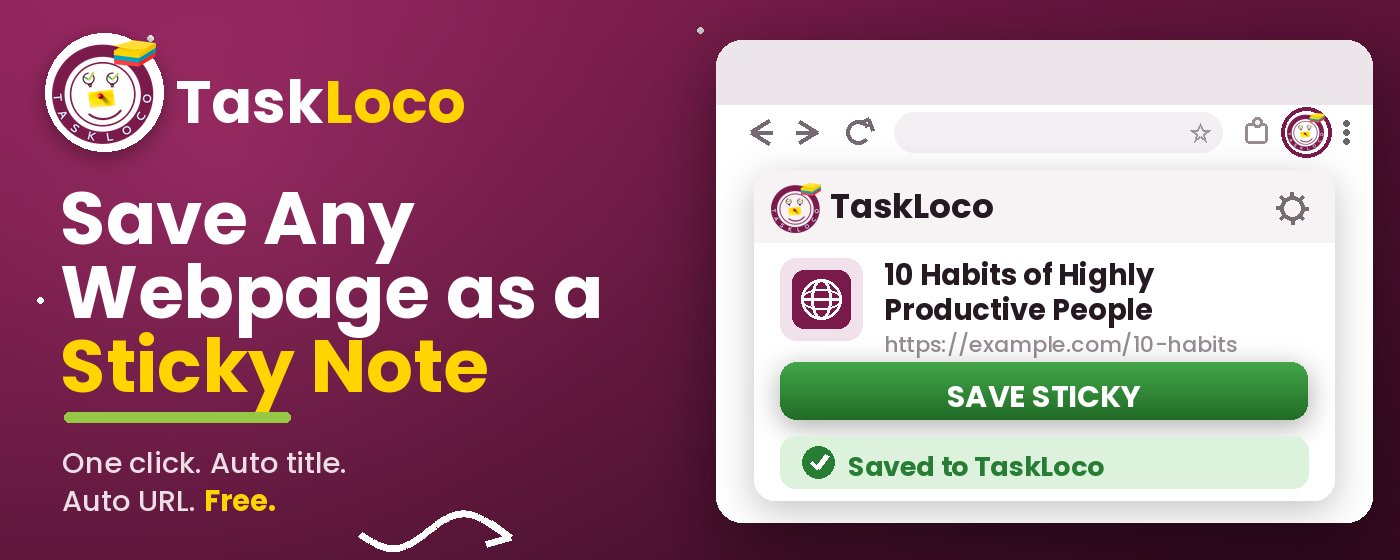
The Sticky Note Web Clipper is free. Install it from the Chrome Web Store, sign in with Google, and every page you clip becomes a sticky note you can find later.
Your clipped notes sync to TaskLoco across Chrome, desktop, iPhone, and Android — also free to start. No credit card to begin.
Get the Free Clipper
Sticky Note Web Clipper
- Free Chrome extension
- One-click save — any page, article, or video
- Title & URL auto-filled
- Tags & search
- Free forever
Synced to TaskLoco
- Sign in free with Google
- Your wall on Chrome, desktop, iPhone, Android
- YouTube videos embed & play in notes
- Visual sticky-note wall
- Free to start
Add It to Chrome — Free
One click saves any page, article, or YouTube video as a sticky note. Title and URL auto-filled.
Add to Chrome — FreeSee TaskLoco in Action
Frequently Asked Questions
Can I save recipes from any website, not just major cooking sites?
Yes. The Sticky Note Web Clipper works on any page with a URL — food blogs, Reddit threads, magazine paywalled previews, YouTube recipe videos, cooking newsletters, anywhere. If you can open the page in Chrome, you can clip it in one click.
Does it save the actual recipe text, or just the link?
The clipper saves the page title and URL as a sticky note and auto-fills both. The original page stays at that URL, so you always go back to the full recipe with one tap. You can also type your own notes — like ingredient swaps or cook time adjustments — directly into the note.
Will my saved recipes be on my phone when I'm in the kitchen or at the store?
Yes. Saved notes sync to TaskLoco, which is available on iPhone, Android, and desktop alongside the Chrome extension. Sign in with Google on any device and your entire clipped recipe wall is there.
Can I save YouTube cooking videos the same way?
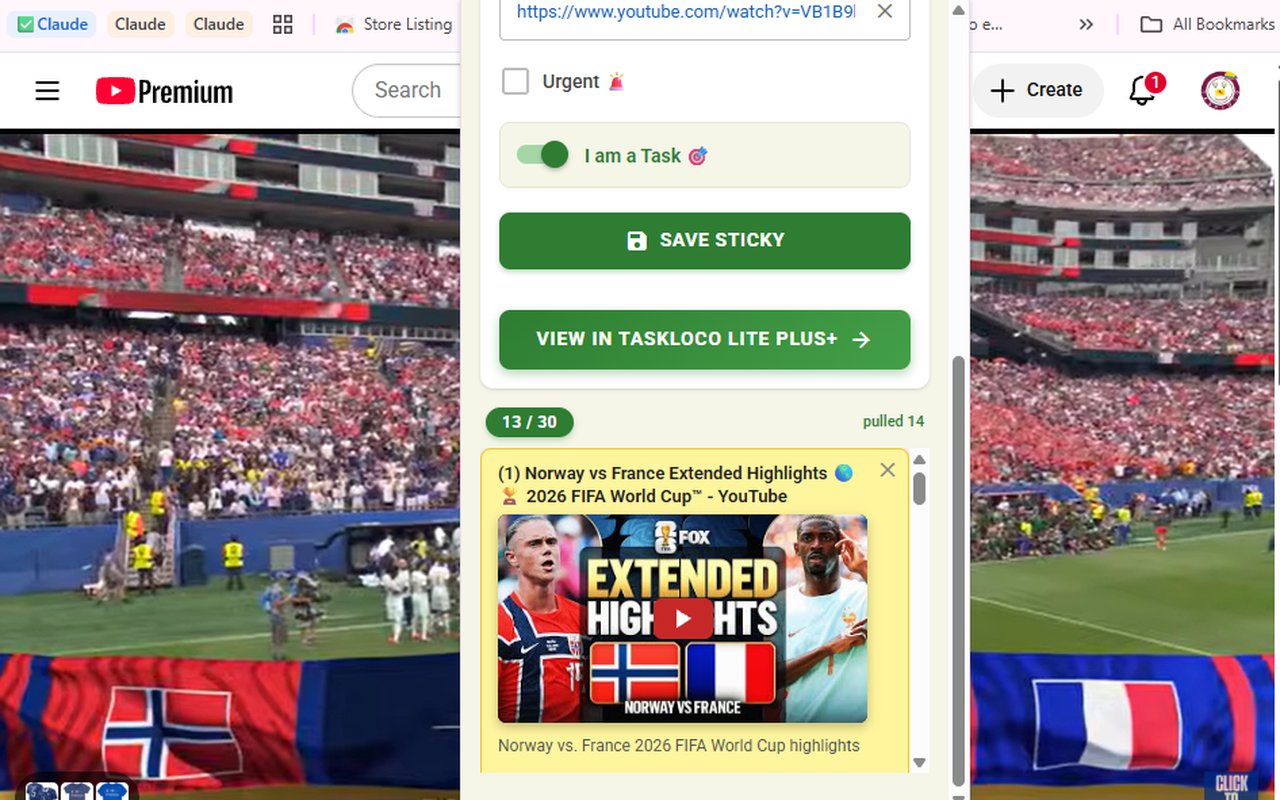
Yes, and it goes one step further — YouTube videos embed directly inside the sticky note and play in place. So you can watch a chef's technique without leaving your TaskLoco wall or hunting for the original tab.
How is this better than just bookmarking a recipe?
Browser bookmarks are a flat list of URLs with no visual context. After a few dozen saves, you're clicking blind to remember what each one was. Sticky notes show you a visual card with the title and your own added notes, they sync to mobile, and you can tag and search across everything. Bookmarks were never designed for recipe collecting — they were designed for navigation.
Is the Sticky Note Web Clipper free?
Yes — the extension is completely free. TaskLoco also has a free tier. Install from the Chrome Web Store, sign in with Google, and start clipping recipes right away. No credit card, no trial period.
How do I get started saving recipes with the clipper?
Install the Sticky Note Web Clipper free from the Chrome Web Store and sign in with Google. Then go to any recipe page, click the clipper icon in your Chrome toolbar, and the recipe is saved as a sticky note with the title and URL filled in automatically. Add a tag or a quick personal note if you want, then close it and keep browsing.
Born in Brooklyn. Powered by AWS. Your data stays yours.
TaskLoco is available on iPhone, Android, Chrome, and every web browser.