You found the article. You bookmarked it on your laptop. You pull out your phone on the commute and it's nowhere. Sound familiar? Browser bookmarks were built for a single-device world, and even Chrome's built-in sync is more unreliable than it should be in practice — folders go missing, items don't appear, and nothing looks the way you left it.
Keeping saved pages genuinely in sync across Chrome and mobile isn't hard once you stop relying on the browser's own bookmark engine. There are a few solid methods — and one that takes only a single click while you're already on the page you want to save. This guide covers all of them honestly, so you can pick what fits.
Why Chrome Bookmarks Don't Really Sync the Way You Expect
Chrome does have built-in bookmark sync — it's tied to your Google account and technically pushes bookmarks across devices. The problem is that 'synced' doesn't mean 'accessible in a useful way.' On mobile, Chrome bookmarks live buried in a menu. There's no visual layout, no context, no way to see what a link was about without opening it. And if you've accumulated hundreds of bookmarks over the years, finding anything means scrolling through a flat list or hoping your folder structure still makes sense.
There's also a more practical failure mode: bookmark sync can silently lag. You save something on your laptop and check your phone ten minutes later — it's not there yet. Sometimes it takes hours. If you're trying to pick up research on your phone that you started on your desktop, that lag defeats the whole purpose.
The deeper issue is that bookmarks were designed as navigation shortcuts, not as a reading or research queue. They don't distinguish between 'I want to visit this site regularly' and 'I need to read this article once and remember what it said.' Using them for both jobs makes both jobs worse.
Methods That Actually Keep Saved Pages in Sync Across Devices
Here are the real options — each with honest tradeoffs:
- Chrome bookmark sync with Google account: Works, but slow to propagate, no visual layer, hard to search by topic once your list grows. Fine for a handful of links, not for an ongoing research habit.
- Send a tab to your phone (Chrome's built-in feature): Right-click a tab in Chrome on desktop, choose 'Send to your devices,' and it appears in your Chrome history on mobile. This is genuinely useful for one-off moments — but the link only stays in your 'Recent Tabs' briefly. It's not a save; it's a nudge.
- Read-it-later apps (Pocket, Instapaper): These are purpose-built for cross-device reading queues and do the job well. You install a browser extension, click to save, and the article shows up stripped of formatting in the app. The tradeoff: they're text-focused, they don't handle non-article pages well (YouTube videos, dashboards, tools), and your saved items live in a separate app ecosystem entirely.
- Note-taking clippers (Evernote, Notion): Both have browser extensions that clip pages into their respective apps. They sync reliably. The friction is real, though — Evernote's clipper asks you to pick a notebook and format every time; Notion's clipper drops content into your workspace but requires you to have a Notion setup worth clipping into. Neither is truly one-click.
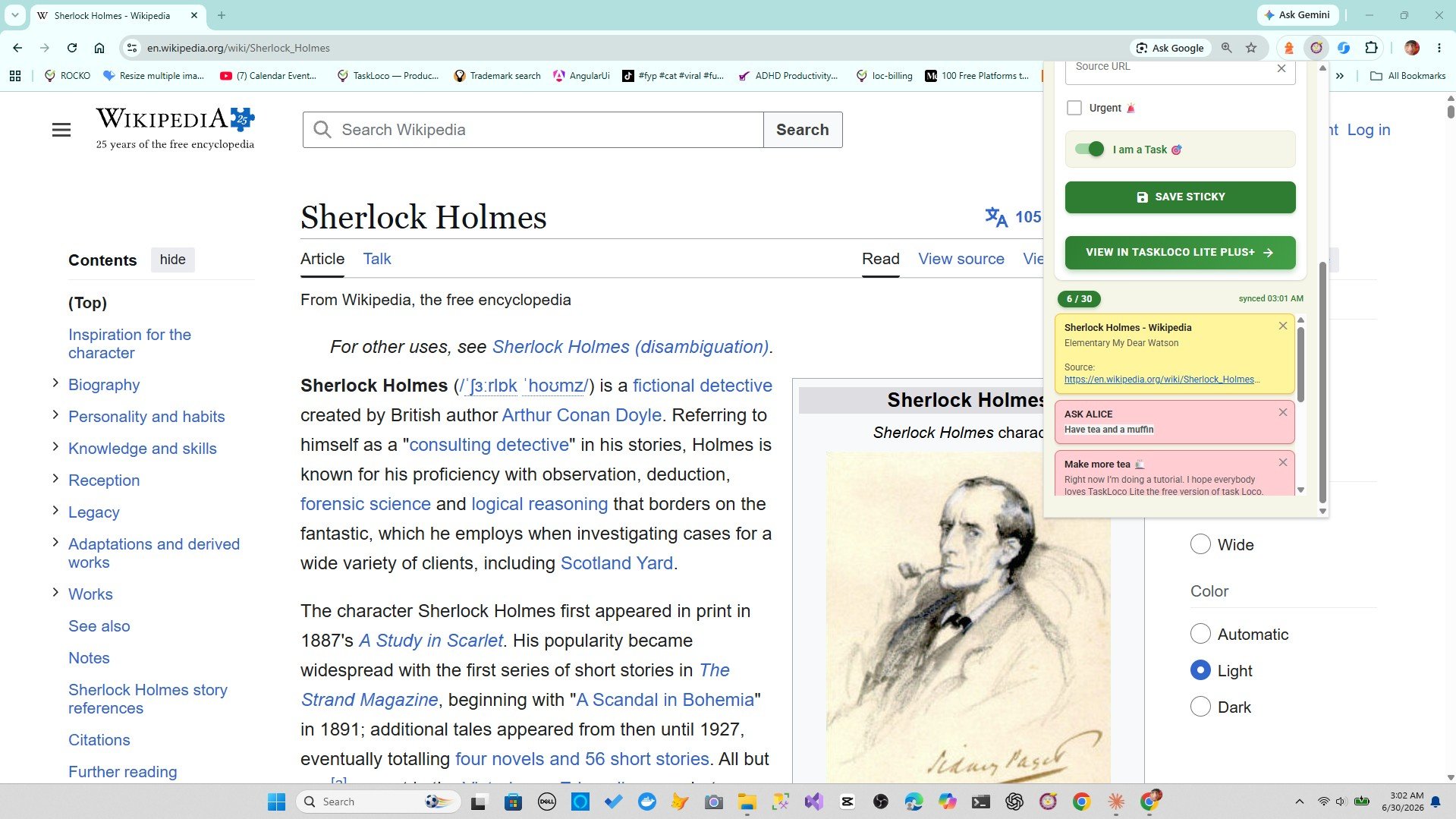
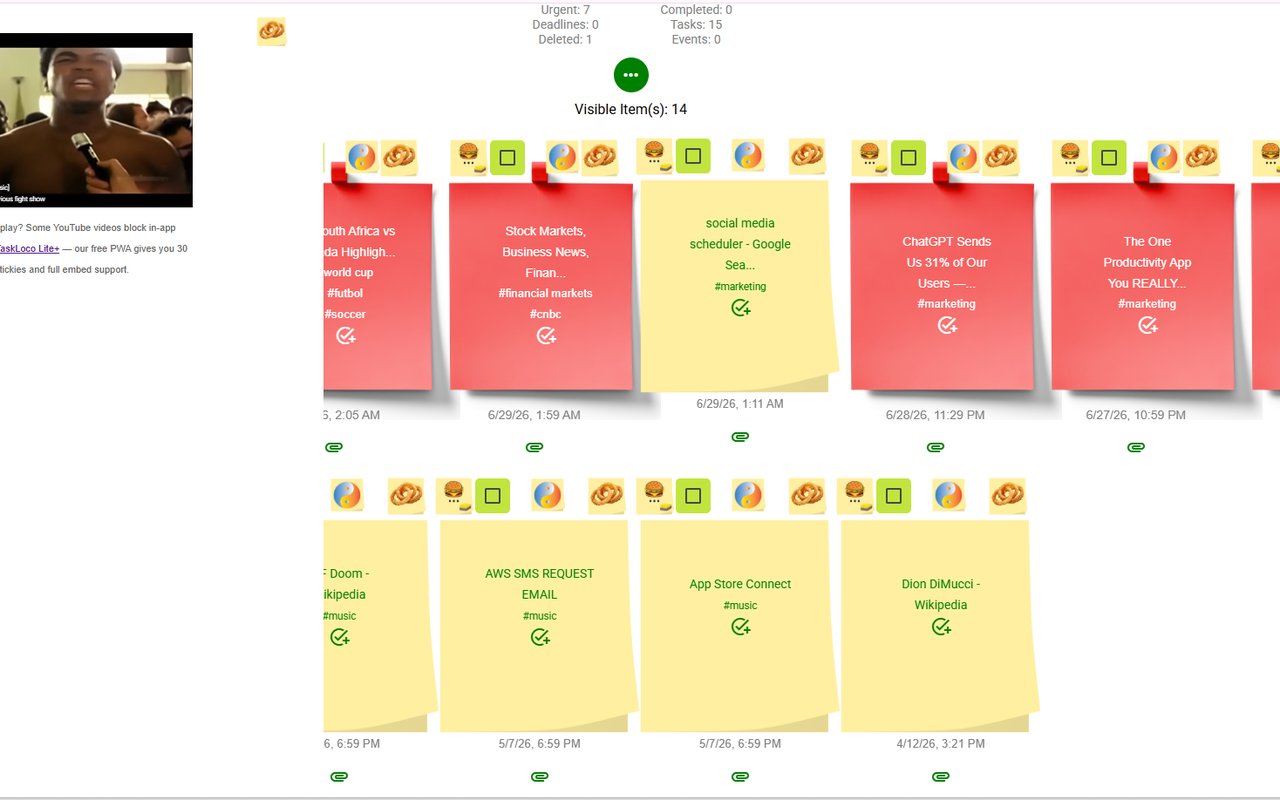
- A visual sticky-note clipper: This is the category the Sticky Note Web Clipper occupies. One click on the toolbar icon saves the current page — title and URL auto-filled — as a visual note on a wall that syncs to your phone and desktop. No format decisions, no folder routing, no lag waiting for bookmark sync to catch up.
The method you'll actually use consistently is the one with the least friction at the moment of saving. That's the most important variable — not features you'll never reach.
How to Set Up a Save-and-Sync Habit That Works
Whatever tool you pick, the habit only works if saving takes less effort than opening a new tab and forgetting about the page. Here's a practical setup:
Step 1 — Pick one destination. The biggest reason saved pages get lost is they end up in three places: bookmarks, an open tab, a Slack message to yourself, a screenshot. Pick one tool and make it the default for everything worth keeping.
Step 2 — Put the save button where you can see it. Whether that's a pinned browser extension icon or a bookmarklet in your toolbar, the save action should never require more than one click. If saving requires you to remember a keyboard shortcut or navigate a menu, you'll skip it half the time.
Step 3 — Sign into the same account on mobile. This sounds obvious but it's where most setups fail. If your save tool is cloud-backed and you're signed into the same account on your phone, saved pages appear there immediately — no USB, no email-to-yourself, no 'Recent Tabs' waiting room.
Step 4 — Add light context when it matters. A saved URL with no label is nearly as useless as a forgotten bookmark. The best clippers auto-fill the page title so you're not starting from zero, but adding a quick tag or a one-line note while you're still thinking about why you saved it pays off later.
Step 5 — Review regularly, not obsessively. A weekly pass through what you've saved — deleting what's no longer relevant, acting on what you meant to read — keeps the list from becoming the bookmark graveyard you're trying to escape.
One Practical Way to Apply This: The Sticky Note Web Clipper
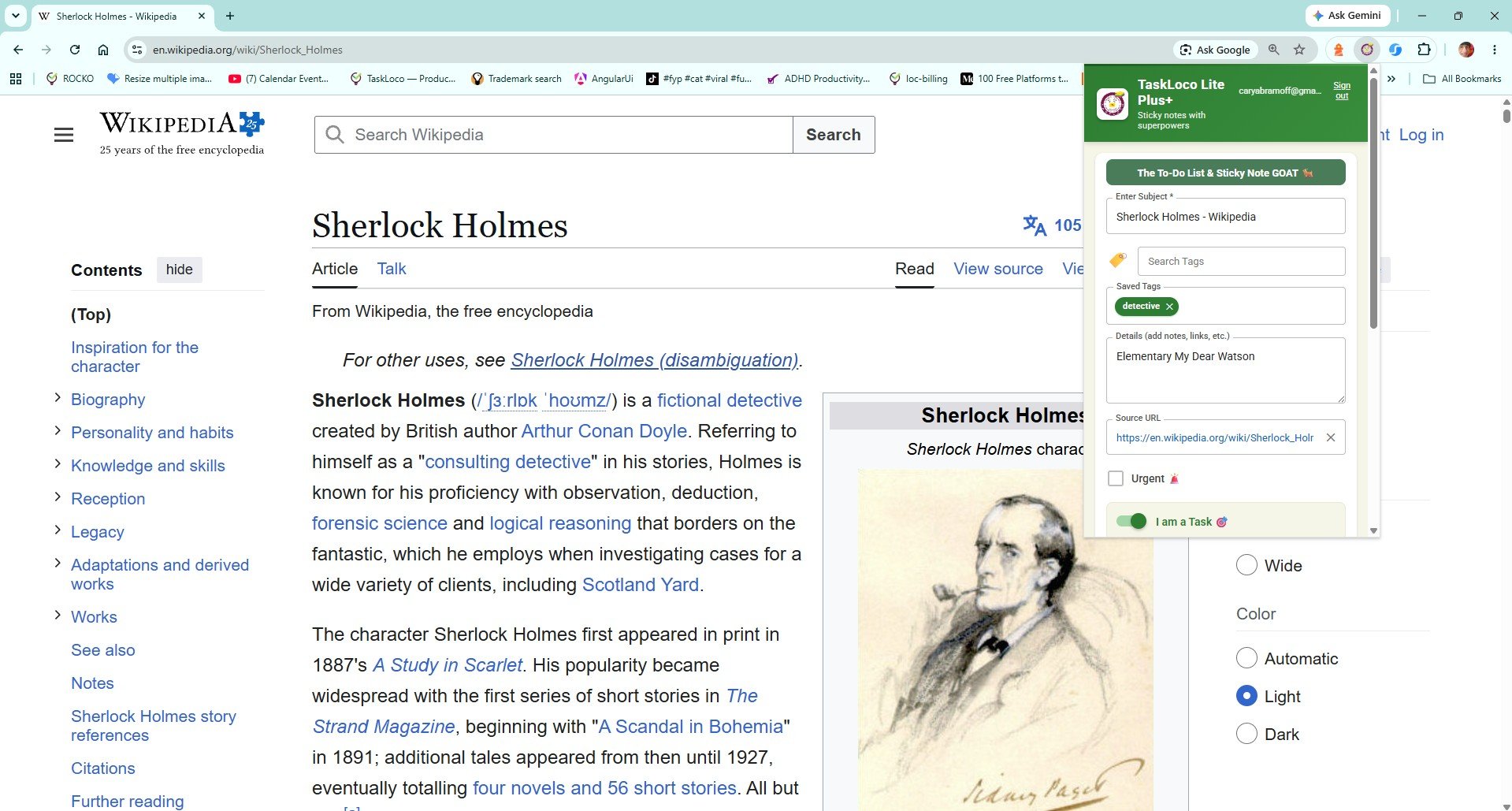
If you want to try the visual sticky-note approach, the Sticky Note Web Clipper is a free Chrome extension that handles the save-and-sync workflow with minimal setup. Install it from the Chrome Web Store, sign in with Google, and the toolbar icon is live. Click it on any page — an article, a YouTube video, a product page, a research source — and it saves as a sticky note with the title and URL already filled in.
Your notes live in TaskLoco, which you can open in any browser or on the free mobile app for iPhone and Android. Because it's cloud-backed and tied to your account, what you save on your laptop shows up on your phone immediately — no sync lag, no folder routing decisions, no format to pick.
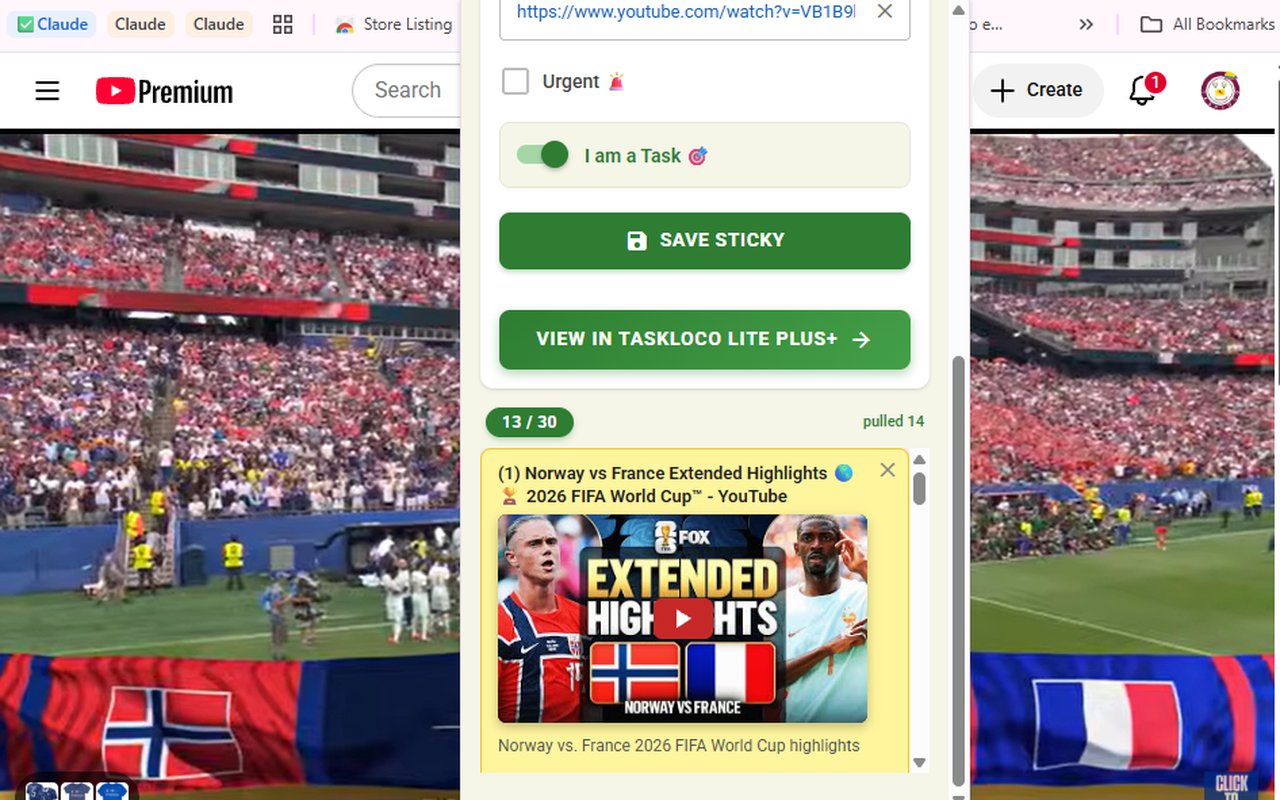
YouTube videos are worth calling out specifically: when you save a YouTube page with the clipper, the video embeds directly inside the note and plays there. That's something bookmarks and most read-it-later tools simply don't do.
This isn't the only valid approach — if you already have a Pocket or Notion workflow you're happy with, there's no reason to switch. But if you've been stuck in the 'bookmark it and never find it again' loop, a one-click visual clipper with real cross-device sync is a straightforward fix.
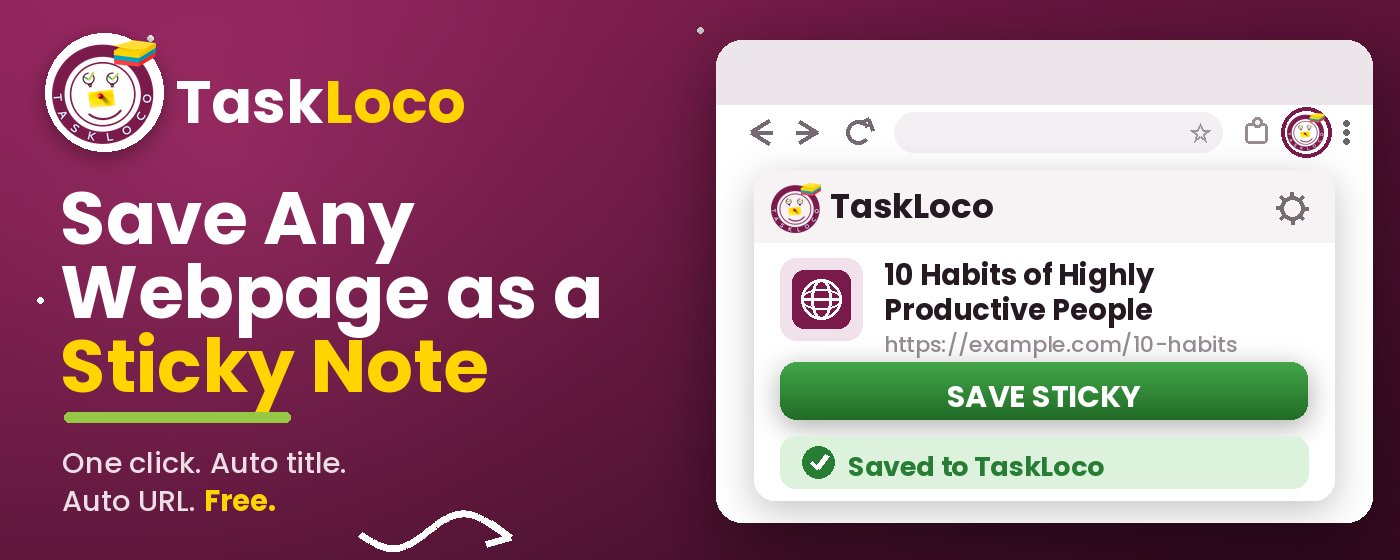
The Sticky Note Web Clipper is free. Install it from the Chrome Web Store, sign in with Google, and every page you clip becomes a sticky note you can find later.
Your clipped notes sync to TaskLoco across Chrome, desktop, iPhone, and Android — also free to start. No credit card to begin.
Get the Free Clipper
Sticky Note Web Clipper
- Free Chrome extension
- One-click save — any page, article, or video
- Title & URL auto-filled
- Tags & search
- Free forever
Synced to TaskLoco
- Sign in free with Google
- Your wall on Chrome, desktop, iPhone, Android
- YouTube videos embed & play in notes
- Visual sticky-note wall
- Free to start
Add It to Chrome — Free
One click saves any page, article, or YouTube video as a sticky note. Title and URL auto-filled.
Add to Chrome — FreeSee TaskLoco in Action
Frequently Asked Questions
Why don't my Chrome bookmarks show up on my phone right away?
Chrome bookmark sync runs in the background and can lag — sometimes by minutes, sometimes longer. It depends on your connection, how recently Chrome has synced, and whether both devices are signed into the same Google account. For anything time-sensitive, bookmark sync isn't reliable enough. A cloud-backed clipper like the free Sticky Note Web Clipper saves to your account instantly, so what you clip on desktop appears on your phone immediately when you open TaskLoco.
What's the fastest way to send a page from Chrome on desktop to my phone?
Chrome's built-in 'Send to your devices' feature (right-click any tab) is the fastest native option — but it only places the link in your phone's 'Recent Tabs,' where it disappears quickly. For anything you actually want to keep, a one-click clipper is faster and more permanent. The Sticky Note Web Clipper saves the page as a note in one click, and it's waiting for you in TaskLoco on your phone whenever you want it.
Does the Sticky Note Web Clipper work on iPhone and Android?
The Chrome extension itself runs in your Chrome browser on desktop and saves notes to your TaskLoco account. That account syncs across the TaskLoco web experience and the free mobile apps for iPhone and Android. So you clip on Chrome, and your notes are available on your phone through TaskLoco — no extra steps.
Can I save YouTube videos and have them sync to my phone too?
Yes. When you save a YouTube page with the Sticky Note Web Clipper, the video embeds directly inside the note. That note syncs to your TaskLoco account, so you can access it on your phone or any other device. The video plays inside the note — you don't have to hunt down the original link again.
Is the Sticky Note Web Clipper free?
Yes — the extension is free. Install it from the Chrome Web Store, sign in with Google, and start clipping. TaskLoco, where your notes sync, also has a free tier. There's nothing to pay to get started.
How is a sticky-note clipper different from just bookmarking a page?
A bookmark stores a URL in a list. A sticky note stores the URL as a visual card with the page title already filled in, sitting on a wall you can scan at a glance. You can add tags, search by topic, and see what you saved at a glance — rather than opening a folder full of unlabeled links. The Sticky Note Web Clipper also syncs to mobile through TaskLoco, while bookmark sync can be slow and unreliable.
Do I need a TaskLoco account to use the clipper?
You sign in with Google — that creates your free TaskLoco account automatically. There's no separate sign-up form. Once you're in, everything you clip from Chrome syncs to that account across desktop and mobile.
Born in Brooklyn. Powered by AWS. Your data stays yours.
TaskLoco is available on iPhone, Android, Chrome, and every web browser.