You land on a brilliantly written headline, a product page with copy you want to study, a YouTube breakdown of a technique you need later, or a news article that reframes how you think about your industry. You tell yourself you'll come back to it. You don't. The tab closes, the browser history grows, and the insight is gone. That is the exact problem a swipe file solves — and the reason building one is worth doing properly.
A swipe file is not a reading list. It is not a folder of bookmarks you never open. It is an active, searchable collection of real examples you return to — for writing inspiration, research, competitive reference, or creative fuel. The difference between a useful swipe file and a digital junk drawer comes down to one thing: how fast and consistently you capture things when you see them. The harder the capture step, the fewer things make it in, and the less useful the collection becomes.
What a Swipe File Actually Is — and What Goes In It
The term comes from advertising. Copywriters kept physical folders — swipe files — stuffed with ads, headlines, and direct-mail pieces they admired. When they sat down to write, they'd flip through the file for patterns, structures, and lines that worked. The goal was never plagiarism. It was pattern recognition.
The digital version is the same idea applied to everything you browse. What belongs in a swipe file?
- Writing samples: Landing pages with great headlines, email newsletters with clean structures, articles with compelling hooks or arguments you want to reverse-engineer.
- Research and reference: Studies, data pages, expert explainers — anything you might cite or build on later.
- Design inspiration: Web layouts, UI patterns, product pages with visual choices you want to remember.
- Competitor pages: How rivals position themselves, what they emphasize, what they ignore.
- YouTube and video: Tutorials, talks, breakdowns — things that teach a skill or demonstrate an idea you need to absorb.
- News and trends: Articles that mark a shift in your space and are worth keeping for context.
What does not belong: anything you're saving purely because it felt interesting for a second. A swipe file has a purpose — creative fuel, research, professional reference. If you can't say why something belongs, it probably doesn't.
How to Build the Habit: Capture Fast, Organize Later
The single biggest mistake people make with swipe files is trying to perfectly organize items at the moment of capture. You're in the middle of reading. You stop, think about which folder it belongs in, write a long note to future-you, and by the time you've done all that, you've broken your reading flow — and you still probably won't remember what you saved or why.
Better approach: capture immediately, with one action, then organize in a separate session.
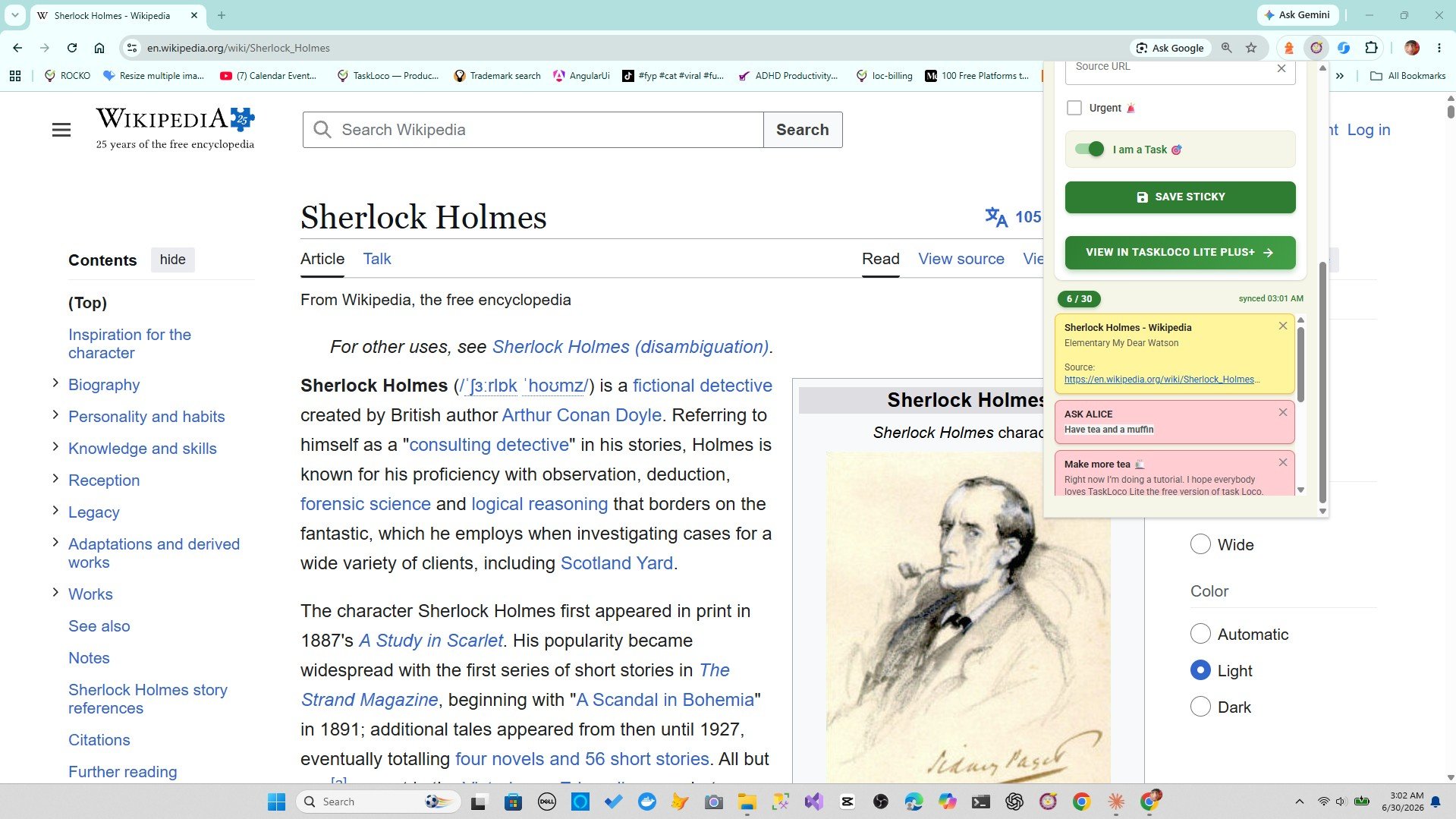
Step 1: Lower the capture barrier to almost zero. Whatever tool you use, saving a page should take one click or one keyboard shortcut. If it takes more than that, you will skip it when you're busy, which is exactly when the best things cross your feed.
Step 2: Let the title and URL carry the initial context. For most web pages, the page title plus the URL tells you enough to remember why you saved it. You do not need to write a description at the moment of capture. Add notes later if something needs more context.
Step 3: Use tags, not nested folders. Folders force you to decide on a single category at capture time. Tags let you apply multiple labels — copywriting, competitor, headlines — and search across them. Tagging takes two seconds and makes retrieval far more flexible.
Step 4: Review and prune regularly. Set aside ten minutes once a week or once a month to go through recent captures. Delete things that no longer feel relevant. Add a note to the ones that still spark something. Move the keepers to whatever section of your file they belong in. This review habit is what turns a pile of saved links into a working reference.
Choosing the Right Capture Tool — and What Most People Get Wrong
Browser bookmarks are where swipe files go to die. They're text-only, nested inside folders nobody opens, and there's no visual way to scan what you've saved. You can't tag, you can't search by content, and they don't sync gracefully across your phone and desktop. Most people have hundreds of bookmarks they haven't opened in years.
Read-later apps are better, but they're built for reading, not referencing. They strip the page down to text, which means you lose the visual context — the layout, the design, the formatting that made the page worth saving in the first place. And they typically don't handle YouTube or interactive pages well at all.
Full-page screenshot tools capture visuals but create static images you can't search, can't tag easily, and can't click back to the live page from.
What a swipe file actually needs from a capture tool:
- One-click save — no friction at the moment you see something worth keeping
- Title and URL auto-filled — so you know what it is and can click back to the live page
- Tags — so you can categorize across multiple topics and find things later
- Visual layout — so you can scan your collection the way you'd flip through a physical swipe file
- Cross-device sync — because good ideas don't only hit you at your desk
- Video support — because a large proportion of the best reference material lives on YouTube
The Evernote Web Clipper is the old standard. It's powerful but heavy — it does a lot more than capture, and you feel that weight every time you use it. The Notion Web Clipper requires you to already have a Notion workspace and know where to send things. Neither gives you a visual, at-a-glance wall of what you've saved.
One Practical Way to Run Your Swipe File: The Sticky Note Web Clipper
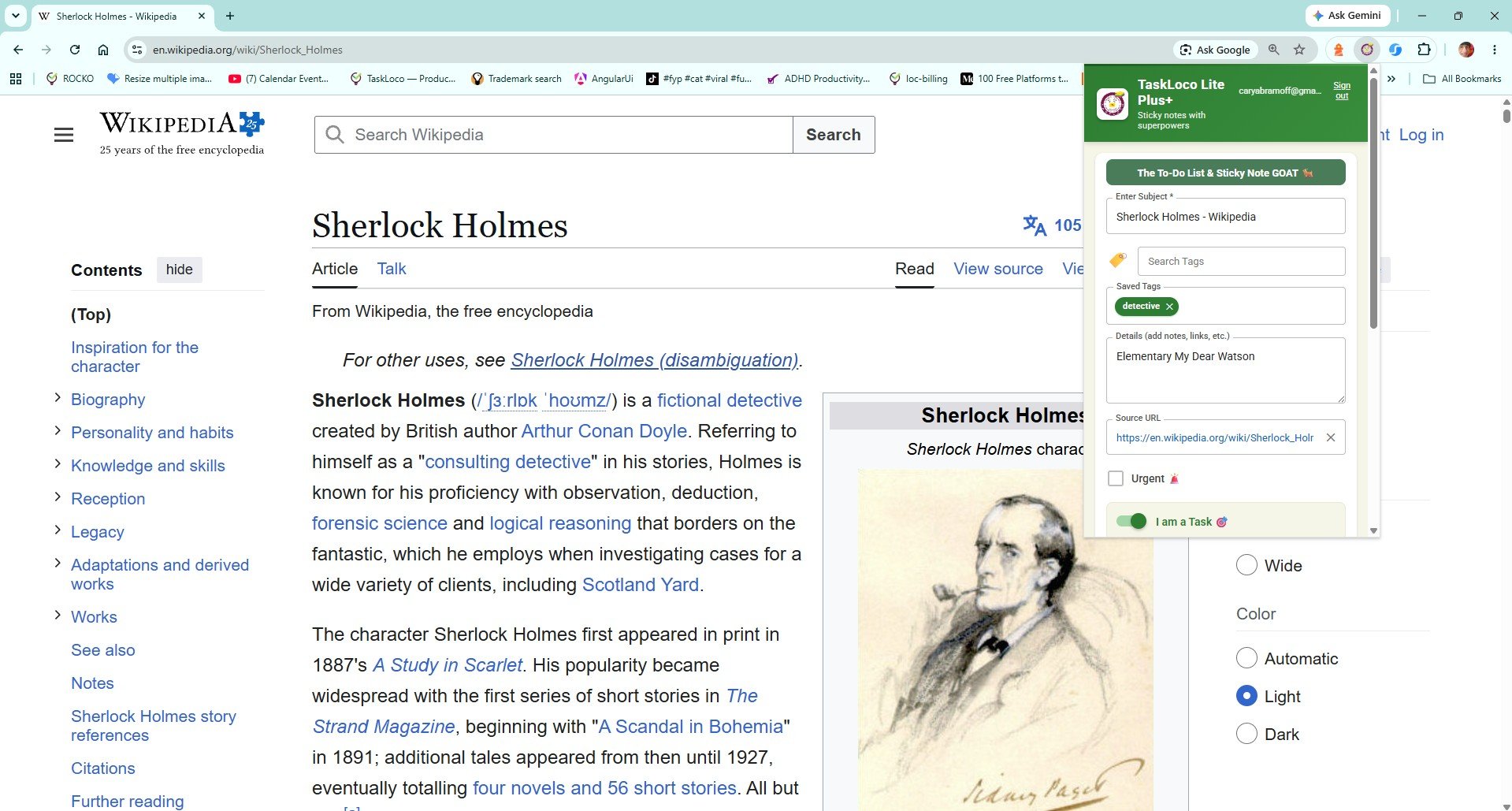
The Sticky Note Web Clipper is a free Chrome extension by TaskLoco that fits exactly the workflow described above. You install it, pin it to your toolbar, and from that point on, saving any web page is one click. The current page's title and URL auto-fill into a new sticky note. No copy-pasting. No switching tabs to find your note app. No decisions to make.
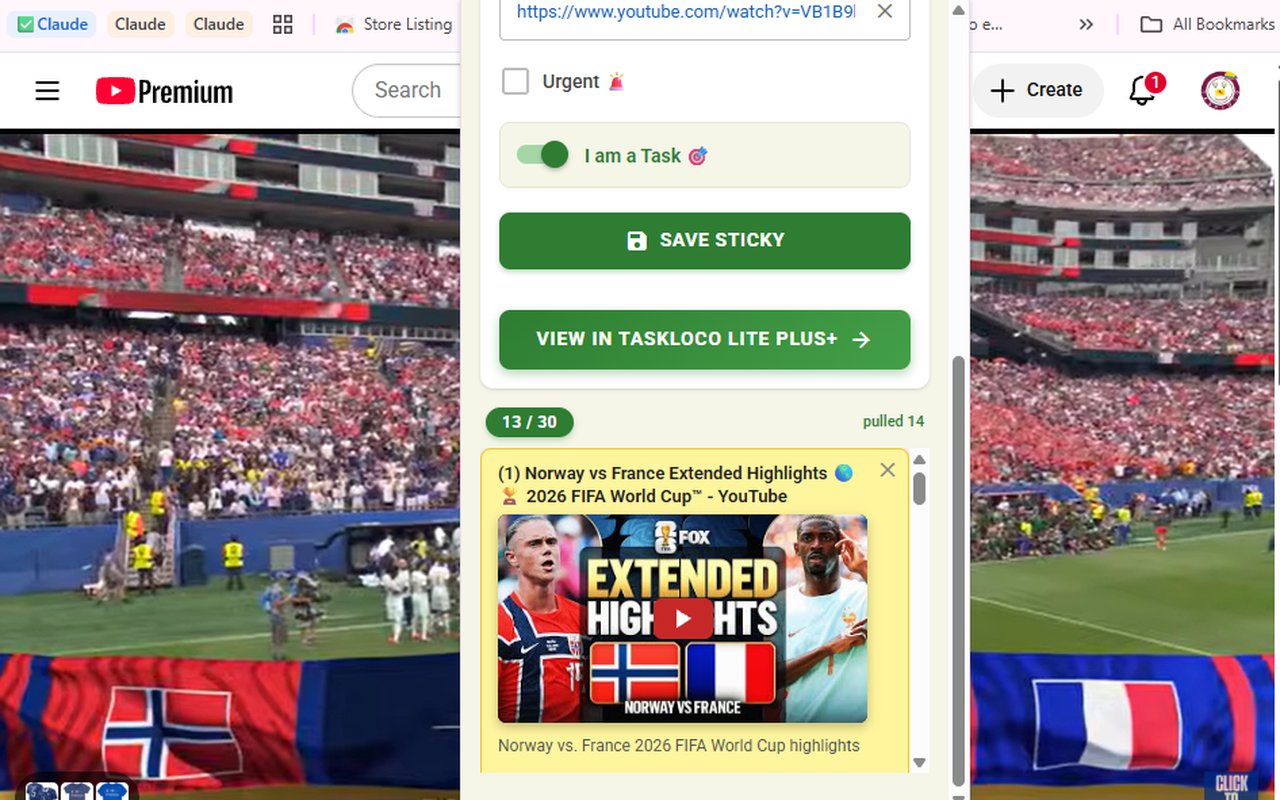
YouTube videos are a first-class citizen: save a YouTube page and the video embeds directly inside the note, so you can play it later without hunting for the original link. That alone makes it more useful for swipe files than most clippers, which either skip video entirely or save a dead thumbnail.
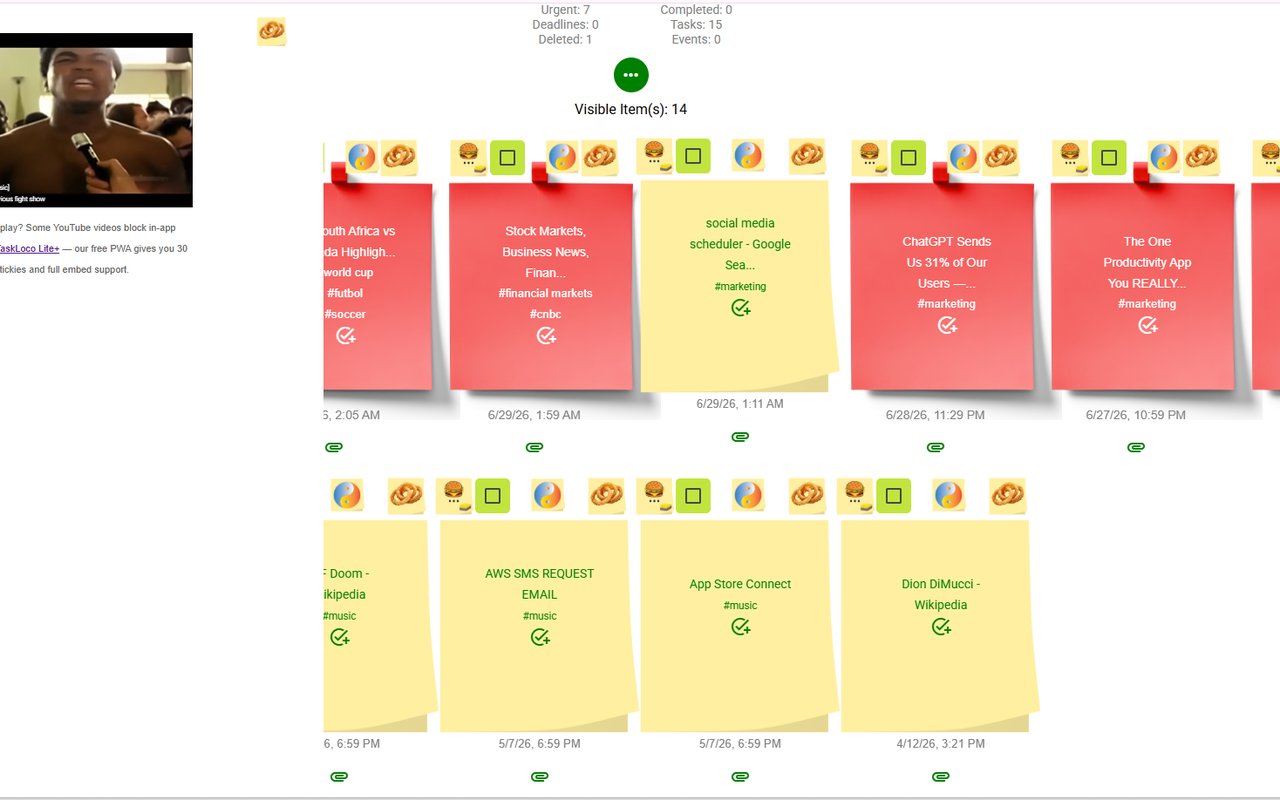
Notes live on a visual wall in TaskLoco — your free account that syncs across Chrome, desktop, iPhone, and Android. You can add tags at any point, search by keyword, and scan your saved items the way you'd thumb through a physical swipe file. Sign in with Google and it takes about thirty seconds to have a working system.
If you've been meaning to build a swipe file for a while and just haven't found a workflow that sticks, the extension removes the main obstacle: the friction of capture. Once saving a page takes one click, you'll actually do it every time you see something worth keeping.
Add the Sticky Note Web Clipper to Chrome for free and start your swipe file today. The extension is free, TaskLoco has a free tier, and your first capture takes about ten seconds.
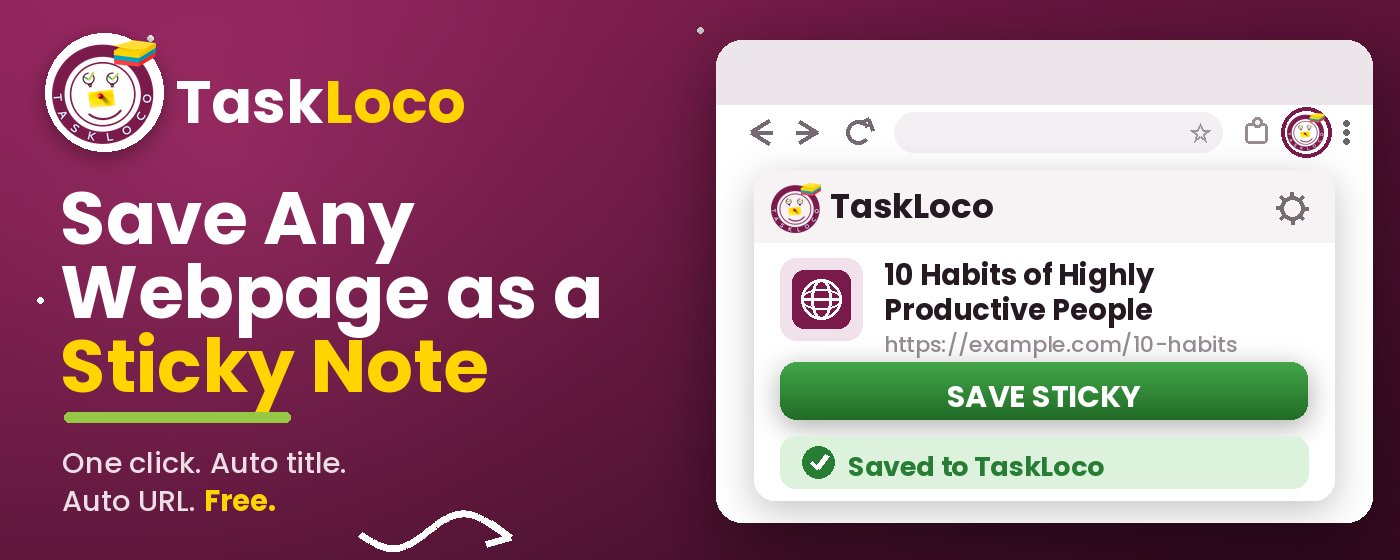
The Sticky Note Web Clipper is free. Install it from the Chrome Web Store, sign in with Google, and every page you clip becomes a sticky note you can find later.
Your clipped notes sync to TaskLoco across Chrome, desktop, iPhone, and Android — also free to start. No credit card to begin.
Get the Free Clipper
Sticky Note Web Clipper
- Free Chrome extension
- One-click save — any page, article, or video
- Title & URL auto-filled
- Tags & search
- Free forever
Synced to TaskLoco
- Sign in free with Google
- Your wall on Chrome, desktop, iPhone, Android
- YouTube videos embed & play in notes
- Visual sticky-note wall
- Free to start
Add It to Chrome — Free
One click saves any page, article, or YouTube video as a sticky note. Title and URL auto-filled.
Add to Chrome — FreeSee TaskLoco in Action
Frequently Asked Questions
What exactly is a swipe file?
A swipe file is a personal collection of web pages, articles, ads, videos, and other content you save as reference or inspiration — for writing, design, research, or competitive analysis. The name comes from old-school copywriters who kept physical folders of ads they admired. The digital version is the same idea: a curated, searchable archive of things you want to revisit and learn from.
How is a swipe file different from a bookmarks folder?
Browser bookmarks are text-only and nested in folders most people never open again. A proper swipe file is visual, tagged, searchable, and actively maintained. You should be able to scan it like a wall of reference cards — not scroll through an alphabetical list of page titles. Tools designed for swipe files (like the Sticky Note Web Clipper) give you a visual layout, tags, and cross-device sync that bookmarks don't.
What kind of content belongs in a swipe file?
Great headlines and copy you want to study, landing pages and product pages with effective structure, research sources and data pages you might cite, competitor pages, YouTube tutorials or talks you need to revisit, and news articles that mark a significant shift in your space. The key filter: can you say specifically why this belongs? If yes, save it. If you're just hoarding, it'll make your swipe file less useful over time.
Can I save YouTube videos to a swipe file?
Yes — and this is one of the things most clippers handle badly. The free Sticky Note Web Clipper embeds YouTube videos directly inside the saved note, so you can play them later without needing to track down the original link. Read-later apps typically strip video or save a dead thumbnail, which makes them poor choices for any swipe file that includes video content.
Is the Sticky Note Web Clipper free?
Yes — the extension is completely free. Install it from the Chrome Web Store, sign in with Google, and start clipping. TaskLoco, where your notes sync, also has a free tier. There's no cost to set up a working swipe file using this tool.
How do I organize a swipe file so I can actually find things later?
Use tags rather than nested folders. Tags let you apply multiple labels to a single saved item — so a landing page can be tagged 'copywriting', 'competitor', and 'headlines' all at once. Then search by tag or keyword when you need something. Combine that with a short weekly review to prune what's no longer relevant, and your swipe file stays searchable instead of becoming a digital junk drawer.
Will my swipe file be accessible on my phone?
If you use the Sticky Note Web Clipper, yes. Notes you save in Chrome sync to your free TaskLoco account, which is available on iPhone, Android, and desktop. So anything you clip while browsing on your laptop is waiting for you on your phone — no extra steps needed.
Born in Brooklyn. Powered by AWS. Your data stays yours.
TaskLoco is available on iPhone, Android, Chrome, and every web browser.