Dwight Eisenhower ran two terms as president, commanded Allied forces in World War II, and reportedly kept a desk that was clean enough to worry his staff. When asked how he managed his time, he offered a deceptively simple idea: distinguish between what is urgent and what is important, because they are rarely the same thing. That distinction became the foundation of what productivity writers later packaged as the Eisenhower Matrix.
The matrix itself is just a two-by-two grid. One axis is urgency — does this need a response now or later? The other is importance — does this move the needle on something that actually matters? The intersection of those two dimensions produces four quadrants, each with a clear prescription. It sounds almost too simple. The reason it still gets written about decades later is that most people, left to their own instincts, collapse both dimensions into one feeling: stress. High stress gets attention. Low stress gets ignored. The matrix forces you to break that habit explicitly, on paper or screen.
Where the Matrix Comes From — and What Eisenhower Actually Said
The clearest version of the principle appears in a 1954 speech Eisenhower gave to the Second Assembly of the World Council of Churches, where he quoted an unnamed college president: "I have two kinds of problems, the urgent and the important. The urgent are not important, and the important are never urgent." Eisenhower was relaying someone else's framing, not coining it himself — a detail that gets dropped every time the matrix gets rebranded with his name.
Stephen Covey formalized the grid in The 7 Habits of Highly Effective People (1989), labeling the four quadrants and arguing that most high performers live primarily in Quadrant II — tasks that are important but not urgent. Planning, relationship-building, skill development, strategic thinking. These are the activities that produce compounding returns but never demand your attention the way a ringing phone does. Covey's contribution was making the quadrant visual and giving people a vocabulary for the distinction Eisenhower had described verbally.
The original idea has no built-in software requirement. Eisenhower used paper. Covey drew boxes in a book. The question of which software supports the matrix is really a question of which software lets you see all your tasks at once, apply consistent labels or filters, and surface the right quadrant at the right time without friction.
How the Four Quadrants Work — and Where Each One Breaks Down
The four quadrants are usually labeled as follows, though different sources use slightly different names:
- Q1 — Urgent and Important (Do): Crises, deadlines, genuine emergencies. Act now. These tasks demand your immediate attention and have real consequences if ignored. The trap here is that Q1 is self-reinforcing — if you live here, you never build the systems that reduce future crises.
- Q2 — Not Urgent but Important (Schedule): Planning, learning, strategy, health, relationship maintenance. This is where compounding happens. It never screams at you, which is why it perpetually gets bumped. The entire point of the matrix is to protect Q2 time deliberately.
- Q3 — Urgent but Not Important (Delegate): Interruptions, many meetings, requests from others that feel pressing but do not advance your goals. The urgency is real, but the importance belongs to someone else. The prescription is to delegate or at minimum batch these rather than letting them fragment Q2 time.
- Q4 — Not Urgent and Not Important (Eliminate): Busywork, time fillers, low-value habits. In theory, cut these. In practice, some Q4 activity is rest and recovery — the model does not account for that distinction cleanly.
The honest limitations of the framework are worth naming. First, urgency and importance are genuinely hard to assess in the moment — what looks like Q3 today may turn out to be Q1 by Friday. Second, the matrix is static. Real work is dynamic: tasks shift quadrants as deadlines approach or context changes. Third, the model assumes you are the one setting priorities. In practice, your manager or a client may override your Q2 plan with a Q1 demand and you have no recourse. Fourth, the framework has no mechanism for dependency management. If Task B cannot start until Task A is done, the quadrant tells you nothing about sequencing.
Software can support the model in a few concrete ways: it can surface all tasks in a single view so nothing gets missed during classification, it can let you tag or color-code by quadrant, and it can remind you when a Q2 task you scheduled is about to become Q1 because you have been ignoring it. What software cannot do is make the judgment call for you. The classification is the intellectual work — the app is just the container.
What to Look for in Software That Supports the Matrix
Because the Eisenhower Matrix is a classification system, the software requirements are simpler than most productivity app marketing suggests. You do not need a built-in "Eisenhower mode" — you need a few foundational capabilities.
A unified task surface. If your tasks are scattered across emails, chat threads, and three different apps, you cannot classify them coherently. The matrix falls apart immediately if you do not have a complete picture. Any serious implementation requires a single inbox or capture layer where everything lands first.
Flexible tagging or filtering. Q1 through Q4 need to be expressible in the tool, whether through labels, colors, custom fields, or note-level flags. You do not need four separate lists — you need the ability to filter your total task set by quadrant on demand.
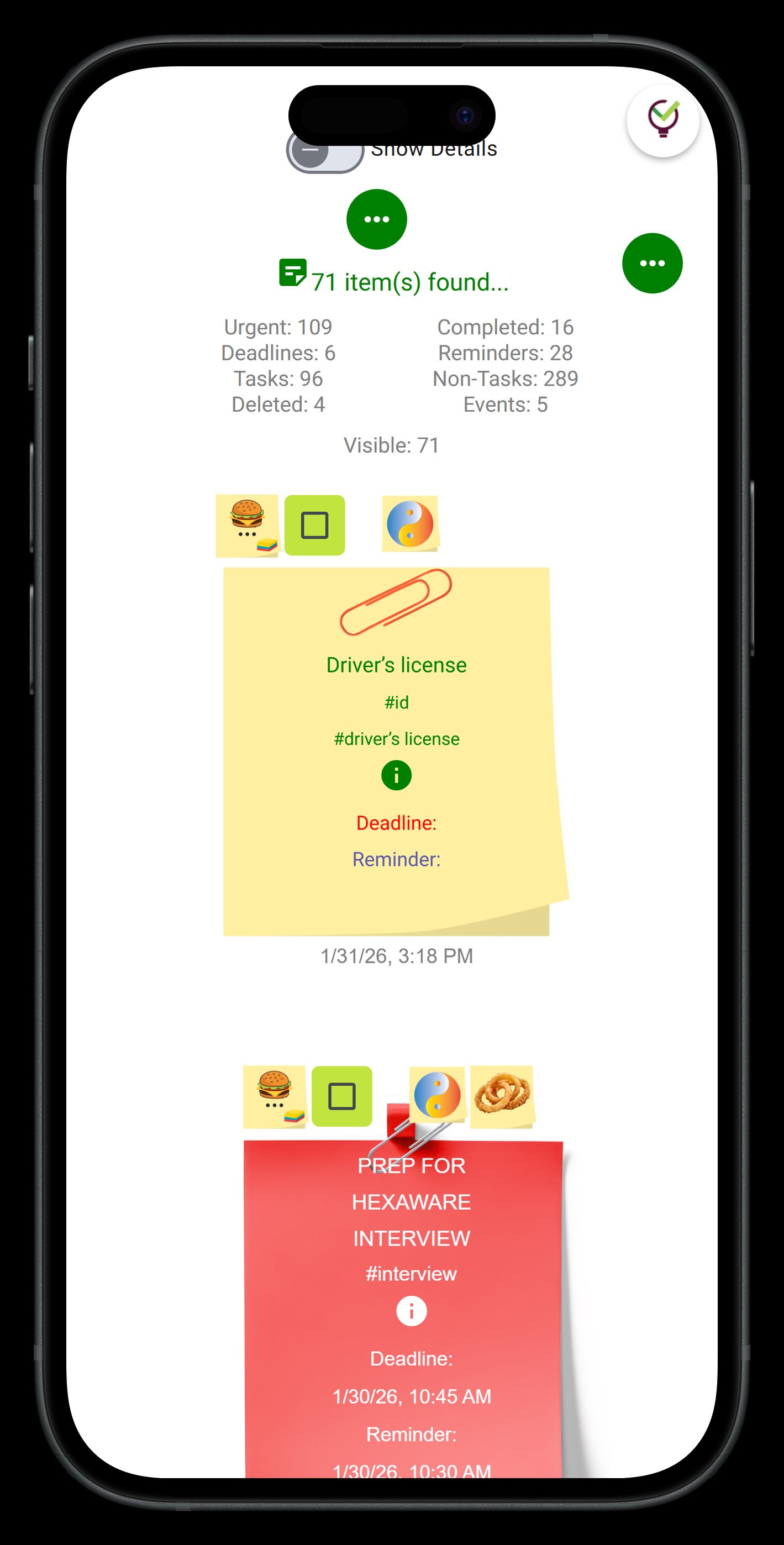
A visual layout that makes the grid intuitive. A flat list of tasks sorted by quadrant label works, but a spatial view where you can see density — how many things are piling up in Q1, how thin Q2 is — gives you faster signal. This is where spatial note tools and wall-style views have a real advantage over pure list interfaces.
Reminders tied to the specific task, not a separate calendar event. A Q2 task you scheduled for Thursday needs a reminder that brings you back to that exact note or task, not a generic calendar block you then have to cross-reference. The reminder should deep-link to the work itself.
Capture speed. If logging a new task takes more than five seconds, you will stop doing it during the day and lose the material for your next classification session. Browser extensions that capture a page in one click, or apps that launch directly to a new note, lower the friction enough that capture becomes habitual.
How TaskLoco Fits the Eisenhower Workflow
TaskLoco is not marketed as Eisenhower Matrix software, and it does not build the four-quadrant grid for you. What it does is cover the practical requirements above in a way that makes the framework genuinely usable day-to-day.
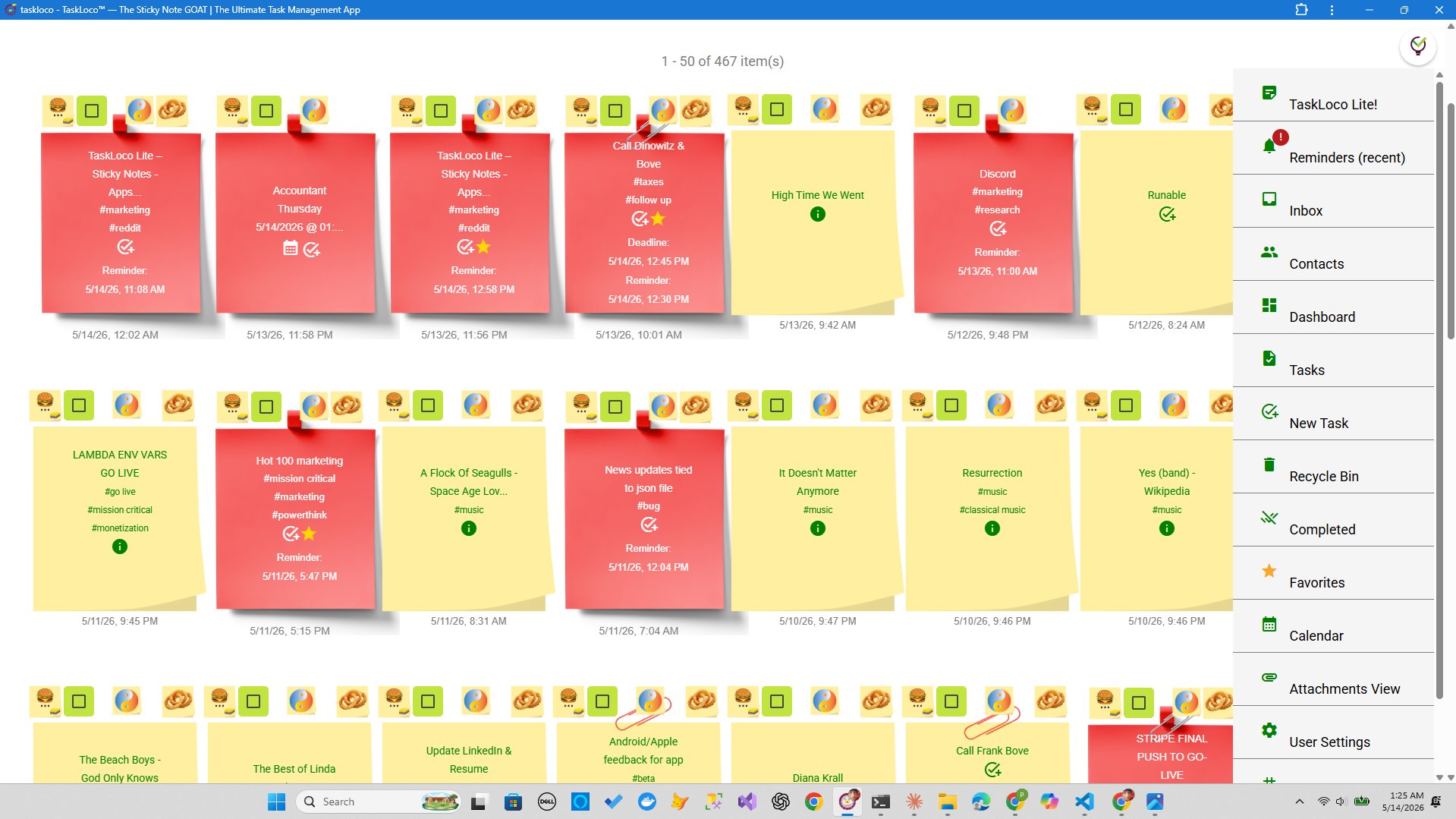
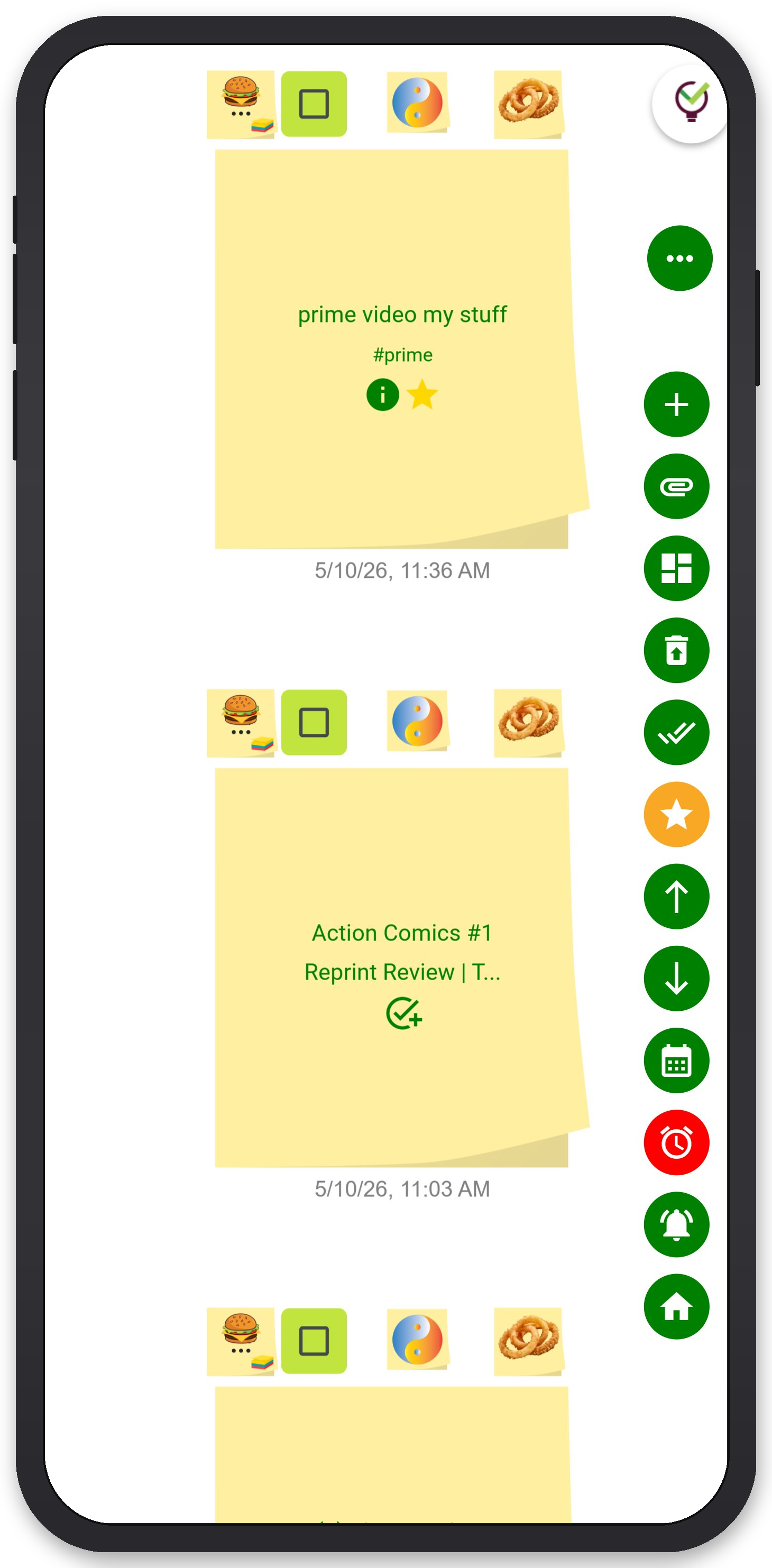
The wall view — a spatial canvas of sticky notes — gives you the density signal a flat list cannot. When Q1 is overloaded, you see it. When Q2 has been empty for two weeks, that visual gap is harder to ignore than a filtered list with zero results. Notes can be color-coded and tagged, so mapping your own Q1–Q4 classification onto the wall takes seconds, not a configuration session.
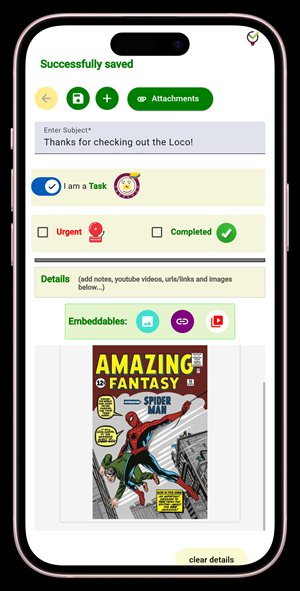
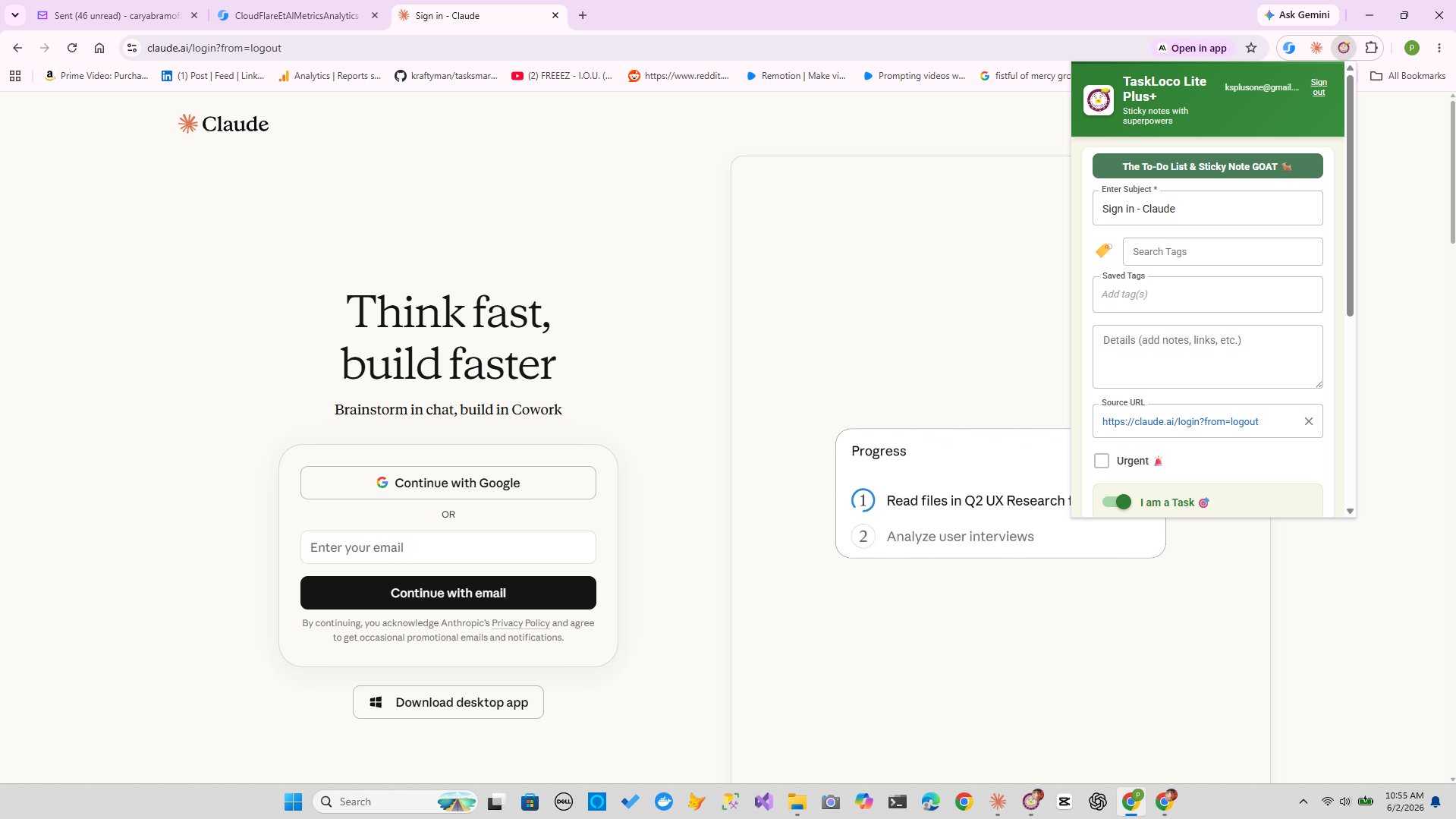
The Chrome extension captures any webpage — a task in a project doc, a support thread, a research article — as a note in one click. That is the capture speed requirement solved. File attachments (10GB included with Premium) mean you can attach the brief, the screenshot, or the reference doc directly to the task note rather than hunting for it later during a review session.
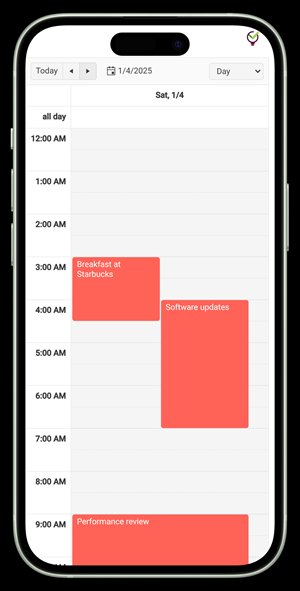
Reminders in TaskLoco deliver a push notification that deep-links back to the original note. That is the mechanism that keeps a scheduled Q2 task from quietly turning into a missed Q1 crisis. You set the reminder when you classify the task as important-but-not-urgent, and the app brings you back to that exact note at the right time.
For teams, shared notes mean Q3 delegation is a first-class action: hand off the note, and the recipient can clone it and make it their own — no permissions overhead, no access level configuration. The model calls for delegation; the tool makes the handoff fast.
TaskLoco does not have Gantt charts, project dependencies, or natural language task input. If your implementation of the Eisenhower Matrix requires those things, you will need a different tool or a combination. But for the core workflow — capture everything, classify once a week, schedule Q2, act on Q1, delegate Q3, cut Q4 — TaskLoco's wall view, tagging, reminders, and capture speed cover the actual requirements.

TaskLoco Premium is regularly $9.99/month per person. Right now, charter members can lock in 50% off the regular price — forever. That means $4.99/month per person today. And if our price ever goes up, you still pay half. Always.
Code CHARTER50 auto-applies at checkout. First 500 spots only — once they're gone, this offer is gone permanently. Act fast while spots last.
Every Premium subscription includes unlimited notes, 10GB file storage, reminders, calendar, and team sharing. Each team member requires a separate subscription. 7-day free trial — no charge until day 8. Cancel anytime.
Free Options: TaskLoco
TaskLoco Lite
- Native iPhone & Android app
- Completely anonymous — no sign-in
- Data stays on your device
- Up to 20 notes
- Free forever
TaskLoco Lite Plus+
- Web app + Chrome extension
- Sign in with Google
- Wall syncs across all devices
- Up to 30 notes
- Free forever
Lock In 50% Off — Forever
7-day free trial. No charge until day 8. CHARTER50 auto-applies at checkout.
🔒 Lock In My Charter SpotSee TaskLoco in Action
Frequently Asked Questions
What is the Eisenhower Matrix?
The Eisenhower Matrix is a four-quadrant framework for sorting tasks by urgency and importance. Urgent and important tasks go in Q1 (do now), important but not urgent go in Q2 (schedule), urgent but not important go in Q3 (delegate), and neither urgent nor important go in Q4 (eliminate). The goal is to spend more time in Q2, where compounding, strategic work happens, and less time reacting to Q1 crises that Q2 neglect creates.
Did Eisenhower actually invent the matrix?
Not exactly. In a 1954 speech, Eisenhower quoted another person's observation that urgent problems and important problems are rarely the same thing. Stephen Covey later formalized the two-by-two grid in The 7 Habits of Highly Effective People (1989) and the productivity world named it after Eisenhower. The underlying principle predates both of them.
Does software need a built-in Eisenhower Matrix feature to support the method?
No. The matrix is a classification system, not a feature. Any tool that gives you a complete view of all your tasks, lets you tag or filter by priority, and makes capture fast enough to be habitual will support the workflow. Built-in "Eisenhower mode" labels are a convenience, not a requirement. What matters more is whether you can see all your tasks in one place and apply consistent quadrant labels quickly.
What are the biggest limitations of the Eisenhower Matrix?
Several honest ones: urgency and importance are genuinely hard to assess in real time; tasks shift quadrants as deadlines approach; the model assumes you control your own priorities, which is often not true in organizations; and the framework has no concept of task dependencies or sequencing. It works best as a weekly review tool applied in a calm moment, not as a real-time filter you apply to every incoming request.
How do you handle Q3 delegation in a task app?
The key is that delegation needs to be fast and self-contained. The best tools let you hand off a task note with all its context — description, attachments, links — so the recipient has everything they need without a follow-up conversation. In TaskLoco, shared notes work like this: the recipient can clone the shared note and own it independently, with no permissions setup required. Q3 delegation becomes a one-step action instead of a process.
How should I use reminders in an Eisenhower Matrix workflow?
Reminders are most useful for Q2 tasks — the important-but-not-urgent work that tends to get bumped by Q1 noise. When you classify a task as Q2 and schedule it, set a reminder at that point. The reminder should bring you directly back to the task itself, not just alert you generically. In TaskLoco, reminders deliver a push notification that deep-links to the original note, so you land exactly where the work is when the time comes.
Is the Eisenhower Matrix good for teams or just individuals?
The framework was designed for individual decision-making, but it adapts to teams reasonably well at the planning level. In a team context, the matrix helps clarify which tasks belong to whom and which requests coming into the team are genuinely important versus just urgent-feeling. The Q3 delegation quadrant becomes especially useful — it surfaces work that should be rerouted rather than absorbed by the most available person. The limitation is that team-level urgency and importance require shared context, so alignment on quadrant definitions matters as much as the tool you use.
Born in Brooklyn. Powered by AWS. Your data stays yours.
TaskLoco is available on iPhone, Android, Chrome, and every web browser.