Dwight Eisenhower ran the Allied invasion of Europe and then the United States for eight years. He was not known for working weekends. The productivity principle that bears his name comes from a single observation he made: the things that feel most urgent are rarely the most important, and the things that are most important rarely feel urgent. That gap — between what demands your attention and what deserves it — is where most people lose their day.
The matrix itself is a 2×2 grid with 'urgency' on one axis and 'importance' on the other. It produces four quadrants, each with a prescription: do it now, schedule it, delegate it, or delete it. Simple on paper. Harder in practice. And almost always taught with a lifeless diagram that makes the whole idea feel like a corporate training slide.
Where the Matrix Actually Comes From
Eisenhower never drew the grid himself. The framework was popularized by Stephen Covey in The 7 Habits of Highly Effective People, who attributed the core idea to Eisenhower's working habits and a 1954 speech in which Eisenhower quoted Northwestern University president James Roscoe Miller: 'I have two kinds of problems, the urgent and the important. The urgent are not important, and the important are never urgent.'
Covey turned that observation into a quadrant. He called the four sections: Q1 (urgent and important), Q2 (not urgent but important), Q3 (urgent but not important), and Q4 (neither). His argument was that most people live in Q1 and Q3 — putting out fires and answering other people's demands — while almost entirely neglecting Q2, which is where strategic work, relationship-building, and meaningful progress actually live.
This distinction matters because urgency is emotional and importance is rational. Urgency triggers a stress response. It feels like it must be handled. Importance requires judgment — you have to decide it matters, and that decision is easy to defer. The matrix creates a moment of deliberate evaluation that most task systems skip entirely.
Why It Works — and Where It Breaks
The framework works because it separates two variables that the brain naturally conflates. When something is urgent, it feels important. When something is important, the lack of urgency makes it feel optional. The matrix forces you to evaluate each dimension independently, which interrupts the cognitive shortcut that sends most people straight to their inbox every morning.
Q2 is the quadrant that Covey considered the key to effectiveness. Exercise, long-term planning, learning new skills, building systems — none of these are urgent, but neglecting them compresses your future. The matrix makes Q2 visible and legitimate. It gives you permission to block time for non-urgent work without feeling like you're shirking something.
But the model has real limits. First, urgency and importance aren't binary — they exist on spectrums, and forcing them into four boxes loses information. A task that is somewhat urgent and moderately important doesn't map cleanly to any quadrant. Second, importance is context-dependent. A task that is Q2 for you might be Q1 for your client. The matrix offers no mechanism for reconciling these perspectives. Third, and most practically: the grid format is static. Real work is dynamic. Priorities shift mid-day, new information arrives, deadlines move. A grid drawn in the morning is often irrelevant by noon.
There's also a delegation problem. Q3 — urgent but not important — is supposed to be delegated. That advice assumes you have someone to delegate to and the bandwidth to hand things off cleanly. For solo workers, freelancers, and anyone without direct reports, Q3 often just becomes Q1 by default. The model was built around a very specific kind of executive workflow and can feel hollow outside of it.
Making It Usable: The Case for Spatial Thinking
The reason the matrix resonates — even when the grid format falls flat — is that it is fundamentally spatial. It asks you to place things relative to each other. That spatial relationship carries meaning that a flat list can't replicate. A ranked to-do list tells you what to do next. The matrix tells you what kind of work you're doing and why, which is a different and richer kind of information.
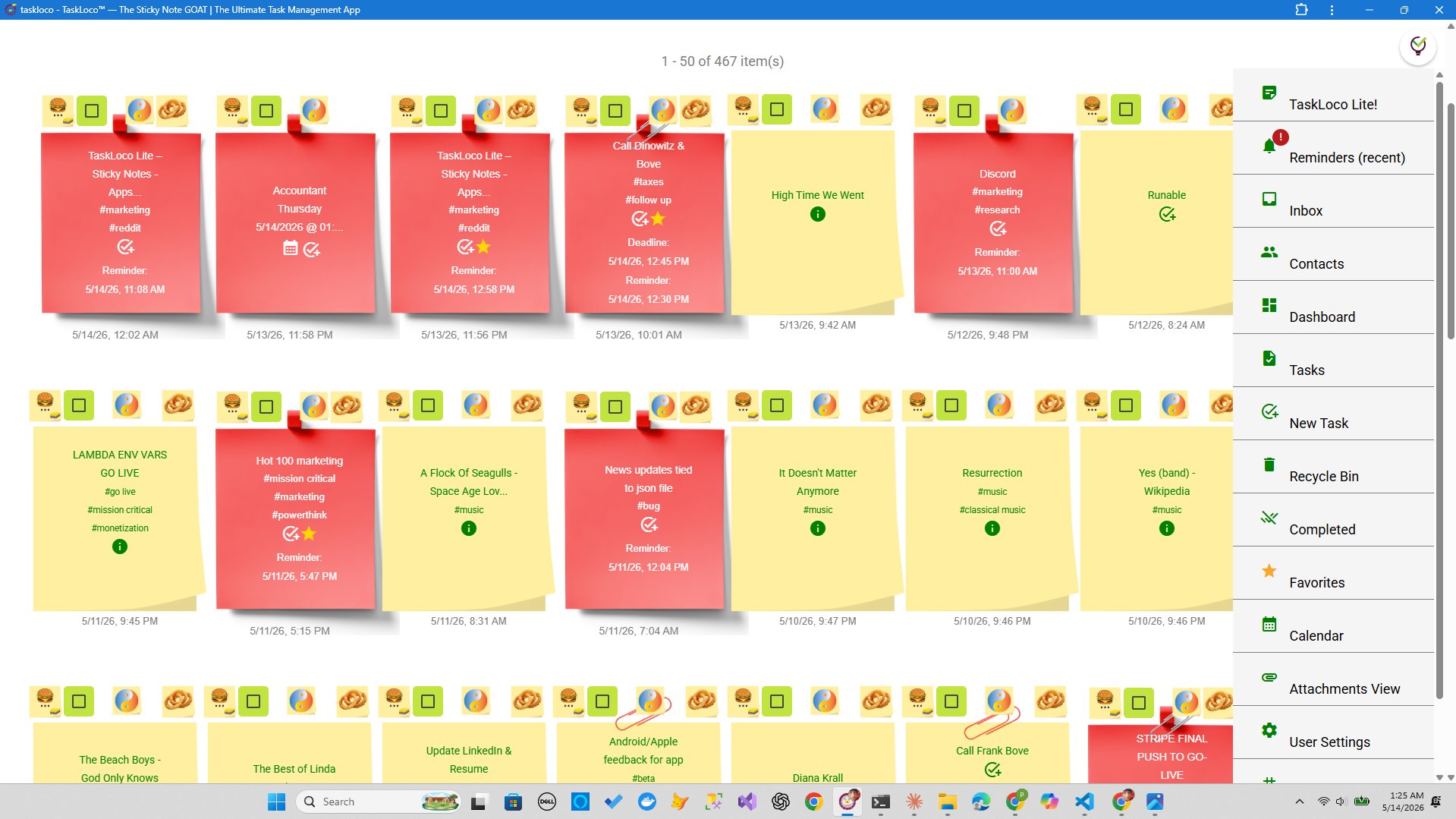
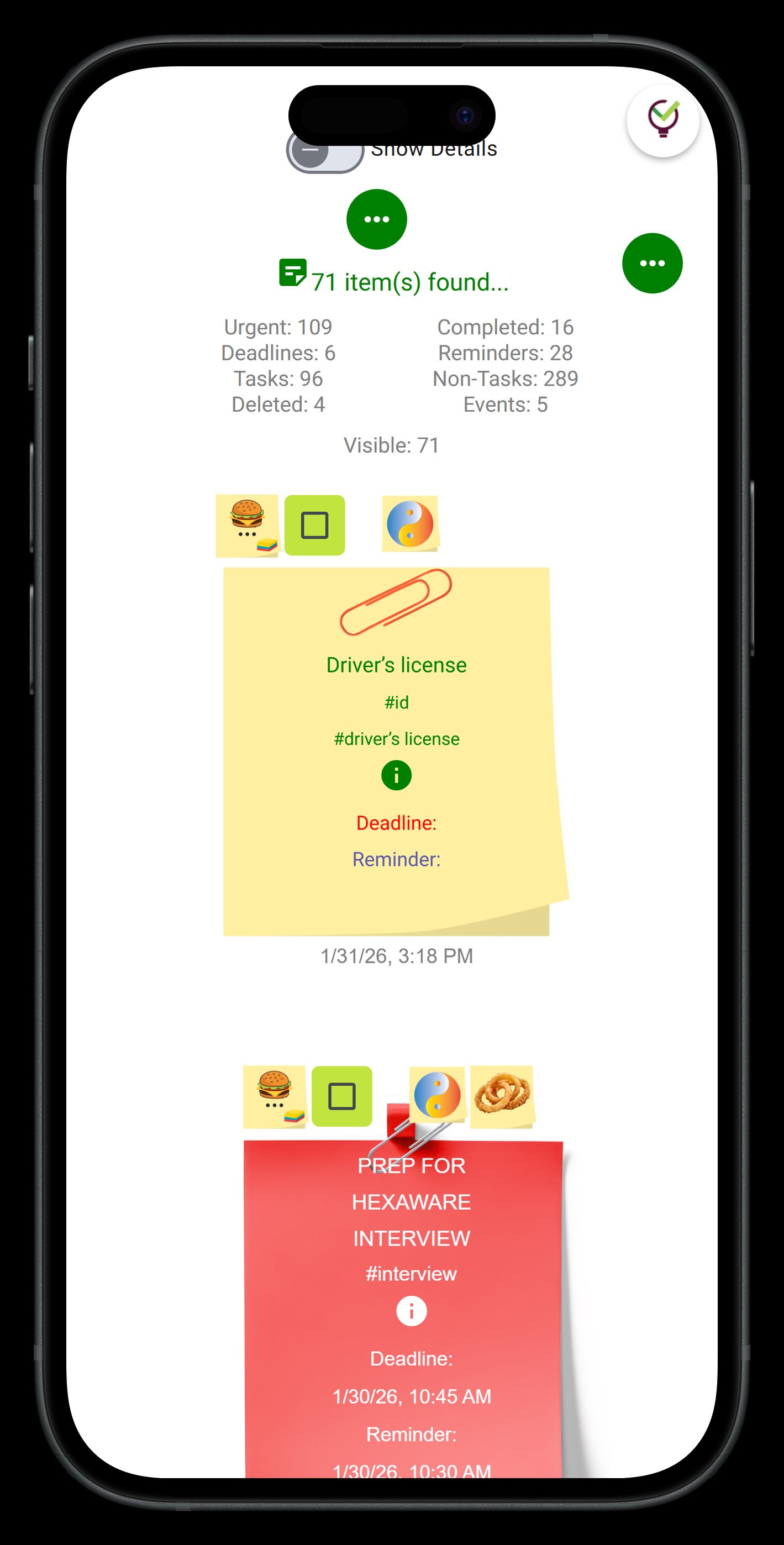
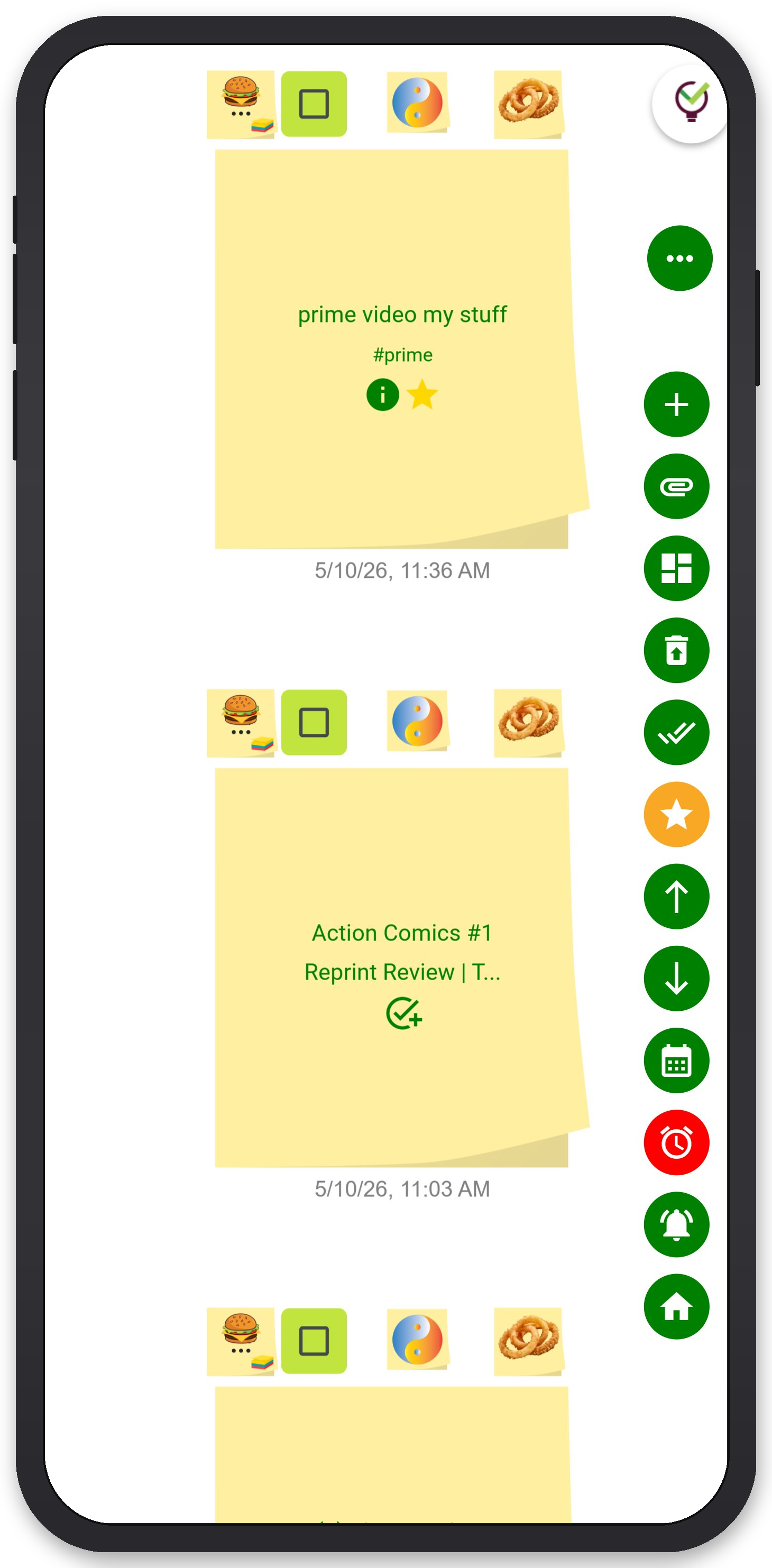
Sticky notes have always been a natural fit for this. Physical sticky notes on a wall let you move items between quadrants as context shifts. They make the matrix a live system instead of a finished document. The act of picking up a note and moving it is a deliberate cognitive gesture — you're re-evaluating, not just relabeling.
The problem with physical notes is obvious: they don't travel, they don't sync, and they disappear. The problem with most digital tools is that they optimize for list formats, not spatial ones. They let you tag tasks as 'high priority' but they don't let you see the relationship between tasks the way a wall does.
The most effective people who use the Eisenhower Matrix don't rigidly maintain a perfect four-quadrant grid. They use the framework as a mental filter — a quick question they ask before adding anything to their day: is this urgent, important, both, or neither? The grid is training wheels for developing that judgment. Once the habit is formed, the judgment happens automatically, and the tool just needs to support fast capture and flexible organization.
TaskLoco Premium is regularly $9.99/month per person. Right now, charter members can lock in 50% off the regular price — forever. That means $4.99/month per person today. And if our price ever goes up, you still pay half. Always.
Code CHARTER50 auto-applies at checkout. First 500 spots only — once they're gone, this offer is gone permanently. Act fast while spots last.
Every Premium subscription includes unlimited notes, 10GB file storage, reminders, calendar, and team sharing. Each team member requires a separate subscription. 7-day free trial — no charge until day 8. Cancel anytime.
Free Options: TaskLoco
TaskLoco Lite
- Native iPhone & Android app
- Completely anonymous — no sign-in
- Data stays on your device
- Up to 20 notes
- Free forever
TaskLoco Lite Plus+
- Web app + Chrome extension
- Sign in with Google
- Wall syncs across all devices
- Up to 30 notes
- Free forever
Lock In 50% Off — Forever
7-day free trial. No charge until day 8. CHARTER50 auto-applies at checkout.
🔒 Lock In My Charter SpotSee TaskLoco in Action
Frequently Asked Questions
What are the four quadrants of the Eisenhower Matrix?
The four quadrants are defined by combining two dimensions — urgency and importance — into a 2×2 grid:
- Q1 — Urgent and Important: Do it now. Crises, deadlines, genuine emergencies.
- Q2 — Not Urgent but Important: Schedule it. Strategic work, planning, relationship-building, learning.
- Q3 — Urgent but Not Important: Delegate it if possible. Interruptions, many meetings, others' requests that feel pressing but don't advance your own goals.
- Q4 — Not Urgent and Not Important: Eliminate it. Busywork, time-wasters, low-value habits.
Covey's argument was that Q2 is where effectiveness lives, and most people underinvest in it because Q1 and Q3 feel more immediate.
Did Eisenhower actually invent the matrix?
Not exactly. Eisenhower's working habits and a 1954 speech inspired the idea, but the 2×2 grid format was developed and popularized by Stephen Covey in The 7 Habits of Highly Effective People. Covey credited Eisenhower's observation — that urgent things are rarely important and important things are rarely urgent — as the conceptual foundation. The matrix is Covey's operationalization of Eisenhower's instinct.
What is the difference between urgent and important?
Urgency is about time pressure — something demands a response now, or soon, or it will have consequences. Importance is about impact — something contributes meaningfully to your goals, values, or responsibilities. The confusion between the two is the central problem the matrix addresses. Urgent things trigger an emotional response; they feel like they must be handled. Important things require a judgment call; they can always wait until later, which is why they often do — sometimes permanently. The matrix forces you to evaluate each dimension separately before deciding how to respond.
What are the biggest weaknesses of the Eisenhower Matrix?
Several real limitations are worth knowing:
- Binary axes: Urgency and importance exist on spectrums. The four-box format loses nuance for tasks that are 'sort of' urgent or 'moderately' important.
- Context dependence: What's important varies by role, relationship, and moment. The matrix offers no way to reconcile competing perspectives on importance.
- Delegation assumption: Q3 advises delegation, but that only works if you have someone to delegate to. Solo workers often find Q3 just becomes Q1 by default.
- Static format: A grid drawn in the morning can be completely outdated by afternoon. The matrix is better used as a mental filter than a fixed document.
How do sticky notes work with the Eisenhower Matrix?
Sticky notes — physical or digital — suit the matrix well because the framework is inherently spatial. Placing a note in a quadrant is a deliberate act of evaluation. Moving a note when priorities shift is a deliberate re-evaluation. That physical or visual gesture is more cognitively meaningful than changing a tag in a list. A wall of notes organized by quadrant makes the distribution of your work visible at a glance — how much is Q1 versus Q2, whether Q4 has crept in — in a way that a ranked list simply doesn't communicate.
Can I use the Eisenhower Matrix without drawing a grid?
Yes — and most experienced practitioners do. The grid is a teaching device that makes the framework concrete when you're learning it. Once the habit of asking 'is this urgent? is this important?' is internalized, the judgment happens automatically. You don't need a formal four-quadrant layout; you just need a capture system fast enough to hold tasks before they age into emergencies, and enough visual flexibility to express priority relationships spatially. A spatial note wall does this without requiring you to maintain a rigid grid format.
Does TaskLoco support the Eisenhower Matrix approach?
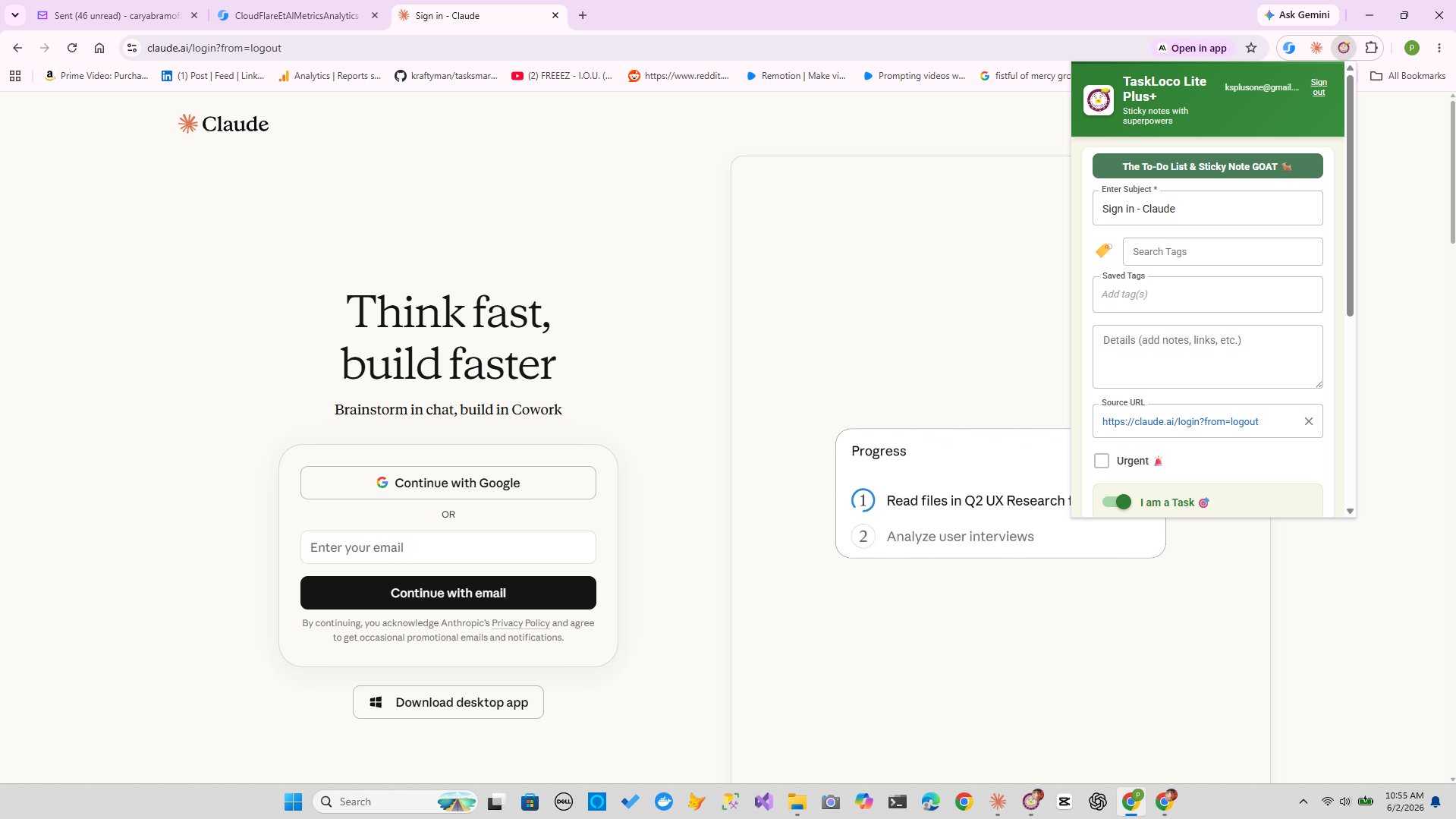
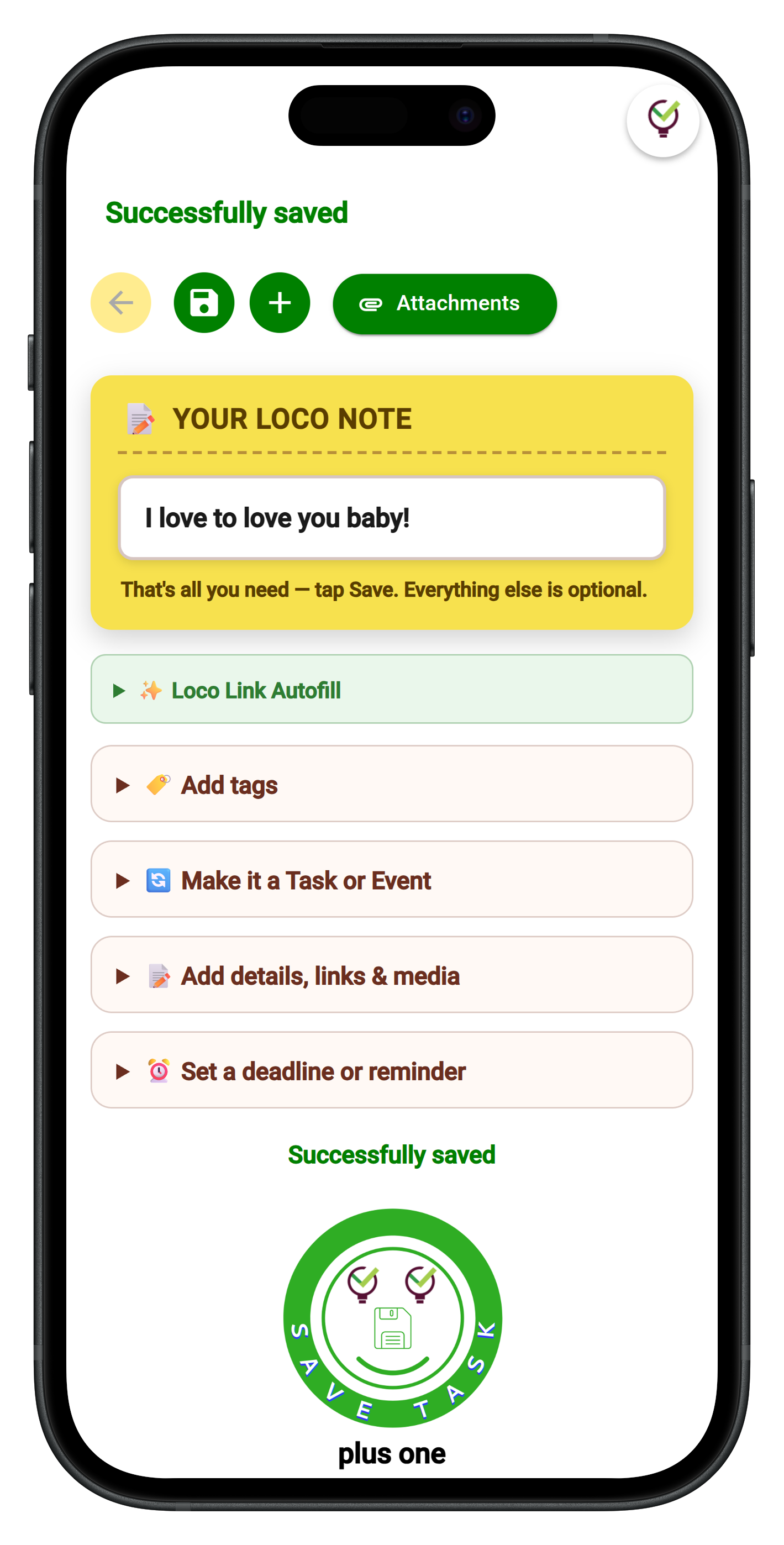
TaskLoco's spatial note wall is a natural fit for Eisenhower-style thinking. You can arrange notes into quadrant groups, use proximity to express priority relationships, and move notes as context shifts — all without a rigid grid forcing a layout you have to maintain. The Chrome extension captures tasks in one click before they get forgotten or default-urgent. Premium reminders deep-link back to the original note, so scheduled Q2 work surfaces with full context attached. TaskLoco Lite is free on iPhone and Android with no sign-in required. Lite Plus+ is free on the web with sync across devices. Premium adds unlimited notes, reminders, file storage, calendar, and team sharing — with a 7-day free trial and no charge until day 8. $9.99/month per person (currently $4.99/month per person for first 500 charter members with code CHARTER50)
Born in Brooklyn. Powered by AWS. Your data stays yours.
TaskLoco is available on iPhone, Android, Chrome, and every web browser.