You've reorganized your task list three times this week. You've color-coded your goals, mapped out your project phases, and written out every step in satisfying detail. And yet — the actual thing you needed to do still hasn't been done. If that sounds familiar, you're not lazy. You're doing something your brain finds genuinely comfortable: planning.
There's a reason planning feels so good. It activates the same reward circuits as accomplishment, lets you imagine success without risking failure, and gives you the feeling of forward motion without any of the friction of real action. Understanding the psychology behind this isn't about beating yourself up — it's about recognizing a very human pattern so you can work with it instead of being trapped by it.
The Psychology: Why Your Brain Prefers the Map to the Territory
Neuroscience has a phrase for this: anticipatory reward. When you plan — when you write out steps, imagine outcomes, and organize information — your brain releases dopamine. The same dopamine it releases when you actually accomplish something. This is why making a to-do list can feel almost as satisfying as completing the items on it.
Planning also creates what psychologists call a sense of agency. You feel like you're in control. And that feeling matters enormously to your nervous system. The moment you move from planning into doing, you give up some of that control. You might get stuck. You might make a mistake. You might realize the thing is harder than you thought. Planning keeps all of those possibilities safely in the future.
There's also the concept of substitution — when your brain replaces a harder goal (finish the project) with an easier proxy (plan the project perfectly). The proxy feels meaningful. It's related to the real goal. But it's not the real goal. This is sometimes called productive procrastination, and it's particularly sneaky because it doesn't feel like procrastination at all.
Research by Peter Gollwitzer on implementation intentions found something counterintuitive: people who told others about their goals before starting were less likely to achieve them than those who kept quiet and started. Announcing your plan — or perfecting it in writing — can create a kind of premature closure, a feeling that you've already done some of the work.
How to Tell the Difference Between Useful Planning and Avoidance
Not all planning is avoidance. Some of it is genuinely necessary. The distinction comes down to one question: Is this plan enabling action, or delaying it?
Useful planning is time-bounded. You spend 20 minutes outlining the three main steps of a project, then you start step one. Avoidance planning is open-ended. You keep refining, adding detail, restructuring, and finding one more thing to clarify before you can possibly begin.
Here are some honest signals that you've crossed the line:
- You've planned the same thing more than twice. A second pass is normal. A fifth pass is a red flag.
- Your plan has become more detailed than the work itself. If the outline is longer than the first draft would be, you're over-planning.
- You feel anxious when someone asks you to just start. That resistance is worth paying attention to — it's often fear dressed up as thoroughness.
- You're planning in order to feel ready, but the feeling never arrives. Readiness is usually a myth. Most people feel ready only in retrospect.
- You're optimizing tools instead of using them. Switching apps, redesigning your system, or researching better methods are all forms of meta-work — work about work.
The underlying emotion is almost always some combination of fear and uncertainty. Fear of doing it wrong. Fear of finding out it's harder than expected. Fear that when you start, you'll discover something uncomfortable about the project — or about yourself.
Breaking the Cycle: Practical Ways to Move from Planning into Action
The goal isn't to stop planning. It's to keep planning in its lane — a tool you use, not a space you live in. These approaches work:
Define a minimum viable first action. Not the whole project. Not even the first phase. Just the single smallest thing you could do that counts as starting. Write one sentence. Make one phone call. Open the file. The act of starting dismantles a surprising amount of resistance.
Set a planning budget. Give yourself a fixed amount of time to plan — 15 minutes, 30 minutes, an hour — and when it's up, you're done planning. Whatever you have is enough to start. This makes planning feel less like a stage and more like a sprint.
Separate your plan from your workspace. If your plan and your doing space are the same document or the same app, it's easy to keep slipping back into plan-mode when the doing gets hard. Some people find it useful to physically close the plan once they start, so the plan stops being a comfort object.
Notice the moment resistance appears. There's usually a specific point where planning starts to function as avoidance — often right before the hardest part of the work. Learning to recognize that transition is half the battle. When you catch yourself adding one more detail to a plan you've already made, ask: What am I avoiding right now?
Use commitment devices. Tell someone what you'll have done by a specific time. Set a visible countdown. Make the cost of not starting concrete. The goal is to make inaction feel less safe than action — not through self-criticism, but through external structure.
Accept imperfect starting conditions. You will never have enough information. The plan will never be complete. The conditions will never be ideal. Most great work started before the person doing it felt ready. Done and imperfect beats planned and perfect every time.
How TaskLoco Helps You Plan Less and Do More
One practical reason people over-plan is that their tools invite it. Project management platforms with nested subtasks, multiple views, and endless configuration options make planning feel like the work. When your system is complex, organizing it becomes a job in itself.
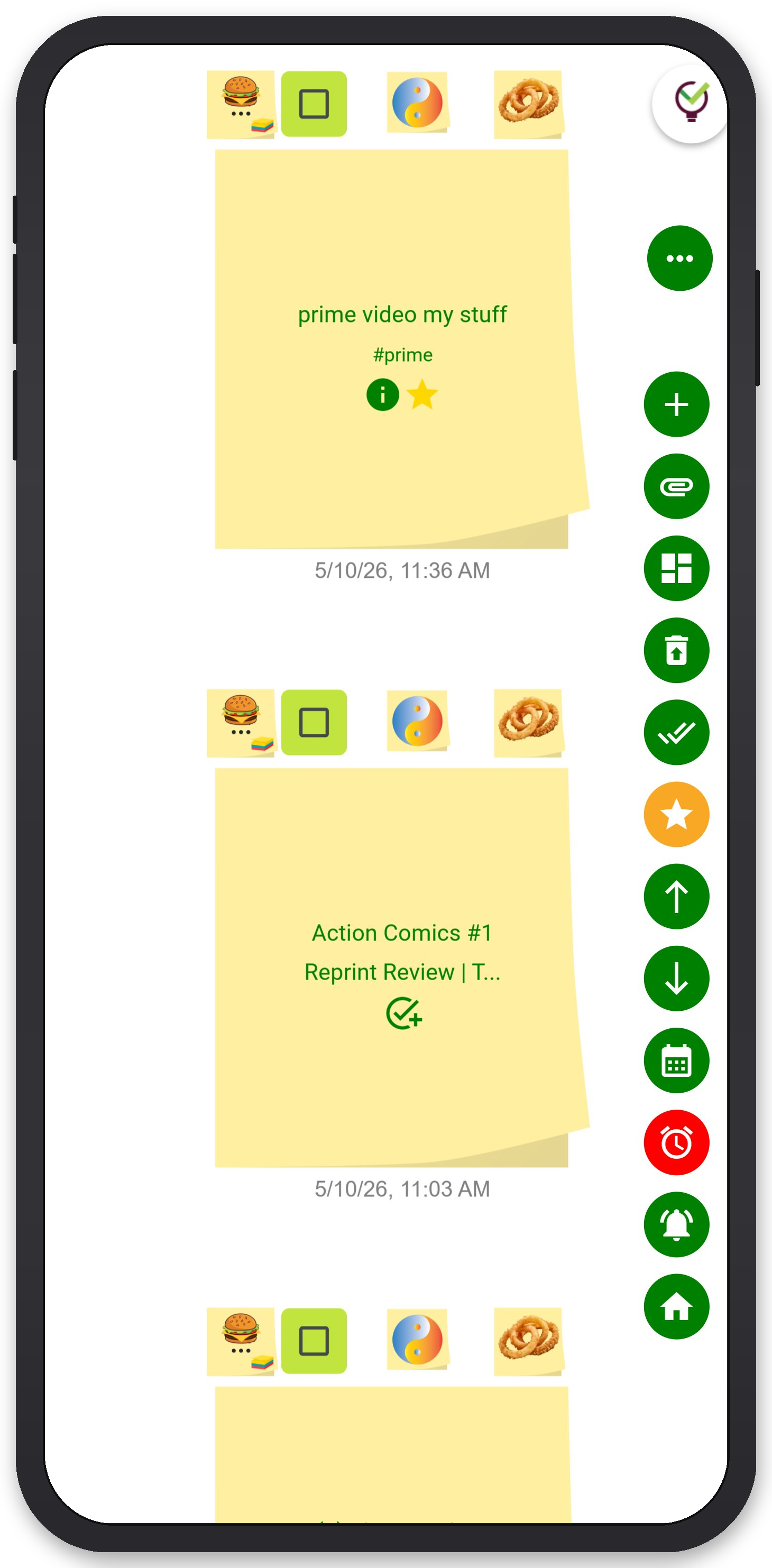
TaskLoco is built around sticky notes — which sounds simple, and it is, deliberately. A sticky note has a natural size limit. You can't fit an entire project plan on a note. What you can fit is a clear next action, a quick list, a reminder, or a file you need. That constraint turns out to be useful.
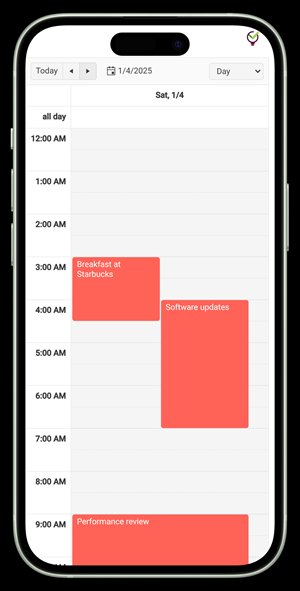
With TaskLoco Premium, you get reminders that fire as push notifications straight to your phone or computer — each one deep-linking back to the exact note it came from, so you land directly in context without having to hunt. You get a calendar view to see when things are actually due. You get 10GB of file storage to attach the reference material directly to the task, so you're not digging through email when it's time to start. And you get full team sharing — shared notes work like emails: recipients clone the note and make it their own, no permissions or access levels needed.
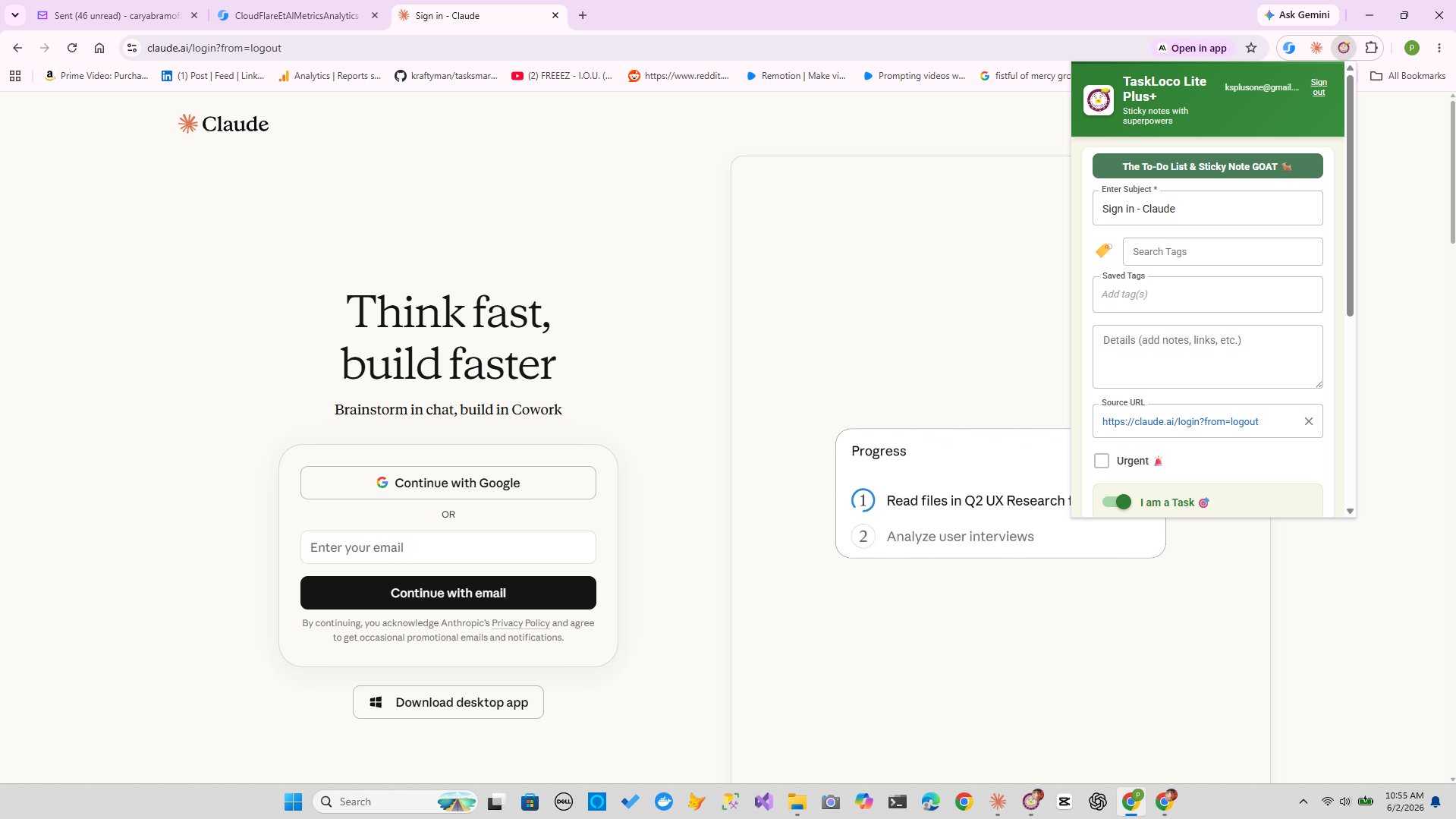
The Chrome extension captures any webpage into a note in one click — useful when research threatens to turn into an all-day detour. The idea goes into a note, and you keep moving.
TaskLoco won't stop you from over-planning if you're determined to. But its format tends to push you toward action. Notes are light. They're made to be acted on and crossed off, not endlessly refined.
TaskLoco Premium is regularly $9.99/month per person. Right now, charter members can lock in 50% off the regular price — forever. That means $4.99/month per person today. And if our price ever goes up, you still pay half. Always.
Code CHARTER50 auto-applies at checkout. First 500 spots only — once they're gone, this offer is gone permanently. Act fast while spots last.
Every Premium subscription includes unlimited notes, 10GB file storage, reminders, calendar, and team sharing. Each team member requires a separate subscription. 7-day free trial — no charge until day 8. Cancel anytime.
Free Options: TaskLoco
TaskLoco Lite
- Native iPhone & Android app
- Completely anonymous — no sign-in
- Data stays on your device
- Up to 20 notes
- Free forever
TaskLoco Lite Plus+
- Web app + Chrome extension
- Sign in with Google
- Wall syncs across all devices
- Up to 30 notes
- Free forever
Lock In 50% Off — Forever
7-day free trial. No charge until day 8. CHARTER50 auto-applies at checkout.
🔒 Lock In My Charter SpotSee TaskLoco in Action
Frequently Asked Questions
Is planning actually a form of procrastination?
It can be. When planning becomes a way to feel productive without taking real risk, it functions as procrastination — sometimes called productive procrastination. The difference between useful planning and avoidance planning is whether the plan is enabling action or replacing it. If you've planned the same project multiple times without starting, that's worth examining honestly.
Why do I keep making to-do lists but never finishing them?
Making lists triggers a dopamine release similar to completing tasks, which is why the act of listing can feel satisfying enough to repeat. If your lists keep growing but tasks aren't getting done, the problem usually isn't the list format — it's that the items on the list are too vague, too large, or emotionally loaded. Break each item down to the smallest concrete action required to start, and notice whether a specific task is consistently avoided. That task usually holds the answer.
How much planning is too much?
A useful rule: if your plan has taken longer to create than the first step of the work would take to do, you've over-planned. More practically — if you've revisited and refined the same plan more than twice without taking action between revisions, planning has probably crossed into avoidance. Set a time limit for planning, honor it, and start with whatever you have when it ends.
What is the psychology behind needing everything perfect before starting?
Perfectionism before starting is usually a form of fear management. If you start imperfectly, you might confirm a worry about your own ability or the quality of your work. Waiting for perfect conditions or a perfect plan keeps that threat at a distance. The problem is that perfect conditions never arrive. Research consistently shows that action produces better outcomes than extended preparation, in part because real-world feedback is far more useful than any plan made in advance.
Why does writing down tasks feel like doing them?
Because your brain responds to the symbolic representation of progress. Writing a task activates cognitive processes related to planning and intention, which partially satisfies the drive to accomplish. This is related to what Peter Gollwitzer calls symbolic self-completion — telling yourself (or the world) about a goal can reduce the motivation to actually pursue it. Writing tasks down is genuinely useful for memory and prioritization, but it should be the beginning of a workflow, not a substitute for one.
How do I stop over-researching and actually start?
Set a research budget — a fixed number of sources, a time limit, or both — and commit to starting once it's exhausted. Research has diminishing returns quickly, and the feeling that you need more information is often a cover for not wanting to face the harder work of producing something. A useful reframe: treat your first attempt as research. The doing will teach you far more than additional planning ever could.
Can a note-taking app actually help with the planning-vs-doing problem?
The right tool can reduce friction in both directions. An overly complex tool invites over-planning because setting it up and maintaining it becomes a task in itself. A simpler tool — one that shows you what you need to do without asking you to configure it first — keeps the focus on action. The best note or task system is the one you spend the least time managing and the most time acting on. $9.99/month per person (currently $4.99/month per person for first 500 charter members with code CHARTER50)
Born in Brooklyn. Powered by AWS. Your data stays yours.
TaskLoco is available on iPhone, Android, Chrome, and every web browser.