You finish a task. You tap the checkbox. Something tiny but unmistakable happens in your chest. That's not a personality quirk — that's your brain doing exactly what it was built to do. Dopamine, the neurotransmitter most people associate with pleasure, is actually more precisely a signal for anticipated reward. And task completion is one of the cleanest triggers for it that everyday life offers.
Understanding why this happens — and how task apps can either feed or starve that loop — changes how you think about productivity tools entirely. The best ones aren't just list managers. They're tiny dopamine delivery systems, whether their designers knew it or not.
What Dopamine Actually Does (It's Not What You Think)
The popular shorthand is that dopamine = pleasure. That's close, but not quite right. Neuroscientist Kent Berridge drew a now-famous distinction between wanting and liking — and dopamine is firmly on the wanting side. It's the neurochemical that drives you toward a goal, not the one that makes you feel good once you're there.
What this means practically: dopamine fires most strongly in anticipation of reward, and it fires again — briefly — at the moment of completion, especially when the outcome matches or exceeds expectation. That second spike is the 'hit.' It's small. It's fast. But it's real, and your brain records it as confirmation that the behavior was worth doing.
Wolfram Schultz's foundational research on dopamine neurons showed that these cells respond to prediction errors — moments when reality is better than expected. Checking off a task you'd been procrastinating on hits harder than checking off one you breezed through. The contrast matters. The brain is constantly running a model of the future, and every completion is a data point that says: yes, this effort was worth it.
Why Task Apps Succeed or Fail at This Loop
Here's the problem with most task apps: they're designed around capture and organization, not around the completion experience. They optimize for the inbox, not the checkbox. And that is, neurochemically speaking, a significant mistake.
If completing a task requires navigating three submenus, archiving the item, and watching it disappear into a 'Done' folder you'll never open — the feedback loop is broken. The brain gets no clean spike. The action dissolves into interface friction. Over time, users stop feeling the reward, and the app starts to feel like a chore rather than a tool.
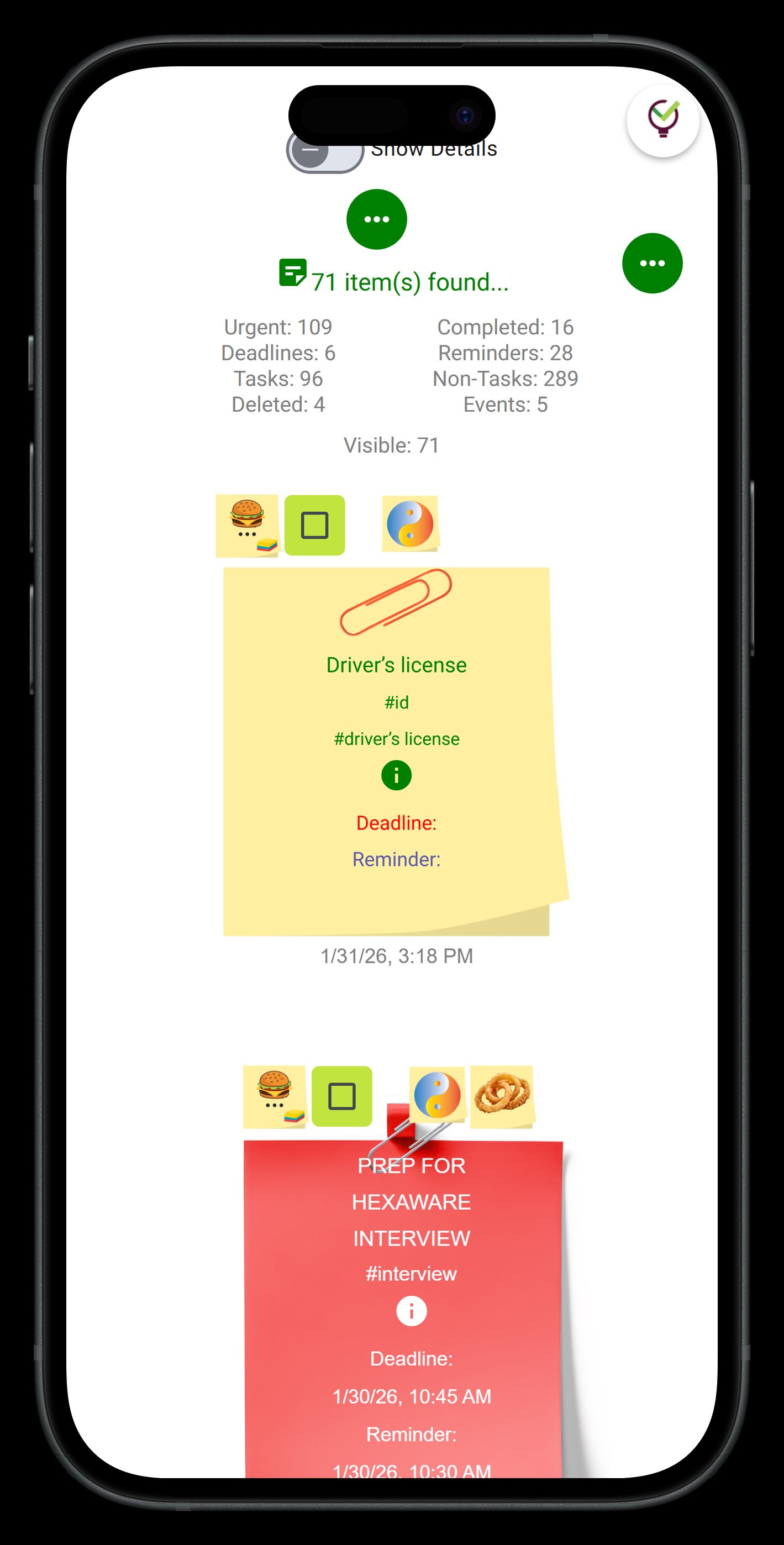
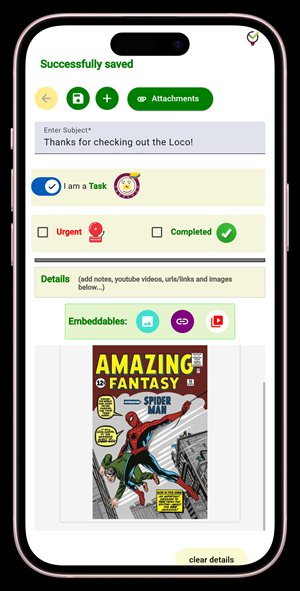
The apps that generate real satisfaction tend to share a few design traits. Tasks are visible before completion — you see them, you anticipate them, the wanting system fires. The act of completion is immediate and tactile — a tap, a swipe, a satisfying animation. And the finished state is acknowledged, not just hidden. Progress is made legible to the brain.
Breaking tasks into smaller pieces amplifies this effect. Research on what psychologists call the 'progress principle' — documented extensively by Teresa Amabile and Steven Kramer — shows that even small wins produce measurable boosts in motivation and mood. A list of ten small tasks you can actually finish beats one massive project item that never moves.
Where the Loop Breaks Down
The same neurochemistry that makes task completion rewarding can be hijacked against you. Two failure modes are especially common.
The first is list inflation. When a task list grows faster than you can clear it, the ratio of completion to accumulation flips negative. Instead of a dopamine loop, you get a cortisol response — low-grade stress from a backlog that feels impossible. The list itself becomes the enemy. Apps that make it too easy to capture without enforcing any discipline around scope tend to create this problem.
The second is false completion. This is subtler. Moving a task to 'In Progress,' adding a subtask, commenting on a ticket — these actions generate a ghost of the completion signal without actually closing anything. Heavy project management tools can be especially prone to this because they offer so many intermediate states that it's easy to stay busy without ever finishing. The wanting system stays permanently activated; the completion spike never comes.
There's also the question of task granularity. Neuroscience researcher Roy Baumeister's work on ego depletion (however contested the replication has been) points to a real phenomenon: decision fatigue is real, and a task system that requires constant re-evaluation of priority and next actions burns the very cognitive fuel you were trying to save. The ideal system minimizes meta-work — thinking about your tasks — in favor of just doing them.
How TaskLoco Fits This Picture
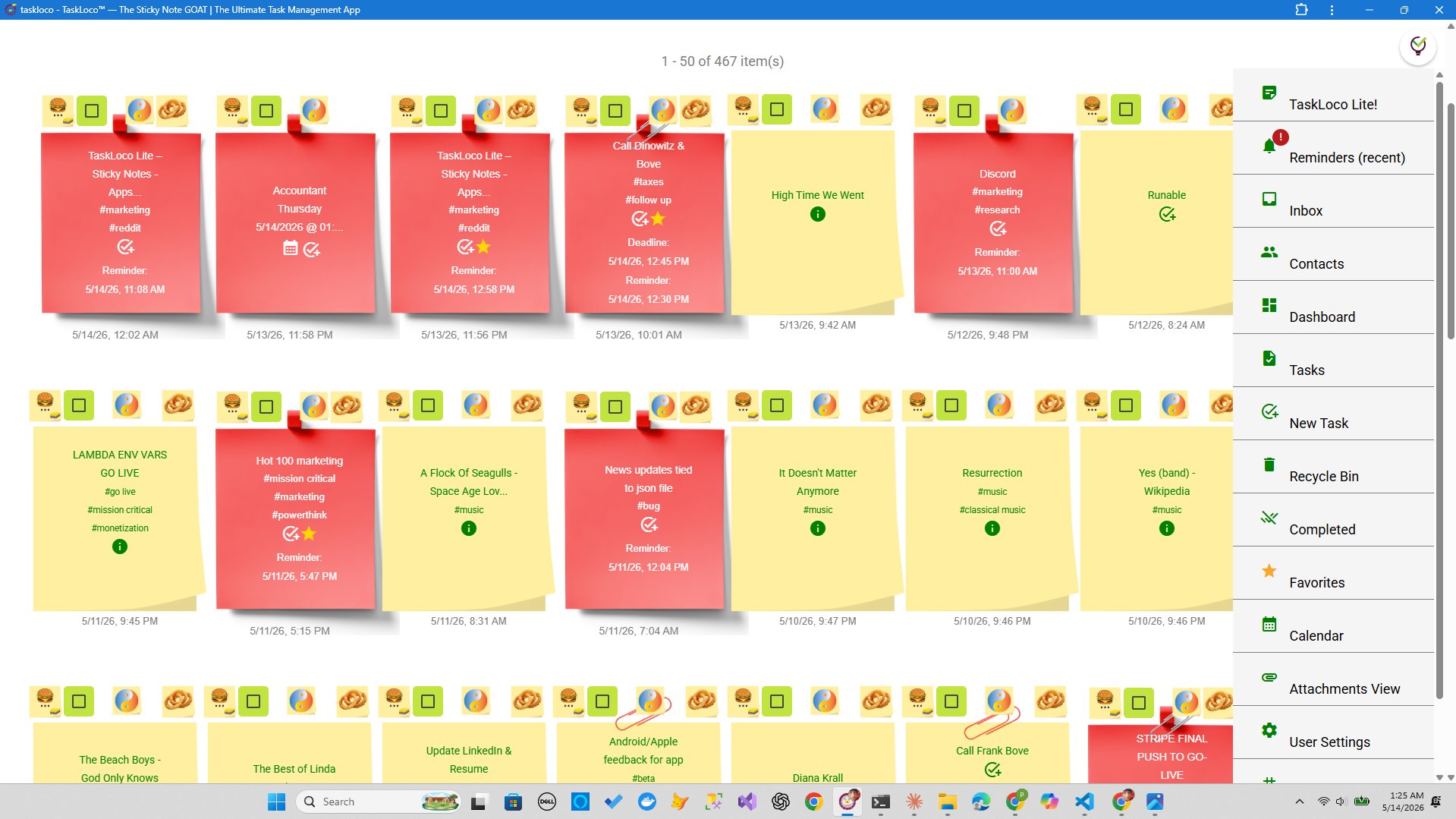
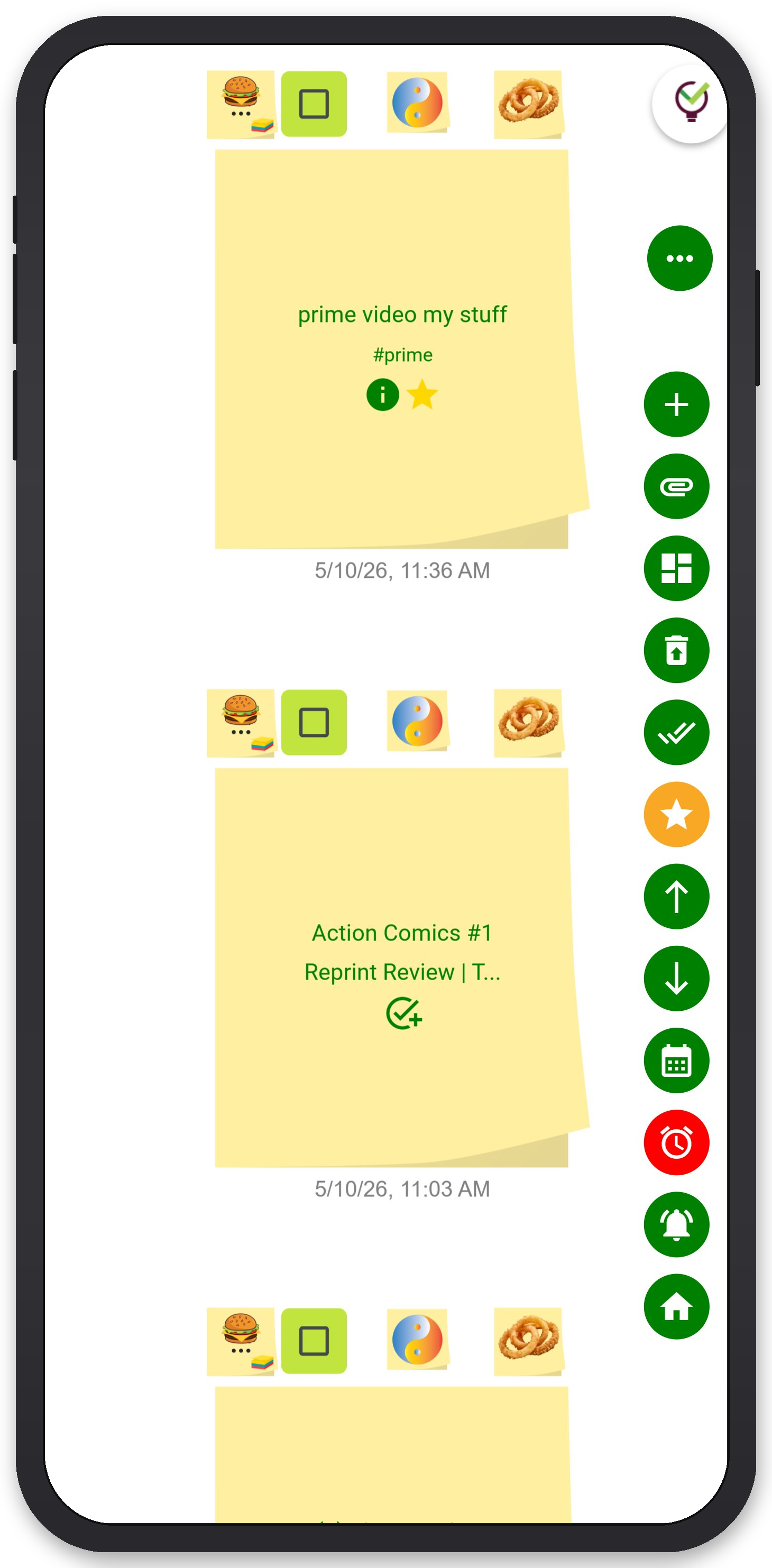
TaskLoco is built on sticky notes — a format with a strong psychological profile. A sticky note has a natural size constraint. It can't hold an entire project. It holds one thing, or a handful of things, and it sits on a visible wall where you see it before you touch it. That visibility is the wanting phase. The completion is the hit.
The wall metaphor also makes progress legible at a glance. When notes move, or when a note clears, you perceive change. The brain processes spatial change faster than it processes a number in a counter. You feel the progress before you compute it.
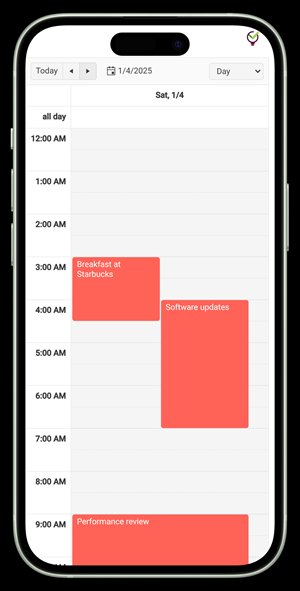
TaskLoco Premium adds reminders delivered as push notifications that deep-link directly back to the note they came from — so the bridge between 'I should do this' and 'here it is, do it now' is one tap. No hunting. No re-orientation. The path from reminder to action to completion is as short as the designers could make it, which is exactly what the dopamine loop needs: low friction between wanting and getting.
It's also worth being honest about what TaskLoco isn't. If you need Gantt charts, dependency trees, or enterprise workflow automation, a sticky-note-based system isn't the right tool. But if the reason you've tried five task apps and abandoned them all is that they felt heavy and joyless — the dopamine explanation is probably why. A system that makes completion feel good is a system you'll actually use.
TaskLoco Premium is regularly $9.99/month per person. Right now, charter members can lock in 50% off the regular price — forever. That means $4.99/month per person today. And if our price ever goes up, you still pay half. Always.
Code CHARTER50 auto-applies at checkout. First 500 spots only — once they're gone, this offer is gone permanently. Act fast while spots last.
Every Premium subscription includes unlimited notes, 10GB file storage, reminders, calendar, and team sharing. Each team member requires a separate subscription. 7-day free trial — no charge until day 8. Cancel anytime.
Free Options: TaskLoco
TaskLoco Lite
- Native iPhone & Android app
- Completely anonymous — no sign-in
- Data stays on your device
- Up to 20 notes
- Free forever
TaskLoco Lite Plus+
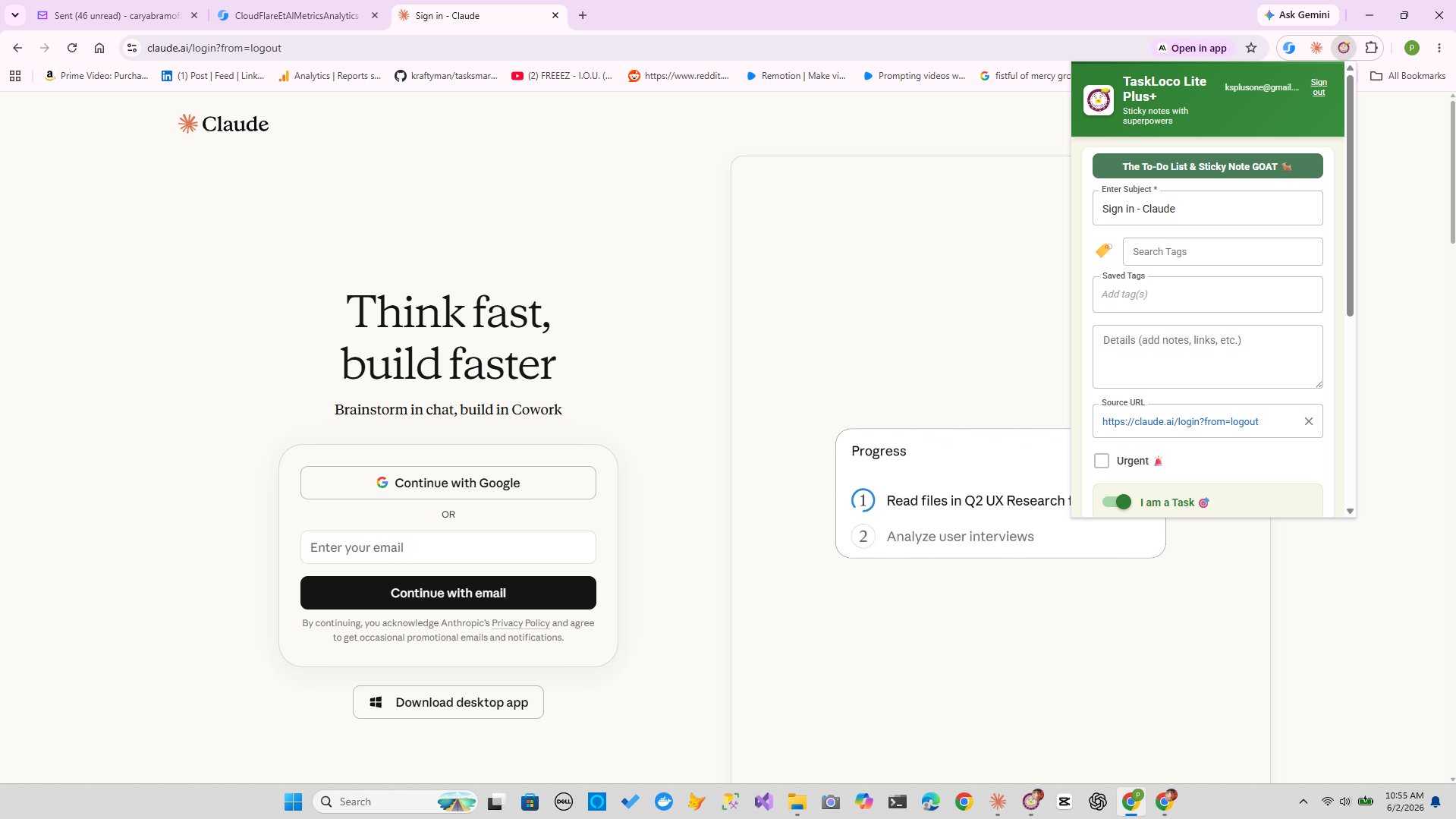
- Web app + Chrome extension
- Sign in with Google
- Wall syncs across all devices
- Up to 30 notes
- Free forever
Lock In 50% Off — Forever
7-day free trial. No charge until day 8. CHARTER50 auto-applies at checkout.
🔒 Lock In My Charter SpotSee TaskLoco in Action
Frequently Asked Questions
Why does checking off a task feel so satisfying?
It triggers a small dopamine release — the same neurochemical system that drives motivation and goal-directed behavior. The brain treats task completion as a prediction-error reward: you anticipated finishing, you finished, the system confirms the behavior was worth it. That confirmation is the 'hit.'
Is the dopamine from task completion real or just a metaphor?
It's real in the sense that dopamine neurons demonstrably respond to goal completion and reward prediction. Wolfram Schultz's research on dopamine and reward prediction errors is peer-reviewed and well-established. The popular framing oversimplifies — dopamine is more about wanting than pleasure — but the underlying neuroscience is solid.
Why do some task apps feel satisfying and others feel like a chore?
The difference usually comes down to feedback loop design. Apps that make completion immediate, tactile, and visible feed the dopamine cycle. Apps that bury completion behind multiple steps, intermediate states, or an endless backlog break the loop — the brain gets no clean signal that anything was actually finished.
Does breaking big tasks into smaller ones actually help motivation?
Yes, and the research backs it up. Teresa Amabile and Steven Kramer's 'progress principle' shows that small, frequent wins produce measurable boosts in motivation and mood. Each small task you complete is a discrete completion event — a discrete dopamine signal. One giant task that takes weeks produces almost none of that.
Can a task app make you more productive through the dopamine loop?
Indirectly, yes. The dopamine loop doesn't make you smarter or give you more hours — but it makes you more likely to return to the system consistently and to maintain momentum within a session. Habit formation depends heavily on reward signals, and a task app that reliably delivers a small hit on completion is one you'll keep using, which is most of the productivity battle.
What makes TaskLoco different from other task apps for this use case?
TaskLoco's sticky-note format enforces the small-task discipline that the dopamine loop depends on. Notes have a natural size limit — they encourage granularity rather than sprawl. The wall layout makes progress visible spatially, which the brain processes faster than numerical progress indicators. And Premium reminders deep-link directly back to the note they're attached to, cutting the friction between 'I should do this' and actually doing it.
How do I get started with TaskLoco?
TaskLoco Lite is a free native app for iPhone and Android — no sign-in required, completely anonymous, stores up to 20 notes on your device. TaskLoco Lite Plus+ is free on the web and as a Chrome extension — sign in with Google, sync up to 30 notes across devices. TaskLoco Premium unlocks unlimited notes, 10GB file storage, reminders, calendar view, and team sharing. $9.99/month per person (currently $4.99/month per person for first 500 charter members with code CHARTER50)
Born in Brooklyn. Powered by AWS. Your data stays yours.
TaskLoco is available on iPhone, Android, Chrome, and every web browser.