You picked up your phone to check one thing. Forty seconds later you're reading a news headline, your original thought has evaporated, and the task you were halfway through is sitting cold on your desk. That's not a willpower problem. That's how notification-driven devices are designed to work — and it's costing you more than you realize.
The average knowledge worker checks their phone 96 times a day. That's once every ten minutes during a standard workday. Each check isn't neutral. It's a withdrawal from your focus account, and that account doesn't refill as fast as you're draining it. This article breaks down exactly what those checks cost, why most productivity advice misses the point entirely, and what a smarter approach to phone alerts actually looks like.
What Focus Actually Costs — The Science Behind the Interruption
Gloria Mark at UC Irvine published the number that should terrify every professional: after an interruption, it takes an average of 23 minutes and 15 seconds to return to the same level of focus on the original task. Not 23 minutes to get back to the task — 23 minutes to return to the cognitive depth you were operating at before you were interrupted.
Most phone checks are not task-relevant. They are reflex. The notification sound or visual pulse triggers an orienting response — an ancient survival mechanism that says something changed in the environment, assess the threat. Your brain doesn't distinguish between a lion and a Slack ping. It just pulls you away.
Now do the math. If you check your phone 96 times a day and even half of those checks interrupt a period of focused work, you are triggering dozens of 23-minute recovery cycles every single day. That's not inefficiency. That's a productivity structure that is fundamentally incompatible with doing anything that requires real thought.
The deeper issue is what researchers call attention residue. Even after you've physically put the phone down and returned to work, part of your cognitive load is still processing what you just saw. A text you didn't reply to. An email subject line that felt vaguely urgent. A news alert that made you mildly anxious. These fragments don't disappear — they sit in working memory, quietly consuming the bandwidth you need for the task in front of you.
The Notification Trap: Why 'Just Turn Them Off' Isn't the Answer
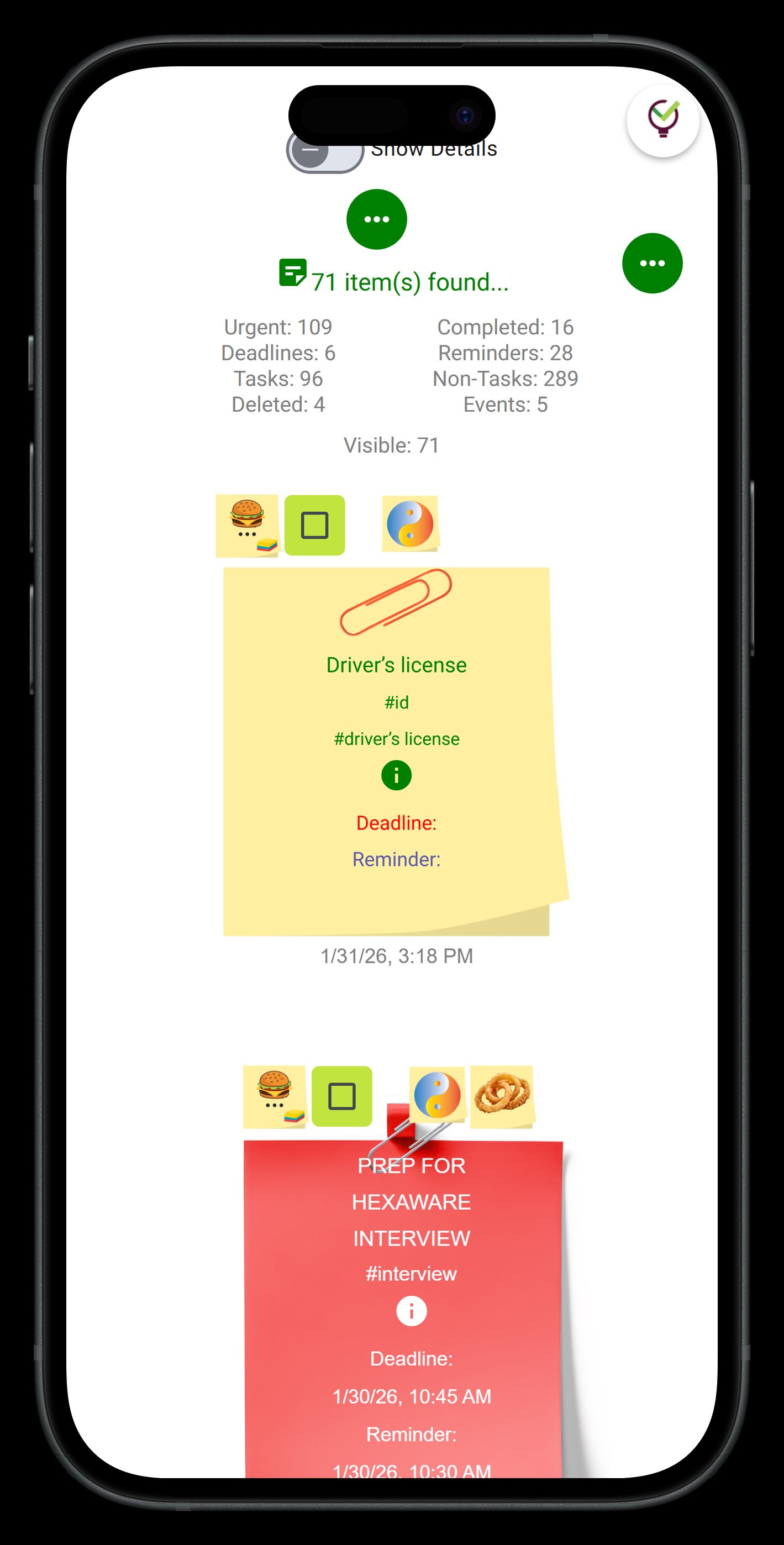
The standard productivity advice — turn off all notifications, check your phone on a schedule — sounds sensible until you actually try to run a life or a team with it. You can't nuke all alerts because some things genuinely are time-sensitive. A reminder about a client call in ten minutes matters. A delivery confirmation for a package you ordered three weeks ago does not. The problem is that most apps treat both identically.
The result is that people end up in one of two broken states. Either they leave everything on and get pulled away constantly, or they turn everything off and then compulsively check manually because they're anxious about missing something real. Both states are expensive. The compulsive manual check is arguably worse, because it's self-generated and even less tied to anything actionable.
What actually works is intentional notification design — a system where the only alerts that reach you are ones that are attached to something specific you already decided was important, and that take you directly to that thing without any detours. No feed. No badge count. No rabbit hole.
This is why the architecture of your productivity tools matters as much as the discipline you bring to them. If your reminder system fires a generic alert that says 'you have a reminder' and makes you navigate to find what it was, you've already lost. You're going to get distracted on the way.
How TaskLoco Is Built Around the Interruption Problem
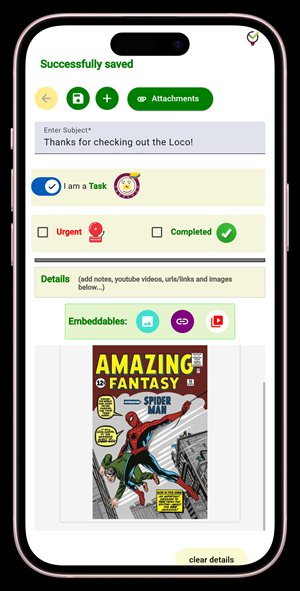
TaskLoco's reminder system is designed around one core principle: when a reminder fires, it deep-links directly back to the specific note that triggered it. You tap the push notification. You are taken immediately to the exact note, task, or item you need to act on. That's it. No home screen. No inbox. No feed. The loop closes in one tap.
This matters because the mental cost of an interruption isn't just the time you spend away from work — it's the navigation overhead. Every extra step between the alert and the action is another opportunity to get pulled somewhere else. TaskLoco eliminates those steps by design.
Reminders are delivered as push notifications directly to your phone and computer. If you want an email notification as well, that's a free optional add-on. If you want SMS, that's available too. But the core mechanism — the one that creates the tight loop between alert and action — is the push notification that takes you exactly where you need to go.
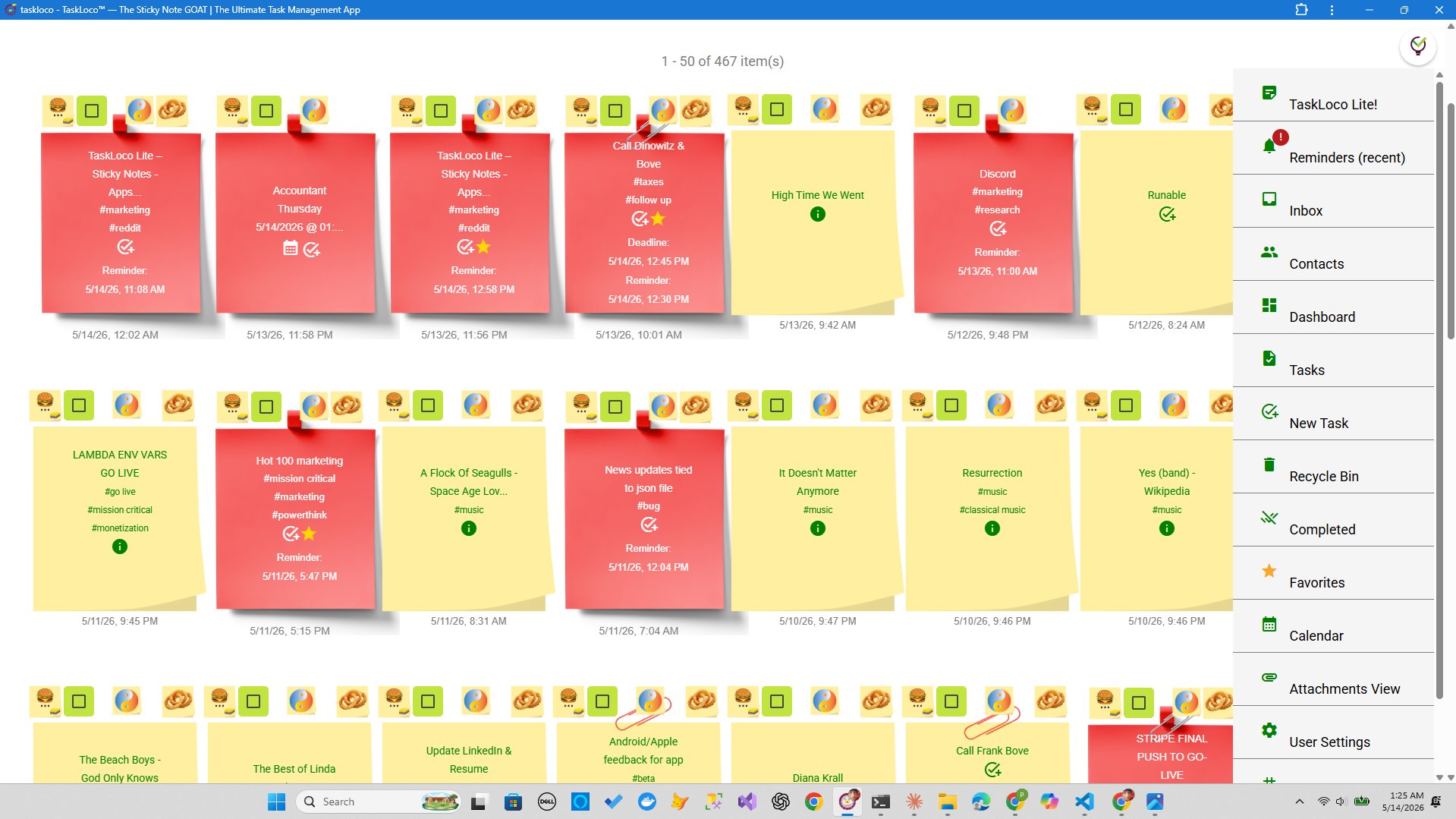
Beyond reminders, TaskLoco is structured to reduce the number of reasons you'd pick up your phone aimlessly in the first place. Your notes, tasks, files, and calendar all live in one place. When everything is organized on your wall — visible, searchable, attached to real files when needed — you spend less time in the anxious 'I know I wrote that somewhere' loop that drives so many unnecessary phone checks.
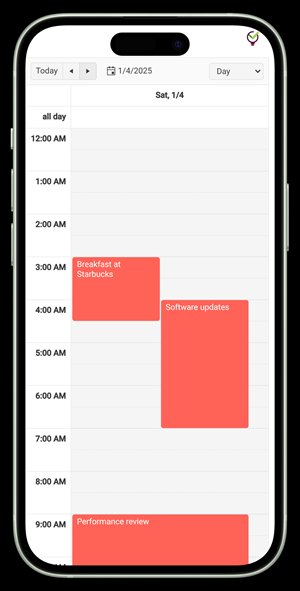
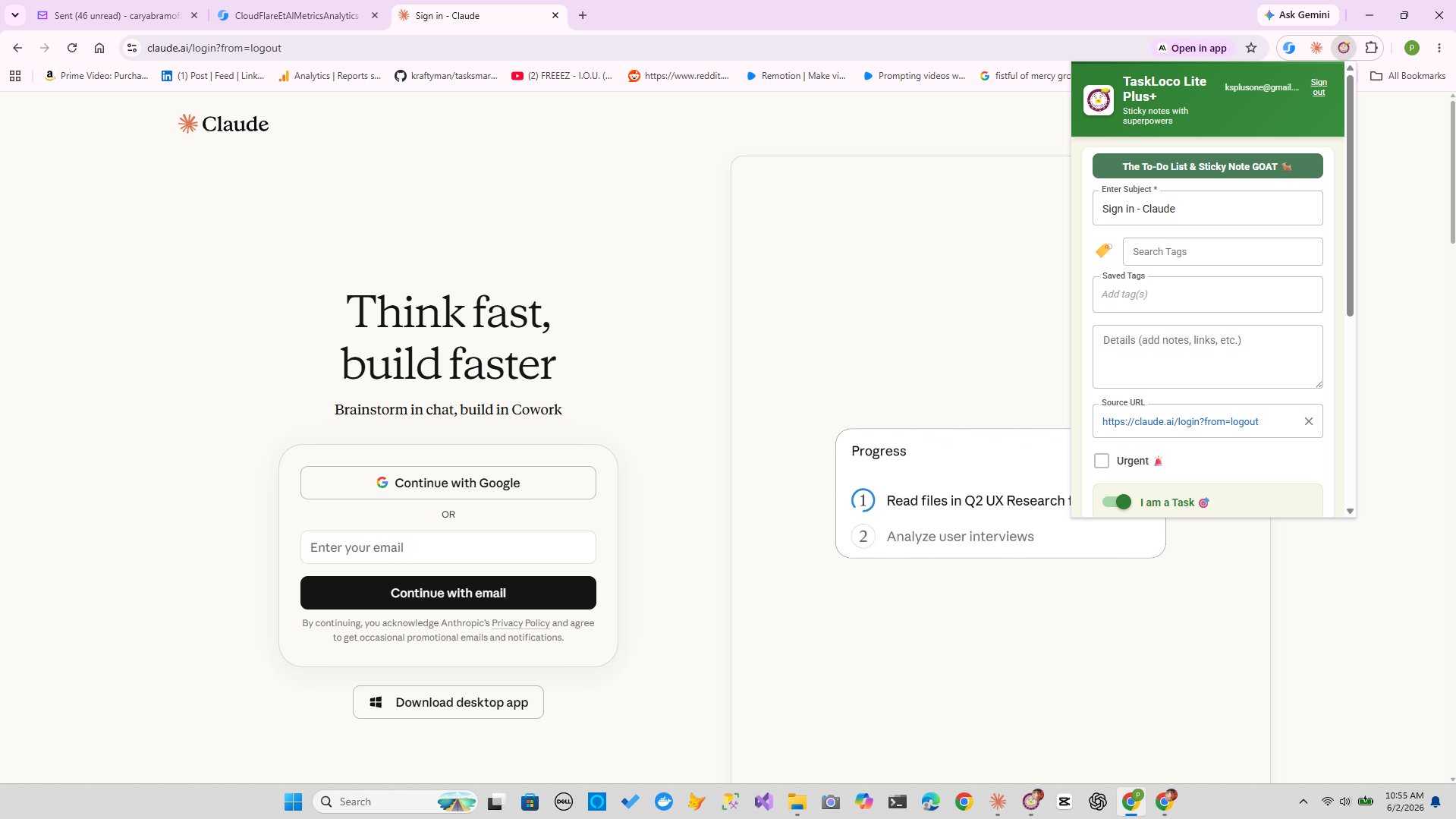
The Chrome extension lets you capture anything from any webpage into a note in one click, so the urge to screenshot something for later doesn't pull you into your photos app or camera roll. The calendar view means you're not opening four different apps to understand what today looks like. The goal isn't to make you a more disciplined person. It's to build a system that doesn't require as much discipline to begin with.
Building a Phone-Check Budget That Actually Works
Even the best notification system doesn't help if your habits haven't caught up to your tools. Here's a framework that works:
- Audit before you cut. Spend one day tracking every time you pick up your phone. Don't try to change anything yet. Just count. Most people are shocked by the actual number, which is the point — you can't fix what you haven't measured.
- Categorize your alerts into three buckets: action-required (a reminder tied to something specific), informational (something you want to know about but don't need to act on immediately), and noise (everything else). Turn off the noise entirely. Schedule time for informational. Let action-required through.
- Use a single capture tool. The anxiety that drives compulsive checking is often rooted in the fear of forgetting something. If you have one reliable place where everything lands — one system you trust — the urge to check 'just in case' drops significantly. TaskLoco Lite Plus+ is free, syncs across all your devices, and lets you capture up to 30 notes without an account barrier. If you're ready for reminders, files, and unlimited notes, Premium is where that system becomes complete.
- Create phone-free blocks. Not all day. Even 90-minute blocks of focused work with notifications silenced will compound into a dramatically different output over a week. The science on deep work is not subtle — quality output requires uninterrupted stretches, not optimized multitasking.
The goal isn't to become someone who never checks their phone. It's to make sure that when you do, there's a real reason waiting for you — not just the ghost of a habit.
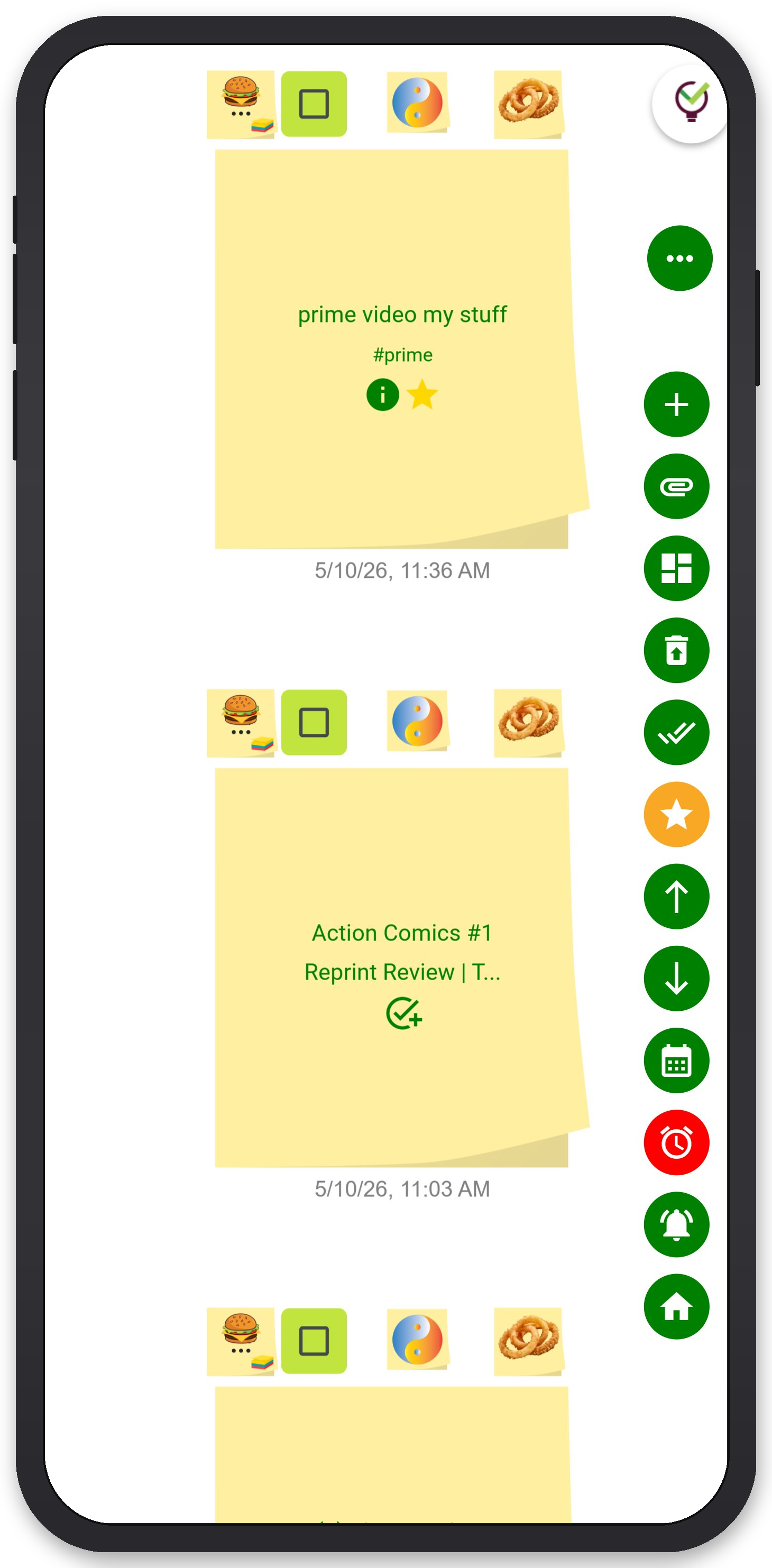
TaskLoco Premium is regularly $9.99/month per person. Right now, charter members can lock in 50% off the regular price — forever. That means $4.99/month per person today. And if our price ever goes up, you still pay half. Always.
Code CHARTER50 auto-applies at checkout. First 500 spots only — once they're gone, this offer is gone permanently. Act fast while spots last.
Every Premium subscription includes unlimited notes, 10GB file storage, reminders, calendar, and team sharing. Each team member requires a separate subscription. 7-day free trial — no charge until day 8. Cancel anytime.
Free Options: TaskLoco
TaskLoco Lite
- Native iPhone & Android app
- Completely anonymous — no sign-in
- Data stays on your device
- Up to 20 notes
- Free forever
TaskLoco Lite Plus+
- Web app + Chrome extension
- Sign in with Google
- Wall syncs across all devices
- Up to 30 notes
- Free forever
Lock In 50% Off — Forever
7-day free trial. No charge until day 8. CHARTER50 auto-applies at checkout.
🔒 Lock In My Charter SpotSee TaskLoco in Action
Frequently Asked Questions
How long does it take to regain focus after checking your phone?
Research from UC Irvine found it takes an average of 23 minutes and 15 seconds to return to the same depth of focus after an interruption. This means even a 5-second phone check can cost you nearly a half hour of productive output. The fix isn't willpower — it's reducing the number of interruptions that don't have a clear, actionable reason behind them.
What is attention residue and why does it matter?
Attention residue is the cognitive load left behind after you switch away from a task — even after you physically return to it. If you saw an unread text or a vague subject line, part of your brain is still processing it while you try to work. This is why interruptions cost more than the time you spend away: the distraction lingers. Reducing unnecessary notification triggers is one of the most direct ways to clear this residue before it builds up.
How many times a day does the average person check their phone?
Studies consistently put the number between 80 and 100 times per day for the average smartphone user, with many knowledge workers landing closer to 96. That's roughly once every ten minutes during a standard workday. The majority of those checks are not prompted by an incoming alert — they're habitual and reflexive, triggered by boredom, anxiety, or force of habit rather than any genuine need.
Does turning off all notifications actually help productivity?
It helps with the noise, but it creates a different problem: anxiety-driven manual checking. If you're not confident that urgent things will reach you, you'll check compulsively just in case. The better approach is a tiered notification strategy — eliminate noise entirely, schedule time for low-priority updates, and let only action-required alerts through. TaskLoco's reminder system is built for exactly this: push notifications that deep-link directly to the note that needs your attention, with optional email and SMS channels for additional reach.
What is the best way to organize tasks so I stop checking my phone for reminders?
The underlying anxiety that drives phone-checking is usually a fear of forgetting something important. The solution is a single, trusted capture system — one place where every task, note, and reminder lives, and that you can rely on to surface things at the right moment. When your system is reliable, the compulsive check-just-in-case behavior drops significantly. TaskLoco Premium keeps notes, reminders, files, and calendar in one place, with push notifications that take you directly to the relevant note when something needs action.
How does TaskLoco handle reminders without adding to notification noise?
TaskLoco reminders are tied to specific notes, not generic system alerts. When a reminder fires, the push notification deep-links directly to the note that triggered it — you tap once and you're exactly where you need to be. There's no hunting, no navigation, no detour through a feed. Optional email and SMS notifications are available as additional channels, but the push notification is the core mechanism: targeted, actionable, and direct.
Is TaskLoco free to use?
TaskLoco has two free tiers. TaskLoco Lite is a native iPhone and Android app — completely anonymous, no sign-in required, stores up to 20 notes on your device. TaskLoco Lite Plus+ is the web app and Chrome extension — free, sign in with Google, syncs across all your devices, and holds up to 30 notes. Reminders, file attachments, unlimited notes, and team sharing are Premium features. $9.99/month per person (currently $4.99/month per person for first 500 charter members with code CHARTER50)
Born in Brooklyn. Powered by AWS. Your data stays yours.
TaskLoco is available on iPhone, Android, Chrome, and every web browser.