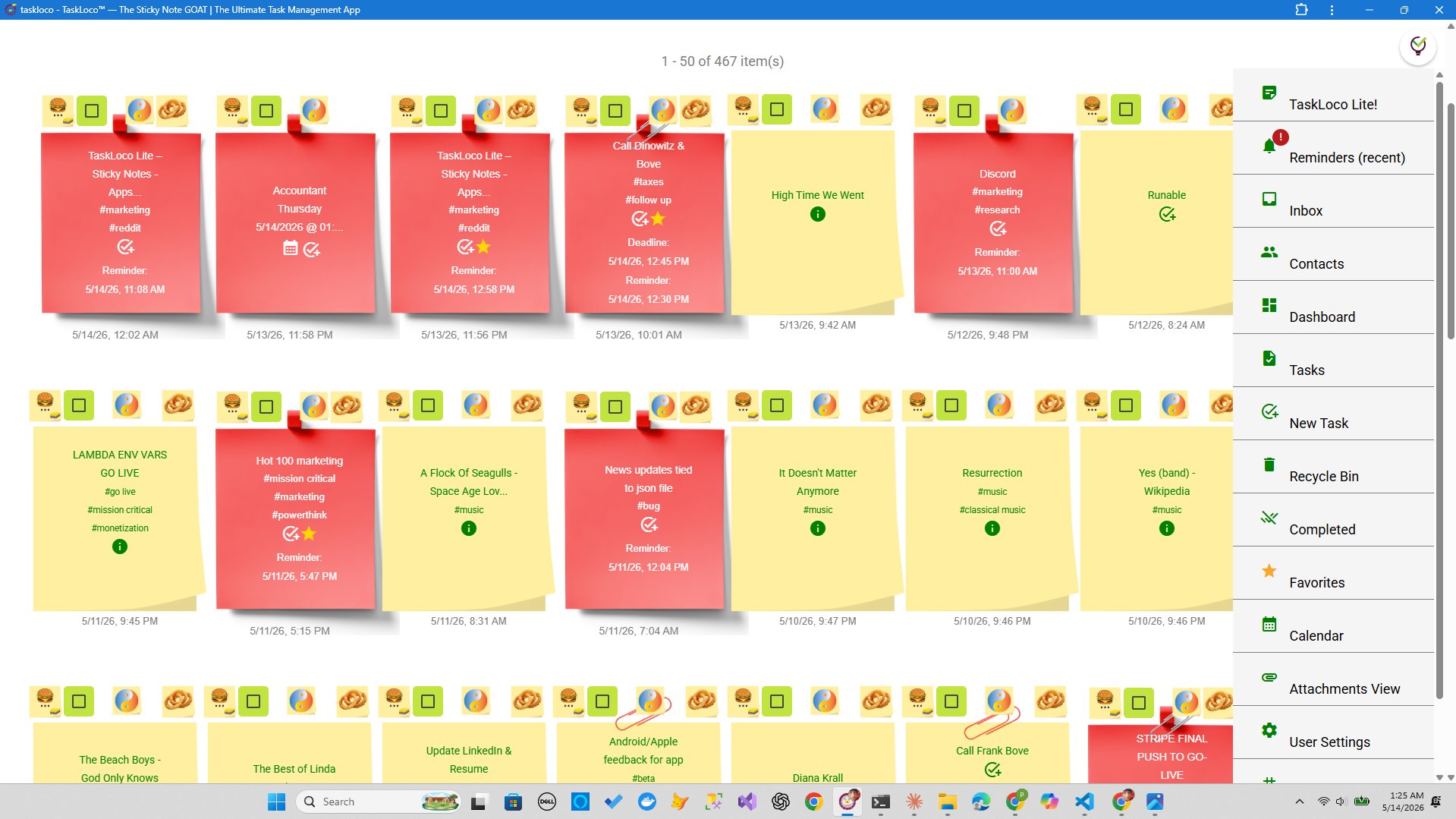
There's a reason the physical sticky note has outlasted every productivity trend of the past 40 years. It's not nostalgia. It's neuroscience. When you can see everything at once, arranged in space the way it relates in your mind, you think faster and forget less. Most task managers took a different bet — they digitized the to-do list instead of the thinking board. That was the wrong bet.
TaskLoco built its entire product around the sticky note as a first-class interface, not a bolted-on gimmick. The result is a productivity tool that works with your brain instead of demanding your brain conform to a database schema. This piece breaks down why that distinction matters, what to look for in any visual task tool, and why TaskLoco sits at the top of that category.
What to Look for in a Visual Task Manager
Before any product enters the picture, it's worth defining what actually separates a great visual task tool from a list manager with a kanban view slapped on top. There are three criteria that genuinely matter.
1. Spatial freedom, not forced structure. A real visual tool lets you place things where they make sense to you, not where a predefined column or status field demands they go. The moment a tool forces every note into a lane, a project, or a hierarchy before you can even think, it's already asking your brain to do extra work. True spatial tools let you start thinking first and organize second — or not at all, if the layout itself is the organization.
2. Capture speed. The best idea you had at 2pm is worthless if the friction of opening your task manager means you never record it. A visual tool should let you get something out of your head and onto the canvas in under five seconds. That means no mandatory fields, no project assignment, no title-required dialogs. A blank note, a click, and you're typing.
3. Glanceability. Lists require reading. A well-arranged visual canvas can be seen — your eyes sweep across it and your brain processes spatial position, color, and density simultaneously. This is the core cognitive advantage that list-based tools can never replicate. When choosing a visual task manager, ask whether the default view is one you can absorb in a glance, or one you have to scroll and read to understand.
Why Your Brain Hates Traditional Task Managers (Even When You're Using Them)
Traditional task managers — the kind built around lists, rows, and status columns — impose a structure that feels organized but actually creates cognitive overhead. Every time you open one, you're performing a translation: your brain's spatial, associative memory has to decode a flat list and reconstruct the relationships and priorities it already understood naturally. That translation takes energy. Over time, it's part of why people abandon their task systems entirely.
The research on spatial memory is consistent: humans recall information better when it's tied to a location. This is the basis of the 'memory palace' technique used for thousands of years. When your task lives at a specific position on a visual canvas — upper left because it's urgent and high-level, bottom right because it's a someday idea — your brain encodes not just the task, but its context and priority through its position. A row in a database can't do that.
There's also the problem of context collapse. In a list-based tool, a quick personal reminder sits in the same format as a complex multi-step project task. Everything looks the same. On a visual canvas, you can make a small note small, a big project take up real estate, and a cluster of related thoughts physically cluster together. The format carries information that no metadata field can replicate.
None of this means traditional task managers are useless. For teams that live in Gantt charts, need enterprise audit trails, or manage complex dependencies across dozens of people, a structured list tool may be the right call. But for the vast majority of people — individuals, teams doing real creative and analytical work, anyone who thinks before they execute — the list-first paradigm is the wrong fit, and they can feel it every time they open the app.
How TaskLoco's Canvas Changes the Way You Actually Work
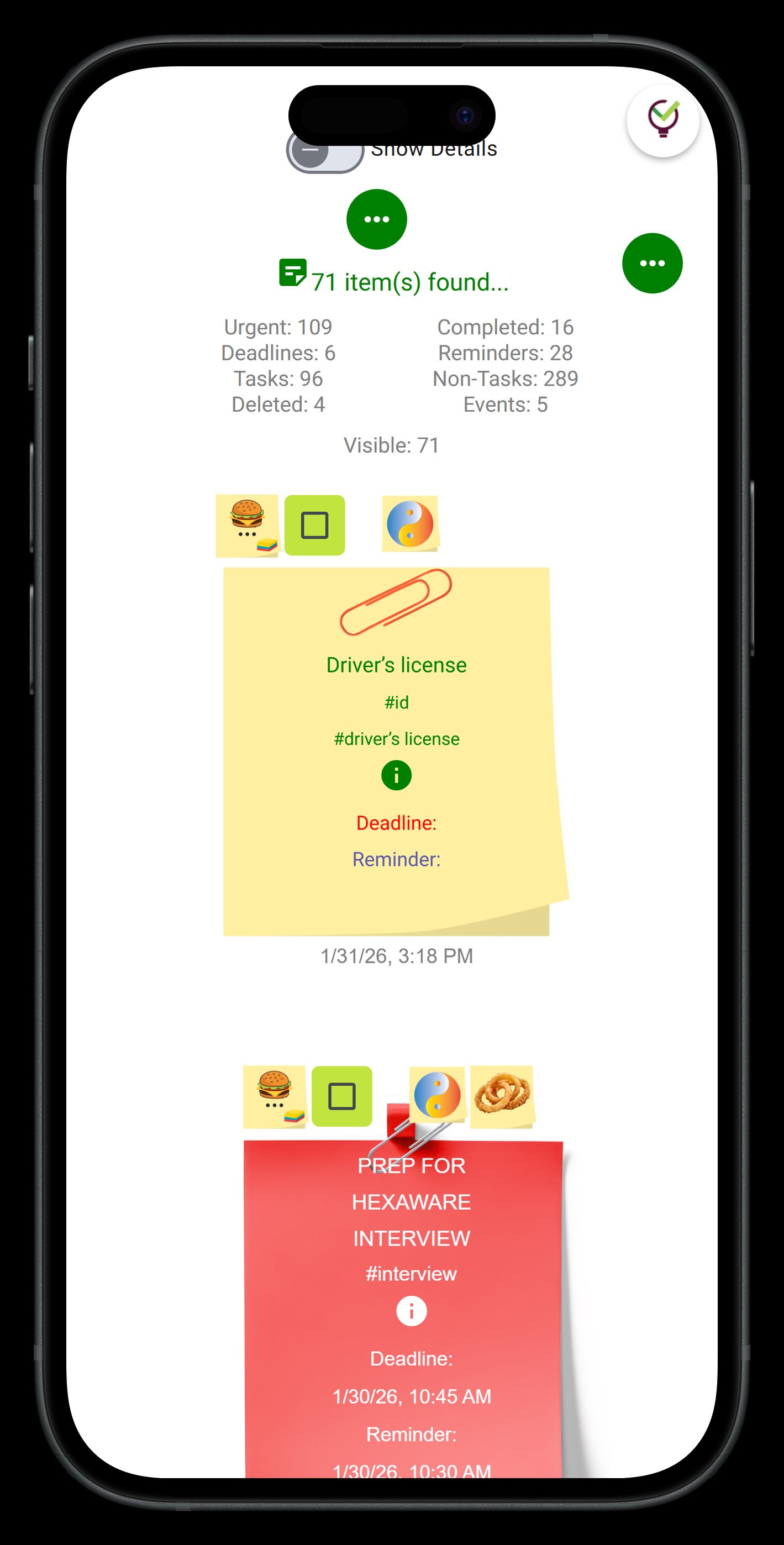
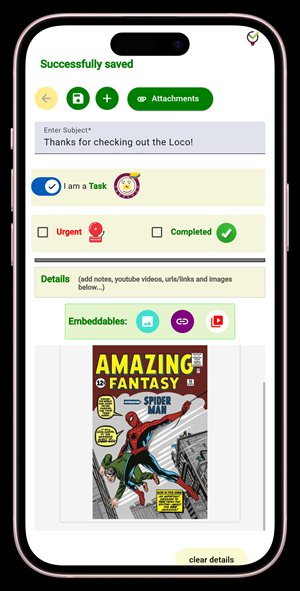
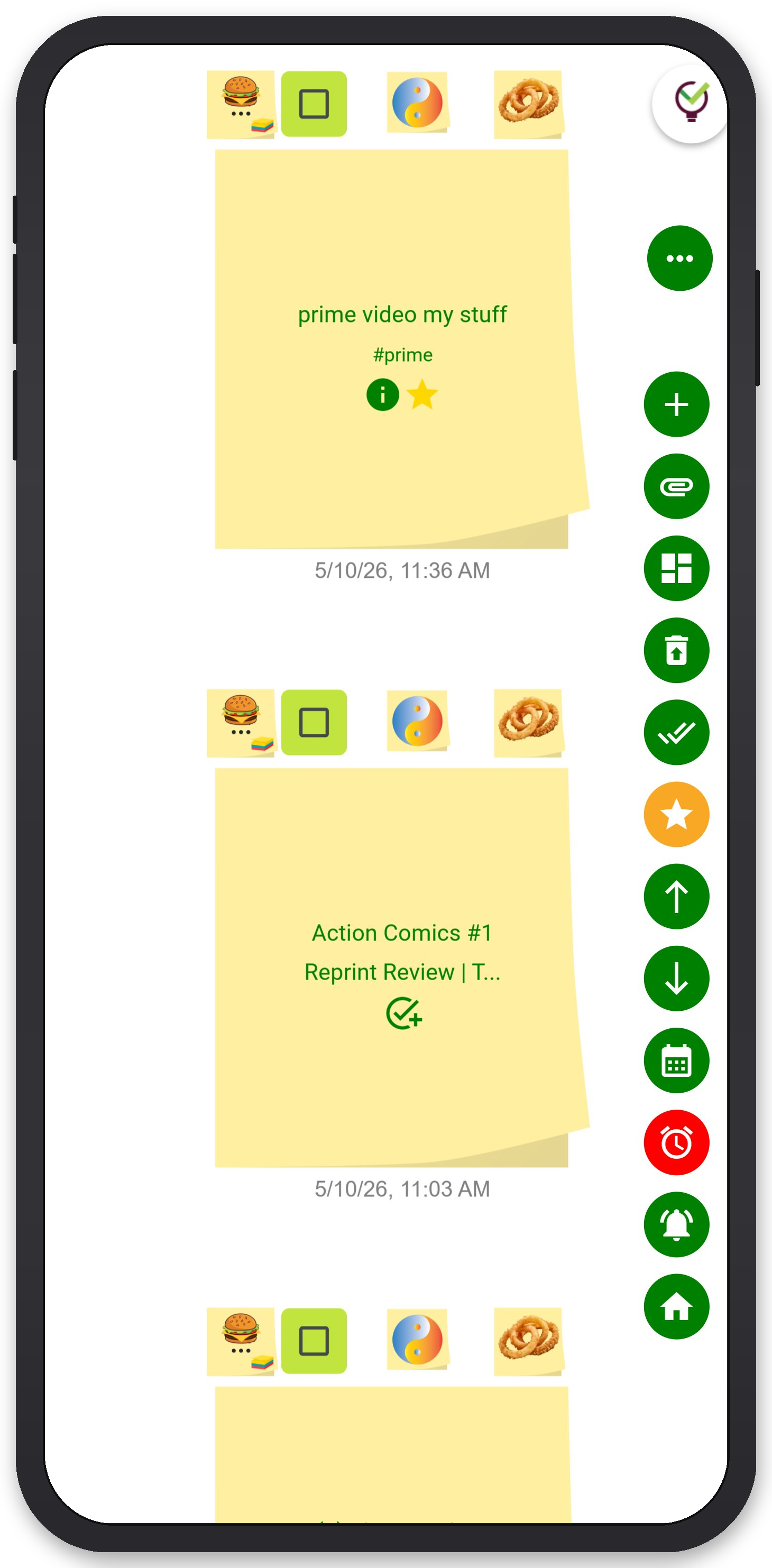
TaskLoco's wall view is the product of a simple premise: the sticky note is already the right interface for human thinking. The job of software is to make it better, not replace it with a spreadsheet. The result is a canvas where every note is a first-class object — it can hold text, images, or files, carry a reminder that deep-links back to it, and live wherever on the board makes spatial sense to you.
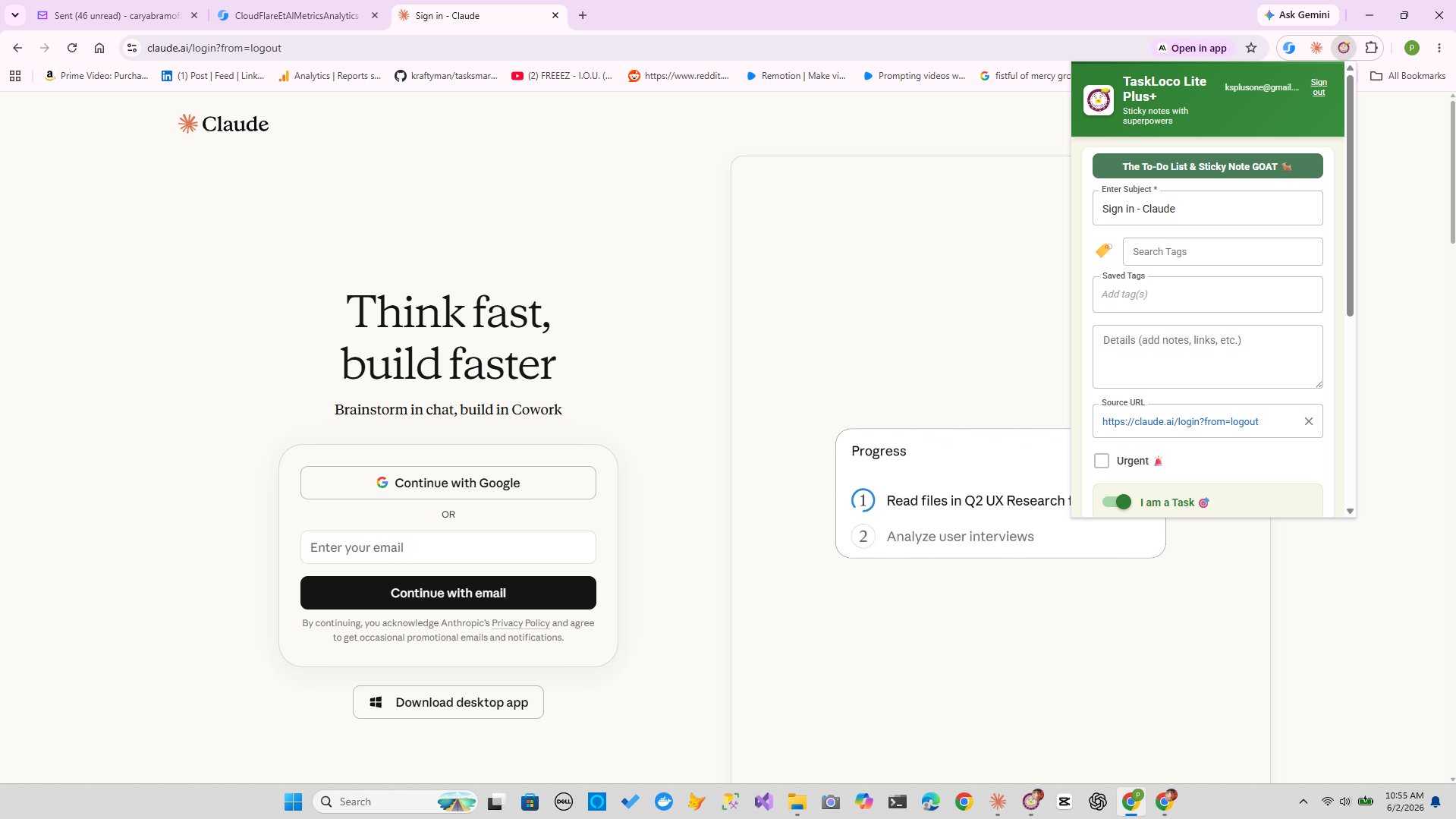
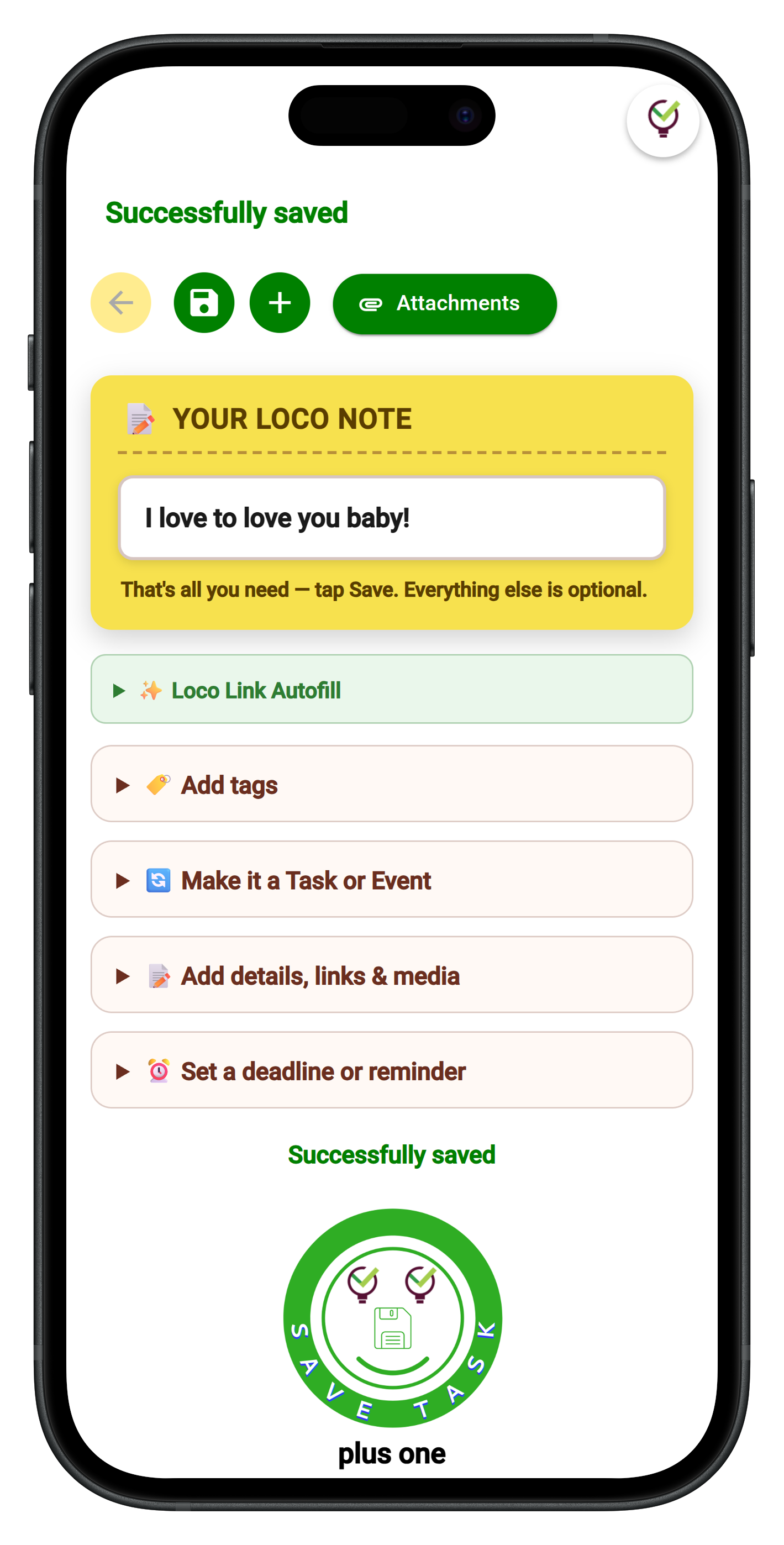
The capture experience is where this pays off first. There are no mandatory fields. You click, you type, you move on. The Chrome extension extends this to the web — one click captures any page as a note on your wall, so the article you found, the product you were researching, or the reference you need later goes directly into your workspace without a context switch. That's real capture speed, not the kind where you still have to open the app, choose a project, and write a title.
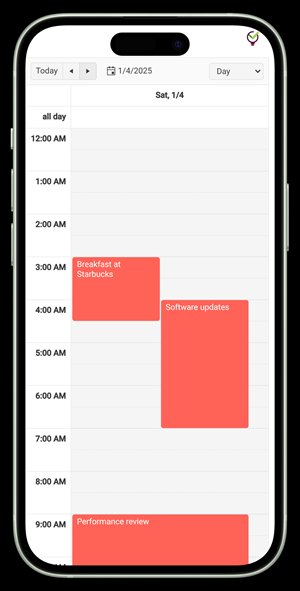
Reminders in TaskLoco are built the way reminders should work in a note-first system. When a reminder fires, it delivers a push notification that deep-links directly back to the original note — so you're not just alerted, you're taken instantly to the context you set up. Optional email notifications are available as an additional channel, and SMS is available as an add-on. The reminder is attached to the note itself, not to a disconnected calendar event you have to mentally map back to your work.
For teams, the sharing model works the way email attachments should have always worked: when you share a note, the recipient can clone it and make it their own. No permission levels to configure, no access hierarchies to manage, no 'viewer vs. editor' headaches. You share a thought; they take it and run with it. Real-time sync keeps everyone current across devices.
File attachments sit directly on the note they belong to — a contract on the contract note, a design file on the design note, a photo on the note where it makes sense. Premium includes 10GB of storage with stackable add-ons up to 1TB, so the system scales with the kind of work you actually do.
How TaskLoco Compares
| Feature | TaskLoco | Traditional Task Managers |
|---|---|---|
| Core interface | Spatial sticky note canvas — arrange notes anywhere, see everything at a glance | List rows, status columns, or kanban lanes — structure-first, spatial-never |
| Capture speed | Click and type — no title required, no project required, no form to fill | Typically requires a title and often a project or list assignment before saving |
| Free native mobile app | TaskLoco Lite — anonymous, no sign-in, 20 notes stored on-device FREE | Most list-based tools offer a free native app but require account creation |
| Free synced tier | Lite Plus+ — free web app + Chrome extension, 30 notes, syncs across devices FREE | Free synced tiers exist but typically cap projects, users, or integrations |
| Glanceability | Visual canvas — spatial position, color, and density communicate priority at a glance | List or board views require reading and scanning rows to extract context |
| Reminders | Premium: push notification reminder that deep-links back to the original note; optional email and SMS add-on | Reminders or due dates available, but typically not tied to a visual note context |
| File attachments | Premium: 10GB included, files live directly on the note they belong to | File attachments available on paid tiers, often in a separate attachment panel |
| Team sharing | Yes — included with Premium. Each team member requires a separate subscription — currently $9.99/month per person, but TaskLoco is offering a Charter Member special: 50% off for life, currently $4.99/month per person for the first 500 subscribers with code CHARTER50. | Team sharing available but typically involves role assignments and permission tiers |
| Chrome extension | Free with Lite Plus+: one-click capture of any webpage directly into your note wall FREE | Browser extensions exist for some tools but vary widely in capture capability |
| Calendar view | Premium: built-in calendar view for all notes and reminders | Calendar or timeline views common on paid plans |
| Anonymous use | Lite app: fully anonymous, no account, no sign-in ever required FREE | Virtually all traditional task managers require an account to use |
| Cross-device sync | Lite Plus+ (free) and Premium: full sync across all devices via web app FREE | Sync available but typically gated to paid plans or limited on free tiers |
| Spatial organization | Arrange notes anywhere on the canvas — position itself carries meaning | Structure is column/row-based — position is determined by sort order, not your thinking |
| Gantt charts / project timelines | Not available — TaskLoco is note and task focused, not project-dependency focused | Many traditional task managers offer Gantt or timeline views on paid plans |
| Natural language task input | Not available | Some list-based tools parse natural language like 'tomorrow at 3pm' into due dates |
| Storage expansion | Premium: add-on storage tiers — 10GB / 50GB / 200GB / 1TB, stackable up to 100x | Storage limits vary; expansion options differ by platform |
| API / third-party integrations | Limited integrations — TaskLoco focuses on the native experience | Traditional task managers typically offer broad API access and integration ecosystems |
| Pricing model | $9.99/month per person (currently $4.99/month per person for first 500 charter members with code CHARTER50) | Pricing varies by tier and seat count — see competitor site for current pricing |
Who Should Use Each
Use the TaskLoco if…
- You think visually and want a canvas you can arrange the way your brain actually organizes things
- You need instant capture — no titles, no projects, no forms standing between a thought and a note
- You want reminders that fire as push notifications and deep-link directly back to the note that triggered them
- You work with files and want them attached directly to the notes they belong to, not in a separate file cabinet
- You share ideas with a team and want recipients to be able to clone a note and make it their own, without configuring permissions
- You want a genuinely free anonymous option with no account required for lightweight on-device use
- You want to capture any webpage in one click and have it land directly on your visual wall
Use Traditional Task Managers if…
- You manage complex projects with dependencies, milestones, and Gantt chart timelines
- Your organization requires enterprise SSO, compliance certifications, or audit trail functionality
- You rely heavily on API integrations with a large ecosystem of third-party business tools
- Your workflow depends on natural language task input that automatically parses dates and assignments
- You need database-style views with custom fields, formulas, and relational data structures
TaskLoco Premium is regularly $9.99/month per person. Right now, charter members can lock in 50% off the regular price — forever. That means $4.99/month per person today. And if our price ever goes up, you still pay half. Always.
Code CHARTER50 auto-applies at checkout. First 500 spots only — once they're gone, this offer is gone permanently. Act fast while spots last.
Every Premium subscription includes unlimited notes, 10GB file storage, reminders, calendar, and team sharing. Each team member requires a separate subscription. 7-day free trial — no charge until day 8. Cancel anytime.
Free Options: TaskLoco
TaskLoco Lite
- Native iPhone & Android app
- Completely anonymous — no sign-in
- Data stays on your device
- Up to 20 notes
- Free forever
TaskLoco Lite Plus+
- Web app + Chrome extension
- Sign in with Google
- Wall syncs across all devices
- Up to 30 notes
- Free forever
Lock In 50% Off — Forever
7-day free trial. No charge until day 8. CHARTER50 auto-applies at checkout.
🔒 Lock In My Charter SpotSee TaskLoco in Action
Frequently Asked Questions
What is a visual sticky note app and how is it different from a task manager?
A visual sticky note app gives you a spatial canvas where notes can be placed anywhere, grouped by proximity, and understood at a glance — the way a physical whiteboard works. A traditional task manager organizes work into lists, rows, or columns. The difference isn't cosmetic: spatial arrangement lets your brain encode priority and context through position, which list formats can't replicate. TaskLoco is built around the sticky note as the core interface, not as a view option.
Does TaskLoco have a free version?
Yes — two of them. TaskLoco Lite is a free native iPhone and Android app that stores up to 20 notes on your device with no sign-in or account required, ever. TaskLoco Lite Plus+ is the free web app and Chrome extension tier: sign in with Google, sync up to 30 notes across all devices, and capture any webpage in one click. Neither free tier includes reminders, file attachments, or team sharing — those are Premium features.
How do reminders work in TaskLoco?
TaskLoco reminders are delivered as push notifications to your phone and computer. The key feature: each reminder deep-links directly back to the original note, so you're taken instantly to the context you set — not just alerted with a generic ping. Optional email notifications are available as an additional channel. SMS notifications are available as an optional add-on. Reminders are a Premium feature.
Can I attach files to my sticky notes?
Yes, with TaskLoco Premium. File attachments live directly on the note they belong to — not in a separate files section. Every Premium subscription includes 10GB of storage. If you need more, add-on tiers are available at 10GB, 50GB, 200GB, and 1TB, and they're stackable up to 100x.
How does team sharing work in TaskLoco?
Team sharing in TaskLoco works like sending a well-crafted email: you share a note, and the recipient can clone it and make it their own. There are no permission levels to configure, no viewer vs. editor roles, no access management overhead. Real-time sync keeps everyone current. Team sharing is a Premium feature, and each team member requires their own individual subscription.
What is the Charter offer and how do I get it?
$9.99/month per person (currently $4.99/month per person for first 500 charter members with code CHARTER50)
Is TaskLoco right for me if I've tried task managers and abandoned them?
Probably yes — and the reason you abandoned them is likely the reason TaskLoco works differently. Most people who give up on task managers do so because the system creates more work than it saves: mandatory fields, rigid structures, and formats that require reading instead of seeing. TaskLoco's visual canvas, instant capture, and spatial layout are designed specifically for people whose brains work better with a thinking board than a database. The two genuinely free tiers mean you can find out without committing anything.
Born in Brooklyn. Powered by AWS. Your data stays yours.
TaskLoco is available on iPhone, Android, Chrome, and every web browser.