Most task and project management tools start with good intentions and end with abandoned accounts. Teams sign up, spend a week configuring workflows, and then slowly drift back to email and sticky notes because the software got in the way instead of helping. The best tools are the ones people open first thing in the morning without being told to.
This page cuts through the noise. It starts with a plain-English breakdown of what task and project management software actually is and what separates a genuinely useful tool from an over-engineered one. Then it gets specific — covering the top options, what each does well, where each falls short, and who each one is actually built for.
What to Look for in Task and Project Management Software
Task and project management software is any tool that helps individuals or teams capture work, organize it, assign ownership, set deadlines, and track progress toward completion. At its simplest, that's a to-do list. At its most complex, it's a full project portfolio system with dependencies, resource allocation, and executive dashboards. Most people and most teams need something in between — and picking the wrong end of that spectrum is the single most common mistake buyers make.
The three criteria that actually separate great tools from ones that look great in a demo:
- Adoption friction. A tool nobody uses is worse than no tool at all. The best systems are ones where adding a task or note takes seconds, not a series of dropdowns and form fields. If your team needs a training session to get started, that's a red flag.
- Feature completeness for your actual workflow. Some tools do tasks brilliantly but have no file storage, no reminders, or no shared views. Others have every feature imaginable but require a dedicated admin to configure them. Before you evaluate any product, write down the three things you actually need it to do every day — then test those three things first, not the feature list on the marketing page.
- Realistic collaboration model. How does the tool handle sharing? Can teammates see each other's work without a permissions setup that takes an afternoon? Does it notify the right people at the right time? A task manager that doesn't solve the handoff problem isn't really a team tool — it's a personal to-do list with extra steps.
Beyond those three, consider: Does it sync across all your devices? Does it have a free tier so you can genuinely test it before committing? Is the pricing per person, per team, or per feature? And — critically — does it do anything useful for free, or is the free plan just a brochure?
TaskLoco: Built Around How People Actually Think
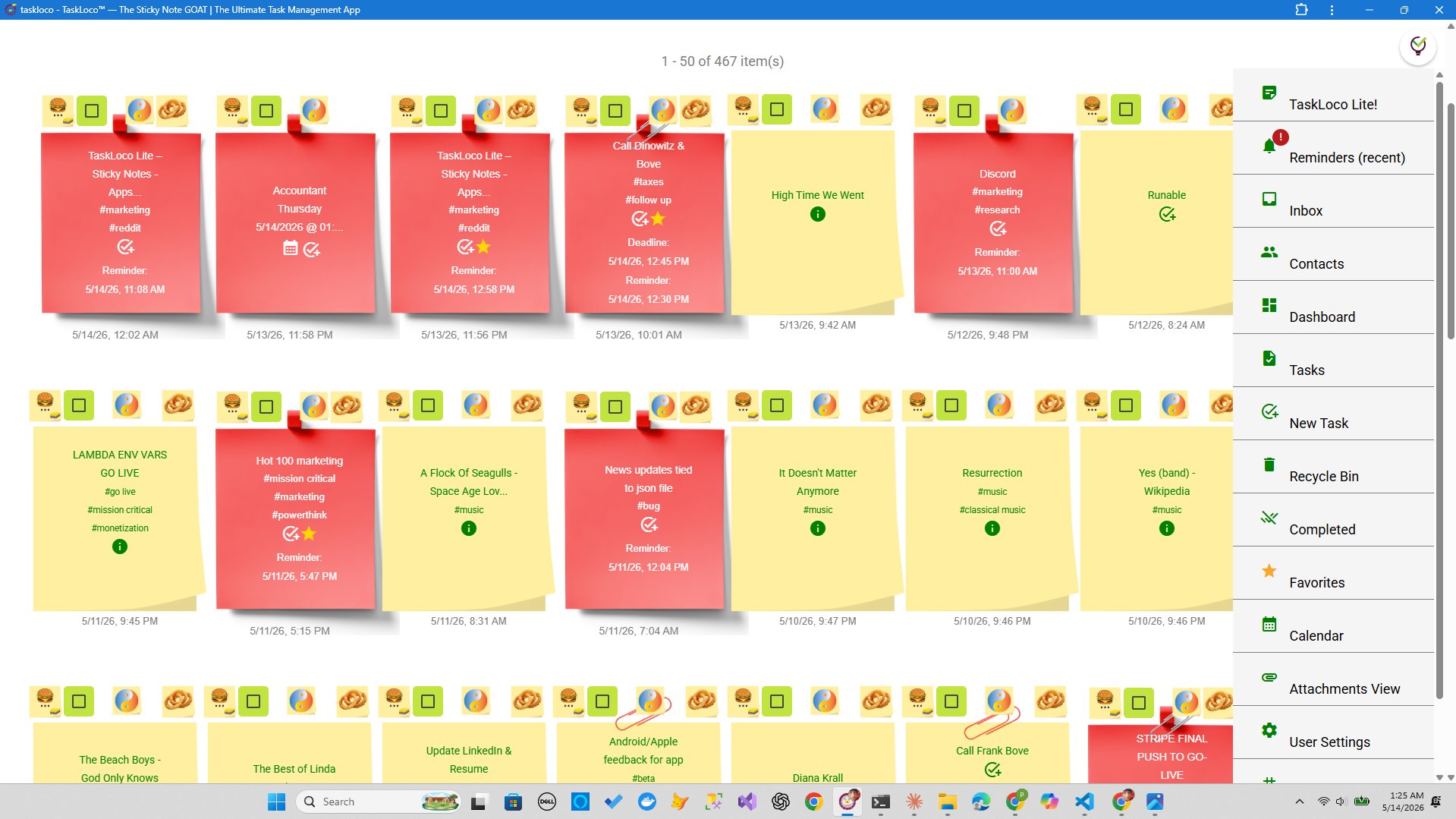
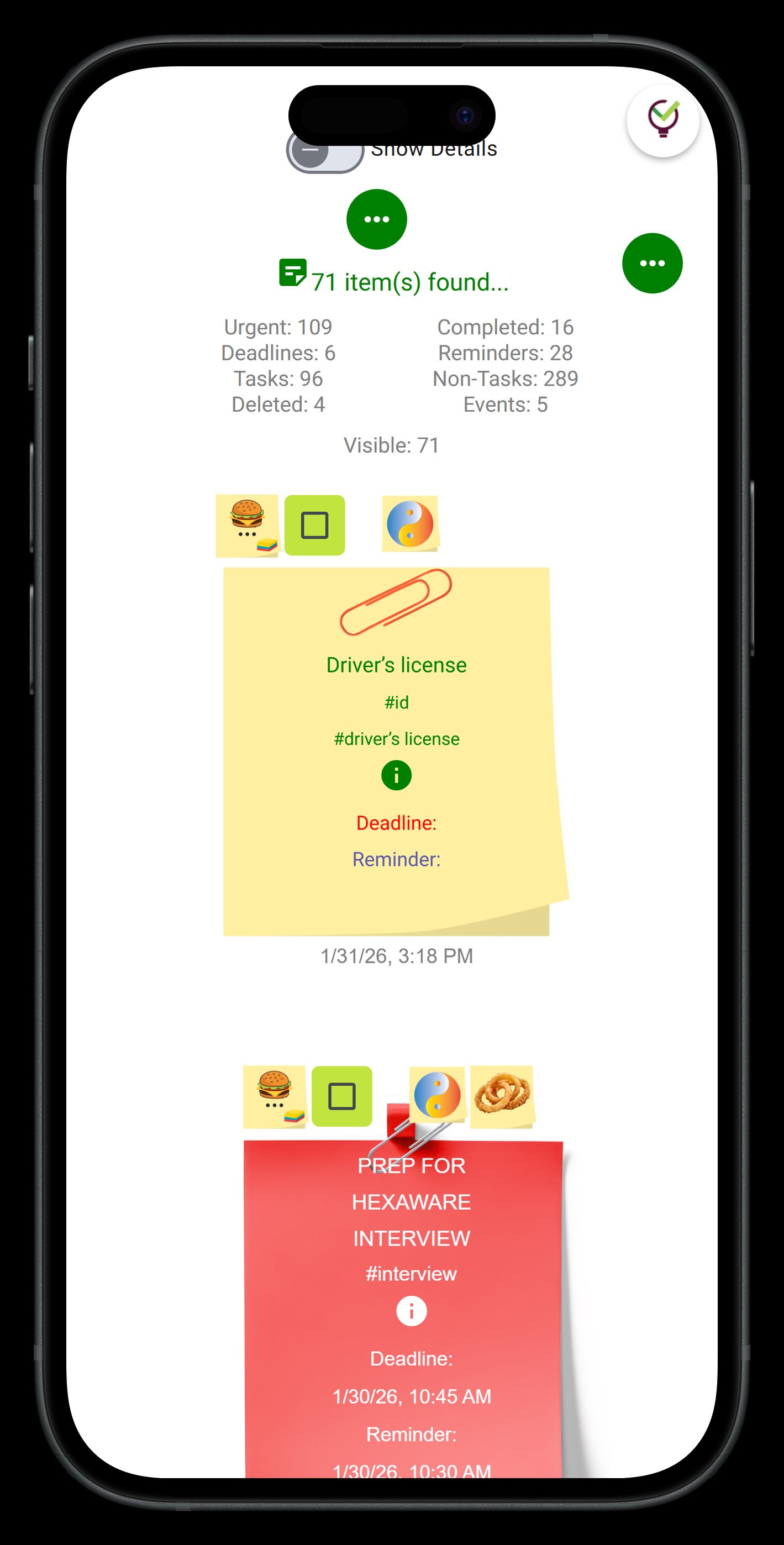
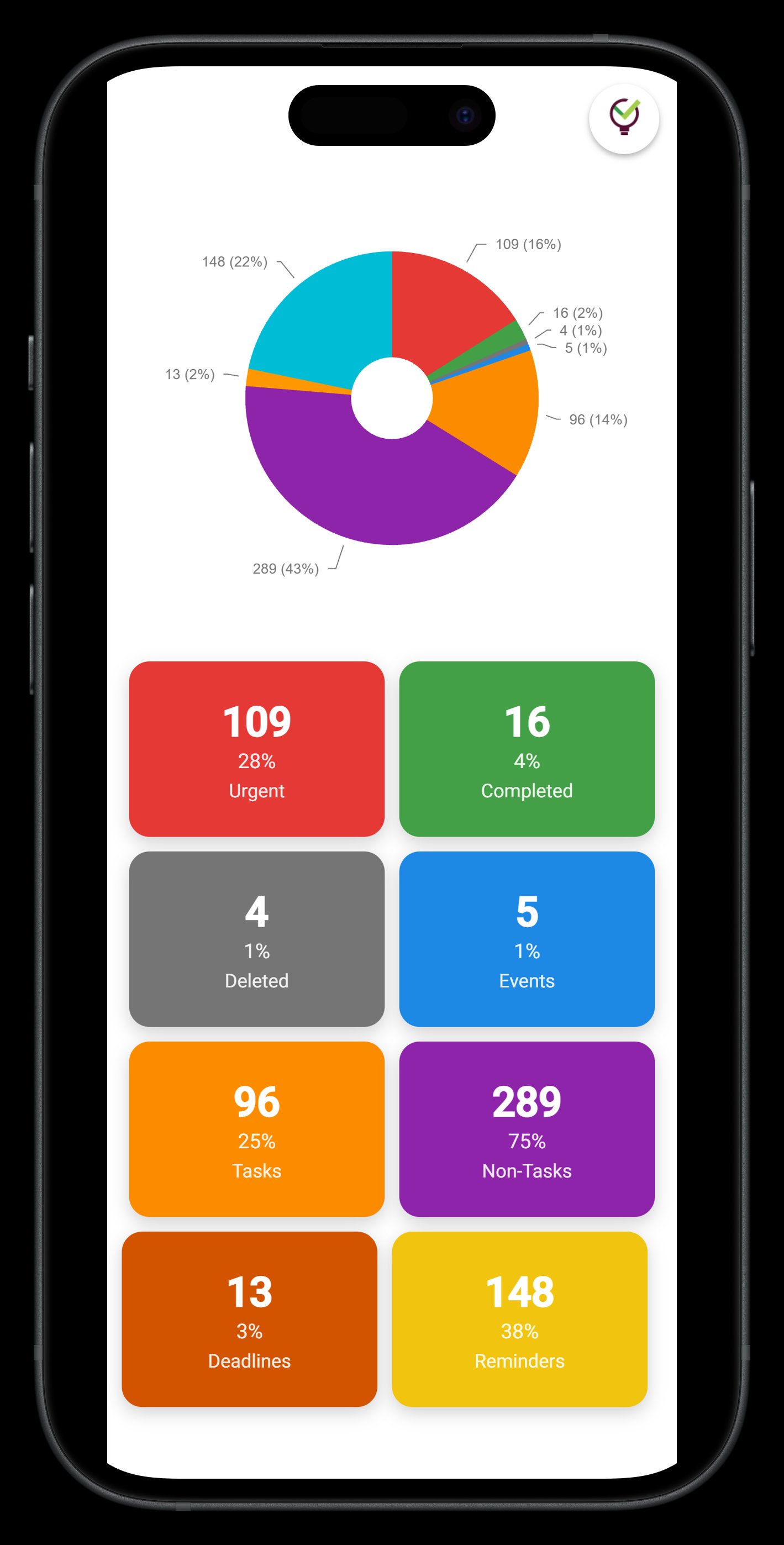
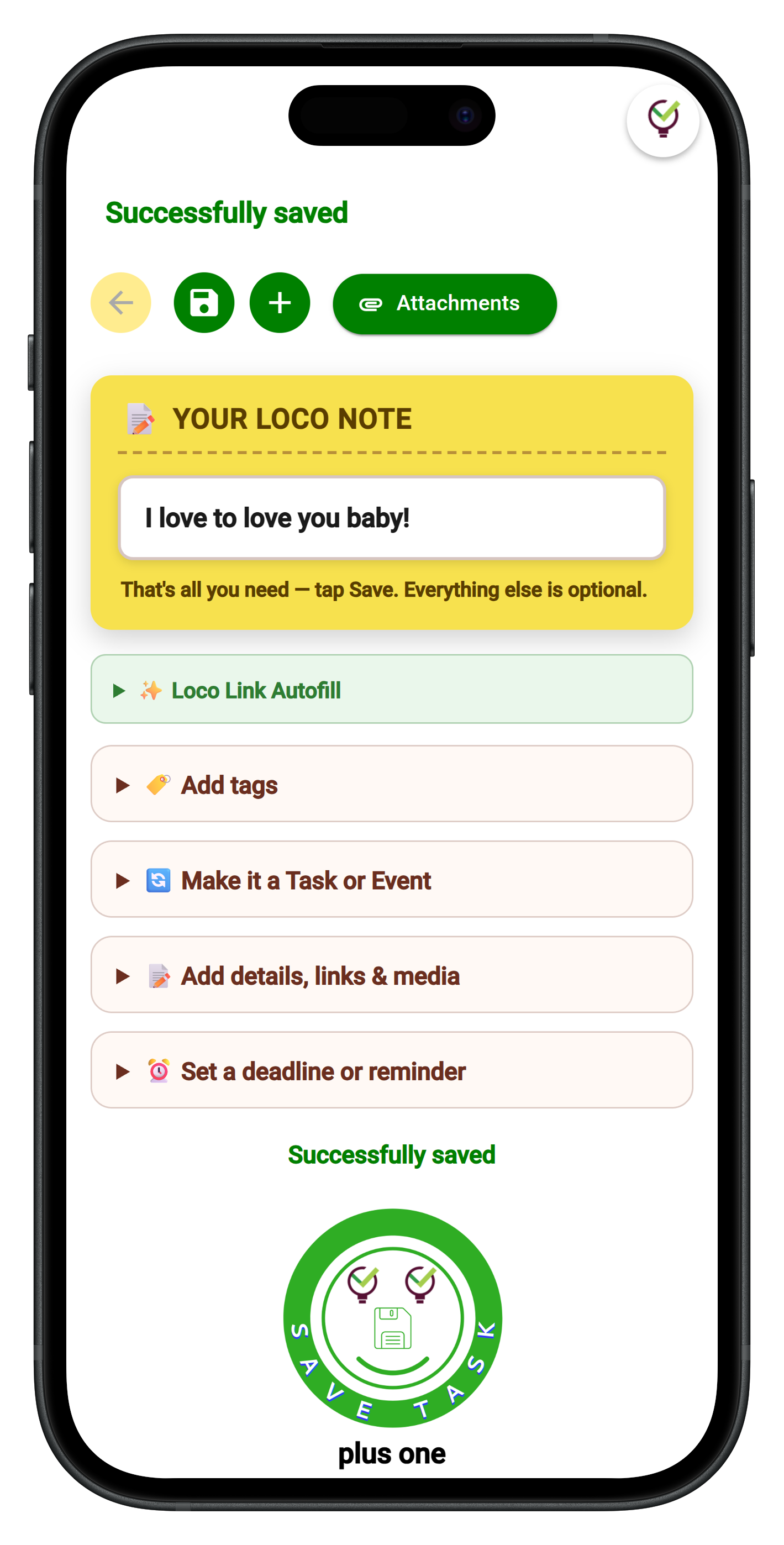
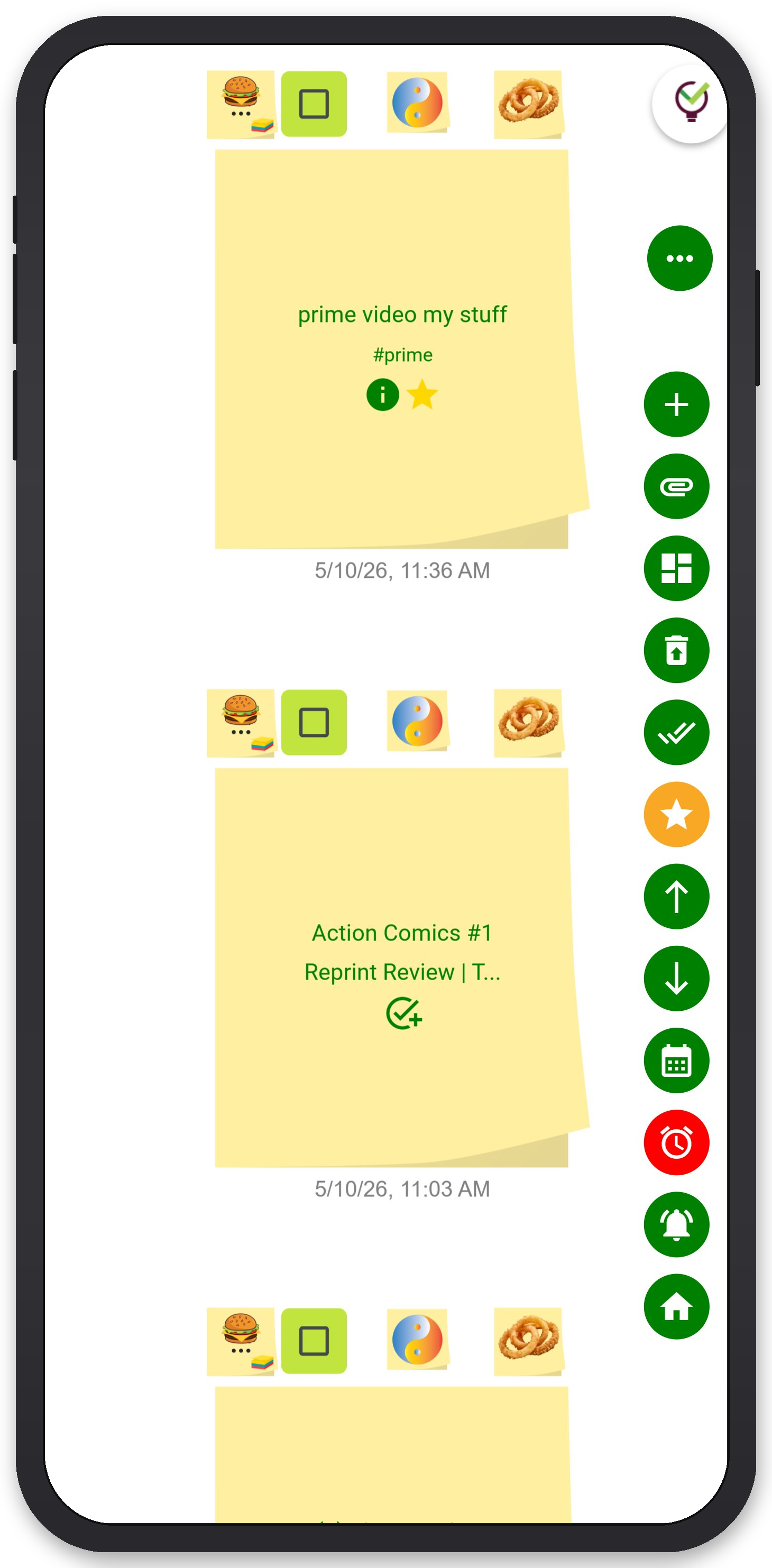
TaskLoco is a task and project management app built around sticky notes — the mental model most people already use when they're figuring out what needs to happen. Notes can hold tasks, checklists, file attachments, images, and reminders. The wall view lets you arrange everything spatially, so your project isn't buried in a linear list — it's laid out the way it lives in your head.
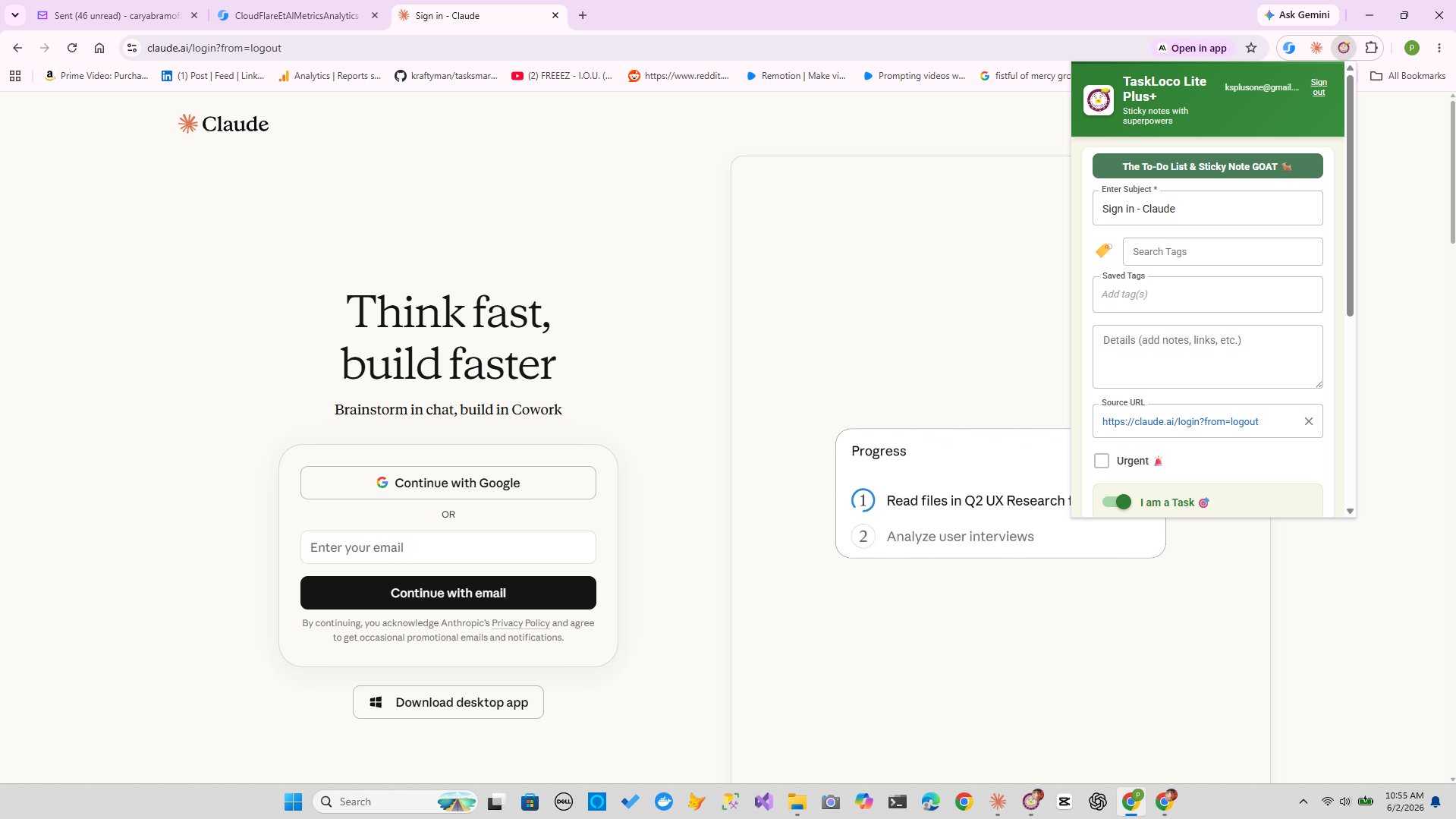
There are three tiers. TaskLoco Lite is a free native iPhone and Android app — completely anonymous, no sign-in required, up to 20 notes stored on your device. It's a fast, private scratchpad for personal tasks with zero setup. TaskLoco Lite Plus+ is a free web app with Chrome extension. Sign in with Google, get up to 30 notes synced across all your devices, and capture any webpage in one click with the Chrome extension. No reminders, no file attachments, no team sharing — but genuinely useful for individuals who need sync without paying for it.
TaskLoco Premium is where the full tool lives. Unlimited notes, tasks, and calendar events. 10GB file storage included, with add-on tiers up to 1TB. Reminders delivered as push notifications directly to your phone and computer — and each reminder deep-links straight back to the original note, so you're never hunting for context when the alert fires. Optional email and SMS notifications are available as additional channels. Calendar view. Full team sharing that works like email: share a note with a teammate, they clone it and make it their own — no permissions to configure, no access levels to manage, no admin overhead.
The Chrome extension is free and works with Lite Plus+ and Premium. One click captures any webpage — the URL, the title, and any text you highlight — and turns it into a TaskLoco note. For anyone who does research, client work, or content planning, this alone is worth the switch.
How the Major Tools Compare
The task and project management space has a handful of clear categories. Understanding which category each tool belongs to makes the choice much easier.
Asana is built for structured project work with defined tasks, assignees, and timelines. It's genuinely good at managing cross-functional projects where you need to see dependencies and who's blocked on what. The tradeoff is complexity — getting a new team member up to speed takes real time, and the interface rewards power users who live inside it all day. If your work is mostly project-based with clear deliverables and handoffs, Asana is a strong choice. If your work is more fluid and note-driven, it can feel like overkill.
Notion blurs the line between notes and tasks. It's a flexible workspace that can be shaped into almost anything — which is both its strength and its biggest problem. Most teams spend more time building their Notion setup than actually using it. It's genuinely powerful for documentation and knowledge bases. For quick task capture and day-to-day work management, it's slower than tools built specifically for tasks.
Todoist is a polished, focused task manager with natural language input and solid repeat-task handling. It's excellent for personal productivity. Team features exist but feel like a bolt-on rather than a core design principle. If one person needs a personal task system and team collaboration isn't the priority, Todoist is worth a look.
Monday.com is a visual project tracker built around customizable boards and dashboards. It scales well for teams that want visibility into who's doing what across multiple projects. The UI is engaging, but the per-seat pricing can add up quickly for larger teams, and the learning curve for custom automations is real.
Trello is a Kanban board — simple, visual, and genuinely easy to pick up. For teams that only need a drag-and-drop board with cards and columns, it delivers. The moment you need reminders, file management, or anything beyond basic card-moving, you're adding Power-Ups or switching tools.
File Attachments, Team Sharing, and the Features That Actually Matter Daily
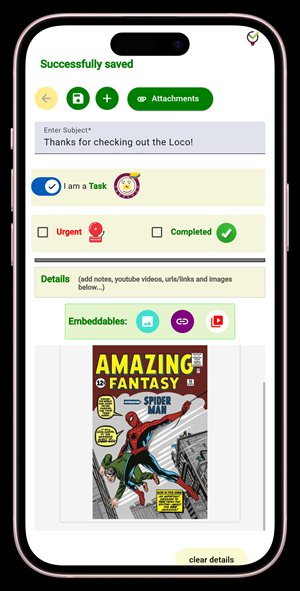
File attachments sound like a minor feature until the fourth time you paste a link into a task comment and the link breaks a month later. TaskLoco Premium includes 10GB of file storage per person, with stackable add-on tiers (10GB / 50GB / 200GB / 1TB) if you need more. Files live inside the note they belong to — attached directly to the context, not floating in a separate folder somewhere.
Team sharing in TaskLoco works the way sharing should: you share a note the way you'd send an email. The recipient gets it, clones it, and it becomes theirs to work with. No roles to assign. No permissions matrix. No admin panel to navigate before someone can see what you sent them. For teams that move fast and don't want collaboration to require a setup process, this is a significant advantage over tools that model sharing around organizational hierarchies.
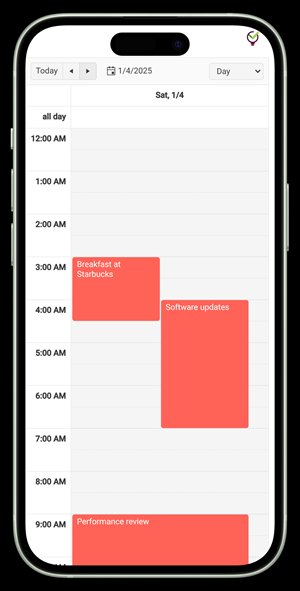
The calendar view gives you a time-based look at everything with a due date — across all your notes and tasks, in one place. No exporting to Google Calendar. No third-party integration required. It's built in.
For capturing work from the web, the Chrome extension is free and available to Lite Plus+ and Premium users. One click on any page creates a TaskLoco note with the URL, page title, and any highlighted text pre-filled. For research, content planning, competitive tracking, or client reference material, this is a genuinely faster workflow than any alternative.
How TaskLoco Compares
| Feature | TaskLoco | Most Apps |
|---|---|---|
| Free tier | Two free tiers: Lite (20 notes, native app, no sign-in) and Lite Plus+ (30 notes, synced, web + Chrome extension) FREE | Most tools offer a limited free plan — usually capped on seats, projects, or features |
| Native mobile app | TaskLoco Lite — free native iPhone & Android app, anonymous, no sign-in, 20 notes on device FREE | Most major tools have native mobile apps with full feature access |
| Cross-device sync | Lite Plus+ and Premium sync across all devices via web app | Available on most paid plans and some free tiers |
| Chrome extension | Free one-click webpage capture — turns any page into a note instantly FREE | Some tools have browser extensions; capture quality and ease varies widely |
| Reminders | Push notifications to phone and computer, deep-linking back to the original note; optional email and SMS add-on | Most tools offer reminders on paid plans, with varying notification channels |
| File attachments | 10GB included with Premium; add-on tiers up to 1TB, stackable. Files live inside the note they belong to. | File attachments available on most paid plans; storage limits vary by tool and tier |
| Team sharing | Yes — included with Premium. Each team member requires a separate subscription — currently $9.99/month per person, but TaskLoco is offering a Charter Member special: 50% off for life, currently $4.99/month per person for the first 500 subscribers with code CHARTER50. | Most tools offer team sharing; typically requires assigning roles and managing access levels |
| Unlimited notes and tasks | Unlimited with Premium; 20 notes on Lite, 30 on Lite Plus+ | Free plans typically cap projects or tasks; unlimited usually requires paid tier |
| Calendar view | Built into Premium — see all tasks and events with due dates in one calendar, no integration needed | Calendar views available on most paid tools; some require integration with external calendars |
| Note-centric design | Built around sticky notes — tasks, files, reminders, and checklists all live inside a single note | Most tools are task-list or board-centric; notes are secondary or separate |
| Gantt charts / project timelines | Not available | Available in several major tools (Asana, Monday.com, Teamwork) on paid plans |
| Task dependencies | Not available | Available in structured project tools like Asana, Monday.com, and Wrike |
| Natural language task input | Not available | Todoist and some other tools support natural language entry for dates and recurrence |
| Database / custom fields / relations | Not available | Notion and Airtable offer database-style custom fields and relational data |
| Enterprise SSO / compliance | Not available | Available in enterprise tiers of Asana, Monday.com, Notion, and others |
| API access / integrations | Limited integrations | Most major tools offer public APIs and large integration libraries (Zapier, Slack, etc.) |
| Privacy / anonymous use | Lite requires zero sign-in, zero account, completely anonymous — unique in the category FREE | All competitors require account creation to use any feature |
| Pricing model | Simple per-person monthly subscription. Charter offer available — see pricing below. | Per-seat pricing is standard; most tools have multiple tiers with feature gating at each level |
Who Should Use Each
Use the TaskLoco if…
- You want a tool that feels like organized sticky notes — fast to open, fast to update, zero learning curve
- You need tasks, reminders, file attachments, and team sharing without configuring a permission system
- You do research or content work and want one-click webpage capture directly into your notes
- You want reminders that fire as push notifications and drop you straight back into the relevant note
- You're managing projects that are fluid and note-driven rather than rigidly structured with formal dependencies
- You want a clean, generous free tier to test the tool properly before paying anything
- You need a fully anonymous mobile option with zero sign-in for personal tasks alongside a synced team tool
Use Most Apps if…
- You manage complex cross-functional projects and need Gantt charts, task dependencies, and formal timelines
- Your organization requires enterprise SSO, audit logs, or specific compliance certifications
- You need a public API and deep integrations with a large library of third-party tools
- You want natural language task input that automatically parses dates and recurring schedules
- You need database-style custom fields, relations between records, or formula columns in your task views
TaskLoco Premium is regularly $9.99/month per person. Right now, charter members can lock in 50% off the regular price — forever. That means $4.99/month per person today. And if our price ever goes up, you still pay half. Always.
Code CHARTER50 auto-applies at checkout. First 500 spots only — once they're gone, this offer is gone permanently. Act fast while spots last.
Every Premium subscription includes unlimited notes, 10GB file storage, reminders, calendar, and team sharing. Each team member requires a separate subscription. 7-day free trial — no charge until day 8. Cancel anytime.
Free Options: TaskLoco
TaskLoco Lite
- Native iPhone & Android app
- Completely anonymous — no sign-in
- Data stays on your device
- Up to 20 notes
- Free forever
TaskLoco Lite Plus+
- Web app + Chrome extension
- Sign in with Google
- Wall syncs across all devices
- Up to 30 notes
- Free forever
Lock In 50% Off — Forever
7-day free trial. No charge until day 8. CHARTER50 auto-applies at checkout.
🔒 Lock In My Charter SpotSee TaskLoco in Action
Frequently Asked Questions
What is task and project management software?
Task and project management software is any tool that helps you capture work, organize it, set deadlines, assign ownership, and track progress to completion. The category ranges from simple personal to-do list apps to full enterprise project suites with resource planning and Gantt charts. Most individuals and teams need something in between — a tool that's fast enough for daily use but capable enough to handle real projects with multiple people.
What features should I prioritize when choosing a task management tool?
Start with three questions: How fast is it to add a task? Can my whole team use it without a training session? Does it handle the specific things I need — reminders, file attachments, team sharing, calendar view — or will I need another tool alongside it? The most feature-rich tool is rarely the right answer. The right answer is the one your team actually opens every day.
How is TaskLoco different from tools like Asana or Monday.com?
TaskLoco is built around the sticky note — a mental model most people already use when organizing work. Tasks, files, reminders, and checklists all live inside a single note. Sharing works like email — send a note, the recipient clones it and owns it, no permissions required. Tools like Asana and Monday.com are built around structured project management with defined hierarchies, which is powerful for complex project work but adds friction for everyday task management. TaskLoco Premium also includes reminders that deep-link back to the original note, 10GB of file storage, a calendar view, and a free Chrome extension for one-click webpage capture.
Does TaskLoco have a free version?
Yes — two of them. TaskLoco Lite is a free native iPhone and Android app that requires no sign-in and no account. It stores up to 20 notes on your device and is completely anonymous. TaskLoco Lite Plus+ is a free web app and Chrome extension. Sign in with Google, get up to 30 notes synced across all your devices, and capture any webpage in one click. Reminders, file attachments, unlimited notes, and team sharing are Premium-only features.
Is TaskLoco good for team collaboration?
Yes. TaskLoco Premium includes full team sharing — share a note the way you'd send an email, and the recipient clones it and makes it their own. No access levels, no roles to configure, no admin panel. Reminders fire as push notifications with a deep link back to the original note, so the right person is always looking at the right work at the right time. Optional email and SMS notifications are available as additional channels. Each team member requires their own Premium subscription.
What are the limitations of TaskLoco compared to enterprise project tools?
TaskLoco doesn't have Gantt charts, task dependencies, or project timeline views. It doesn't support enterprise SSO, compliance certifications, or extensive third-party API integrations. Natural language task input isn't available. If your work centers on complex multi-team project delivery with formal dependencies and executive reporting dashboards, a dedicated enterprise project tool will serve you better. For most teams doing real work that's more fluid and note-driven, TaskLoco covers the bases that actually matter day to day.
How much does TaskLoco Premium cost?
$9.99/month per person (currently $4.99/month per person for first 500 charter members with code CHARTER50)
Born in Brooklyn. Powered by AWS. Your data stays yours.
TaskLoco is available on iPhone, Android, Chrome, and every web browser.