You sat down to finish one thing. Twenty minutes later you're three tabs deep into something that wasn't even on your list. It's not laziness — it's a broken system. Your brain is pattern-matching against every unfinished task you haven't written down, every ping you haven't processed, every "I should also" that hasn't found a home yet. The result feels like distraction. It's actually your working memory doing its job too well.
The fix isn't another browser extension that blocks Reddit. It's a set of habits that close open loops, create real task boundaries, and make your attention sticky. This guide covers the actual method — the kind you can use with a pen and paper if that's all you have.
Why You Keep Switching (It's Not What You Think)
Most productivity advice treats task-switching as a discipline failure. It isn't. Research on cognitive load consistently shows that the brain treats every uncaptured commitment as an active process running in the background. If you have twelve things you "need to remember to do," your mind will interrupt you with them at random intervals — regardless of how focused you're trying to be.
The other major driver is friction asymmetry. Starting a new task feels momentarily easier than pushing through a hard part of the current one. Switching gives you a micro-hit of novelty and the illusion of progress. Over time, your brain learns that switching is rewarded, and it starts suggesting it more aggressively.
There's also environment design. If your phone is face-up on your desk, if your email tab refreshes with a number badge, if your chat is open — you're not fighting distraction, you're soaking in it. The environment is doing the switching for you.
The Method: Four Steps That Actually Work
These steps work in order. Skipping step one and jumping to time-blocking is why most focus systems fall apart within a week.
Step 1 — Drain the inbox of your mind. Before any work session, spend five minutes writing down every open loop you're aware of: tasks, worries, things you promised someone, things you're waiting on. Don't organize it yet. Just get it out. This is often called a "brain dump" and it works because it moves items out of active working memory and into a trusted external system. Once something is written down somewhere you trust, your brain stops pinging you about it.
Step 2 — Pick exactly one task for the next block. Not a project. Not a theme. One specific task with a clear done state. "Work on the report" is not a task. "Write the executive summary section" is. Vague tasks invite switching because your brain can't measure progress on them. Specific tasks have an obvious finish line, which makes staying on them much easier.
Step 3 — Set a visible timer and announce the contract. Tell yourself — out loud if needed — "I'm doing this one thing for the next 25 minutes." A visible countdown timer (phone, browser tab, physical timer) does two things: it makes the time commitment feel real, and it gives you a psychological off-ramp. You're not working forever. You're working until that timer ends. This dramatically lowers the urge to escape. When the timer fires, you decide whether to extend or take a break — you're in control.
Step 4 — Make switching costly, not just inconvenient. When you feel the urge to switch mid-block, write the new thought down immediately — don't act on it. This is the keystone habit. You acknowledge the pull without feeding it. Over time, your brain learns that switching thoughts get captured (so they're not lost) but don't get acted on immediately. The interruption reflex weakens because it stops being rewarded.
Repeat this loop consistently for two weeks and the switching reflex genuinely diminishes. Not because you've become a different person, but because the system has closed all the loops your brain used to use as escape routes.
Environment Design: Remove the Triggers
Even a perfect task system will crack under a hostile environment. These changes are low-effort and high-impact.
- Phone face down, on silent, in a different room if possible. Physical distance from a device reduces check-in urges by a measurable amount — the pull isn't just psychological, it's proximity-driven.
- Close every browser tab not related to the current task. Tab-hoarding feels like preparation. It's actually a buffet of potential switches waiting to happen. Use bookmarks or a capture note for anything you want to get back to.
- One screen rule during deep work. Dual monitors are great for reference tasks. They're a switching machine for anything requiring concentration. For deep work blocks, work on one screen with everything else closed or hidden.
- Handle communication in batches. Email and chat are not real-time requirements for most jobs. Set two or three windows per day where you process messages. Outside those windows, close the app entirely — not minimized, closed. A badge count you can see is a standing invitation to switch.
- Write tomorrow's single most important task before you stop working today. Decision fatigue at the start of a day is a major switching trigger. If you have to figure out what to do first, you'll bounce between options before you've even started. Pre-deciding removes that friction entirely.
None of these require technology. They require intention once, and then routine carries them.
How TaskLoco Fits Into This System
The method above works with any capture system — a paper notebook, a plain text file, a whiteboard. But if you want a digital tool that matches how this method actually works in practice, TaskLoco is built for it.
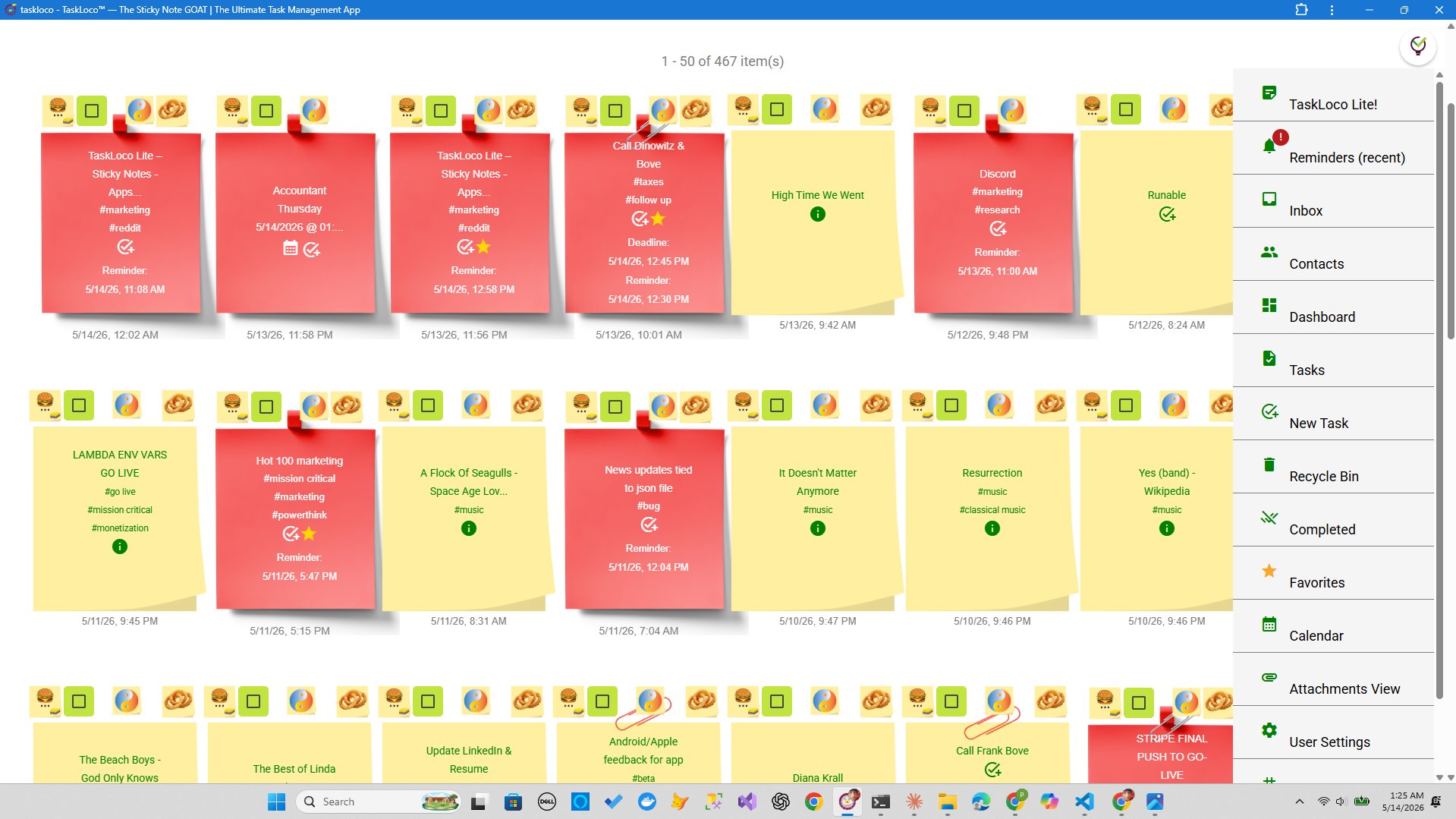
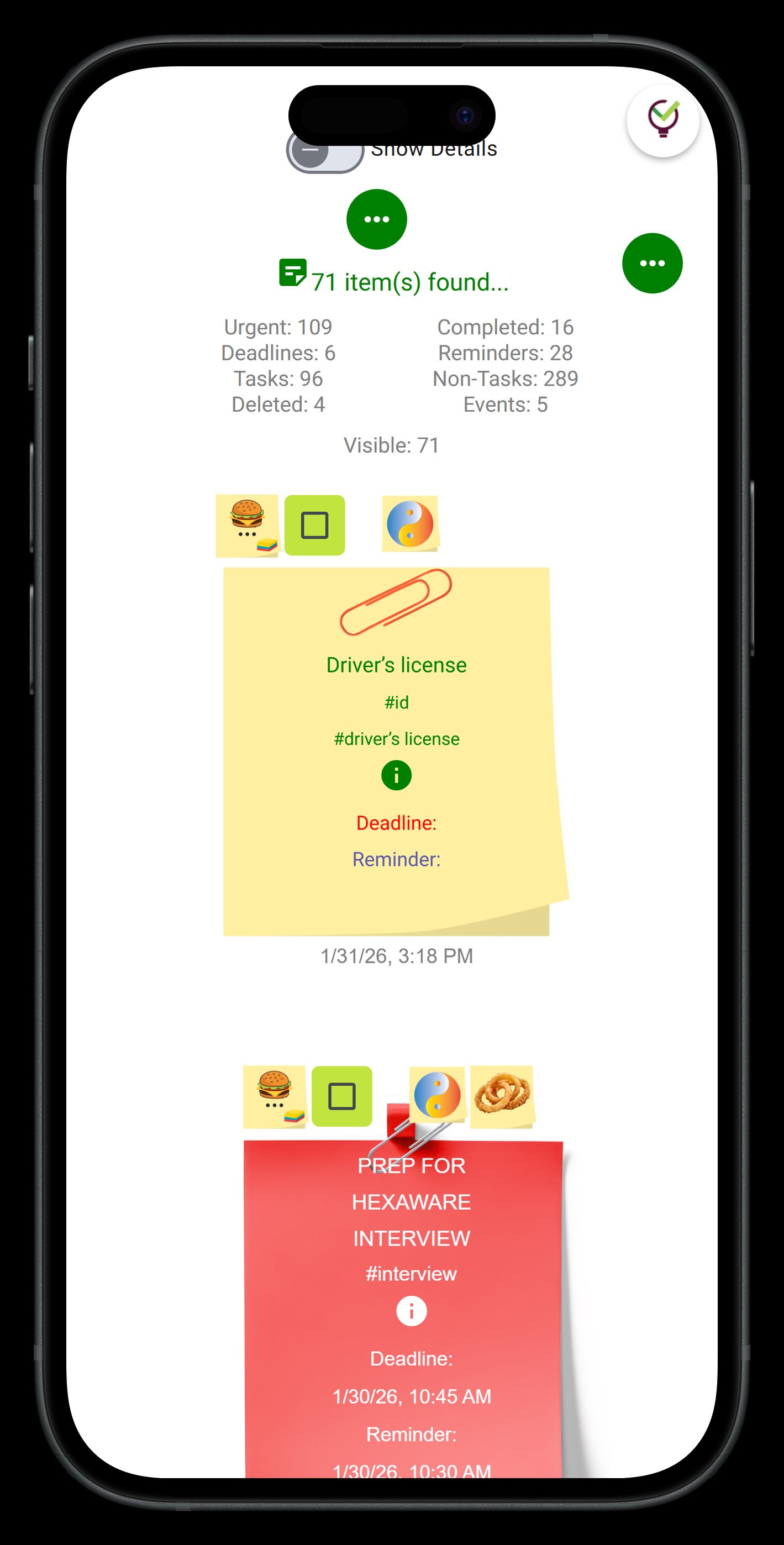
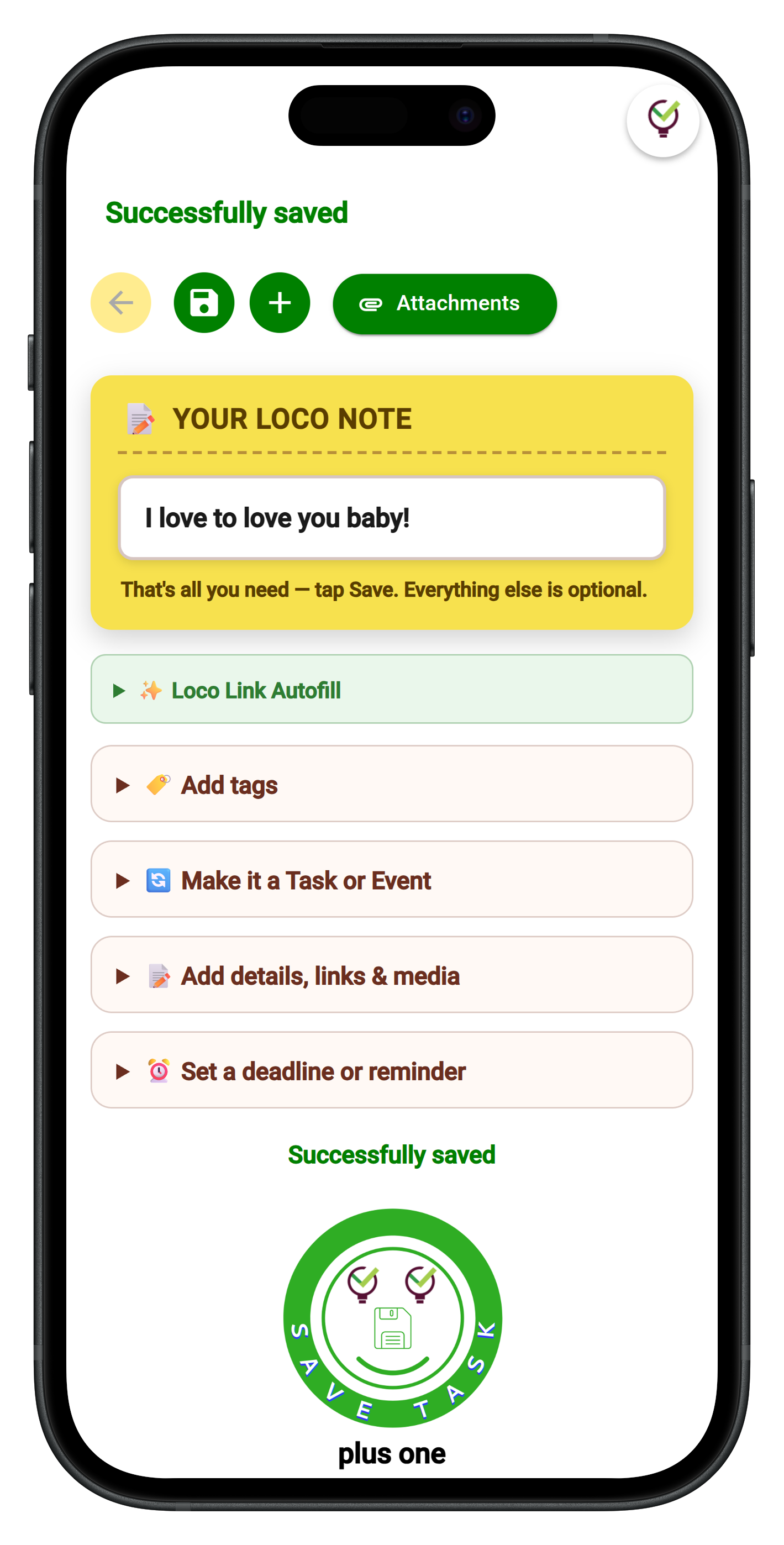
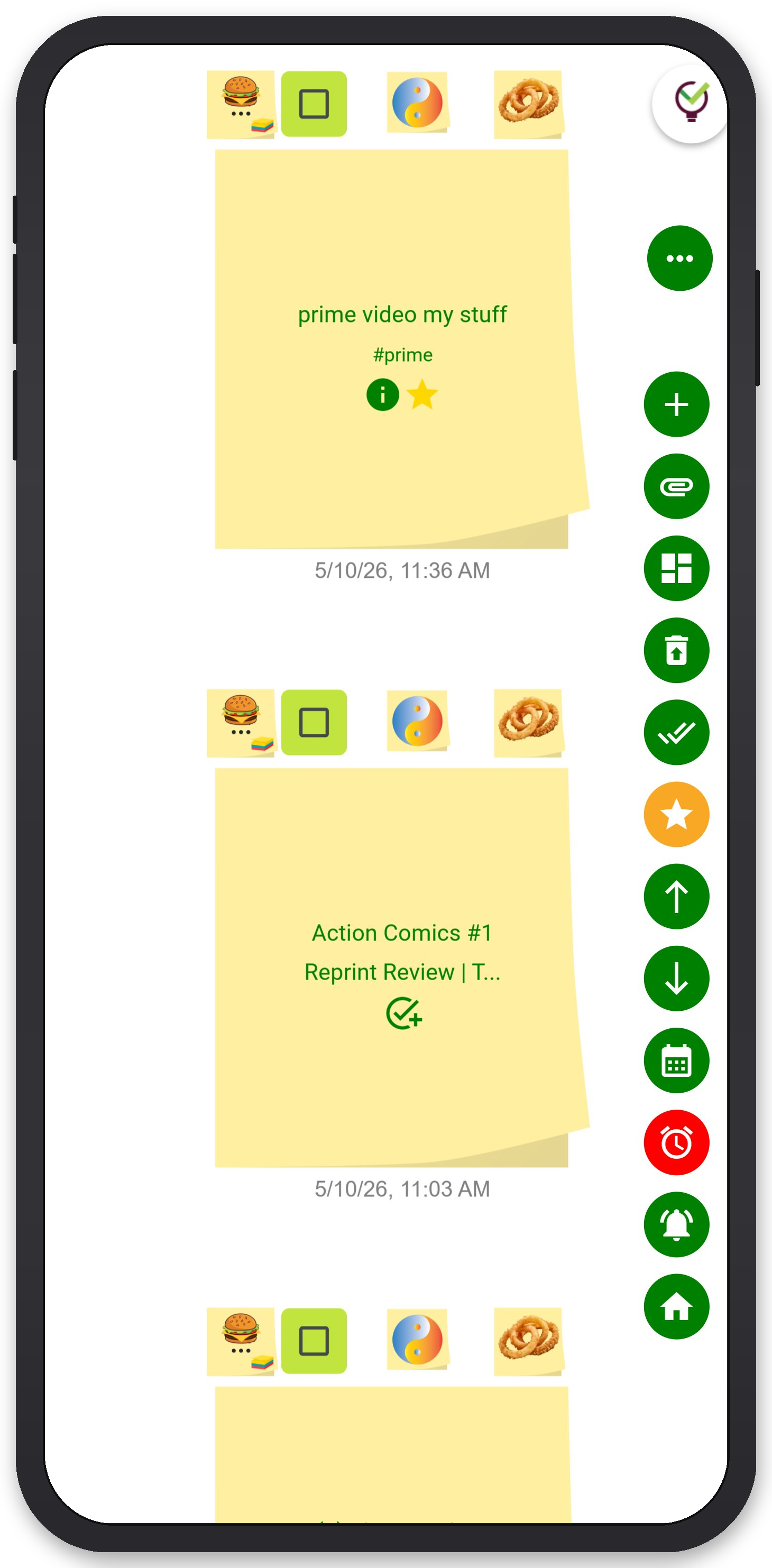
The core of TaskLoco is sticky notes — fast to create, easy to pin, built for the kind of rapid brain-dump that step one requires. When a thought interrupts you mid-task, you open a note, write it down, and close it. It takes five seconds and the thought is captured. No new project to create, no fields to fill in, no system to navigate.
For the actual focus blocks, TaskLoco's Premium reminders work as push notifications — delivered directly to your phone and computer so they fire at the exact moment your timer ends, and each one deep-links straight back to the note it belongs to. You're not hunting for what's next. The reminder takes you there. Optional email and SMS notifications are available too, but the push notification to your device is the default and it's instant.
Team sharing in Premium works the way you'd want it to: share a note with a teammate and they can clone it and make it their own. There are no permission levels to manage, no access hierarchies to configure. It works the same way forwarding an email works — clean and fast.
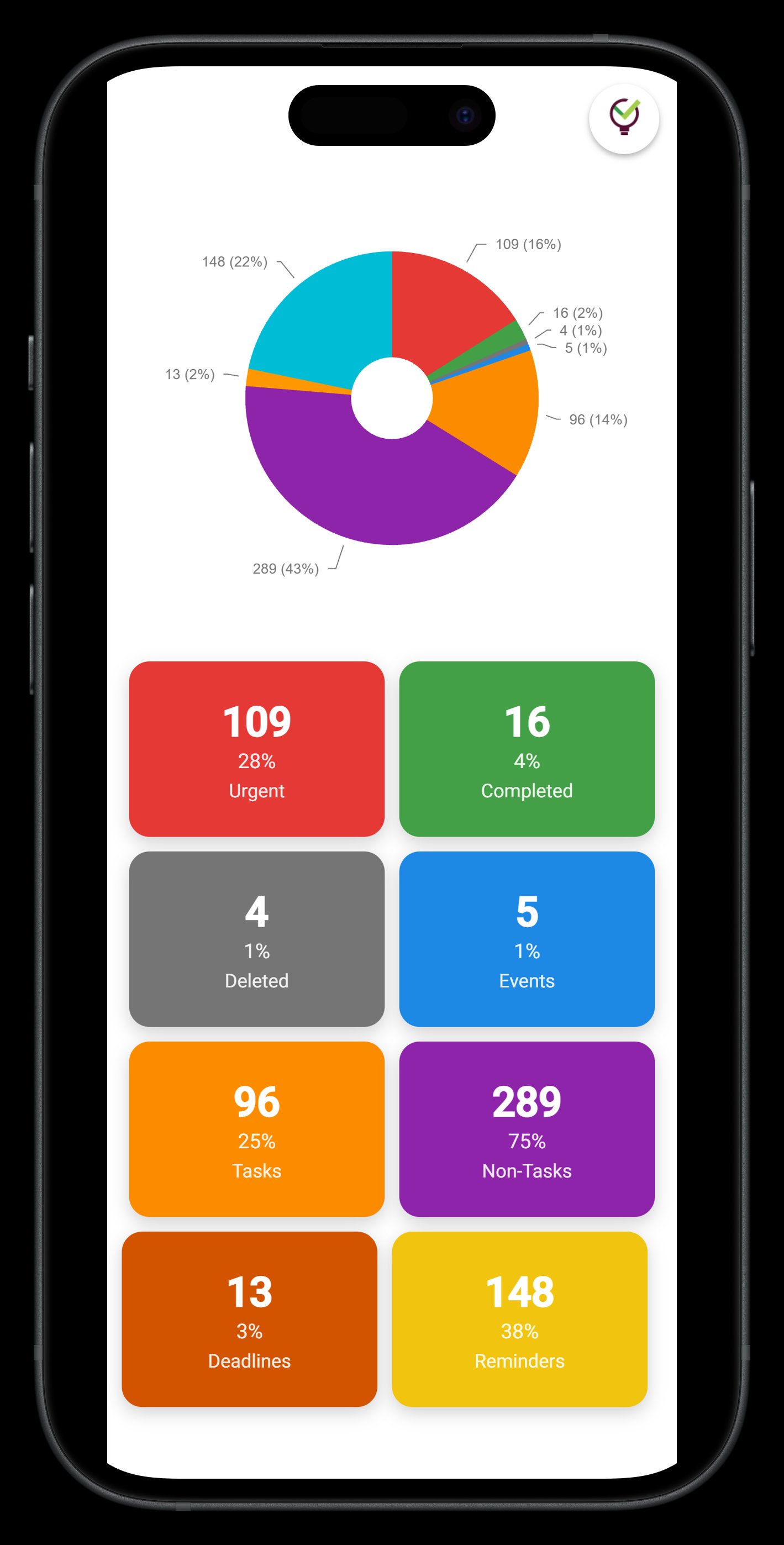
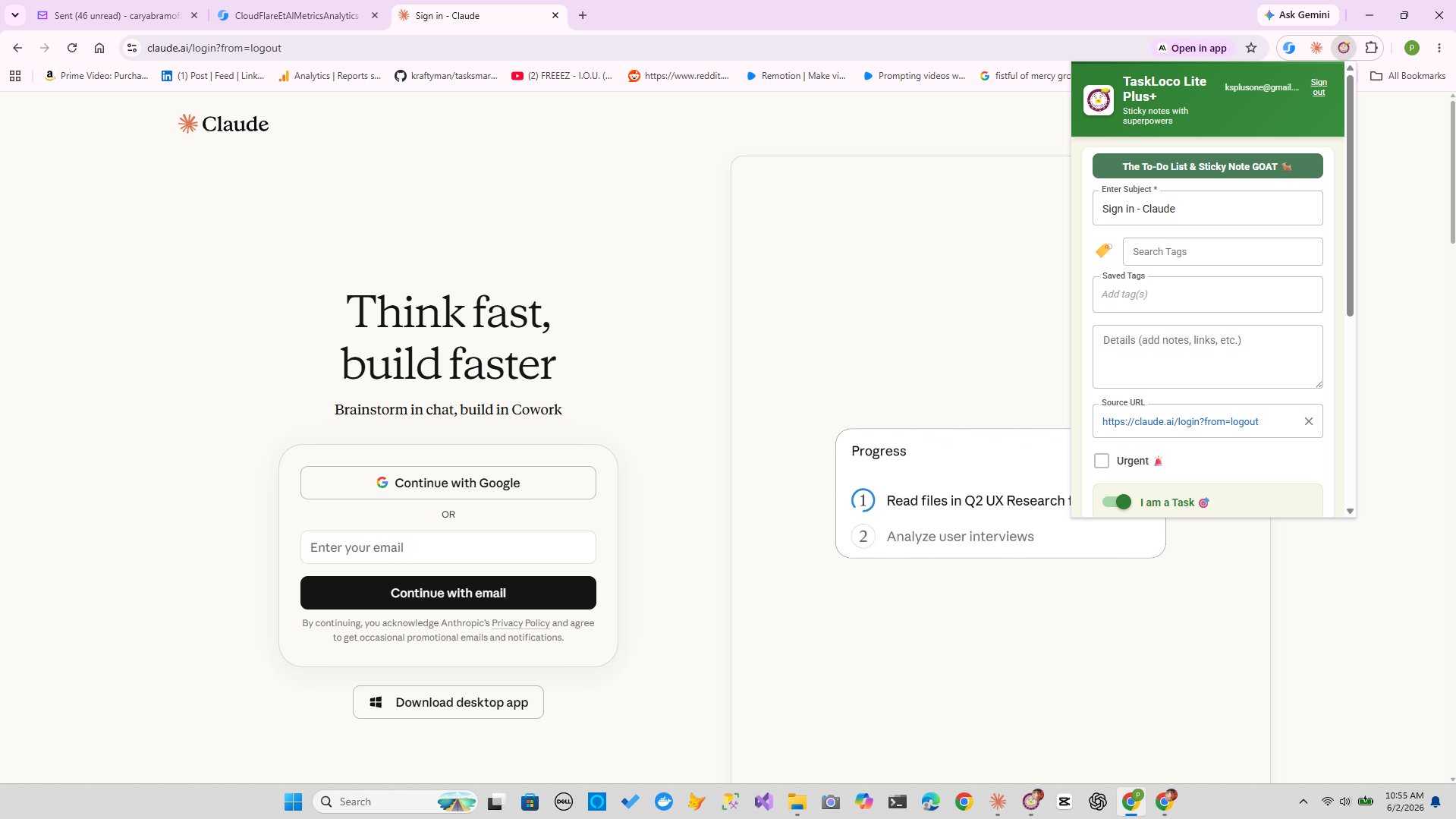
TaskLoco Lite is a free native app (iPhone and Android) — no sign-in, no account, up to 20 notes stored directly on your device. It's a genuine starting point for anyone who wants to try the capture habit before committing to anything. TaskLoco Lite Plus+ is a free web app that syncs across all your devices and lets you capture any webpage instantly with the Chrome extension — useful when you're doing browser-based research and want to capture a source without leaving your focus block.
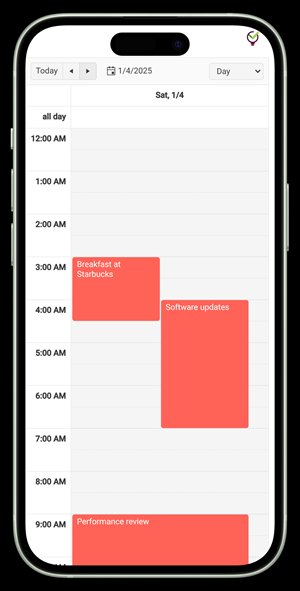
If you want the full system — reminders, 10GB file storage, calendar view, unlimited notes, and team sharing — that's TaskLoco Premium.
TaskLoco Premium is regularly $9.99/month per person. Right now, charter members can lock in 50% off the regular price — forever. That means $4.99/month per person today. And if our price ever goes up, you still pay half. Always.
Code CHARTER50 auto-applies at checkout. First 500 spots only — once they're gone, this offer is gone permanently. Act fast while spots last.
Every Premium subscription includes unlimited notes, 10GB file storage, reminders, calendar, and team sharing. Each team member requires a separate subscription. 7-day free trial — no charge until day 8. Cancel anytime.
Free Options: TaskLoco
TaskLoco Lite
- Native iPhone & Android app
- Completely anonymous — no sign-in
- Data stays on your device
- Up to 20 notes
- Free forever
TaskLoco Lite Plus+
- Web app + Chrome extension
- Sign in with Google
- Wall syncs across all devices
- Up to 30 notes
- Free forever
Lock In 50% Off — Forever
7-day free trial. No charge until day 8. CHARTER50 auto-applies at checkout.
🔒 Lock In My Charter SpotSee TaskLoco in Action
Frequently Asked Questions
Why do I keep switching tasks even when I know I shouldn't?
Because the urge to switch is generated by your system, not your character. Every uncaptured task is an active process in your working memory — your brain interrupts you with it to make sure it doesn't get forgotten. The fix is to close every open loop by writing it down before you start working. Once items are captured somewhere you trust, the interruptions stop.
What is task-switching costing me in real productivity?
Studies on attention residue show it takes an average of over 20 minutes to fully return to a deep work state after an unplanned interruption. If you're switching tasks every five minutes, you're spending almost no time in the productive cognitive state where real work actually happens. The cost compounds fast across a workday.
Does the Pomodoro technique actually help with task-switching?
Yes, but only if you pair it with a capture habit. The timer alone gives you a finite work window, which lowers the urge to escape. But if you don't have a place to immediately write down interrupting thoughts, you'll still act on them mid-block. Use the timer alongside a fast capture system and the combination is genuinely powerful.
How do I stop context-switching between work apps?
Reduce the number of apps you have open during a focus block to the minimum required for the specific task at hand. Close everything else. For capture — new thoughts, things you don't want to forget — use one dedicated place rather than scattering things across Slack, email drafts, browser tabs, and sticky note apps. Fragmentation is the root cause of most app-switching.
What's the best way to handle interruptions from teammates while trying to focus?
Batch your communication windows and set expectations. Most messages that arrive during your focus block can wait 90 minutes without consequence. Communicate your focused-work windows to your team so they know when to expect a response. For urgent handoffs, shared notes work well — a teammate can drop something into a shared note and you review it at your next processing window, not mid-task.
Can TaskLoco help me focus better?
TaskLoco won't focus for you — no app can do that. But it removes the friction that causes most task-switching: uncaptured thoughts, scattered context, and reminders that fire in the wrong place at the wrong time. The brain-dump habit pairs naturally with TaskLoco's sticky-note model — fast to create, visual, and easy to review before a focus block. Premium reminders deep-link straight back to the note they belong to, so when your block ends you're never hunting for what's next. $9.99/month per person (currently $4.99/month per person for first 500 charter members with code CHARTER50)
Is there a free way to try TaskLoco before committing?
Yes. TaskLoco Lite is a completely free native app for iPhone and Android — no sign-in, no account required, stores up to 20 notes directly on your device. TaskLoco Lite Plus+ is a free web app that syncs across all your devices and includes a Chrome extension for one-click webpage capture. For reminders, file attachments, unlimited notes, and team sharing, TaskLoco Premium includes a 7-day free trial with no charge until day 8. $9.99/month per person (currently $4.99/month per person for first 500 charter members with code CHARTER50)
Born in Brooklyn. Powered by AWS. Your data stays yours.
TaskLoco is available on iPhone, Android, Chrome, and every web browser.