You've been there. Fourteen tabs open, three of them articles you were definitely going to read tonight, and then your laptop restarts. Or you close the tab by accident. Or you bookmark it under a folder called 'Stuff' and never think about it again. The page is gone — not because it disappeared from the internet, but because the way you tried to hold onto it didn't actually work.
This isn't a memory problem or a discipline problem. It's a systems problem. The default tools browsers give you for saving pages — bookmarks, pinned tabs, copy-pasted URLs in a notes app — were never really designed around the way people actually browse: fast, scattered, curious, and always interrupted. There are real, practical ways to fix this, and once you understand why things fall through the cracks in the first place, the solution becomes obvious.
Why You Keep Losing Pages (It's Not Your Fault)
The core problem is friction at the moment of discovery. When you find something interesting while browsing, you're mid-flow — reading something else, working on something else, or just following a thread of curiosity. The gap between 'I want to save this' and 'I have successfully saved this somewhere I'll find it again' is where everything gets lost.
Bookmarks fail because they're invisible. Once a bookmark is filed, it disappears into a nested folder structure that most people never open again. There's no visual reminder, no thumbnail, no context about why you saved it. Research consistently shows that most saved bookmarks are never revisited — not because the content wasn't worth reading, but because there's no mechanism to surface it again.
Open tabs fail because they're fragile. Keeping a tab open as a reminder is a habit almost everyone has, but it breaks the moment your browser crashes, your computer restarts, or you close the window by accident. Even when it doesn't break, a tab graveyard of 40+ pages creates cognitive overhead that makes you less likely to actually read any of them.
Copy-pasting URLs into notes apps is better than nothing, but it's slow enough that you skip it half the time, and a list of bare URLs with no titles or context is nearly impossible to scan when you come back to it a week later. You end up with a document full of links you can't remember the point of.
A Method That Actually Works: Capture Now, Read Later
The principle behind every effective read-later system is the same: capture immediately, consume on your own schedule. The moment you find something worth reading, saving it should take less than two seconds — otherwise you'll skip the step, tell yourself you'll remember, and lose it.
Here's how to build a real habit around this:
- Make saving a reflex, not a decision. Every time you think 'I want to read this later,' your next action should be automatic — one gesture, one click, done. If saving requires more than that, you'll only do it sometimes.
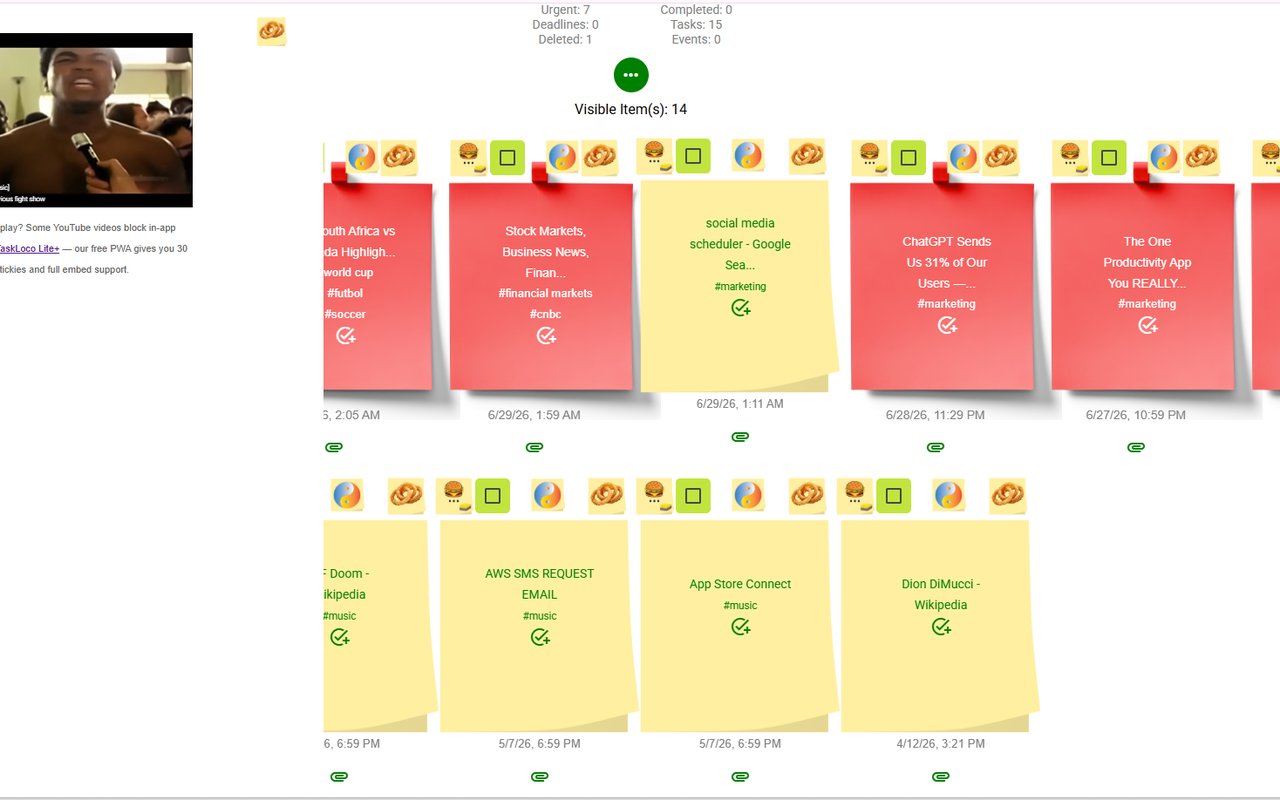
- Keep saved items visible. A list you can scroll through and scan visually is far more likely to get acted on than a folder of bookmarks or a wall of identical tabs. Visual cues — titles, thumbnails, your own notes — help your brain recognize what something was about and whether now is the right time to read it.
- Save with context. When you clip something, add a quick note about why it mattered — 'for the article I'm writing,' 'check this before the meeting,' 'good example of X.' A bare URL is almost meaningless two weeks later. A URL plus two words of context is something you can act on.
- Review on a schedule. Set aside a specific time — even fifteen minutes a week — to go through what you've saved. This turns your capture habit into something that actually feeds your reading and thinking, instead of just accumulating digital clutter.
None of this requires any app. A simple text file, a sticky note on your desktop, or even a dedicated browser bookmark folder reviewed weekly can work if you're consistent. The question is what makes consistency easiest.
Why Most Clippers Still Don't Solve the Problem
There's a whole category of tools built around this problem — read-later apps, web clippers, note-taking extensions — and most of them get part of it right. But a few common failure modes keep showing up.
Multi-step save flows. Some clippers open a sidebar, ask you to choose a notebook, pick tags, edit the title, and confirm. That's five actions where there should be one. Heavy clippers like the Evernote Web Clipper or Notion Web Clipper are powerful if you're deeply invested in those ecosystems, but they're overkill if all you want is to not lose a page. The setup cost and the save-time friction mean a lot of people install them and then stop using them.
Out of sight, out of mind. Apps that save content into a list buried behind a login and several taps don't solve the visibility problem — they just move it somewhere slightly more organized. If you have to go looking for your saved pages, you still won't revisit most of them.
No sync to where you actually read. Many people discover things on their laptop but actually have time to read on their phone, on the couch, in line, during a commute. A clipper that saves to your browser only — with no phone access — breaks the read-anywhere part of read-later.
The pattern that works is: one click to save, visual layout to browse, available wherever you are. That's the bar worth holding any save-later tool to.
One Practical Option: The Sticky Note Web Clipper
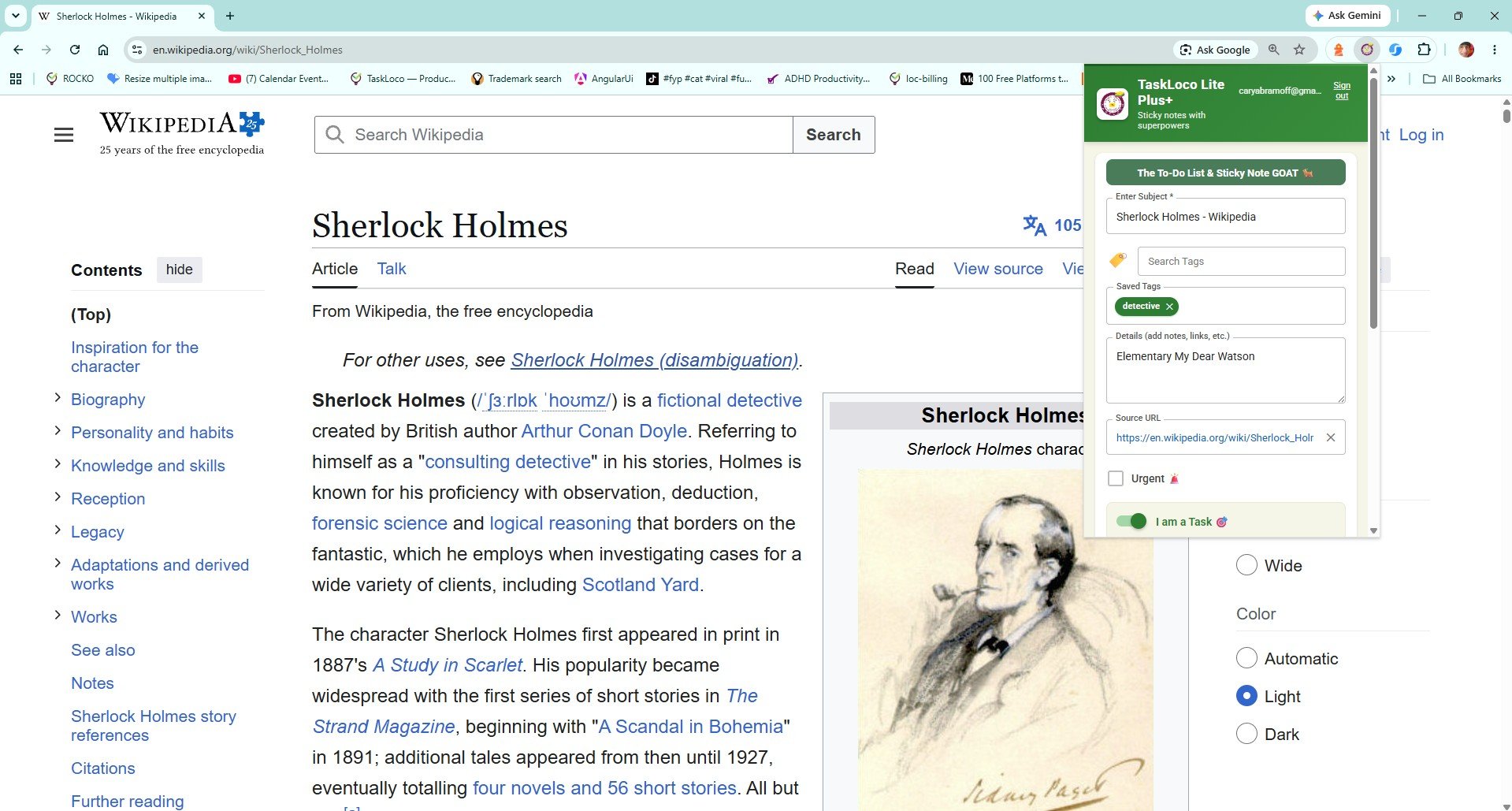
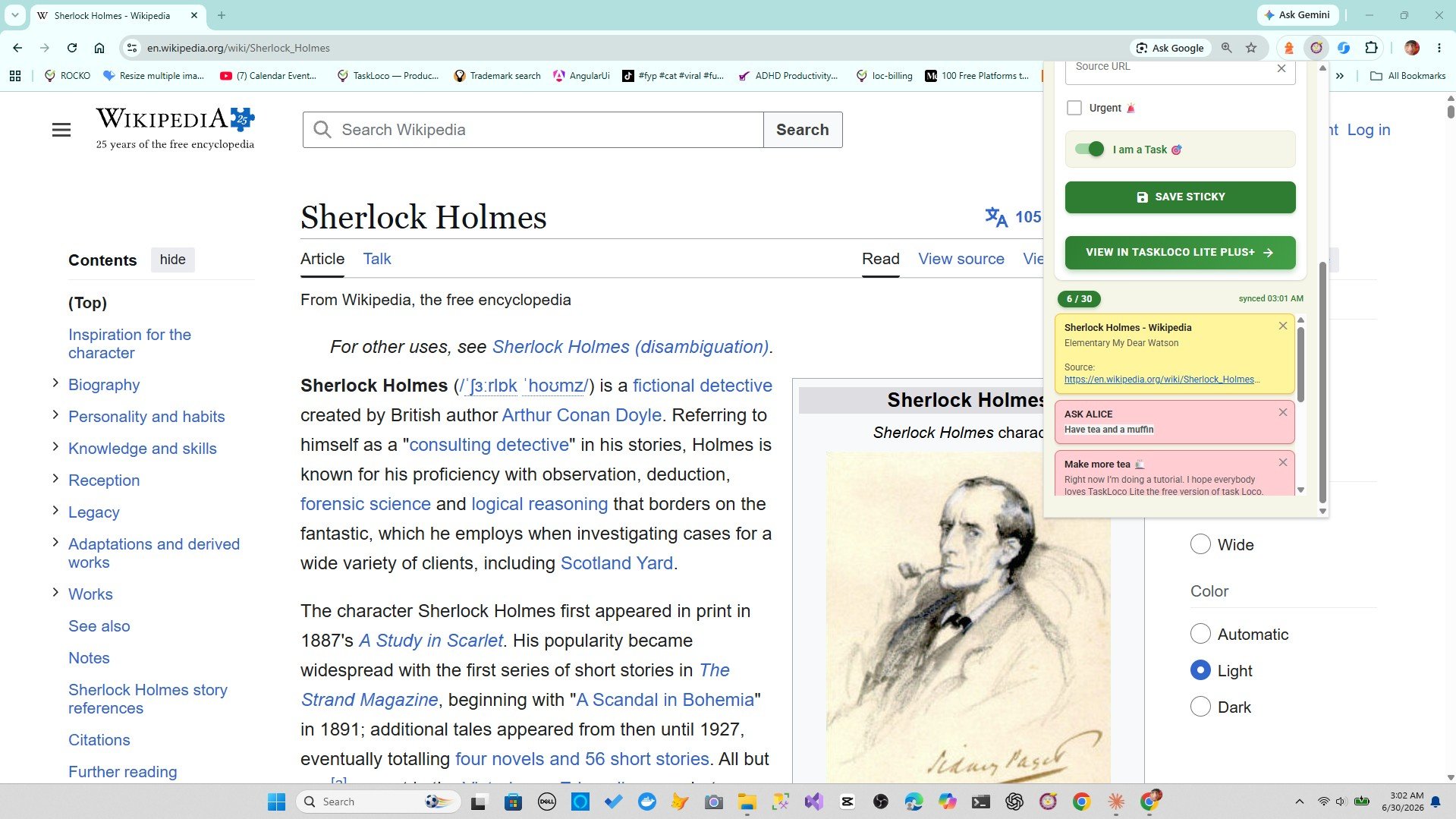
If you want a tool that matches the method above without adding overhead, the Sticky Note Web Clipper by TaskLoco is worth a look — and it's free. Install it from the Chrome Web Store, sign in with Google, and it sits in your toolbar. When you hit a page worth saving, you click the icon. The title and URL are filled in automatically. Add a quick note if you want context, or don't — either way, it takes about two seconds.
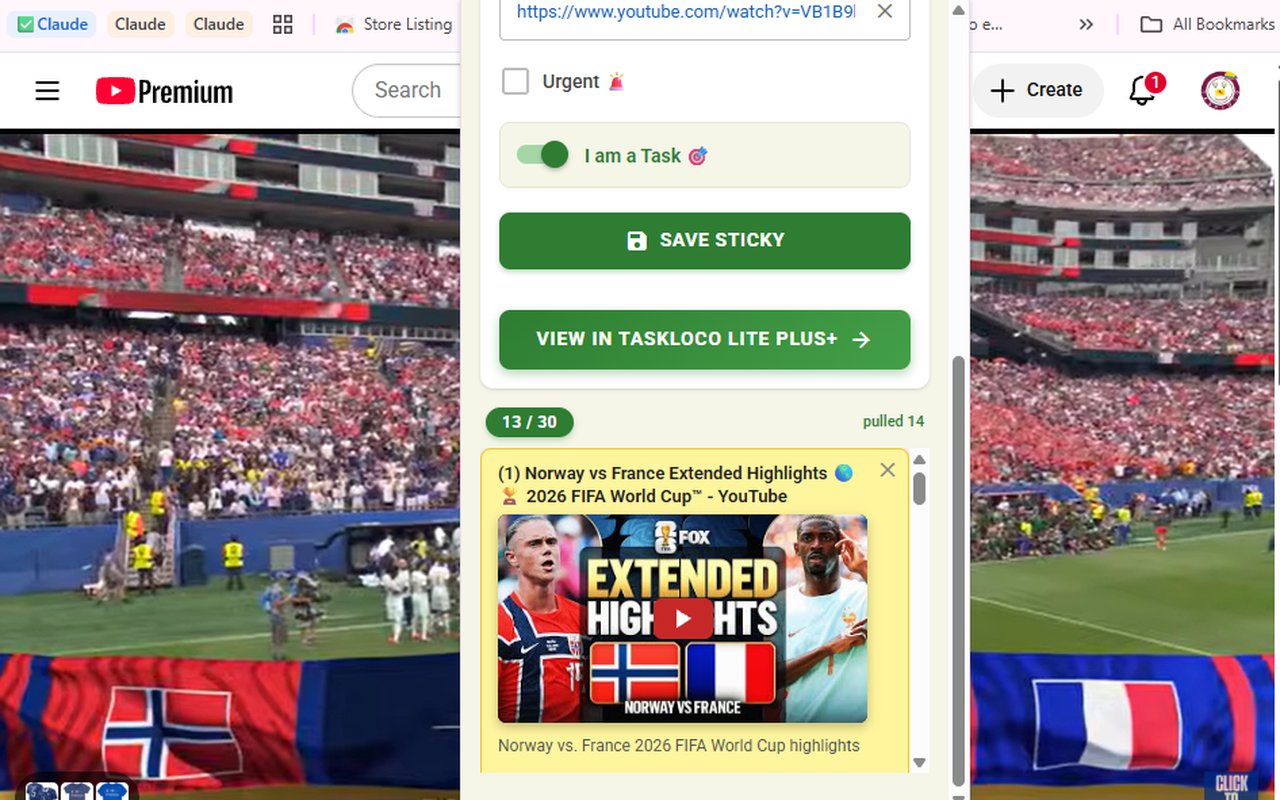
What makes it different from a bookmark is that saved pages appear as visual sticky notes on a wall you can actually see and browse. Articles, news, research, YouTube videos — clips show up as cards with titles and your notes, not as lines of text in a nested folder. YouTube videos embed directly in the note and play inside it, which is genuinely useful when you're saving a tutorial or talk you want to return to.
Everything syncs automatically to TaskLoco — accessible on Chrome, desktop, iPhone, and Android — so the page you saved on your laptop is waiting for you on your phone when you have time to read it. There's no paid plan involved in any of this; the extension is free and TaskLoco has a free tier.
If the method described earlier resonates — capture immediately, keep things visible, read on your own schedule — this is a tool that's built around exactly that workflow, without asking you to do anything complicated to make it work.
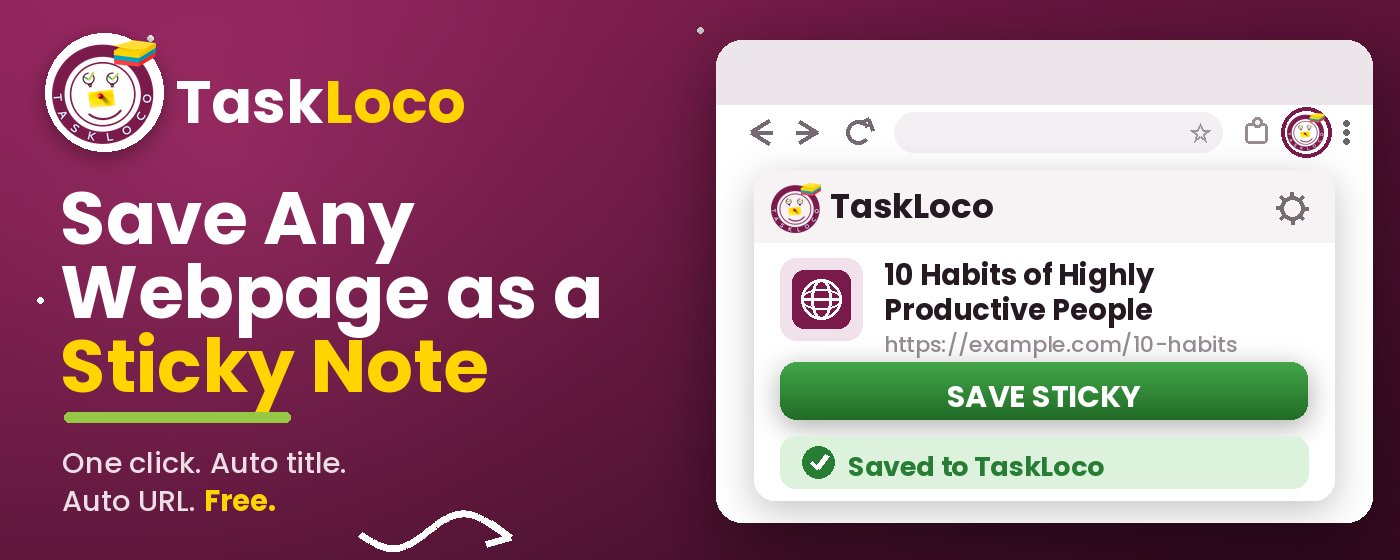
The Sticky Note Web Clipper is free. Install it from the Chrome Web Store, sign in with Google, and every page you clip becomes a sticky note you can find later.
Your clipped notes sync to TaskLoco across Chrome, desktop, iPhone, and Android — also free to start. No credit card to begin.
Get the Free Clipper
Sticky Note Web Clipper
- Free Chrome extension
- One-click save — any page, article, or video
- Title & URL auto-filled
- Tags & search
- Free forever
Synced to TaskLoco
- Sign in free with Google
- Your wall on Chrome, desktop, iPhone, Android
- YouTube videos embed & play in notes
- Visual sticky-note wall
- Free to start
Add It to Chrome — Free
One click saves any page, article, or YouTube video as a sticky note. Title and URL auto-filled.
Add to Chrome — FreeSee TaskLoco in Action
Frequently Asked Questions
Why do I keep forgetting pages I saved?
Usually because the saving method has no visibility. Bookmarks disappear into folders; URLs in notes apps look like noise. The fix is saving pages somewhere you'll actually see them — a visual layout with titles and your own notes gives your brain enough context to remember why something mattered and act on it.
Is it better to bookmark something or use a read-later app?
A read-later app almost always wins for pages you actually intend to revisit. Bookmarks are fine for sites you go back to regularly (tools, dashboards, references), but for articles and one-off reads, they disappear into a folder and never get opened. A visual clipper keeps things surfaced in a way that makes you more likely to actually read them.
What's the fastest way to save a webpage in Chrome?
Install the Sticky Note Web Clipper from the Chrome Web Store. Once it's in your toolbar, one click saves the current page as a sticky note — title and URL auto-filled. It's the shortest path from 'I want this' to 'it's saved.' No copy-pasting, no folder selection, no form to fill out.
Can I save YouTube videos to read — or watch — later?
Yes. The Sticky Note Web Clipper saves YouTube pages as notes, and the video embeds directly inside the note and plays there. So instead of losing a tab or a bookmarked URL you'll never find, you have a sticky note with the title, your context note, and the video ready to play when you come back to it.
Will my saved pages be available on my phone?
Yes. When you save something with the Sticky Note Web Clipper on Chrome, it syncs to TaskLoco, which is accessible on iPhone, Android, and desktop. So pages you find while working on your laptop are there when you have time to read on your phone — no manual syncing or exporting needed.
Is the Sticky Note Web Clipper free?
Yes — the extension is completely free. Install it from the Chrome Web Store, sign in with Google, and start saving. TaskLoco, where your notes sync, also has a free tier. There's nothing to pay to get the core clip-and-save workflow working.
How do I actually build a habit of reading what I save?
Two things help most: make capturing effortless (one click, not five), and add a short note when you save explaining why you wanted it. Then block a short window — even fifteen minutes a week — to scroll through what you've saved. A visual layout where you can see all your clips at a glance makes this review session much easier than digging through a folder of bookmarks.
Born in Brooklyn. Powered by AWS. Your data stays yours.
TaskLoco is available on iPhone, Android, Chrome, and every web browser.