It's never the big project that derails your week. It's the email you forgot to reply to, the thing you meant to grab from the store, the quick favor someone asked three days ago. Small things. Embarrassingly small. And yet they pile up into a fog of low-grade anxiety that follows you everywhere.
The problem isn't your memory. The problem is that your brain treats every open loop — no matter how tiny — as a background process that quietly drains your focus. You can't think clearly when your mind is simultaneously trying to remember to call the dentist, buy batteries, and follow up on that invoice. This isn't a willpower issue. It's a systems issue. And systems can be fixed.
Why Small Things Slip (And Why You Keep Blaming Yourself)
Your working memory can hold roughly four chunks of information at a time. That's it. So when you're mid-task and someone asks you to do something small, your brain has a choice: displace something else to hold the new item, or let it go. Most of the time, under load, it lets it go.
The second trap is task switching. You think you'll remember to do the thing after you finish what you're doing. But the moment your attention shifts — a notification, a conversation, a different task — the new item never makes it into long-term memory. It just evaporates.
The third trap is that small tasks feel too minor to write down. "I'll definitely remember to send that." You won't. The very fact that something feels too small to capture is exactly why it gets forgotten. Big tasks get written on to-do lists. Small tasks float in the air.
This is the core insight behind every effective productivity system, from Getting Things Done to the simplest paper notebook: your brain is for having ideas, not holding them. External storage — any kind — is more reliable than internal memory. Always.
The Capture Habit: A Practical System That Actually Works
You don't need a complex productivity framework. You need one thing: a capture habit. The rule is simple — when something enters your awareness that requires any future action, you capture it immediately. No exceptions, no "I'll remember this one."
Step 1: Choose one inbox. The biggest mistake people make is scattering tasks across three apps, a physical notebook, voice memos, and random sticky notes on their monitor. Pick one place where everything goes. It doesn't matter what it is — a notebook, an app, a legal pad — as long as it's always within reach and you trust it completely.
Step 2: Lower the friction to zero. Your capture tool needs to be faster than the thought is fleeting. If it takes more than five seconds to open and add something, you'll skip it when you're in the middle of something. Physical index cards in your pocket, a notes widget on your phone lock screen, a browser extension that opens in one click — whatever removes the most friction for your actual life.
Step 3: Do a daily two-minute sweep. Once a day — morning coffee, commute, right before bed — scan your capture inbox. Move anything that has a specific due date into your calendar or task list. Archive anything done. Delete anything that no longer matters. This sweep is what separates a capture system from a pile of notes that stresses you out.
Step 4: Use the two-minute rule for tiny tasks. If something will take less than two minutes to do right now, do it now instead of capturing it. Reply to the message, send the file, set the reminder. Capturing five-second tasks wastes more time than just doing them.
Step 5: Review weekly. Once a week, spend ten minutes looking at everything you've captured. This is where you catch the things that slipped through the daily sweep and make sure nothing important is sitting unactioned in your inbox. The weekly review is the safety net.
One practical addition: when you capture something, add context immediately. "Call Sarah" is easy to forget the urgency of. "Call Sarah — she's waiting on the contract before she can pay" takes four extra seconds and makes it impossible to misread later. Context transforms a vague reminder into an actionable item.
The Specific Types of Small Stuff That Always Slip (And How To Handle Each)
Not all forgotten tasks are the same. Different categories of small stuff slip for different reasons, and the fix for each is slightly different.
Things people ask you verbally. Someone asks you something in passing — a hallway conversation, a quick message, a request at the end of a meeting. These are high-risk because there's social pressure to say yes immediately, and you never write it down. Fix: before the conversation ends, pull out your phone or a card and capture it in front of them. It signals you take it seriously and guarantees it's in your system.
Things you think of in the wrong place. You remember to send the email while you're in the shower. You think of the perfect reply while driving. You realize mid-run that you forgot to pay something. Fix: use voice — Siri, Google Assistant, or a voice memo app — to speak the thought immediately. Even a rough voice note is better than trusting your memory to hold it until you're back at your desk.
Things that depend on other things. "I'll follow up once they reply" or "I'll do this after the meeting" are conditional tasks. They get forgotten because the trigger never gets captured — only the task. Fix: capture the condition alongside the task. "Follow up with Marcus — waiting on his reply, check Thursday if nothing." The date gives you a safety net even if the trigger never fires.
Things at the edge of your attention. You notice something needs doing — a light bulb out, a form to fill, a thing to mention to someone — but it feels too minor to capture. These are exactly the things that accumulate into household chaos and professional dropped balls. Fix: ruthlessly capture these the moment you notice them, without judgment about whether they're worth writing down. If you noticed it, it's worth capturing.
Things other people are supposed to do. You delegated something and assumed it would come back to you. It didn't. Fix: keep a "waiting for" section in your capture system. Every time you delegate or hand something off, log it with a name and a rough expected return date. Check it in your weekly review.
How TaskLoco Fits Into This System
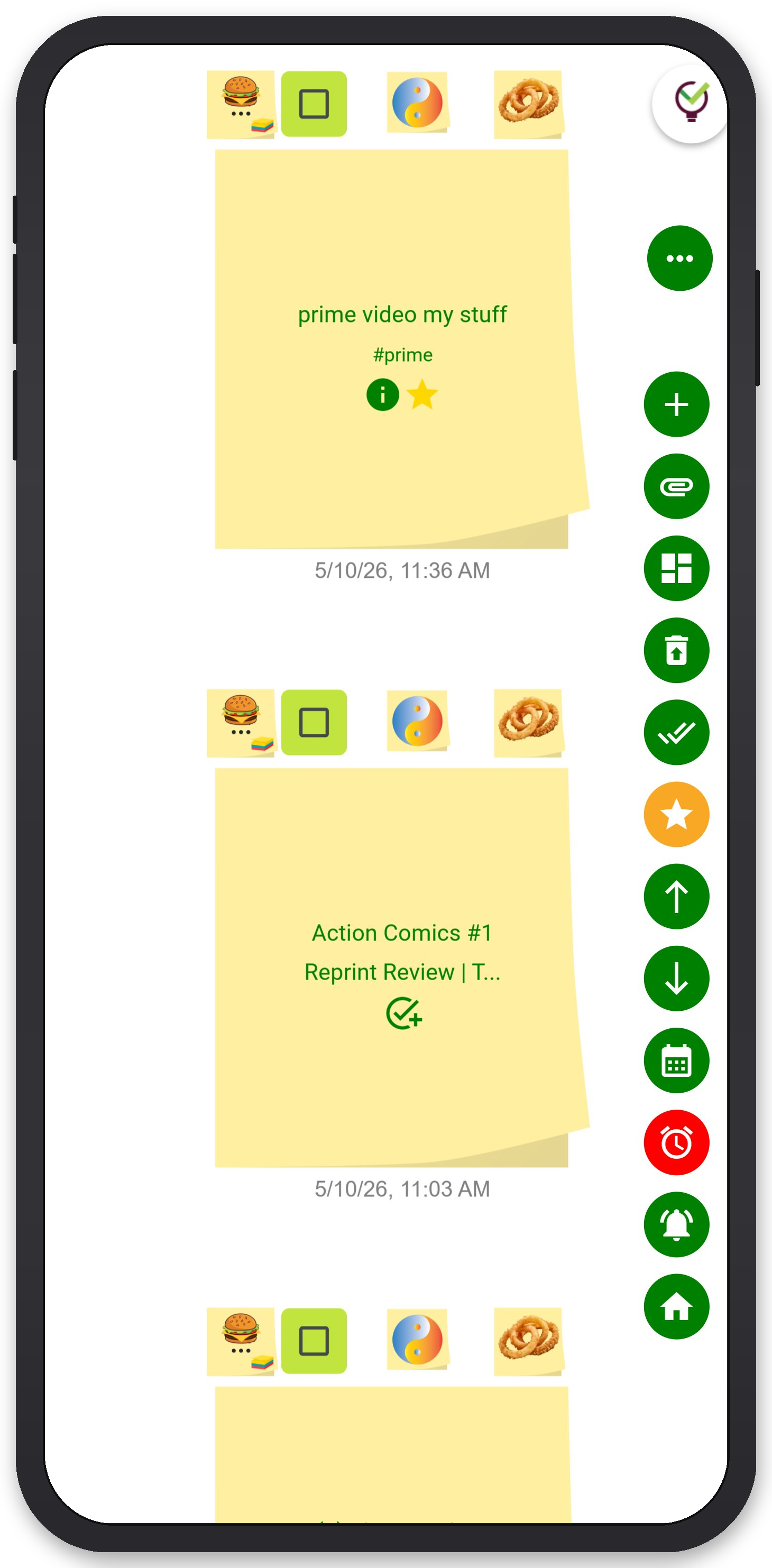
Once you have the capture habit, the tool you use starts to matter more — because you're actually going to use it every day. TaskLoco was built around the sticky note model, which turns out to be one of the most natural capture formats there is: fast to create, visually distinct, easy to scan at a glance.
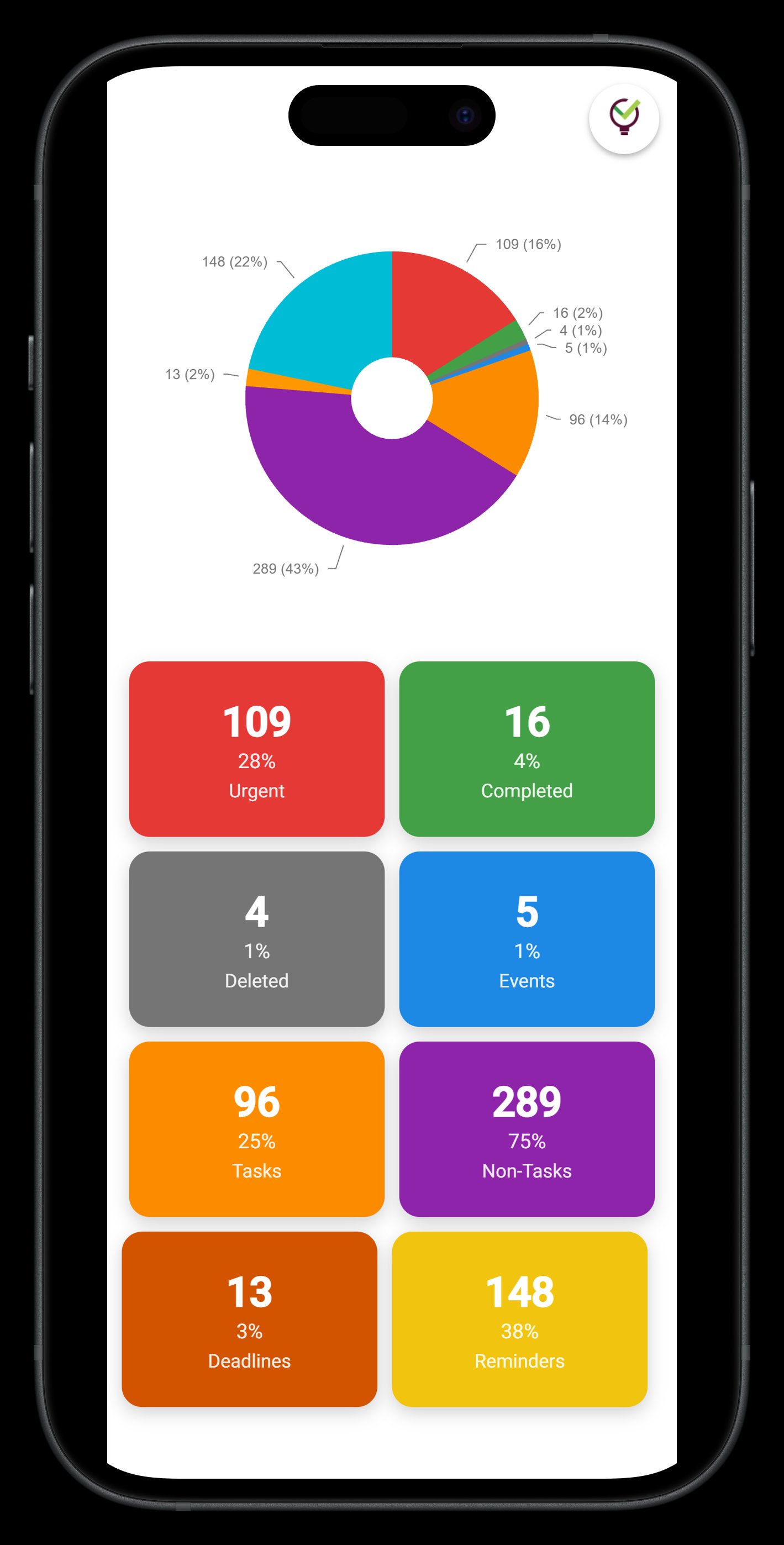
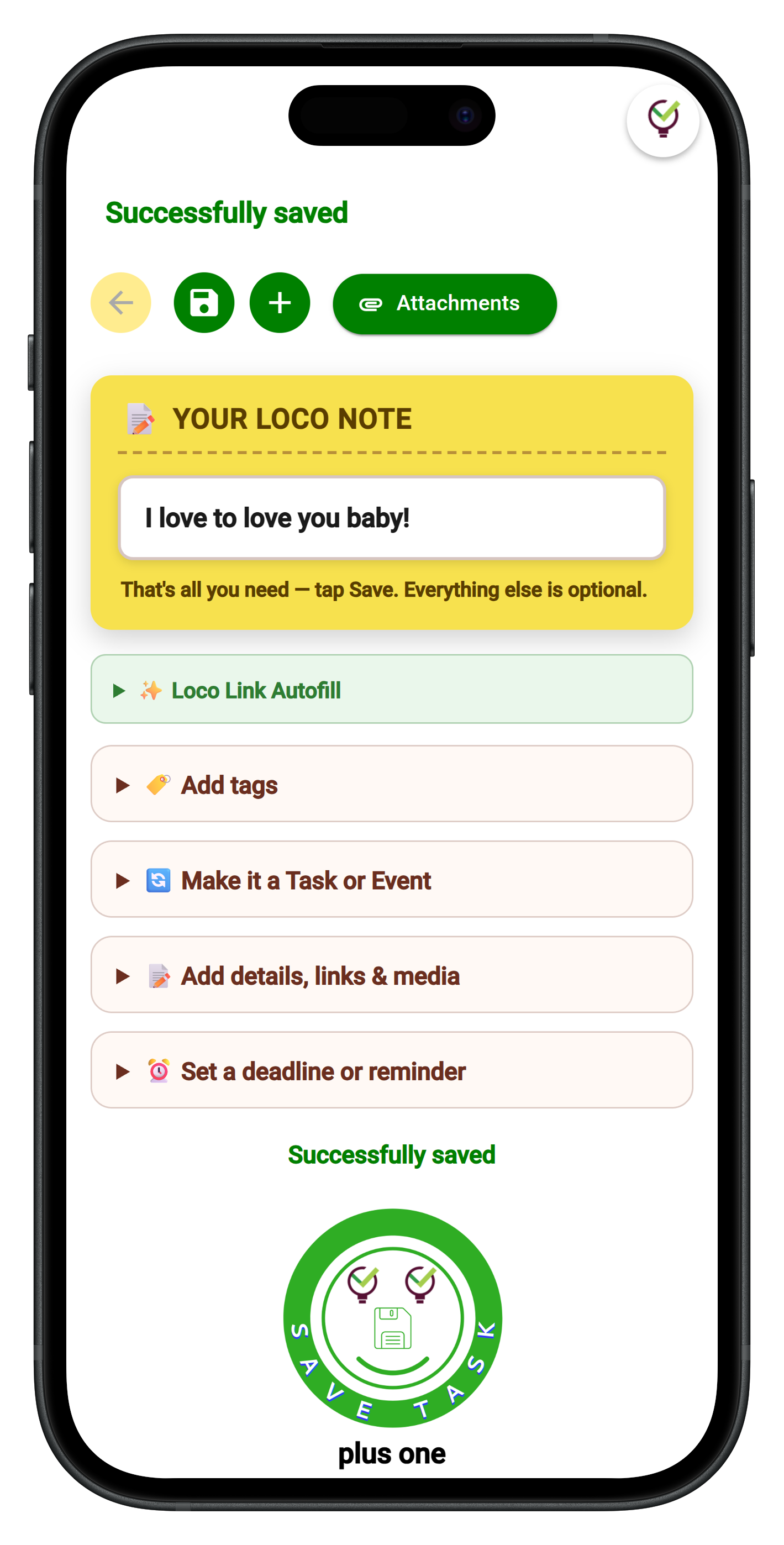
For free, TaskLoco Lite is the native iPhone and Android app — completely anonymous, no sign-in required, up to 20 notes stored locally on your device. It's the lowest-friction capture tool on the list. Open, type, done. No account creation standing between you and the thought you're trying to capture.
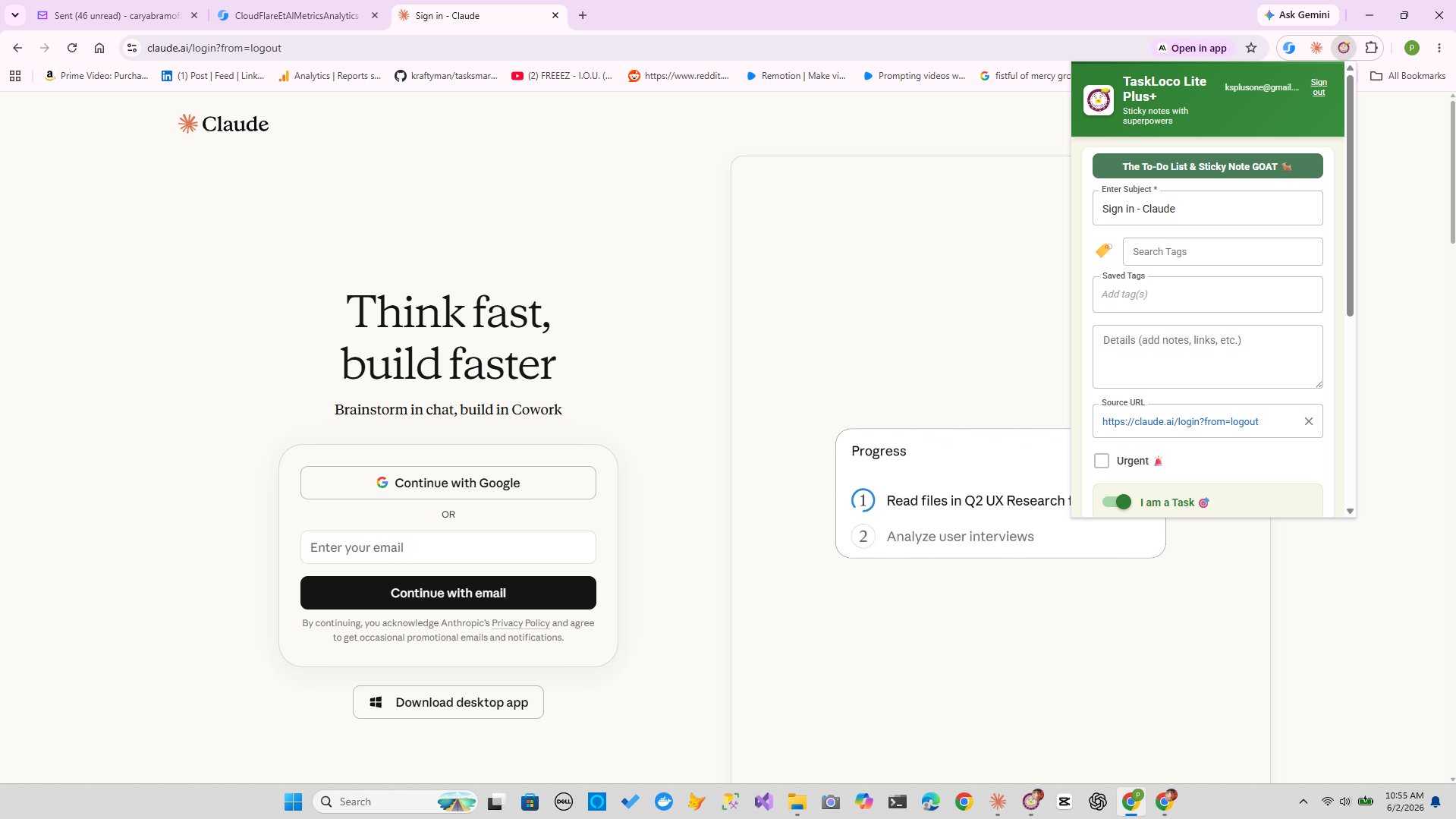
If you capture across multiple devices — phone, laptop, work computer — TaskLoco Lite Plus+ syncs across all of them through the web app, with up to 30 notes and a Chrome extension that captures any webpage in one click. Still free, still no subscription. When you come across something online that you want to action later, the Chrome extension gets it into your system before you click away and forget it existed.
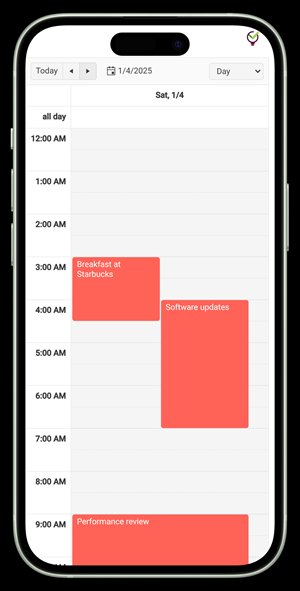
TaskLoco Premium is where the system gets complete. Unlimited notes means you never have to delete things to make room. Reminders deliver push notifications to your phone and computer that deep-link directly back to the original note, so you're not just alerted — you're taken straight to the context. File attachments let you keep receipts, screenshots, and documents alongside the task they belong to, so nothing is stranded in a different app. Calendar view gives you a visual sweep of everything time-sensitive, which is essential for the weekly review. And team sharing works the way email does — share a note, and the recipient can clone it and make it their own, no permissions setup required.
The combination of a zero-friction capture tool (Lite for mobile, Chrome extension for web), syncing across devices (Lite Plus+), and reminders that pull you back to the exact note (Premium) is a complete implementation of the capture system described above — without requiring you to learn a new framework or configure anything complicated.
TaskLoco Premium is regularly $9.99/month per person. Right now, charter members can lock in 50% off the regular price — forever. That means $4.99/month per person today. And if our price ever goes up, you still pay half. Always.
Code CHARTER50 auto-applies at checkout. First 500 spots only — once they're gone, this offer is gone permanently. Act fast while spots last.
Every Premium subscription includes unlimited notes, 10GB file storage, reminders, calendar, and team sharing. Each team member requires a separate subscription. 7-day free trial — no charge until day 8. Cancel anytime.
Free Options: TaskLoco
TaskLoco Lite
- Native iPhone & Android app
- Completely anonymous — no sign-in
- Data stays on your device
- Up to 20 notes
- Free forever
TaskLoco Lite Plus+
- Web app + Chrome extension
- Sign in with Google
- Wall syncs across all devices
- Up to 30 notes
- Free forever
Lock In 50% Off — Forever
7-day free trial. No charge until day 8. CHARTER50 auto-applies at checkout.
🔒 Lock In My Charter SpotSee TaskLoco in Action
Frequently Asked Questions
Why do I keep forgetting small tasks even when I try to remember them?
Because working memory is limited — your brain can only hold about four chunks of information at once. Under any cognitive load, small tasks get displaced and dropped. The solution isn't trying harder; it's removing the task from your brain entirely by capturing it externally the moment it appears. Memory is unreliable by design. External capture systems are not.
What is the best way to capture tasks quickly so I don't forget them?
The best capture method is the one with the lowest friction for your real life. For most people, that means a phone-based solution that's always in your pocket — either a notes app, a sticky note app, or a voice memo. The key rule: capture the moment the thought appears, not later. Add a single line of context while you're at it. That's the whole method.
How do I stop forgetting things people ask me verbally?
Capture it before the conversation ends. Pull out your phone and write it down in front of the person. This does two things: it guarantees it enters your system, and it signals to the other person that you take the request seriously. The only verbal requests that get forgotten are the ones that feel too small to write down — which is exactly why you write them all down.
Does writing things down actually help you remember them better?
Yes, in two ways. First, the physical act of writing (or typing) reinforces encoding in memory. Second — and more importantly for this purpose — it means your memory no longer has to hold the item at all. When you trust that something is written down in a place you'll check, your brain releases it. That's not forgetting; that's offloading. The goal of a capture system is to make your brain stop trying to remember things so it can focus on doing them.
What is a 'capture habit' and how do I build one?
A capture habit is the consistent practice of externalizing every open loop — any thought, task, or obligation — into a single trusted system the moment it appears, rather than relying on memory. To build it: choose one inbox (one app, one notebook — not multiple), keep it within reach at all times, and do a daily two-minute sweep to process what you've captured. It takes about two weeks of deliberate practice before it becomes automatic.
How is TaskLoco useful for remembering small tasks?
TaskLoco's sticky note format is built for fast capture — open the app or Chrome extension, create a note, and you're done in seconds. The free Lite app on iPhone and Android requires no sign-in, so there's zero barrier between you and the capture. TaskLoco Premium adds reminders that fire as push notifications and deep-link back to the original note, so you're not just reminded — you're taken straight to the context. $9.99/month per person (currently $4.99/month per person for first 500 charter members with code CHARTER50)
What is the weekly review and why does it matter?
The weekly review is a ten-minute habit, done once a week, where you look at everything in your capture system and make sure nothing important is sitting unactioned. It's the safety net that catches everything the daily sweep missed. Without a weekly review, your capture system gradually becomes a pile of old notes you stop trusting — and when you stop trusting your system, you go back to relying on memory. The weekly review is what keeps the system alive.
Born in Brooklyn. Powered by AWS. Your data stays yours.
TaskLoco is available on iPhone, Android, Chrome, and every web browser.