At some point, almost everyone has that moment: a colleague sends a follow-up on something you promised three weeks ago, and you have absolutely no memory of it. Or you're lying awake at 1am with a creeping feeling that you've forgotten something important, but you can't name what it is. That feeling has a name — it's called an open loop, and the cure is a complete commitment inventory.
This article walks you through exactly how to build one. No productivity philosophy required. Just a method for getting every commitment out of your head, off sticky notes, out of buried emails, and into one place where you can actually see it. We'll cover the sweep, the sort, the weekly review, and then one practical tool you can use to keep it running long-term.
Step 1 — The Full Capture Sweep
Before you can see everything you've committed to, you have to go find it. Commitments scatter across more places than most people realize. The goal of a capture sweep is to drain every single one of those locations in one sitting — ideally 60 to 90 minutes with no interruptions.
Work through each of these sources systematically:
- Email inbox (sent folder too): Search your sent mail for words like 'I'll', 'I will', 'I can', 'I'll get that', 'let me', 'I'll send', 'I'll follow up'. Every one of those is a potential commitment. Flag or copy them out.
- Calendar past and future: Anything on your calendar that you agreed to attend or prepare for. Look back 30 days — did you commit to a follow-up after a meeting that never made it onto a list?
- Text messages and Slack/Teams: Scroll back through recent conversations. The word 'sure' by itself has ended careers. Every 'sure', 'yep', 'on it', or thumbs-up emoji is a commitment.
- Physical notebooks and sticky notes: Every scrap of paper on your desk, every notebook page with a circled item. If it lives on paper, it needs to move somewhere you'll actually see it.
- Your own head: Sit quietly for five minutes and ask yourself: what have I told someone I'd do? What have I told myself I'd do? Write everything down without editing. Nothing is too small.
When you're done, you should have an ugly, unorganized pile of commitments. That's the right output. The next step is sorting it.
Step 2 — Sort Into a Trusted System
Raw captures are useless unless they live somewhere you trust and return to consistently. The sort step turns your pile into a system. There are a few principles that make the difference between a list you keep and a list you abandon.
Organize by context, not by source. It doesn't matter that a commitment came from an email or a sticky note. What matters is: who is waiting on this, and when? Sort your commitments by the person or project they belong to, not by where you found them.
Separate hard deadlines from soft ones. Some things have a real deadline — a client deliverable, a meeting, a school pickup. Others are 'I'll get to it eventually.' Both matter, but they need to be treated differently. Hard deadlines go on your calendar or a date-anchored list. Soft ones go into a separate 'when I can' bucket that you review weekly.
Flag anything that requires a response from someone else. A huge category of open loops are things you're waiting on — you sent the ball back and now you're waiting. These aren't actionable right now, but if you don't track them, they disappear and you never follow up. Keep a 'waiting for' list explicitly for these.
- Do now (under 2 minutes): If a commitment takes less than 2 minutes to fulfill, do it during the sort and strike it off immediately.
- Schedule: Anything that needs a specific block of time — put it on a calendar.
- Delegate: Anything you've already handed off — add it to your 'waiting for' list.
- Defer: Everything else goes into your trusted list with as much context as possible.
At the end of the sort, your pile should be gone. In its place you'll have: a scheduled calendar, a 'waiting for' list, and a master task list with enough context on each item that you never have to decode what you meant.
Step 3 — The Weekly Review That Keeps It Alive
A commitment inventory isn't a one-time event. It's a practice. The sweep and sort get you current; the weekly review keeps you current. Without it, the pile grows back within days and you're right back where you started.
A weekly review doesn't need to be long. Thirty minutes on a Friday afternoon or Sunday evening is enough. Here's the sequence:
- Clear your inboxes again: Everything that arrived since your last review — email, messages, voicemail, paper — gets swept and sorted the same way. Don't skip this step even if it feels redundant.
- Review your 'waiting for' list: Has anything been sitting there too long without a response? Nudge those people now, while you're in the system.
- Look at the week ahead: Are there commitments coming due that need prep time? Block that time now. A commitment without preparation time is a commitment you'll fail under pressure.
- Archive completed items: Strike through or archive anything you finished. This sounds small but it matters — seeing a trail of completed commitments builds the kind of confidence that keeps the system going.
- Renegotiate anything unrealistic: If something has been on your list for three weeks and you haven't touched it, you have a decision to make: do it, delegate it, delete it, or explicitly reschedule it with a real commitment date. Letting it rot on the list is not a strategy.
The system works best when it's frictionless. The more steps it takes to add something, the less you'll do it. That's why the tool you use matters — not because a fancy app magically makes you reliable, but because friction is the enemy of consistency.
Applying This System in TaskLoco
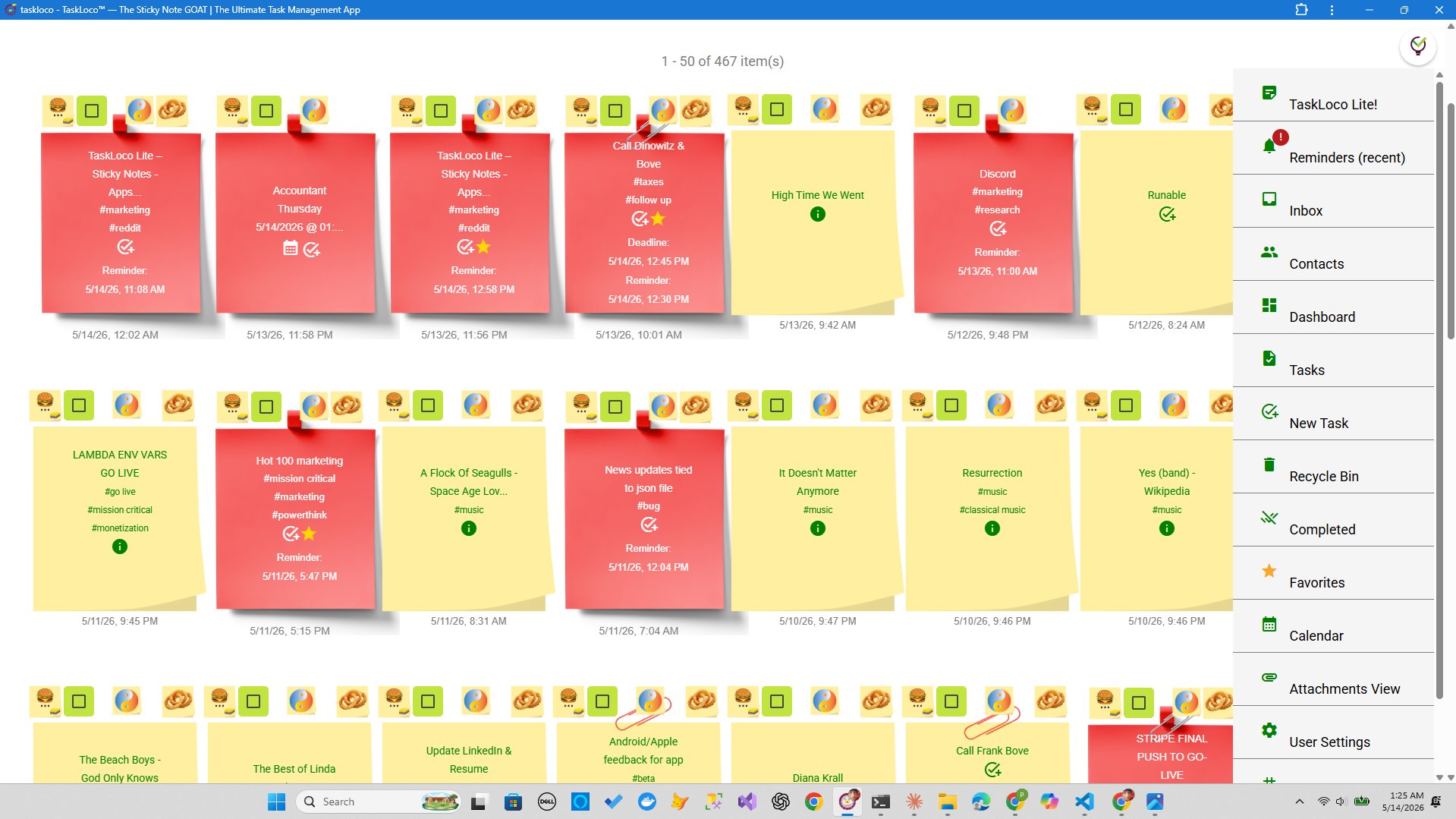
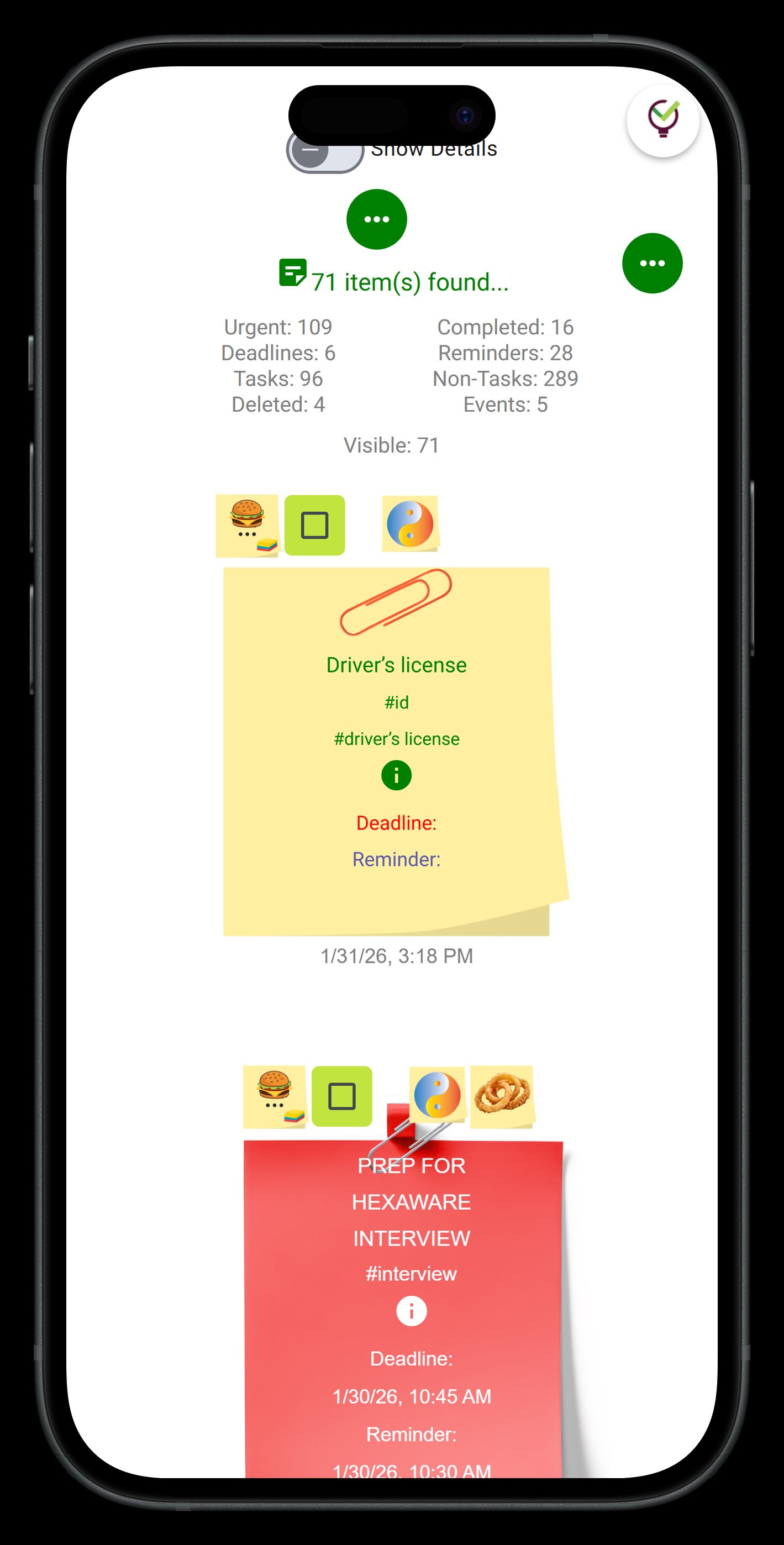
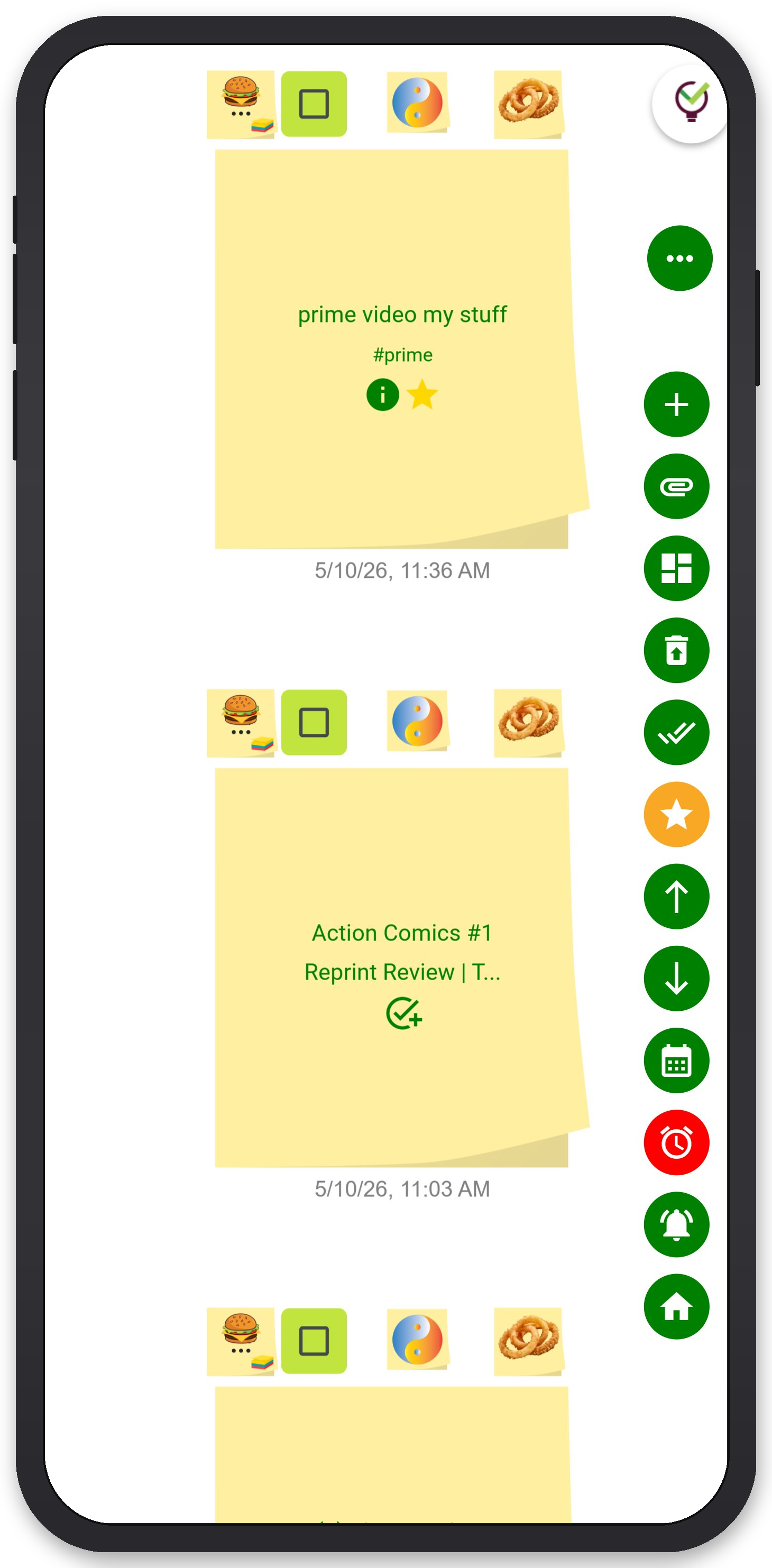
Once you've done the sweep and built the habit of capturing, you need a home for it. TaskLoco was built around exactly this kind of thinking — each note is a container for a commitment, a project, a context, or a waiting-for list. The visual wall layout means you can see all your commitment buckets at once without drilling into menus.
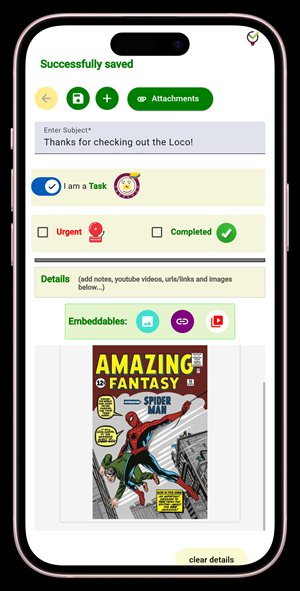
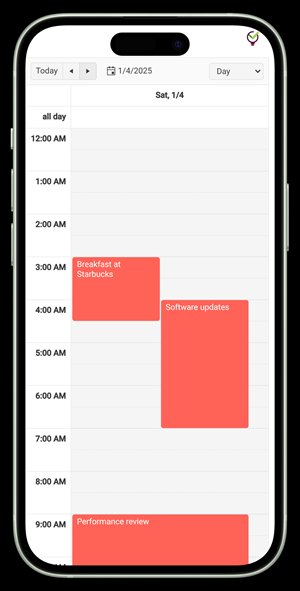
With TaskLoco Premium, you can attach files directly to a note — so the proposal draft lives with the 'send to Marcus' commitment, not in a separate folder you have to hunt down. Reminders are delivered as push notifications straight to your phone and computer, and they deep-link back to the exact note so you land in context, not in a generic inbox. The calendar view gives you a timeline across all your notes so hard deadlines are visible without hunting.
Team sharing works the way email does — you share a note, the recipient clones it and makes it their own. No permission levels to configure, no access management overhead. For commitments that involve other people, that simplicity is underrated.
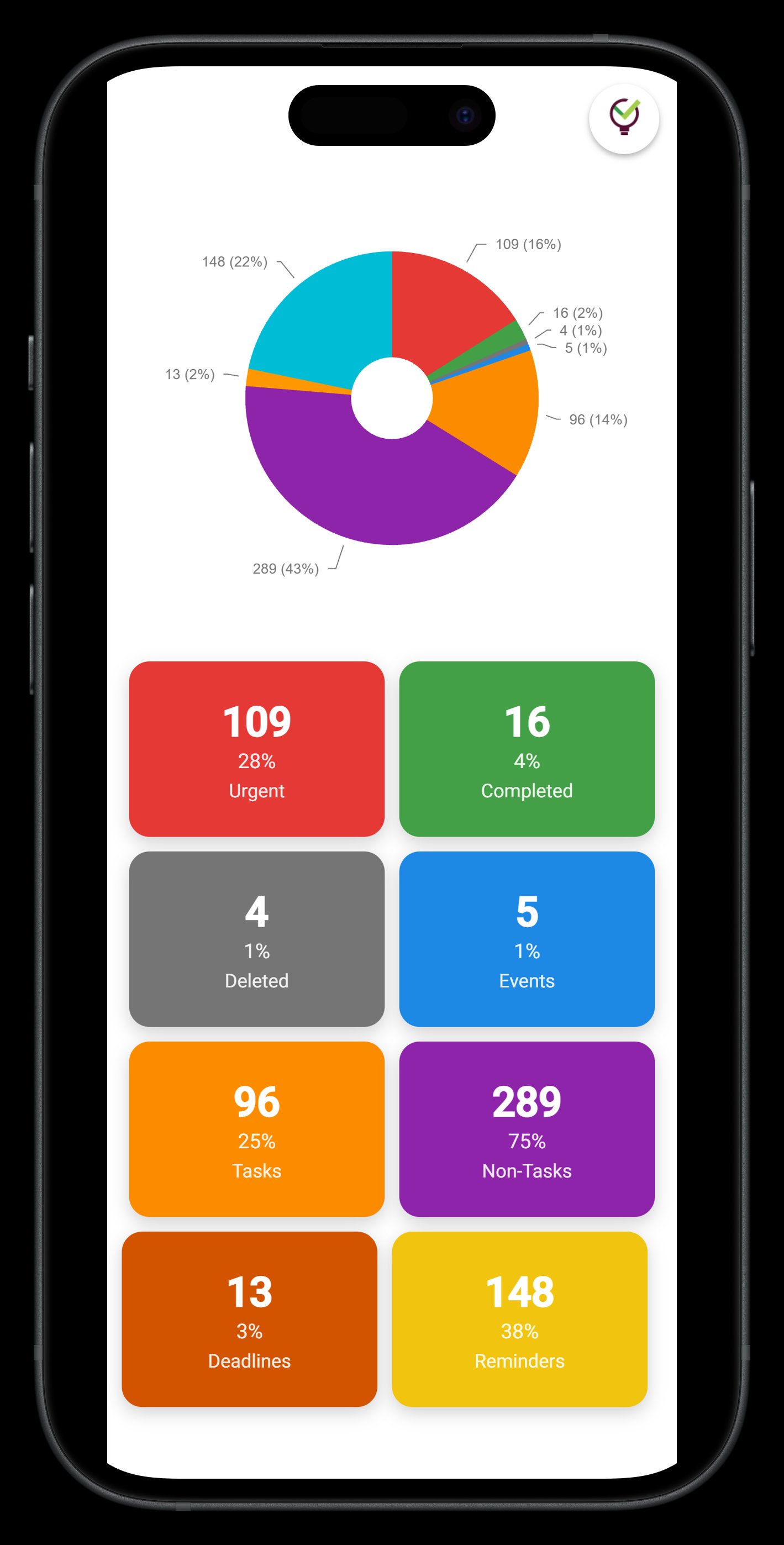
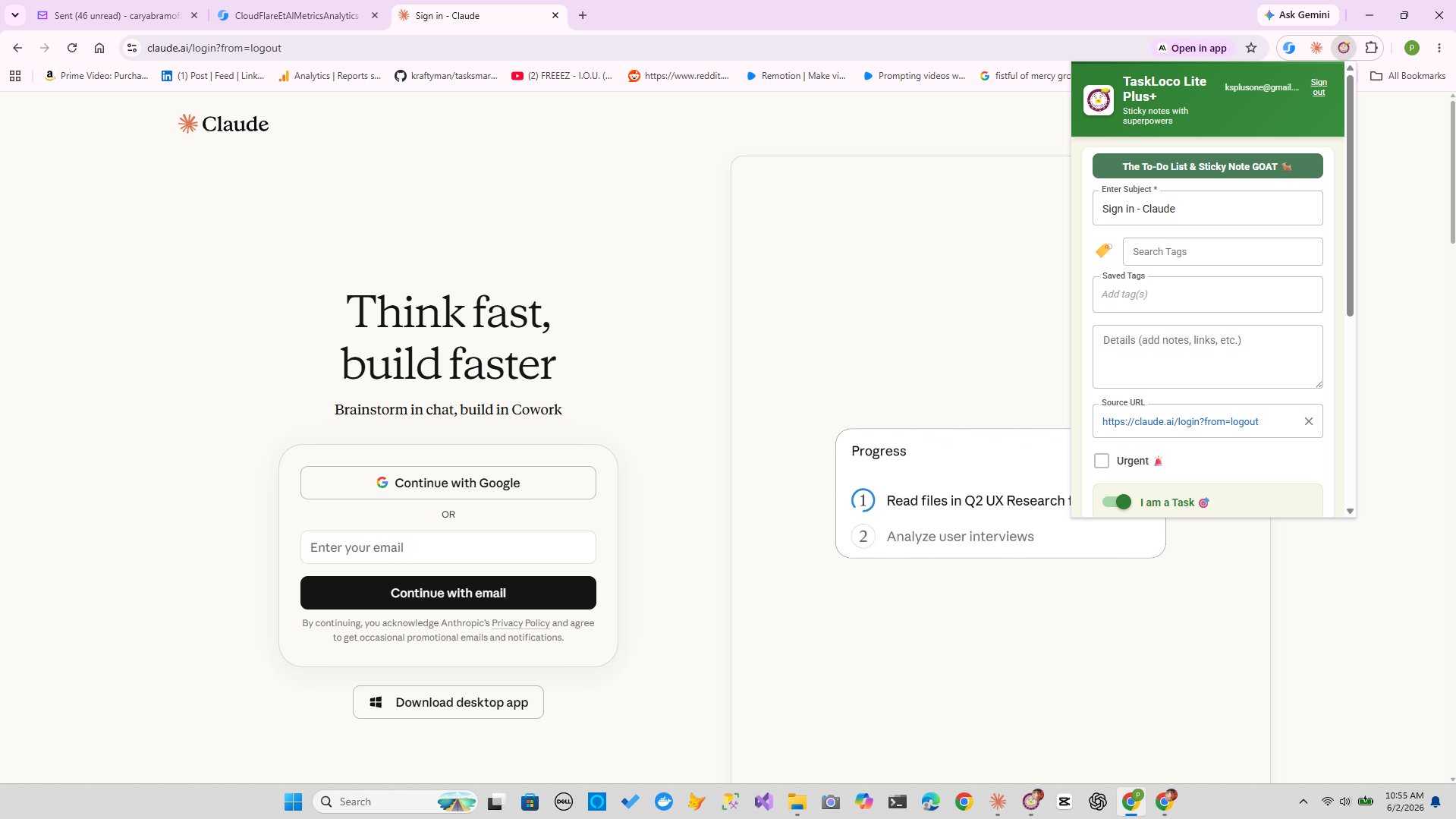
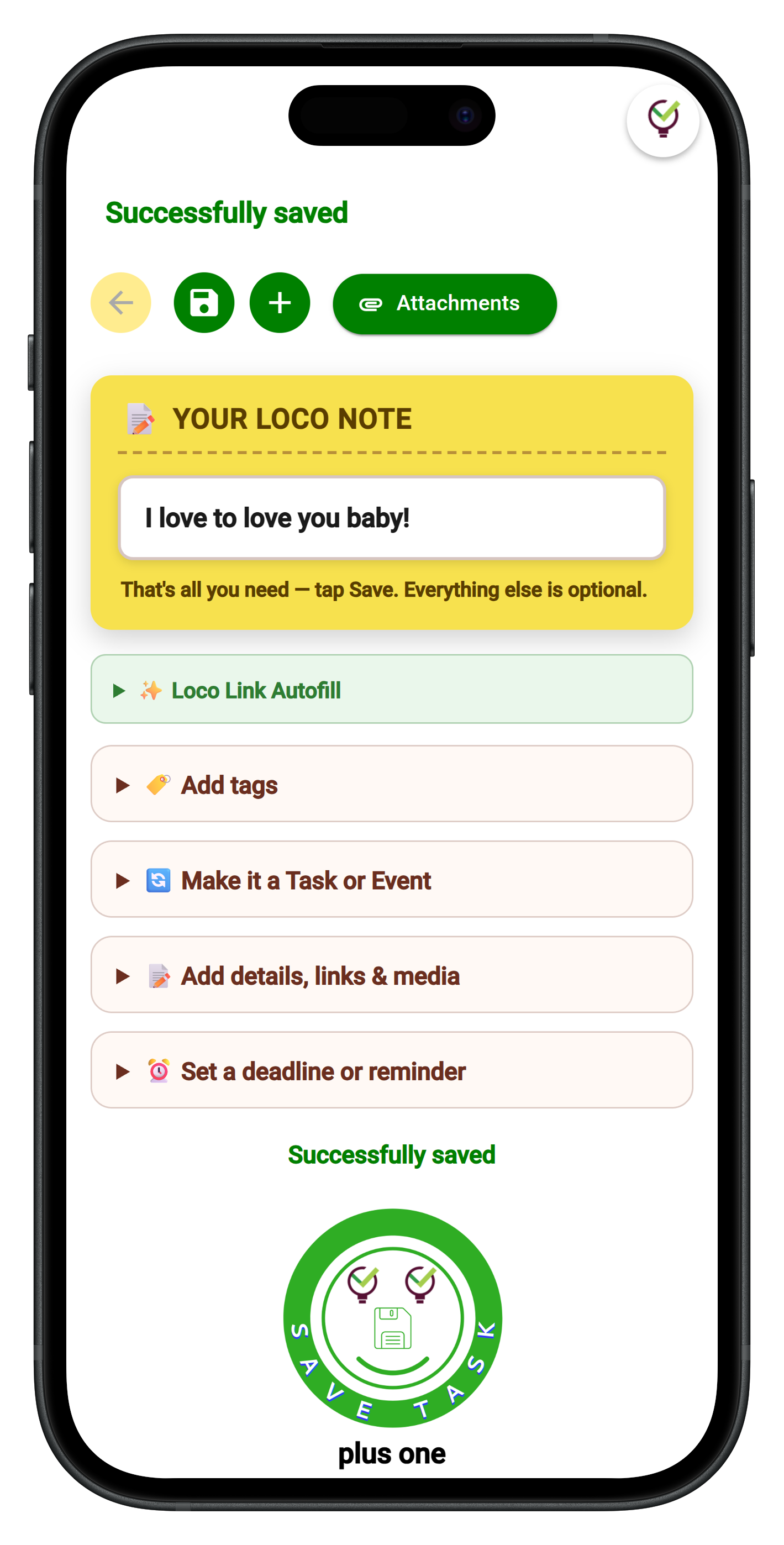
TaskLoco Lite is a free native app on iPhone and Android — no sign-in, completely anonymous, stores up to 20 notes on your device. It's a solid starting point if you just want a quick capture tool. For everything covered in this article — reminders, attachments, calendar view, team sharing, and unlimited notes — that's TaskLoco Premium territory. There's also TaskLoco Lite Plus+, a free web app that syncs across all your devices and includes a Chrome extension for capturing any webpage in one click, up to 30 notes, no reminders or attachments.

TaskLoco Premium is regularly $9.99/month per person. Right now, charter members can lock in 50% off the regular price — forever. That means $4.99/month per person today. And if our price ever goes up, you still pay half. Always.
Code CHARTER50 auto-applies at checkout. First 500 spots only — once they're gone, this offer is gone permanently. Act fast while spots last.
Every Premium subscription includes unlimited notes, 10GB file storage, reminders, calendar, and team sharing. Each team member requires a separate subscription. 7-day free trial — no charge until day 8. Cancel anytime.
Free Options: TaskLoco
TaskLoco Lite
- Native iPhone & Android app
- Completely anonymous — no sign-in
- Data stays on your device
- Up to 20 notes
- Free forever
TaskLoco Lite Plus+
- Web app + Chrome extension
- Sign in with Google
- Wall syncs across all devices
- Up to 30 notes
- Free forever
Lock In 50% Off — Forever
7-day free trial. No charge until day 8. CHARTER50 auto-applies at checkout.
🔒 Lock In My Charter SpotSee TaskLoco in Action
Frequently Asked Questions
How do I find commitments I've forgotten about?
The best method is a full capture sweep: search your sent emails for phrases like 'I'll', 'I will', 'let me', and 'I'll follow up'. Scroll back through recent texts and Slack messages looking for 'sure', 'yep', and thumbs-up replies. Check your physical notebooks and sticky notes. Then sit quietly for five minutes and ask yourself what you've promised people — spoken commitments never make it onto any list otherwise. Write everything down without filtering, then sort.
What's the best way to organize all my commitments in one place?
Organize by context — the person or project the commitment belongs to — not by where you found it. Separate hard deadlines (calendar-bound) from soft 'someday' items. Keep a dedicated 'waiting for' list for things you've handed off. Make each entry specific enough that your future self knows exactly what to do without re-thinking it.
How often should I review my commitment list?
Once a week, minimum. Friday afternoon or Sunday evening work well for most people. Thirty minutes is enough. Clear any new inboxes, check your 'waiting for' list, look at upcoming deadlines, and renegotiate anything that's been sitting untouched for too long. People who skip the weekly review reliably fall behind within two to three weeks.
What should I do if my commitment list feels overwhelming?
An overwhelming list is usually a sign of two things: too many vague entries (which create anxiety without giving you anything to act on) and no distinction between hard deadlines and soft ones. Go through the list and rewrite every vague item as a specific action with a named person or output. Then separate anything with a real deadline from everything else. The 'someday' pile will feel much less threatening once the urgent items have their own space.
How do I track commitments other people owe me?
Keep a separate 'waiting for' list — not a mental note, a real written list — with the person's name, what you're waiting on, and the date you handed it off or asked. Review this list every week and follow up on anything that's been sitting longer than makes sense for the context. Most dropped balls come from this category because people only track what they need to do, not what they're waiting for.
Can TaskLoco help me manage my commitment system?
Yes. TaskLoco Premium gives you unlimited notes for organizing commitments by person or project, file attachments so supporting materials live with the task, push notification reminders that deep-link back to the exact note, a calendar view for deadline visibility, and team sharing for commitments that involve collaborators. TaskLoco Lite is a free native app for basic capture on your phone, and Lite Plus+ is a free web app that syncs across devices with a Chrome extension for one-click webpage capture. $9.99/month per person (currently $4.99/month per person for first 500 charter members with code CHARTER50)
What's the difference between a task list and a commitment inventory?
A task list is usually self-generated — things you want to do. A commitment inventory captures everything you've explicitly or implicitly promised to someone else, including yourself. The difference matters because broken commitments have real consequences for trust and relationships in a way that unfinished personal tasks usually don't. A complete commitment inventory includes tasks, but it's anchored in accountability, not just productivity.
Born in Brooklyn. Powered by AWS. Your data stays yours.
TaskLoco is available on iPhone, Android, Chrome, and every web browser.