You have fourteen tabs open. Some are articles you meant to read, a few are research pages you actually need, and one is a YouTube video you've been meaning to watch. Your computer needs a restart. The clock is ticking. If you just close everything and hope Chrome restores your session, you've probably already learned that lesson the hard way — it doesn't always work, and even when it does, you get a wall of tabs back with no memory of why you had them open.
Saving tabs before a restart isn't complicated, but the method you choose determines whether you'll actually find those pages again — or just open a fresh browser and pretend those fourteen tabs never existed. This guide walks through every real option, from Chrome's built-in tools to one-click visual clipping, so you can pick what actually fits how your brain works.
The Built-In Browser Options (and Where They Fall Short)
Chrome has a few native ways to handle this situation, and they're worth knowing even if none of them is perfect.
- Right-click the tab bar → "Bookmark all tabs" — This dumps every open tab into a bookmark folder. It's fast, but you end up with a folder named something like "Bookmarks — Thursday" that you'll never open again. There's no visual cue about what each page was, no way to add a note about why you saved it, and bookmarks don't sync in a way that puts them front and center when you come back to your computer.
- Chrome's session restore — If Chrome crashes or you reopen it after a normal close, it often offers to restore your previous session. This is unreliable if you restart the OS rather than just Chrome, and it gives you back all the tabs with no organization — the same cluttered state you had before.
- Tab groups — Chrome lets you group and name tabs before closing them, which helps a little. But once you restart and reopen those groups, you're back to a horizontal strip of tabs. Nothing about the context is preserved.
If your tabs are low-stakes — a quick recipe, a news article you already skimmed — browser tools are fine. If they represent real work you need to come back to, you want something that actually surfaces them when you return.
The Manual Method That Actually Works: Save by Priority
Before you touch the restart button, do a quick triage. Not all open tabs deserve the same treatment. Here's a reliable process you can do in under two minutes:
- Close the throwaways first. That tab you opened to check a price, the news article you finished reading, the Google search results page — close them. Don't try to save everything. The goal is signal, not noise.
- Identify the three to five tabs that actually matter. These are the pages you'll be annoyed to lose — a research article mid-read, a form you were filling out, a video at a specific point, a source you need for a project.
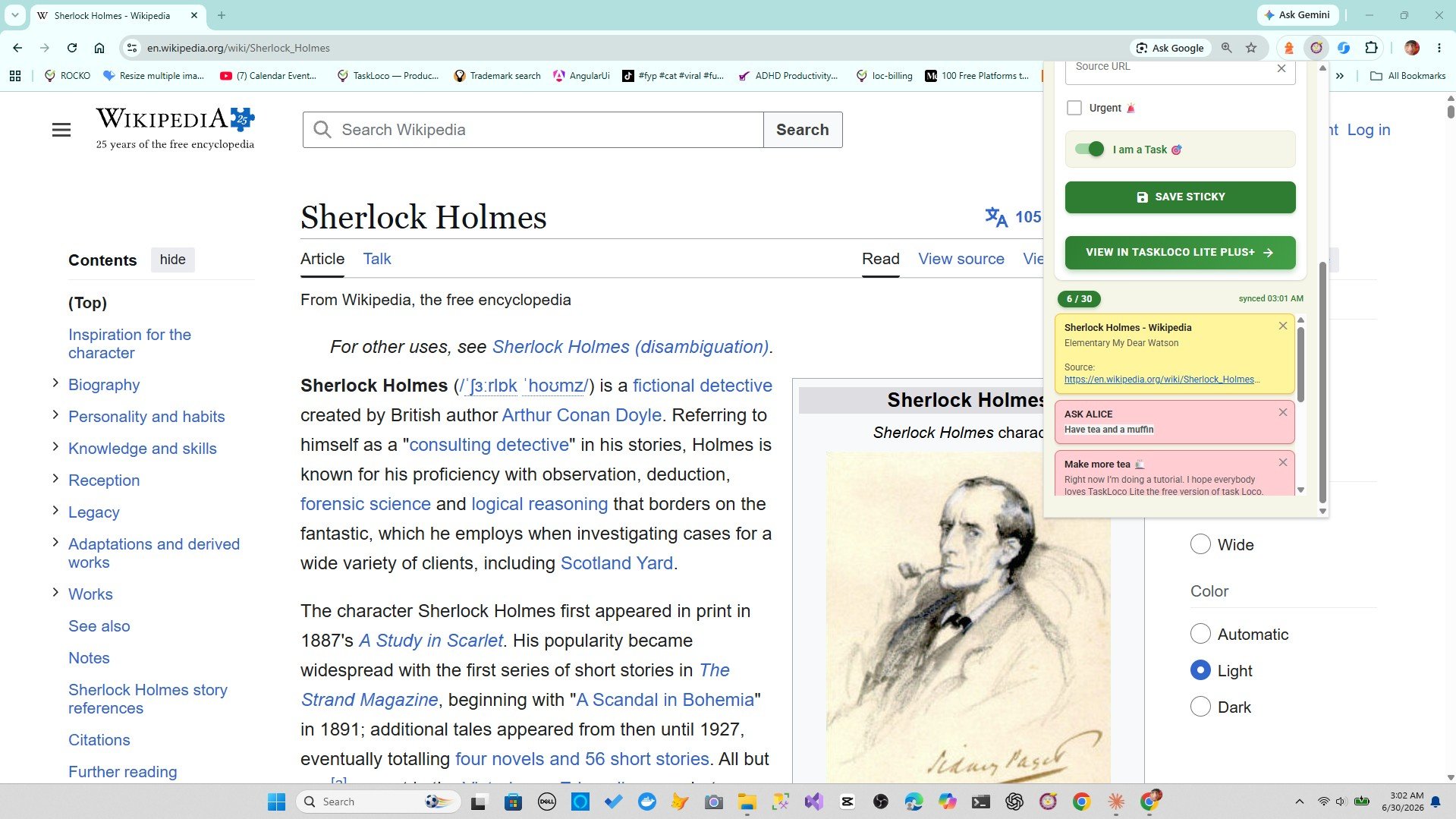
- For each one, decide: bookmark, copy the link, or clip it. Bookmarks work if you're disciplined about your bookmark organization (most people aren't). Copying the URL into a notes app works but requires you to paste it somewhere useful. Clipping it as a visual sticky note — with the title and URL auto-captured — works if you want to actually find it again.
The triage step is the one most people skip. They try to save everything, end up with a bookmark folder of forty links, and open maybe two of them ever again. Be ruthless about what actually needs to survive the restart.
One-Click Clipping: The Fastest Way to Save What Matters
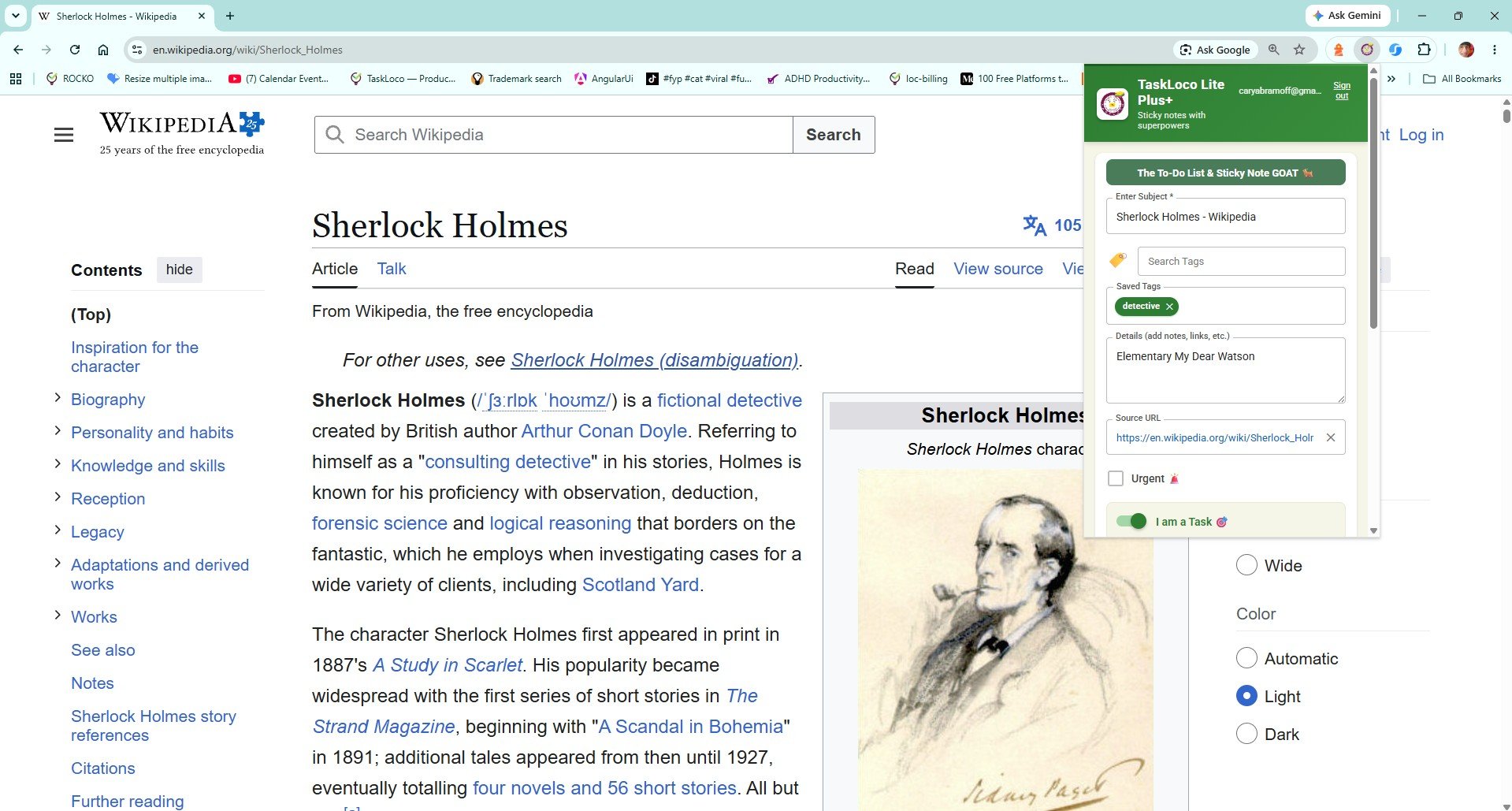
If you're the kind of person who regularly has tabs open for days because you haven't dealt with them yet, a visual clipping tool changes the workflow entirely. The free Sticky Note Web Clipper for Chrome lets you click one button on the toolbar and save the current tab as a sticky note — title and URL filled in automatically. No copy-pasting, no naming folders, no forgetting what you saved.
Here's how it works before a restart:
- Go through each tab you want to keep and click the clipper icon in your toolbar. Done. Each page becomes a sticky note on your TaskLoco wall.
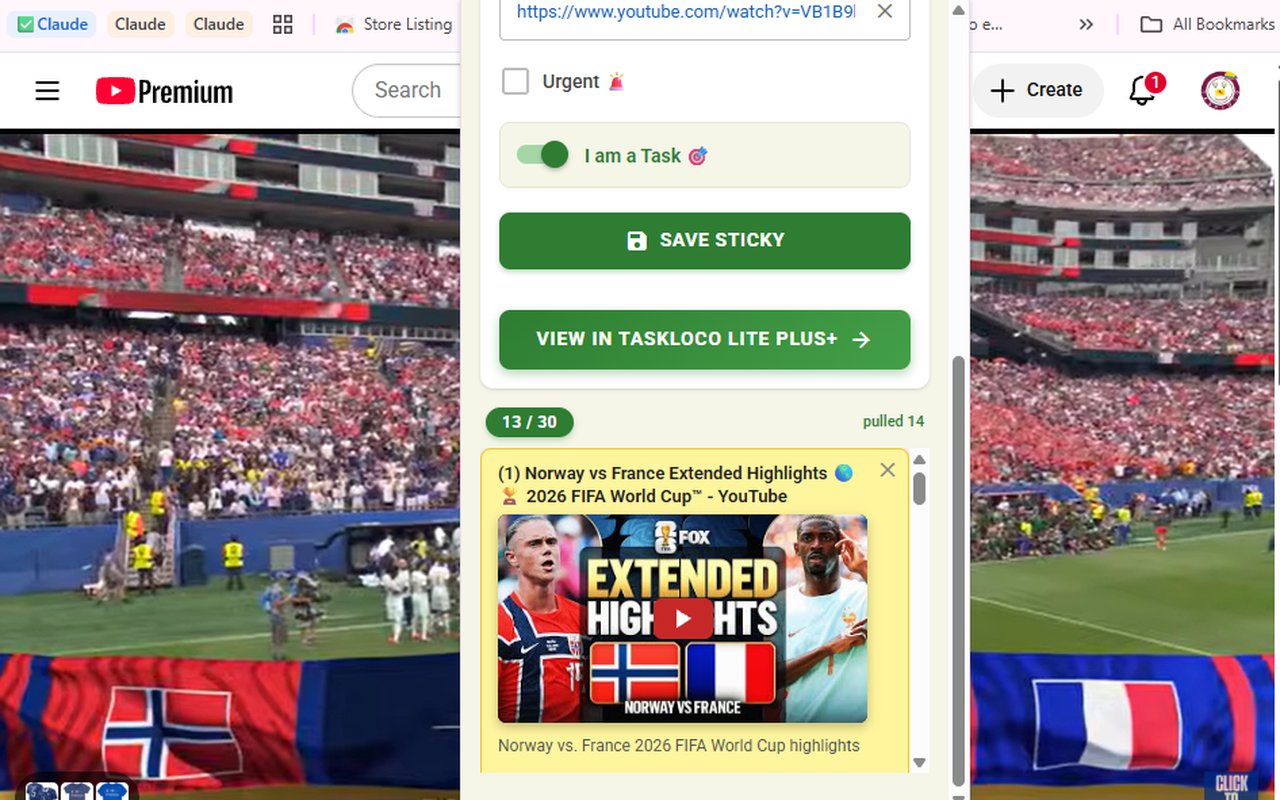
- YouTube videos save as embeddable notes — you can play the video right inside the note when you come back, at whatever point you left off.
- Articles and research pages clip with their title intact, so you can actually remember what they are when you see them later.
- Your clipped notes sync to the TaskLoco app on your phone and desktop, so if you restart and want to pick up on your iPad or phone, everything is there.
This is particularly useful if you're in the middle of research — clipping sources as you find them means you build an organized visual board of references instead of a graveyard of forgotten bookmarks. Sign in is free with Google, and the extension itself is free to install from the Chrome Web Store.
What to Do When You Come Back
Saving tabs is only half the equation — you also need to actually return to them. This is where most tab-saving methods quietly fail. A bookmark folder you haven't named well is invisible. A list of URLs in a notes app requires you to remember the notes app exists. Even Chrome's restored session just puts everything back the way it was, which means the same pile of tabs with no new context.
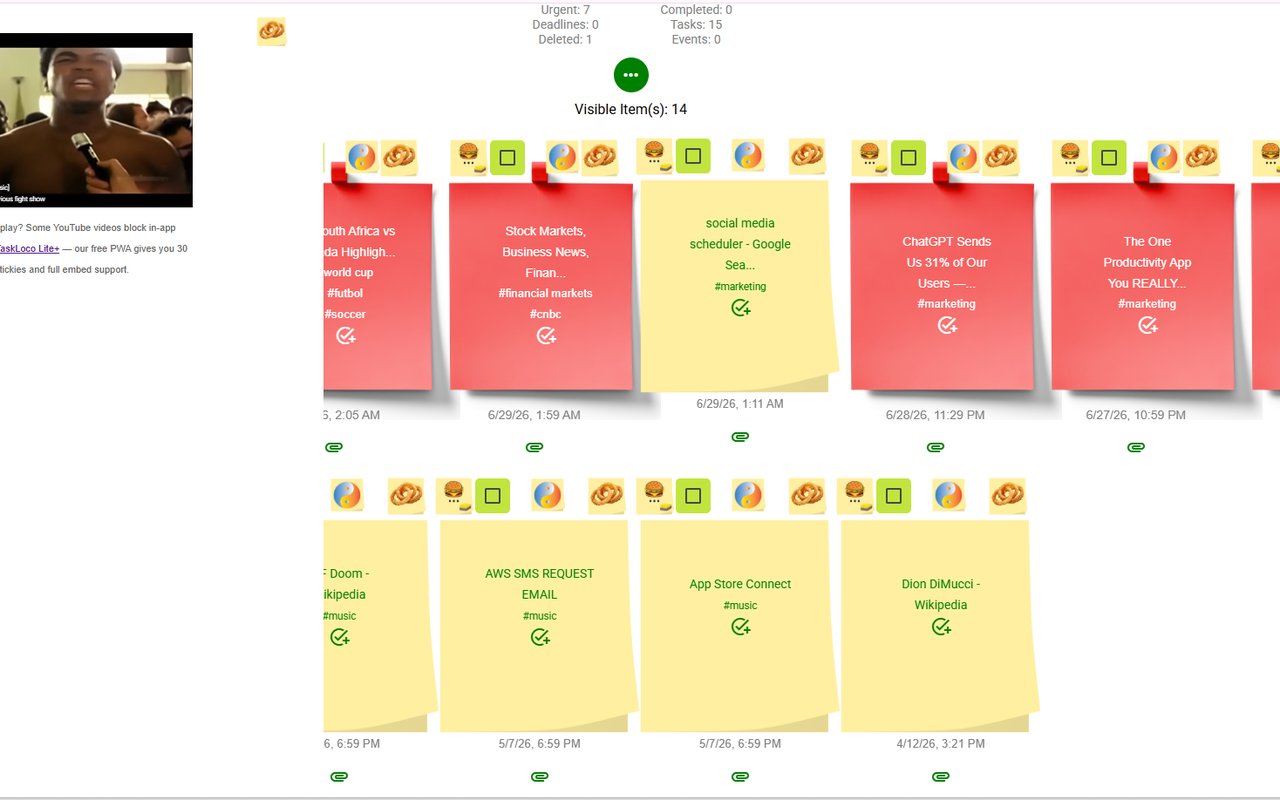
Visual sticky notes work differently. When you sit back down after your restart, your TaskLoco wall shows you the pages you saved with their titles displayed clearly. You can see at a glance what's research, what's a video, what's an article. You can search by title if you have a lot of notes. And because the wall syncs to your phone, you might actually finish reading that article on the couch instead of re-opening a laptop tab you forgot existed.
The habit that makes this stick: treat the clipper like a physical inbox. Clip it now, deal with it when you're ready. Don't try to process everything before the restart — just capture it. The act of clipping creates a visible record you can actually return to, instead of a mental note that evaporates the moment your machine reboots.
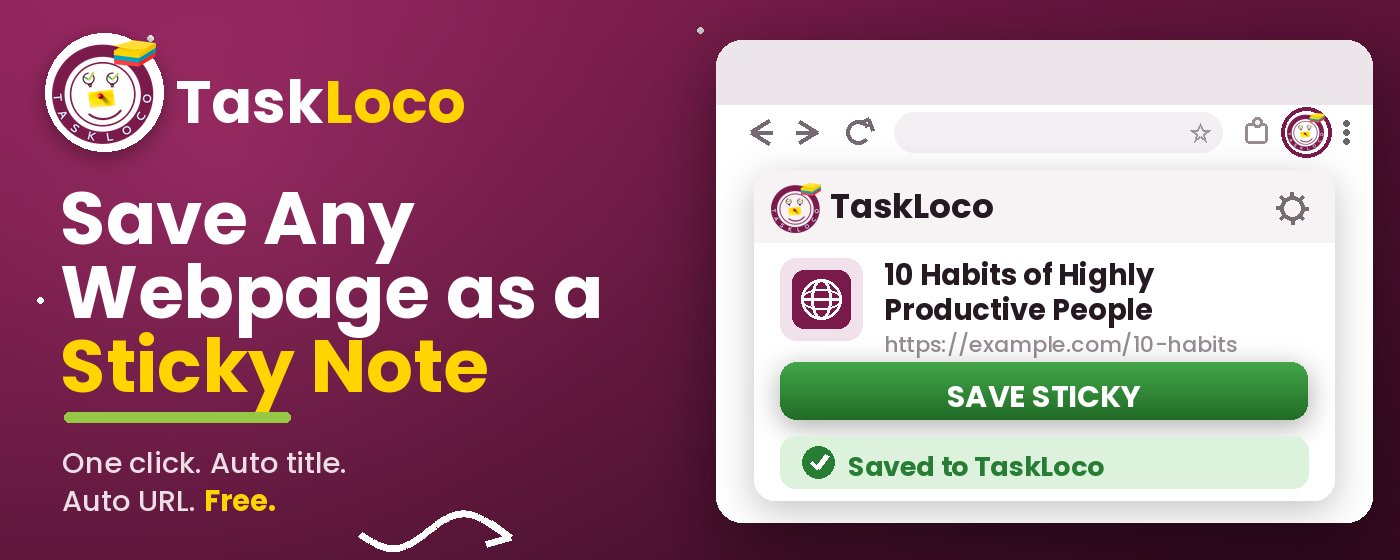
The Sticky Note Web Clipper is free. Install it from the Chrome Web Store, sign in with Google, and every page you clip becomes a sticky note you can find later.
Your clipped notes sync to TaskLoco across Chrome, desktop, iPhone, and Android — also free to start. No credit card to begin.
Get the Free Clipper
Sticky Note Web Clipper
- Free Chrome extension
- One-click save — any page, article, or video
- Title & URL auto-filled
- Tags & search
- Free forever
Synced to TaskLoco
- Sign in free with Google
- Your wall on Chrome, desktop, iPhone, Android
- YouTube videos embed & play in notes
- Visual sticky-note wall
- Free to start
Add It to Chrome — Free
One click saves any page, article, or YouTube video as a sticky note. Title and URL auto-filled.
Add to Chrome — FreeSee TaskLoco in Action
Frequently Asked Questions
What's the fastest way to save all my open tabs before restarting?
The fastest reliable method is to use the free Sticky Note Web Clipper — one click per tab saves it as a sticky note with the title and URL auto-filled. For tabs that don't matter much, Chrome's built-in "Bookmark all tabs" option works, but you'll end up with an unorganized folder you may never revisit.
Will Chrome automatically restore my tabs after a restart?
Sometimes, but not reliably. Chrome's session restore works best if Chrome itself was the last thing closed before shutdown. If you restart the operating system, update Windows or macOS, or Chrome updates in the background, the session may not restore. Don't count on it for tabs that represent real work.
How do I save a YouTube video tab so I can come back to it later?
If you clip a YouTube video with the Sticky Note Web Clipper, it saves as an embeddable note — you can play the video directly inside the note when you return. Bookmarking a YouTube URL works too, but you'll land back at the beginning of the video with no context about why you saved it.
Is there a way to save tabs that also syncs to my phone?
Yes. The Sticky Note Web Clipper saves tabs as sticky notes that sync to TaskLoco, which is available on iPhone, Android, and the web. So a tab you clip on your laptop before a restart shows up on your phone automatically. Sign in is free with Google.
Is the Sticky Note Web Clipper free?
Yes — the extension is completely free to install from the Chrome Web Store. TaskLoco, where your clipped notes live, also has a free tier. Sign in with Google and you're ready to start clipping right away.
What's the difference between bookmarking a tab and clipping it?
Bookmarks save the URL in a list that's easy to ignore. Clipping with the Sticky Note Web Clipper saves the page as a visual sticky note — you see the title clearly on your wall, can search across everything you've saved, and the notes sync to your phone. Bookmarks are fine for reference links you'll consciously look up later; clips work better for things you need to actually remember exist.
Can I save multiple tabs at once with the Sticky Note Web Clipper?
The clipper saves one tab at a time with one click — you move through each tab you want to keep and clip it individually. This is intentional: it forces a quick triage so you're saving what actually matters rather than dumping every open tab into a pile. For most people with a handful of important tabs, the whole process takes under a minute.
Born in Brooklyn. Powered by AWS. Your data stays yours.
TaskLoco is available on iPhone, Android, Chrome, and every web browser.