You found it — the exact thing you wanted, but the timing isn't right. Maybe payday is a week out, maybe you want to see if the price drops, or maybe you're just not ready to commit. Whatever the reason, you need to save that Amazon product page and come back to it later without losing the context of why you saved it in the first place.
The problem is that most saving methods fail quietly. A plain bookmark tells you almost nothing at a glance. An open tab disappears the moment your browser crashes or your kid closes your laptop. A copy-pasted URL in a note app is just a string of characters with no image, no product name, no reminder of what you were even thinking. There's a better way to hold on to a product page — and it takes about one second.
The Simple Methods: What Actually Works (No App Required)
Before anything else, here are the straightforward options that cost nothing and require no install:
- Copy the URL and paste it into any notes app. Open your phone's Notes app, a Google Doc, or even a text file, and paste the link. Add a short note about why you saved it — "headphones, want to wait for a sale" — so future you has some context. This works fine for one or two items.
- Bookmark it with a descriptive name. When you hit Ctrl+D (or Cmd+D on Mac), Chrome lets you rename the bookmark before saving. Change the default title to something like "Blue standing desk — check in two weeks" and drop it into a dedicated folder called "Price Watch" or "To Buy." Organized bookmarks can work if you're disciplined about the folder structure.
- Use Amazon's own Wish List. If you have an Amazon account, the built-in Save for Later and Wish List features are purpose-built for this. Hit the heart icon or add to list directly on the product page. Amazon will even show you if the price dropped since you saved it. For Amazon-only shopping, this is genuinely a strong option.
- Share the product link to yourself. On mobile, use the Share button and send the link to yourself via WhatsApp, iMessage, or email. Quick, dirty, and surprisingly effective for one-off saves — though it turns your inbox or chat history into a shopping list, which gets messy fast.
Why These Methods Break Down Over Time
Each of the above works in isolation. The trouble starts when you're tracking more than a handful of things, or when the items span Amazon, Best Buy, a brand's own site, and a few Reddit recommendation threads all at once.
Bookmarks have no visual memory. A folder of thirty links labeled with product names looks identical whether you're looking for headphones or a kitchen appliance. There's no image, no context, no indicator of why that item made the cut. Studies on re-finding behavior consistently show that people rely heavily on visual cues to recognize what they were looking for — a wall of text-only links strips all of that away.
Amazon Wish Lists only work on Amazon. The moment you find a better deal on the same product at a different retailer, or want to compare a product recommended in a YouTube review, you're outside the Wish List's reach. You end up with a fragmented system: some things in the Wish List, some in bookmarks, some in half-remembered tabs.
Open tabs are not a saving strategy. They feel like one because the product is right there, visible, present. But tabs are volatile. A browser update, a restart, a crash — and your "saved" items are gone. Even if they survive, fifty open tabs is not a curated list, it's digital clutter that makes finding anything a chore.
Links in chat or email get buried. The link you texted yourself on Tuesday is now sixty messages deep under actual conversations. Good luck finding it when the sale drops on Friday.
The One-Click Approach: Save Amazon Pages as Visual Sticky Notes
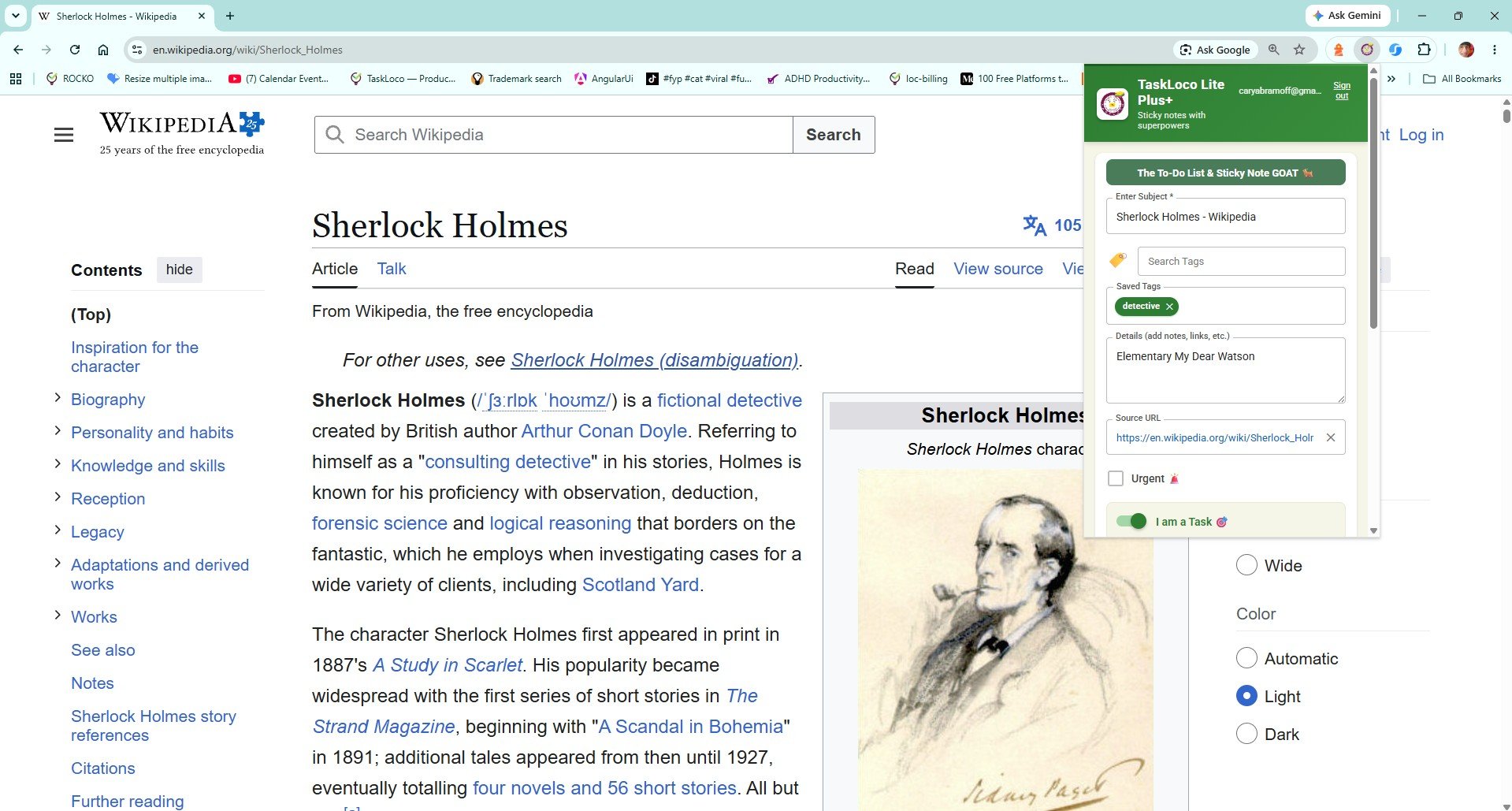
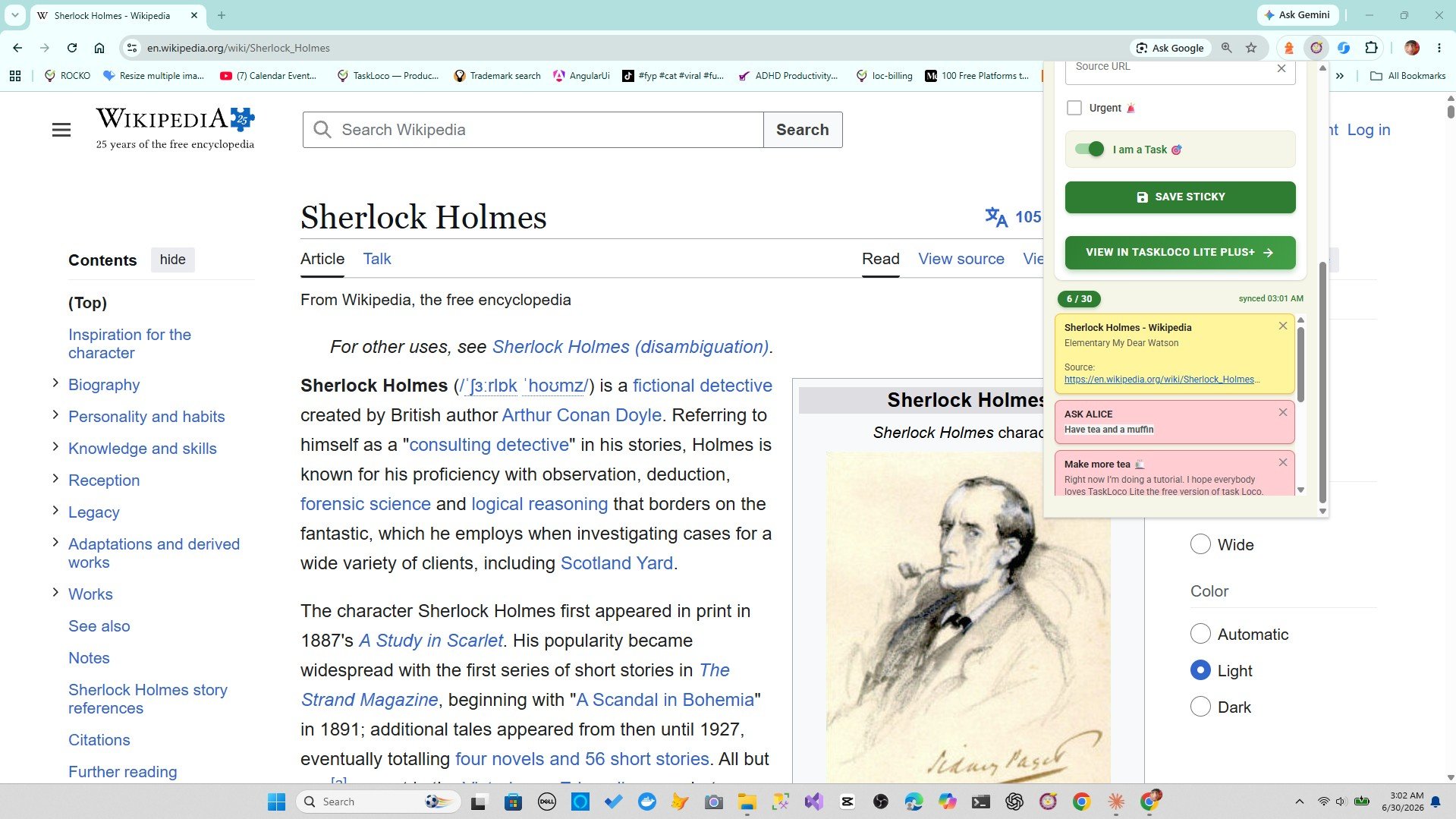
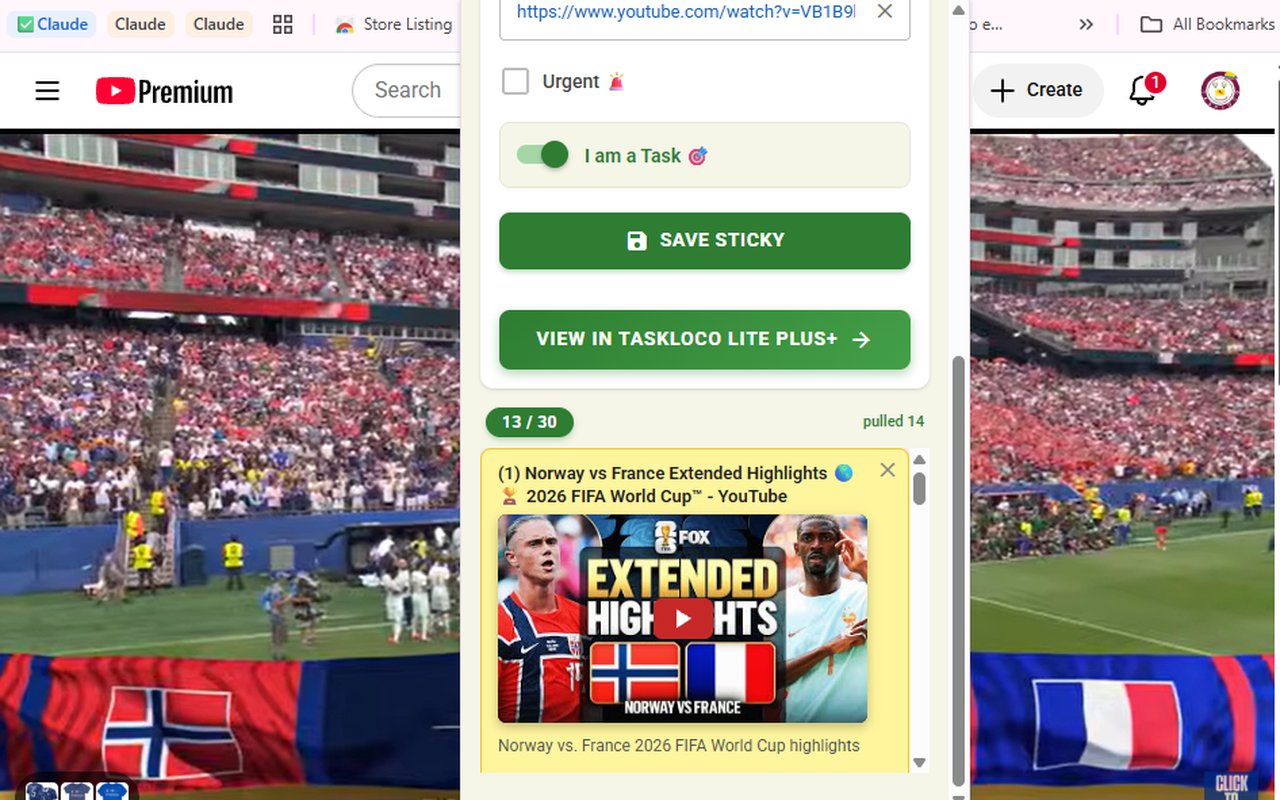
This is where the Sticky Note Web Clipper — a free Chrome extension by TaskLoco — changes the workflow. When you're on any Amazon product page (or any page on the web, for that matter), you click the clipper icon in your Chrome toolbar. That's it. The extension creates a sticky note with the page title and URL already filled in, and it appears on your TaskLoco wall instantly.
What you get that a bookmark doesn't give you:
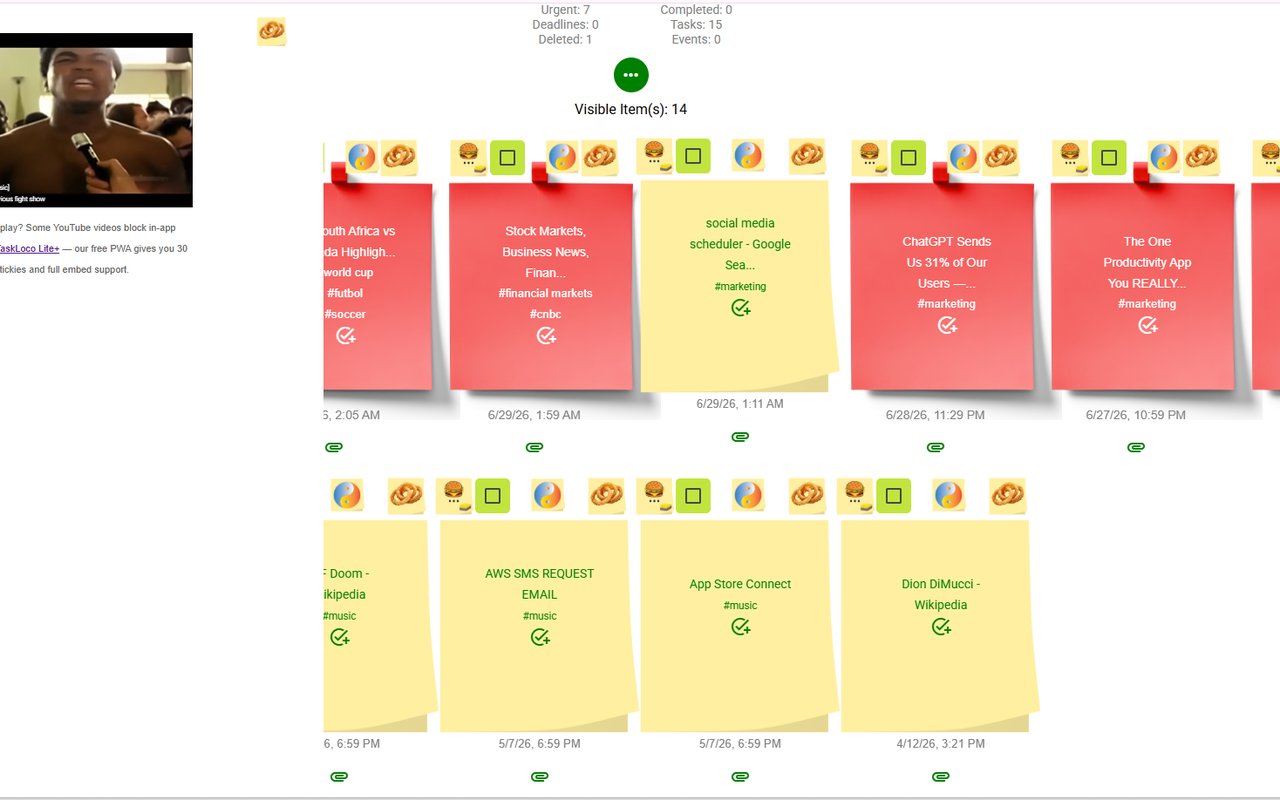
- A visual card — your saved items appear as sticky notes on a wall, not as a list of indistinguishable text links. You can see at a glance what you've saved and why.
- Editable context — you can add a quick note to the card right after saving it: "Wait for Prime Day," "Compare with the Sony version," "Gift for mom." That context sticks with the link.
- Tags and search — tag items by category ("electronics," "kitchen," "gifts") and find them instantly with search. No more digging through bookmark folders.
- Sync to your phone — your saved notes are available on iPhone and Android through the free TaskLoco experience, so the product page you clipped on your laptop is right there when you're ready to buy on your phone.
The extension is free. Sign in with Google, install it from the Chrome Web Store, and your first clip takes about one second. There's no setup beyond that.
Building a Price-Watch System That Actually Works
Once you have a reliable clipping tool, you can build a lightweight system that keeps your "want to buy" items organized without any spreadsheet gymnastics.
Create a tag for price watching. After installing the Sticky Note Web Clipper, save every Amazon product (or any product page, anywhere) with a tag like price-watch or to-buy. When you open TaskLoco on any device, filter by that tag and you have your entire watchlist in one view — across every store, not just Amazon.
Add your own price note at save time. The current price on Amazon changes constantly. When you clip the page, add a quick note to the sticky: "$149 today — want to hit $110." When you come back, you have a baseline. You'll know instantly whether the deal is real or the "sale" price is just the normal price with a fake strikethrough.
Clip the comparison sources too. Found a Reddit thread comparing the product to a competitor? A YouTube review that convinced you it was worth it? Clip those too. They'll sit right alongside the product page on your wall, so when you're ready to decide, all your research is in one place rather than scattered across browser history.
Check your wall before you buy. Make it a habit — before any purchase over a certain threshold, open your TaskLoco wall and see if you clipped it earlier. Sometimes you'll find you already have context you forgot about. Sometimes you'll realize you saved the same item three times, which is a pretty clear signal you actually want it.
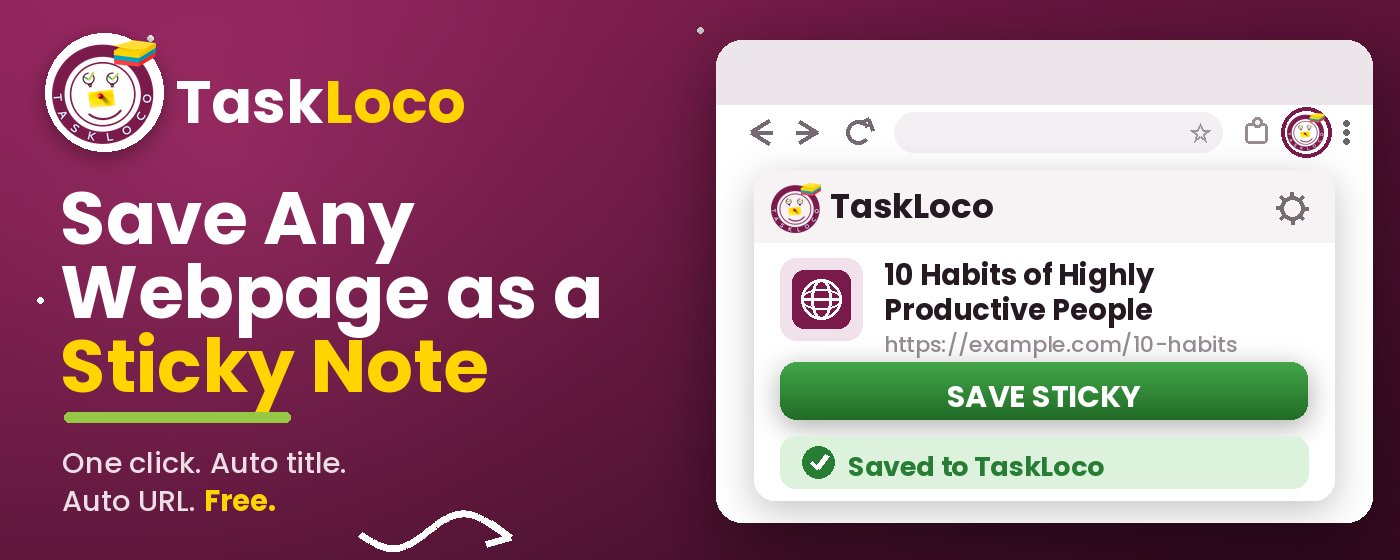
The Sticky Note Web Clipper is free. Install it from the Chrome Web Store, sign in with Google, and every page you clip becomes a sticky note you can find later.
Your clipped notes sync to TaskLoco across Chrome, desktop, iPhone, and Android — also free to start. No credit card to begin.
Get the Free Clipper
Sticky Note Web Clipper
- Free Chrome extension
- One-click save — any page, article, or video
- Title & URL auto-filled
- Tags & search
- Free forever
Synced to TaskLoco
- Sign in free with Google
- Your wall on Chrome, desktop, iPhone, Android
- YouTube videos embed & play in notes
- Visual sticky-note wall
- Free to start
Add It to Chrome — Free
One click saves any page, article, or YouTube video as a sticky note. Title and URL auto-filled.
Add to Chrome — FreeSee TaskLoco in Action
Frequently Asked Questions
Can I save an Amazon product page on my phone to check later on my laptop?
Yes. If you clip the page using the Sticky Note Web Clipper on Chrome, it syncs to your TaskLoco account, which is accessible on desktop, iPhone, and Android. So a product you clip on your phone shows up on your laptop wall and vice versa — all free.
Does Amazon's own Wish List notify me of price drops?
Amazon does show price history indicators on saved Wish List items in some cases, and it occasionally sends price-drop emails. However, this only works for Amazon products — it won't help you track prices on other retailers' sites. For a cross-store watchlist, clipping pages into a visual note wall gives you more flexibility.
What's wrong with just bookmarking an Amazon product page?
Nothing technically — the link works. The problem is context and visibility. A bookmark shows you a title and a URL. It doesn't tell you the price you saw, why you wanted it, whether you were comparing it to something else, or how urgent the purchase was. A visual sticky note with your own added notes gives you all of that at a glance when you come back days or weeks later.
Is the Sticky Note Web Clipper free?
Yes — the extension is completely free. Install it from the Chrome Web Store, sign in with Google, and start clipping. TaskLoco, where your notes sync, also has a free tier. No credit card needed to get started.
What if the Amazon product URL changes or the listing disappears?
Amazon URLs can sometimes change, especially for third-party listings that get updated or removed. The best practice is to add a note to your sticky at save time with the key details — product name, price you saw, seller — so even if the link goes stale, you have the information you needed. A sticky note with context outlasts a dead link.
Can I save product pages from other stores, not just Amazon?
Absolutely. The Sticky Note Web Clipper works on any webpage in Chrome — Amazon, Best Buy, Target, a brand's own site, Etsy, wherever. Click the toolbar icon on any product page and it's clipped. This is one of the biggest advantages over Amazon's Wish List, which is obviously Amazon-only.
How do I find a product page I clipped a few weeks ago?
In TaskLoco, you can search by keyword or filter by tag. If you tagged the note when you saved it — something like "price-watch" or "electronics" — you can filter to that tag and see only those notes. Or just type part of the product name in search and it'll surface the right note. Much faster than scrolling through a bookmark folder trying to remember what you named something three weeks ago.
Born in Brooklyn. Powered by AWS. Your data stays yours.
TaskLoco is available on iPhone, Android, Chrome, and every web browser.