You know the feeling: you watched a brilliant tutorial three weeks ago, you're almost certain it was about CSS Grid or sourdough hydration ratios or Roman aqueducts, and now you cannot find it. YouTube's watch history is a scroll of despair. Your browser bookmarks folder called 'Videos' has 200 entries with titles like 'Part 1' and no context. You need a system — and this article gives you one.
Organizing YouTube videos by topic isn't complicated, but most people skip the five minutes of setup and end up in the same mess every time. Below you'll find a practical method that works whether you use YouTube's own tools, a dedicated clipping extension, or just your browser. Start with the method that fits how you actually browse.
Start With YouTube's Own Playlists — and Fix What's Wrong With Them
YouTube playlists are the obvious first stop, and they're genuinely useful when you use them deliberately. Here's the method that actually works:
- Name playlists by topic, not by vibe. 'Design Tutorials' beats 'Cool Stuff I Like'. Be specific enough that future-you will understand: 'Web Typography Deep Dives' or 'Fermentation Basics'. Vague names are where playlists go to die.
- Create a private playlist the moment you start a topic. Don't save to Watch Later — that's a graveyard. Create a named playlist immediately so the save action has a destination.
- Use playlist descriptions. Almost nobody does this. A two-sentence description of what the playlist is for saves enormous confusion six months later.
- Split large playlists before they hit 30 videos. Once a playlist gets long, you stop browsing it. Break 'Photography' into 'Lighting Techniques', 'Post-Processing', and 'Gear Reviews' before it becomes unwieldy.
Playlists have real limits though. They only work for videos you intend to watch later in sequence. They don't handle cases where you want to save a video alongside a related article, a research note, or a link from another site entirely. And they're locked inside YouTube — if the video gets taken down or the channel disappears, your playlist entry becomes a dead link with no record of what the content even was.
Build a Topic System That Works Across All Your Video Sources
The smarter move is to treat YouTube videos as one type of content inside a broader topic-based system — because most deep dives on any subject pull from YouTube, articles, documentation pages, and podcasts all at once. Here's how to build that system:
Define your topics first, before you save anything. Sit down and list the five to ten areas you actually research or learn about. These become your top-level buckets. Everything you save goes into one of them. If something doesn't fit any bucket, either create a new one or ask whether you actually need to save it.
Give each save a one-line note. The video title alone is almost never enough to remind you why you saved something. 'Great explanation of the Maillard reaction — especially the part at 14:30' is infinitely more useful than the raw URL six weeks later.
Separate 'I want to watch this' from 'I already watched this and want to reference it.' These are different use cases and deserve different homes. A to-watch list should be short and ruthlessly pruned. A reference library can grow indefinitely as long as it's searchable.
Use tags, not just folders. Topics are rarely clean categories — a video on 'fermented hot sauce' belongs under both 'Fermentation' and 'Hot Sauce Recipes'. A tagging approach lets one item live under multiple relevant topics without duplication. Whether you're using a note app, a browser extension, or a dedicated tool, look for something that supports tags alongside folders or boards.
Where Browser Bookmarks and YouTube Playlists Fall Short
Most people end up using one of three systems: YouTube playlists, browser bookmarks, or open tabs. Each one has a specific failure mode that's worth naming clearly so you can avoid it.
YouTube playlists are topic-specific but silo'd. They can't hold articles, they don't let you add notes, and they're vulnerable to channel deletions. They're great for sequential learning within YouTube but terrible as a cross-source research tool.
Browser bookmarks look organized until they aren't. The folder structure always starts clean and ends in chaos because there's no friction-free way to add context to each save, no visual thumbnail to help you recognize what you saved at a glance, and no search that's actually fast across hundreds of items. A bookmarked YouTube URL 90 days later is just a link — you have to open it to remember why it mattered.
Open tabs are not a system. They're a delay mechanism. Keeping 40 tabs open 'so you don't lose them' is a memory leak for your browser and your attention. Tabs crash, sessions end, and nothing is actually organized.
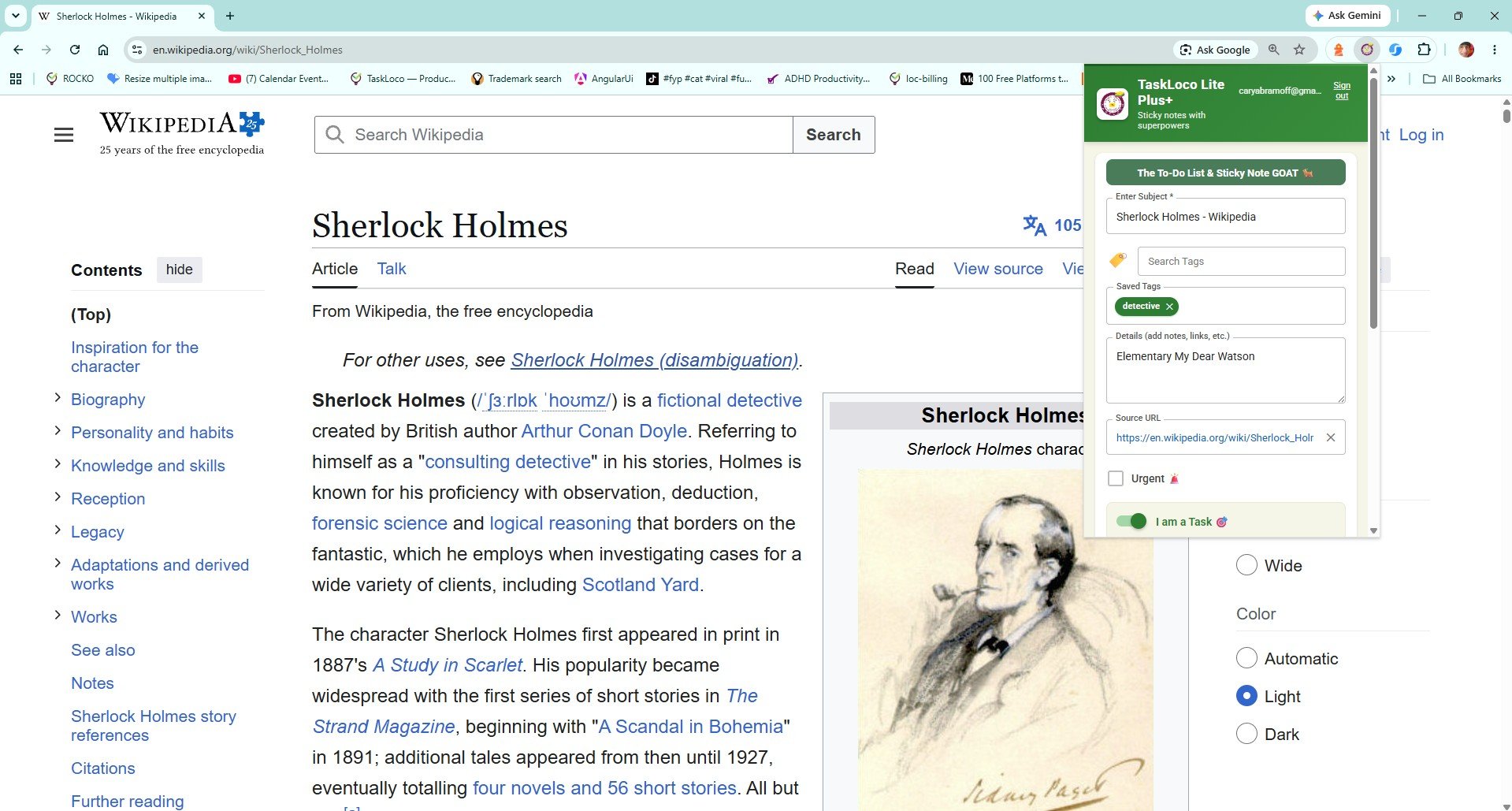
A good organization system solves the context problem at the moment of saving — not later, when you're trying to remember. That means the save step has to capture title, URL, and give you an easy way to add a note or tag immediately. The fewer clicks between 'I want to save this' and 'it's saved with context', the more likely the system actually holds up over time.
One Tool That Clips YouTube Videos as Visual Notes Instantly
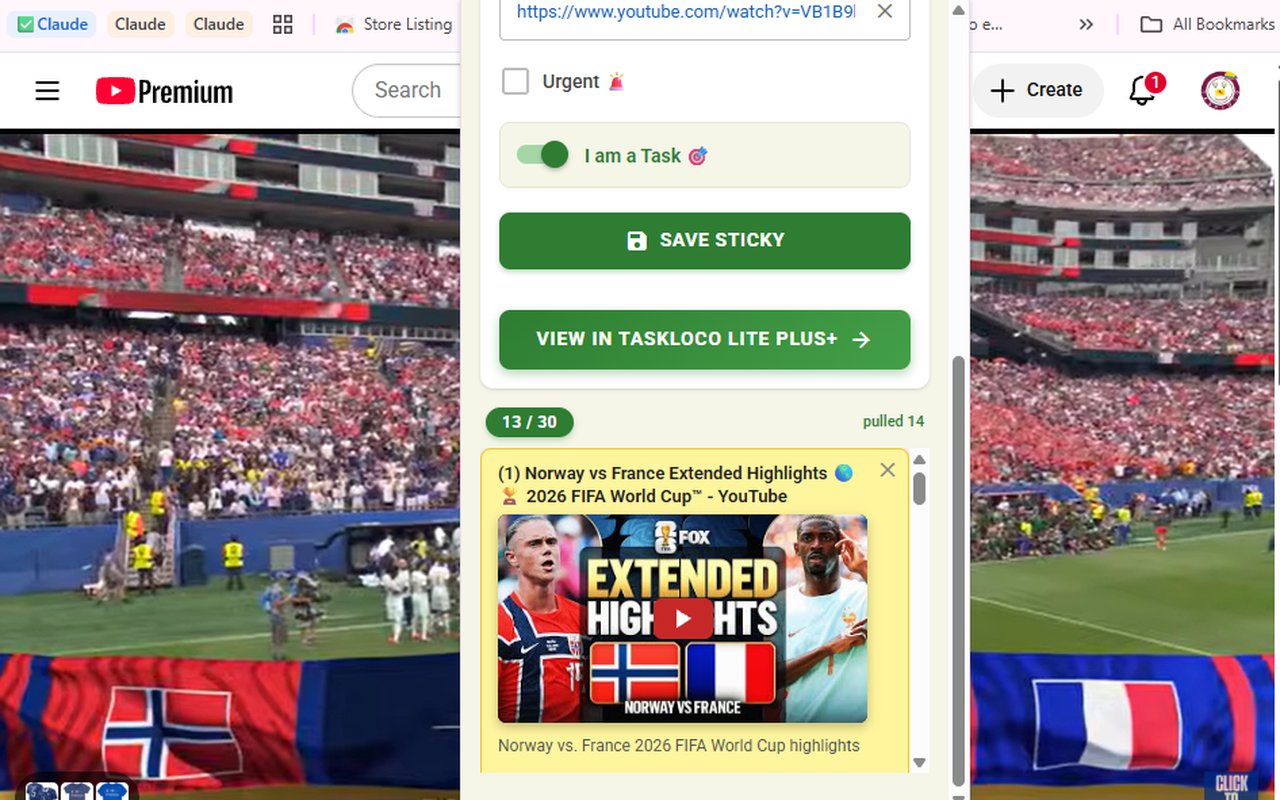
If you want to stop losing YouTube videos to bad playlists and dead bookmarks, the Sticky Note Web Clipper is worth knowing about. It's a free Chrome extension that turns any YouTube video into a visual sticky note in one click — the title and URL are auto-filled, and the video actually embeds and plays right inside the note. You don't have to go back to YouTube to watch it.
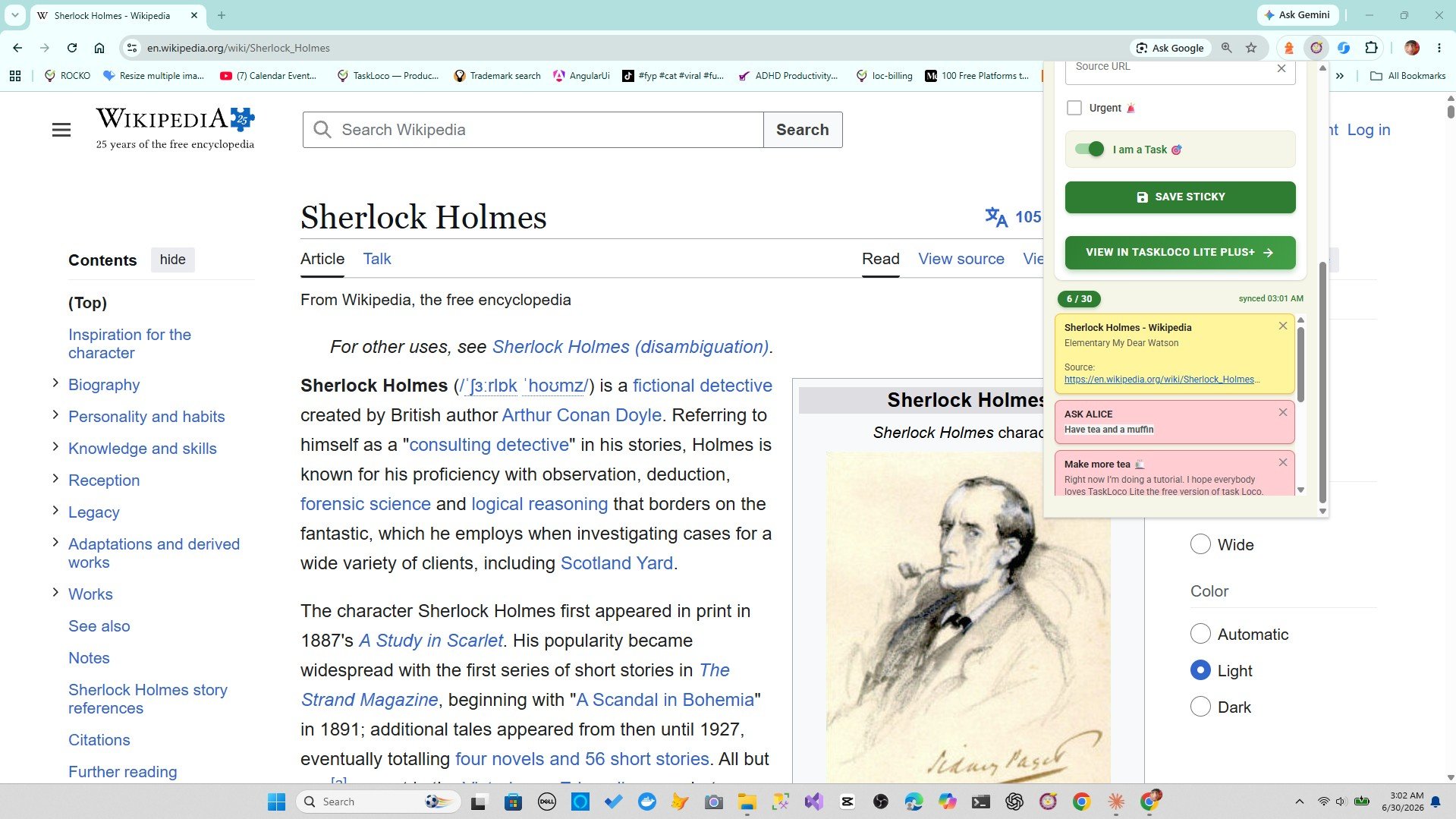
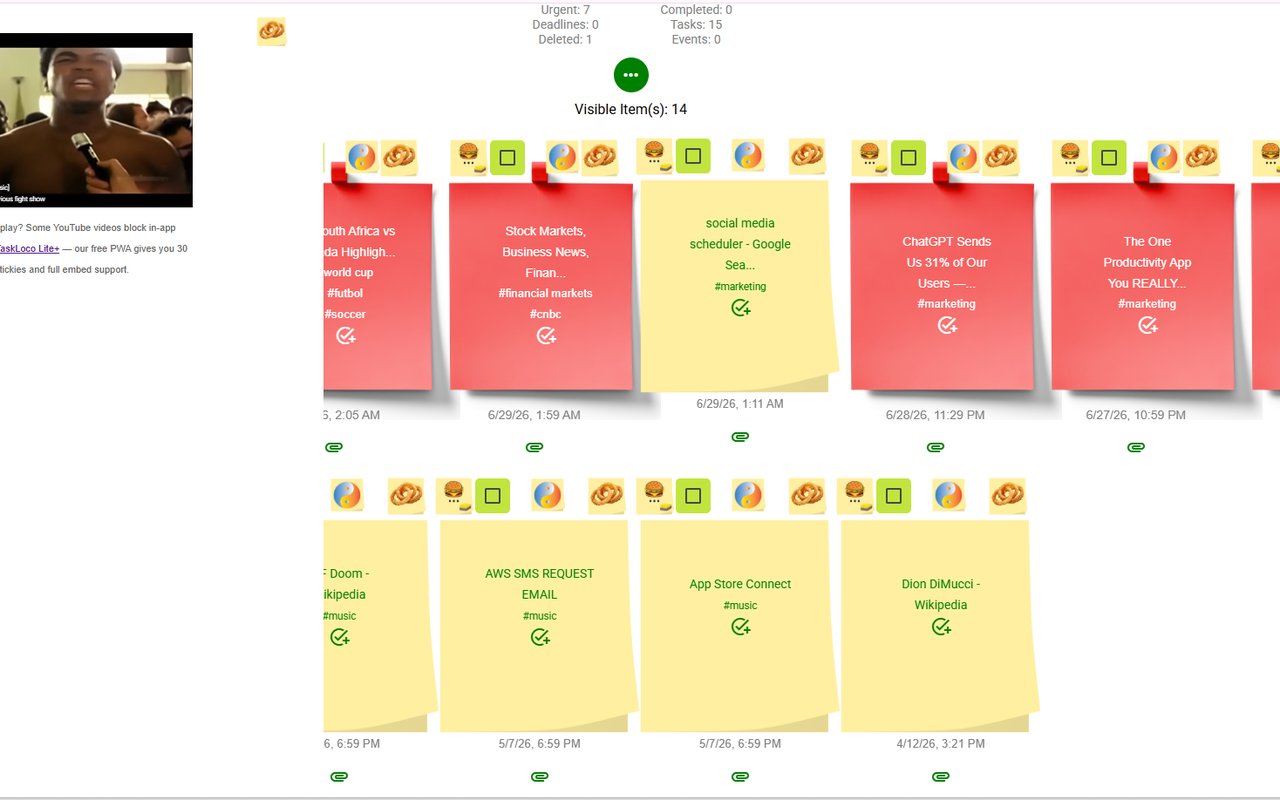
Here's how it fits into a real topic system: you install the extension, sign in free with Google, and then whenever you find a video worth keeping, you click the toolbar icon. The note is created instantly with the video title and URL already filled in. You can add a tag like 'Fermentation' or 'CSS Grid' right there, and the note lands on your TaskLoco wall grouped with everything else on that topic — articles you clipped, links you saved, other videos.
The notes sync across Chrome, desktop, iPhone, and Android via TaskLoco for free, so your organized video library is available wherever you are. You can search by tag or keyword to find any saved video without scrolling through a playlist or a bookmark folder. And because the note holds the title and your context at the time of saving, you never open a mystery link again.
If your current method for keeping YouTube videos organized is 'I try to remember' or 'I have a very long Watch Later playlist', the clipper is a genuinely faster alternative. It takes about thirty seconds to install, it's free, and it requires no workflow overhaul — just click instead of bookmark the next time you find a video worth keeping.
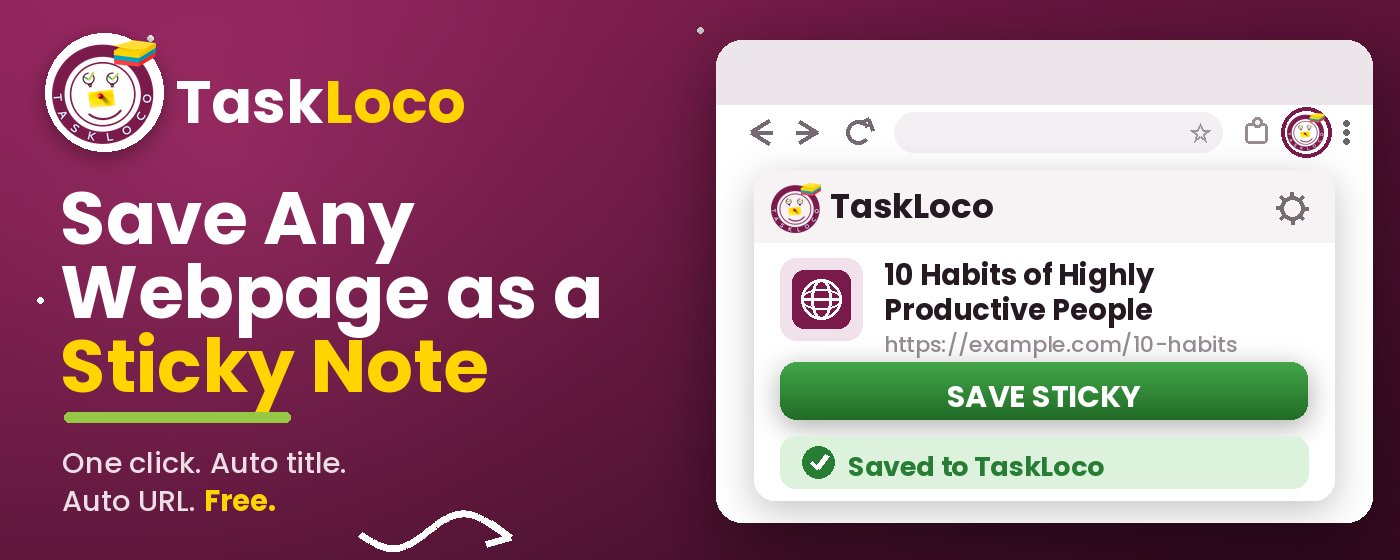
The Sticky Note Web Clipper is free. Install it from the Chrome Web Store, sign in with Google, and every page you clip becomes a sticky note you can find later.
Your clipped notes sync to TaskLoco across Chrome, desktop, iPhone, and Android — also free to start. No credit card to begin.
Get the Free Clipper
Sticky Note Web Clipper
- Free Chrome extension
- One-click save — any page, article, or video
- Title & URL auto-filled
- Tags & search
- Free forever
Synced to TaskLoco
- Sign in free with Google
- Your wall on Chrome, desktop, iPhone, Android
- YouTube videos embed & play in notes
- Visual sticky-note wall
- Free to start
Add It to Chrome — Free
One click saves any page, article, or YouTube video as a sticky note. Title and URL auto-filled.
Add to Chrome — FreeSee TaskLoco in Action
Frequently Asked Questions
What's the best way to organize YouTube videos by topic?
Use topic-named playlists on YouTube for sequential learning, and a visual clipping tool for research and reference. Name your playlists specifically ('CSS Grid Tutorials', not 'Design'), add descriptions, and split playlists before they hit 30 videos. For cross-source topics that mix videos with articles and links, a tool like the free Sticky Note Web Clipper works better — it saves each video with title, URL, and your own context in one click.
Can I save YouTube videos outside of YouTube to keep them organized?
Yes. Browser bookmarks can save a YouTube URL, but they give you no thumbnail, no context, and no tagging. The Sticky Note Web Clipper is a free Chrome extension that clips any YouTube video as a visual sticky note — the video embeds inside the note and plays there, so you don't need to go back to YouTube. Notes are tagged and searchable, so finding a video by topic takes seconds instead of scrolling.
Why is Watch Later so hard to use for organizing videos?
Watch Later is a single undifferentiated queue — there are no topics, no tags, no subtopics. Everything goes in at one end and piles up. It was designed to be a short-term 'watch this next' list, not a library. If you're using it to store dozens or hundreds of videos across different topics, it will always feel chaotic because it has no structure. Use named playlists or a dedicated clipping tool instead.
Do YouTube playlists work for research across multiple topics?
Only within YouTube. Playlists can't hold articles, documentation pages, or links from other sites. If your research on any topic pulls from multiple sources — which most real research does — you need a cross-source system. Something like the Sticky Note Web Clipper lets you clip YouTube videos alongside any other webpage onto the same topic-tagged wall, so all your sources for one topic live together.
What happens to a YouTube playlist if a video gets deleted?
The playlist entry becomes '[Deleted video]' — a dead link with no title, no URL, and no record of what the content was. If you clipped the video to a sticky note first, you still have the title and any notes you added at the time of saving, even if the original video is gone. It won't play, but you at least know what it was, who made it, and why you saved it.
Is the Sticky Note Web Clipper free?
Yes — the extension is completely free. Install it from the Chrome Web Store, sign in with Google, and start clipping. TaskLoco, where your notes are saved and synced, also has a free tier. There's nothing to pay to start organizing your YouTube videos as visual sticky notes.
Can I access my saved YouTube videos on my phone?
Yes. Notes saved with the Sticky Note Web Clipper sync to TaskLoco, which is available on iPhone and Android as well as desktop and Chrome. So if you clip a video during a lunch break on your laptop, it's on your phone that evening. The sync happens automatically when you're signed in with your free Google account.
Born in Brooklyn. Powered by AWS. Your data stays yours.
TaskLoco is available on iPhone, Android, Chrome, and every web browser.