You know the feeling: forty-three tabs open, three browser windows, and a creeping dread that closing any of them means losing something important forever. The tabs aren't really staying open because you need them right now — they're staying open because you don't have a good answer for what happens to them if you close them.
That's the actual problem. Tab overload isn't a memory issue or a willpower issue. It's a capture problem. If you trust that closing a tab won't mean losing what was in it, closing becomes easy. This article gives you a real, working system for that — one that doesn't require any app, any extension, or any paid tool to get started.
Step One: Triage Before You Try to Organize
The worst thing you can do with forty open tabs is try to organize them all at once. That turns a five-minute problem into a two-hour archaeology project. Instead, triage first — ask exactly one question per tab: Does this need action right now, or not?
- Yes, right now: Keep it open. That's what active tabs are for.
- No, but I want it later: Capture it somewhere, then close it.
- Honestly no: Close it. The internet still exists. You can find it again if you need to.
Most people discover that 60–70% of their open tabs fall into the third category the moment they're honest about it. The ones that don't — the articles you actually want to read, the research you're mid-way through, the YouTube video someone sent you — those are what a good capture system is for.
Real Methods for Capturing Tabs You Actually Want to Keep
Once you've decided a tab is worth saving, you have several options. Here's an honest look at each:
- Browser bookmarks: Fast, but they pile up invisibly. Most people have hundreds of bookmarks they've never revisited because there's no visual reminder they exist and no easy way to see what they were actually about. A URL alone rarely jogs your memory weeks later.
- Reading list (Safari/Chrome): Better than bookmarks for articles, but it's a flat list with no context, no tagging, and no way to distinguish between 'read tonight' and 'research for a project I'm working on.'
- Copy-pasting into notes or docs: Genuinely works, but it's slow. If saving a link takes more than ten seconds, you'll stop doing it consistently — and an inconsistent system is the same as no system.
- Tab groups: Chrome and Edge both support these, and they're useful for keeping related tabs together. The problem: they still live in the browser. Close the window, lose the group. They're a way of organizing tabs, not capturing what's in them.
The common thread in all the methods that fail is friction. Any extra step — copying a URL, naming a bookmark folder, opening a doc — is a step that often doesn't happen under real browsing conditions. A good capture method needs to work at the speed of a thought, not the speed of a filing system.
Building a Habit That Actually Sticks
Tools are only half the story. Even the best capture method fails if it doesn't become a reflex. Here's what actually turns tab triage into a habit:
Set a trigger, not a schedule. 'I'll clean up tabs every Friday' doesn't work — by Friday you don't remember which tabs mattered. A better trigger: whenever you open a new browser window, spend 90 seconds on the existing tabs. Or: before you close your laptop, run a quick sweep. The trigger needs to be tied to something you already do.
Trust the system enough to close. This is the psychological piece. If you're not closing tabs, it's because you don't believe what you save is actually findable later. The fix is to test your system — save something, close it, then find it again. Once you've confirmed the capture works, closing feels safe.
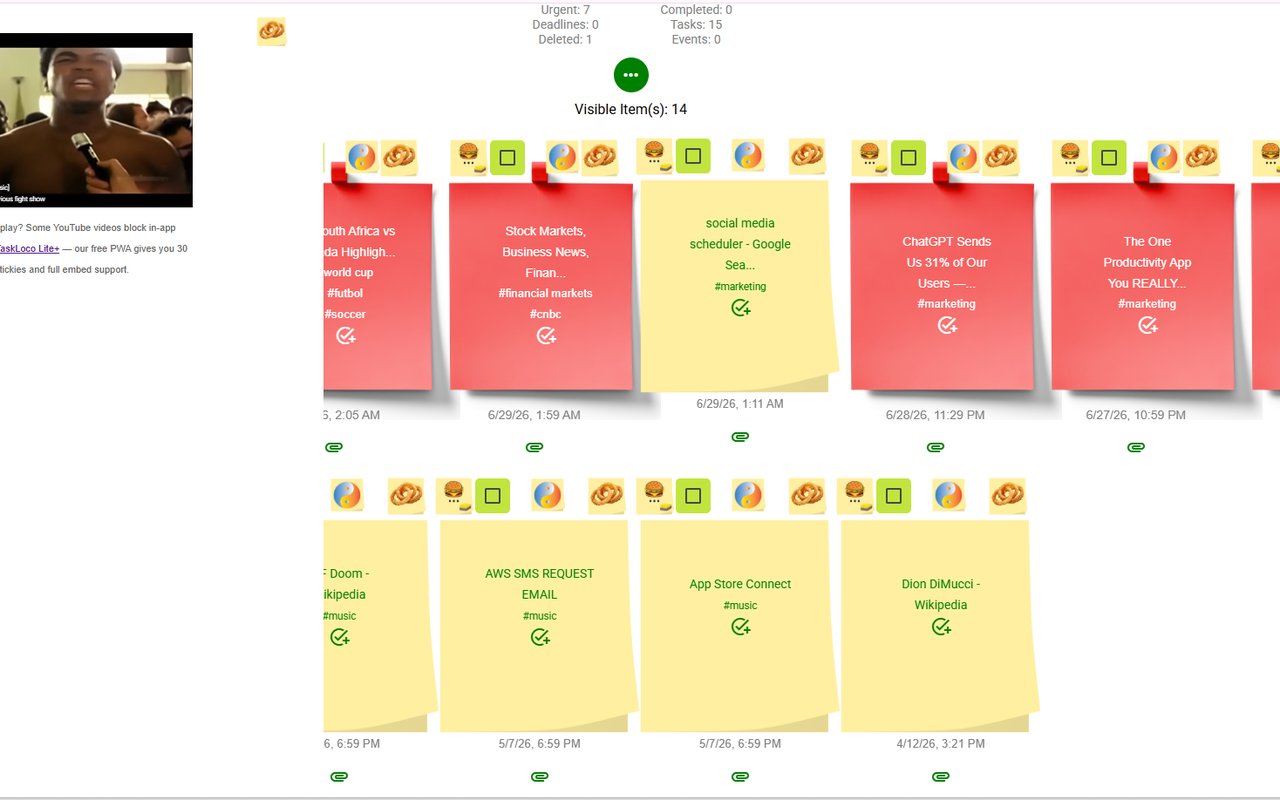
Keep it visual. A list of saved URLs looks like a chore. A visual board of saved pages — where you can actually see what each item is — is something you'll actually browse. That's the difference between a capture system that gathers dust and one that becomes genuinely useful. When you can see what you saved, you revisit it. When you can't, you don't.
- Use tab groups for things that are active right now
- Capture anything you want but can't engage with immediately
- Close anything that passes the 'honest no' test from triage
- Review your captures on a natural trigger, not a calendar reminder
One Practical Tool That Fits Into This System
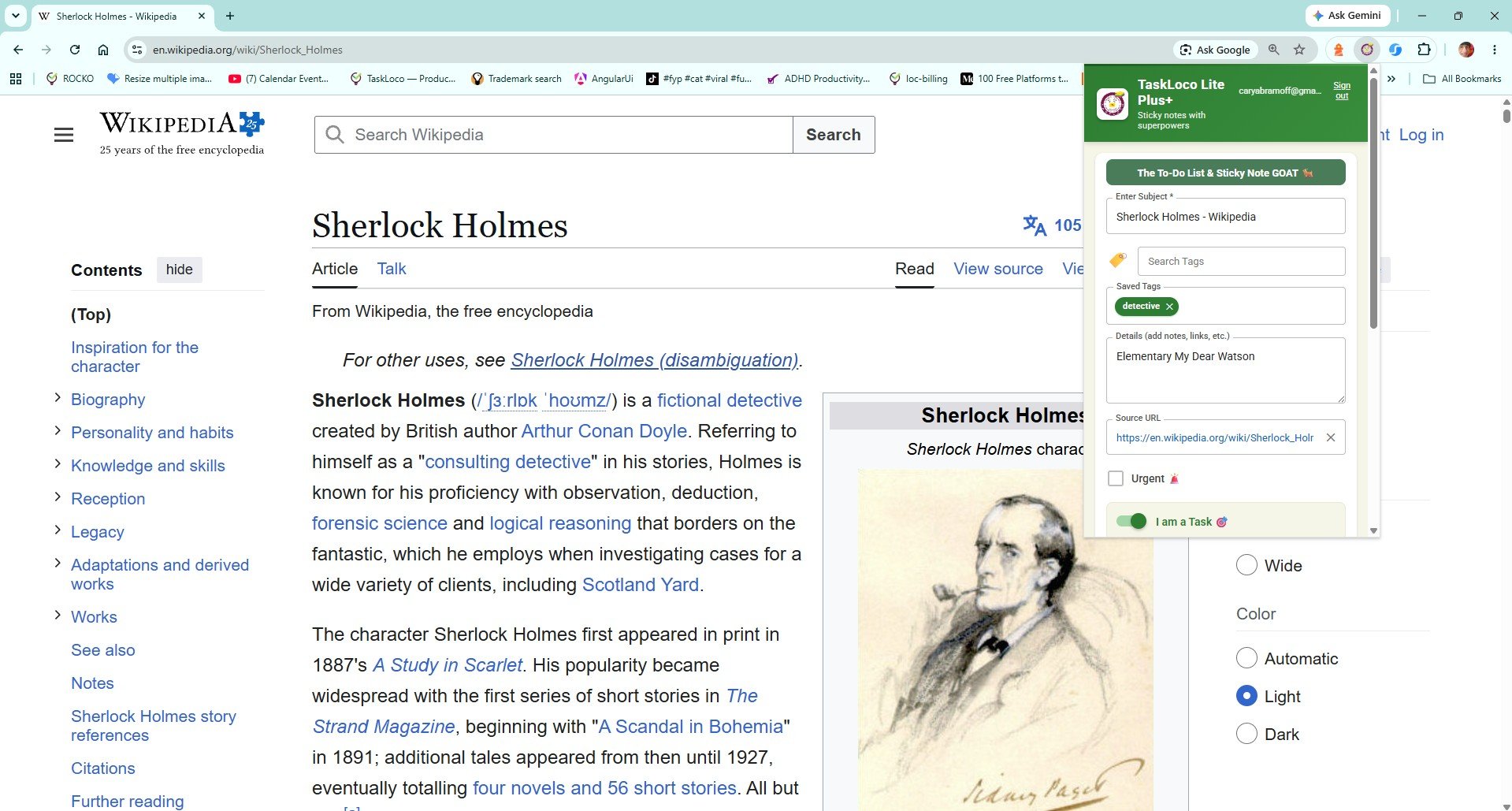
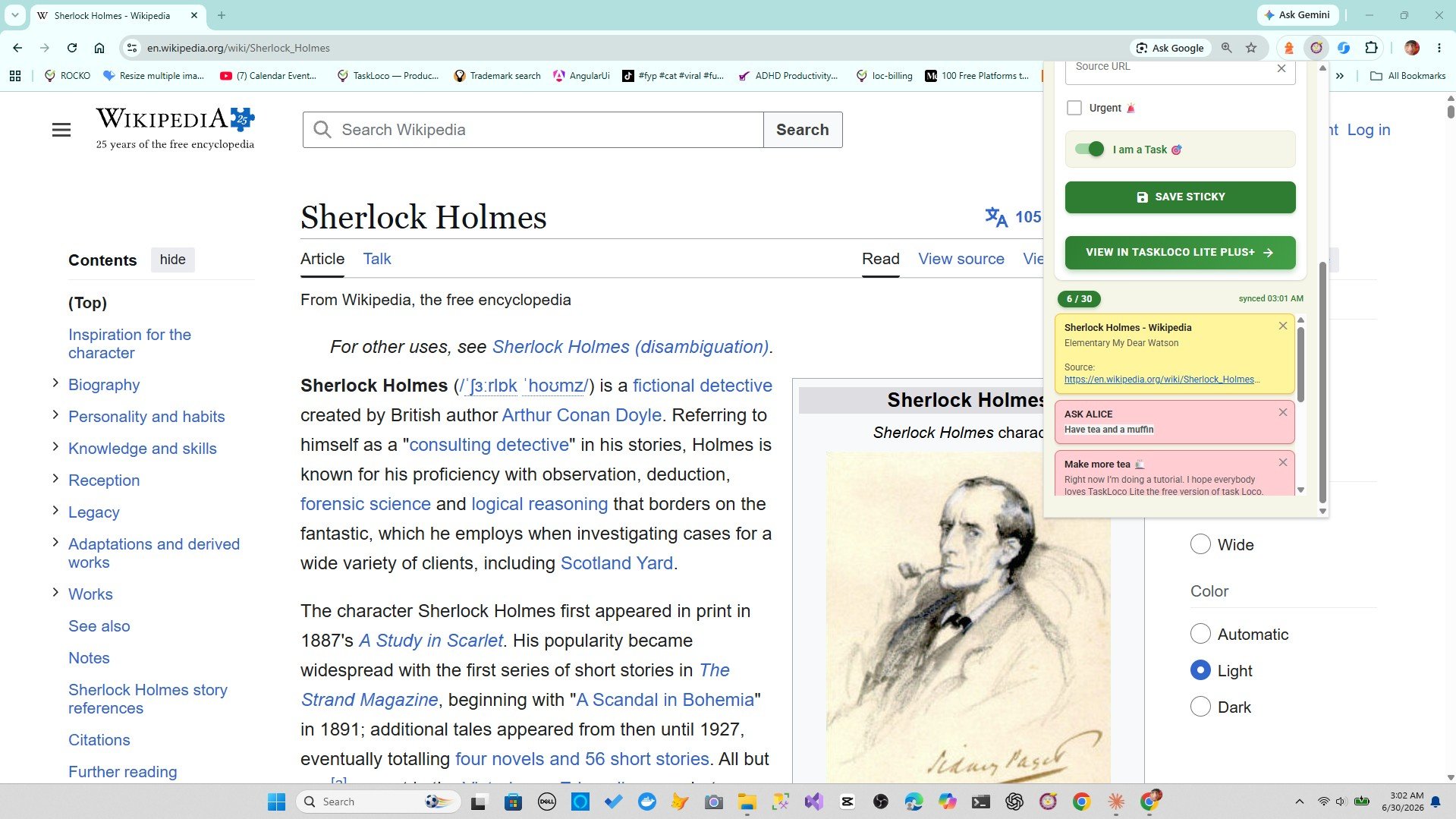
If you want a capture method that's genuinely fast enough to become a reflex, the Sticky Note Web Clipper by TaskLoco does exactly one thing well: click the toolbar icon on any tab, and that page is instantly saved as a visual sticky note — title and URL auto-filled, nothing to type. It takes about one second.
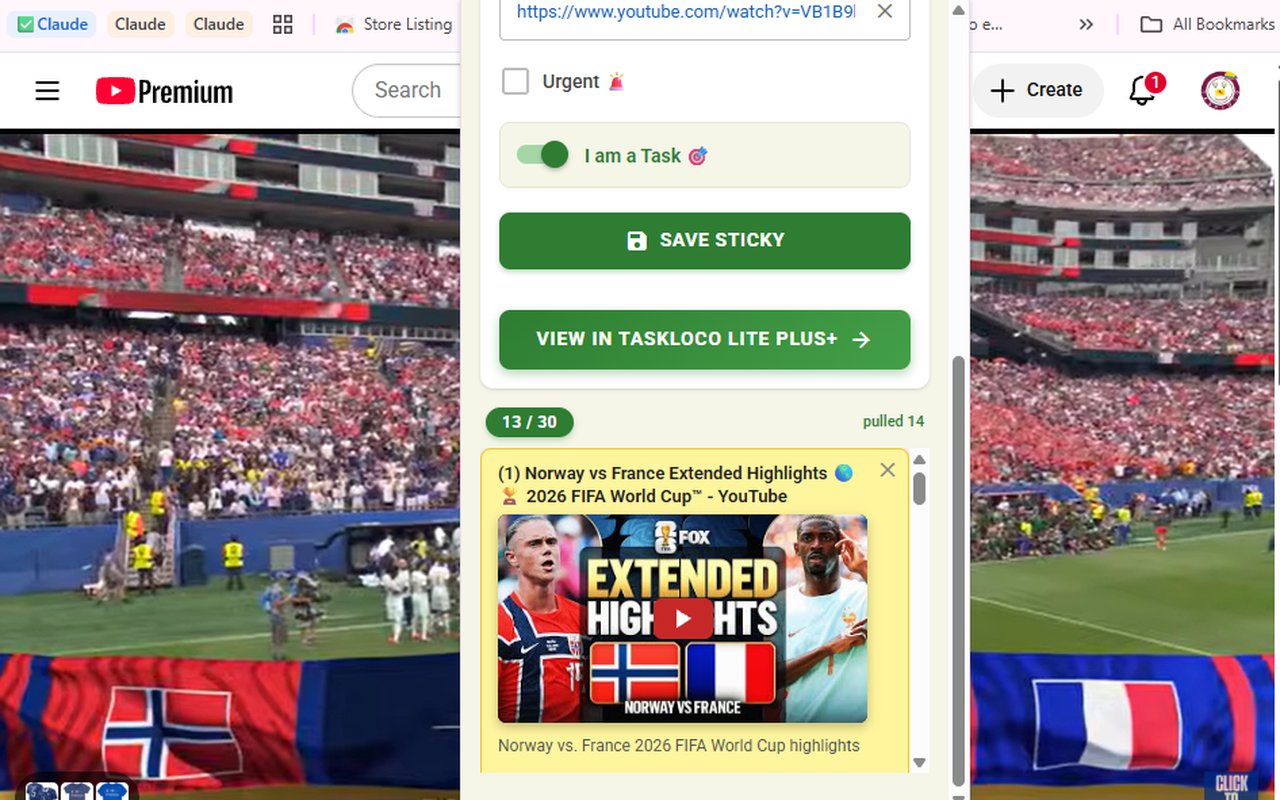
The reason it fits the system above is visual. Your saved pages don't end up as a list of undifferentiated URLs. They show up as sticky notes on a board you can actually see and browse. Articles, news, research pages, YouTube videos (which embed and play directly inside the note) — they all land in the same place and stay findable via tags and search.
The notes sync to your phone and desktop through TaskLoco for free, so something you clip on your laptop while browsing shows up on your iPhone later. Sign-in is free with Google, and the extension itself is free — no trial, no catch.
If you're doing the triage approach above and finding that 'save for later' still creates friction, adding one-click capture to your setup is the most direct fix. Install the free extension from the Chrome Web Store and you'll have it ready the next time a tab is too good to close and too distracting to keep open.
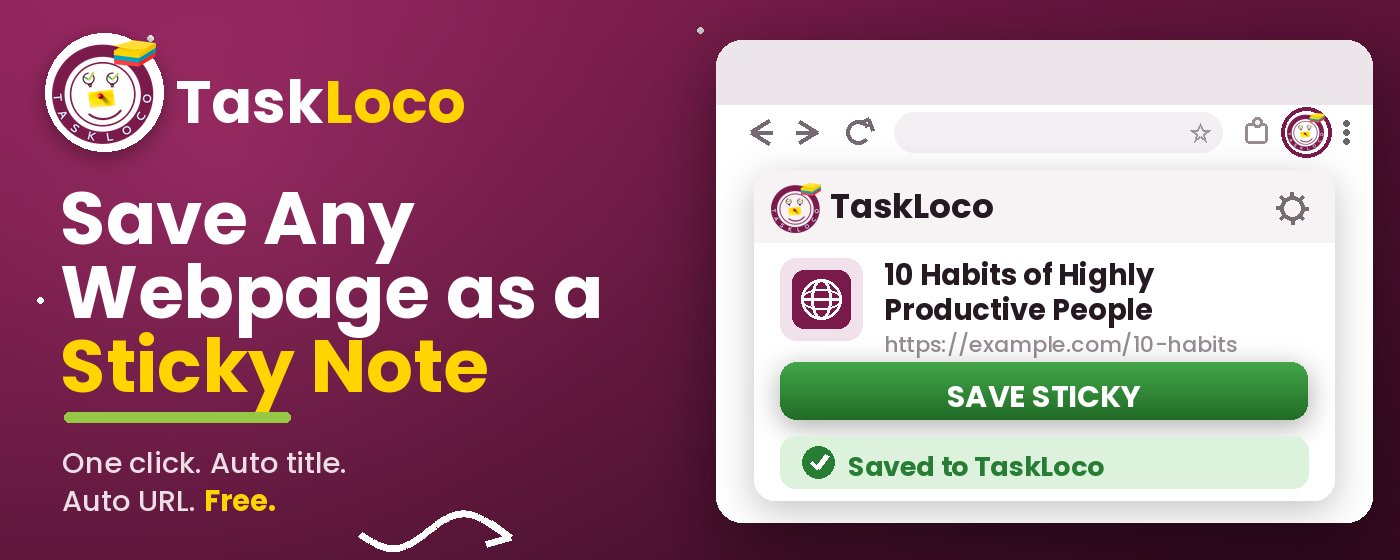
The Sticky Note Web Clipper is free. Install it from the Chrome Web Store, sign in with Google, and every page you clip becomes a sticky note you can find later.
Your clipped notes sync to TaskLoco across Chrome, desktop, iPhone, and Android — also free to start. No credit card to begin.
Get the Free Clipper
Sticky Note Web Clipper
- Free Chrome extension
- One-click save — any page, article, or video
- Title & URL auto-filled
- Tags & search
- Free forever
Synced to TaskLoco
- Sign in free with Google
- Your wall on Chrome, desktop, iPhone, Android
- YouTube videos embed & play in notes
- Visual sticky-note wall
- Free to start
Add It to Chrome — Free
One click saves any page, article, or YouTube video as a sticky note. Title and URL auto-filled.
Add to Chrome — FreeSee TaskLoco in Action
Frequently Asked Questions
What's the fastest way to save a tab before closing it?
The fastest method is a one-click browser extension that captures the current tab automatically. The Sticky Note Web Clipper does this — click the toolbar icon and the page is saved as a sticky note with the title and URL already filled in. No typing, no copy-pasting, no extra windows.
Do Chrome tab groups actually solve the too-many-tabs problem?
Tab groups help you organize tabs that are currently open, but they don't solve the underlying issue: tabs still live in the browser and can vanish if the window closes unexpectedly. For anything you actually need to come back to, capturing it outside the browser — in a note, a clipper, or a reading list — is more reliable.
Is the Sticky Note Web Clipper free?
Yes — the extension is completely free. TaskLoco, where your clipped notes are stored, also has a free tier. Install from the Chrome Web Store, sign in with Google, and start saving tabs as visual sticky notes right away.
Why do I keep opening the same tabs over and over?
Usually it's because you closed a tab before you had a real place to put it, so your brain keeps you circling back. The fix is a capture system you trust — once you know a saved link is findable later, you stop reopening it out of anxiety and you actually go read or use it when you're ready.
Can I save YouTube videos along with regular pages?
Yes. The Sticky Note Web Clipper saves YouTube videos as sticky notes that embed and play directly inside the note. So instead of leaving a YouTube tab open to watch later, you can clip it, close the tab, and watch it from your saved board whenever you're ready.
Will my saved pages sync if I switch between my laptop and phone?
Yes. Notes clipped via the Sticky Note Web Clipper sync to TaskLoco, which is available on desktop, iPhone, and Android. Clip on Chrome during the day and your notes are there on your phone that evening — no extra setup required.
What should I actually do with tabs that I'm not ready to read but don't want to lose?
Clip them and close them. A one-click clipper like the Sticky Note Web Clipper makes this a one-second action — the tab is captured as a visual note with its title and URL, tags can be added to help you find it later, and it syncs to your phone. Keeping tabs open as a reminder system is one of the least reliable methods there is.
Born in Brooklyn. Powered by AWS. Your data stays yours.
TaskLoco is available on iPhone, Android, Chrome, and every web browser.