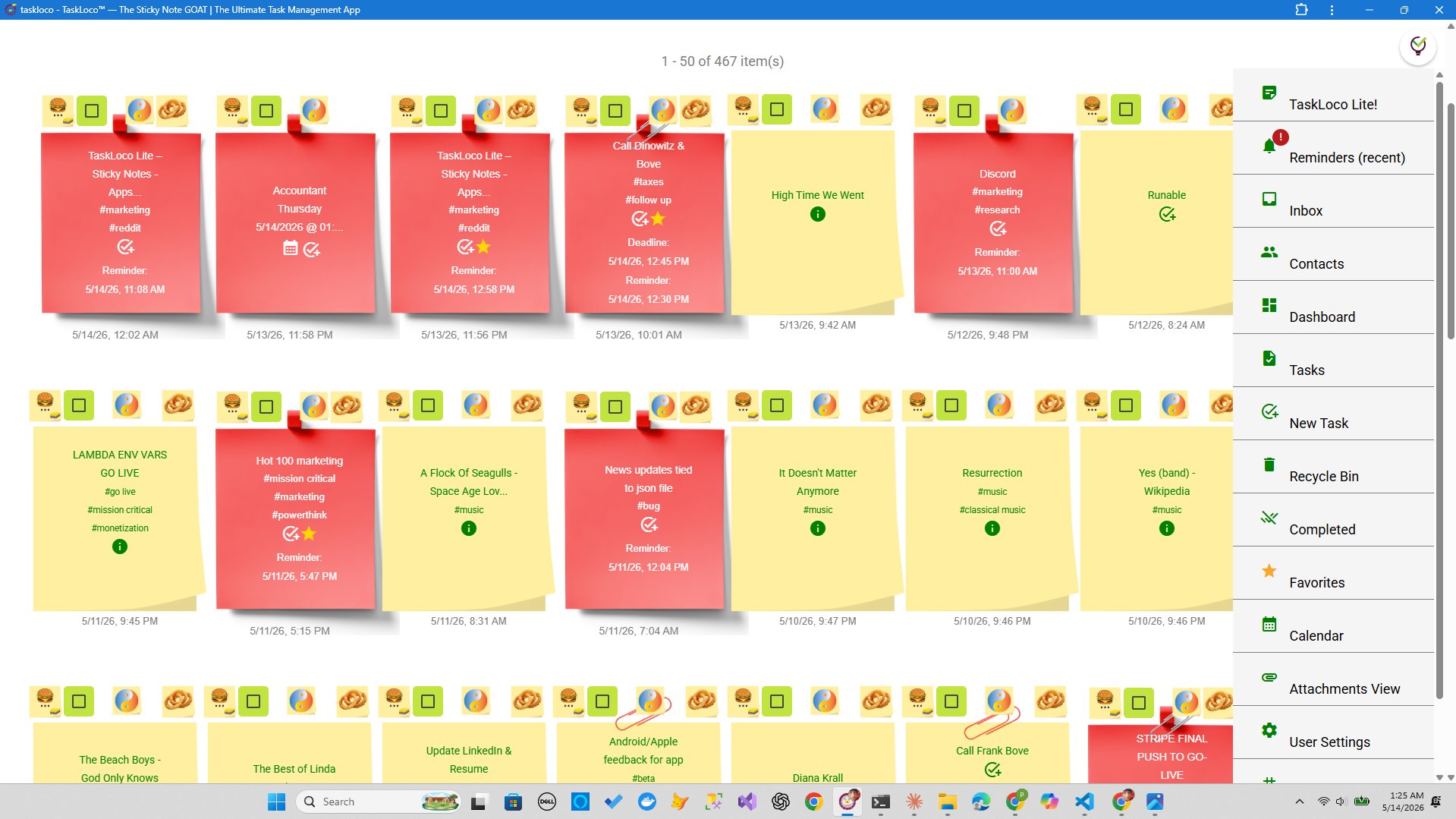
Your desk has seventeen sticky notes on it right now. Three of them say 'URGENT.' Two say 'DON'T FORGET.' You have no idea which one was urgent yesterday and which one is urgent today. This is not a willpower problem — it is a system problem. And color coding is one of the few organizational strategies that neurologists, occupational therapists, and people with ADHD actually agree works.
The reason is simple: ADHD brains have a harder time ranking tasks in working memory. When everything lives in the same beige, same font, same visual weight, the brain has to do extra work to figure out what matters right now. Color coding offloads that ranking to the visual cortex — the part of your brain that is always online and does not require executive function to operate. The right color system does not make you more disciplined. It makes discipline less necessary.
What to Look for in a Color Coded Note System for ADHD
Before recommending any specific tool or approach, it helps to understand what makes a color coding system actually work for ADHD — because not all color systems are created equal, and the wrong one can create just as much noise as no system at all.
1. Instant visual hierarchy. The entire point of color is to let your eyes do the sorting before your brain has to. A good system uses no more than four or five colors, each with one clear, non-overlapping meaning. If you need to remember what a color means, the system has already failed. The best systems use colors that carry cultural or intuitive weight — red for stop/urgent, green for go/done, yellow for caution/waiting — so the meaning is absorbed automatically.
2. Low friction to create and change notes. ADHD task management lives or dies by capture speed. If reclassifying a note from 'urgent' to 'done' takes four taps or a drag into a folder, it won't happen consistently. The system needs to let you create, color, move, and dismiss notes in seconds — not in workflows. Physical sticky notes are fast; the tradeoff is they can't remind you about themselves.
3. Reminders that pull you back to the note. A sticky note that sits silently on a wall is only useful if you happen to look at it at the right moment. ADHD brains are notoriously time-blind, which means passive reminders — things that just sit there — lose their signal fast. The ideal system pairs the visual color cue with an active alert that fires at the right time and takes you directly to the note in question, so there is no extra step between the alert and the action.
Building Your Color System: The ADHD-Specific Framework
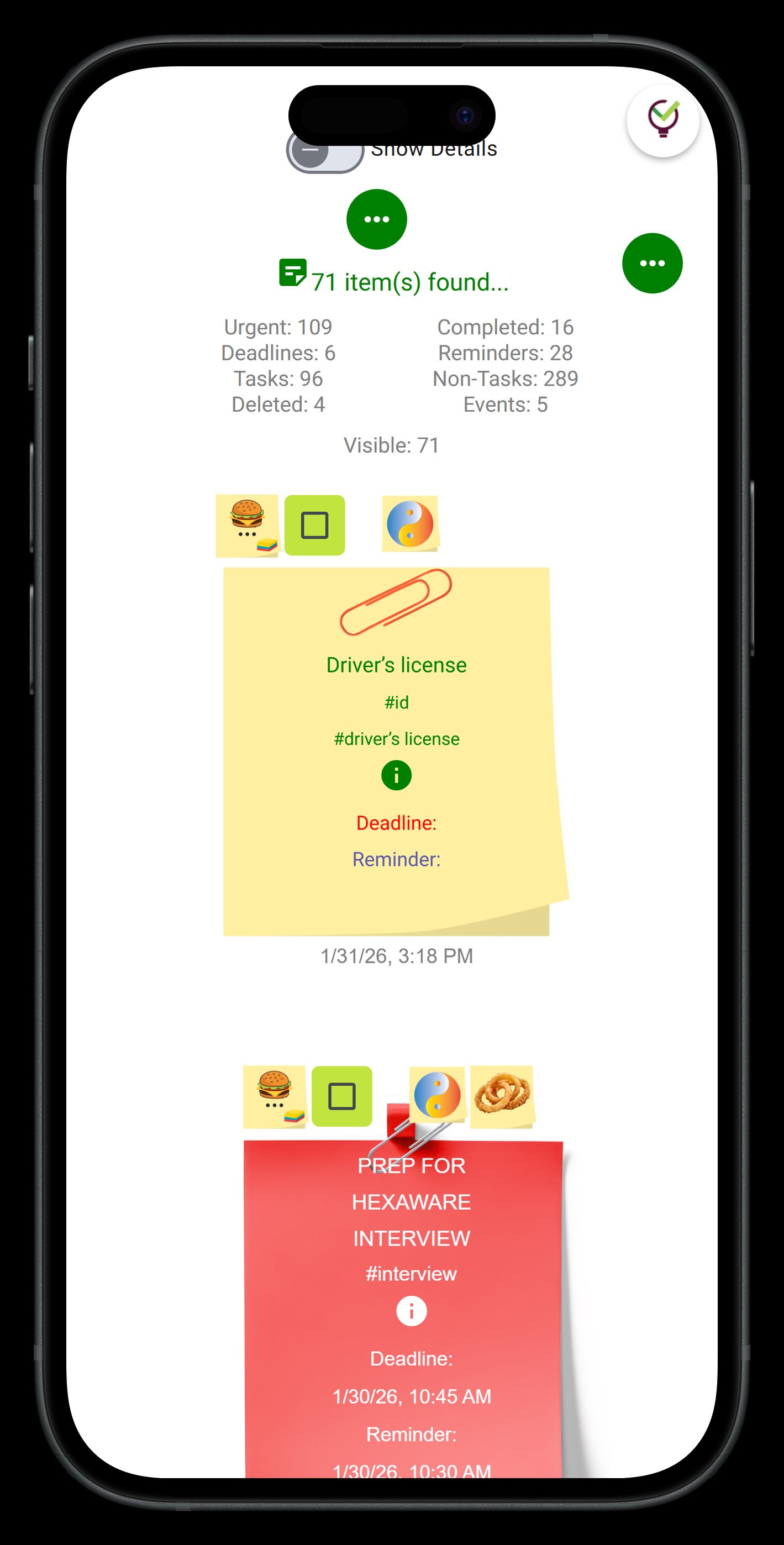
The most common mistake is using too many colors or assigning colors based on project rather than urgency. Projects are abstract. Urgency is visceral. Your color system should answer one question the moment your eyes land on the wall: what do I do right now?
Here is a four-color system that therapists and ADHD coaches return to repeatedly because it maps to how ADHD brains actually process priority:
- Red — Do First. This note requires action today, ideally in the next few hours. Never more than three red notes on your wall at once. If everything is red, nothing is red.
- Yellow — Waiting or In Progress. You have started this or are waiting on someone else. It is not forgotten — it is actively in flight. Yellow notes are the ones you check when you have a spare five minutes.
- Green — Done or Ready to Review. Completed tasks live here briefly before you discard them. Seeing a row of green is a dopamine hit — do not skip this step. ADHD brains need visible evidence of progress.
- Blue — Someday / Reference. Ideas, links, notes to your future self. Blue is low urgency by definition. If a blue note has been sitting for two weeks, it either becomes red or gets deleted.
The power of this framework is that you never have to decide what to do next. You look at the wall, find the reds, and start. Decision fatigue eliminated.
Physical sticky notes work for this system, but they have one fatal flaw: they cannot alert you. A note about a 3pm deadline will sit silently on your wall while you hyperfocus on something else until 4:30pm. This is where a digital color coded note system that pairs visual organization with active push notification reminders becomes genuinely transformative for ADHD management.
Why TaskLoco Works So Well for This System
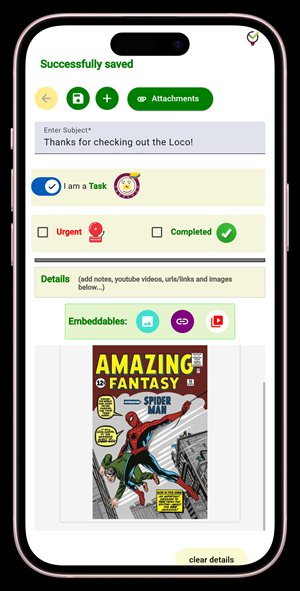
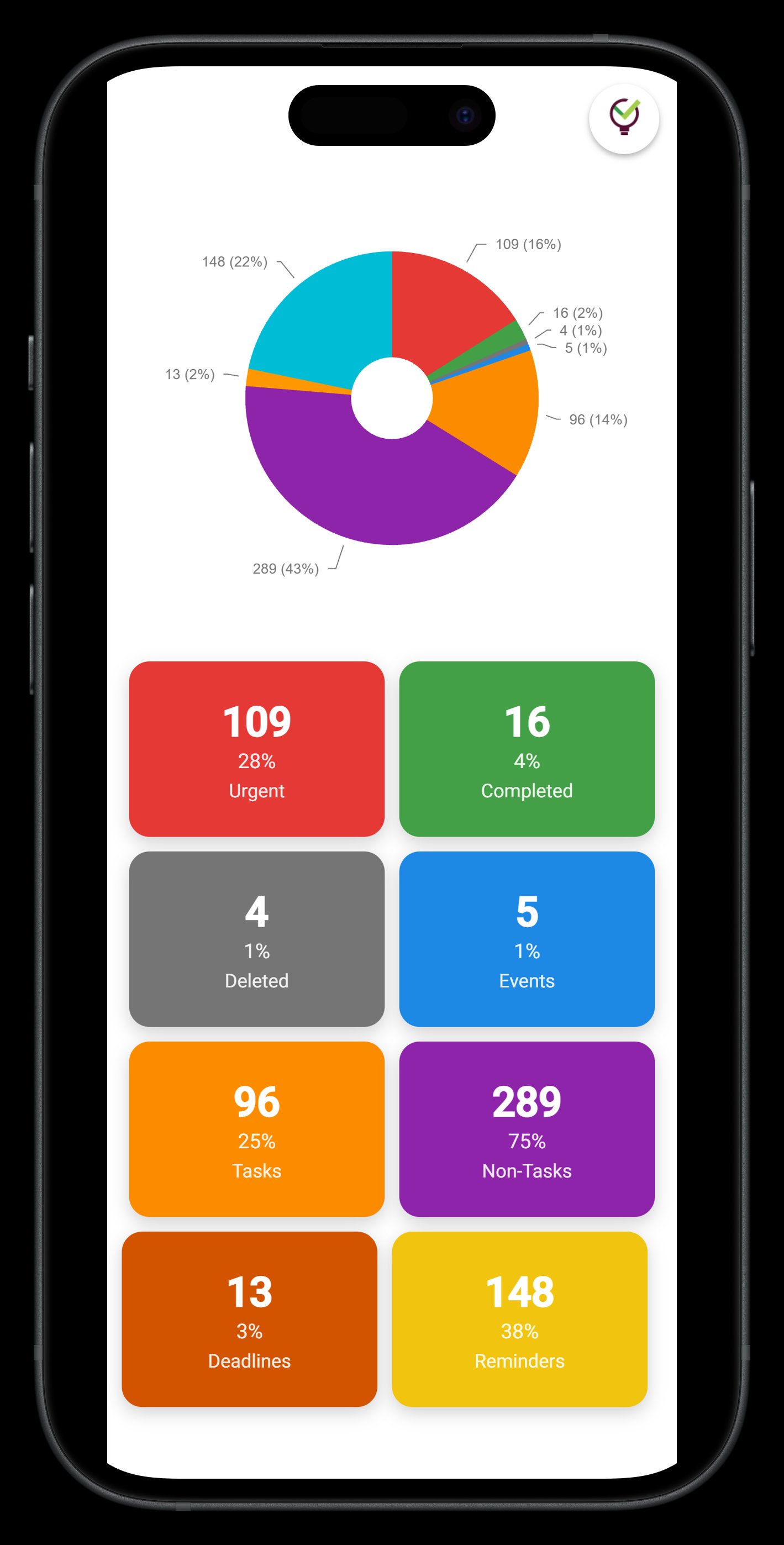
TaskLoco was built around the sticky note as the core unit of work — not tasks nested inside projects nested inside workspaces. Every note is a card. Every card can be color coded. Your wall view gives you the same at-a-glance visual hierarchy as physical sticky notes, but with two capabilities that physical notes fundamentally cannot match: sync and reminders.
The sync piece matters more than it sounds for ADHD. One of the most common failure points with physical note systems is location dependency — the notes are in the office, but you are at home at 9pm when you remember something. With TaskLoco Premium, your entire color coded wall syncs across every device in real time. You capture the thought wherever you are, assign it a color, and it appears on every screen you work from.
The reminder piece is where TaskLoco closes the biggest ADHD gap. When you add a reminder to a note, it fires as a push notification directly to your phone and computer. Tap the notification and you are taken straight back to that specific note — no hunting, no searching, no context switching to figure out what the alert was about. The note is right there. This direct link between the alert and the content is the detail that makes the difference for time-blind brains.
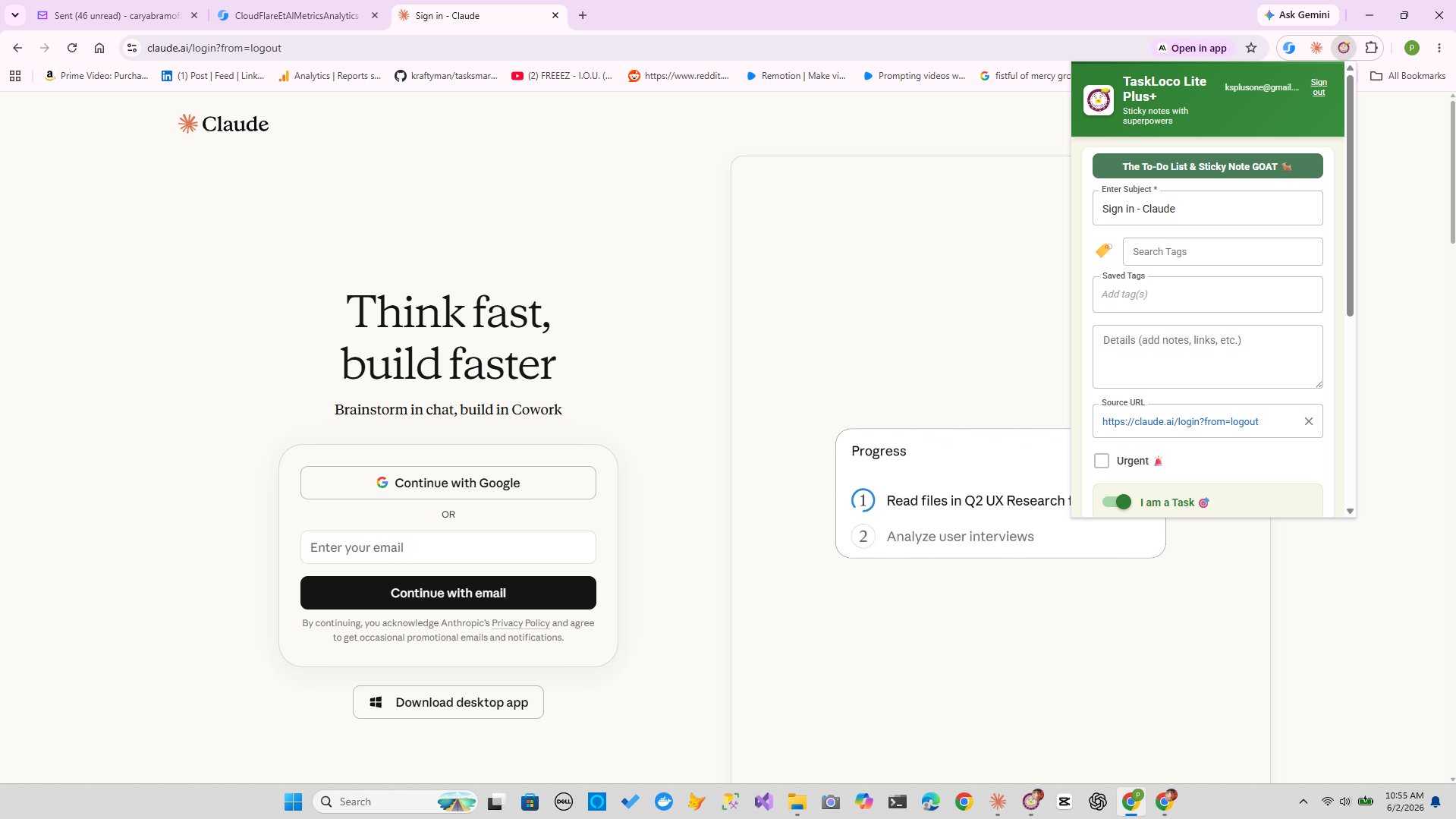
TaskLoco also has a Chrome extension that lets you capture any webpage into a note in one click. For ADHD brains that live in browser tabs, this is significant. You find an article you need to read for a project — click, it becomes a blue reference note. You spot a deadline on a website — click, it becomes a red note with a reminder. The capture friction drops to near zero, which means fewer things fall through the cracks.
For teams and shared accountability — which is one of the most effective ADHD management strategies — TaskLoco Premium includes full team sharing. Shared notes work like email: the recipient gets the note and can clone it, making it fully their own to manage and color code in their own system. No permissions to configure, no access levels to set up. You share, they own it.
Free vs. Premium: Which TaskLoco Plan Fits Where You Are
TaskLoco has three tiers, and knowing which one matches your situation saves you from either paying for features you do not need or hitting a wall when your system matures.
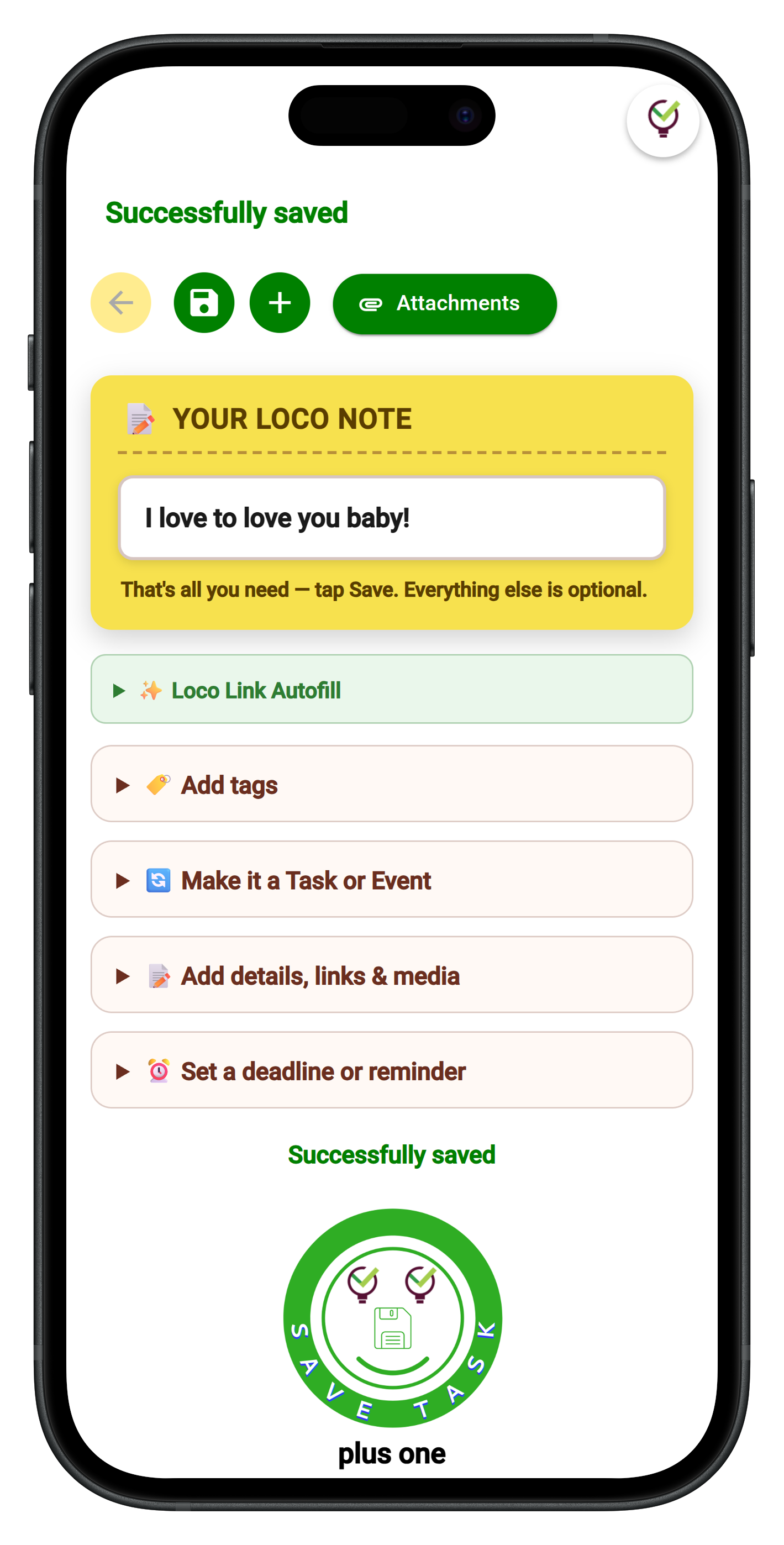
TaskLoco Lite is the native iPhone and Android app. It is completely free, requires no account, no sign-in, and stores up to 20 notes as a JSON file directly on your device. There is no syncing — ever. It is a good way to try the sticky note format if you have never used it digitally, but for an ADHD color coding system that you rely on, the 20-note cap and no-reminder limitation will become constraints quickly. Lite has no reminders, no file attachments, and no team sharing.
TaskLoco Lite Plus+ is the free web app and Chrome extension. Sign in with Google, get up to 30 notes, and sync across all your devices. The Chrome extension one-click capture is included here. This is a real step up — especially the sync — but it still has no reminders, no file attachments, and no team sharing. For a basic color coded capture system, Lite Plus+ works. For a system that actively keeps you on track through alerts, you need Premium.
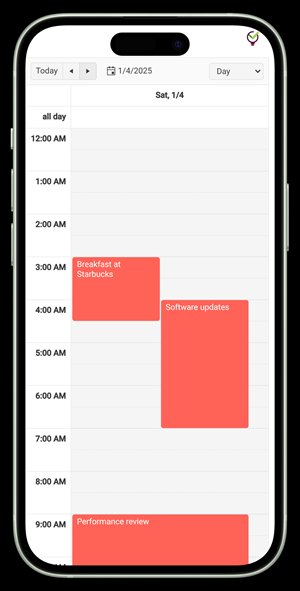
TaskLoco Premium is where the full ADHD-optimized system lives: unlimited notes, 10GB file storage, reminders delivered as push notifications to your phone and computer (with optional email and SMS add-ons), calendar view, and full team sharing. If you are building a color coded system you plan to actually depend on, this is the tier that removes every ceiling.
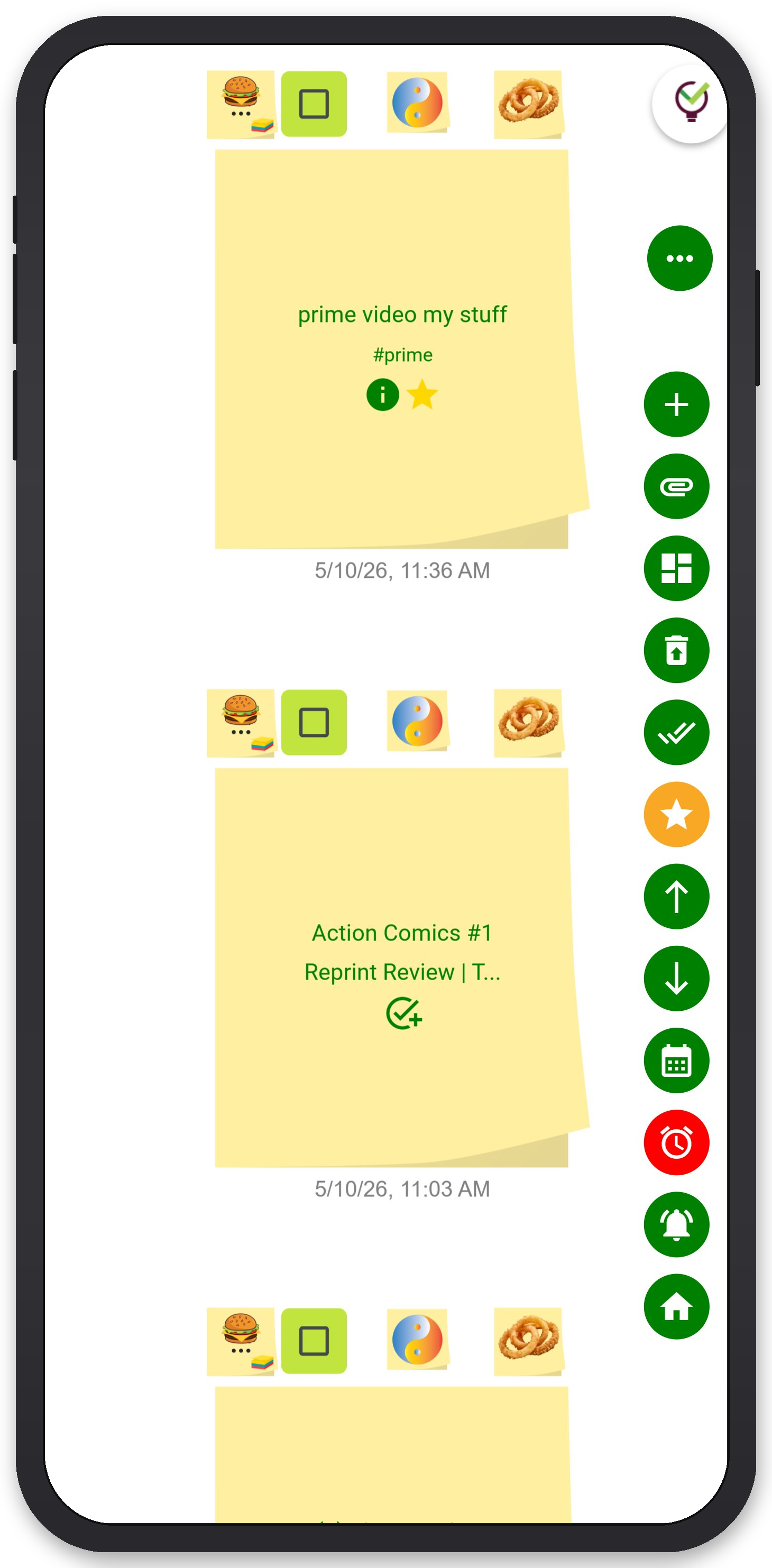
TaskLoco Premium is regularly $9.99/month per person. Right now, charter members can lock in 50% off the regular price — forever. That means $4.99/month per person today. And if our price ever goes up, you still pay half. Always.
Code CHARTER50 auto-applies at checkout. First 500 spots only — once they're gone, this offer is gone permanently. Act fast while spots last.
Every Premium subscription includes unlimited notes, 10GB file storage, reminders, calendar, and team sharing. Each team member requires a separate subscription. 7-day free trial — no charge until day 8. Cancel anytime.
Free Options: TaskLoco
TaskLoco Lite
- Native iPhone & Android app
- Completely anonymous — no sign-in
- Data stays on your device
- Up to 20 notes
- Free forever
TaskLoco Lite Plus+
- Web app + Chrome extension
- Sign in with Google
- Wall syncs across all devices
- Up to 30 notes
- Free forever
Lock In 50% Off — Forever
7-day free trial. No charge until day 8. CHARTER50 auto-applies at checkout.
🔒 Lock In My Charter SpotSee TaskLoco in Action
Frequently Asked Questions
Does color coding actually help with ADHD?
Yes — and it is not just anecdotal. Color coding works because it offloads priority ranking to visual pattern recognition, which bypasses the working memory and executive function deficits that are central to ADHD. When urgency is encoded in color, your brain processes it automatically before conscious decision-making kicks in. The key is keeping the color vocabulary small — four or five colors maximum — and assigning colors based on urgency or status, not by project or category.
How many colors should I use in my sticky note system?
Four to five maximum. Most ADHD coaches land on four: one for urgent/do first, one for in progress or waiting, one for done, and one for reference or someday. Adding more colors forces you to remember what each one means — which requires exactly the kind of working memory load the system is supposed to eliminate. If you need to look up what a color means, you have too many colors.
What is the best color coding system for ADHD sticky notes?
The most effective system uses intuitive, culturally loaded colors: red for urgent action needed now, yellow for in progress or waiting on someone, green for done, and blue for reference or someday ideas. Cap red notes at three at any given time — if everything is red, the color loses its meaning entirely. The constraint is part of the system, not a limitation of it.
Can I use digital sticky notes instead of physical ones for ADHD?
Digital sticky notes solve the two biggest problems with physical ones: location dependency and passive silence. Physical notes can only remind you if you happen to look at them at the right moment — which is the exact failure mode ADHD brains experience most. Digital notes with push notification reminders that deep-link back to the specific note close that gap. TaskLoco Premium's reminder system fires directly to your phone and computer and drops you straight into the note when you tap it.
Does TaskLoco have color coded sticky notes?
Yes. TaskLoco's wall view is built around color coded note cards. You can assign colors to notes and view them all on a wall, which gives you the same at-a-glance visual hierarchy as a physical sticky note board. TaskLoco Premium adds unlimited notes, reminders, file attachments, and team sharing. Lite Plus+ gives you up to 30 synced notes for free via the web app. $9.99/month per person (currently $4.99/month per person for first 500 charter members with code CHARTER50)
How do I keep from ignoring sticky notes when I have ADHD?
Passive visual systems — things that just sit there — lose their signal for ADHD brains within days. The fix is pairing color coding with active alerts. When a note has a time-sensitive component, add a reminder. In TaskLoco Premium, that reminder fires as a push notification to your phone and computer and takes you directly to the note when you tap it. No hunting, no extra steps between the alert and the action. That direct link is what keeps the system from becoming wallpaper.
Is TaskLoco free, or do I need to pay for the ADHD features that matter?
TaskLoco has two free tiers. TaskLoco Lite is the native mobile app — free, no account needed, up to 20 notes on your device, no sync, no reminders. TaskLoco Lite Plus+ is the free web app and Chrome extension — up to 30 notes synced across all devices, no reminders or file attachments. If reminders are part of your system (and for ADHD they should be), you need TaskLoco Premium. $9.99/month per person (currently $4.99/month per person for first 500 charter members with code CHARTER50)
Born in Brooklyn. Powered by AWS. Your data stays yours.
TaskLoco is available on iPhone, Android, Chrome, and every web browser.