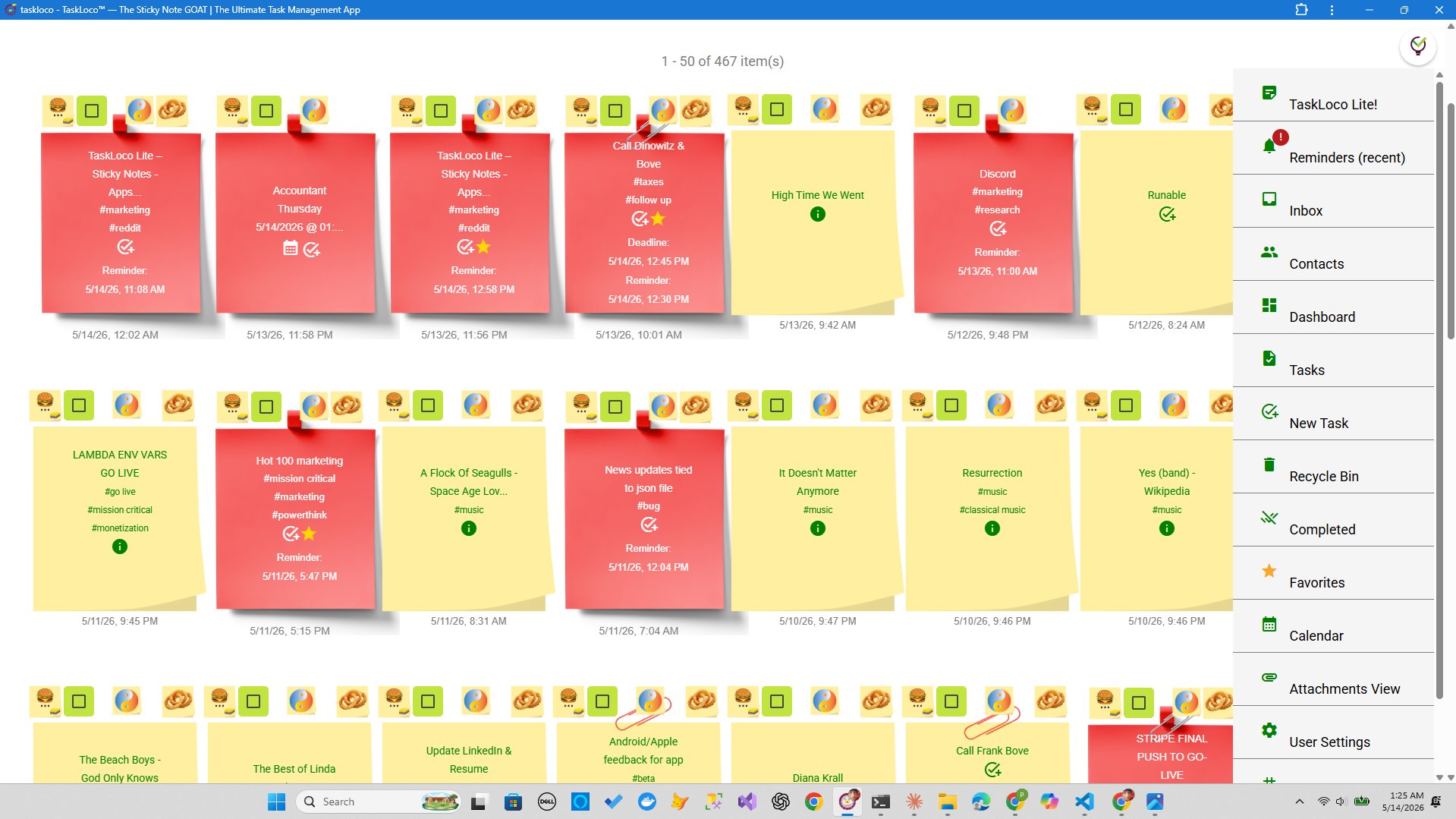
Spreadsheets were never designed for content planning. They were designed for accounting. Yet somehow the marketing world adopted them as the default editorial calendar, and now entire teams are wrestling with color-coded tabs, VLOOKUP formulas, and shared Google Sheets that take 30 seconds to load on a Monday morning. There is a better mental model: a wall of notes you can move around, date, and act on.
A true visual content calendar treats each piece of content as an object — something you can pick up, place on a timeline, attach a brief to, and set a reminder on without leaving the planning surface. This guide explains what that actually looks like, what criteria matter when choosing a tool, and why TaskLoco's note-based approach lands closer to how content teams actually think than any spreadsheet ever will.
What to Look for in a Visual Content Calendar
Before picking any tool, get clear on what a visual content calendar actually needs to do. The word "visual" is doing real work here — it means the layout itself communicates information. You should be able to look at the calendar and immediately know what's publishing this week, what's still a draft, and where the gaps are. If you have to read a cell to understand the status, it isn't truly visual.
Three criteria separate the tools worth using from the ones that just look good in screenshots:
- Spatial flexibility. You need to be able to move content around without breaking formulas or re-sorting columns. Drag-and-drop isn't a luxury — it's the mechanism by which you think through scheduling. If rearranging content is painful, you'll stop doing it.
- Content lives on the card, not in a linked doc. The calendar entry should hold the brief, the target keyword, the asset attachments, and the status — not just a title and a date with a link to a separate Google Doc. Every context switch kills momentum.
- Reminders that reach you. A content calendar without reminders is just a decoration. When a deadline approaches, you need a push notification to your phone or desktop — not something you have to remember to check.
Secondary criteria include team sharing (can a writer see what the editor has scheduled without a separate briefing email?), file attachment support (can you attach the finished asset directly to the calendar entry?), and cross-device access so the plan is always current whether you're at your desk or on your phone.
Why Sticky Notes Are the Right Unit of Content Planning
The spreadsheet row is the wrong abstraction for a piece of content. A blog post isn't a row — it has a title, a brief, a draft, a set of images, a target date, a status, and a chain of tasks before it ships. Cramming all of that into columns creates the compression problem: you either lose information or you build a monster sheet nobody wants to open.
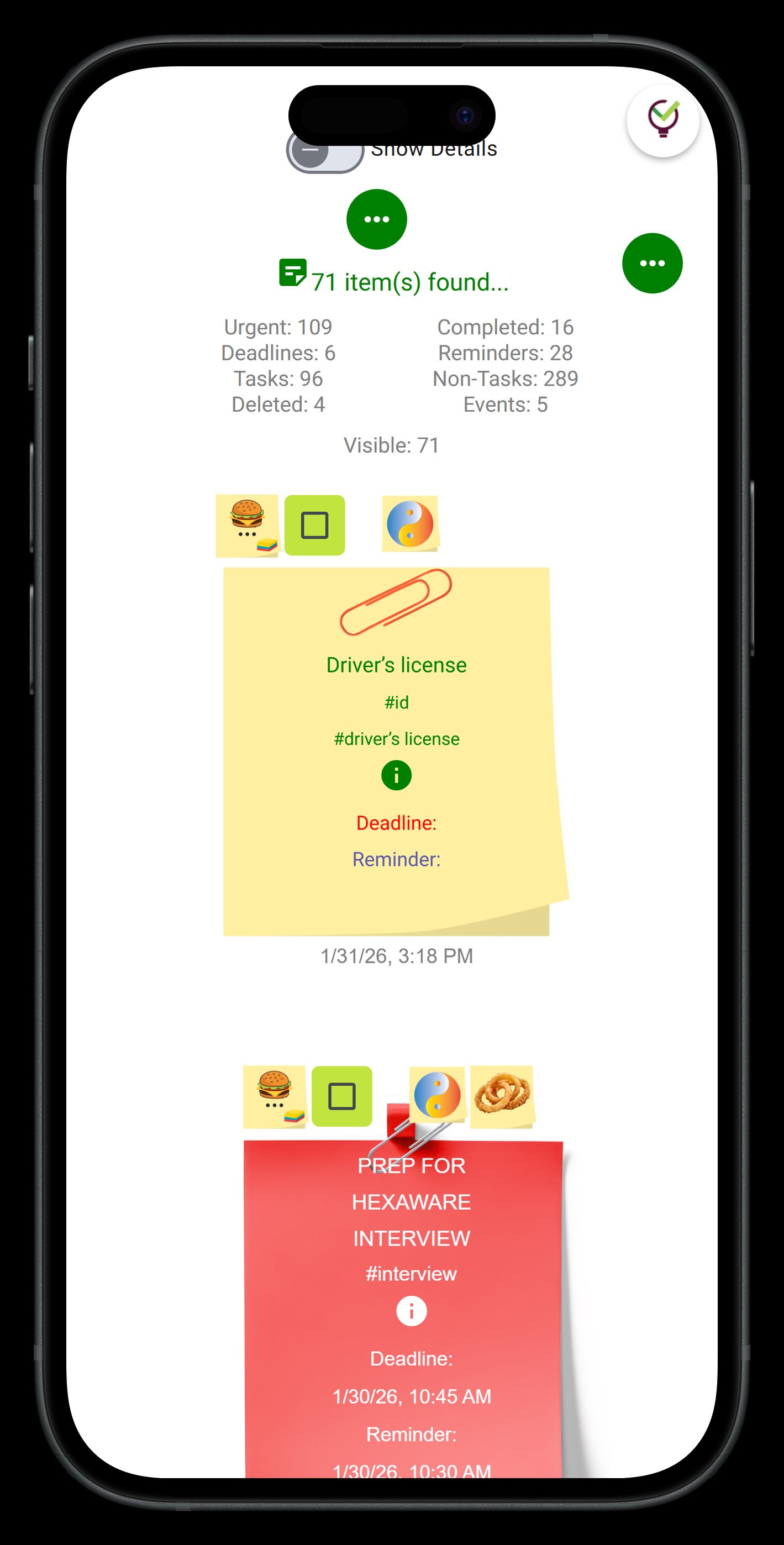
A sticky note is a better primitive. It's a bounded object with a clear identity. You can write the headline on the front, attach the brief and the draft inside, pin it to a date on the calendar, and set a reminder that fires as a push notification when the deadline arrives. If the publish date moves, you drag the note. Nothing breaks.
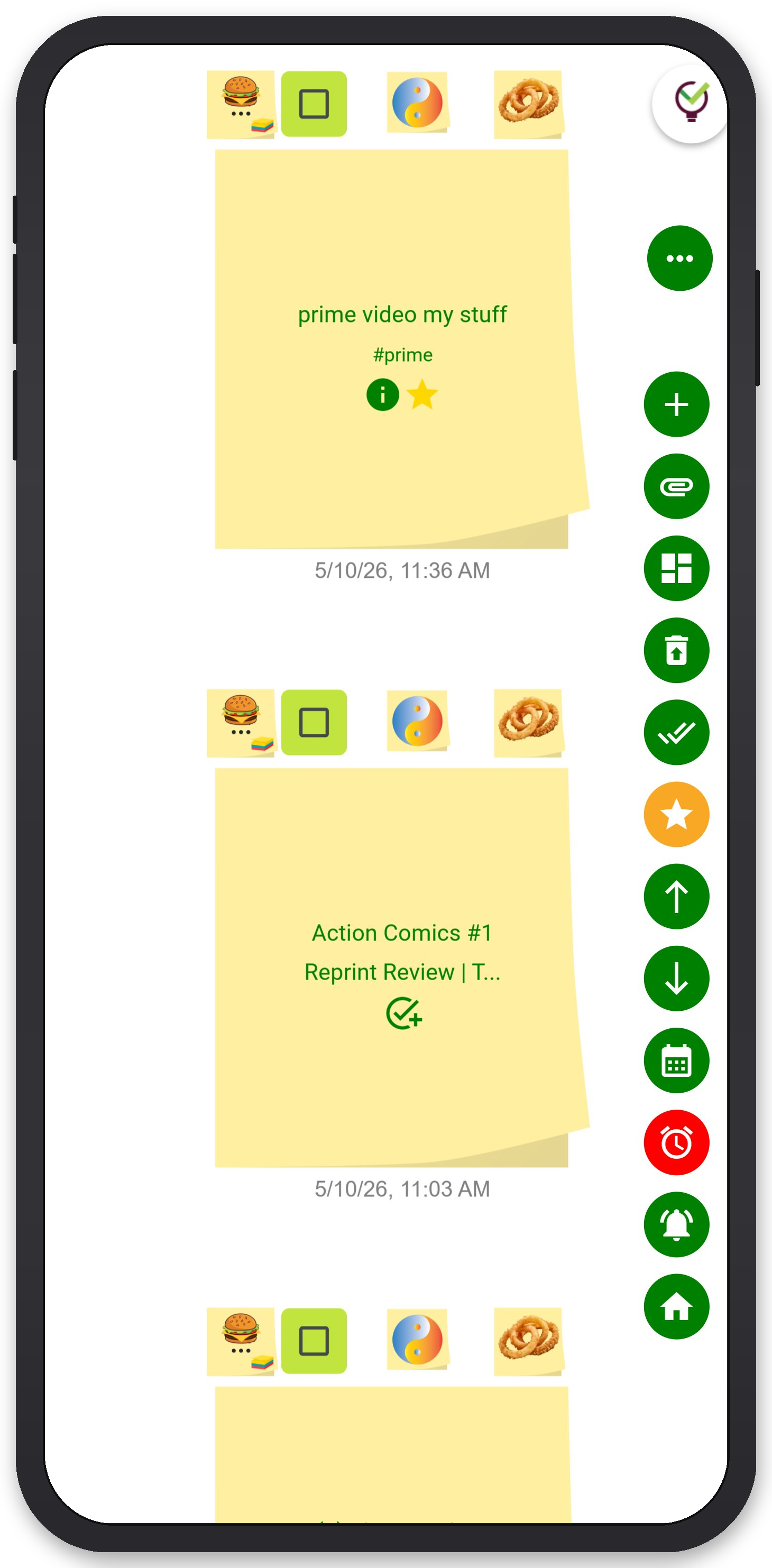
TaskLoco is built exactly around this model. Each note on your wall represents one piece of content — an article, a social post, a video script, a newsletter issue. You give it a title, write the brief inside, attach files directly to the note (images, drafts, brand assets — up to 10GB of storage included with Premium), and schedule a reminder that delivers as a push notification to your phone and desktop. Optional email and SMS notifications are available too, so nothing slips.
The wall view in TaskLoco lets you see all your content notes at once, arranged however makes sense for your workflow: by channel, by week, by campaign. Unlike a rigid calendar grid, the wall is spatial — you're arranging content the same way a good editor arranges a magazine layout, with a sense of flow and balance rather than just filling cells.
Capturing Ideas Before They Disappear
The other failure mode in content planning isn't scheduling — it's capture. A great headline idea hits you while you're reading a competitor's article or browsing Reddit, and by the time you open your content calendar spreadsheet, log in, find the right tab, and type it in, the idea has already lost its energy. Half the time you don't bother, and the idea evaporates.
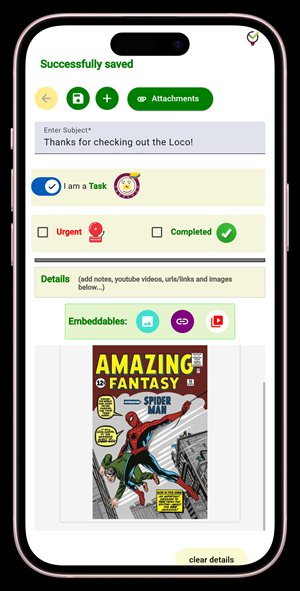
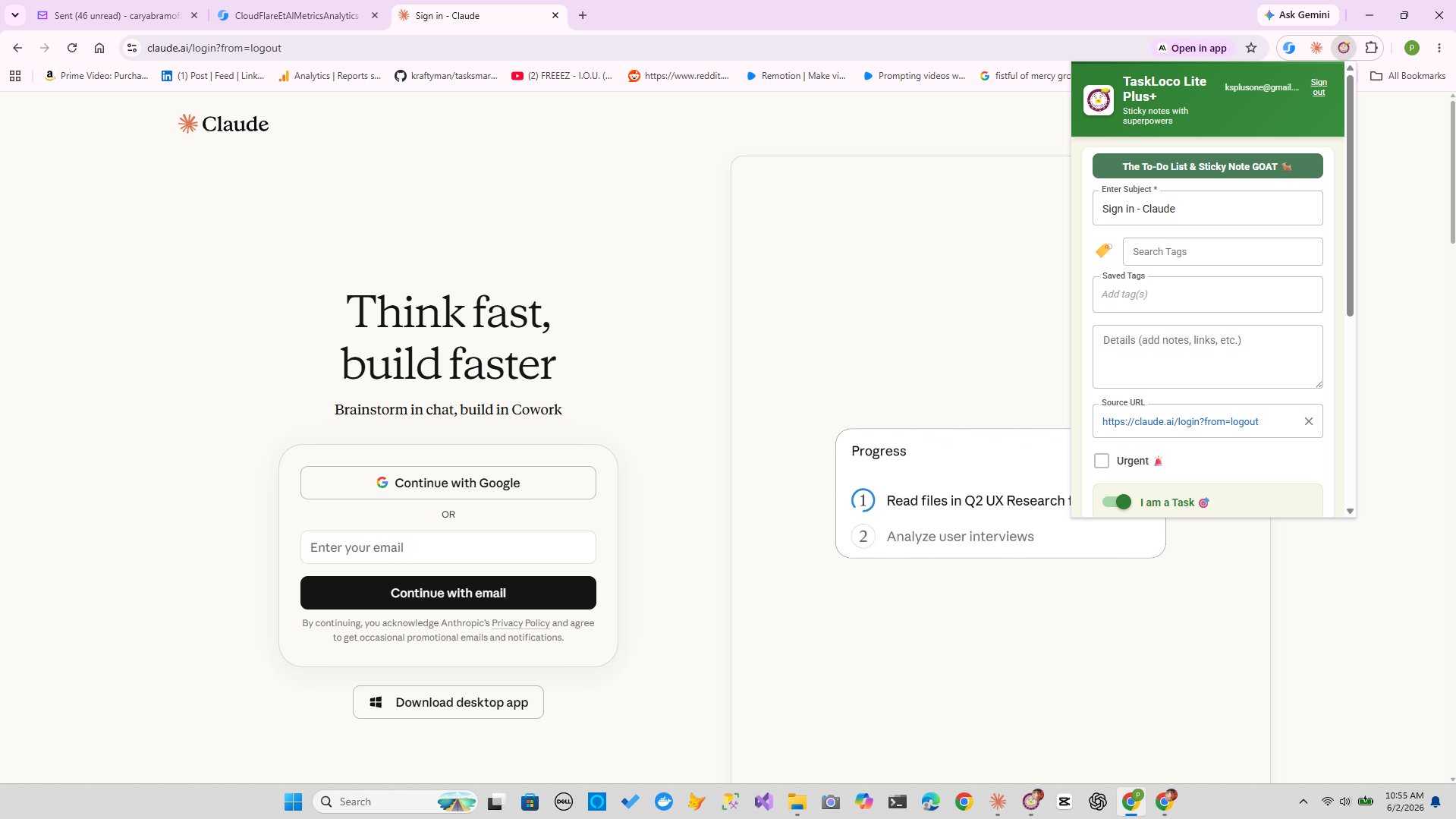
TaskLoco's Chrome extension solves this at the source. One click captures the current webpage — title, URL, and any text you've highlighted — directly into a new note. No switching apps, no copying and pasting, no hunting for the right tab. The idea lands in your TaskLoco wall instantly, where you can add context, tag it for a campaign, and schedule it for development later.
This matters more than it sounds. Content teams that capture well publish more consistently than teams with elaborate planning systems and poor capture habits. The Chrome extension makes TaskLoco part of the research workflow, not just the scheduling workflow.
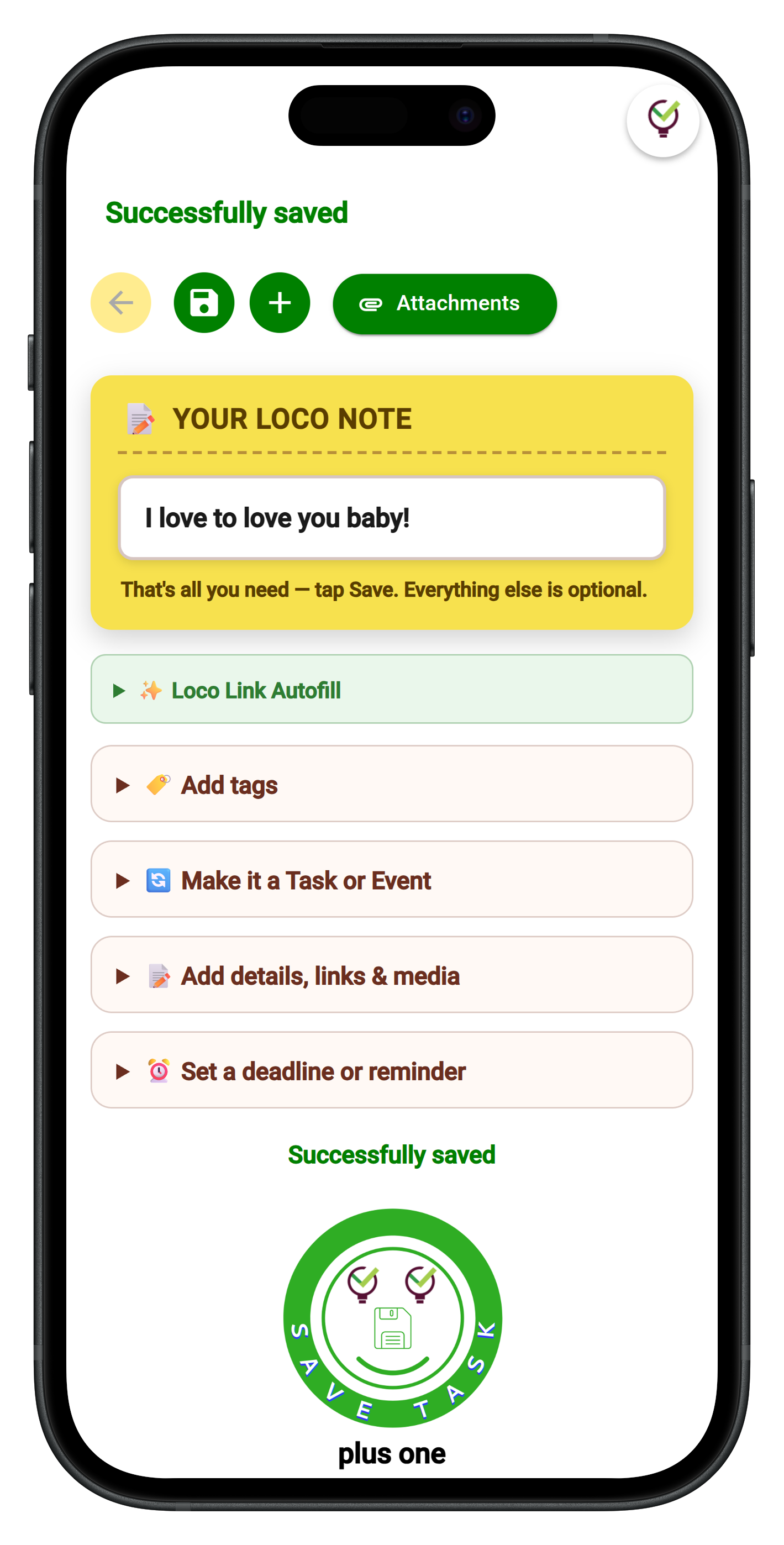
On the go, TaskLoco Lite Plus+ runs through your phone's browser and syncs in real time, so a note you capture at your desk appears on your phone immediately.
Team Sharing That Actually Works for Content Teams
Content planning is almost always collaborative. An editor sets the calendar; writers pick up assignments; a designer needs to know the publish date for the featured image. In most tools, this means permissions hierarchies, shared folders, and access levels that someone has to manage. TaskLoco takes a different approach.
Sharing in TaskLoco works like sending an email. You share a note, and the recipient gets a full copy they can clone and make their own — no access levels to configure, no permissions to set. The writer has their own working copy of the brief. The designer has the date and the specs. If you update the source note, you can reshare. It's fast, it's lightweight, and it doesn't require an admin to manage who can see what.
Real-time sync means the plan is always current. When the editor moves a publish date, everyone's view reflects it. Reminders fire as push notifications — to phones and desktops — so deadlines reach people where they actually are, not buried in an inbox.
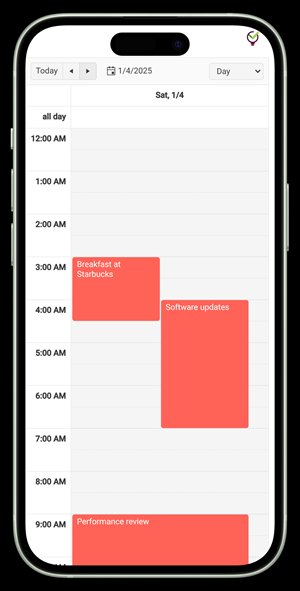
For content teams that want a visual calendar that's also a living collaboration hub — where the brief, the files, the schedule, and the reminders all live on the same card — TaskLoco Premium is the most direct path there. The calendar view gives you the traditional date-based layout when you need it; the wall gives you the spatial, drag-and-drop surface when you're in planning mode. You switch between them freely.
TaskLoco Premium is regularly $9.99/month per person. Right now, charter members can lock in 50% off the regular price — forever. That means $4.99/month per person today. And if our price ever goes up, you still pay half. Always.
Code CHARTER50 auto-applies at checkout. First 500 spots only — once they're gone, this offer is gone permanently. Act fast while spots last.
Every Premium subscription includes unlimited notes, 10GB file storage, reminders, calendar, and team sharing. Each team member requires a separate subscription. 7-day free trial — no charge until day 8. Cancel anytime.
Free Options: TaskLoco
TaskLoco Lite
- Native iPhone & Android app
- Completely anonymous — no sign-in
- Data stays on your device
- Up to 20 notes
- Free forever
TaskLoco Lite Plus+
- Web app + Chrome extension
- Sign in with Google
- Wall syncs across all devices
- Up to 30 notes
- Free forever
Lock In 50% Off — Forever
7-day free trial. No charge until day 8. CHARTER50 auto-applies at checkout.
🔒 Lock In My Charter SpotSee TaskLoco in Action
Frequently Asked Questions
What is a visual content calendar?
A visual content calendar is a planning tool where each piece of content exists as a movable object — a card, a note, or a tile — arranged on a timeline or board you can read at a glance. Unlike a spreadsheet, you can see the shape of your schedule spatially: gaps, clusters, and sequencing become obvious without reading individual cells.
Why shouldn't I just use a spreadsheet for my content calendar?
Spreadsheets work for storing content metadata, but they're poor planning surfaces. Moving content around means cutting and pasting rows, which breaks formulas. There's no built-in reminder system. Attaching files means linking to external docs, which adds context-switching. And the row-based layout doesn't communicate schedule density the way a spatial board does. For active planning, a spreadsheet is the wrong tool.
Does TaskLoco have a calendar view?
Yes. TaskLoco Premium includes a full calendar view where you can see all your notes and tasks arranged by date. You can switch between the calendar view and the wall view — the wall is better for freeform planning and rearranging; the calendar is better for checking what's due when. Both views work with the same notes, so nothing is duplicated.
Can I set reminders for content deadlines in TaskLoco?
Yes — reminders are a Premium feature. Each reminder deep-links back to the original note, so when the push notification fires on your phone or desktop, tapping it takes you directly to the content card with the brief, attachments, and everything else attached to it. Optional email and SMS notifications are available as additional channels.
How does TaskLoco handle file attachments for content planning?
TaskLoco Premium includes 10GB of file storage per person. You can attach drafts, images, brand assets, and any other files directly to a content note. Everything lives on the card — no linking out to Google Drive or Dropbox, no separate document to track down. Additional storage tiers (50GB, 200GB, 1TB) are available as stackable add-ons.
How much does TaskLoco cost?
$9.99/month per person (currently $4.99/month per person for first 500 charter members with code CHARTER50)
Can my whole content team use TaskLoco together?
Yes. TaskLoco Premium includes full team sharing — you share a note and recipients can clone it and make it their own, with no permissions or access levels to manage. Real-time sync keeps everyone's view current. Each team member requires their own individual Premium subscription — there's no single license that covers an entire team.
Born in Brooklyn. Powered by AWS. Your data stays yours.
TaskLoco is available on iPhone, Android, Chrome, and every web browser.