Someone asks you to take on one more thing. You already know your plate is full. You open your mouth and hear yourself say, "Sure, I can do that." Then you hang up, close the email, or walk away from the conversation and immediately feel the dread. Again.
This isn't a discipline problem. It's not even really a time-management problem. It's a pattern with identifiable causes — and once you see them clearly, you can interrupt them. This article breaks down why the yes reflex happens, what keeps it running, and what actually changes it.
The Real Reason You Can't Say No
The standard advice — "just say no" — skips the part where your brain treats a social request almost like a survival signal. Saying no to someone activates the same neural regions involved in physical pain. That's not a metaphor. Research on social rejection shows the anterior cingulate cortex lights up for both. You're not being weak. You're being human.
But humans also over-apply this reflex. Most requests at work or in your personal life carry zero actual threat. Your colleague asking for help with a deck doesn't have power over your safety. Your friend asking you to plan the group trip won't exile you if you decline. Your nervous system doesn't fully register that distinction though — especially in the moment, especially if you haven't slept, especially if you already feel behind.
There are a few distinct flavors of chronic yes. Knowing which one is yours matters because they have different roots:
- Approval-seeking yes: You need people to think well of you. Saying no risks lowering their opinion, at least in your imagination.
- Guilt-based yes: Someone looks overwhelmed or disappointed. You feel responsible for fixing their emotional state.
- Optimism bias yes: You genuinely believe you'll have time. Future-you always seems more capable than present-you.
- Status yes: Being needed feels good. If you're the one people turn to, that means something about your value.
- Conflict-avoidance yes: No might lead to a conversation you don't want to have. Yes closes the loop fast.
Most people are running two or three of these simultaneously. The approval-seeker who's also optimistic about their calendar and hates conflict is going to say yes to nearly everything until something breaks — usually their own wellbeing or the quality of their output.
Why Willpower Alone Won't Fix It
People try to tackle over-commitment with resolve. They tell themselves they're going to be better about boundaries this month. This works for about a week — until a real request comes in, in a real moment, from a real person who seems to really need something. Then the pattern reasserts itself because nothing structural changed.
Willpower is a finite resource that depletes across the day. Decisions made when you're tired or already context-switching — which is when most requests seem to arrive — draw on a near-empty reserve. The yes isn't a failure of character. It's a failure of system design.
What actually works instead:
- The 24-hour rule: For any non-urgent request, your default answer is "Let me check my commitments and come back to you." You don't need to explain further. This single habit buys you the time to make a considered decision rather than a reflexive one. Most people discover they say no far more often when they're not on the spot.
- A visible commitments list: You say yes partly because your current load is abstract. Write down every active commitment you have — not a to-do list, but a full accounting: projects, recurring responsibilities, personal obligations. When someone asks you to add something, you look at the list. The list makes the cost concrete and immediate, which is what your brain needs to counteract the social pressure of the moment.
- Pre-decided criteria: Before you're in a conversation, decide what qualifies for a yes. Does it align with your current priorities? Do you have realistic time in the next two weeks? Is this something only you can do, or are you just the path of least resistance? Applying a checklist in the moment is easier than generating a decision from scratch under social pressure.
- A scripted soft no: Vague nos invite negotiation. "I'm not sure I have bandwidth" sounds like an opening bid. Specific, warm, final nos close the loop: "I can't take this on right now — I'm at capacity through the end of the month. I'd check back with me then if it's still relevant." Practice the exact words until they feel natural.
None of these require you to become a different person. They require a small amount of upfront design — and then the work of applying the design consistently until it becomes default behavior.
How to Audit Your Commitments Right Now
Before you can say no better, you need an honest picture of what you've already said yes to. Most people are carrying more than they consciously realize — because commitments accumulate in scattered places: email threads, Slack messages, verbal conversations, calendar events, half-remembered promises. Getting them into one place is clarifying and often alarming.
Here's a practical 20-minute audit:
- Scan your last two weeks of email and messages for anything you agreed to do that isn't done yet. Write each item down.
- Look at your calendar for recurring meetings, commitments you've signed up for, and events you said you'd help plan or attend.
- Check your mental background noise — the things you haven't written down anywhere but that you know are waiting. Those are often the heaviest ones because they have no container.
- For each item, mark it: Active (you're actually working on it), Parked (you've implicitly agreed but haven't started), or Zombie (it was once relevant but probably isn't anymore, you just haven't officially dropped it).
Zombies are worth particular attention. These are commitments that have expired in practice but not officially. Nobody has closed the loop, so you still carry the vague weight of them. A quick message — "I want to check: is [thing] still relevant? Happy to drop it if circumstances changed" — often kills three zombies at once.
After the audit, you're not looking at a to-do list. You're looking at a map of your actual bandwidth. That map is what you consult the next time someone asks you for something. It's hard to say yes reflexively when you can see in black and white that you're already at capacity.
One Place to Keep Your Commitments Visible: TaskLoco
The audit above works on paper, in a notebook, or in any plain notes app. The key ingredient isn't the tool — it's consistency. That said, if you want a system that makes your commitments genuinely hard to ignore, TaskLoco is worth a look.
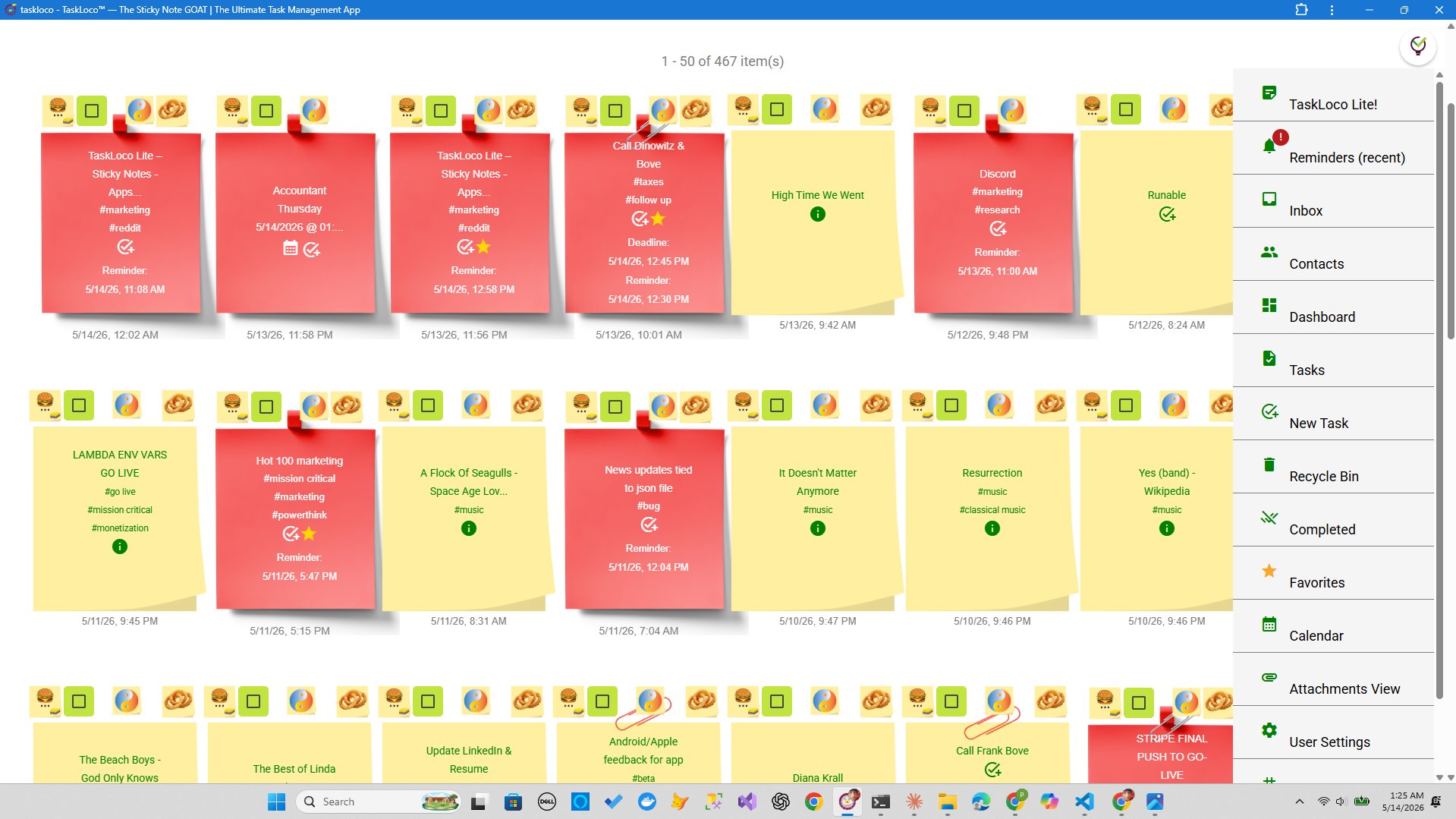
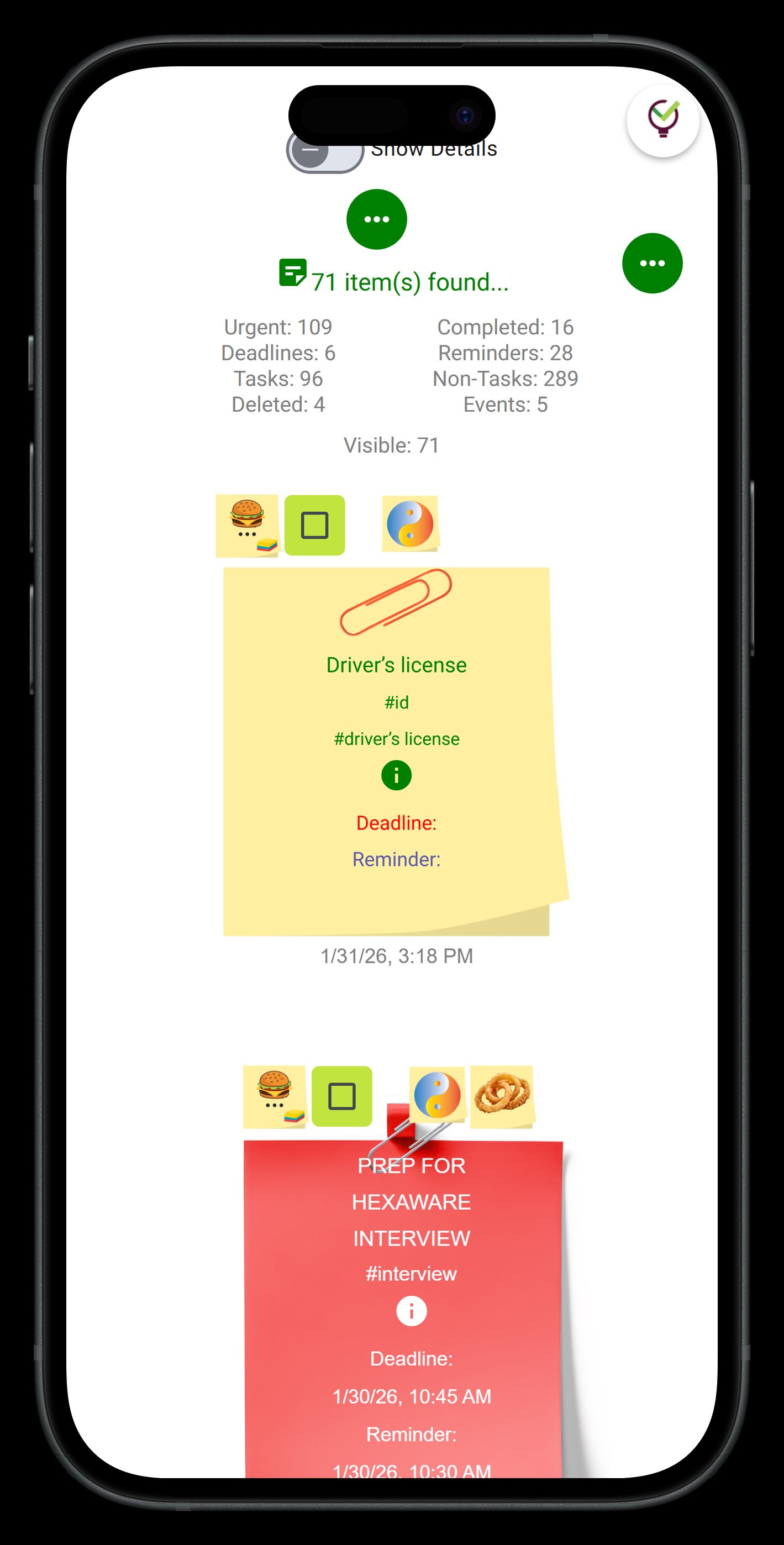
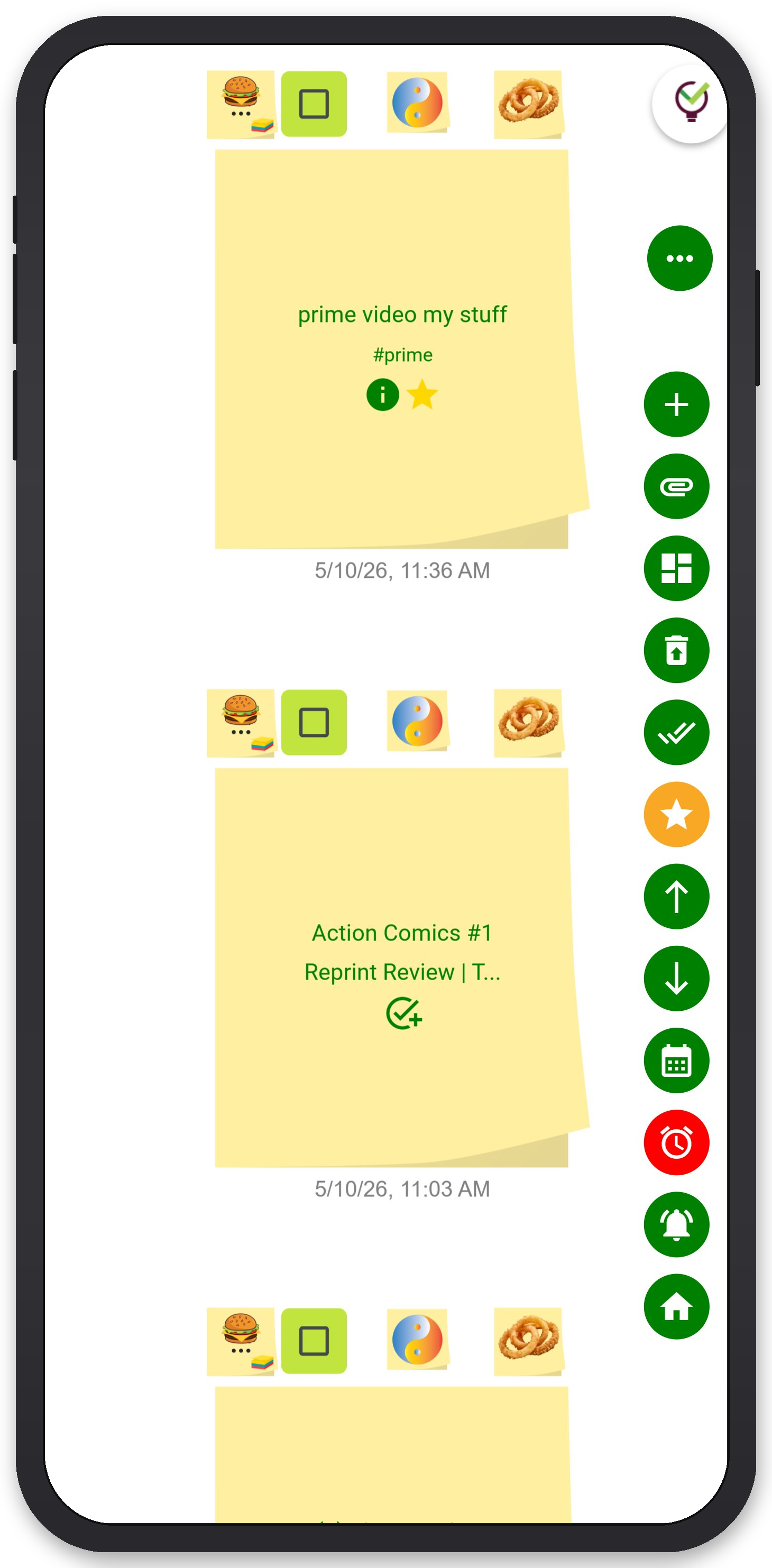
The app is built around sticky notes — which sounds casual, but the wall layout is exactly what makes visible commitments work. You can create a note for each active commitment and arrange them so your full load is in front of you every time you open the app. There's no buried list, no collapsed sidebar. Everything you've agreed to is just there.
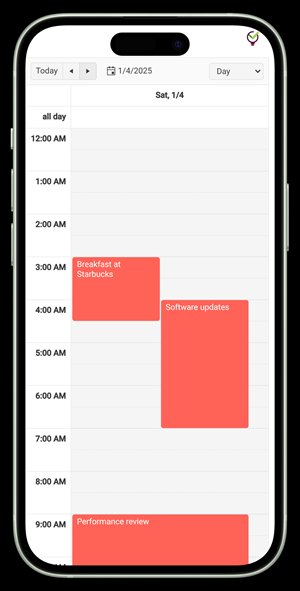
TaskLoco Premium adds reminders that deliver as push notifications — directly to your phone and computer — deep-linking back to the original note so you land right in the relevant context without hunting. Optional email notification is available if you want a second channel, and SMS is available as an add-on. The calendar view lets you see how your commitments distribute across actual dates, which is particularly useful for catching the weeks where you've already said yes to too much before you say yes to one more thing.
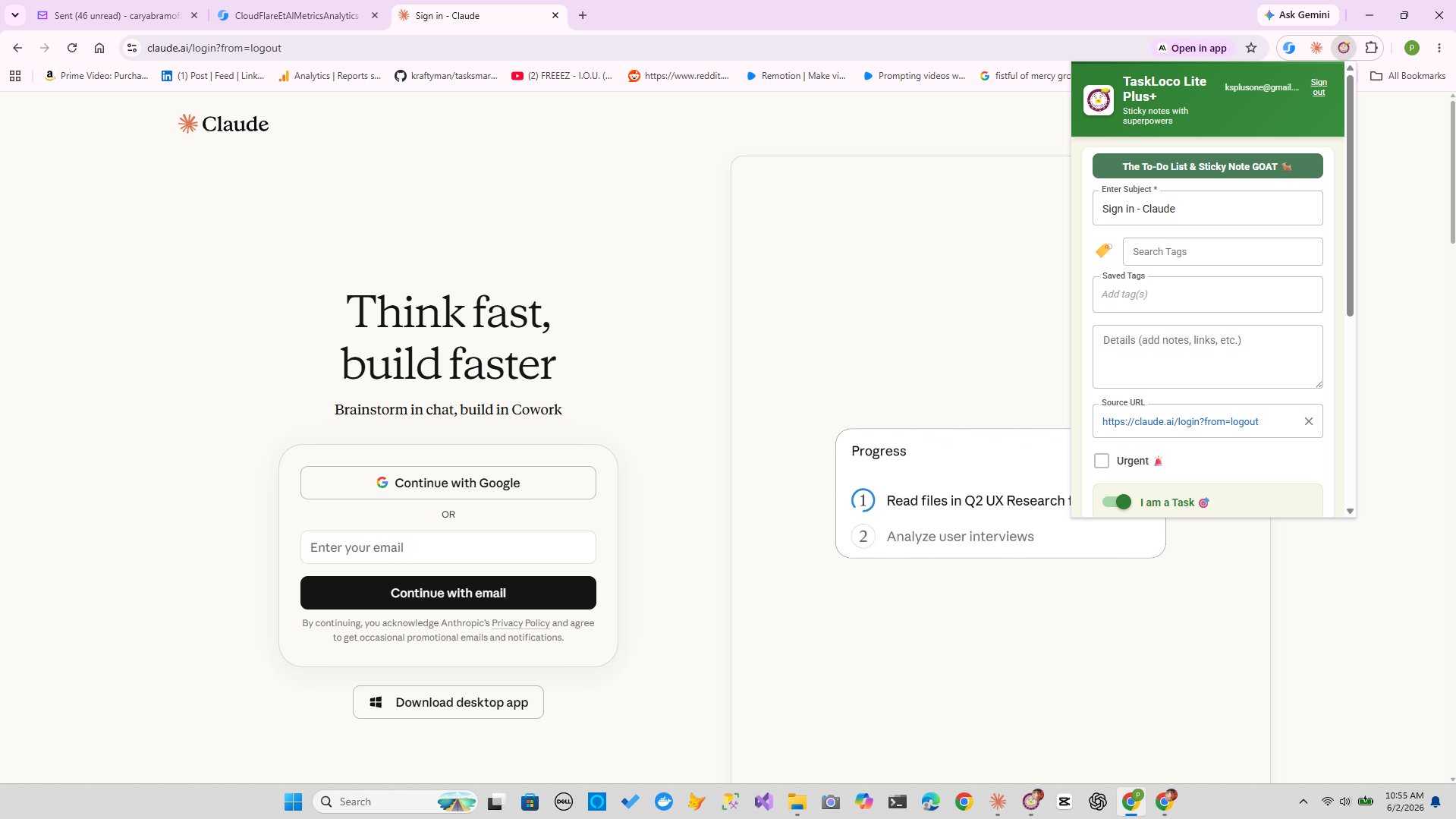
Team sharing means you can share a note with a collaborator who can clone it and make it their own — no complicated permissions, no access levels to manage. The Chrome extension lets you capture a webpage into a note in one click, which is useful when a commitment arrives as a link you need to action later.
There are two free options if you want to try it without committing: TaskLoco Lite is a native iPhone and Android app — fully anonymous, no sign-in required, stores up to 20 notes on your device. TaskLoco Lite Plus+ is the web app and Chrome extension — free with Google sign-in, syncs across all your devices, up to 30 notes. Neither includes reminders, file attachments, or team sharing — those are Premium.
TaskLoco Premium is regularly $9.99/month per person. Right now, charter members can lock in 50% off the regular price — forever. That means $4.99/month per person today. And if our price ever goes up, you still pay half. Always.
Code CHARTER50 auto-applies at checkout. First 500 spots only — once they're gone, this offer is gone permanently. Act fast while spots last.
Every Premium subscription includes unlimited notes, 10GB file storage, reminders, calendar, and team sharing. Each team member requires a separate subscription. 7-day free trial — no charge until day 8. Cancel anytime.
Free Options: TaskLoco
TaskLoco Lite
- Native iPhone & Android app
- Completely anonymous — no sign-in
- Data stays on your device
- Up to 20 notes
- Free forever
TaskLoco Lite Plus+
- Web app + Chrome extension
- Sign in with Google
- Wall syncs across all devices
- Up to 30 notes
- Free forever
Lock In 50% Off — Forever
7-day free trial. No charge until day 8. CHARTER50 auto-applies at checkout.
🔒 Lock In My Charter SpotSee TaskLoco in Action
Frequently Asked Questions
Why do I always say yes even when I don't want to?
Because in the moment, the social cost of no feels immediate and concrete, while the cost of yes feels distant and abstract. Your brain is solving for right now — avoiding awkwardness, maintaining approval, dodging conflict. The overcommitment happens later, which feels like a separate problem even though it's the same decision. The fix is to make the cost of yes visible before you answer, not after.
Is saying yes too much a personality trait or a habit?
Mostly a habit, shaped by some underlying tendencies. People with higher agreeableness or anxiety about social rejection are more prone to it, but that doesn't make it fixed. The patterns are learned — often early, in environments where keeping the peace or being needed was rewarded — and they can be interrupted with deliberate practice. It's not about becoming a different person. It's about adding a pause between the ask and your answer.
What's the best way to say no without damaging a relationship?
Specific and warm beats vague and apologetic. Vague nos — "I'm not sure I have time" — invite negotiation because they sound like openings. A clear, kind no with a brief reason closes the loop: "I can't take this on right now — I'm fully committed through [timeframe]. Worth checking back if it's still open then." You don't need to over-explain. Most people respect directness more than they let on, and a clear no is kinder than a reluctant yes that gets done badly or late.
How do I know if I'm actually overcommitted or just feeling overwhelmed?
Do the audit. Write down every active commitment you have — projects, recurring responsibilities, personal obligations, things you said you'd do that aren't done yet. Then look at the list. If you're genuinely overcommitted, the list will be longer than your available time in the coming weeks. If you're overwhelmed without being objectively overloaded, the list will be manageable but something in your execution system is broken — prioritization, focus, or energy management. The distinction matters because the fix is different.
What is optimism bias and how does it cause over-commitment?
Optimism bias is the brain's tendency to expect future conditions to be better than present conditions — more time, more energy, fewer interruptions. When someone asks you to do something two weeks from now, your brain pictures a calm, open week. It doesn't picture the meetings that will be added, the unexpected fires, or the fatigue you'll actually be carrying. The result is a calendar that looks manageable in theory and brutal in practice. The countermeasure is to schedule new commitments into specific slots before you say yes — if there's no realistic slot, there's your answer.
Can keeping a commitments list really make a difference?
Yes — because it replaces an abstract feeling with a concrete picture. When your commitments live only in your head, your brain can't accurately assess capacity. You know you're busy, but busy is vague. A written list with specific items makes the load visible, which creates the natural friction you need before adding more. It also surfaces zombies — commitments that have expired in practice but that you're still mentally carrying — so you can officially drop them and recover the bandwidth.
How does TaskLoco help with managing too many commitments?
TaskLoco's wall layout keeps every commitment visible at once — no buried lists. You can create a note per commitment and see your full load every time you open the app. Premium adds push notification reminders that deep-link back to the original note, a calendar view to see how commitments distribute across dates, and team sharing. There are two free tiers to start: Lite (native app, 20 notes, no sign-in) and Lite Plus+ (web app, 30 notes, syncs across devices). $9.99/month per person (currently $4.99/month per person for first 500 charter members with code CHARTER50)
Born in Brooklyn. Powered by AWS. Your data stays yours.
TaskLoco is available on iPhone, Android, Chrome, and every web browser.