You're sitting across from a colleague who juggles twice the responsibilities you do, never seems frantic, and somehow remembers every small detail you'd have forgotten a week ago. You assume they're just wired differently. They're not. The gap between people who look organized and people who feel chaotic almost always comes down to a handful of habits that are invisible from the outside — not talent, not a magic app, not more hours in the day.
The frustrating truth is that the habits themselves are simple. The hard part is that nobody explicitly teaches them, so most people never realize what's actually happening when someone appears to have it all together. This article breaks down exactly what organized people do differently — step by step, no app required — and then shows one practical way to make those habits stick if you want some infrastructure behind them.
The Real Reason: Capture Happens the Moment a Thought Appears
Organized people do not have better memories. They have a standing rule: if a thought matters, it leaves the brain immediately. The moment a task, idea, or commitment surfaces — in a meeting, in the shower, mid-conversation — it gets written down. Not later. Not when they get back to their desk. Now.
This single habit solves an enormous problem most people don't even recognize they have. When you try to hold open loops in your head — "I need to follow up with Maria," "pick up the dry cleaning," "check that invoice" — your brain treats each one like an unfinished task and keeps pinging you about it. Psychologists call this the Zeigarnik effect. It's why your mind races when you're trying to sleep. The mental overhead of managing a dozen half-remembered tasks is exhausting, and it crowds out the focused thinking you actually need to do good work.
The fix is mechanical, not motivational. Carry something — a pocket notebook, a notes app, the back of an envelope — and write the thought down the moment it arrives. The medium doesn't matter at first. The habit of immediate capture is everything.
One Trusted List, a Daily Review, and the 'Next Action' Habit
Capture is step one. The second reason organized people seem different is that they maintain one trusted list — not seven. Not a work list, a personal list, a list in their email, a list in their notes app, another in their head. One place where everything lives. When your lists are scattered, you can never fully trust any of them, so you never fully relax your mental grip on the tasks they're supposed to hold.
Consolidation sounds obvious, but most people resist it because merging everything into one list feels overwhelming. Do it anyway. An overwhelming list is honest. A scattered list is dangerous — it gives you the illusion of organization while things still fall through the cracks.
The third habit is the daily review. Organized people spend five to ten minutes — usually at the end of their workday — scanning their list and asking: What's still open? What moved? What needs to happen tomorrow? This micro-habit is what separates people who are actually on top of things from people who are perpetually surprised by deadlines. You cannot maintain a reliable system without touching it regularly. Even the best capture habit breaks down if you never process what you captured.
Finally, there's the next action habit, borrowed from David Allen's Getting Things Done framework. For every item on your list, you should be able to answer: what is the very next physical step that moves this forward? Not "work on the proposal" — that's a project. The next action is "open the client folder and write the first paragraph." Vague tasks get avoided. Concrete next actions get done.
- Pick one list. Migrate everything to it this week and delete or archive the others.
- Do a five-minute end-of-day review. Just scan, update, and flag the top three priorities for tomorrow.
- Rewrite vague tasks as next actions. If you can't picture yourself doing it in the next hour, it's not specific enough.
Why the System Breaks Down — and How to Keep It Alive
Every organized person you've admired has had their system collapse at least once. A brutal week at work, a family emergency, a vacation — and suddenly nothing is captured, the list is stale, and you're back to holding everything in your head. The difference between them and everyone else isn't that their system never breaks. It's that they know how to restart it quickly.
The most common collapse point is friction. If capturing a thought requires too many steps — opening an app, logging in, navigating to the right folder — you won't do it under pressure. Organized people ruthlessly reduce that friction. Their capture tool is always one tap or one reach away. Their review habit is tied to something they already do every day, like making coffee or closing their laptop.
Another common failure mode is the system becoming a dumping ground. A list with 200 items stops being useful — it becomes another source of anxiety. Organized people prune regularly. They delete things that no longer matter, defer things that aren't timely, and keep the active list short enough to actually read. A good rule of thumb: if you can't read your full active list in under two minutes, it needs pruning.
There's also the question of context. Physical sticky notes on a desk work brilliantly when you're at that desk. They fail when you're in a meeting room or on your phone. Organized people match their capture tool to the context where they'll actually use it — and they're not precious about switching tools if something stops working. The system serves them, not the other way around.
How TaskLoco Applies These Habits in Practice
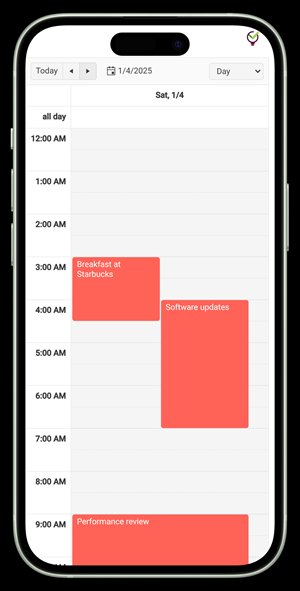
If you want a tool built around the exact habits above — fast capture, one trusted list, a daily review you'll actually do — TaskLoco is worth a look. The core metaphor is a sticky note wall: everything you capture lands on a visual board you can scan in seconds, the same way a well-organized physical desk lets you see what's in play without digging through folders.
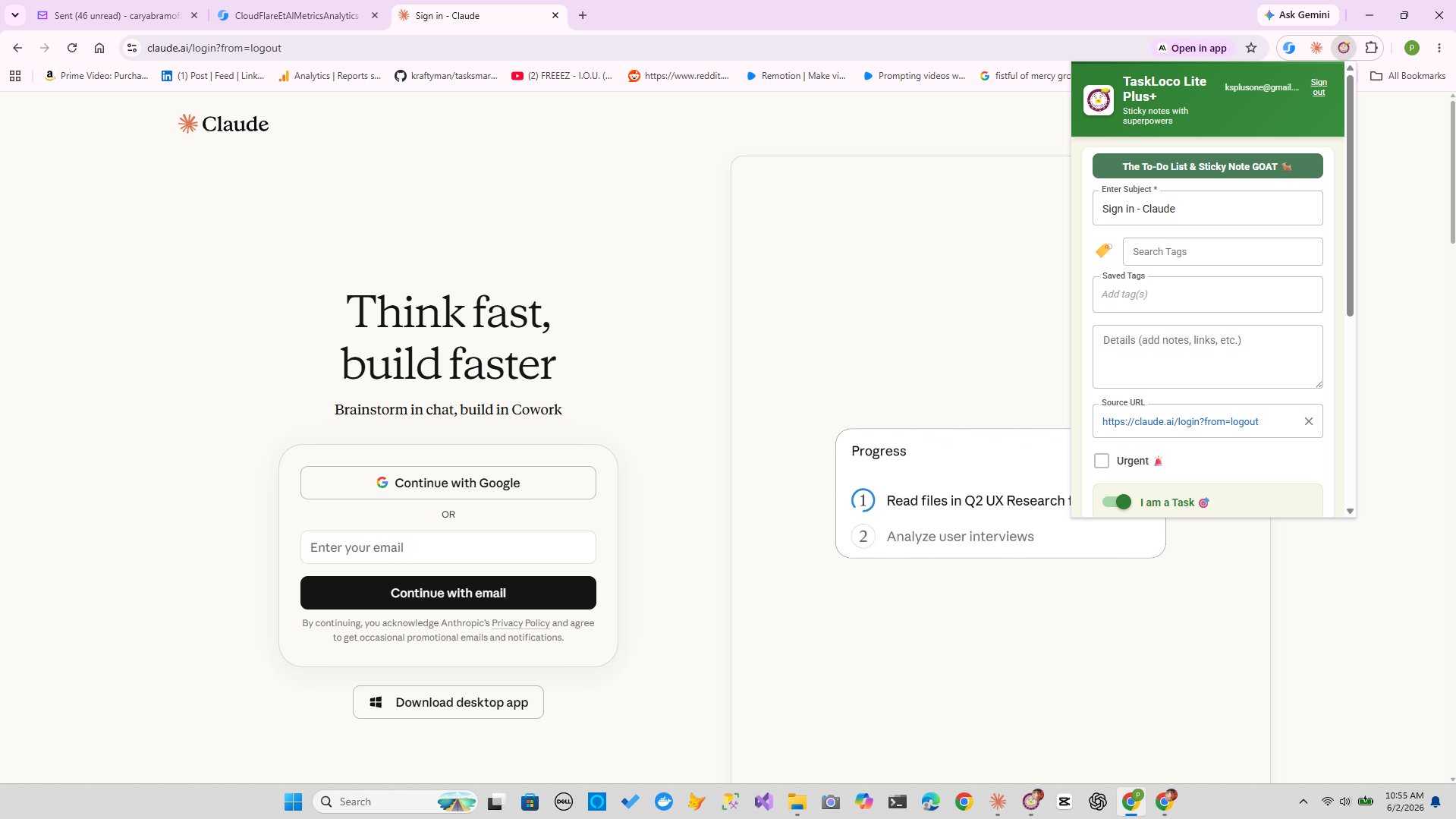
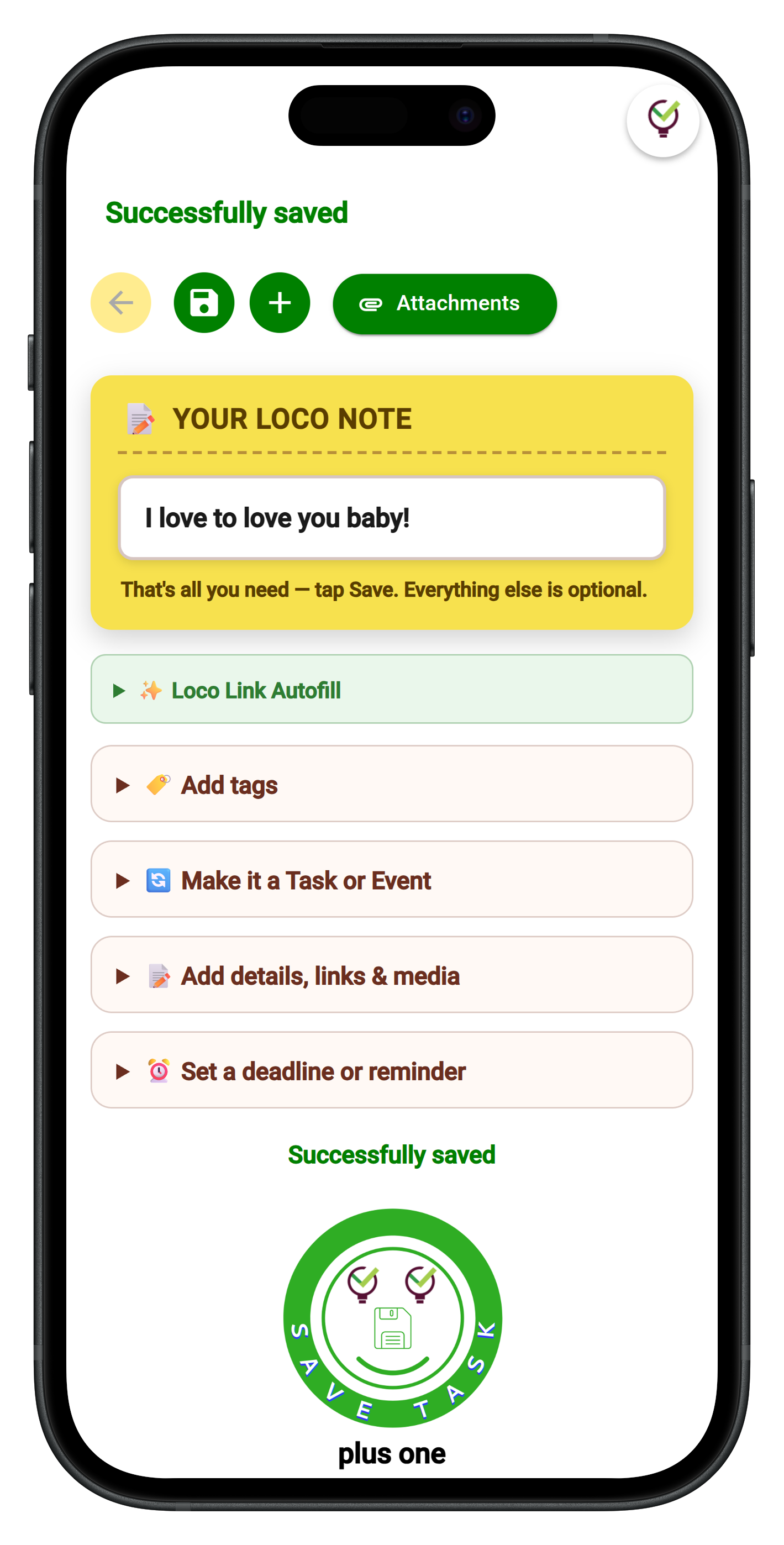
The free tiers let you test the system without committing anything. TaskLoco Lite is a native iPhone and Android app — completely anonymous, no account, no sign-in required. It stores up to 20 notes directly on your device. It's the lowest-friction capture tool TaskLoco offers: open it, write the thought, done. TaskLoco Lite Plus+ is the web app and Chrome extension, free with a Google sign-in, syncing up to 30 notes across all your devices. The Chrome extension is particularly useful for the capture habit — one click saves any webpage directly as a note, which means the "I'll read this later" thought actually gets captured instead of lost in a forgotten browser tab.
When you're ready to go deeper, TaskLoco Premium adds the features that support a full daily review practice: unlimited notes, a calendar view so you can see what's coming, reminders that fire as push notifications directly to your phone and computer and deep-link straight back to the original note, file attachments with 10GB of storage, and full team sharing that works like email — your teammates receive the note and can clone it as their own. Optional email and SMS reminders are available as additional channels on top of push notifications.
For teams using the daily review together — a quick standup, a shared project board, a weekly sync — the sharing model keeps things clean. Notes go out like emails: the recipient gets their own copy to work with. No permission layers, no access levels to manage.
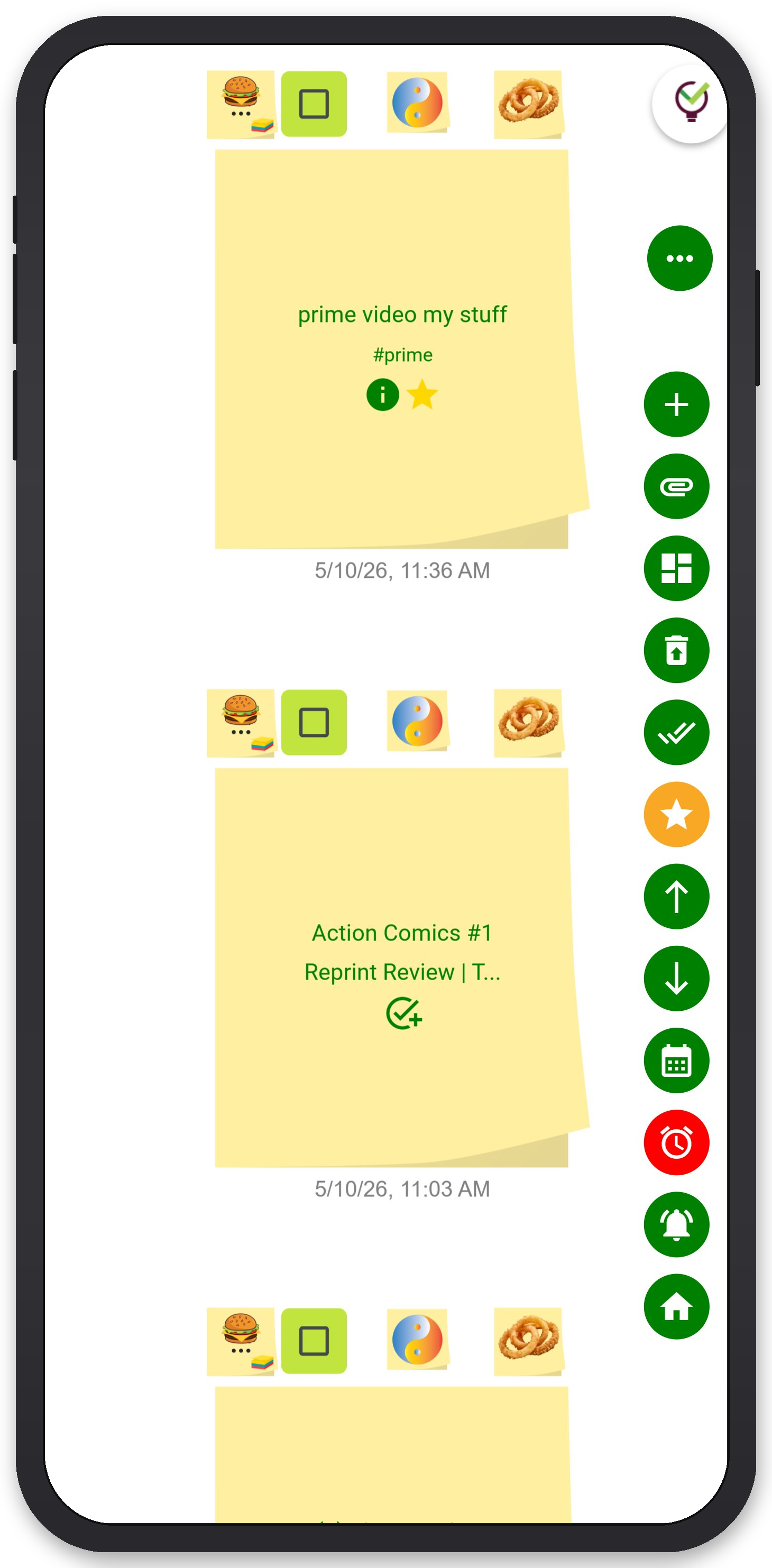
TaskLoco Premium is regularly $9.99/month per person. Right now, charter members can lock in 50% off the regular price — forever. That means $4.99/month per person today. And if our price ever goes up, you still pay half. Always.
Code CHARTER50 auto-applies at checkout. First 500 spots only — once they're gone, this offer is gone permanently. Act fast while spots last.
Every Premium subscription includes unlimited notes, 10GB file storage, reminders, calendar, and team sharing. Each team member requires a separate subscription. 7-day free trial — no charge until day 8. Cancel anytime.
Free Options: TaskLoco
TaskLoco Lite
- Native iPhone & Android app
- Completely anonymous — no sign-in
- Data stays on your device
- Up to 20 notes
- Free forever
TaskLoco Lite Plus+
- Web app + Chrome extension
- Sign in with Google
- Wall syncs across all devices
- Up to 30 notes
- Free forever
Lock In 50% Off — Forever
7-day free trial. No charge until day 8. CHARTER50 auto-applies at checkout.
🔒 Lock In My Charter SpotSee TaskLoco in Action
Frequently Asked Questions
Why do some people seem naturally more organized than others?
It's almost never natural. Organized people have built a small number of habits — immediate capture, one trusted list, and a brief daily review — that become invisible over time. From the outside it looks effortless because they've been doing it long enough that it requires no willpower. The underlying mechanics are learnable by anyone.
What is the single most important habit for getting organized?
Capture. Writing things down the moment they occur to you — not later, not when you get back to your desk, immediately — is the foundation everything else builds on. Without it, you're managing an invisible list in your head, which taxes your focus constantly and guarantees things will slip through.
Why does my to-do list stop working after a few days?
Usually one of three reasons: the list is in too many places so you can't trust any of them, the tasks are too vague ("work on project X" instead of a concrete next action), or you're not doing a regular review to keep it current. A stale list stops feeling reliable, so you stop using it and go back to keeping things in your head.
How long should a daily review take?
Five to ten minutes is enough for most people. You're not re-planning your entire week — you're scanning your active list, noting what moved, flagging what's urgent tomorrow, and closing the mental loop on today. Tie it to something you already do every day, like making coffee or shutting down your laptop, and it becomes automatic quickly.
What does 'next action' mean and why does it matter?
A next action is the single, specific, physical step that moves a task forward — specific enough that you could sit down and do it right now without any more planning. "Call dentist to reschedule" is a next action. "Sort out dentist situation" is not. Vague tasks get avoided because your brain can't find an entry point. Concrete next actions get done because the path is obvious.
What's the best app for building an organization system?
The best app is the one with the least friction for how you actually work. If you're starting fresh, TaskLoco's free tiers are a low-risk way to test the habits described above. The native Lite app (iPhone and Android) requires no account and captures instantly. Lite Plus+ syncs across devices for free. Premium adds unlimited notes, reminders delivered as push notifications that deep-link back to the original note, file attachments, calendar view, and team sharing when you're ready to go further. $9.99/month per person (currently $4.99/month per person for first 500 charter members with code CHARTER50)
How do I stop feeling overwhelmed by a huge task list?
First, make the list honest — merge all your scattered lists into one place so you can see the actual scope. Then prune ruthlessly: delete anything that no longer matters and defer anything with no near-term action. What's left should be readable in under two minutes. Finally, identify just the top three things that matter tomorrow. A long list feels overwhelming because it tries to be everything at once; a short daily focus list is actionable.
Born in Brooklyn. Powered by AWS. Your data stays yours.
TaskLoco is available on iPhone, Android, Chrome, and every web browser.