At some point in the second or third year, every PhD student hits the same wall: you have forty browser tabs open, a folder called 'FINAL_v3_REAL_THIS_TIME,' three different apps for tasks, notes, and deadlines, and a growing suspicion that the system is the problem. It is. Not you.
The tools built for knowledge workers — project managers, marketing teams, software developers — were not designed for the particular chaos of doctoral research: literature that accumulates for years before it coheres, deadlines set by committees who don't coordinate with each other, and a dissertation that lives in your head long before it lives anywhere else. What you actually need is something that captures a thought at 11pm, connects it to a deadline in March, and surfaces a file you uploaded six months ago. That is a very specific job, and most apps do it badly.
What to Look for in a Productivity App for Graduate Research
Before any specific app enters the conversation, it helps to name the criteria that actually matter for doctoral work — because they are genuinely different from what a sales team or a software sprint needs.
1. Frictionless capture. Research insight doesn't schedule itself. A connection between two papers you read eight months apart arrives at 2am or mid-seminar. Your app needs to capture that thought in under five seconds, with zero setup, or you will default to your phone's notes app and lose the thread entirely. The capture experience is the most important feature in the stack — not the most glamorous, but the one that fails you most often.
2. Deadline visibility that accounts for your real calendar. PhD deadlines are not like work deadlines. They include abstract submission windows, IRB renewal dates, grant reporting cycles, committee availability, and the internal milestones only you know about. A calendar view that shows you tasks and deadlines together — not just appointments — is the difference between remembering a funding deadline and missing it by three days.
3. File and reference storage that lives next to the work. Researchers live inside PDFs, annotated drafts, scanned handwritten notes, and data files. An app that separates your files from your tasks forces you to context-switch every time you need to reference something. The apps that actually hold up under dissertation pressure are the ones where the file is attached to the note, not filed somewhere else entirely.
With those criteria in mind, most generic productivity apps fail on at least one of them. Enterprise project tools are overkill and assume team workflows. Basic note apps lack deadlines. Calendar apps lack notes. The sweet spot is a single tool that handles all three without making you configure it for a week before it does anything useful.
How TaskLoco Fits the PhD Workflow
TaskLoco is built around sticky notes — not tasks assigned to people, not project boards with swimlanes, not a database that requires you to design your own schema. Notes. Which is exactly how most researchers think. You have a thought, you capture it, you connect it to a deadline or a file, and you move on.
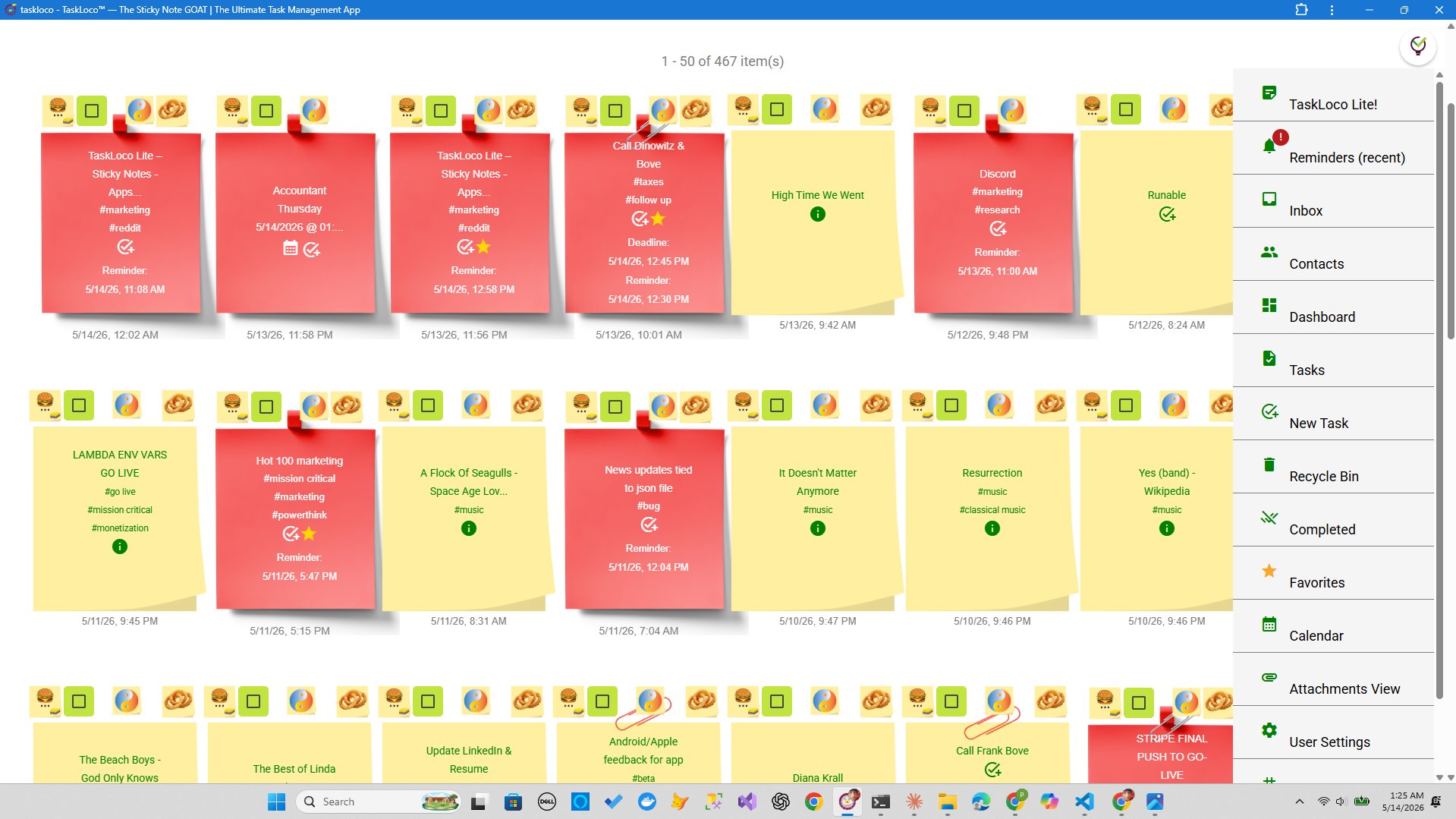
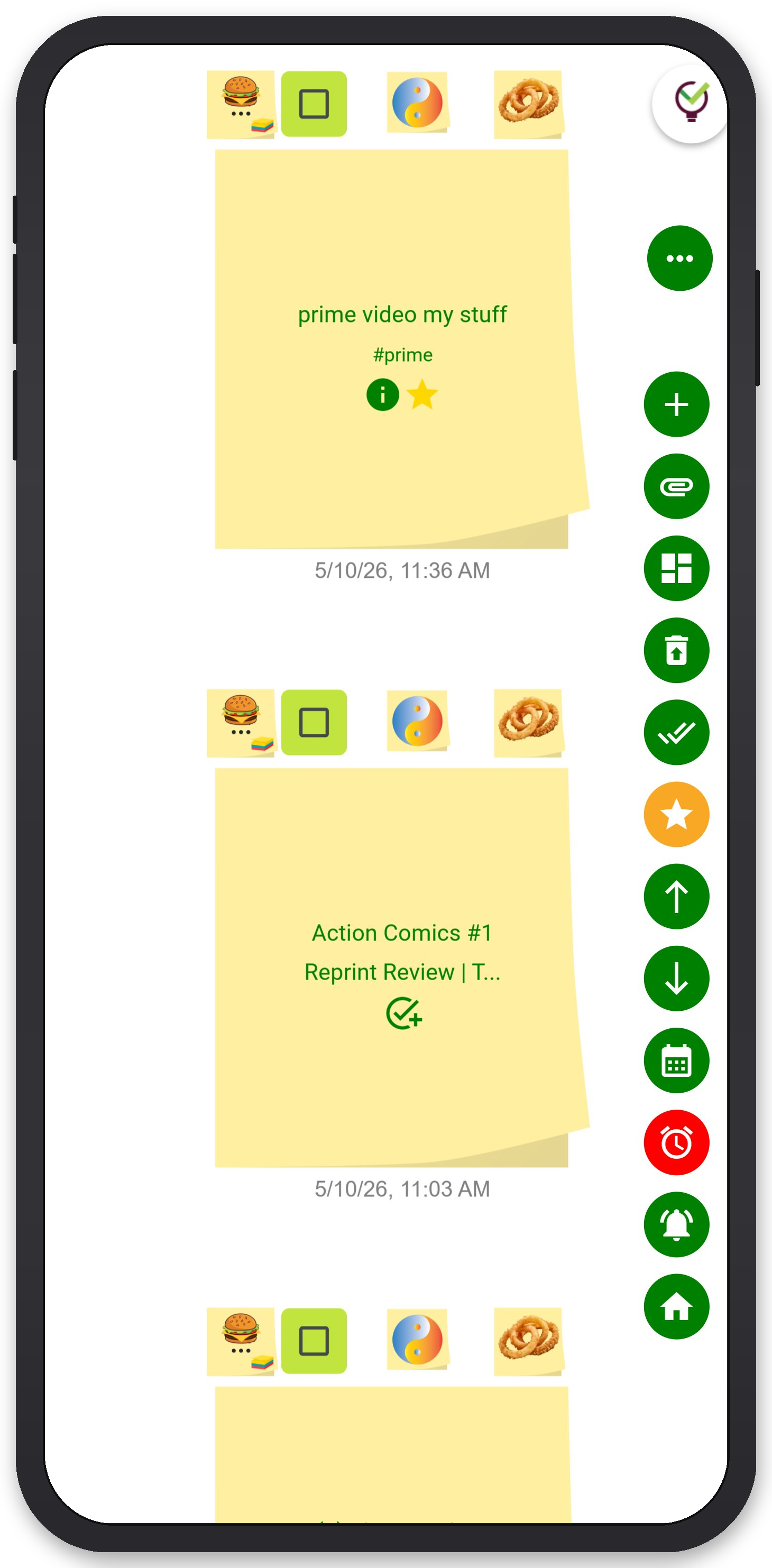
The wall view — a visual canvas of your notes — is particularly useful for dissertation work. You can see your literature themes, your chapter outlines, your committee feedback, and your upcoming deadlines all at once, arranged the way your brain has organized the project, not the way a generic list forces you to see it. This matters more than it sounds: when you are three years into a project, the ability to zoom out and see the whole landscape is cognitively different from scrolling through a list.
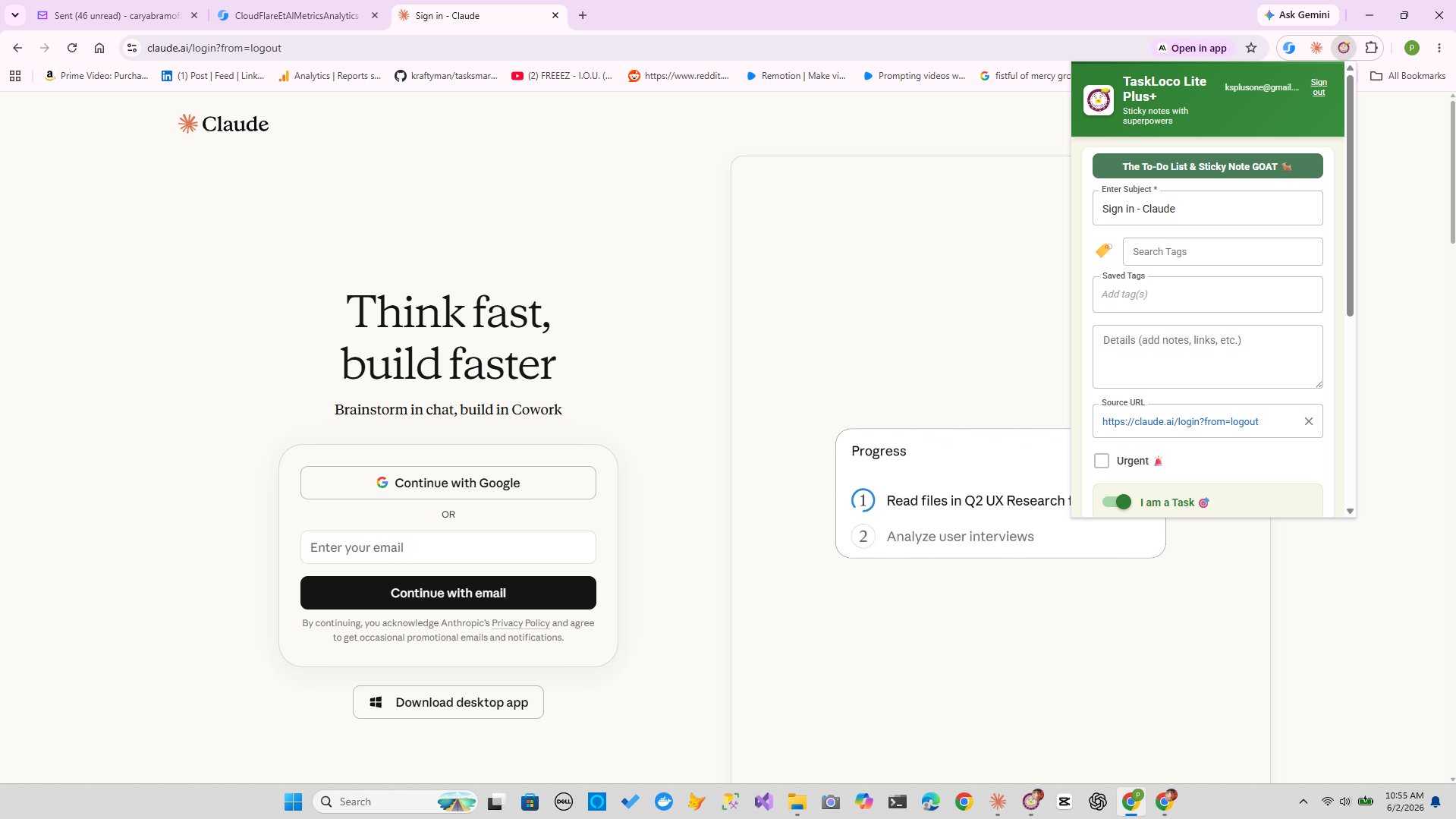
Capture is fast enough to actually use. The Chrome extension — free, available alongside the web app — captures any webpage in one click and saves it as a note. If you are reading a journal article, a conference announcement, a grant page, or a methodology explanation, one click pulls it into your TaskLoco wall without breaking your reading flow. This is the feature that replaces the forty-tab problem.
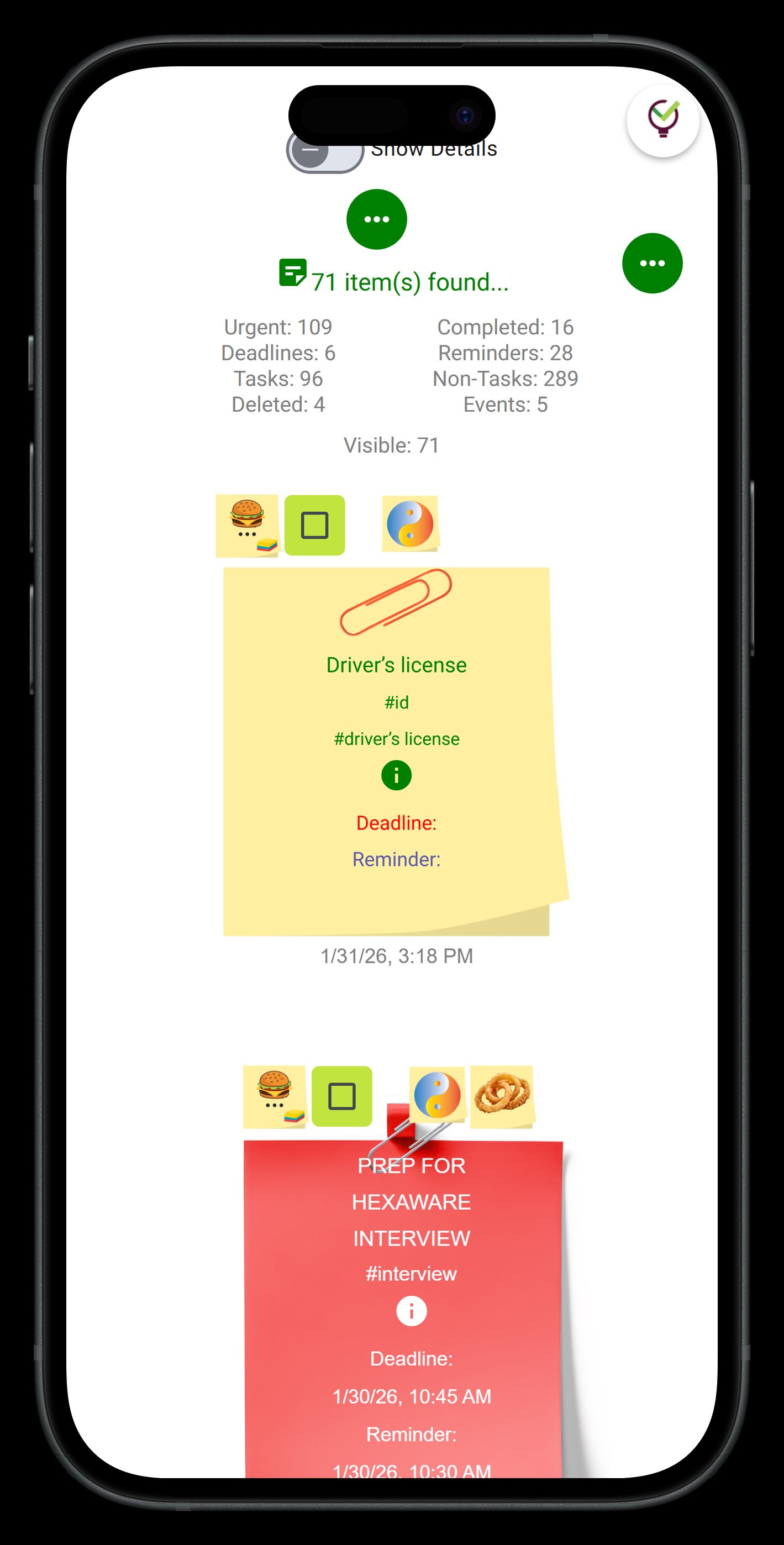
Reminders go where you actually are. TaskLoco reminders are delivered as push notifications — to your phone and your computer. When a deadline surfaces, it reaches you directly, and the notification deep-links back to the original note so you land on the right context immediately, not at a generic home screen. Optional email and SMS notifications are available as additional channels if you want belt-and-suspenders coverage for critical dates.
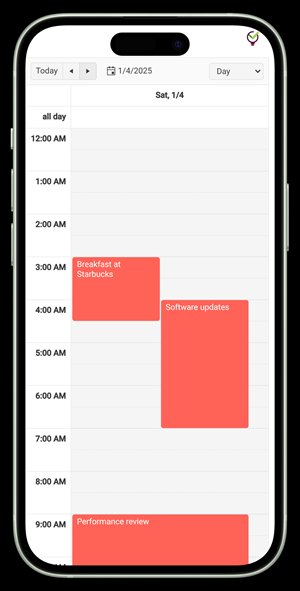
The calendar view inside TaskLoco Premium shows your notes and deadlines together in one place. If you have a grant due in two weeks, a chapter draft due to your advisor in three, and a conference abstract due in one, you see all of that in one view — not split across an app, a calendar, and a to-do list.
Research Files That Live Next to the Work
File management for PhD students is quietly one of the most painful parts of the job. You have annotated PDFs, IRB approval letters, scanned consent forms, data exports, draft chapters, figures in progress, and interview recordings — all of which need to be findable, fast, when you are mid-thought and under pressure. Storing them separately from your notes means you are always switching contexts to retrieve something.
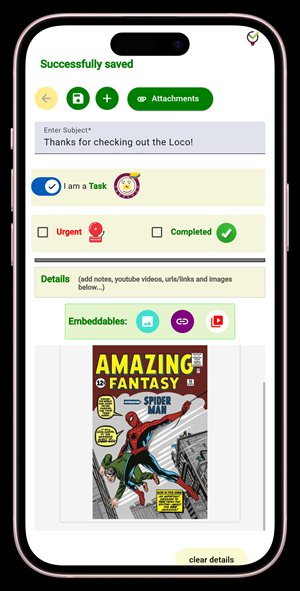
TaskLoco Premium includes 10GB of file storage per person, and files attach directly to notes. That means your IRB protocol lives on the note titled 'Study 2 Ethics Approval.' Your lit review PDF lives on the note for that chapter. Your advisor's feedback document lives on the note for the meeting where you discussed it. When you pull up the note, the file is right there — no folder navigation, no file search, no context switch.
For researchers who accumulate a lot of material over a multi-year project, TaskLoco also offers add-on storage in tiers — 10GB, 50GB, 200GB, and 1TB — stackable if you need serious capacity for large data files, audio recordings, or high-resolution images. Each tier is an add-on to your per-person subscription.
Full-text search runs across all your notes and attachments, so if you remember you read something about measurement invariance but cannot remember which note you filed it under, you search and find it. This is the kind of feature that sounds basic until you are eighteen months into a project with two hundred notes and you need the thing you wrote down in year one.
TaskLoco's Free Tiers — and When to Upgrade
If you are early in your program and still figuring out your workflow, TaskLoco Lite costs nothing and requires nothing. No sign-in, no account, no email address. It stores up to 20 notes locally on your iPhone or Android device as a JSON file. It is purely a local tool — it does not sync, does not connect to any server, and is completely anonymous. For a first-year student who just wants a low-friction place to capture thoughts before committing to a system, it is a clean starting point.
TaskLoco Lite Plus+ is also free and steps it up considerably: sign in with Google, sync across all your devices through the web app and Chrome extension, and store up to 30 notes. No reminders, no file attachments, no sharing — but cross-device sync and the Chrome extension make it genuinely useful for a student who works across a laptop, a desktop, and a phone browser. The 30-note ceiling is the honest limitation; once your research grows past that, you feel it.
TaskLoco Premium is where the full research toolkit lives: unlimited notes, 10GB file storage, reminders with push notifications, calendar view, and team sharing. For PhD students, team sharing works the way email does — you share a note, and the recipient can clone it and make it their own, no permissions configuration needed. That is useful for sharing literature summaries with a lab partner, sending a meeting agenda to your advisor, or coordinating on a co-authored paper.
TaskLoco Premium is regularly $9.99/month per person. Right now, charter members can lock in 50% off the regular price — forever. That means $4.99/month per person today. And if our price ever goes up, you still pay half. Always.
Code CHARTER50 auto-applies at checkout. First 500 spots only — once they're gone, this offer is gone permanently. Act fast while spots last.
Every Premium subscription includes unlimited notes, 10GB file storage, reminders, calendar, and team sharing. Each team member requires a separate subscription. 7-day free trial — no charge until day 8. Cancel anytime.
Free Options: TaskLoco
TaskLoco Lite
- Native iPhone & Android app
- Completely anonymous — no sign-in
- Data stays on your device
- Up to 20 notes
- Free forever
TaskLoco Lite Plus+
- Web app + Chrome extension
- Sign in with Google
- Wall syncs across all devices
- Up to 30 notes
- Free forever
Lock In 50% Off — Forever
7-day free trial. No charge until day 8. CHARTER50 auto-applies at checkout.
🔒 Lock In My Charter SpotSee TaskLoco in Action
Frequently Asked Questions
Is TaskLoco actually useful for PhD research, or is it just a to-do list?
It is more than a to-do list, and the difference matters for research work. TaskLoco is built around notes — not tasks assigned to team members, not project boards. You can attach files to individual notes, set reminders that deep-link back to the note when they fire, view everything on a visual wall, and search across all your notes and attachments. For PhD students, that means your literature notes, deadline reminders, advisor feedback, and chapter drafts all live in one connected place instead of scattered across four apps.
Can I use TaskLoco on my phone and my laptop?
Yes. TaskLoco Lite Plus+ and Premium sync across all your devices through the web app. You open TaskLoco in your phone's browser or your laptop's browser and your notes are current. The Chrome extension — free — is available on desktop and lets you capture any webpage in one click. The native iPhone and Android app (TaskLoco Lite) is a separate, local-only tool with no sync — useful for anonymous capture, but not the cross-device experience. Cross-device sync lives in Lite Plus+ and Premium through the web.
How do TaskLoco reminders work for dissertation deadlines?
Reminders in TaskLoco Premium are delivered as push notifications — to your phone and your computer. When the notification fires, it deep-links directly back to the original note, so you land on the right context immediately. You can also enable optional email notifications and optional SMS notifications as additional channels. That covers IRB renewal dates, grant deadlines, committee meeting prep, and abstract submission windows — all surfacing at the right moment without you having to check anything manually.
What happens to my files if I cancel my Premium subscription?
Your notes remain accessible, but Premium-only features — including file attachments, reminders, calendar view, and unlimited notes — are tied to your active subscription. If you are storing critical research files inside TaskLoco, maintaining your subscription keeps them accessible. The 7-day free trial lets you evaluate the full feature set before any charge hits on day 8.
Can I share research notes with my advisor or lab partner?
Yes. TaskLoco Premium includes team sharing. It works like email — you share a note, and the recipient can clone it and make it their own. No permissions setup, no access level configuration. Your advisor gets the note, makes it theirs, annotates it, and works from it independently. Each person sharing notes needs their own separate Premium subscription. There are no team plans that cover multiple people under one subscription.
Is there a free version I can start with before committing?
Two of them. TaskLoco Lite is the native iPhone and Android app — completely free, no sign-in required, stores up to 20 notes locally on your device only, no sync. TaskLoco Lite Plus+ is free with a Google sign-in, syncs across devices through the web app and Chrome extension, and holds up to 30 notes. Neither free tier includes reminders, file attachments, or unlimited notes — those are Premium only. Premium also comes with a 7-day free trial, so you can test the full research toolkit before anything is charged.
What is the Charter pricing and should I care about it?
$9.99/month per person (currently $4.99/month per person for first 500 charter members with code CHARTER50)
Born in Brooklyn. Powered by AWS. Your data stays yours.
TaskLoco is available on iPhone, Android, Chrome, and every web browser.