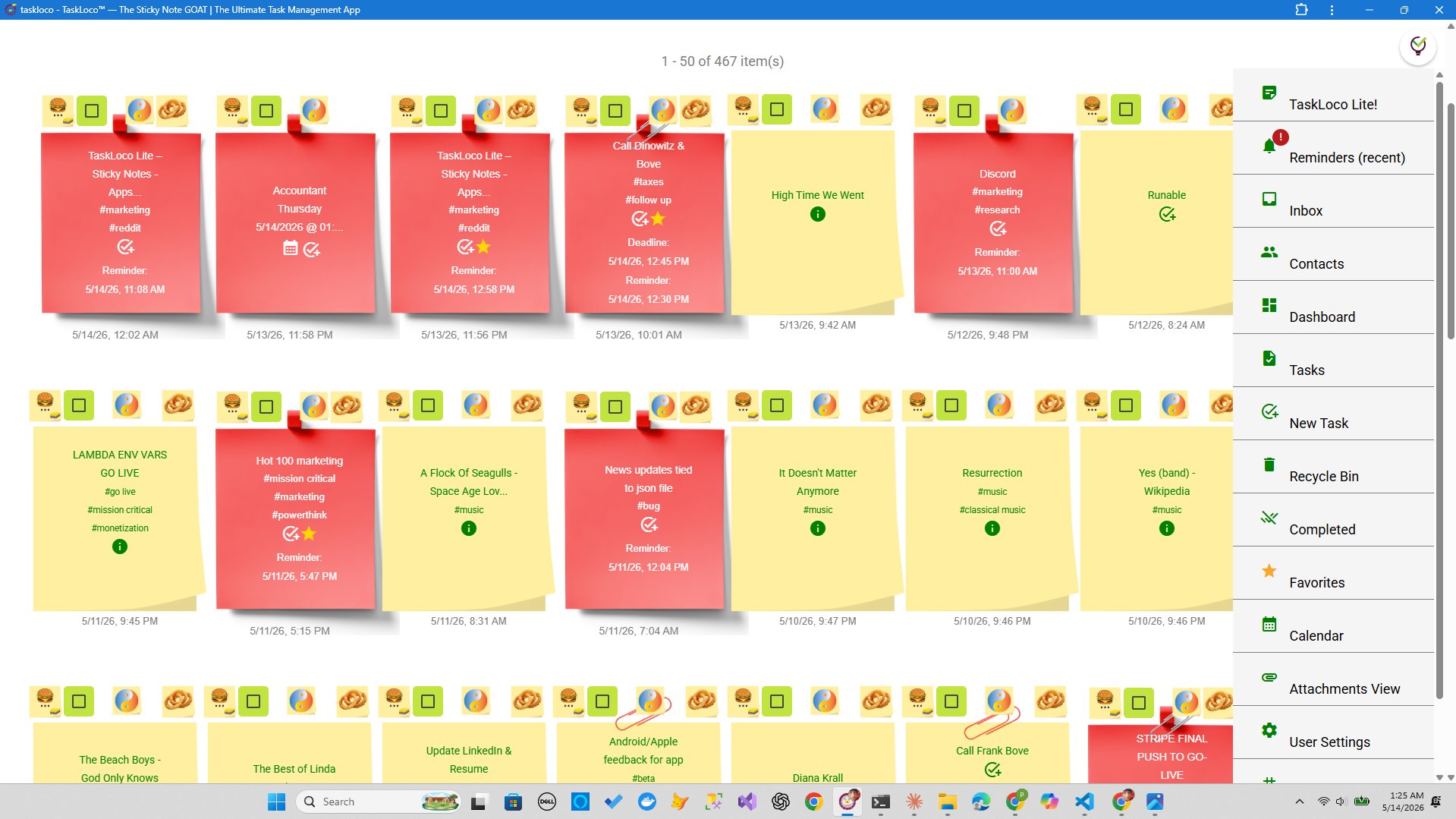
Most people who try time blocking give up within two weeks. Not because the method is broken — it isn't — but because the tools they're using weren't built for it. Spreadsheets are rigid. Calendar apps are disconnected from your actual tasks. Project managers add overhead that defeats the whole point. What time blocking actually needs is something visual, fast, and low-friction.
TaskLoco was built around sticky notes, which turns out to be exactly the right metaphor for time blocking. A block of time is just a sticky note with a start time. Move it, rename it, attach a file to it, get a push notification when it's about to begin. No elaborate setup. No learning curve. Just your day, organized the way your brain actually works.
What to Look for in a Time Blocking App
Time blocking is a scheduling technique where you assign specific chunks of time to specific tasks, rather than working from a running to-do list. It's used by everyone from surgeons to software engineers — anyone who needs focused output and not just a sense of motion. The research behind it is solid: pre-committing to when you'll do something dramatically increases the odds that you actually do it.
But the method only works if the tool supports three things well.
- Visual layout. You need to see your blocks, not scroll through a list. A calendar view or board view is non-negotiable. If you can't see the shape of your day at a glance, you can't manage it.
- Low capture friction. If adding a block takes more than a few seconds, you'll stop doing it. The best time blocking tools let you create a block, name it, and set a time in one motion — no forms, no project hierarchies, no categories required just to start.
- Reminders that actually reach you. A block without an alert is just a hope. Whatever tool you pick needs to notify you when a block is starting — not just show it on a screen you might not be looking at.
Secondary criteria worth considering: file attachment support (so you can pull up the brief or the deck right from the block), cross-device sync (your blocks should follow you from desktop to phone), and team sharing if you're coordinating blocks across people. But the three above are the foundation. Get those wrong and nothing else matters.
Why TaskLoco Gets Time Blocking Right
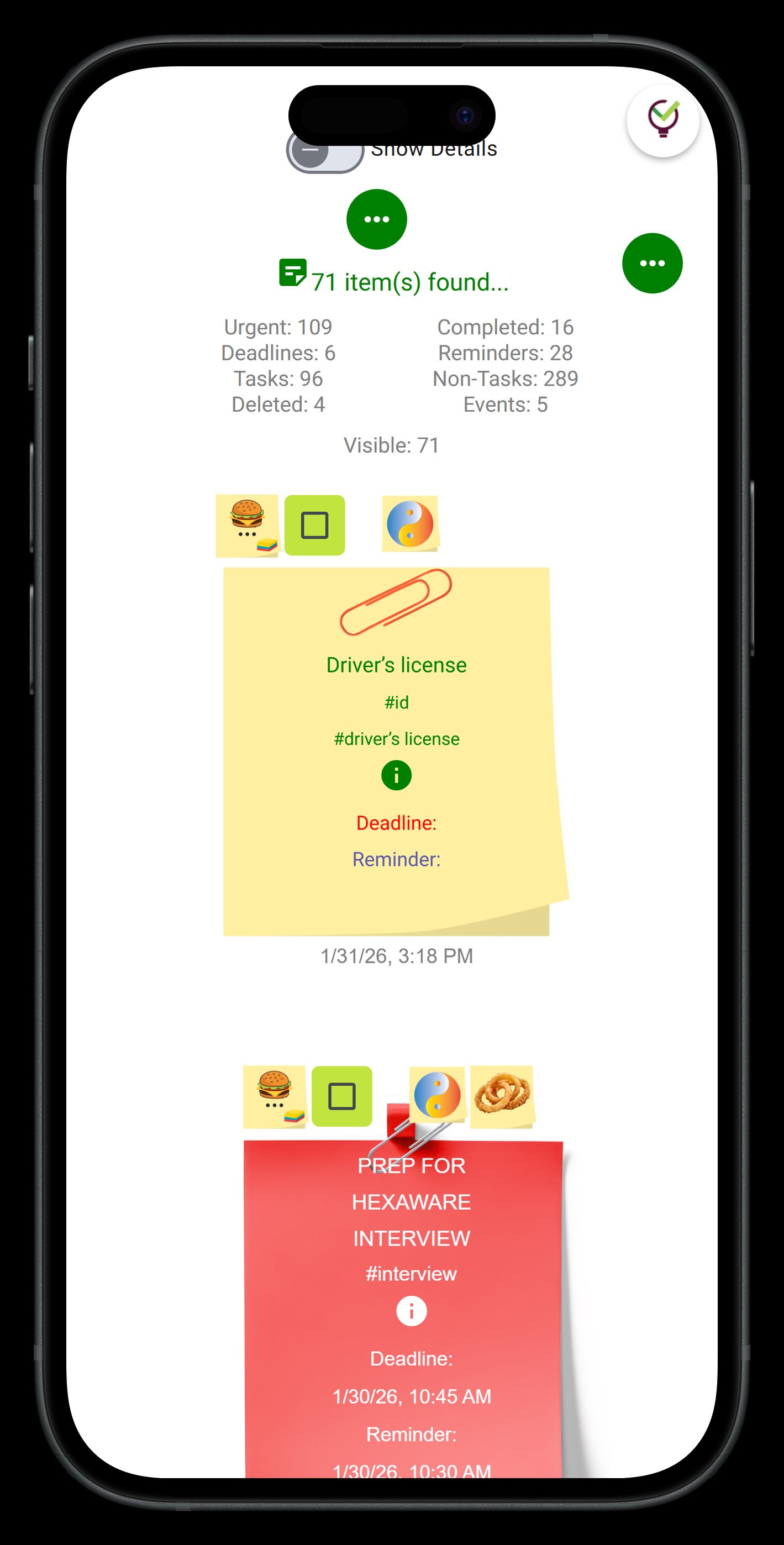
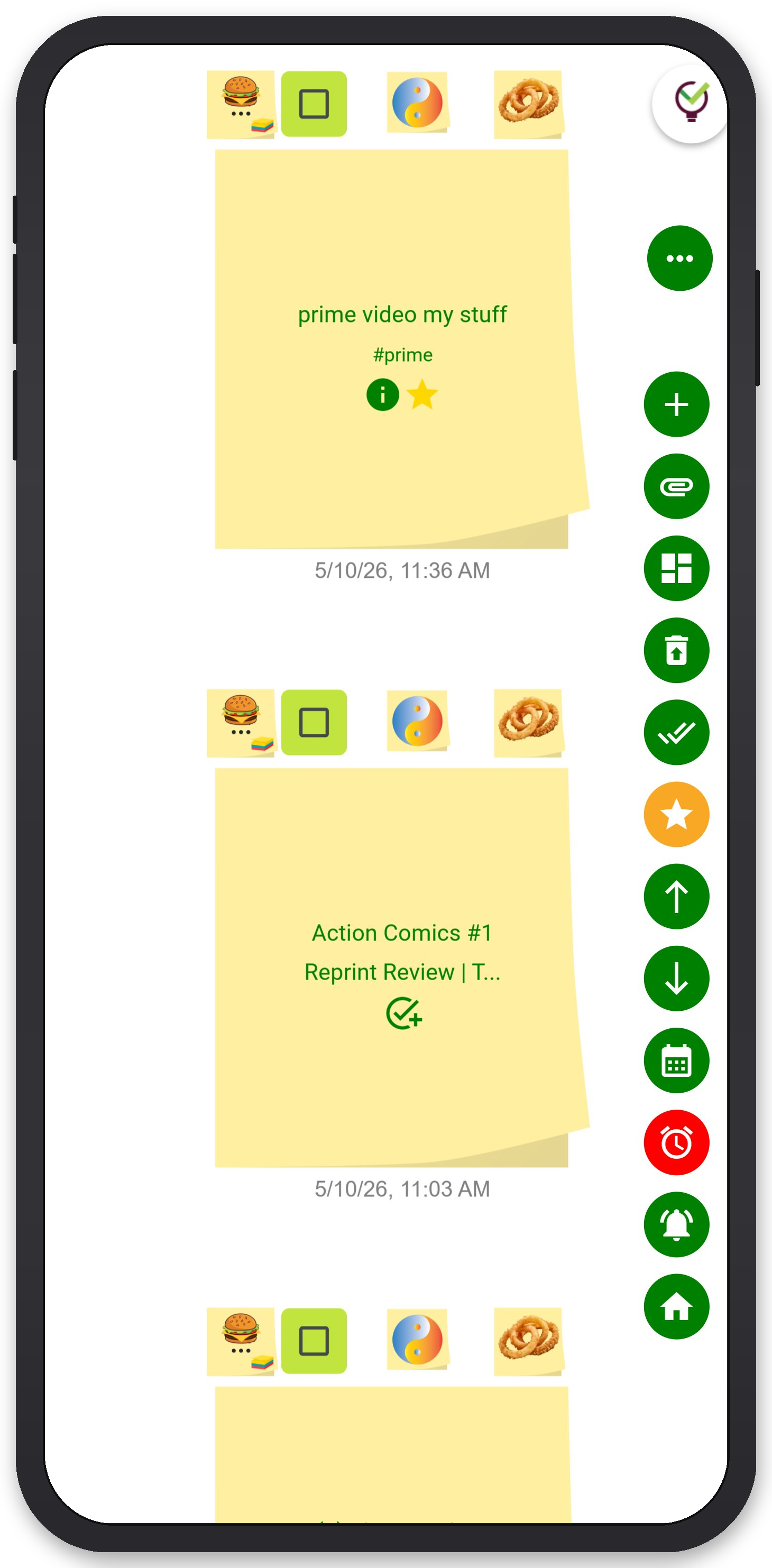
TaskLoco is built around a sticky note metaphor, which maps onto time blocking better than almost any other interface. Each note is a block. You give it a name, a time, and whatever detail you need — and then your day is visible on the wall. Drag a block, rearrange your afternoon, add a note inside a block with the context you'll need when the time comes. It all stays together.
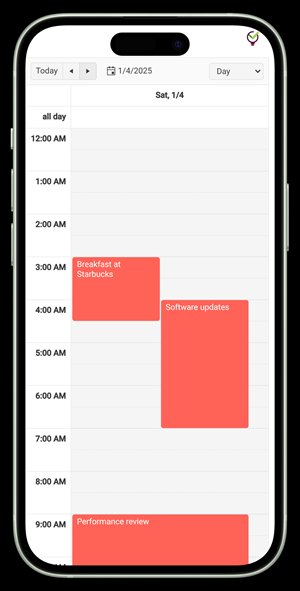
The calendar view in Premium pulls your blocks into a proper time grid, so you can see your day the way time blocking is supposed to be practiced — as a visual schedule, not a prioritized list. And because notes and calendar events live in the same system, there's no tab-switching between your plan and your tasks.
Reminders are delivered as push notifications to your phone and computer, which means you'll actually know when a block is starting. You can also add optional email notifications or an SMS add-on — but push is the default, and it's immediate. Crucially, every reminder deep-links back to the original note, so tapping the notification takes you directly to the block and everything attached to it. That's the detail that separates a useful reminder from a useless ping.
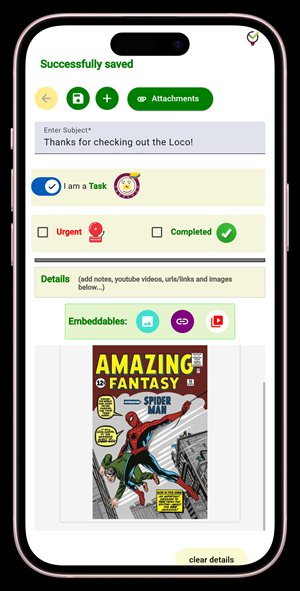
File attachments (10GB included with Premium) mean the document, image, or reference material for that block lives inside the block itself. No hunting through email or a separate drive. When your reminder fires, you tap it, land on the note, and your materials are right there.
The Free Tiers: Start Without Committing
TaskLoco has two free options, which is unusual and worth understanding before you commit to anything.
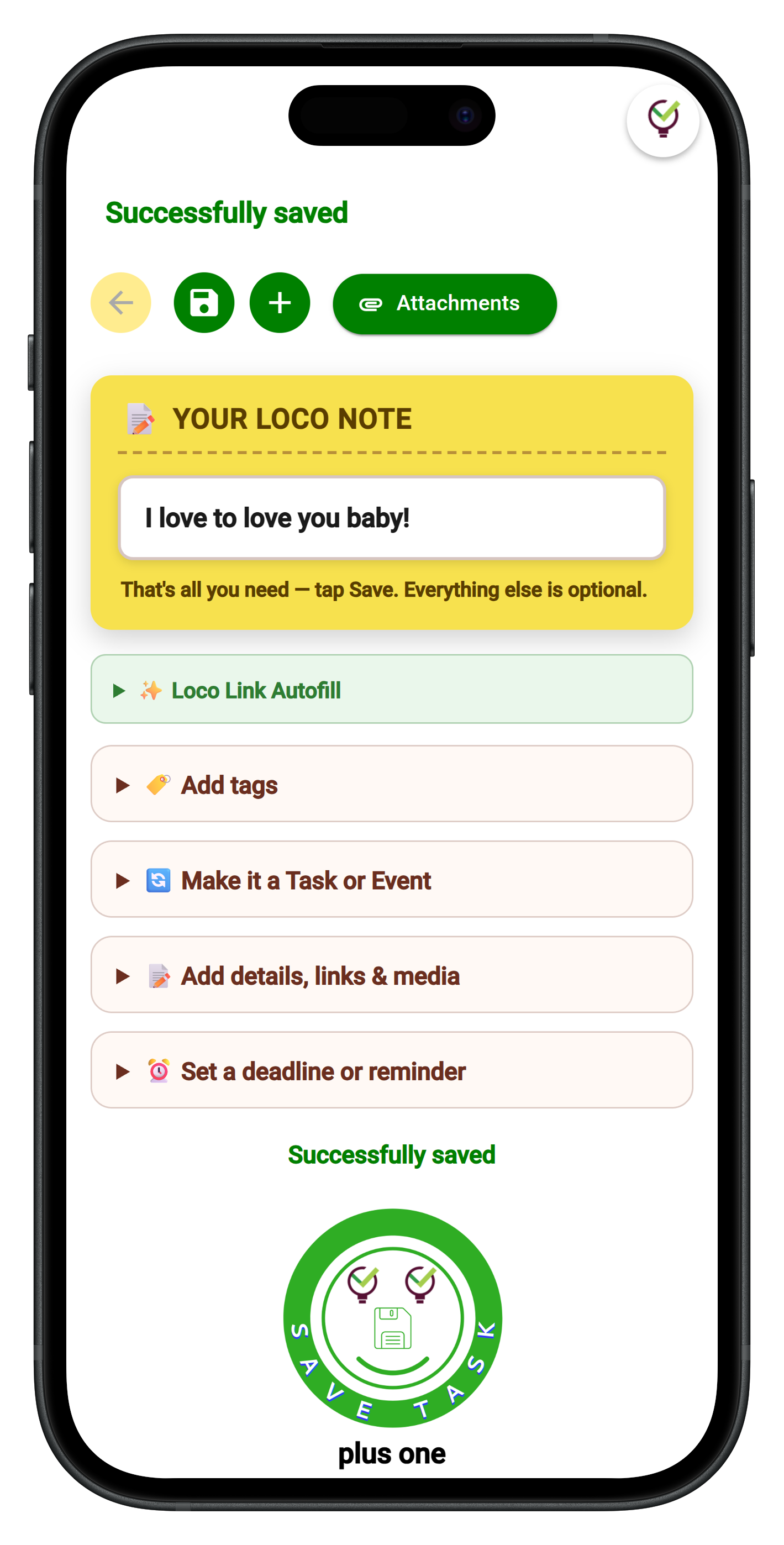
TaskLoco Lite is the native iPhone and Android app. It's completely anonymous — no sign-in, no account, nothing sent to a server. It stores up to 20 notes as a JSON file on your device. For someone who wants to experiment with time blocking privately, with zero friction and zero data sharing, this is a legitimate starting point. Just know it doesn't sync and doesn't have reminders or attachments — it's an honest, minimal tool, not a crippled trial.
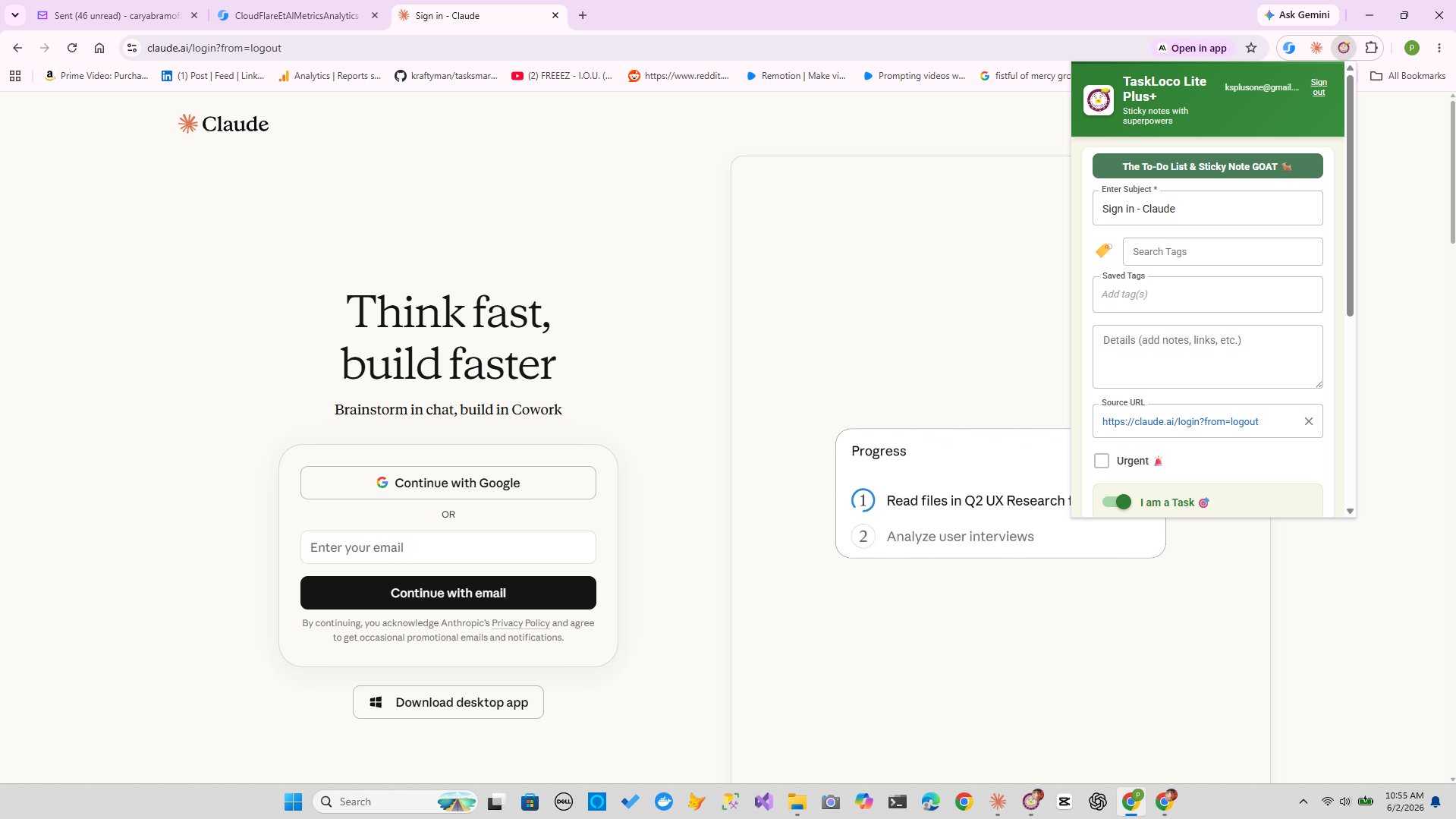
TaskLoco Lite Plus+ is the web app and Chrome extension. Sign in with Google, get up to 30 notes synced across all your devices. The Chrome extension is genuinely useful for time blocking: one click captures any webpage — a brief, a reference article, a client site — directly into a note. That's the kind of low-friction capture that makes time blocking sustainable. Lite Plus+ doesn't include reminders, file attachments, or team sharing, but for solo time blocking with light task loads, it covers a lot of ground for free.
Premium unlocks everything: unlimited notes and calendar events, 10GB file storage, push notification reminders, calendar view, and full team sharing. The jump from free to Premium is the jump from experimenting to actually running your days this way.
Time Blocking With a Team: How Sharing Works
Solo time blocking is straightforward. Team time blocking is where most systems break down — because sharing a block usually means sharing permissions, access levels, and a settings menu nobody asked for.
TaskLoco takes a different approach. Team sharing works like email: you share a note, the recipient gets it, and they can clone it and make it their own. No permission levels, no access tiers, no admin overhead. If you're coordinating blocks across a team — daily standups, shared project windows, handoff times — this is how you do it without turning coordination into its own project.
Real-time sync means everyone sees the current version. Reminders fire as push notifications to each person's own phone and computer. And because each team member has their own subscription, their notes, their blocks, and their reminders are their own — not a shared document that everyone's editing at once.
If your team needs Gantt charts, project dependency mapping, or enterprise SSO, TaskLoco isn't the right fit for that layer of complexity. But for teams that want to time-block their actual workdays — and stay coordinated without a project manager's degree — this is the right tool.
TaskLoco Premium is regularly $9.99/month per person. Right now, charter members can lock in 50% off the regular price — forever. That means $4.99/month per person today. And if our price ever goes up, you still pay half. Always.
Code CHARTER50 auto-applies at checkout. First 500 spots only — once they're gone, this offer is gone permanently. Act fast while spots last.
Every Premium subscription includes unlimited notes, 10GB file storage, reminders, calendar, and team sharing. Each team member requires a separate subscription. 7-day free trial — no charge until day 8. Cancel anytime.
Free Options: TaskLoco
TaskLoco Lite
- Native iPhone & Android app
- Completely anonymous — no sign-in
- Data stays on your device
- Up to 20 notes
- Free forever
TaskLoco Lite Plus+
- Web app + Chrome extension
- Sign in with Google
- Wall syncs across all devices
- Up to 30 notes
- Free forever
Lock In 50% Off — Forever
7-day free trial. No charge until day 8. CHARTER50 auto-applies at checkout.
🔒 Lock In My Charter SpotSee TaskLoco in Action
Frequently Asked Questions
What is time blocking and why does it work?
Time blocking is the practice of assigning specific tasks to specific windows of time on your calendar, rather than working from a to-do list. It works because pre-committing to when you'll do something — not just that you'll do it — dramatically increases follow-through. It also forces realistic scheduling: if a task won't fit in your actual day, you have to make a decision, not just push it down a list indefinitely.
What makes a good time blocking app?
Three things matter most: a visual layout so you can see your day at a glance, low-friction block creation so you don't abandon the system, and reminders that actually reach you when a block starts. File attachments and cross-device sync are strong secondary features — they keep your context inside the block, not scattered across other apps.
How does TaskLoco support time blocking specifically?
TaskLoco's sticky note interface maps directly onto time blocks — each note is a block, with its own name, time, detail, and attached files. The Premium calendar view arranges those blocks into a proper time grid. Reminders fire as push notifications to your phone and computer, and each reminder deep-links back to the original note so you land exactly where your work is. Everything stays together.
Can I try TaskLoco for free before committing?
Yes — two ways. TaskLoco Lite is the native iPhone and Android app: anonymous, no sign-in, up to 20 notes stored on your device. TaskLoco Lite Plus+ is the web app and Chrome extension: sign in with Google, up to 30 notes synced across all your devices, plus one-click webpage capture. Neither free tier includes reminders, file attachments, or team sharing — those are Premium. Premium itself comes with a 7-day free trial, no charge until day 8.
Does TaskLoco have a calendar view for time blocking?
Yes — the calendar view is included with TaskLoco Premium. It arranges your notes and calendar events into a time grid so you can see the actual shape of your day. Because notes and calendar events live in the same system, your tasks and your schedule are never in separate places.
How do TaskLoco reminders work for time blocks?
Reminders in TaskLoco Premium are delivered as push notifications to your phone and computer. Each reminder deep-links back to the original note, so tapping it takes you directly to the block and any files attached to it. Optional email notifications are available, and an SMS add-on is also offered for an additional layer of reach.
What is the pricing for TaskLoco Premium?
$9.99/month per person (currently $4.99/month per person for first 500 charter members with code CHARTER50)
Born in Brooklyn. Powered by AWS. Your data stays yours.
TaskLoco is available on iPhone, Android, Chrome, and every web browser.