Most productivity advice is really just more planning advice. Another framework. Another inbox-zero ritual. Another color-coded calendar. None of it actually gets things done — the doing is still left to you, and you keep postponing it. That gap between knowing what to do and actually doing it is where productivity systems go to die.
The action habit is different because it doesn't try to make planning more elegant. It tries to make planning mostly unnecessary. When acting becomes reflexive — when your first move on any new thought is to capture it and take one immediate step — the backlog stops growing. Things get done. The habit itself becomes the system.
What the Action Habit Actually Is (and What It Isn't)
The action habit is the behavioral pattern of converting thoughts into concrete next steps immediately, rather than deferring them to a review session, a planning block, or a better day. It lives at the intersection of behavioral psychology and practical productivity, and it's grounded in a simple insight: decision fatigue kills execution. The more distance between an intention and an action, the less likely that action ever happens.
Psychologists call the underlying mechanism implementation intention — the research-backed finding that attaching a specific action to a specific trigger dramatically increases follow-through. "I will call the vendor" is a wish. "I will call the vendor right after I finish reading this email" is an implementation intention. The action habit, at scale, is what it looks like when implementation intentions become automatic rather than effortful.
What the action habit is not: it's not impulsiveness. It's not abandoning planning entirely. The distinction is that planning serves the action rather than substituting for it. You still think — but you think in terms of next steps, not in terms of systems and frameworks and the perfect organizational structure. The action you take might be tiny. It might be writing one sentence, sending one message, or capturing one idea. But it is always real, always forward, always done.
Three things actually determine whether someone builds a strong action habit. First, friction — the lower the barrier to capturing and acting, the more likely the habit forms. Second, visibility — actions that stay visible get done; actions buried in nested lists or collapsed menus get forgotten. Third, feedback loops — the brain needs to register that something happened. A sticky note moved, a task checked off, a note archived: small visual completions reinforce the habit at a neurological level.
Why Most Tools Undermine the Action Habit
Here is an uncomfortable truth: most productivity apps are designed to capture complexity, not to reduce friction. They reward thorough organization. They invite you to add labels, set priority levels, assign to projects, write descriptions, link dependencies, and schedule reviews. All of that is genuinely useful for certain kinds of work. But it is lethal for the action habit, because every extra field between thought and capture is a place where momentum dies.
The pattern plays out the same way every time. You get a new productivity app. You spend a weekend setting it up. You feel productive. Then the maintenance overhead starts — the inbox grows, the reviews slip, the projects fall out of sync, and suddenly the system itself is the task you're avoiding. You're managing the tool instead of doing the work.
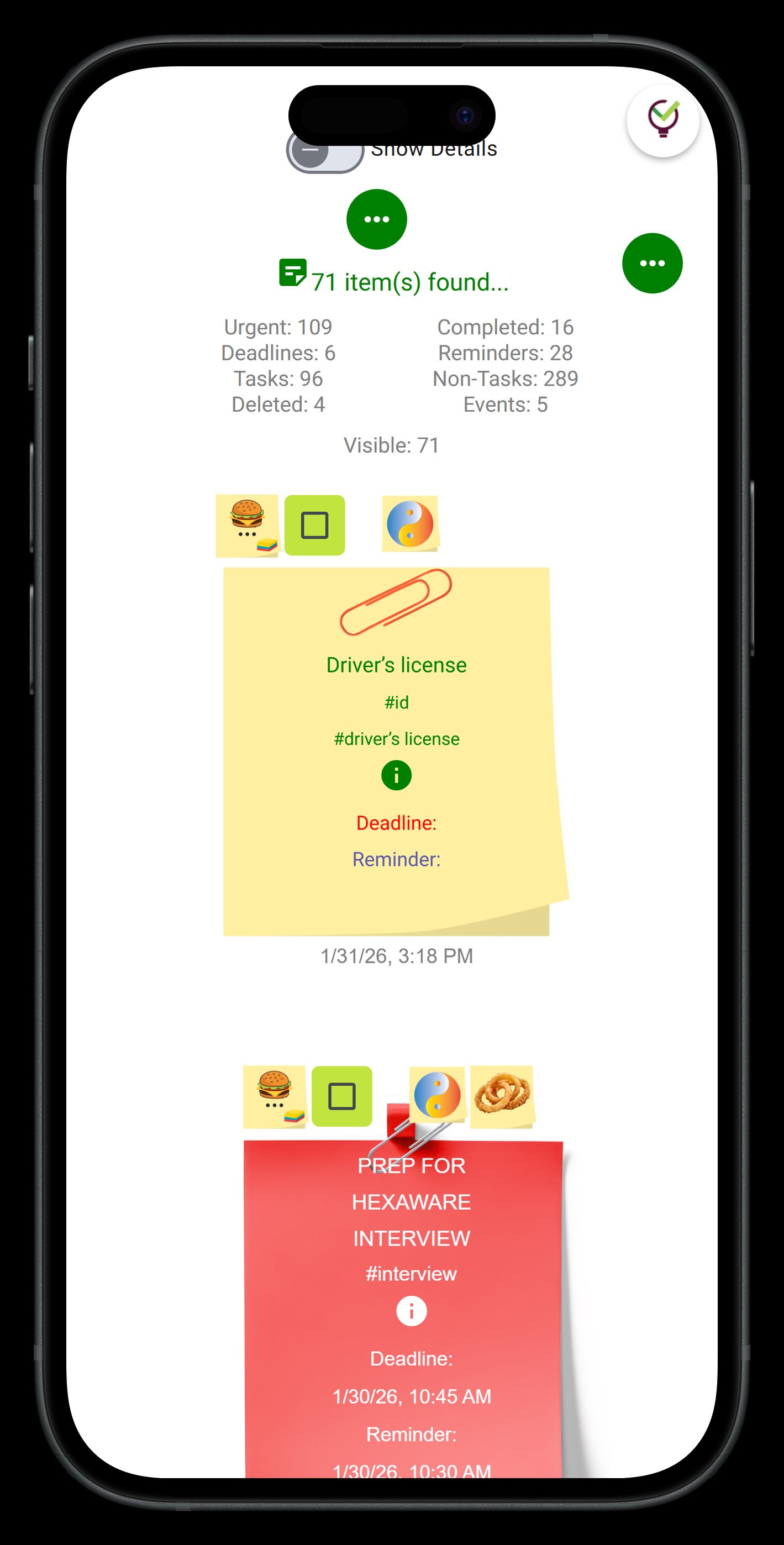
The tools that reinforce the action habit share a different design philosophy: capture first, organize later, act always. The note goes on the wall. You see it. You do something about it. That's the loop. It doesn't need six fields and three approval stages. It needs to be visible, fast, and impossible to ignore.
Visibility is especially underrated. A wall of sticky notes — physical or digital — works partly because you can't pretend you didn't see it. The brain registers the note as an open loop, and open loops create low-level urgency. Collapse those notes into a list inside a project inside a workspace and that urgency evaporates. Out of sight, out of mind is not a cliché — it's neuroscience.
How TaskLoco Is Built Around the Action Habit
TaskLoco's core metaphor is the sticky note, and that is not an aesthetic choice — it is a product philosophy. Sticky notes have survived decades of competing organizational systems because they are fast, visible, and disposable. You write, you stick, you act, you discard. That loop maps perfectly onto the action habit cycle.
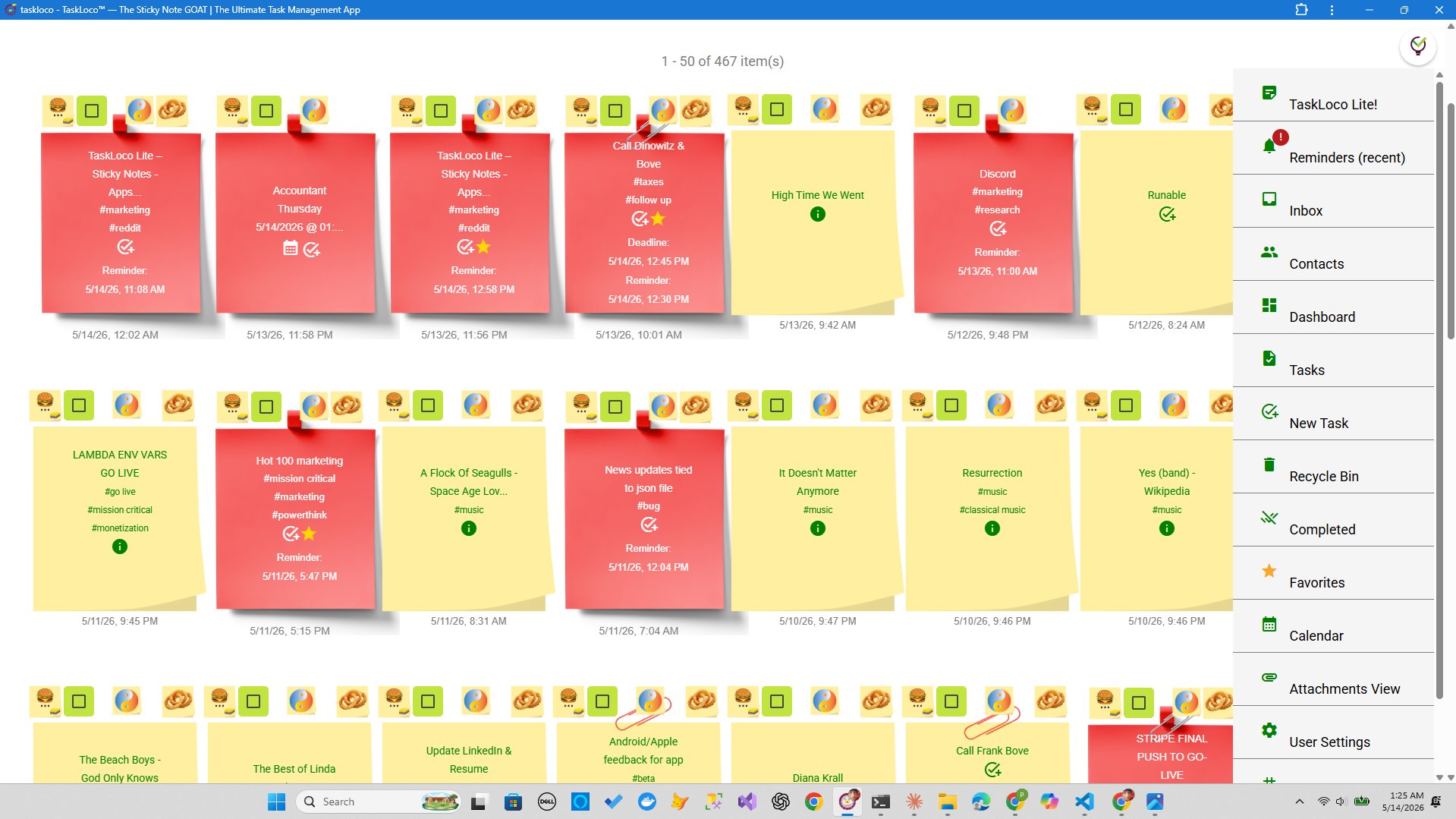
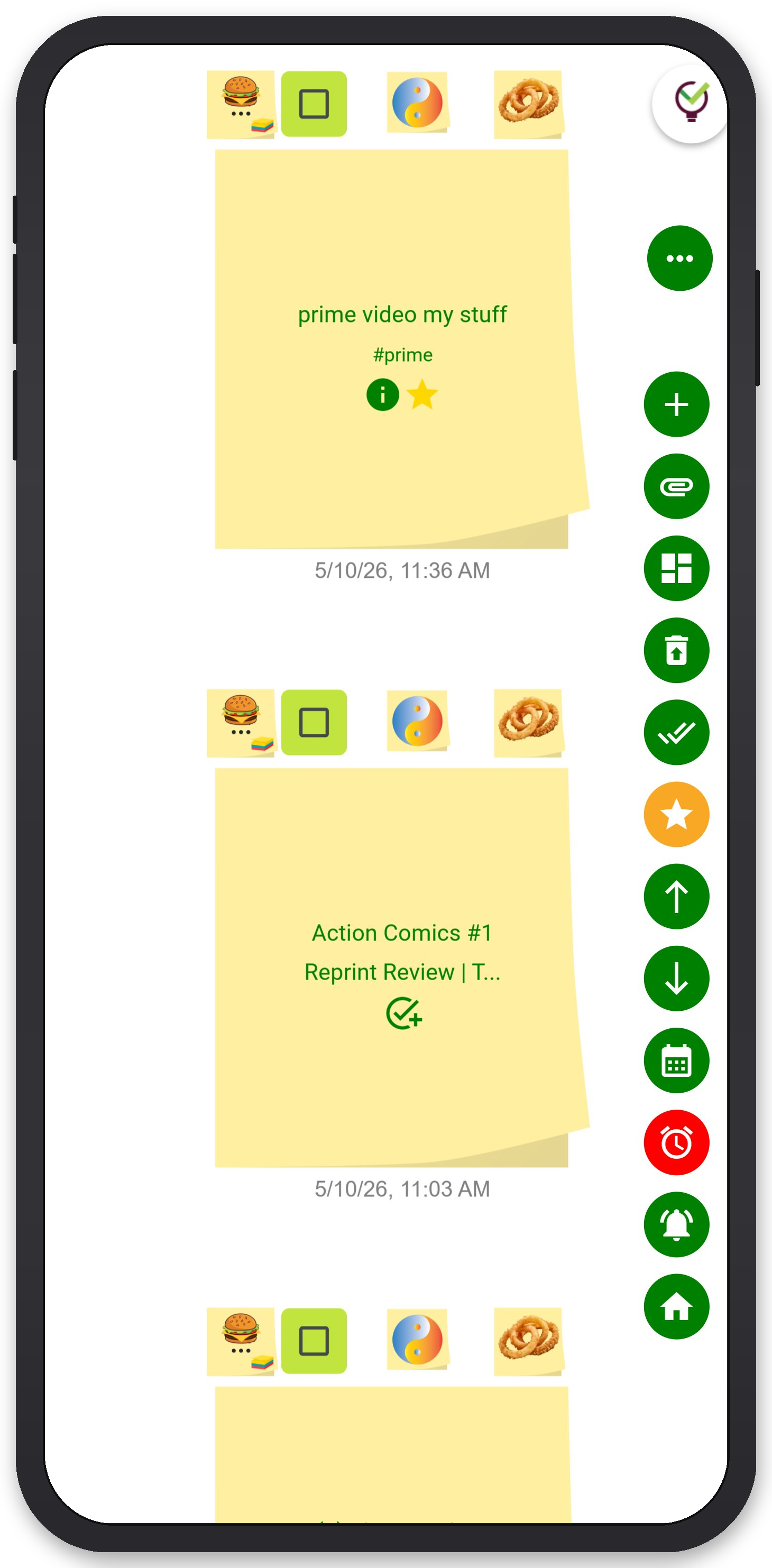
Opening TaskLoco puts you in front of a wall of notes. Not a list inside a folder inside a project. A wall. Every open note is immediately visible, which means every open action is immediately visible. The psychological weight of that visibility is the engine of the action habit — you can't scroll past your tasks the way you scroll past a list item at the bottom of a nested view.
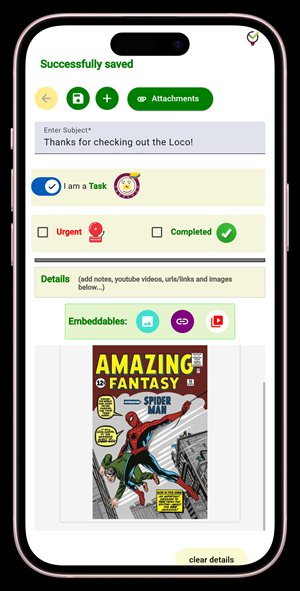
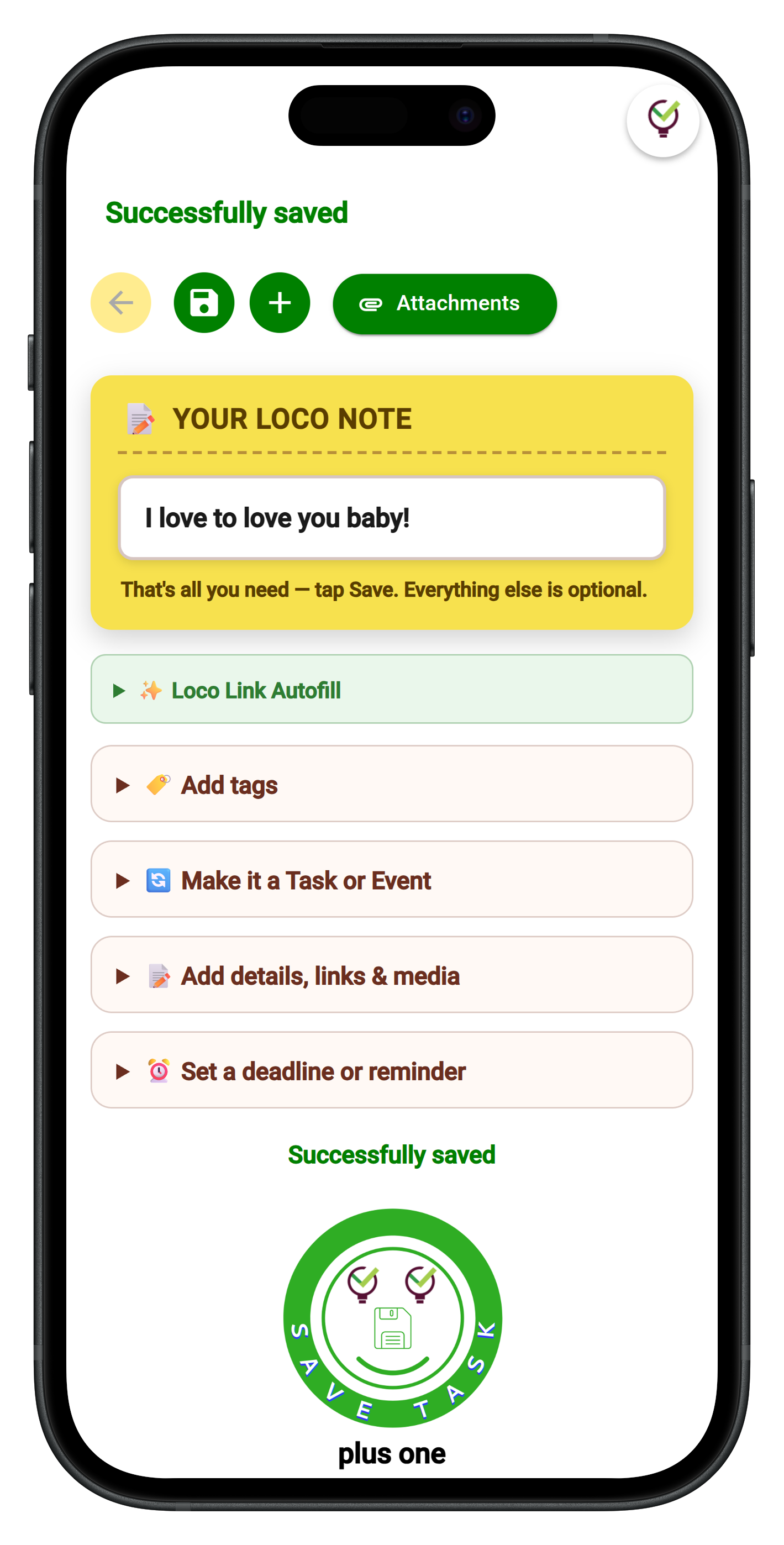
Capturing a new note takes seconds. There is no mandatory structure, no required fields, no template to fill out. The thought goes in. The note goes on the wall. You move. For teams, shared notes work the way emails work — a recipient can clone the note and make it their own. There are no permissions to manage, no access levels to configure. The shared note becomes your note, and the action is yours to own.
When you need a nudge to act, reminders in TaskLoco Premium deliver a push notification directly to your phone or computer, and that notification deep-links straight back to the note itself — so you land on the action, not on a dashboard you have to navigate. Optional email notifications and an SMS add-on are also available for people who want additional channels. The point is that the reminder returns you to the work, not to an interface.
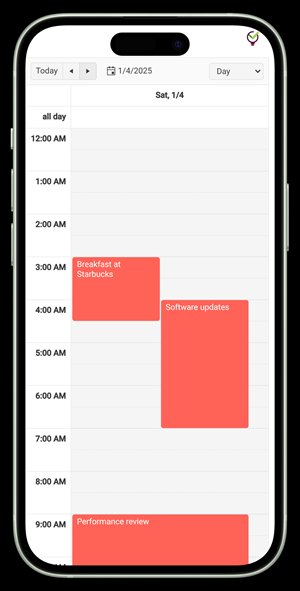
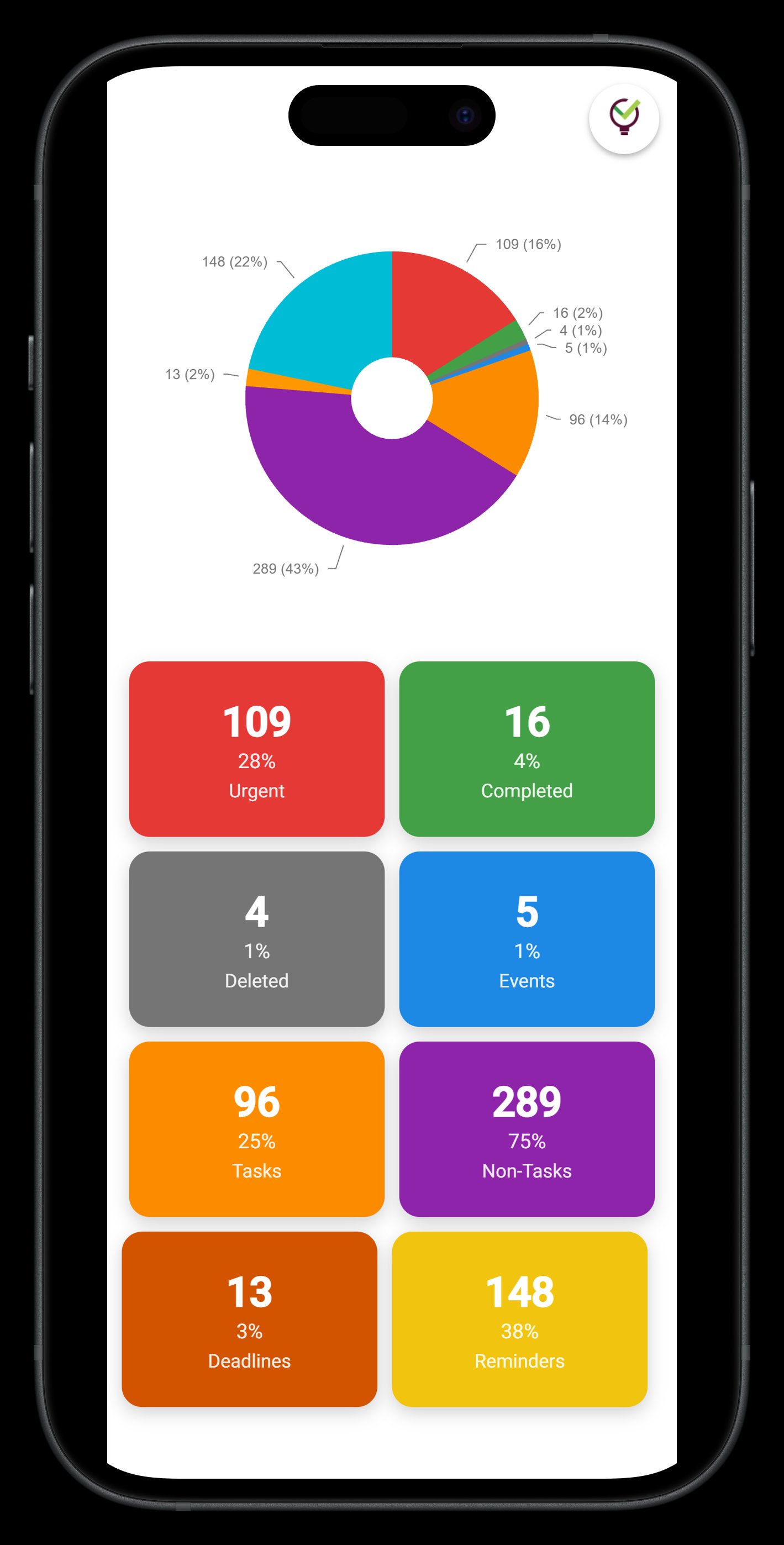
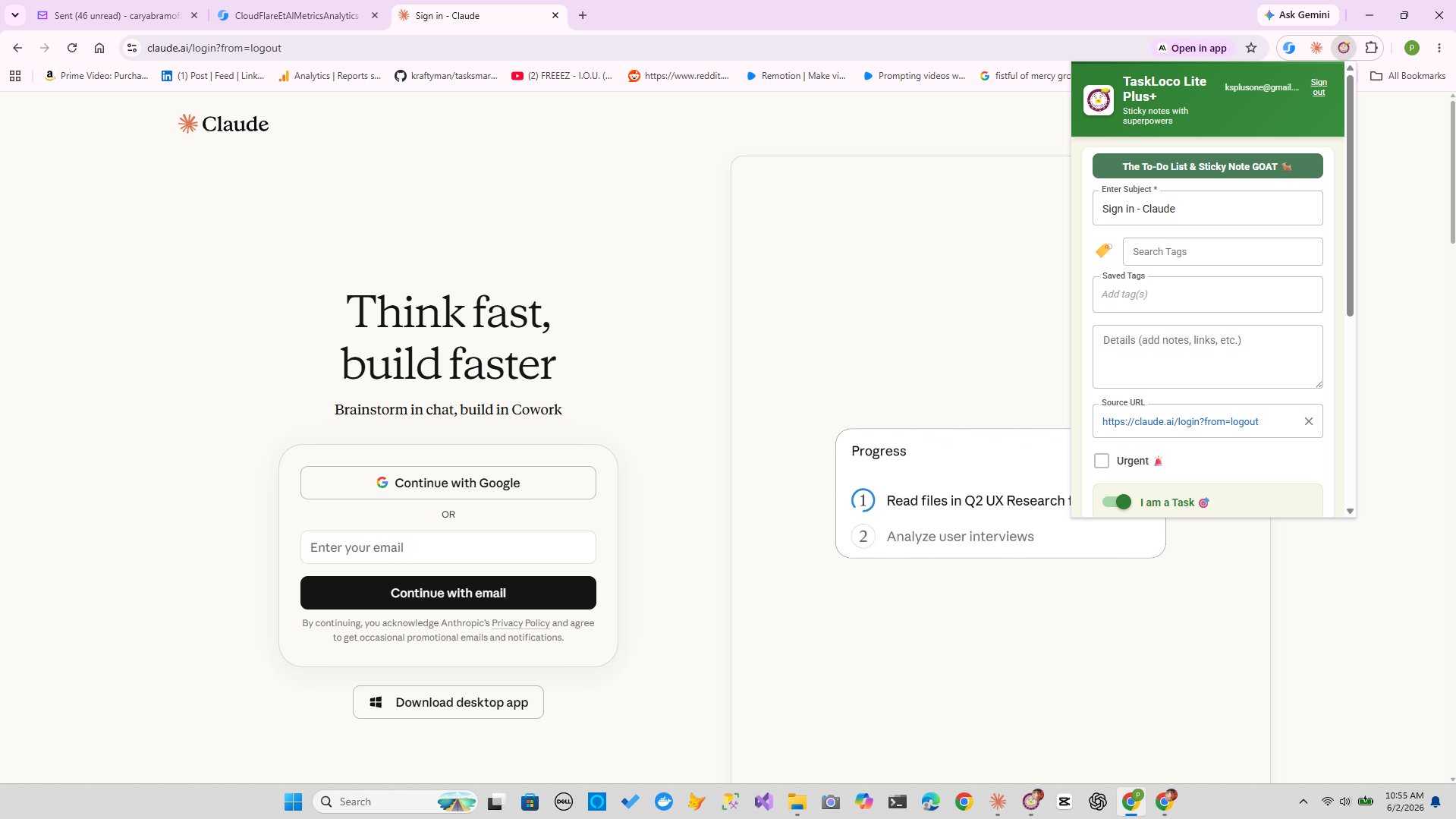
The Chrome extension closes the last gap in the capture loop. Any webpage — an article, a reference, a product page — can be saved as a note in one click. The action habit depends on zero-friction capture, and a one-click browser extension is as close to zero as software gets. TaskLoco Lite Plus+ includes the extension for free, and Premium members get it alongside unlimited notes, the full calendar view, file attachments up to 10GB, and the complete reminder system.
Building the Habit: A Practical Framework That Actually Works
Knowing what the action habit is doesn't make you better at it. The habit forms through repetition of a specific behavioral sequence, not through understanding the concept. Here is a concrete sequence that works, structured around the three criteria that matter — low friction, high visibility, and fast feedback.
Step 1 — Always capture immediately. When a task, idea, or commitment arises, it gets a note right then. Not in five minutes. Not when you get to your desk. Now. On mobile, TaskLoco's Lite app stores up to 20 notes on your device with no sign-in required — it exists specifically for the kind of frictionless capture that the action habit demands. Premium users on the web app can add a note in seconds from any browser or through the Chrome extension.
Step 2 — Write the next physical action, not the project. The note doesn't say "Website redesign." It says "Email Sarah about the homepage brief." The specificity is what makes acting automatic. Vague notes produce vague action, which means no action. The sticky note format actually enforces this discipline — there isn't room for a project outline. There's room for a next step.
Step 3 — Use the wall, not the list. Keep your active notes visible on the TaskLoco wall view. Do not collapse them, do not archive them prematurely, do not sort them into nested folders. Let the open loops be visible. The slight discomfort of seeing unfinished work is not a bug — it is the mechanism that drives action.
Step 4 — Set one reminder per day that matters. Pick the single most important note and set a push notification reminder for a specific time. When it fires, the deep-link takes you directly to that note. You are not deciding what to work on — you are acting. This is the difference between a reminder as a scheduling tool and a reminder as a behavioral intervention.
Step 5 — Archive visibly. When a note is done, archive it deliberately. Don't just delete it silently. The visual act of moving something out of the active wall is the feedback loop that reinforces the habit. Your brain registers: action taken, loop closed, done. Over time, those small completions accumulate into something that feels a lot like momentum — because it is.
TaskLoco Premium is regularly $9.99/month per person. Right now, charter members can lock in 50% off the regular price — forever. That means $4.99/month per person today. And if our price ever goes up, you still pay half. Always.
Code CHARTER50 auto-applies at checkout. First 500 spots only — once they're gone, this offer is gone permanently. Act fast while spots last.
Every Premium subscription includes unlimited notes, 10GB file storage, reminders, calendar, and team sharing. Each team member requires a separate subscription. 7-day free trial — no charge until day 8. Cancel anytime.
Free Options: TaskLoco
TaskLoco Lite
- Native iPhone & Android app
- Completely anonymous — no sign-in
- Data stays on your device
- Up to 20 notes
- Free forever
TaskLoco Lite Plus+
- Web app + Chrome extension
- Sign in with Google
- Wall syncs across all devices
- Up to 30 notes
- Free forever
Lock In 50% Off — Forever
7-day free trial. No charge until day 8. CHARTER50 auto-applies at checkout.
🔒 Lock In My Charter SpotSee TaskLoco in Action
Frequently Asked Questions
What is the action habit and why does it matter?
The action habit is the practice of converting thoughts and intentions into concrete next steps immediately, rather than deferring them to a later planning session. It matters because the distance between intention and action is where most productivity systems fail. The smaller that gap, and the more automatic the conversion, the more actually gets done. Research on implementation intentions shows that people who default to specific, immediate actions follow through at dramatically higher rates than those who rely on general intentions alone.
How is the action habit different from just being busy?
Being busy means filling time with activity. The action habit means moving forward on things that matter. The distinction is direction — action habit practitioners are not just doing more, they are specifically doing the next right thing on their most important priorities. The habit includes the discipline of capturing the right actions, not just any actions. A to-do list full of busywork is not the action habit. A sticky note wall that forces you to confront your real next steps is.
What kind of tool best supports building the action habit?
Three things matter most: low capture friction, high visibility, and clear feedback when something is done. A tool that requires multiple steps to add a note, buries tasks in nested menus, or offers no visual sense of completion will undermine the habit. Sticky-note-style tools work well because capture is fast, the wall keeps everything visible, and archiving a note provides an immediate sense of closure. TaskLoco is designed around exactly these principles — fast capture, a visual wall, push notification reminders that deep-link back to the note, and a Chrome extension for one-click webpage capture.
How do reminders help build the action habit?
Reminders are most useful when they return you directly to the work rather than to a generic dashboard. TaskLoco Premium reminders are delivered as push notifications to your phone and computer, and each notification deep-links straight back to the original note. That means when the reminder fires, you are immediately looking at the action — not navigating to find it. Optional email and SMS notifications are also available for additional channels. The result is that the reminder becomes a behavioral trigger, not just a scheduling alert.
Can I start building the action habit without paying for anything?
Yes. TaskLoco Lite is a completely free native iPhone and Android app — no sign-in, no account, completely anonymous — that stores up to 20 notes on your device. It is designed for fast, frictionless capture, which is the foundation of the action habit. TaskLoco Lite Plus+ is also free: it requires a Google sign-in, syncs up to 30 notes across all your devices, and includes the Chrome extension for one-click webpage capture. Neither free tier includes reminders, file attachments, or team sharing — those are Premium features — but both give you everything you need to start the capture and visibility habits immediately.
How does TaskLoco Premium support the action habit for teams?
TaskLoco Premium includes full team sharing that works the way email does — you share a note, the recipient can clone it and make it their own, with no permissions or access levels to manage. This keeps the low-friction ethos of the action habit intact for collaborative work. Shared notes stay visible on each person's wall, reminders fire as push notifications to each individual, and the calendar view shows what's coming across all your notes. $9.99/month per person (currently $4.99/month per person for first 500 charter members with code CHARTER50)
Is the action habit the same as GTD (Getting Things Done)?
They overlap but are not identical. GTD is a structured system with specific phases — capture, clarify, organize, reflect, engage. The action habit is narrower and more behavioral: it is specifically the reflexive conversion of thoughts into immediate next steps. GTD practitioners often develop the action habit as a byproduct of the system. But you don't need to implement all of GTD to build the action habit — you just need low-friction capture, high visibility, and a bias toward doing the next physical action rather than planning it. A sticky note wall covers most of that without the full GTD infrastructure.
Born in Brooklyn. Powered by AWS. Your data stays yours.
TaskLoco is available on iPhone, Android, Chrome, and every web browser.