Most people don't fail their day because they lacked ambition. They fail it because their planner was a flat list of 22 items with no structure, no time awareness, and no honest sense of what was actually going to happen. A structured daily planner fixes that — it forces a realistic shape onto your day before the day starts shaping you.
This guide covers what a structured daily planner actually is, the criteria that separate useful ones from beautiful ones that go unused, and how TaskLoco's note-based system gives you structure without making planning feel like a second job.
What to Look for in a Structured Daily Planner
A structured daily planner is any system — digital or paper — that organizes your day into intentional blocks, priorities, or categories rather than a raw list. The structure is the point: it forces you to decide, before the day begins, what matters and roughly when it happens.
Not all planners that claim to be structured actually are. Here are the three criteria that actually separate effective ones from the ones that get abandoned by Wednesday:
- Time-awareness: A real structured planner acknowledges that a day has finite hours. If your planner lets you add unlimited tasks without any mechanism for thinking about time, it's a list with a logo. Look for time-blocking, priority tiers, or at least a morning / afternoon / evening split that forces triage.
- Capture speed: If adding a task takes more than five seconds, you'll avoid the planner the moment your day accelerates. The best structured planners make capture frictionless — one tap, one click, or one keyboard shortcut — so the system stays current rather than becoming a historical artifact you update at 9 PM.
- Visibility of the full day: Structure means nothing if you can't see it. A planner that buries tasks inside nested folders or requires multiple taps to review your day defeats the purpose. You need a single-screen view of what's happening so your brain can hold the shape of the day without effort.
Secondary considerations worth evaluating: Does it carry unfinished tasks forward automatically? Does it support notes alongside tasks so context travels with the to-do? Does it work across the devices you actually use? These matter less than the three above, but they separate a planner that works for a week from one that works for a year.
Why Sticky Notes Are the Original Structured Planner
Before apps, before bullet journals, there were sticky notes on a wall. And they worked — not despite their simplicity, but because of it. A sticky note forces brevity. You can't write a novel on a Post-it, which means you have to decide what actually matters. That constraint is structural by nature.
The problem with physical sticky notes is obvious: they fall off walls, they don't sync to your phone, and you can't attach a PDF to one. But the underlying idea — a discrete, visible, repositionable unit of information — is exactly the right mental model for daily planning. TaskLoco was built around that model and then added everything physical sticky notes were missing.
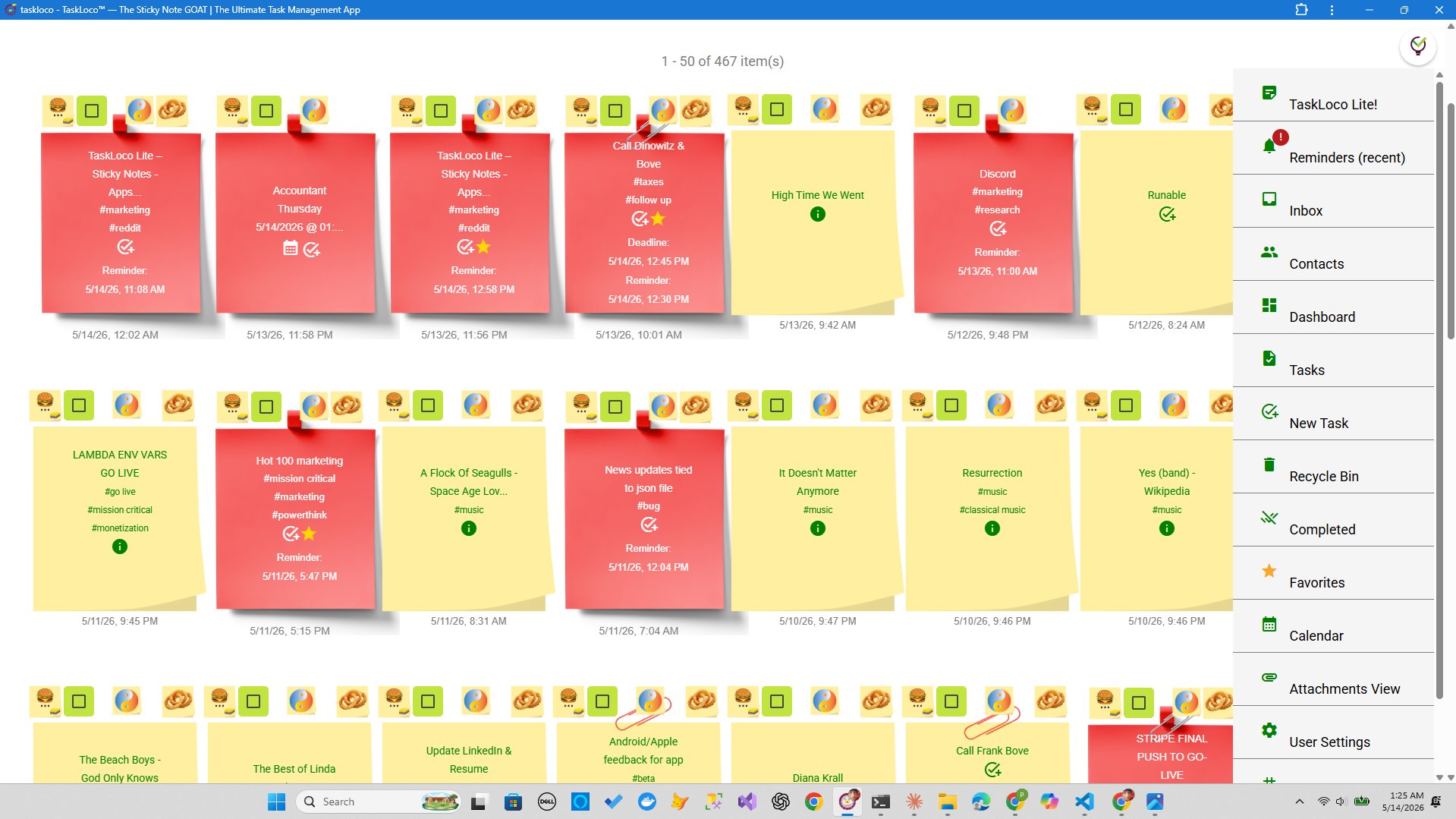
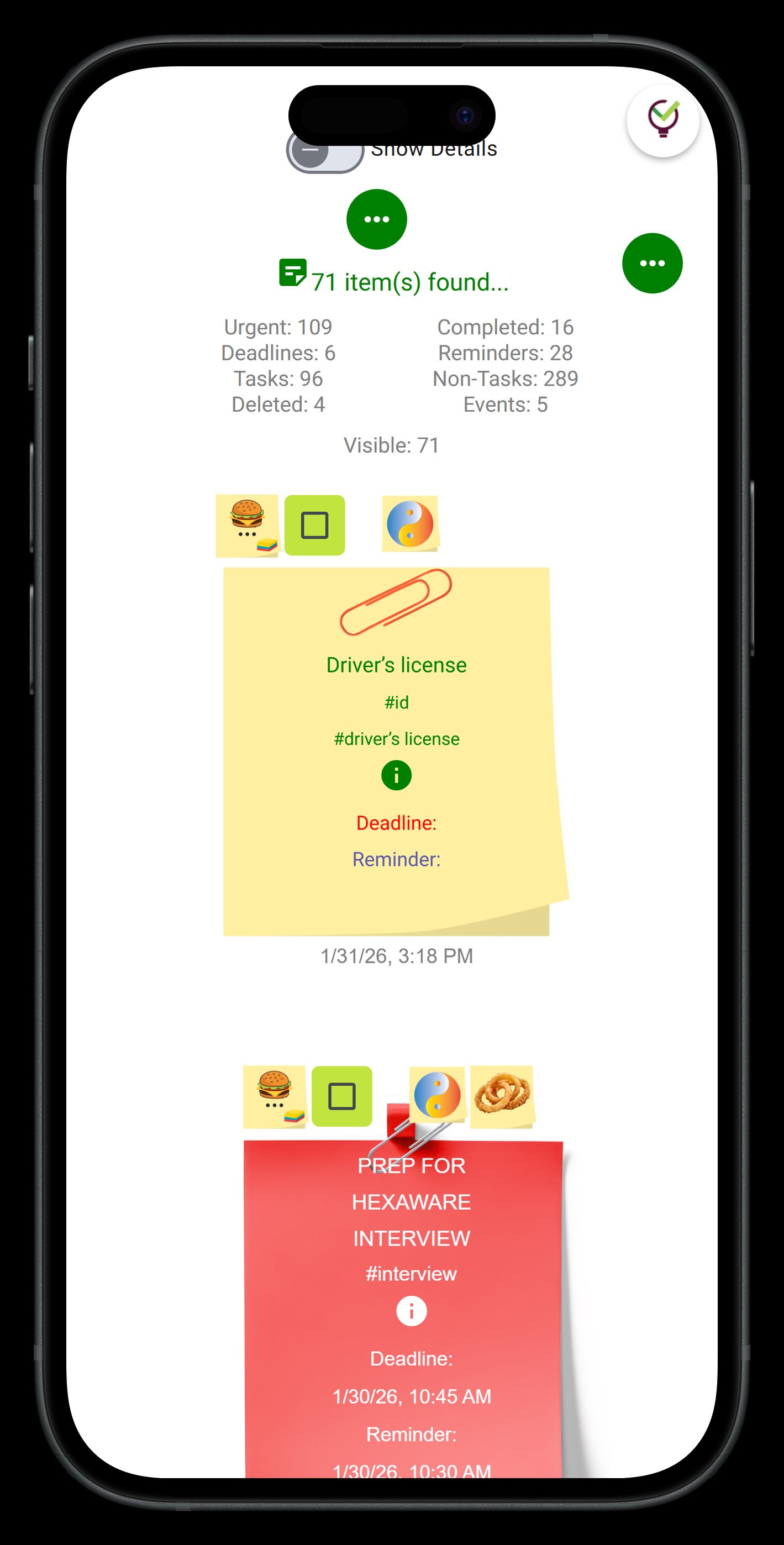
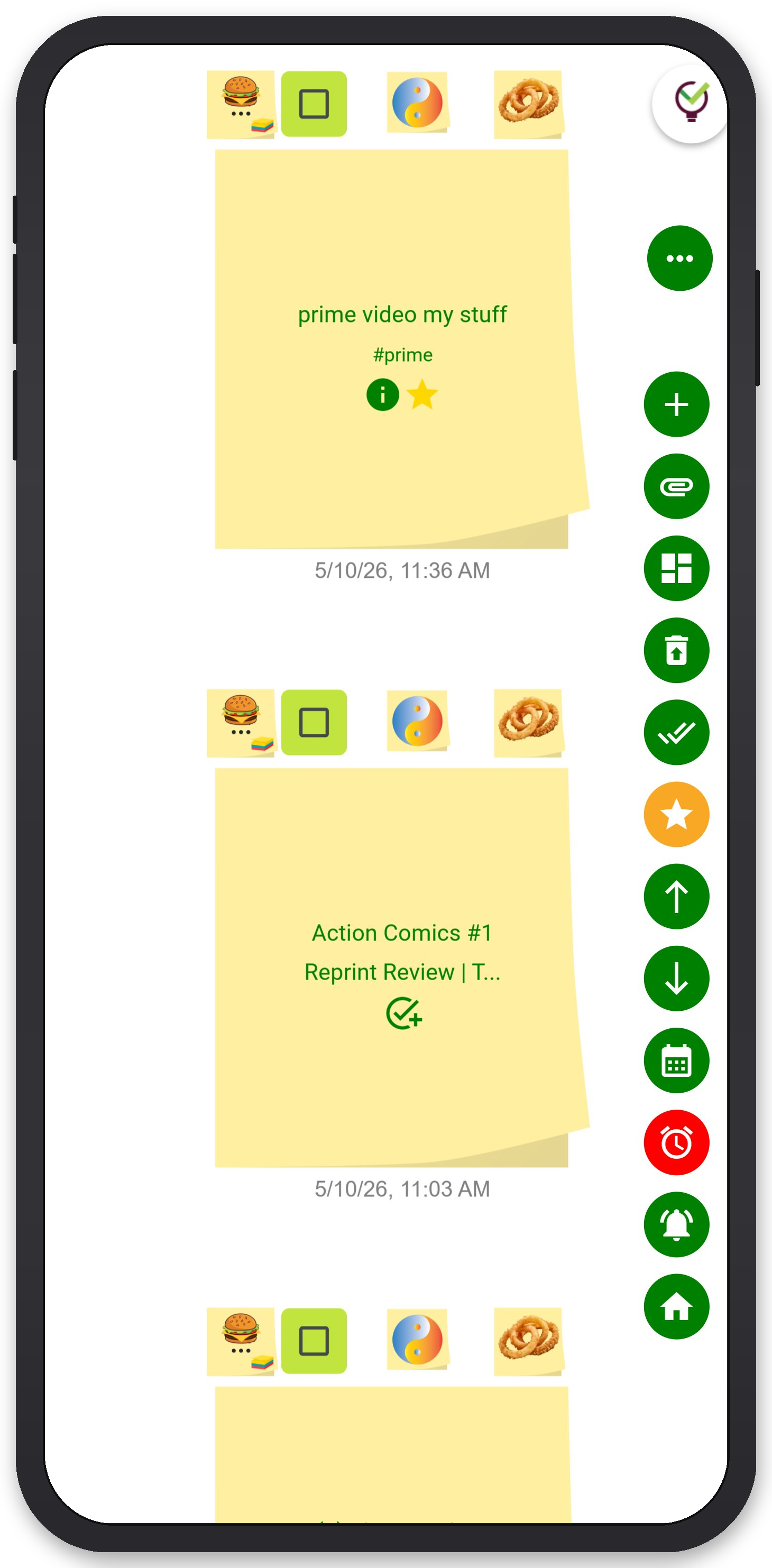
In TaskLoco, each note is a card. You can arrange cards on a visual wall — your dashboard — the way you'd arrange sticky notes on a whiteboard. Morning priorities on the left, afternoon in the middle, evening on the right, or whatever spatial logic matches how your brain works. Nothing is hidden inside a project tree. The whole day is on the wall.
The key difference from a traditional to-do list app: in TaskLoco, the note is the task. You don't create a project, then a section, then a task, then a subtask. You write a note. If you need more detail, you expand it. If you need a reminder, you set one and it arrives as a push notification that deep-links straight back to that note. The structure is spatial and visual, not hierarchical and buried.
Building a Structured Day with TaskLoco: A Practical Framework
Structure doesn't mean rigidity. It means intention. Here's how to use TaskLoco to give your day a real shape without turning planning into a project of its own.
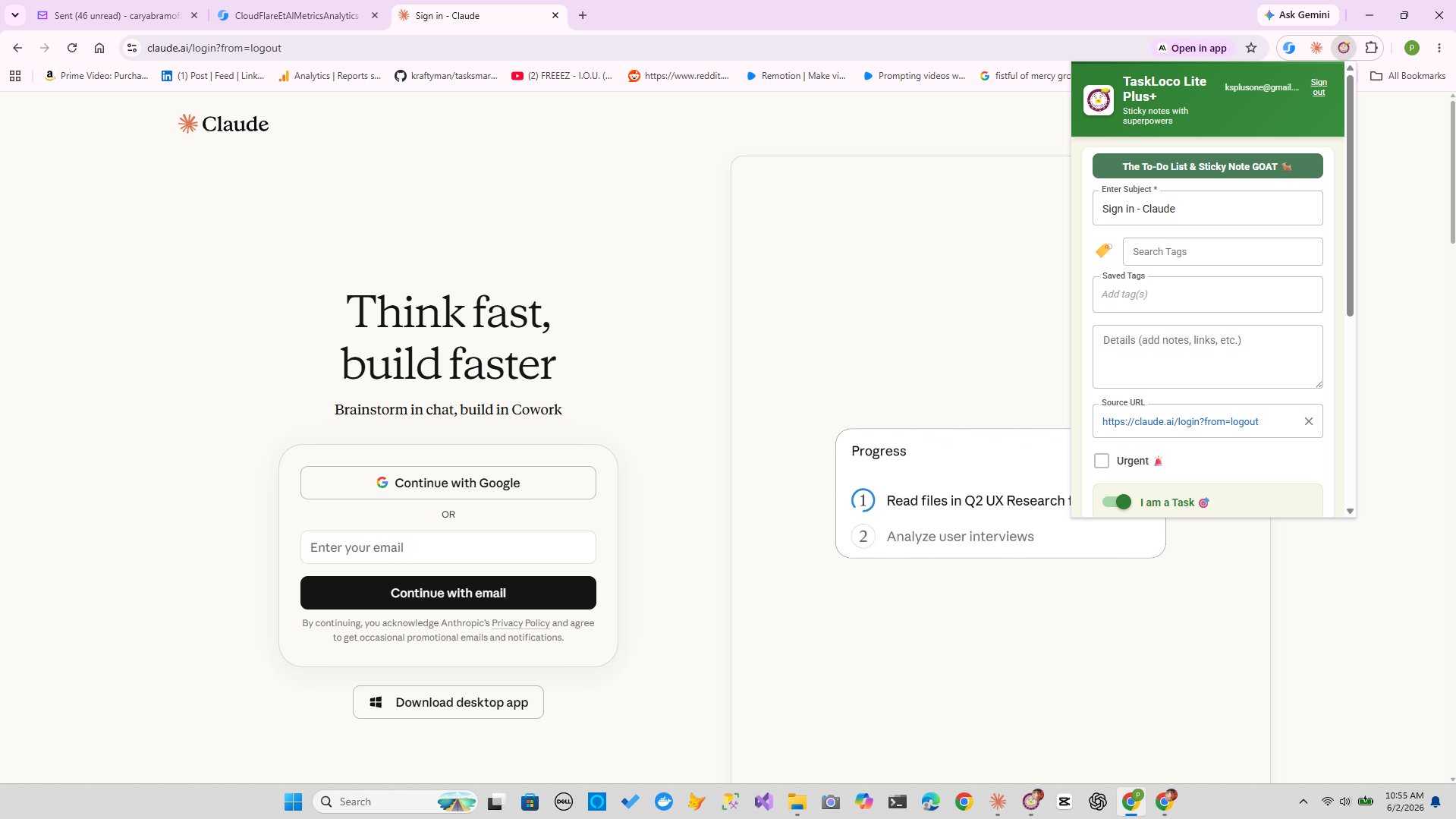
Step 1 — The night-before dump. At the end of each day, spend five minutes creating notes for everything you need to do tomorrow. Don't organize yet. Just capture. TaskLoco's Chrome extension lets you clip articles, tasks from emails, or any webpage directly into a note with one click — so nothing gets lost between tabs.
Step 2 — Prioritize on the wall. The next morning, open your wall view and drag your notes into a rough order of priority. Put the two or three things that absolutely must happen in a prominent position. The rest are secondary. Seeing them spatially — not in a numbered list — makes triage feel natural rather than stressful.
Step 3 — Set reminders on the critical notes. For anything with a real deadline or a time you need to start, add a reminder. It arrives as a push notification on your phone and computer and taps directly into the note — no hunting through a list to remember what the reminder was for. Optional email and SMS channels are available if you want backup.
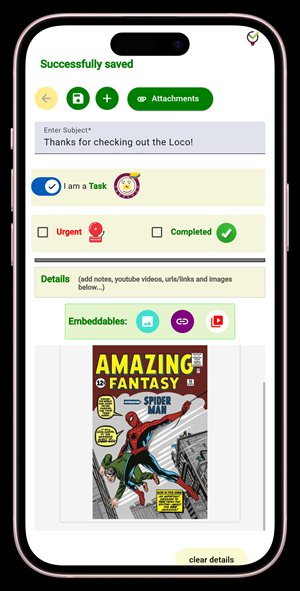
Step 4 — Attach context where it matters. If a task requires a document, a photo, or a reference file, attach it directly to the note. TaskLoco Premium includes 10GB of file storage, so the briefing doc, the contract draft, and the client photo all travel with the task that needs them.
Step 5 — Share with your team. If a note involves someone else, share it. TaskLoco's team sharing works like email — the recipient gets the note and can clone it as their own, no permissions setup required. Your structure and theirs stay independent but connected.
When to Use TaskLoco — and When Another Tool Makes More Sense
TaskLoco is the right structured daily planner for most people: anyone managing their own work, running a team that needs shared tasks and reminders, or anyone who has found traditional to-do apps too bureaucratic to actually use every day. The note-card model fits personal daily planning, content calendars, client work, research, and meeting prep equally well.
TaskLoco Premium adds the full structure toolkit: unlimited notes, 10GB file attachments, calendar view, team sharing, and push notification reminders. If you're building your own habit system or need a flexible daily framework that doesn't force you into someone else's methodology, this is it. The free tiers — Lite on iPhone and Android for anonymous, no-sign-in use, and Lite Plus+ as a web app with Google sign-in and cross-device sync — let you test the concept before committing.
There are cases where a different tool fits better. If your work centers on multi-week project timelines with task dependencies and Gantt charts, a dedicated project management tool is a better primary system — though many people use TaskLoco alongside it for personal daily planning. If your organization requires enterprise SSO, compliance certifications, or deep API integrations with existing infrastructure, TaskLoco doesn't cover those needs today.
But for the core job — structuring a day so you actually know what you're doing and can act without friction — TaskLoco does it better than tools three times as complicated and, often, several times more expensive per person.
TaskLoco Premium is regularly $9.99/month per person. Right now, charter members can lock in 50% off the regular price — forever. That means $4.99/month per person today. And if our price ever goes up, you still pay half. Always.
Code CHARTER50 auto-applies at checkout. First 500 spots only — once they're gone, this offer is gone permanently. Act fast while spots last.
Every Premium subscription includes unlimited notes, 10GB file storage, reminders, calendar, and team sharing. Each team member requires a separate subscription. 7-day free trial — no charge until day 8. Cancel anytime.
Free Options: TaskLoco
TaskLoco Lite
- Native iPhone & Android app
- Completely anonymous — no sign-in
- Data stays on your device
- Up to 20 notes
- Free forever
TaskLoco Lite Plus+
- Web app + Chrome extension
- Sign in with Google
- Wall syncs across all devices
- Up to 30 notes
- Free forever
Lock In 50% Off — Forever
7-day free trial. No charge until day 8. CHARTER50 auto-applies at checkout.
🔒 Lock In My Charter SpotSee TaskLoco in Action
Frequently Asked Questions
What is a structured daily planner?
A structured daily planner is any system that organizes your day into intentional categories, priority tiers, or time blocks — rather than a flat list of tasks. The structure forces you to decide what matters and roughly when it will happen, before the day begins pulling you in every direction. It can be paper or digital; what makes it structured is that it imposes shape on your time.
What's the best digital structured daily planner?
The best digital structured daily planner is the one you actually open every morning. That means fast capture, a clear visual layout, and reminders that reach you without hunting. TaskLoco's sticky-note wall gives you a spatial, visual structure — drag notes into priority order, set push notification reminders that deep-link back to the note, and attach any files the task needs. Lite Plus+ (free, web app) lets you try it with up to 30 synced notes. TaskLoco Premium unlocks unlimited notes, file storage, calendar view, and team sharing. $9.99/month per person (currently $4.99/month per person for first 500 charter members with code CHARTER50)
How do I structure my daily planner to actually get things done?
Three habits make the difference: capture everything the night before so your morning starts with a full picture, prioritize ruthlessly — pick two or three things that must happen and treat the rest as bonus — and set reminders on anything with a real deadline. In TaskLoco, reminders arrive as push notifications that tap directly into the note they belong to, so there's no ambiguity about what the reminder was for. Five minutes the night before plus five minutes in the morning is all the overhead a good structure requires.
Is TaskLoco free to use as a daily planner?
Yes — TaskLoco has two free tiers. TaskLoco Lite is the native iPhone and Android app: completely anonymous, no sign-in required, stores up to 20 notes on your device. TaskLoco Lite Plus+ is the web app (plus Chrome extension): sign in with Google, up to 30 notes, synced across all your devices. Reminders, file attachments, unlimited notes, calendar view, and team sharing are TaskLoco Premium features. $9.99/month per person (currently $4.99/month per person for first 500 charter members with code CHARTER50)
Can I use TaskLoco as a team daily planner?
Yes. TaskLoco Premium includes full team sharing. Shared notes work like email — you send a note and the recipient can clone it as their own, with no permissions configuration required. Each team member manages their own structure independently, while shared notes keep everyone aligned. Push notification reminders ensure nothing slips through. Each team member requires their own Premium subscription.
Does TaskLoco have a calendar view for daily planning?
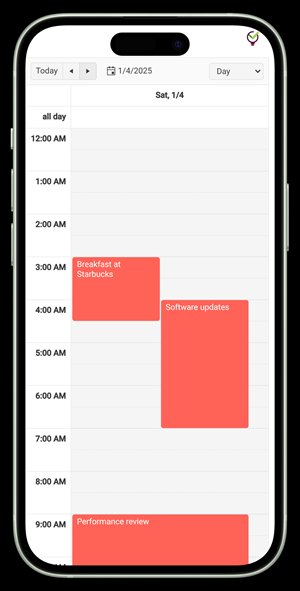
Yes — TaskLoco Premium includes a calendar view. You can see your notes and tasks laid out across days and weeks, giving your structure a time dimension beyond the wall view. Notes with reminders appear on the calendar so you can spot overloaded days and redistribute before the week starts. $9.99/month per person (currently $4.99/month per person for first 500 charter members with code CHARTER50)
What's the difference between TaskLoco Lite, Lite Plus+, and Premium for daily planning?
TaskLoco Lite (native iPhone and Android app) is best for anonymous, private capture — no account, no sync, up to 20 notes stored only on your device. TaskLoco Lite Plus+ (web app + Chrome extension) syncs up to 30 notes across all your devices and adds one-click webpage capture. TaskLoco Premium is the full daily planning system: unlimited notes, 10GB file storage, reminders delivered as push notifications, calendar view, and team sharing. $9.99/month per person (currently $4.99/month per person for first 500 charter members with code CHARTER50)
Born in Brooklyn. Powered by AWS. Your data stays yours.
TaskLoco is available on iPhone, Android, Chrome, and every web browser.