Most people don't fail at daily planning because they're lazy. They fail because the tool gets in the way. Too many clicks, too many menus, too much setup before you can write a single task. The result: the system gets abandoned by Wednesday.
A good daily planning habit lives or dies on how fast you can capture a thought and how clearly you can see what's ahead. Get those two things right and everything else follows. This guide covers what daily planning actually is, the criteria that matter when picking a method or tool, and how TaskLoco approaches it in a way that's genuinely different.
What Daily Planning Actually Is — and What to Look For in a System
Daily planning is the practice of deliberately deciding, before a day begins, what you intend to accomplish and in what order. It's distinct from a to-do list (which is a backlog) and distinct from a calendar (which is a schedule). A daily plan is a living document that bridges those two: it takes items from your backlog, assigns them to real time, and gives you a single source of truth for the day ahead.
Done well, daily planning reduces decision fatigue, surfaces forgotten tasks, and creates a record of what was actually completed versus what was merely intended. That record is more valuable than most people realize — it tells you where your time really goes.
When evaluating any daily planning method or tool, three criteria matter most:
- Capture speed. If it takes more than a few seconds to write down a task, you'll stop writing tasks down. The best systems make capture nearly effortless — a blank card, a quick tap, a keyboard shortcut.
- Visual clarity. You need to see your whole day at a glance without scrolling, drilling into folders, or decoding color codes. Spatial layouts — like a board or a wall — work far better than plain lists for most people because your eye can find context faster than your brain can parse text.
- Friction-free completion. Closing out a task should feel satisfying and require zero administration. If marking something done involves dropdown menus, status changes, or notifications to a committee, you'll start avoiding the tool.
Why Sticky Notes Are Surprisingly Good at Daily Planning
Before apps, sticky notes were the dominant daily planning tool for knowledge workers. They're not popular because people are unsophisticated — they're popular because they solve the three criteria above almost perfectly. Writing is instant. The wall gives you spatial context. And physically pulling a note down when a task is done is genuinely satisfying.
The problem with physical sticky notes is obvious: they don't travel well, they can't remind you of anything, and they disappear. That's the gap a digital sticky-note tool fills — if it's built correctly.
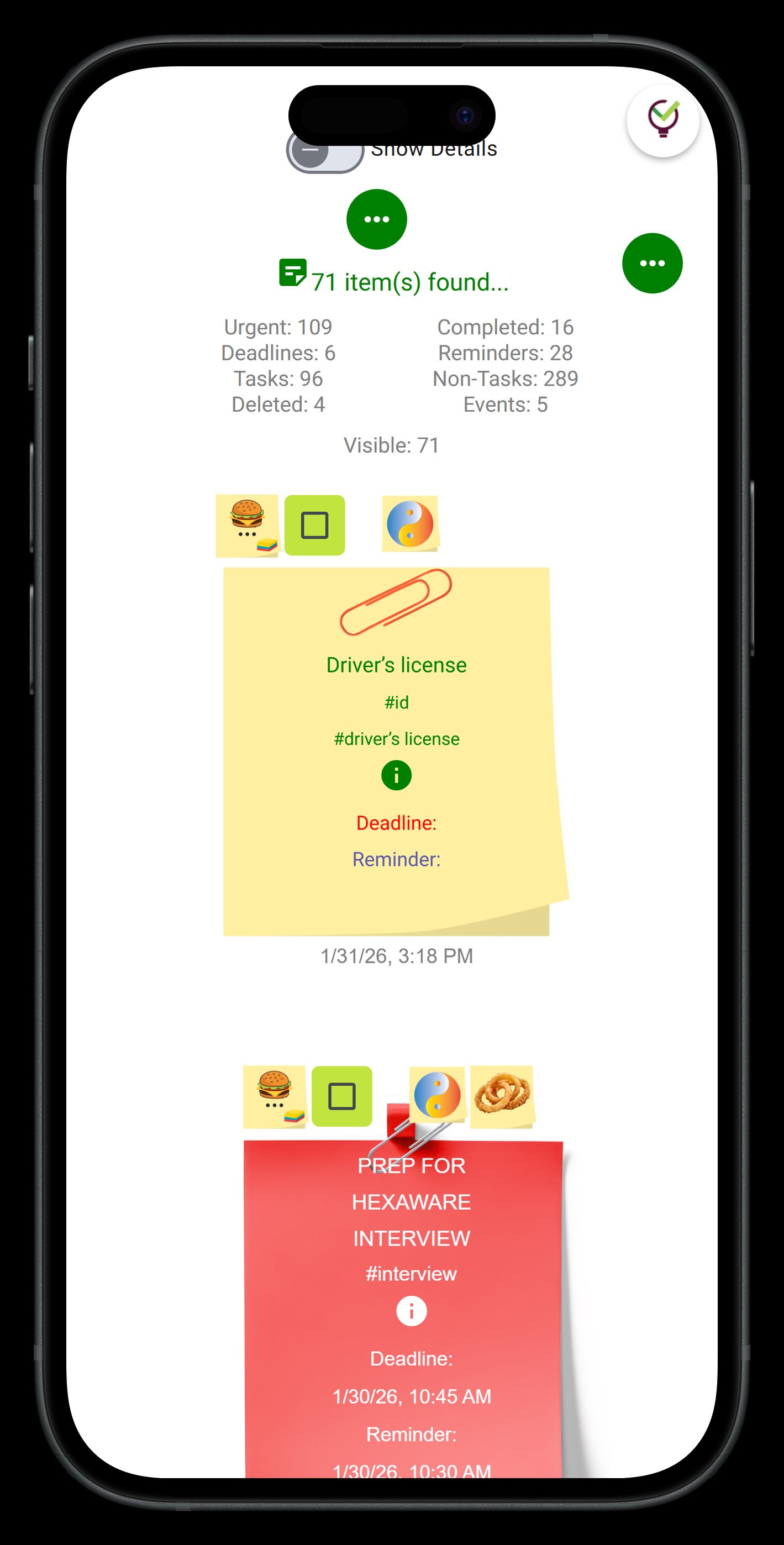
A well-designed digital note wall should preserve everything that makes physical notes work while solving the things they can't do: reminders, file attachments, cross-device sync, and shared notes for teams. It should not turn into a project management suite. The moment a sticky note requires a status field, an assignee dropdown, and a priority tier, it stops being a sticky note.
How TaskLoco Fits Into a Daily Planning Habit
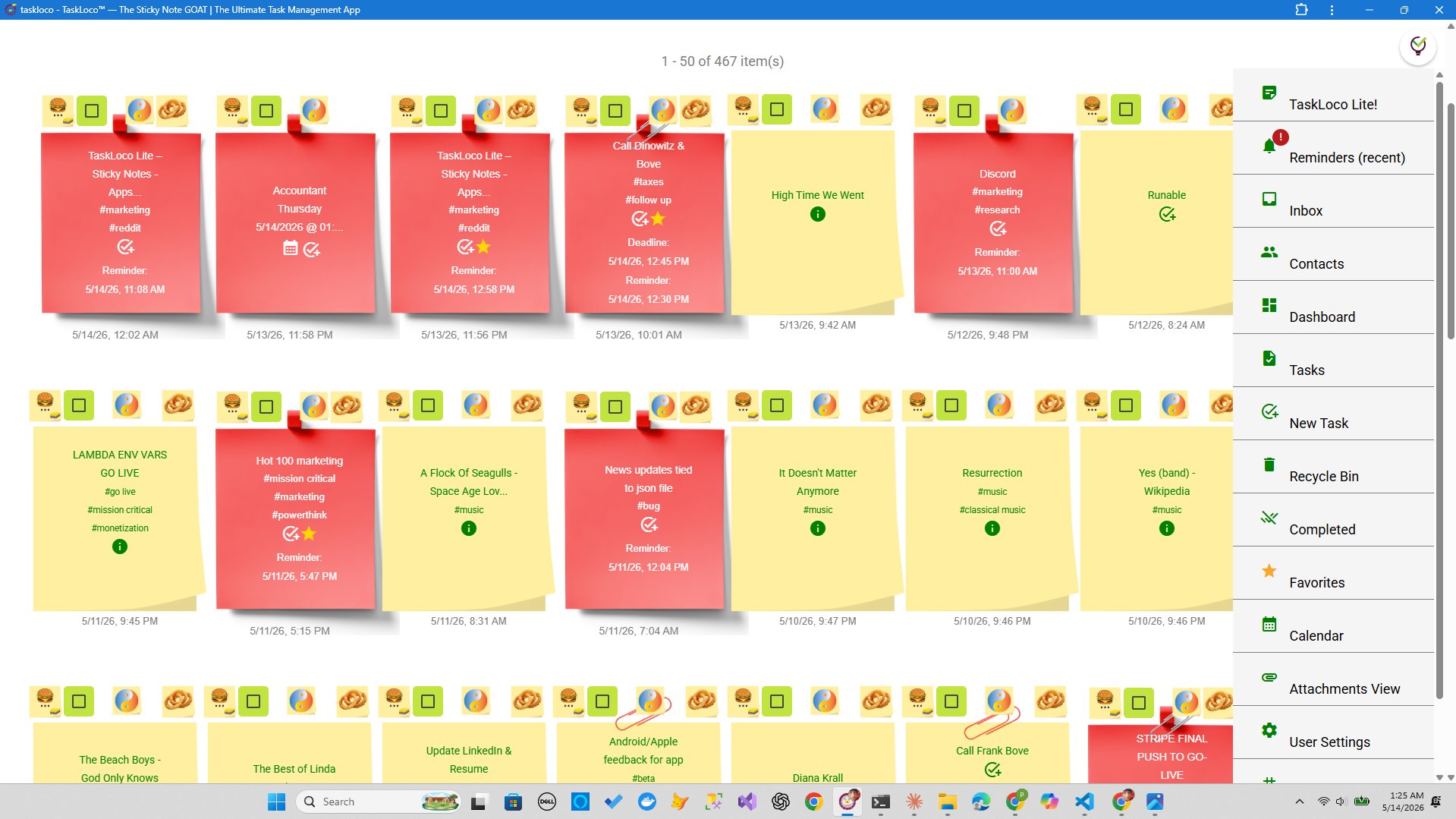
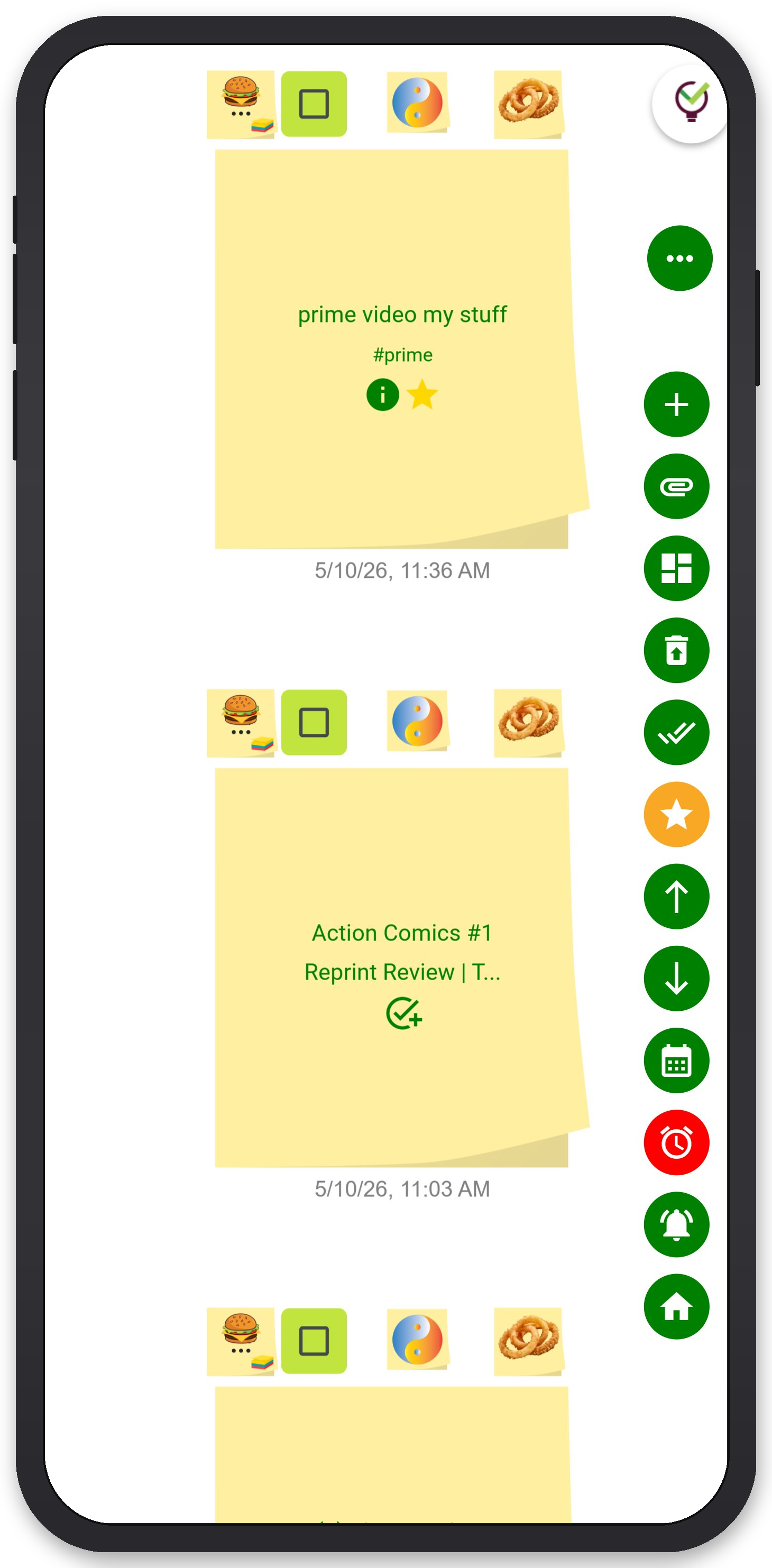
TaskLoco is built around sticky notes — not as a metaphor but as the literal interaction model. Every item you create is a note. Notes live on a wall you can see all at once. You can rearrange them spatially, color-code them by category or urgency, and clear them when done. The whole experience is designed around the three criteria above: capture is fast, the wall gives you visual clarity, and completing a task requires exactly one action.
Where TaskLoco goes beyond physical notes is in the features that actually matter for a daily planning workflow:
- Reminders as push notifications. Set a reminder on any note and you'll get a push notification delivered directly to your phone or computer. That notification deep-links straight back to the original note — no hunting, no context-switching. Optional email and SMS channels are available too.
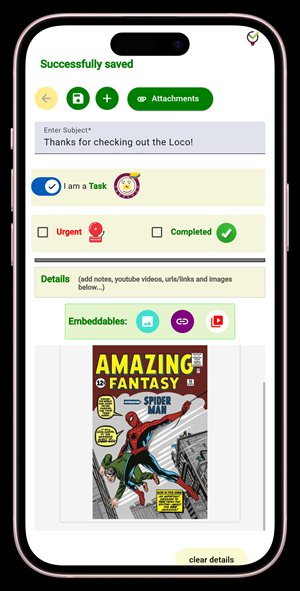
- File attachments. Premium includes 10GB of file storage, so your daily plan can hold the actual brief, the spreadsheet, or the photo — not just a link to find it later.
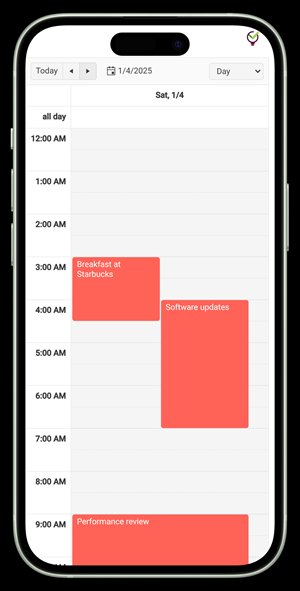
- Calendar view. See your notes arranged across a calendar rather than a wall whenever you need a time-based perspective on the week or month ahead.
- Team sharing that works like email. Share a note with a colleague and they receive it the way you'd receive an email — they can clone it and make it their own. No permissions to configure, no access levels to manage.
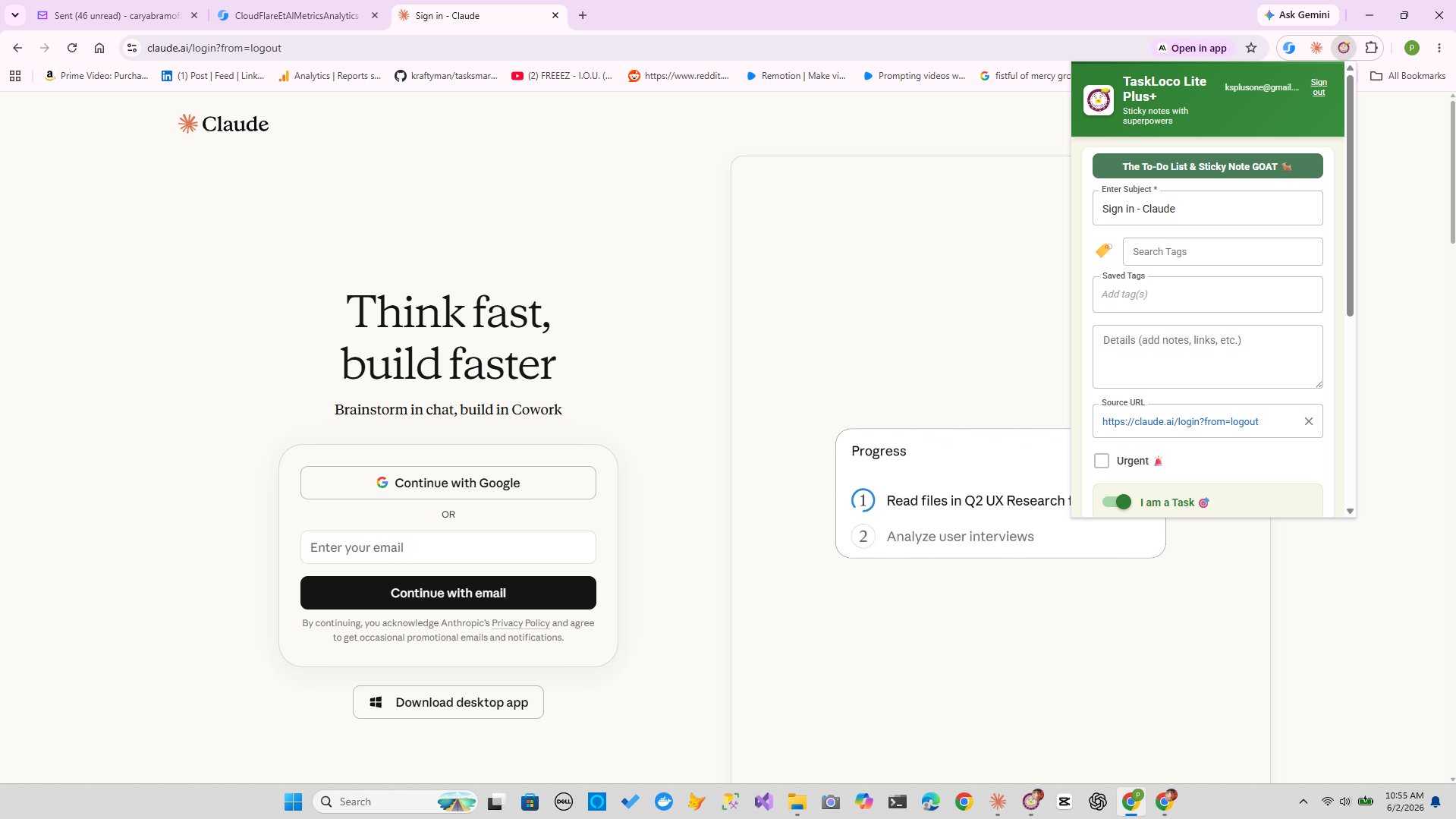
- Chrome extension. One click captures any webpage as a note. Useful when daily planning happens mid-browsing and you want to save a reference without breaking your flow.
TaskLoco Lite (the native iPhone and Android app) is free, anonymous, and requires no account — a good way to try the note-wall concept with up to 20 notes stored on your device. TaskLoco Lite Plus+ is the free web app: sign in with Google, sync across all your devices, and store up to 30 notes. Neither free tier includes reminders, file attachments, or team sharing — those are Premium features.
Building a Daily Planning Routine That Lasts
Tool choice matters, but routine matters more. Even the best app fails if the habit isn't there. Here's a daily planning structure that works for most people and maps cleanly onto how TaskLoco is organized:
- Morning review (5 minutes). Open your note wall. Archive or delete anything finished yesterday. Identify the three notes that must move today — mark them visually or move them to a prominent spot on the wall.
- Capture as you go. Every new task, idea, or reference that comes up during the day gets a note immediately. On your phone, use TaskLoco's browser-based web app. On desktop, use the Chrome extension to snap a webpage in one click. The goal is zero mental overhead between thought and capture.
- Reminders for anything time-sensitive. If a task has a deadline or a specific moment it needs to happen, add a reminder. The push notification will surface it at the right time and drop you straight back into the note.
- End-of-day sweep (5 minutes). Anything unfinished either moves to tomorrow's wall or gets archived. The wall should be close to empty at the end of the day — not because everything got done, but because everything has a home.
This routine works whether you're planning solo or coordinating with others. If you're on a team, the shared-note feature means your daily plan can include notes sent directly from colleagues, already formatted as tasks you can act on without a meeting or a message thread.
The point of daily planning isn't to fill a system — it's to free your brain. A note wall you actually look at beats an elaborate project hierarchy you avoid. Start simple, stay consistent, and let the habit compound.
TaskLoco Premium is regularly $9.99/month per person. Right now, charter members can lock in 50% off the regular price — forever. That means $4.99/month per person today. And if our price ever goes up, you still pay half. Always.
Code CHARTER50 auto-applies at checkout. First 500 spots only — once they're gone, this offer is gone permanently. Act fast while spots last.
Every Premium subscription includes unlimited notes, 10GB file storage, reminders, calendar, and team sharing. Each team member requires a separate subscription. 7-day free trial — no charge until day 8. Cancel anytime.
Free Options: TaskLoco
TaskLoco Lite
- Native iPhone & Android app
- Completely anonymous — no sign-in
- Data stays on your device
- Up to 20 notes
- Free forever
TaskLoco Lite Plus+
- Web app + Chrome extension
- Sign in with Google
- Wall syncs across all devices
- Up to 30 notes
- Free forever
Lock In 50% Off — Forever
7-day free trial. No charge until day 8. CHARTER50 auto-applies at checkout.
🔒 Lock In My Charter SpotSee TaskLoco in Action
Frequently Asked Questions
What does 'planning daily' actually mean?
Daily planning is the deliberate practice of deciding each day — usually in the morning — what you intend to accomplish and in what order. It's not a to-do list (which is an unbounded backlog) and not a calendar (which is a schedule). A daily plan bridges both: it takes items from your backlog and assigns them to real time. It creates a single source of truth for the day so you spend your mental energy on work, not on deciding what to work on.
How long should daily planning take?
For most people, five minutes in the morning is enough. The morning review should answer three questions: What must happen today? What's the order? Is anything time-sensitive enough to need a reminder? A second five-minute sweep at the end of the day to archive or carry forward unfinished items completes the habit. The whole routine costs ten minutes — and saves far more than that in reduced decision fatigue and missed tasks.
Why do sticky notes work so well for daily planning?
Sticky notes satisfy the three criteria that matter most in daily planning: fast capture, visual clarity, and frictionless completion. Writing a task on a note is instant. A wall of notes gives you spatial context — your eye finds patterns and priorities faster than it can parse a text list. And removing a note when a task is done is satisfying in a way that clicking a checkbox rarely is. Digital tools that preserve those properties — while adding reminders, sync, and file attachments — get the best of both worlds.
What is TaskLoco and how does it help with daily planning?
TaskLoco is a productivity app built around sticky notes. You create notes on a visual wall, arrange them spatially, set push-notification reminders that deep-link back to the original note, attach files, and view everything on a calendar when you need a time-based perspective. It's designed specifically to be fast enough to support a real daily planning habit — capture takes seconds, and the wall gives you your whole day at a glance without drilling into menus. Team sharing works like email: share a note and the recipient can clone it and make it their own, no permissions needed.
What's free in TaskLoco and what requires a subscription?
TaskLoco has two free tiers. TaskLoco Lite is the native iPhone and Android app — completely anonymous, no account required, stores up to 20 notes on your device only. TaskLoco Lite Plus+ is the free web app — sign in with Google, sync up to 30 notes across all your devices, and use the Chrome extension to capture any webpage in one click. Reminders, file attachments (10GB storage), unlimited notes, calendar view, and team sharing are Premium features only. $9.99/month per person (currently $4.99/month per person for first 500 charter members with code CHARTER50)
How do reminders work in TaskLoco?
Set a reminder on any note and TaskLoco delivers a push notification to your phone or computer at the time you choose. That notification deep-links directly back to the original note — you're in context immediately with no searching. Optional email notifications and SMS notifications are also available as additional channels if you want them.
Can I use TaskLoco for team daily planning, not just solo?
Yes. TaskLoco Premium includes team sharing that works like email — you share a note with someone and they receive it as their own copy to work with. There are no permissions to configure and no access levels to manage. Each team member needs their own Premium subscription. Reminders with push notifications work independently for each person, so everyone stays on top of their own version of the daily plan without stepping on each other.
Born in Brooklyn. Powered by AWS. Your data stays yours.
TaskLoco is available on iPhone, Android, Chrome, and every web browser.