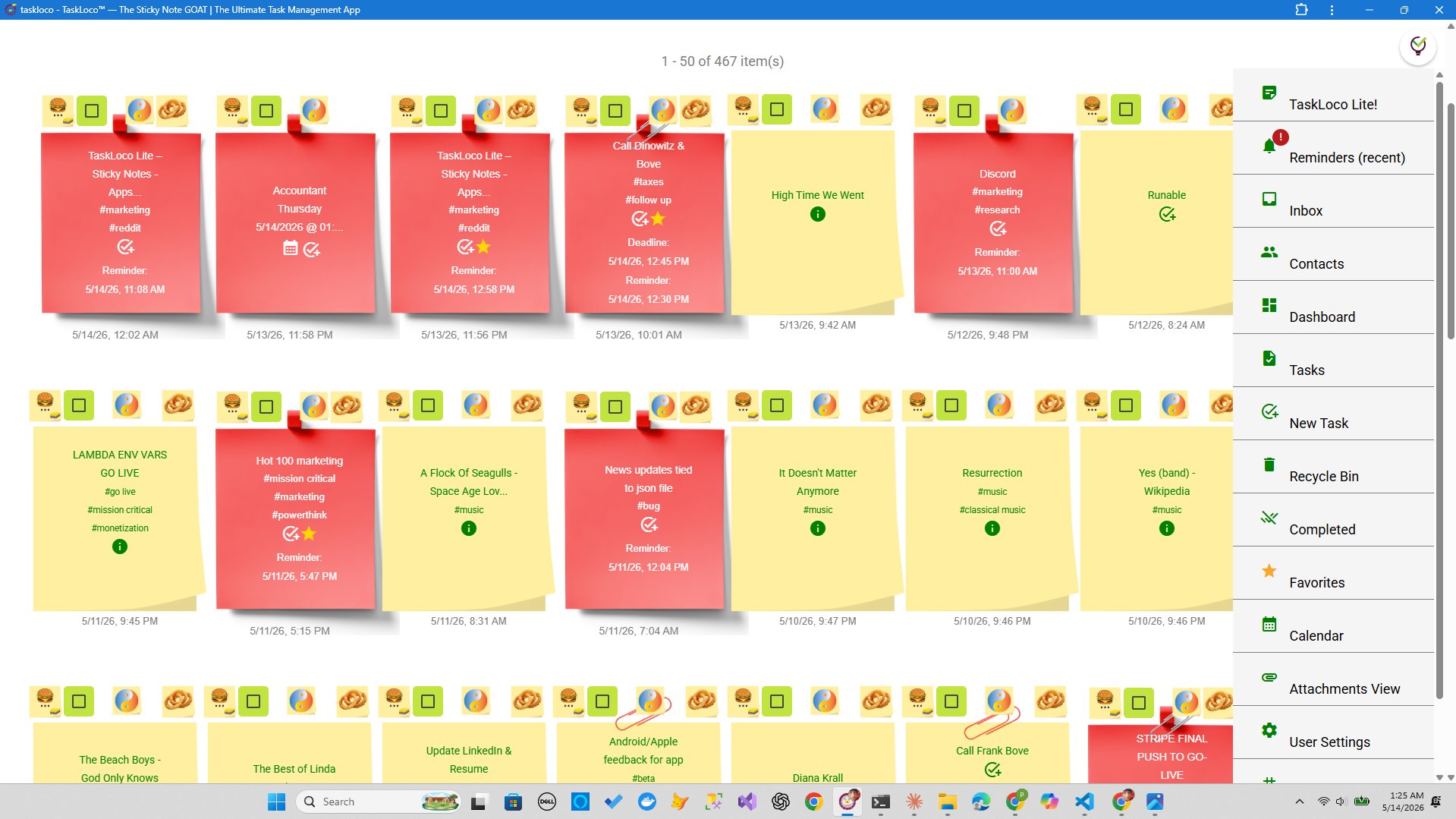
Somewhere around week three of the semester, the wheels quietly come off. Not because you forgot to study — but because you never saw the collision coming. The research paper, the group project kickoff, and the midterm all land in the same seven-day window, and your color-coded calendar gave you zero warning. A visual wall changes that. When every obligation lives as a card on a single surface, overlaps become obvious before they become crises.
This is not about being more organized in a productivity-influencer sense. It's about spatial awareness. Humans are wired to process position and proximity better than we process lists. A wall of sticky notes — physical or digital — lets your brain do pattern recognition that a bullet journal or a task app simply cannot trigger. The question is how to build one that actually holds up across a 16-week semester without falling apart in week four.
What Actually Makes a Semester Planning System Work
Before getting into any specific tool, it's worth being blunt about what a semester wall needs to do — and what routinely makes them collapse. Most students build something beautiful in August and abandon it by October. The system isn't the problem; the friction is.
A genuinely useful semester planning wall has three non-negotiable qualities. First, visual density without visual noise. You need to see eight to sixteen weeks at a glance, with enough detail on each card to know what the task actually is — not just a vague label. Second, low capture friction. If adding a new assignment to the wall takes more than ten seconds, you will stop doing it. The wall rots. Third, reminders that pull you back to the right card. A wall that you have to remember to check is just a fancy bulletin board. The system should reach out to you, not the other way around.
When evaluating any planning tool — app, whiteboard, or notebook — run it through those three filters. Does it let you see everything at scale? Can you add something new in seconds? And does it actively remind you, or passively wait to be consulted?
A fourth criterion matters for students working on group projects: shareability without complexity. If sharing a note with a lab partner requires setting permissions, managing access levels, or teaching someone a new tool, you will stop sharing. The ideal system lets you share a card the same way you would forward an email — recipient gets it, makes it their own, and the collaboration just happens.
Building Your Semester Wall: The Architecture That Actually Holds
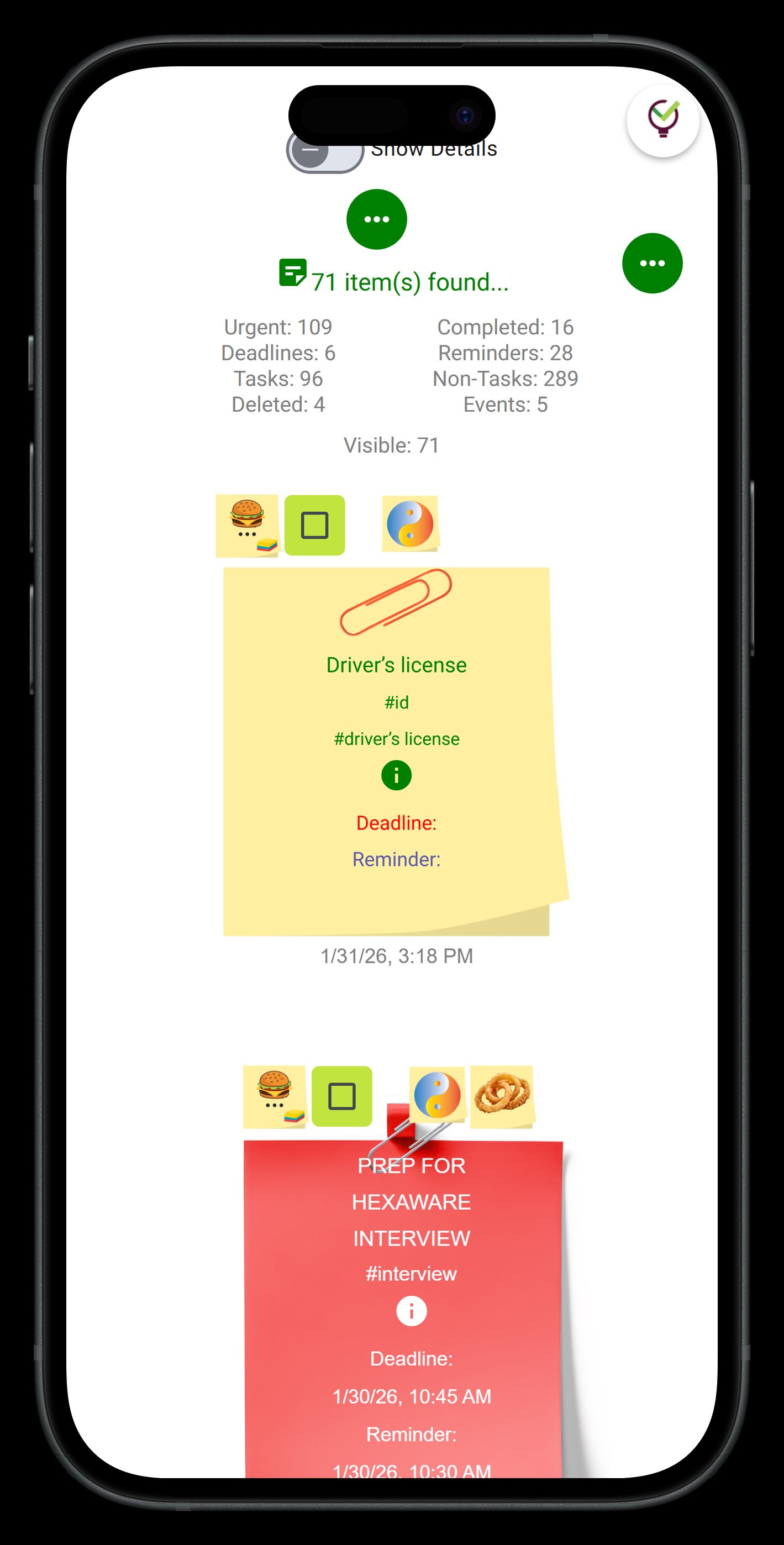
The most common mistake is organizing by subject. You end up with a column for Math, a column for English, a column for Bio — and no way to see that the Bio lab report, the English draft, and the Math midterm all land on the same Thursday. Organize by week, not by subject. Each column or row is a week. Each card within that week is a deliverable. Color-code by subject if you want, but the primary axis should always be time.
Start with the non-negotiable anchors: exam dates, paper due dates, and any hard external deadlines your professor controls. These go on the wall first, in their exact week. Then fill in the scaffolding — the work that has to happen before those anchors. A research paper due in week 11 needs a thesis draft in week 7, source collection in week 5, and a topic decision in week 3. Map those backwards. Suddenly week 7 looks very different than it did on the syllabus.
- Week columns: Use the academic calendar, not Monday-to-Monday. Weeks 1–16, with finals as a separate block.
- Card anatomy: Course, deliverable name, and the single next action. Not everything — just what moves it forward today.
- Color coding: By course, not by priority. Priority changes. The course label never does.
- Buffer cards: Add a blank card in any week that already has three or more deliverables. That week needs a buffer, not another task.
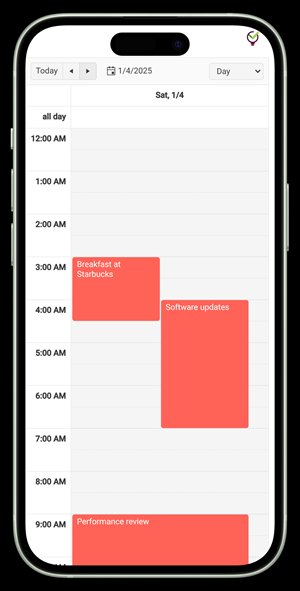
In TaskLoco, each of these cards is a sticky note. You can attach the syllabus PDF directly to the note — no more hunting through email for the file. The calendar view lets you flip between the wall layout and a traditional calendar when you need to coordinate with people outside your system. And when you add a file to a note, it lives there permanently, searchable, right next to the task it belongs to.
Reminders and Files: The Two Features That Separate a Living Wall From a Dead One
A wall without reminders is a monument. It sits there looking organized while your actual schedule unfolds somewhere else. The reason most physical sticky-note walls get abandoned is that they are purely passive — you have to remember to walk up and look at them. A digital wall with active reminders flips that dynamic entirely.
TaskLoco Premium reminders work as push notifications delivered directly to your phone and computer. When a reminder fires, it deep-links back to the exact note it belongs to — one tap and you are looking at the assignment, the attached rubric, and the next action, all in the same place. That deep-link detail matters more than it sounds. The cognitive cost of context-switching — getting a reminder, then hunting for the relevant document, then remembering where you were — is where most reminder systems fail. TaskLoco eliminates that chain entirely. If you also want email or SMS alongside the push notification, both are available as optional add-ons.
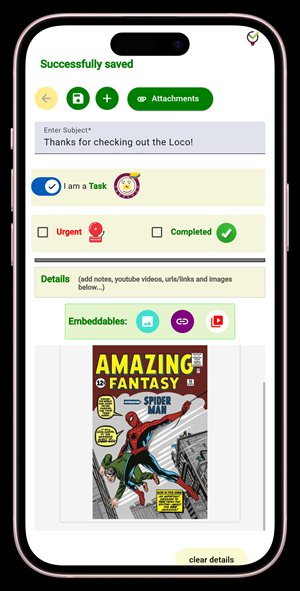
The file attachment piece deserves equal attention. Every course generates documents: syllabi, rubrics, lecture slides, draft essays, lab templates. Most students keep these in a folder system that is completely disconnected from their task system. When the assignment is due, they go to the task. Then they go find the file. TaskLoco attaches the file directly to the note — 10GB of storage included with Premium. Your Bio lab note has the lab template attached. Your English paper note has the rubric attached. The wall and the documents live together.
For students working in groups, TaskLoco's team sharing works the way email works — not the way enterprise software works. You share a note, the other person receives it and can clone it as their own. No permissions dialog, no access tiers, no onboarding required. If you are coordinating a group project, one person builds the project note with the timeline, attaches the shared documents, and sends it. Everyone starts from the same card.
Capturing New Assignments Fast Enough That the Wall Stays Accurate
The wall is only useful if it is current. And the hardest moment in any planning system is the one right after a professor mentions an assignment mid-lecture. You have about four seconds before the class moves on. If adding a card to your wall takes longer than that, you take a shortcut — you jot it in the margin of your notebook and tell yourself you will transfer it later. You will not transfer it later.
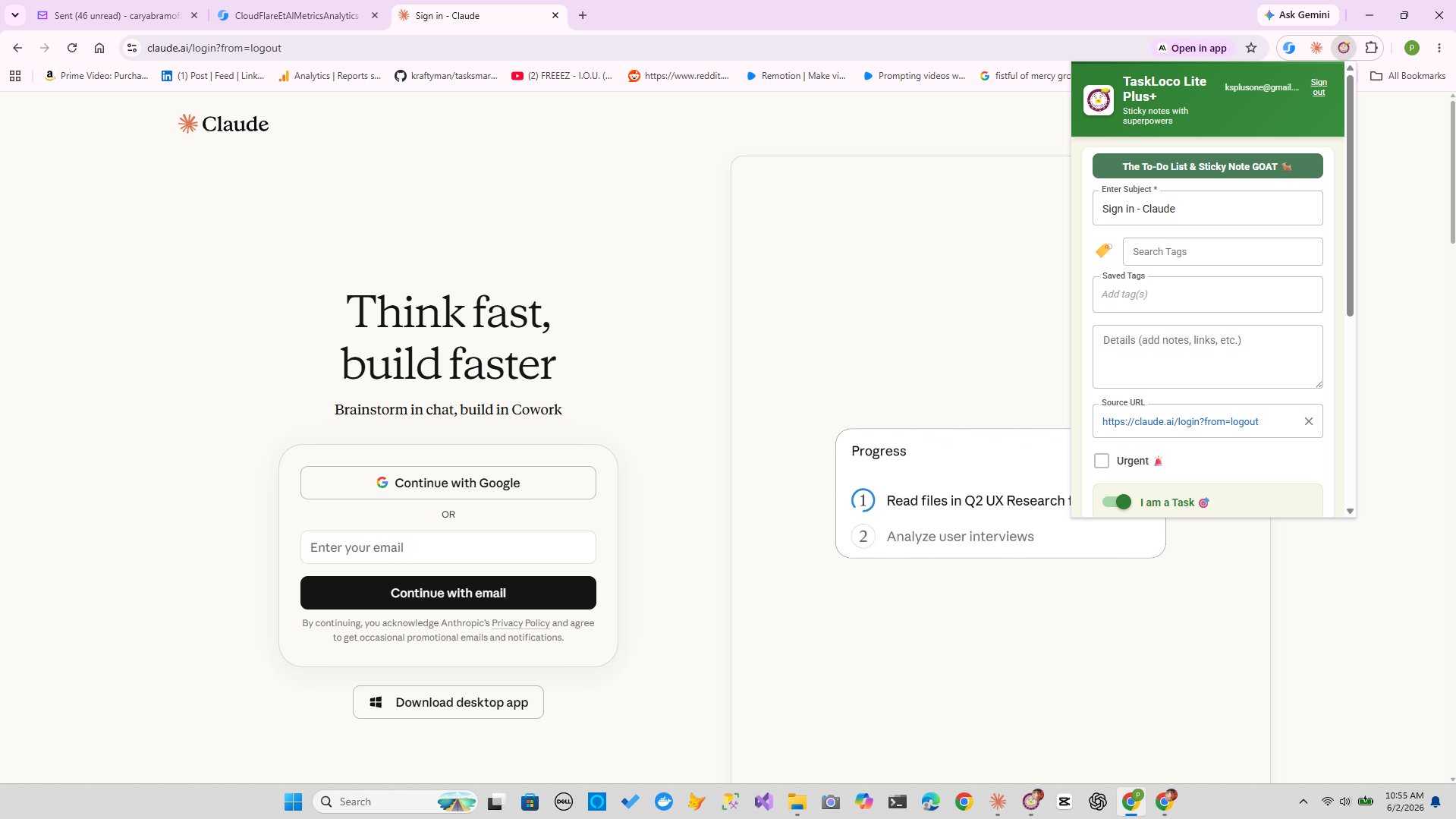
TaskLoco's Chrome extension solves this for anything that happens online: a course portal page, a PDF syllabus, a Canvas assignment — one click captures it directly into a new note. If the assignment exists on a webpage, you never have to retype it. For in-class moments when you are on your phone, the web app opens in your phone's browser in the same state you left it, with full sync, so the card you add in class appears on your desktop wall the moment you open your laptop.
The workflow that actually sticks across a full semester looks like this: every Sunday, spend ten minutes on the wall. Pull up the next two weeks. Are the cards accurate? Are there new assignments that need to be added? Do any cards that felt distant last week now feel urgent? That weekly ten-minute review, combined with reminders that push to you automatically during the week, is the complete maintenance overhead. Not a daily ritual, not a second job — just a Sunday habit and a notification system that does the rest.
TaskLoco Lite Plus+ is free and syncs across all your devices — it is a strong starting point if you want to try the wall approach before committing. It supports up to 30 notes. For a full semester wall with reminders firing at the right moment, file attachments keeping your documents organized, and unlimited notes so you never have to delete old cards to make room, TaskLoco Premium is where the system becomes genuinely complete.
TaskLoco Premium is regularly $9.99/month per person. Right now, charter members can lock in 50% off the regular price — forever. That means $4.99/month per person today. And if our price ever goes up, you still pay half. Always.
Code CHARTER50 auto-applies at checkout. First 500 spots only — once they're gone, this offer is gone permanently. Act fast while spots last.
Every Premium subscription includes unlimited notes, 10GB file storage, reminders, calendar, and team sharing. Each team member requires a separate subscription. 7-day free trial — no charge until day 8. Cancel anytime.
Free Options: TaskLoco
TaskLoco Lite
- Native iPhone & Android app
- Completely anonymous — no sign-in
- Data stays on your device
- Up to 20 notes
- Free forever
TaskLoco Lite Plus+
- Web app + Chrome extension
- Sign in with Google
- Wall syncs across all devices
- Up to 30 notes
- Free forever
Lock In 50% Off — Forever
7-day free trial. No charge until day 8. CHARTER50 auto-applies at checkout.
🔒 Lock In My Charter SpotSee TaskLoco in Action
Frequently Asked Questions
How do I organize a full semester on a sticky-note wall without it becoming overwhelming?
Organize by week, not by subject. Make each column a week of the academic calendar, and place every deliverable in the week it is due. Then work backwards to add the prep work — drafts, research sessions, outlines — into the weeks before each deadline. Color-code by course so you can spot subject-specific load at a glance, but keep time as the primary axis. Visual conflicts become obvious immediately when the layout mirrors the calendar.
Does TaskLoco have a calendar view for semester planning?
Yes. TaskLoco Premium includes a full calendar view alongside the sticky-note wall. You can switch between the visual board layout and the calendar whenever you need to coordinate dates, and both views stay in sync. Reminders are delivered as push notifications that deep-link back to the exact note, so you are never context-switching between your calendar and your tasks.
Can I attach syllabi and rubrics directly to my assignment notes?
Yes, and this is one of the most underrated features for semester planning. TaskLoco Premium includes 10GB of file storage, and you can attach any document — syllabi, rubrics, lecture slides, draft essays — directly to the relevant note. When the reminder fires and you open the note, the file is already there. No separate folder hunting required. Additional storage tiers (50GB, 200GB, 1TB) are available as add-ons if you need more.
How do reminders work in TaskLoco for assignment deadlines?
TaskLoco reminders are delivered as push notifications to your phone and computer. When a reminder fires, it deep-links directly back to the note it belongs to — one tap and you are looking at the assignment, the attached files, and the next action. Optional email notifications are available at no extra cost. Optional SMS notifications are available as an add-on. Reminders are a Premium feature.
Can I share my semester wall with study partners or group project teammates?
Yes. TaskLoco Premium includes full team sharing. Sharing a note works the way email works — you share it, the other person receives it and can clone it as their own. There are no permissions dialogs, no access tiers, and no onboarding hoops. For group projects, one person builds the project note with the timeline and attached documents, shares it, and everyone starts from the same card. Each team member needs their own subscription.
What is the difference between TaskLoco Lite, Lite Plus+, and Premium for students?
TaskLoco Lite is the free native iPhone and Android app — completely anonymous, no sign-in, stores up to 20 notes on your device only, no sync, no reminders, no attachments. It is a good scratchpad but not a semester planning system. Still no reminders or file attachments. TaskLoco Premium adds unlimited notes, reminders with push notifications, 10GB file storage, calendar view, and team sharing — everything a full semester wall needs. $9.99/month per person (currently $4.99/month per person for first 500 charter members with code CHARTER50)
Is there a free way to try the semester wall approach before paying?
Yes, two ways. TaskLoco Lite Plus+ is permanently free — sign in with Google, get 30 notes synced across all your devices, and use the Chrome extension to capture assignment pages in one click. It is a solid way to test the wall approach. When you are ready for reminders, file attachments, and unlimited notes, TaskLoco Premium includes a 7-day free trial with no charge until day 8. $9.99/month per person (currently $4.99/month per person for first 500 charter members with code CHARTER50)
Born in Brooklyn. Powered by AWS. Your data stays yours.
TaskLoco is available on iPhone, Android, Chrome, and every web browser.