Assembly lines don't fail because workers are lazy. They fail because one station gets 40 minutes of work while the next gets 8 — and everything behind that bottleneck piles up. Industrial engineers call fixing that problem line balancing, and they've been doing it since Henry Ford. Here's what nobody told you: your to-do list has the exact same problem, and the exact same fix works.
Most overloaded task lists aren't overloaded because you have too much to do. They're overloaded because everything landed on the same metaphorical station — today, or this hour, or the top of a single vertical column that you can barely see to the bottom of. Line balancing, applied to personal productivity, means redistributing that load so each day, each hour, and each project phase carries roughly equal weight. The result isn't magic — it's engineering. And it's surprisingly easy to do once you can actually see your workload laid out in front of you.
What Line Balancing Actually Is — and Why It Matters for Knowledge Workers
In manufacturing, line balancing is the process of assigning tasks to workstations so the total time at each station is as close to equal as possible. The goal is to eliminate idle time on one end and overload on the other. The metric engineers care about is called cycle time — the maximum time any one station is allowed before the line stalls. If one station takes 12 minutes and every other takes 4, the line's output is capped at one unit every 12 minutes, no matter how fast the other stations move.
For a knowledge worker, the equivalent of a workstation is a block of time — a morning, an afternoon, a focused work session. The equivalent of a task is any item on your list. Cycle time, in your world, is your energy. When you stack three 2-hour deep-focus tasks into a single morning that also has two back-to-back meetings, you've created a 10-minute station in a 4-minute cycle. Something will not get done, and it's usually the thing that matters most.
The criteria that make line balancing actually work in a personal productivity context come down to three things:
- Visibility: You cannot balance what you cannot see. If your task list is a vertical scroll of 60 items with no time estimates, you have no idea what's overloaded. You need a spatial, visual layout — columns for days, rows for priority, cards that can be moved.
- Time estimation: Every task needs a rough weight. Not a precise stopwatch number — just a T-shirt size. Small (under 30 min), medium (30–90 min), large (half day or more). Without this, you're trying to balance a scale with no weights on it.
- Redistribution speed: Rebalancing has to be frictionless. If moving a task from Tuesday to Thursday requires three clicks, two menu dives, and a page reload, you'll stop doing it. The tool has to let you drag and drop in under two seconds.
How to Apply Line Balancing to Your To-Do List in Four Steps
You don't need a whiteboard, a stopwatch, or an MBA. You need a surface you can see all at once, and a willingness to be honest about how long things actually take. Here's the method:
Step 1 — Dump everything onto cards. One task, one card. Don't organize yet. Don't prioritize yet. Just get every open item out of your head and into a physical or digital space. The goal here is the same as in a factory audit: before you can balance the line, you have to know every task that needs a station. If it's stuck in your head, it doesn't exist as a workload unit yet.
Step 2 — Assign a weight to each card. Go through every card and mark it S, M, or L. You can be more precise if you like — actual minute estimates work great — but S/M/L is enough for most people. An S task is something you can knock out without losing your train of thought. An L task requires a protected block with no interruptions. Be honest. People consistently underestimate L tasks and overestimate how many S tasks they can chain together.
Step 3 — Lay the cards into columns by day or time block. Now the balancing happens. Spread your weighted cards across the days of the week, or the time blocks in your day. Each column should carry roughly the same total weight. If Monday has four L cards and Friday has two S cards, you have a line imbalance. Move cards until the columns feel roughly equal — or deliberately lighter on days you know have meetings or low energy.
Step 4 — Set a reminder on anything with a hard deadline. Line balancing handles distribution. Reminders handle urgency. Any card that has a real external deadline — a client deliverable, a payment, a meeting prep — needs a push notification so the rebalanced schedule doesn't cause you to miss it while you're in a flow state on something else.
Why a Sticky-Note Wall Is the Right Tool for This — and How TaskLoco Delivers It
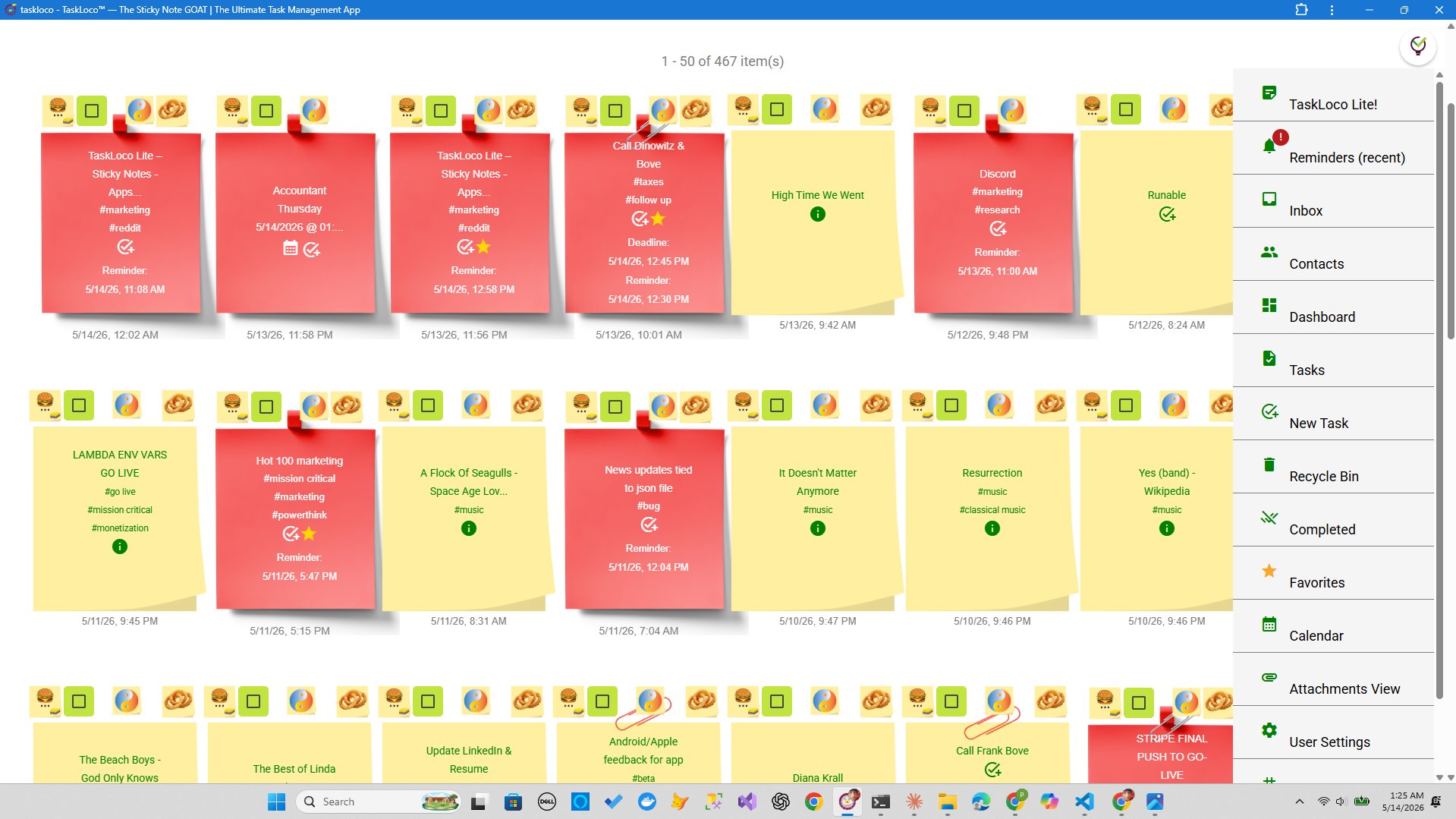
The sticky-note wall isn't nostalgia. It's the correct visual metaphor for line balancing. In a factory, engineers use a physical board with swimlanes and cards to map workstations. The spatial layout lets them see imbalance the moment it exists — a crowded column is visually obvious. A vertical list of 60 items in a task manager app gives you no such signal. You have to mentally reconstruct the load distribution every time you look at it, which is exactly the cognitive overhead that causes people to stop maintaining their system.
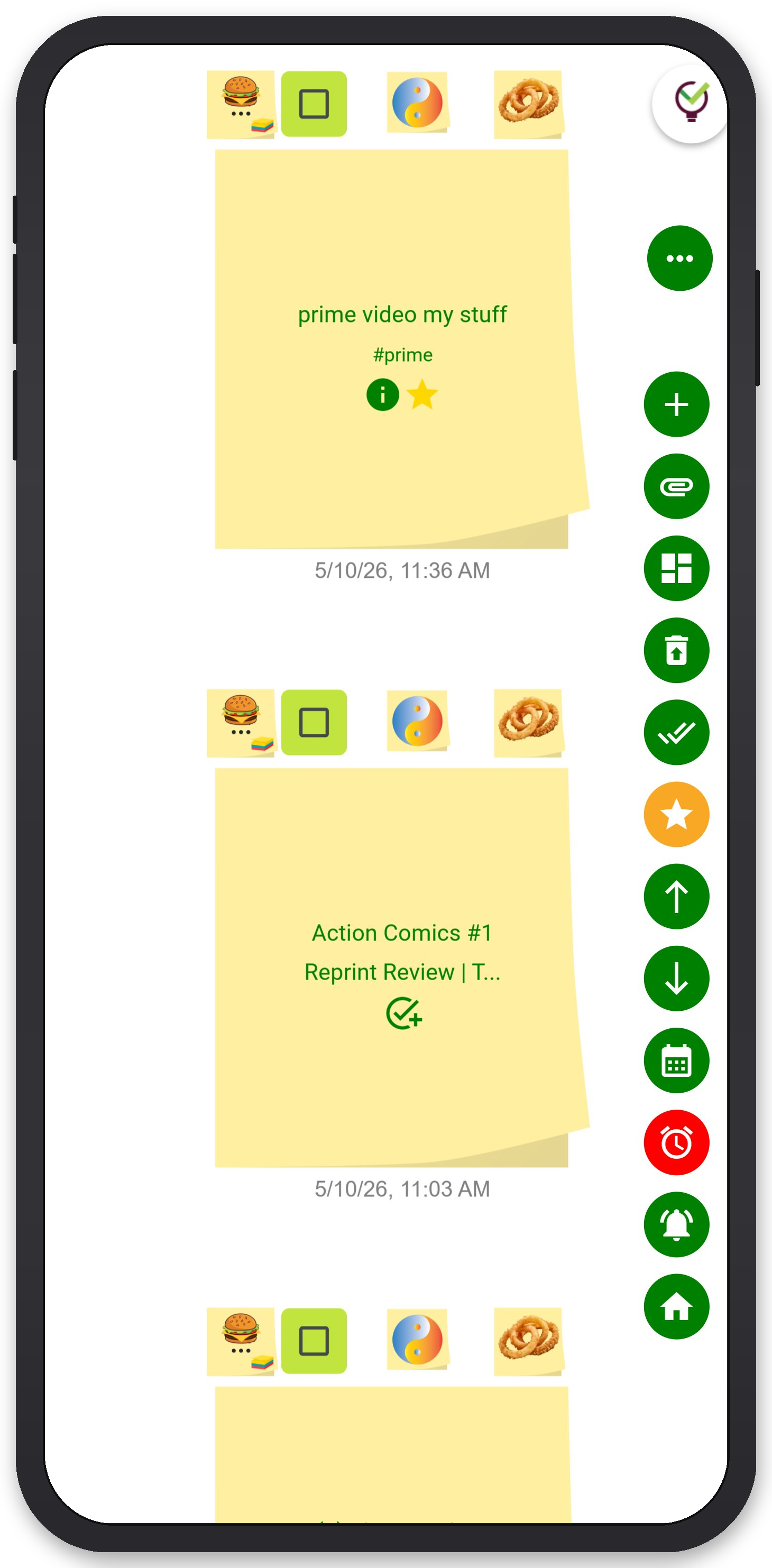
TaskLoco is built around the sticky-note wall as a first-class interface. Your notes and tasks live on a wall you can scan in one glance. Columns can represent days, projects, priority levels, or any other dimension that matters to your workflow. Moving a card from one column to another is a drag. Spotting an overloaded column takes about half a second. That's the friction reduction that makes continuous rebalancing actually happen instead of just being a good intention.
Here's what makes TaskLoco the right tool for this specific method:
- Unlimited notes on Premium — your full brain dump has no cap. Every task gets a card, no matter how long the list gets.
- Push notification reminders that deep-link back to the original note — when a reminder fires, tapping it takes you directly to the task, not to a generic inbox. Optional email and SMS add-ons are also available.
- 10GB file storage included with Premium — attach the brief, the reference doc, the photo to the card itself, so context travels with the task when you move it.
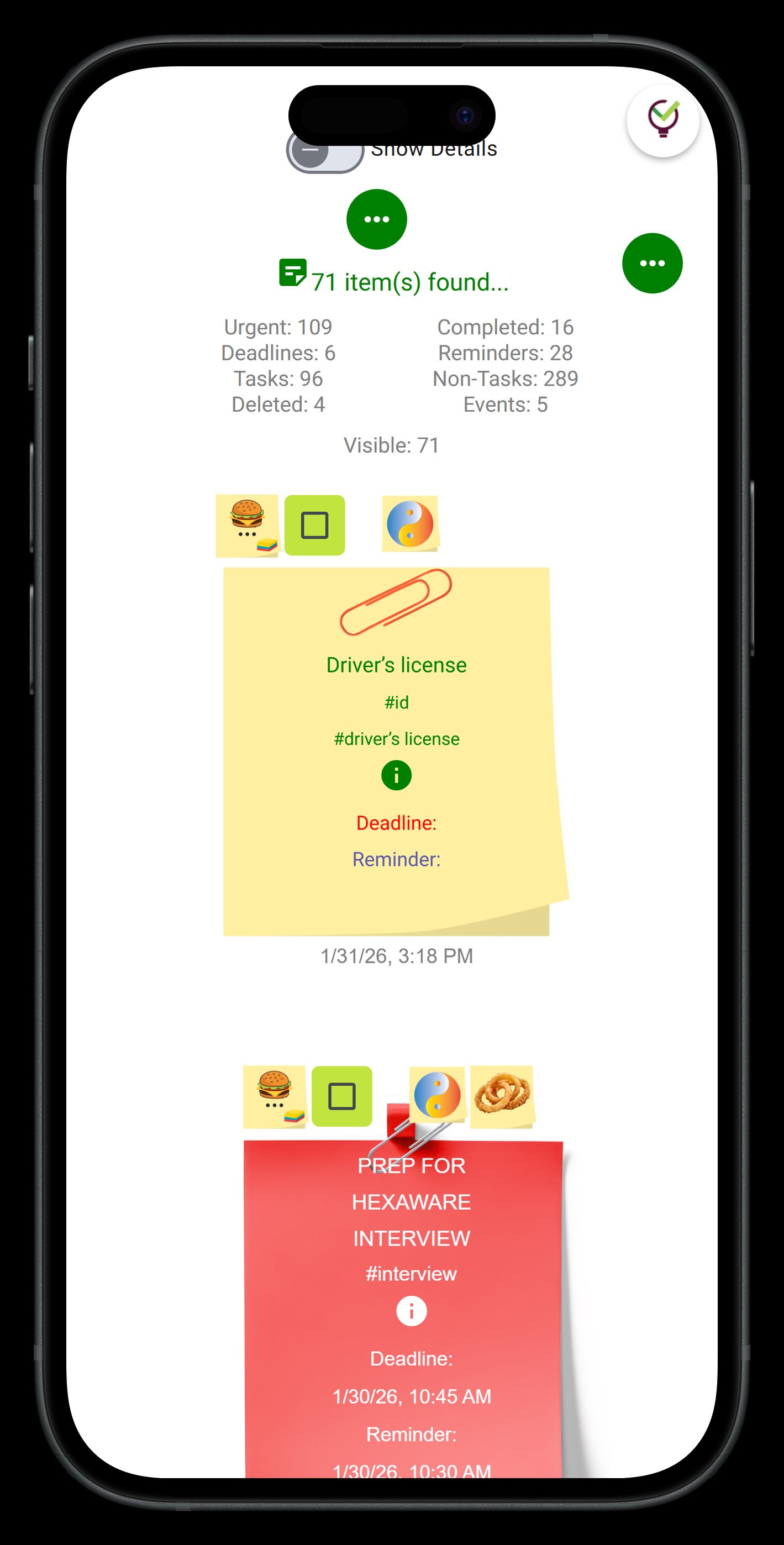
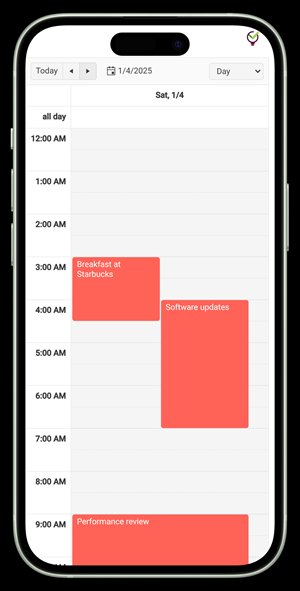
- Calendar view — switch from wall view to calendar view to see your balanced load against actual days. The two views work together: build on the wall, verify on the calendar.
- Team sharing that works like email — when a task belongs to someone else, share the note. Recipients clone it and make it their own. No permission levels, no access management. The distributed load stays distributed.
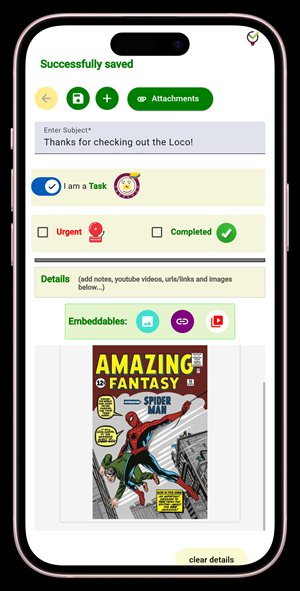
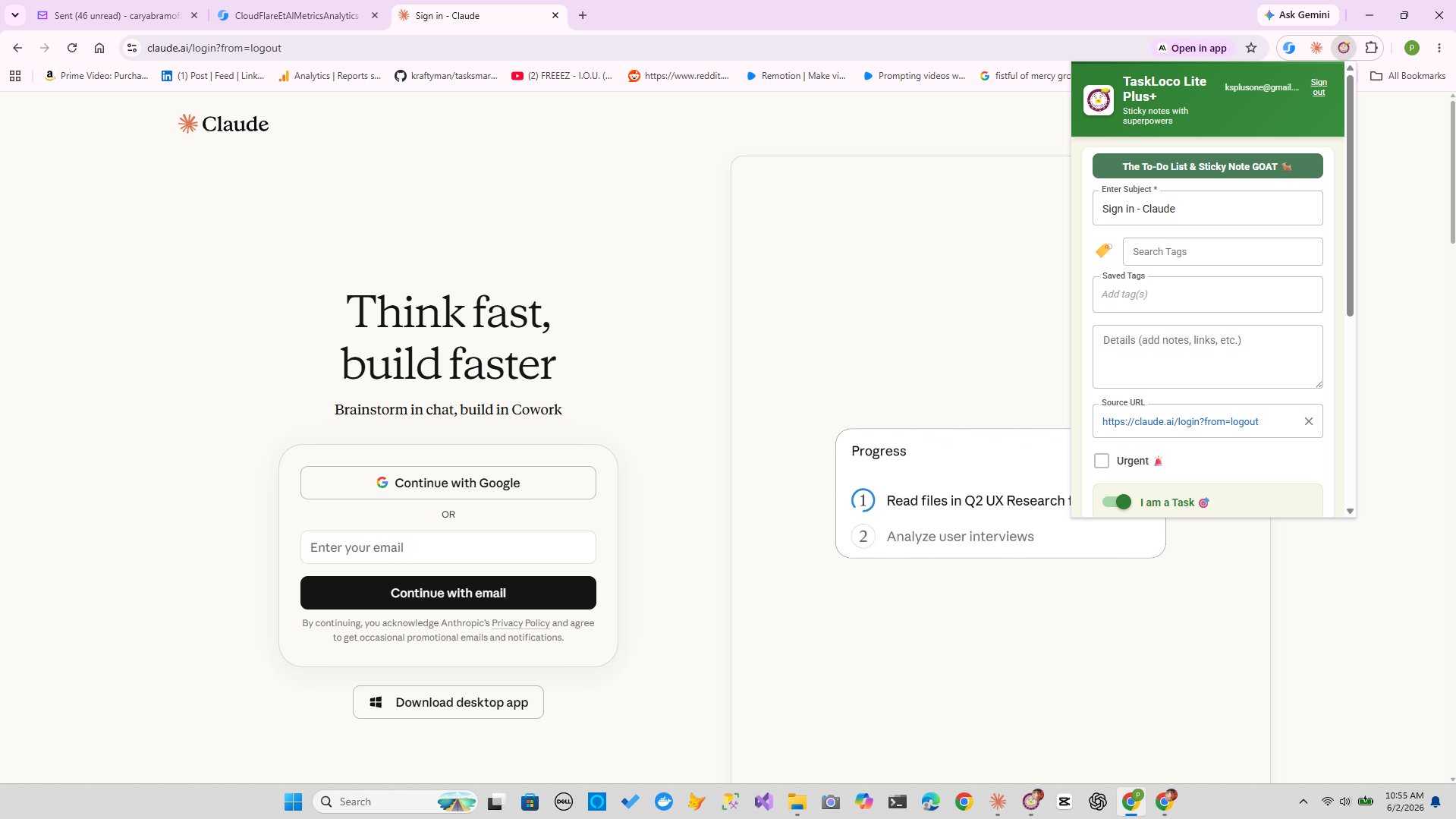
- Chrome extension for one-click capture — found something on the web that needs to become a task? One click creates a note. It goes straight to the wall, where you can weight and place it immediately instead of letting it pile up in a browser tab graveyard.
Getting Started: Your First Line-Balanced Week with TaskLoco
The best time to run your first line-balance session is Sunday evening or Monday morning, before the week has a chance to ambush you. Here's a concrete starting point:
Open TaskLoco and create a column for each workday. Label them Monday through Friday. Then do your full brain dump — every open task, every project commitment, every errand with a deadline this week — onto individual notes. Don't place them yet. Just create them. You'll notice something almost immediately: the act of making each item its own card forces you to think about it as a discrete unit of work rather than a vague item in an undifferentiated pile. That's the beginning of line balancing right there.
Now go through and add a weight label to each note. TaskLoco lets you add color coding, tags, or just a simple S/M/L label in the note title. Use whatever system you'll actually maintain. Then start placing cards into columns. Watch the columns as you fill them. The moment one column looks visually heavier than the others, stop and redistribute before continuing. Your goal is columns that look roughly the same — not identical, but comparable.
Finally, set reminders on anything with a hard external deadline. When that reminder fires as a push notification, it deep-links you straight back to the note — so you're never hunting for context at the moment urgency hits.
Run this for two weeks and you'll have calibrated your time estimates against reality. You'll know whether your S tasks actually take 20 minutes or 45. You'll know how many M tasks fit in a morning that also has a 10am call. That calibration is the compounding return on the method — the longer you do it, the more accurate your line gets.

TaskLoco Premium is regularly $9.99/month per person. Right now, charter members can lock in 50% off the regular price — forever. That means $4.99/month per person today. And if our price ever goes up, you still pay half. Always.
Code CHARTER50 auto-applies at checkout. First 500 spots only — once they're gone, this offer is gone permanently. Act fast while spots last.
Every Premium subscription includes unlimited notes, 10GB file storage, reminders, calendar, and team sharing. Each team member requires a separate subscription. 7-day free trial — no charge until day 8. Cancel anytime.
Free Options: TaskLoco
TaskLoco Lite
- Native iPhone & Android app
- Completely anonymous — no sign-in
- Data stays on your device
- Up to 20 notes
- Free forever
TaskLoco Lite Plus+
- Web app + Chrome extension
- Sign in with Google
- Wall syncs across all devices
- Up to 30 notes
- Free forever
Lock In 50% Off — Forever
7-day free trial. No charge until day 8. CHARTER50 auto-applies at checkout.
🔒 Lock In My Charter SpotSee TaskLoco in Action
Frequently Asked Questions
What is line balancing in simple terms?
Line balancing is an industrial engineering technique that distributes work evenly across a process so no single station gets overloaded while others sit idle. In a factory, that means distributing tasks across workstations. In personal productivity, it means distributing your tasks across time blocks — days, mornings, focused sessions — so no single block is crushed while others are empty.
Can line balancing really work for personal task management?
Yes — and it works better than most people expect, because the core problem is identical. A factory line fails when work is unevenly distributed. A personal to-do list fails for the same reason: too much lands on Monday, nothing is scheduled for Thursday, and the heaviest tasks always seem to share the same morning. Line balancing gives you a framework to see and fix that distribution before the week starts, rather than discovering the problem at 4pm when nothing is done.
What tool is best for visual line balancing of a to-do list?
Any tool that gives you a spatial, column-based layout where you can see all your tasks at once and move them freely. The critical features are: a wall or board view (not just a vertical list), drag-and-drop reordering, and some way to indicate task weight or size. TaskLoco's sticky-note wall is purpose-built for this — you can see the entire week's load at a glance, spot an overloaded column instantly, and rebalance by dragging cards in under two seconds.
How do I estimate how long tasks will take for line balancing?
Start with a simple three-tier system: Small (under 30 minutes), Medium (30 to 90 minutes), Large (half a day or more). Don't obsess over precision — the goal is relative weight, not a project management schedule. After two weeks of tracking actuals against estimates, you'll naturally calibrate. Most people discover their S tasks take twice as long as they thought, and that three M tasks is the realistic maximum for a focused morning. That calibration is where the real productivity gains come from.
How is line balancing different from just making a prioritized to-do list?
A prioritized list tells you what matters most. Line balancing tells you when each thing can actually happen. You can have a perfectly prioritized list and still fail to execute it because five high-priority tasks all require deep focus and all landed on the same Tuesday morning. Priority is about importance. Line balancing is about capacity. You need both — priority to decide what's on the wall, balancing to decide where each card sits on it.
Does TaskLoco have reminders to help manage a balanced task schedule?
Yes. TaskLoco Premium includes reminders that fire as push notifications directly to your phone and computer. Tapping the notification deep-links you straight to the original note — no hunting, no context-switching. Optional email notifications and an SMS add-on are also available if you want additional channels. Reminders are a Premium feature and work alongside the wall and calendar views to keep your balanced schedule actually on track.
How much does TaskLoco cost?
$9.99/month per person (currently $4.99/month per person for first 500 charter members with code CHARTER50)
Born in Brooklyn. Powered by AWS. Your data stays yours.
TaskLoco is available on iPhone, Android, Chrome, and every web browser.