You open Instagram and someone from your graduating class just got promoted, bought a house, and ran a half marathon — all apparently in the same month. You close the app feeling like you've wasted the last three years. That's not a motivation problem. That's a comparison trap, and nearly everyone falls into it at some point.
Feeling behind is one of the most common emotional experiences adults deal with — and one of the least talked about honestly. The advice you usually get is either hollow ('just be grateful!') or overwhelming ('wake up at 5am and optimize everything'). Neither actually works. What works is understanding why the feeling shows up, where it's lying to you, and what to do next with the time you actually have.
Why You Feel Behind (And Why The Feeling Is Usually Wrong)
The feeling of being behind requires a race — and every race needs a track, a starting gun, and agreed-upon finish lines. The problem is that no one actually agreed to any of this with you. The milestones you're measuring yourself against — the house by 30, the promotion, the relationship, the savings account, the fitness level — were mostly absorbed from social media, family expectations, and a vague cultural script written for people who aren't you.
Here's what's happening neurologically: your brain is wired to compare. It's a survival mechanism that helped our ancestors gauge where they stood in social hierarchies. Today that same circuitry fires when you scroll a curated highlight reel and your brain registers it as real-time competitive data. It isn't. You're comparing your unedited inner life to someone else's edited public presentation.
There's also a second trap: the moving goalpost. People who 'achieve' the thing they thought would make them feel on track usually discover the finish line just moves further out. The feeling of being behind isn't eliminated by achievement — it's eliminated by changing the metric entirely.
That reframe matters more than any productivity system. Until you've done it, no amount of planning, journaling, or early mornings will make the feeling go away permanently. It'll just relocate.
How To Actually Reset: A Practical Method That Works
Once you've acknowledged that the race you've been running was at least partially fictional, you can build something real. This process doesn't require an app, a journal, or a weekend retreat. It requires about an hour of honest thinking and something to write with.
Step 1: Do a life audit — without judgment. Write down every area of your life: career, finances, relationships, health, creative work, learning, fun. For each one, write a single sentence describing where you are right now. Don't editorialize. Don't compare. Just describe the current state as neutrally as you'd describe the weather.
Step 2: Separate what you actually want from what you think you should want. This is harder than it sounds. For each area, ask: if no one knew about this — if it would never appear on your resume or LinkedIn or Instagram — would I still want it? The answers will surprise you. Some of your 'goals' will reveal themselves as performance for an audience you don't even like.
Step 3: Pick two or three things that genuinely matter. Not twelve. Not a five-year plan with quarterly OKRs. Two or three directions that feel genuinely yours. Write them as outcomes, not tasks. 'Feel strong and capable in my body' is better than 'go to the gym 5x per week.' The outcome gives you room to find your own path there.
Step 4: Define the very next physical action for each one. This is David Allen's concept from Getting Things Done, and it works because vague intentions don't move. 'Get healthier' is paralysis. 'Put on shoes and walk around the block tonight' is motion. Motion builds identity. Identity builds momentum.
Step 5: Build a weekly review habit — even a five-minute one. The feeling of being behind often intensifies because we never stop to register what we've actually done. A weekly check-in where you write down three things you moved forward — even small things — rewires the scorecard your brain is using.
You don't need to complete these steps perfectly. You need to start one of them today. The gap between where you are and where you want to be is only scary when you're looking at the whole distance. It shrinks the moment you take the first step and look back.
The Mindset Shifts That Make The Change Stick
Tactical steps alone won't hold. The feeling of being behind is stubborn because it's rooted in identity, not just scheduling. These mindset shifts are the ones that actually change the underlying pattern.
Your timeline is not delayed — it's different. There's no universal schedule for a meaningful life. Julia Child published her first cookbook at 49. Vera Wang didn't design her first dress until she was 40. These aren't inspirational exceptions — they're evidence that the timeline most people internalize is made up. Your path unfolds at its own pace, and that pace is not a failure.
Comparison is only useful when it's chosen. Looking at someone who's further along in an area you care about and asking 'how did they get there?' is useful. Looking at someone's life highlights and feeling inadequate is not information — it's noise. You get to choose which comparisons you engage with.
Rest is not falling behind. One of the most corrosive beliefs behind the 'behind' feeling is that stillness is waste. It isn't. Recovery, reflection, and genuine rest are part of the cycle of doing anything well. If your body or mind is demanding rest, that is the work right now.
Small is not slow. A page written every day is a book in a year. A 20-minute walk every day is over 120 hours of movement annually. The math on small, consistent action is quietly devastating to the 'I'm not making progress' story. The problem is usually that the action is too small to feel like progress in the moment — but it is.
The feeling will come back — and that's okay. You won't solve this permanently. The comparison trap will spring again, especially during transitions, milestone birthdays, or when someone close to you has a big win. The goal isn't immunity — it's a faster recovery. With practice, you'll recognize the feeling sooner, name it accurately ('that's the comparison spiral, not reality'), and return to your own direction more quickly.
How TaskLoco Can Help You Keep It Visible
Once you've done the honest work of clarifying what actually matters to you, the practical challenge becomes keeping that clarity visible in daily life. Most people do the reflection once and then let it get buried under email and noise. The feeling of being behind returns not because the insight was wrong, but because it became invisible.
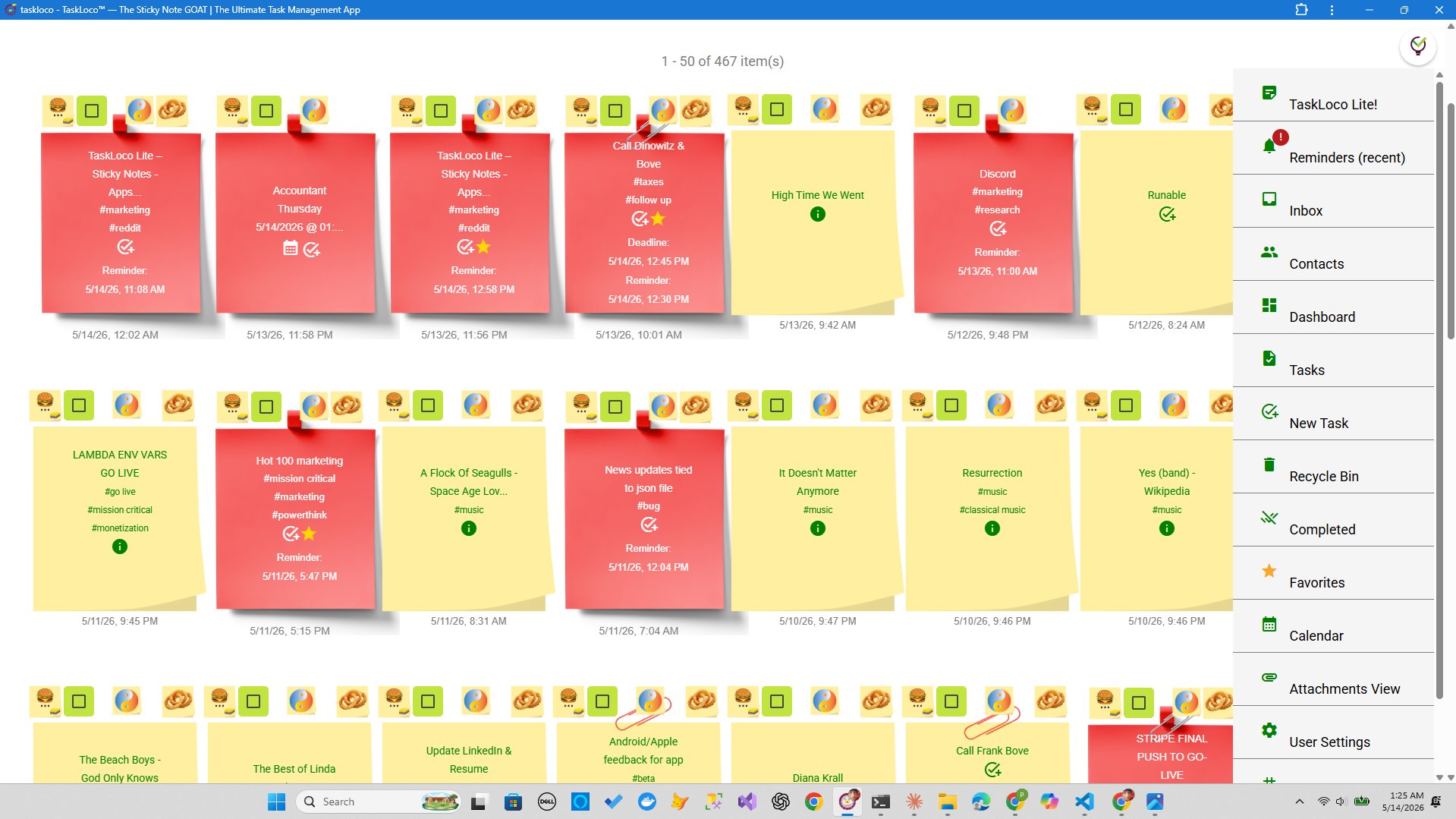
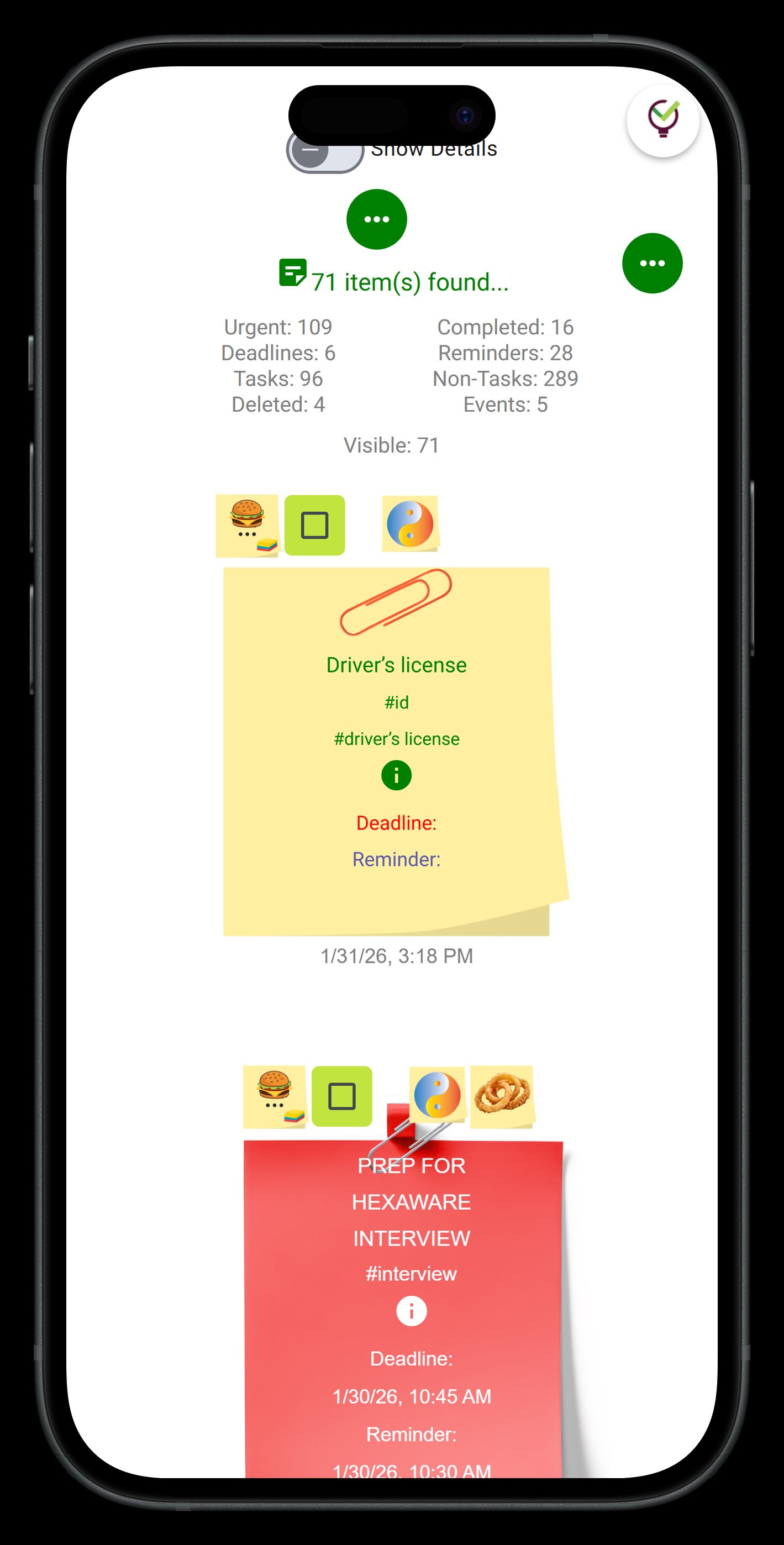
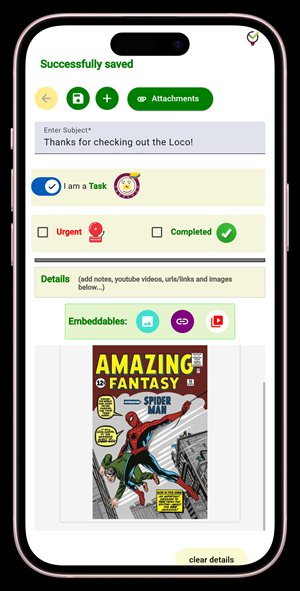
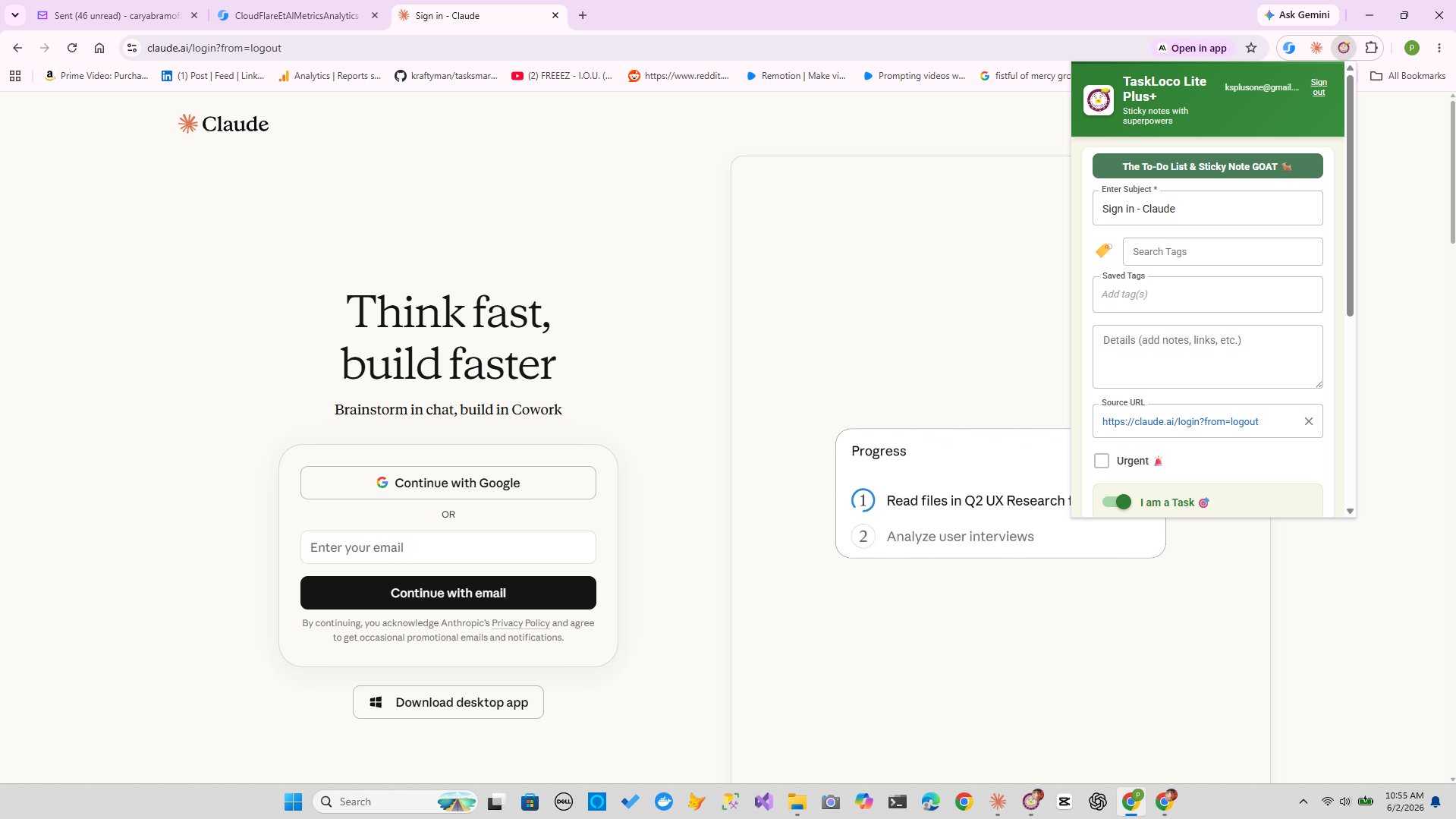
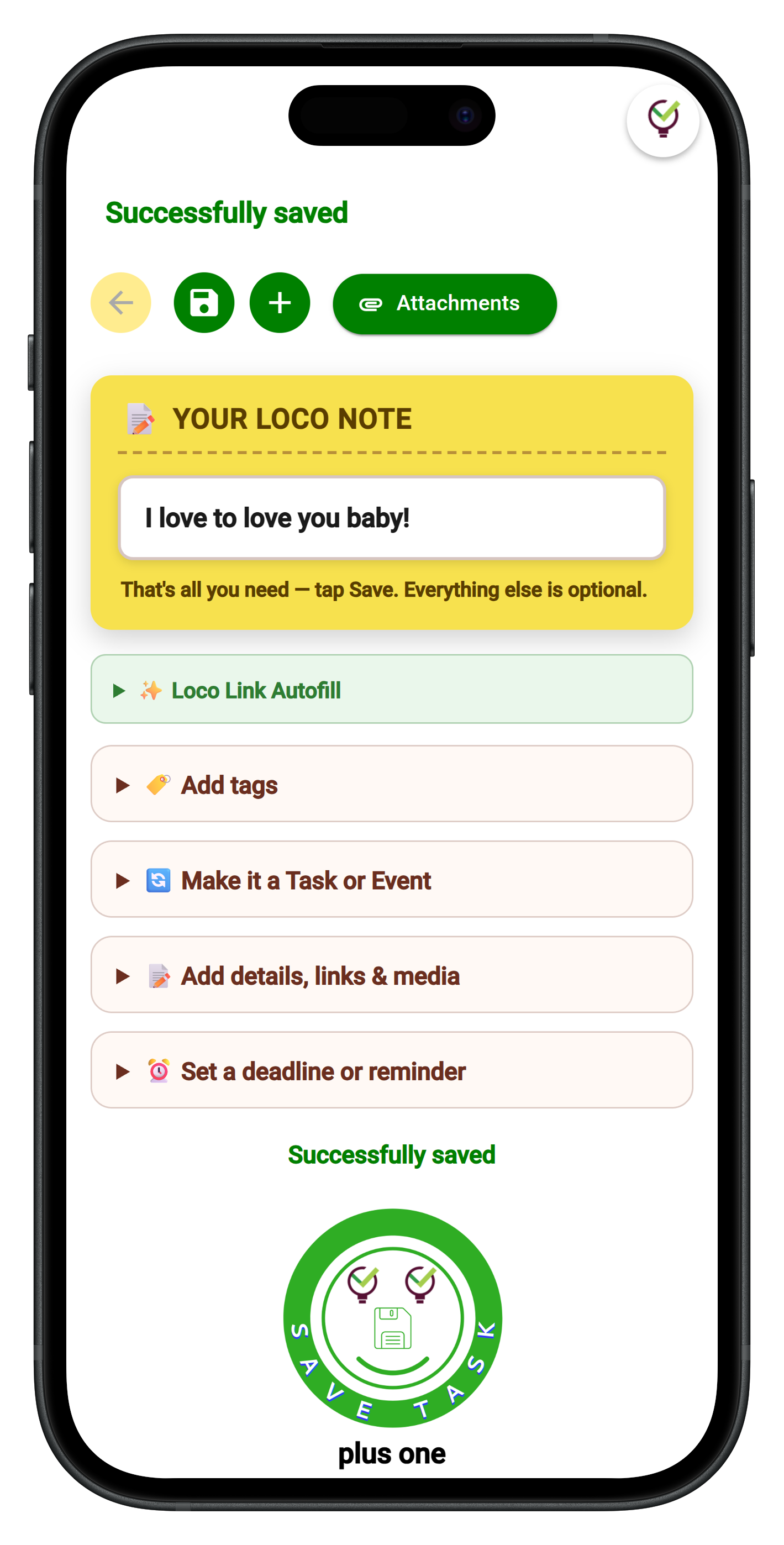
This is where a tool like TaskLoco earns its place. TaskLoco is built around the sticky note model — the same format that works on a wall or a notebook, now captured and synced across your devices through the web app and Chrome extension. You can create a note for each area of your life, pin your two or three real priorities where you see them every day, and attach the next action directly to each one.
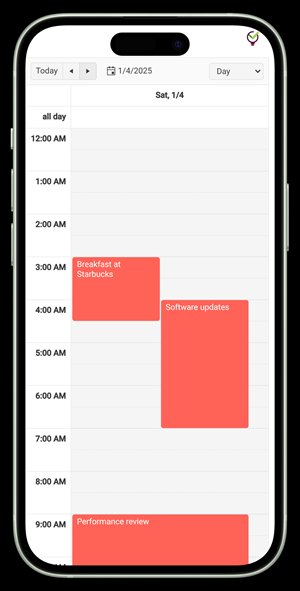
With TaskLoco Premium, you can set reminders that deep-link straight back to the note they belong to — so when a push notification fires, one tap takes you back to exactly the context you need. You can attach files, use the calendar view to see your commitments across time, and share notes with people you're accountable to. The Chrome extension lets you capture anything from the web — an article, a job listing, a course — in one click, so nothing useful gets lost.
The free tiers let you get started with no commitment. TaskLoco Lite is a native iPhone and Android app — completely anonymous, no account required, stores up to 20 notes on your device. TaskLoco Lite Plus+ is the web app and Chrome extension, free, sign in with Google, syncs up to 30 notes across all your devices. When you're ready for reminders, unlimited notes, file storage, and team sharing, that's Premium.
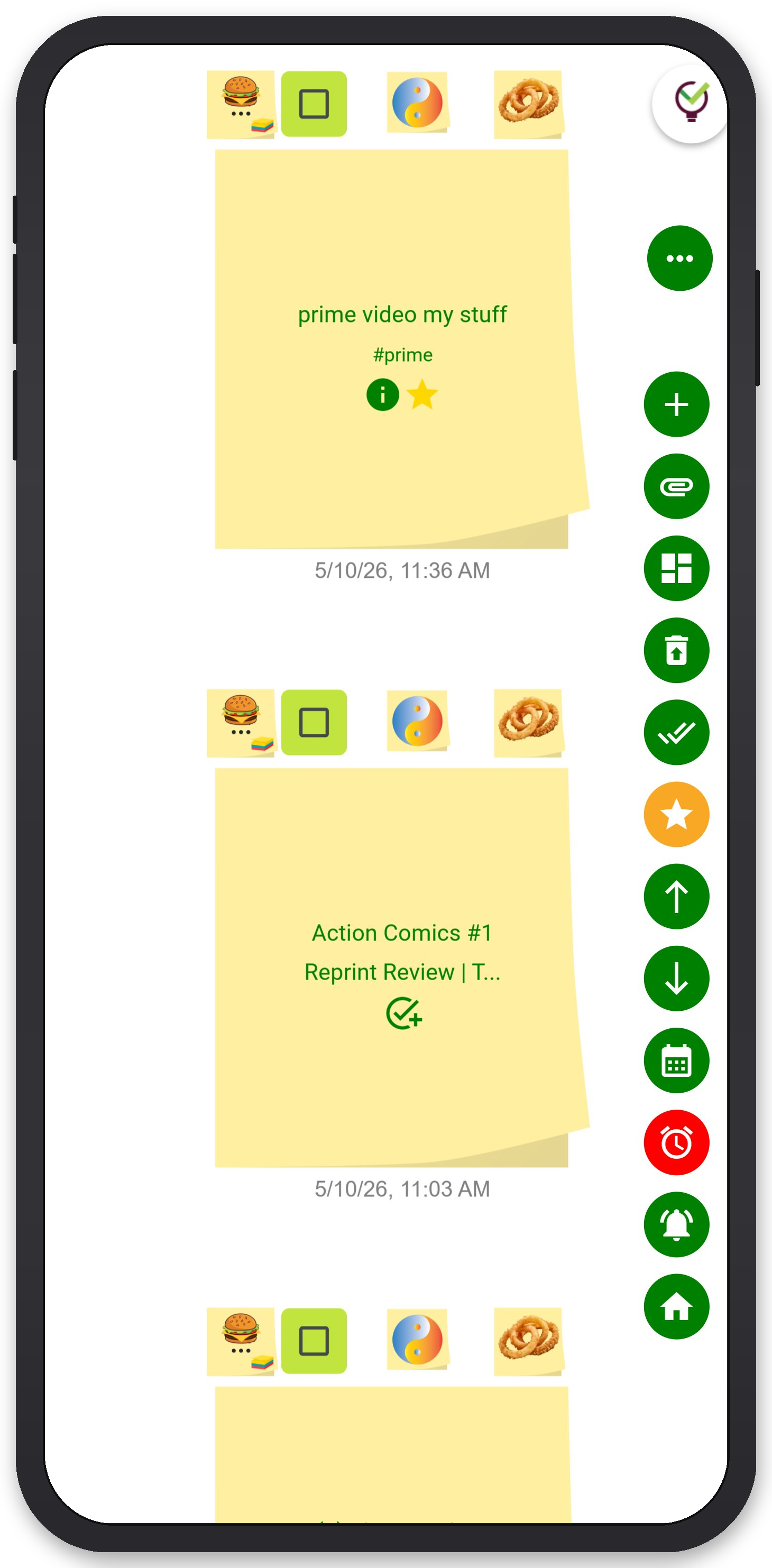
TaskLoco Premium is regularly $9.99/month per person. Right now, charter members can lock in 50% off the regular price — forever. That means $4.99/month per person today. And if our price ever goes up, you still pay half. Always.
Code CHARTER50 auto-applies at checkout. First 500 spots only — once they're gone, this offer is gone permanently. Act fast while spots last.
Every Premium subscription includes unlimited notes, 10GB file storage, reminders, calendar, and team sharing. Each team member requires a separate subscription. 7-day free trial — no charge until day 8. Cancel anytime.
Free Options: TaskLoco
TaskLoco Lite
- Native iPhone & Android app
- Completely anonymous — no sign-in
- Data stays on your device
- Up to 20 notes
- Free forever
TaskLoco Lite Plus+
- Web app + Chrome extension
- Sign in with Google
- Wall syncs across all devices
- Up to 30 notes
- Free forever
Lock In 50% Off — Forever
7-day free trial. No charge until day 8. CHARTER50 auto-applies at checkout.
🔒 Lock In My Charter SpotSee TaskLoco in Action
Frequently Asked Questions
Why do I always feel behind no matter what I accomplish?
Because the goalpost keeps moving. Achievement doesn't eliminate the feeling of being behind — it just relocates it. The feeling comes from an internal measuring system that's calibrated to an external, often arbitrary standard. The fix isn't accomplishing more; it's changing the metric you're using to measure yourself. When you shift from 'am I where everyone else seems to be?' to 'am I moving toward something that genuinely matters to me?', the feeling loses most of its grip.
Is feeling behind in life normal?
Extremely. It's one of the most universal adult experiences, and it's become more intense in the social media era because we're exposed to more curated highlight reels than any previous generation. The feeling doesn't mean you're actually behind — it means your brain is doing its hardwired comparison thing without useful data. Knowing it's normal doesn't make it painless, but it does mean you're not uniquely broken. Almost everyone feels this way sometimes, including people who appear, from the outside, to have it all figured out.
How do I stop comparing myself to others?
You probably can't stop entirely — comparison is a deeply wired cognitive function. But you can get selective about it. Chosen comparison is useful: finding someone who's done what you want to do and studying how they got there is a legitimate tool. Ambient comparison — passively absorbing other people's highlight reels and feeling diminished — is almost never useful. The practical step is to audit your inputs. What are you consuming daily that triggers the comparison spiral? Social media accounts, certain conversations, specific websites? You can curate your information environment the same way you'd curate your physical environment.
What should I do when I feel overwhelmed by how much I haven't done?
Stop. Seriously — the impulse when overwhelmed is to push harder, make a longer list, or set a more aggressive schedule. That usually makes it worse. Instead: write down everything that's in your head onto paper or a note, then pick the single most important thing and do only that for the next 30 minutes. The overwhelm almost always comes from holding too many open loops in working memory at once. Getting it out of your head and onto something external frees up cognitive space immediately. Then the next physical action on the one real priority becomes visible.
How long does it take to stop feeling behind?
It's not a one-time fix — it's a practice. Most people who do the honest work of clarifying their own priorities and building a simple daily system start to feel measurably different within a few weeks. But the feeling will return during transitions, milestone moments, or when someone close to you has a big win. The goal isn't permanent immunity — it's a faster recovery each time. With practice, you'll recognize the feeling sooner, name it accurately, and return to your own direction without losing days to the spiral.
Can a productivity app help with feeling behind?
Yes, but only after you've done the upstream thinking. An app won't help if you're using it to track the wrong goals — it'll just make you more efficiently miserable. Once you know what actually matters to you and have defined real next actions, a tool that keeps those priorities visible and prompts you with reminders at the right moment genuinely helps. The key is visibility: your priorities need to be somewhere you actually look, not buried in a system you forget to open. That's where something like TaskLoco — built around the sticky note model, always quick to capture and review — fits naturally.
What's the first thing I should do today if I feel behind?
Write down everything that's making you feel behind. Not to fix it — just to get it out of your head and onto paper. Then look at the list and ask: which of these are things I genuinely want, versus things I think I should want based on external expectations? Cross out anything in the second category, at least for now. What's left is your real list. Pick the one item that would move the needle most meaningfully and identify the single next physical action you could take today — something concrete and completable in under an hour. Do that one thing. That's it. That's the start.
Born in Brooklyn. Powered by AWS. Your data stays yours.
TaskLoco is available on iPhone, Android, Chrome, and every web browser.