ADHD brains have a visibility problem. If a task isn't right in front of you, it doesn't exist. That's not a character flaw — it's how the executive function works when dopamine regulation is off. Sticky notes solve this in the most literal way possible: they make your tasks physically impossible to ignore.
But random sticky notes everywhere is just chaos with better colors. What actually works is a deliberate system — specific colors, specific zones, specific rules for when a note moves or gets tossed. This guide walks through that system step by step, so you can build something that sticks (pun intended) even on your worst focus days.
Build Your Color Code: One Rule Per Color
The single most important step is deciding what each color means — and then never breaking the rule. Your brain can't benefit from color if the colors are arbitrary. Here's a starter system that many people with ADHD find effective:
- Red: Urgent — must happen today, or there are real consequences.
- Yellow: In progress — something you've started but haven't finished.
- Blue: Waiting — blocked on someone else, or scheduled for later this week.
- Green: Done — keep these visible for a day before tossing. The visual record of completion is motivating.
- Pink or Purple: Personal or energy-dependent — tasks that need your best brain, not your leftover brain.
You don't need all five categories. Start with three. Red (urgent), yellow (in progress), green (done). Add more only when the system feels stable. Overcomplicating it before you've built the habit is the fastest way to abandon it.
Write tasks as actions, not topics. Don't write "dentist" — write "call dentist to reschedule Wednesday appointment." The specificity makes it easier to start, which is exactly where ADHD task initiation breaks down.
Where You Place Notes Matters as Much as the Color
Physical placement is everything. ADHD brains respond to environmental cues, and a sticky note on your monitor bezel gets seen every time you sit down. A sticky note inside a notebook gets seen never.
Think about your physical environment and identify three anchor points — places you visit multiple times a day without trying. Common ones:
- The edge of your laptop screen or monitor
- The inside of your bathroom mirror
- The surface right next to your phone charger
- The front of your refrigerator
- The back of your front door
Put your red (urgent) notes at your primary work anchor — whatever surface you're physically at when you work. Put your blue (waiting) notes somewhere you'll see them but not stress over, like the side of the refrigerator. Keep your green (done) notes in one small cluster so they stay satisfying without taking over the wall.
If you work at a desk, a whiteboard or corkboard directly in your sightline is the gold standard. You get a full visual map of everything in play without having to remember to look at a list. The brain scan happens automatically every time you glance up.
One more placement rule: limit your red notes to five or fewer at any time. If everything is urgent, nothing is urgent, and you'll shut down. When a sixth urgent task appears, you have to promote one of the existing reds to a waiting note or deal with it immediately. This constraint forces you to actually prioritize instead of just accumulating.
The Daily Reset: 5 Minutes That Keep the System Alive
Every system for ADHD fails eventually because of maintenance overhead. The daily reset ritual is what prevents that. It takes five minutes, and it's the only time you touch the whole board at once.
Here's the exact sequence:
- Archive greens: Pull off any done notes from yesterday and toss them. Or keep a "done" envelope if you like the record.
- Promote blues: Check your waiting notes. Has anyone replied? Has the date passed? Move them to yellow if they're now in progress, or red if they've become urgent.
- Write new reds: Whatever must happen today goes on a new red note. Maximum five. Be brutal.
- Check your yellows: If a yellow note has been sitting untouched for three days, it's either not actually important or it's too big and needs to be broken down.
The reset works best when it's tied to a trigger — something you already do every day without thinking. Right after your first coffee. Before you open email. At the same time you plug in your laptop. Habit stacking is one of the most reliable ADHD strategies because it offloads the initiation decision to an existing routine.
If you miss a day, don't restart from scratch. Just do the reset when you get back. The system is forgiving by design — it's physical, it's visible, and nothing disappears on its own.
When the Paper System Isn't Enough: Going Digital Without Losing the Visual
Physical sticky notes have one obvious limitation: they don't travel with you, they don't send reminders, and they can't hold a photo of the receipt you need for that expense report. If your life spans multiple locations — home office, shared workspace, meetings, phone while commuting — a digital system that looks and feels like a sticky note wall can pick up where paper leaves off.
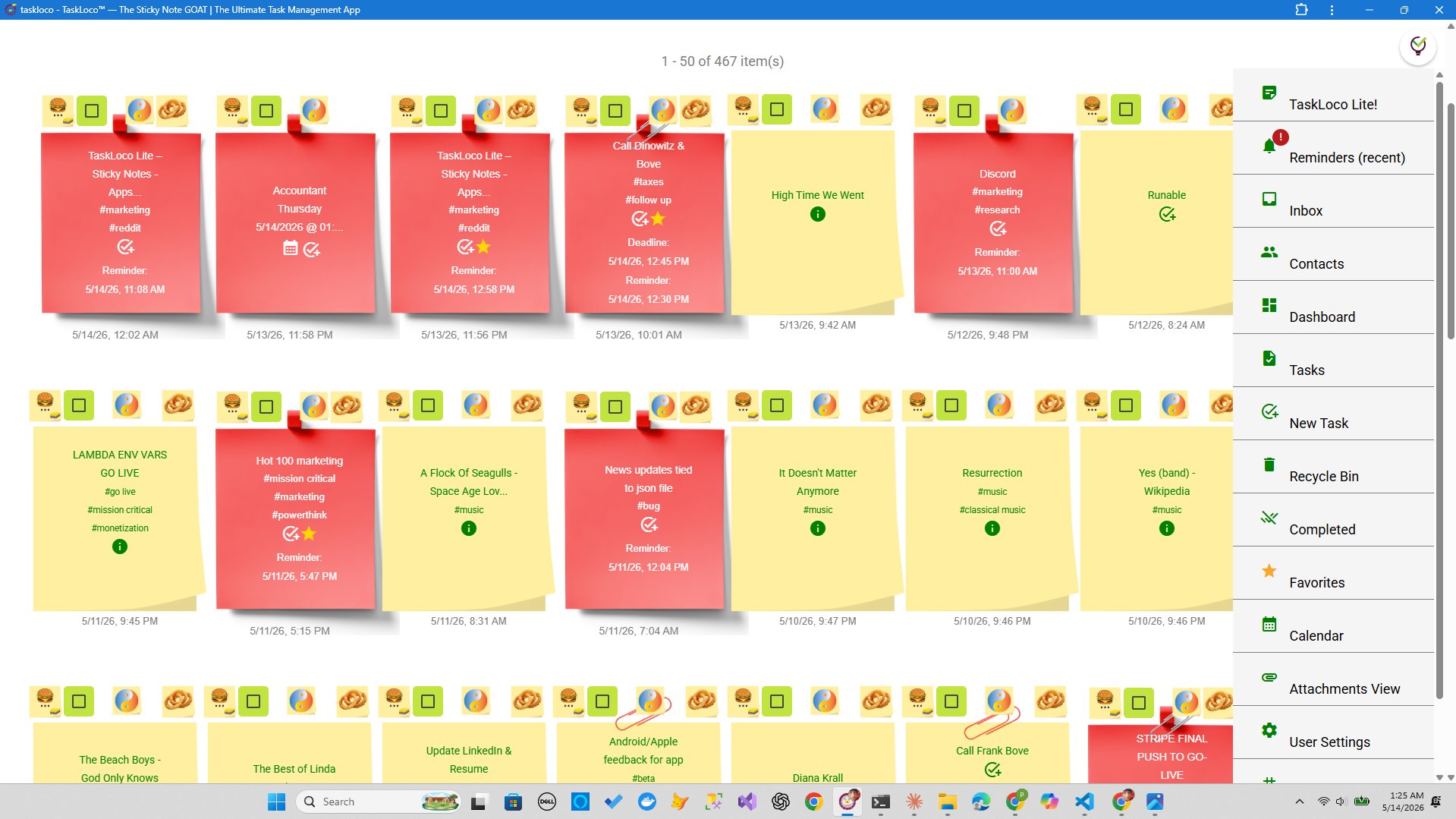
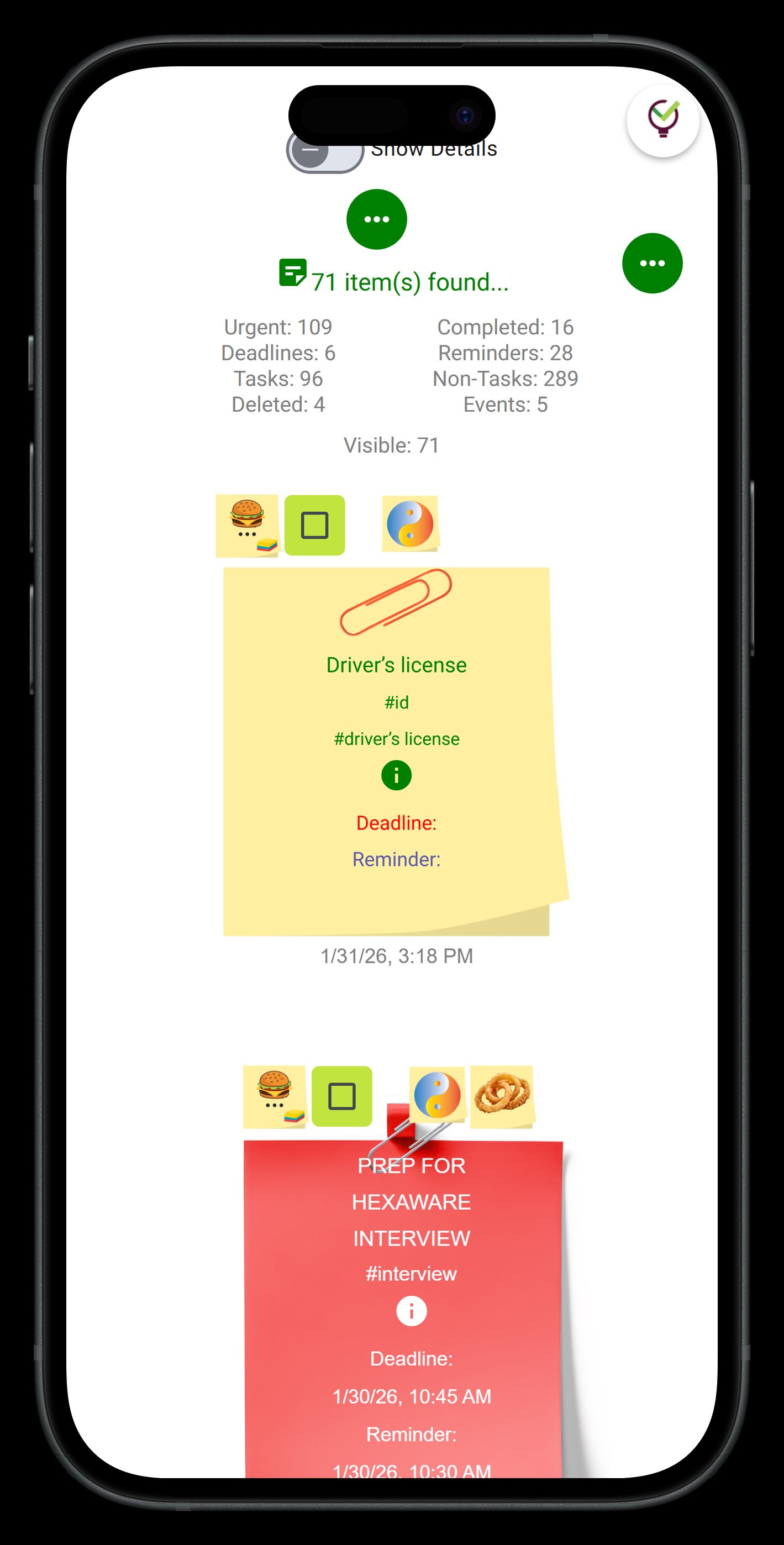
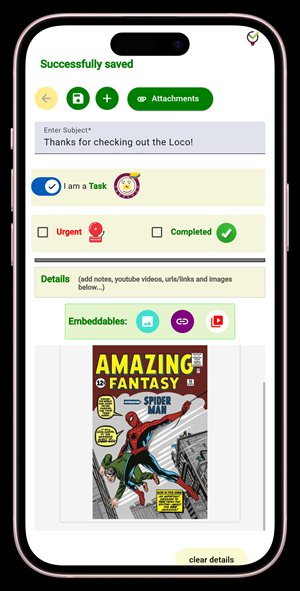
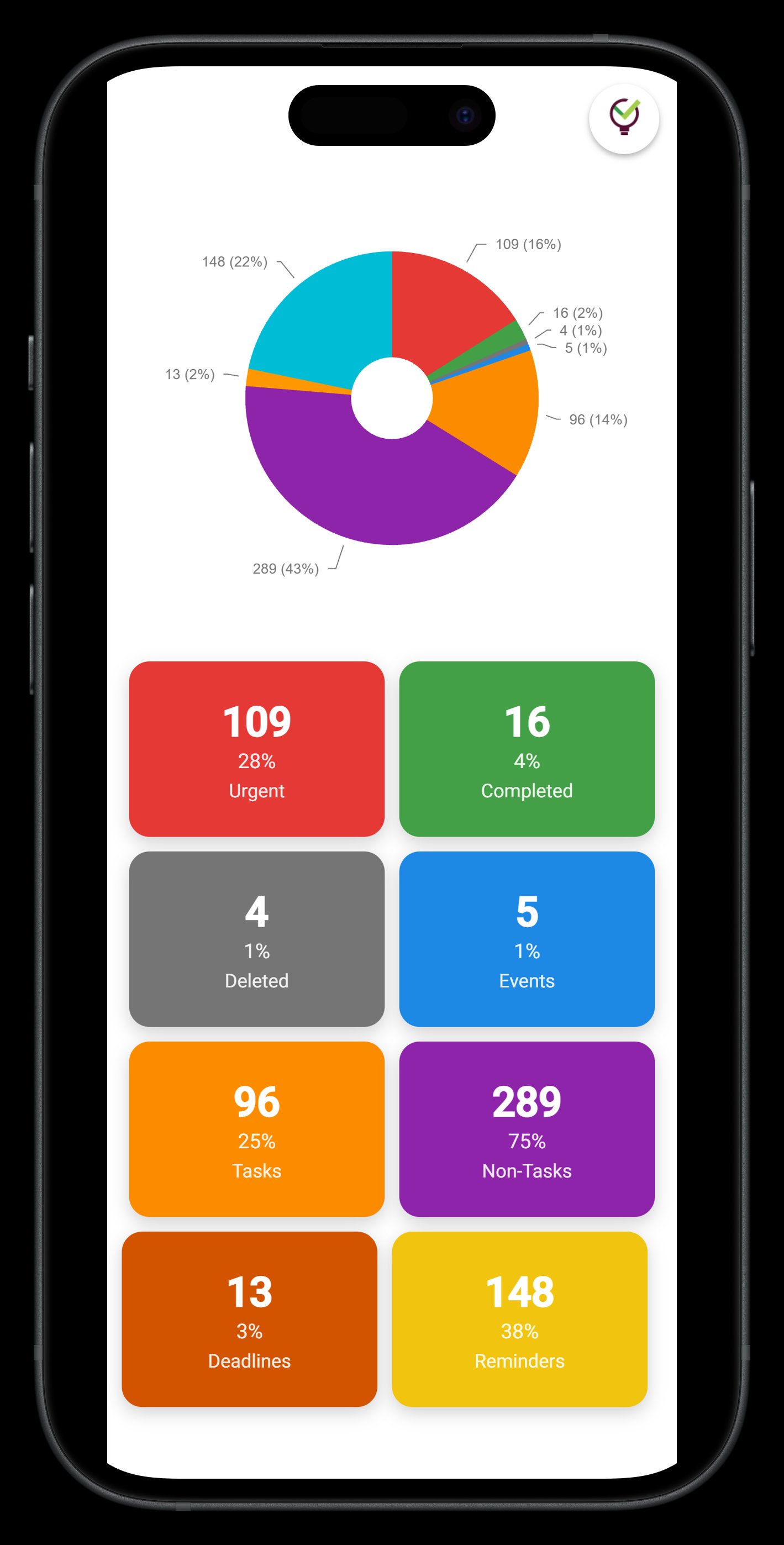
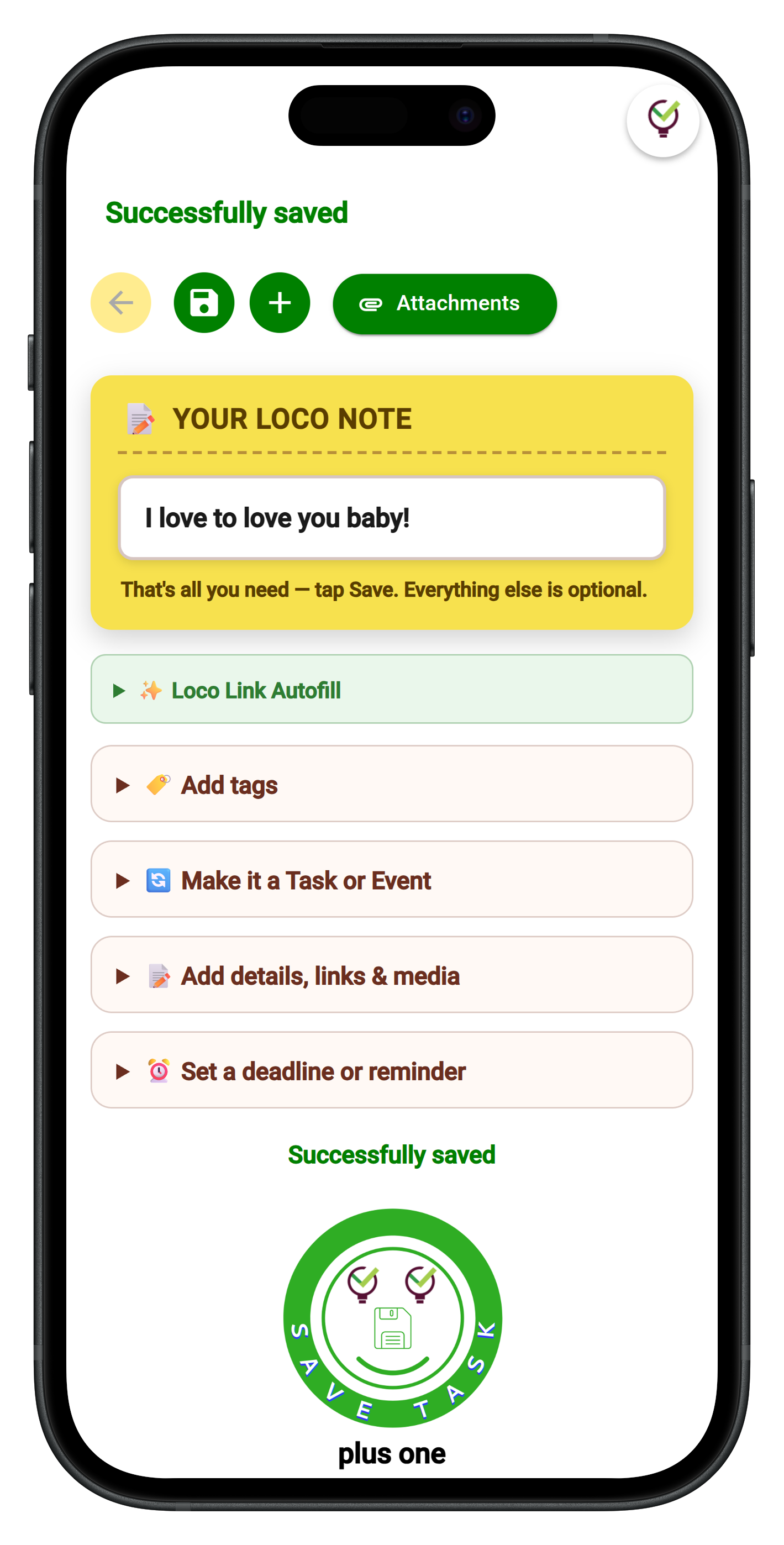
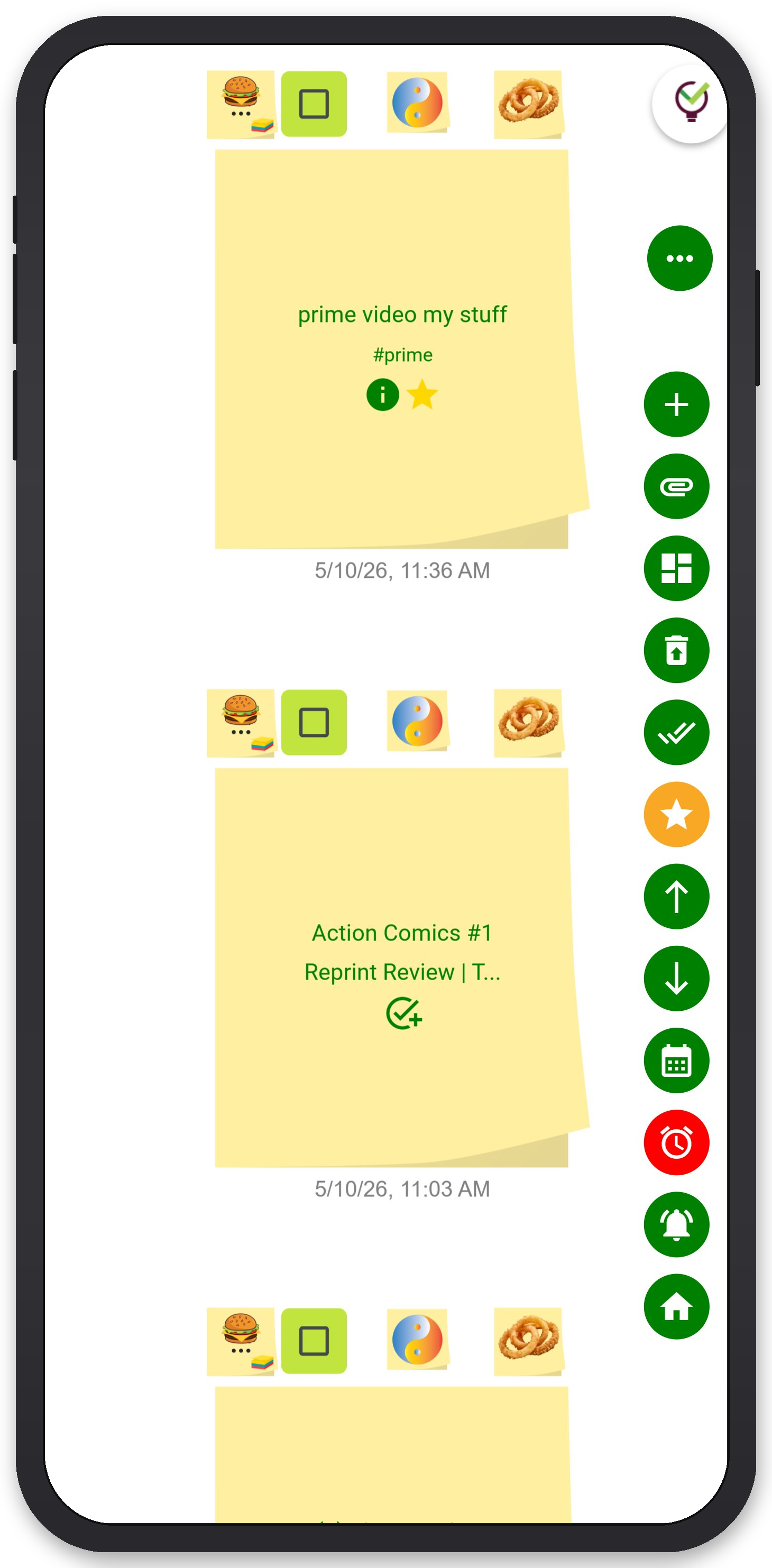
TaskLoco Premium is built exactly around this model. Your notes are color-coded, they live on a visual wall you can scan at a glance, and they carry file attachments (10GB included) for the documents, photos, or links that belong with a task. The same color-coding logic you'd use on a physical board translates directly — one note, one task, one color, visible on your wall.
The feature that matters most for ADHD, though, is reminders. In TaskLoco Premium, a reminder delivers a push notification directly to your phone and computer, and tapping it takes you straight back to the note. No hunting through menus, no "where did I put that task" — the reminder deep-links to the exact note. Optional email and SMS notifications are available as add-ons if you want extra channels.
Team sharing works the same way a shared email works: the recipient gets the note and can clone it as their own — no permissions setup, no access levels to configure, no IT ticket. If you work with a coach, partner, or anyone else who needs to see what you're working on, sharing a note takes seconds.
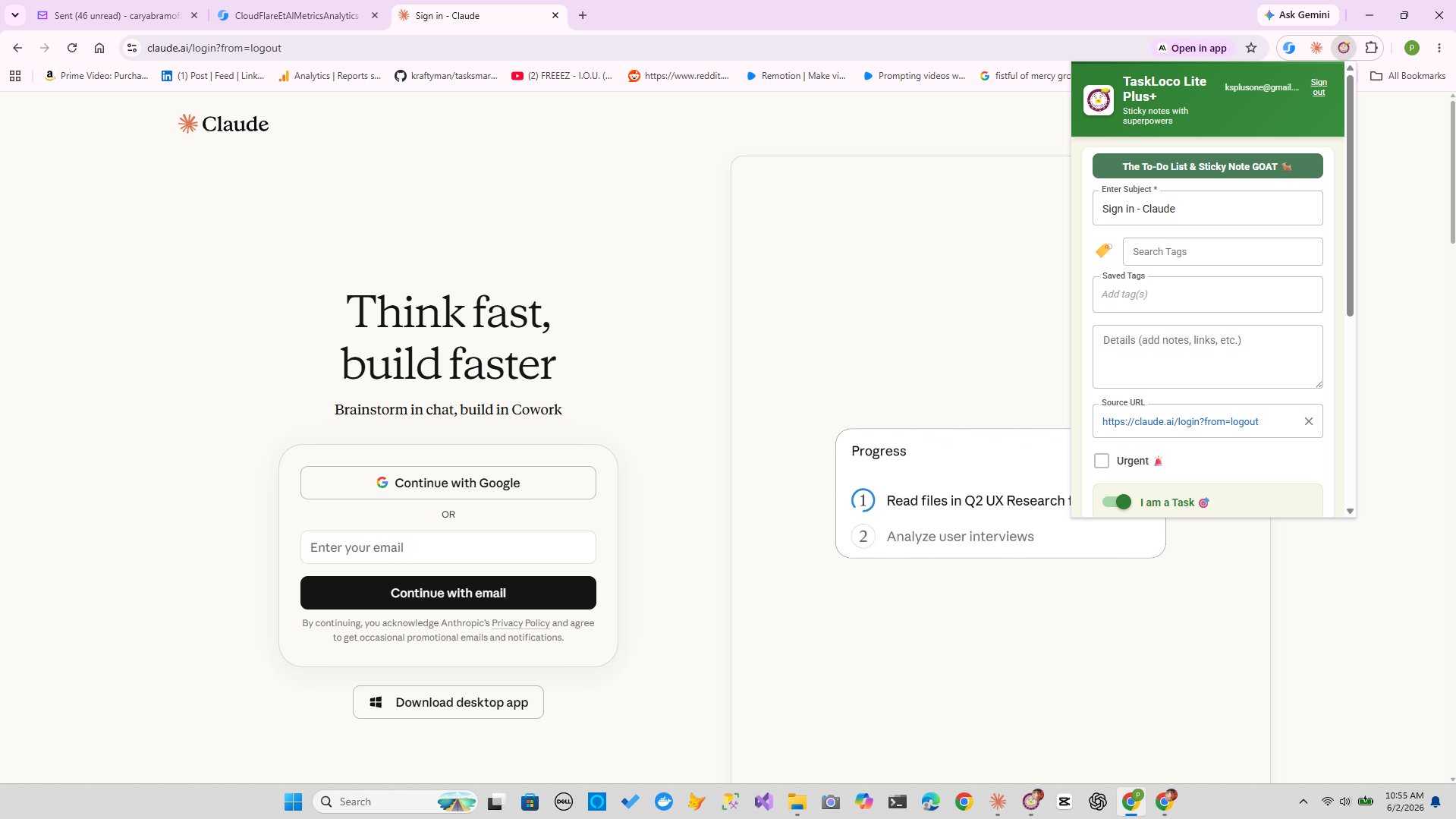
The Chrome extension is worth mentioning for ADHD specifically: when you find an article, a reference, or a webpage you need to act on later, one click captures it as a note. No copy-paste, no separate tab, no "I'll remember this" — it becomes a note on your wall immediately, ready to get a color and a due date.
TaskLoco Premium is regularly $9.99/month per person. Right now, charter members can lock in 50% off the regular price — forever. That means $4.99/month per person today. And if our price ever goes up, you still pay half. Always.
Code CHARTER50 auto-applies at checkout. First 500 spots only — once they're gone, this offer is gone permanently. Act fast while spots last.
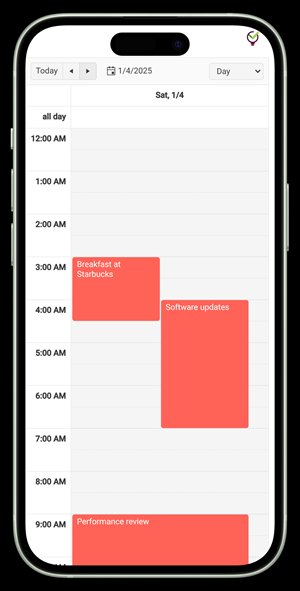
Every Premium subscription includes unlimited notes, 10GB file storage, reminders, calendar, and team sharing. Each team member requires a separate subscription. 7-day free trial — no charge until day 8. Cancel anytime.
Free Options: TaskLoco
TaskLoco Lite
- Native iPhone & Android app
- Completely anonymous — no sign-in
- Data stays on your device
- Up to 20 notes
- Free forever
TaskLoco Lite Plus+
- Web app + Chrome extension
- Sign in with Google
- Wall syncs across all devices
- Up to 30 notes
- Free forever
Lock In 50% Off — Forever
7-day free trial. No charge until day 8. CHARTER50 auto-applies at checkout.
🔒 Lock In My Charter SpotSee TaskLoco in Action
Frequently Asked Questions
Why are sticky notes good for ADHD?
ADHD brains rely heavily on visual cues and environmental triggers. Sticky notes make tasks physically visible in your workspace, which means you don't have to remember to check a list — the reminder is always in your line of sight. The act of writing a task by hand also reinforces memory encoding, and the physical ritual of moving or removing a note provides a small dopamine hit that digital checkboxes often don't.
What colors should I use for ADHD task management?
Start simple: red for urgent, yellow for in-progress, green for done. Add a blue for waiting/blocked and a pink or purple for tasks that need deep focus. The colors themselves don't matter — consistency does. Pick a system, write it down somewhere, and never break the rules. The moment colors become arbitrary, the system stops working.
How many sticky notes should I have at once?
As few as possible. Cap your urgent (red) notes at five. If you exceed that, you must remove one before adding another — either by completing a task or downgrading its urgency. Too many notes create visual noise that your ADHD brain will start filtering out, defeating the entire purpose. A full wall of notes is a sign the system needs a reset, not more notes.
How do I stop forgetting to look at my sticky notes?
Placement is the answer, not willpower. Put notes at your physical anchor points — the spots you visit every day without thinking, like your laptop edge, mirror, phone charger, or refrigerator. If you're not seeing your notes regularly, move them somewhere more intrusive. The goal is to make ignoring them harder than noticing them.
Can I use digital sticky notes for ADHD instead of paper?
Yes, and digital notes solve some real problems paper can't — they travel with you, they can hold file attachments, and they can send reminders. TaskLoco Premium delivers reminders as push notifications that deep-link directly back to the note, so you don't lose the context when the reminder fires. The visual wall layout preserves the at-a-glance scanning that makes physical sticky notes effective for ADHD brains. $9.99/month per person (currently $4.99/month per person for first 500 charter members with code CHARTER50)
What's the best way to write tasks on sticky notes for ADHD?
Write every task as a specific action, not a topic. "Email" is not a task. "Reply to Marcus about the Thursday budget meeting" is a task. The more specific the language, the lower the initiation barrier — your brain doesn't have to figure out what the task means before it can start. One note, one sentence, one action. If it takes more than that, it's a project and needs to be broken down.
How do I build a daily reset habit with sticky notes?
Stack the reset onto something you already do every day — first coffee, opening your laptop, brushing your teeth. The reset itself takes about five minutes: archive completed notes, promote any waiting tasks that are now active, write new urgent notes for the day (max five), and flag any in-progress notes that have stalled. Consistency with the reset is more important than perfection with the notes.
Born in Brooklyn. Powered by AWS. Your data stays yours.
TaskLoco is available on iPhone, Android, Chrome, and every web browser.