You text your partner 'can you grab milk?' They text back 'already got some.' You come home with milk. There are now three cartons in the fridge. Or the opposite: neither of you buys it, and you're both standing in the kitchen at 7pm wondering who dropped the ball. Shared household logistics fail in predictable ways — and almost none of them are about forgetting. They're about information living in two different heads with no reliable bridge between them.
The good news: this is a genuinely solvable problem. It doesn't require a fancy app or a productivity overhaul. It requires one shared system, two people who agree to use it, and about five minutes to set it up. This guide covers the practical methods — from analog to digital — so you can pick the one that fits how you and your partner actually live.
The Core Problem: Two People, One Household, Zero Shared Memory
Most couples don't fail at shared lists because they're disorganized. They fail because they never agreed on one place where the list lives. You add items to your mental running tab. Your partner adds items to theirs. Neither list gets communicated until someone's already at the store, phone in hand, trying to reconstruct what you needed from a three-day-old text thread.
Before you pick a tool or system, settle these three questions as a couple:
- Where does the list live? One place. Not 'the whiteboard usually, but sometimes the group chat.' One place.
- Who adds to it? Both of you, as things come up — not in a batch the night before shopping.
- When do you shop? If you have a consistent shopping day, review the list together the morning of. If shopping is ad hoc, whoever goes checks the list before leaving, every time.
That's the whole framework. Everything else is just choosing the right container for it.
Practical Methods: From Whiteboard to App
There's no universally right answer here. The best system is the one both of you will actually use. Here's an honest rundown of what works and where each approach breaks down.
The Whiteboard or Paper List
A magnetic notepad on the fridge or a whiteboard in the kitchen works well for groceries specifically — it's visible, tactile, and requires zero technology. The fatal weakness: it doesn't travel with you. If your partner is already near the store and the list is on the fridge, you're back to texting. Good as a primary capture point; fails as a shopping companion.
A Shared Note in Your Phone's Default App
Apple Notes and Google Keep both allow shared notes. You create one note, share it with your partner, and you both have edit access. This works surprisingly well for many couples — it's free, it's always in your pocket, and most people already have the app. The main limitation: no structure. A single running note can get messy fast, especially when you're mixing groceries with home repairs with 'call the landlord' items.
A Dedicated Shared List App
Apps built specifically for shared lists — or general-purpose notes apps with solid sharing — give you more organization. You can separate groceries from household tasks, check items off without deleting them, and both partners see changes instantly. The downside is convincing your partner to download and use yet another app.
A Shared Spreadsheet
Google Sheets works well for couples who like structure. You can have tabs for groceries, home projects, and recurring tasks. It's overkill for a simple grocery run but genuinely useful if you have complex household management needs — tracking expenses, managing a renovation, coordinating with a landlord. Both partners can edit from any device, and changes sync in real time.
The Group Chat Method
Almost every couple uses this at some point. It's the worst option for lists. Chat is for conversation, not reference. 'Milk' gets buried under twelve other messages before anyone goes shopping. Avoid it as your primary list system, though it's fine for one-off urgent items.
Building the Habit: Making It Stick Long-Term
The system you pick matters less than the habit you build around it. Here's what separates couples who actually use their shared list from the ones who abandon it after two weeks.
Add items the moment you notice, not later. You open the cabinet, you see you're almost out of coffee — add it right then. 'I'll remember to add it tonight' is where lists go to die. Friction is the enemy. Your system needs to be reachable in under ten seconds or the habit won't form.
Don't wait for a 'shopping session' to organize the list. The list should be a living document, not something you compile the night before shopping. Both partners should feel comfortable adding a single item at any moment without it feeling like an interruption.
Do a quick list review together before whoever shops leaves. Even thirty seconds of 'anything else we need?' before the shopping trip prevents most missed items. This is also a good moment to note quantities, brand preferences, or 'only if it's on sale' conditions.
Keep old items for reference. Instead of deleting completed grocery items, consider archiving them. Most households buy the same things repeatedly. A record of your last few shopping lists is surprisingly useful when you're trying to remember whether you usually buy the 2% or the whole milk.
Assign to-do items explicitly. 'Schedule the pest control visit' sitting on a shared list with no owner is just as likely to get done by neither of you as it is by one of you. For household tasks, add a name next to the item. It removes ambiguity and prevents the passive standoff of 'I thought you were going to do that.'
How TaskLoco Fits Into This (One Option Worth Knowing About)
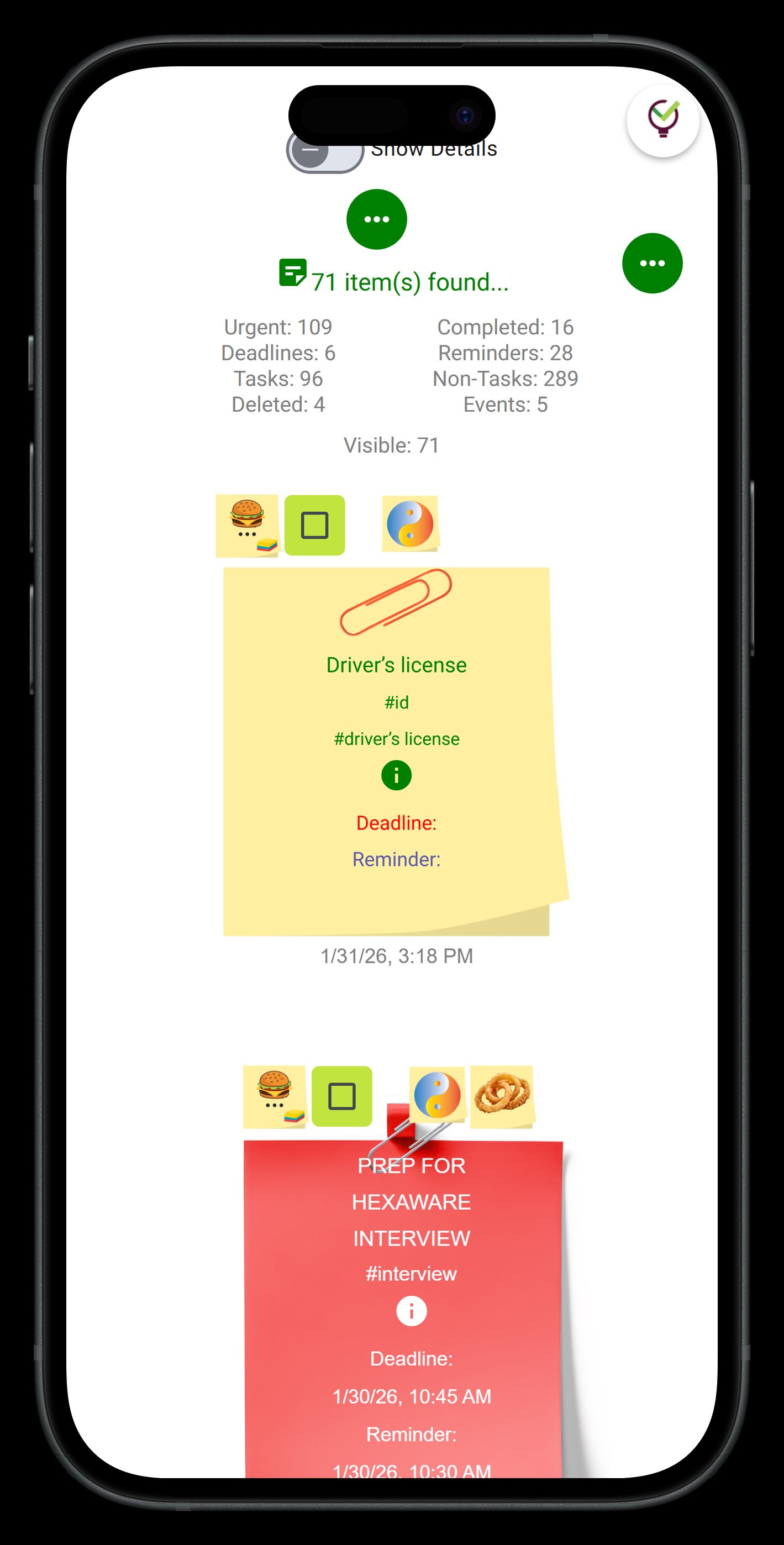
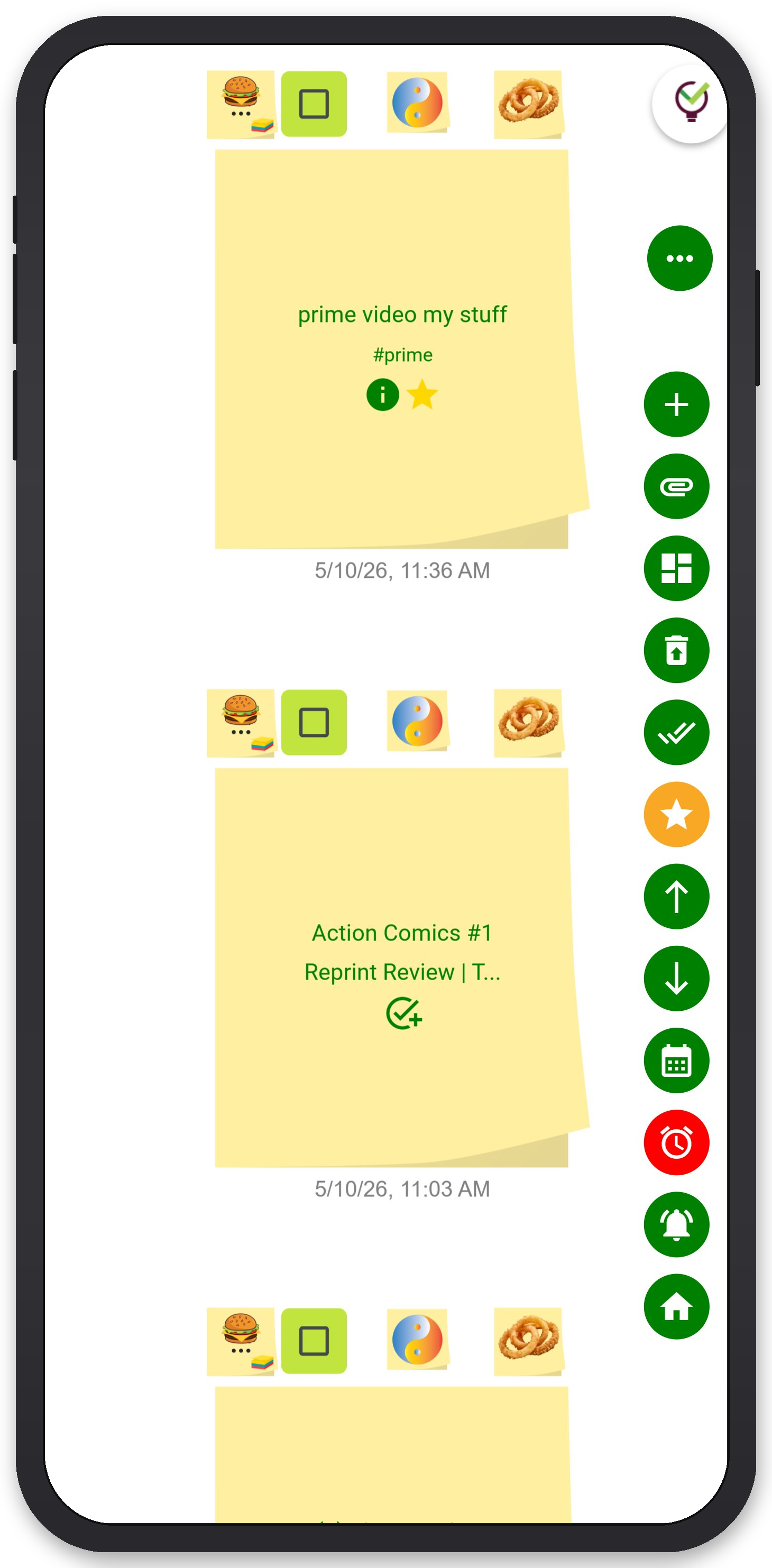
If you want a digital system and you're open to something beyond a basic notes app, TaskLoco is worth a look. It's built around sticky notes as the core unit — which maps naturally to how most people think about lists. You create a note for groceries, a note for household to-dos, a note for the running 'call these people' list. Everything lives on one wall you can see at a glance.
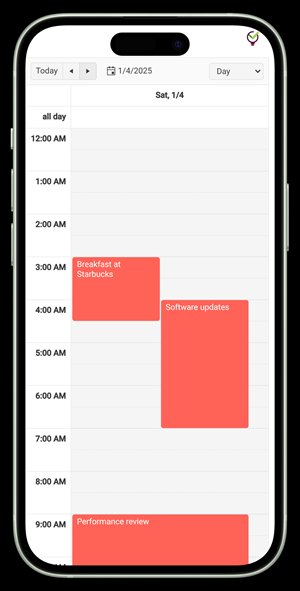
The sharing works more like email than traditional permissions: you share a note with your partner and they get their own copy to work with — no access levels to configure, no 'viewer vs. editor' friction. Reminders are built in and deliver as push notifications directly to your phone and computer, with optional email or SMS if you want an extra nudge. If you add 'pick up the dry cleaning' and set a reminder, the notification deep-links straight back to the note — not just a generic alert you have to go hunt for.
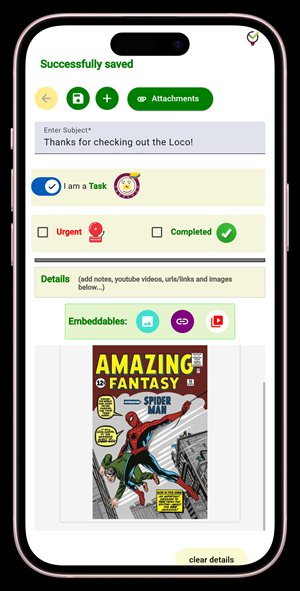
For the grocery list specifically: TaskLoco Premium includes 10GB of file storage, so you can attach a photo of the exact pasta brand or the specific paint color you need for a home project. No more 'I wasn't sure which one you meant' from whoever's standing in the aisle.
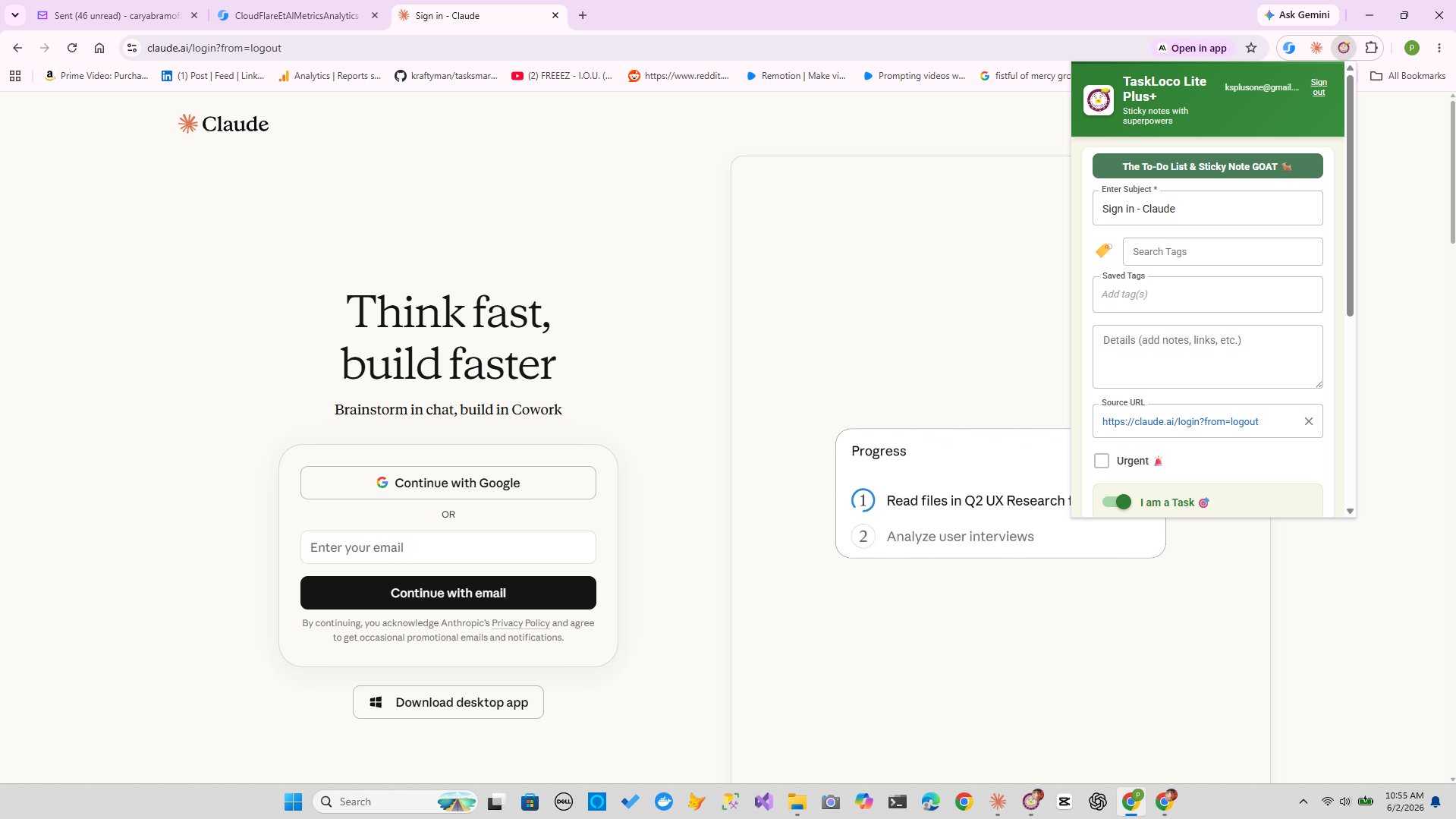
There's also a free tier to start with — no credit card required. TaskLoco Lite Plus+ is a free web app (plus a Chrome extension for one-click saves) that syncs across all your devices and gives you up to 30 notes. That's enough to run a solid shared list system for most households without spending anything. When you're ready for reminders, attachments, unlimited notes, and calendar view, that's when Premium comes in.
TaskLoco Premium is regularly $9.99/month per person. Right now, charter members can lock in 50% off the regular price — forever. That means $4.99/month per person today. And if our price ever goes up, you still pay half. Always.
Code CHARTER50 auto-applies at checkout. First 500 spots only — once they're gone, this offer is gone permanently. Act fast while spots last.
Every Premium subscription includes unlimited notes, 10GB file storage, reminders, calendar, and team sharing. Each team member requires a separate subscription. 7-day free trial — no charge until day 8. Cancel anytime.
Free Options: TaskLoco
TaskLoco Lite
- Native iPhone & Android app
- Completely anonymous — no sign-in
- Data stays on your device
- Up to 20 notes
- Free forever
TaskLoco Lite Plus+
- Web app + Chrome extension
- Sign in with Google
- Wall syncs across all devices
- Up to 30 notes
- Free forever
Lock In 50% Off — Forever
7-day free trial. No charge until day 8. CHARTER50 auto-applies at checkout.
🔒 Lock In My Charter SpotSee TaskLoco in Action
Frequently Asked Questions
What's the easiest way to share a grocery list with my partner?
The easiest approach is a shared note in an app you both already have — Apple Notes, Google Keep, or any notes app that supports shared access. Create one note, share it with your partner, and you both have edit access from your own phones. The key is agreeing that this one note is the grocery list — not 'one option among several.' Simplicity and agreement matter more than which app you pick.
Should we keep groceries and household to-dos on the same list?
No — keep them separate. Groceries are high-frequency, time-sensitive, and get fully refreshed every week or two. Household to-dos accumulate over time, have longer timelines, and often need to be assigned to a specific person. Mixing them creates visual clutter that makes both lists harder to act on. Use two separate notes or lists, even if they live in the same app.
How do we make sure both of us actually add to the list?
Friction is the main barrier. The system needs to be reachable in under ten seconds — ideally from your phone's home screen or a pinned widget. If adding an item requires opening an app, finding the right note, and remembering where things go, one partner will default to texting instead. Make the list the path of least resistance. The other factor is agreeing explicitly that both people maintain it — not one person who 'manages' it while the other 'just says what they need.'
What happens when we both edit the list at the same time?
Any app with real-time sync handles simultaneous edits gracefully — changes from both partners merge without conflict. Apple Notes, Google Keep, and most dedicated notes apps with cloud sync all do this well. The only version of this that fails is a list stored locally on one person's phone with no sync — in that case, only the person who owns the device can update it in real time, which defeats the whole purpose of sharing.
Can TaskLoco be used as a shared grocery and to-do list?
Yes. TaskLoco's note-sharing works by giving your partner their own copy of a shared note — no permissions to manage, no 'request access' friction. You can keep a grocery note, a household to-do note, and whatever else you need on a shared wall. TaskLoco Premium adds reminders (delivered as push notifications that deep-link back to the note), file attachments (useful for product photos or reference images), and unlimited notes. The free Lite Plus+ tier gives you 30 synced notes across all devices with no credit card required — enough for most households to get started.
Is a whiteboard still a good option for a shared grocery list?
For capture, yes — a whiteboard or magnetic notepad on the fridge is great because it's always visible and requires no technology. The problem is that it doesn't travel. Whoever goes shopping has to either photograph it, transcribe it, or rely on memory. If one partner does all the shopping and always sees the fridge before leaving, a whiteboard works fine. If shopping is split or ad hoc, a digital list that's always in your pocket is more reliable.
How do we handle recurring items that we buy every week?
A few approaches work well. One: keep a 'always buy' section at the top of your grocery note — staples that get purchased every trip regardless. Both partners know not to delete those items. Two: use a template. Every shopping cycle, start with a copy of your standard list and add to it. The right approach depends on how varied your shopping tends to be week to week.
Born in Brooklyn. Powered by AWS. Your data stays yours.
TaskLoco is available on iPhone, Android, Chrome, and every web browser.