Most productivity systems fail for the same reason: they rely on willpower at the exact moment you have the least of it. You planned the task yesterday when you felt motivated. Today, 3 p.m. hits, and suddenly anything — email, a snack, literally staring at a wall — feels more appealing. That gap between intention and action is where productivity systems go to die.
Commitment devices close that gap before it opens. Borrowed from behavioral economics, they are constraints you impose on your future self, making the desired behavior easier and the escape route harder. They are not motivational tricks. They are structural fixes. And when you pair them with the right tools, they genuinely change how much you get done.
What Is a Commitment Device — and What Actually Makes One Work?
A commitment device is any mechanism that locks you into a course of action before the temptation to abandon it arrives. The classic example is Ulysses tying himself to the mast so he couldn't steer toward the Sirens. The modern version might be paying for a gym membership in advance, giving a friend $100 to hold until you finish a project, or blocking social media during your focus hours.
The psychology behind them is solid. Nobel Prize-winning economist Richard Thaler and legal scholar Cass Sunstein built an entire framework — nudge theory — around the idea that changing the choice architecture changes behavior more reliably than changing motivation. A commitment device is the strongest form of nudge: it removes the bad choice from the menu entirely, or makes it costly enough that you default to the good one.
Three criteria actually determine whether a commitment device will work:
- Friction asymmetry. The commitment must make the desired behavior easier than the alternative. If bailing out is still frictionless, the device has no teeth.
- Visibility. The commitment needs to be in your face at the moment of decision, not buried in a note you opened three weeks ago. Out of sight is out of mind — literally.
- Consequence. There must be a real cost to breaking it — social, financial, or at minimum the cognitive discomfort of consciously choosing to fail. The cost doesn't have to be dramatic, but it must be real.
The Most Effective Commitment Device Formats — and How to Build Them
Not every commitment device looks the same. The right format depends on what kind of task you're trying to protect and what kind of pressure you respond to. Here are the ones that actually work in practice:
Public accountability commitments. Tell someone — a colleague, a group chat, a Twitter audience — what you're going to do and by when. The social cost of public failure is a surprisingly powerful motivator. This works especially well for creative projects and long-term goals where progress is invisible until you announce it. Pair this with a shared note so your accountability partner can see exactly what you committed to.
Pre-commitment stakes. Put something on the line. Platforms like Beeminder let you pledge money against missing a daily goal. You don't need a platform to do this — a handshake agreement with a friend works. The key is that the stake must actually sting. A dollar is a joke; a hundred dollars is a commitment device.
Environmental design. Remove the escape routes before you sit down. Phone in another room. Website blocker on. The note for today's single most important task front and center on your screen before anything else opens. Environmental design is the quietest commitment device and often the most effective because it doesn't require remembering to activate it — you set it up once, and it runs.
Time-locked plans. Schedule the work as if it's a meeting you can't cancel. Put it in your calendar with a reminder. The moment it's on the calendar with a notification coming, it graduates from intention to appointment. The reminder that fires at the right moment — and drops you directly into the relevant note — is what separates a plan from an actual commitment.
Why TaskLoco Is Built for Commitment Devices
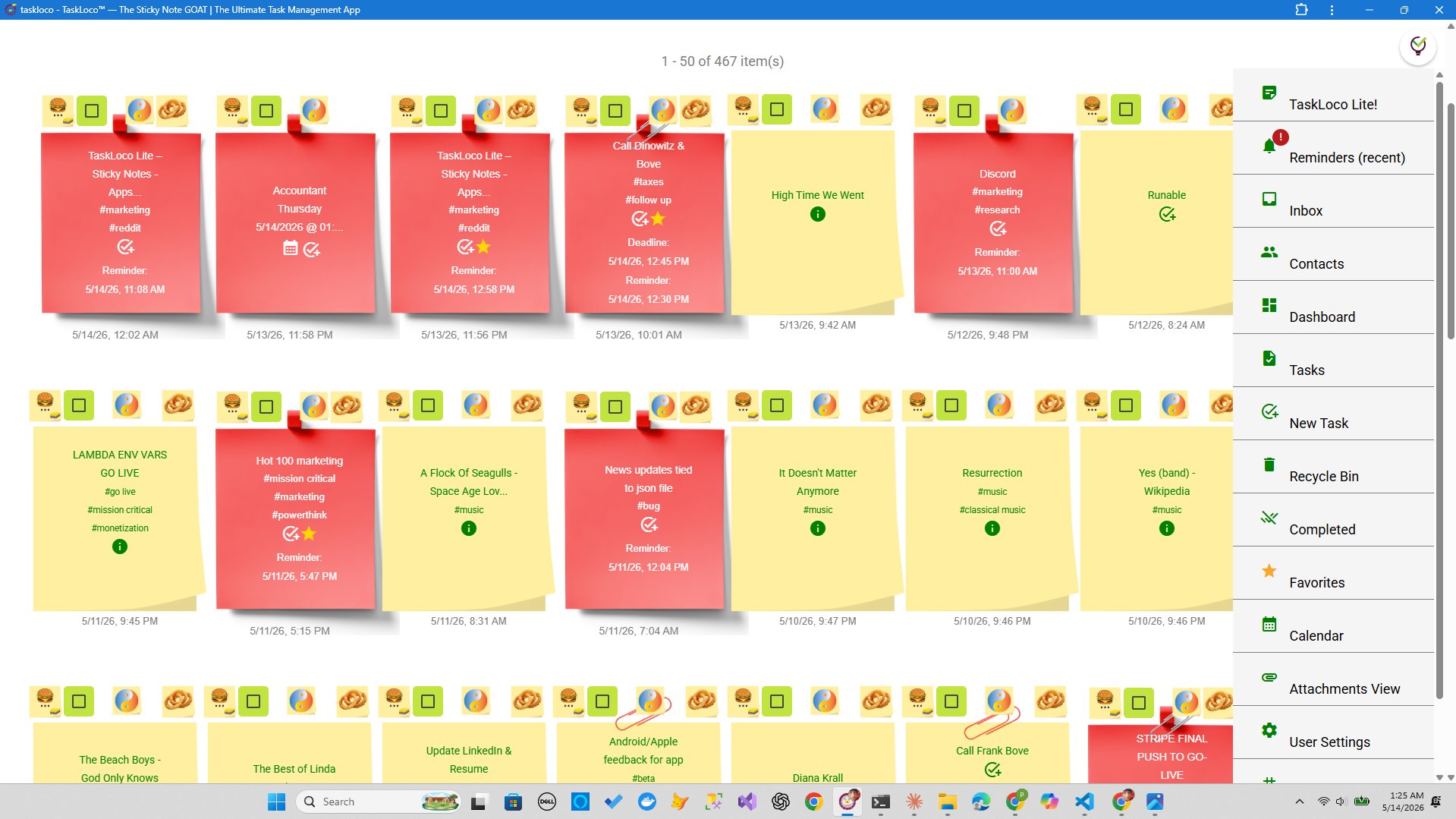
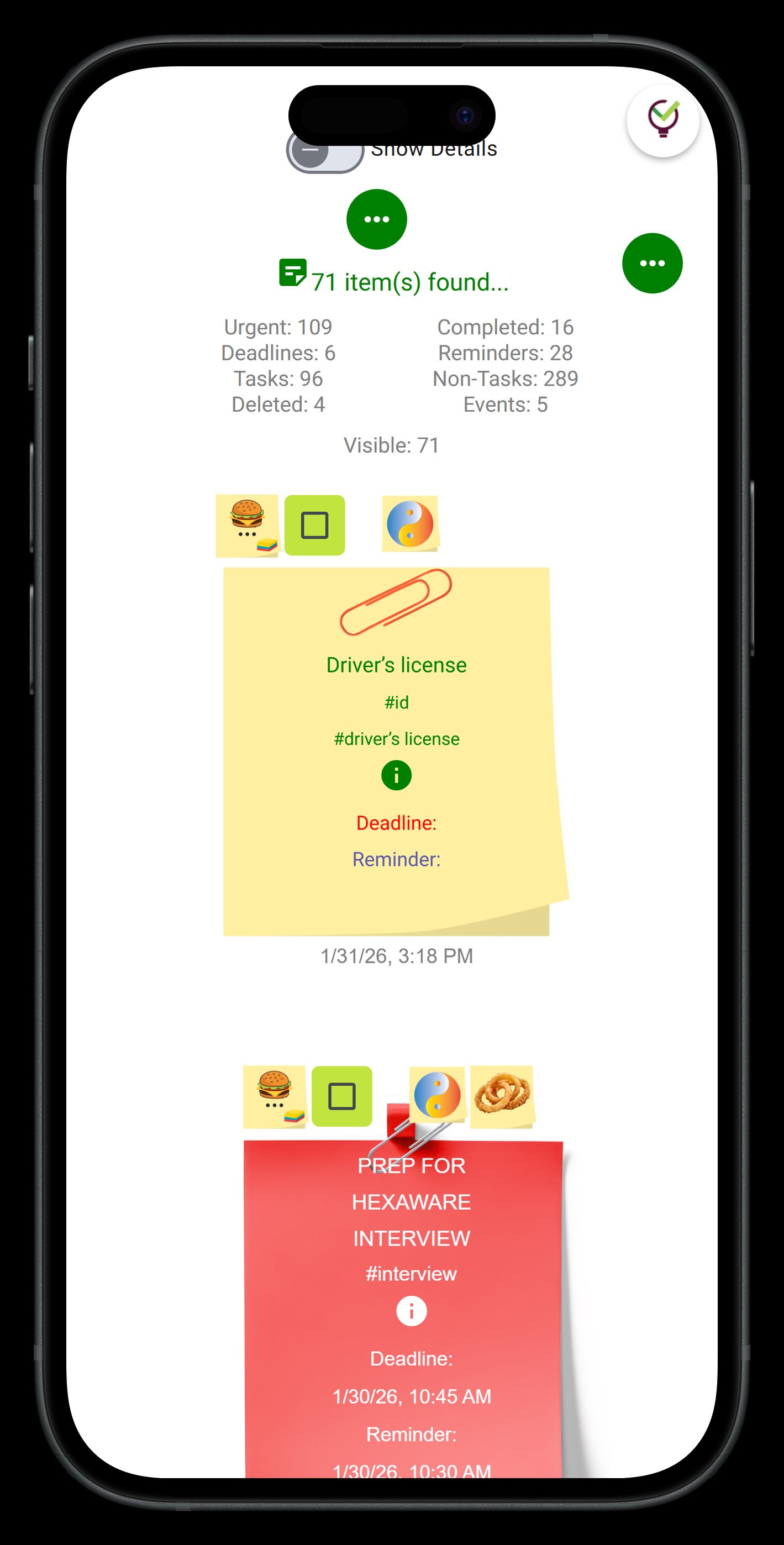
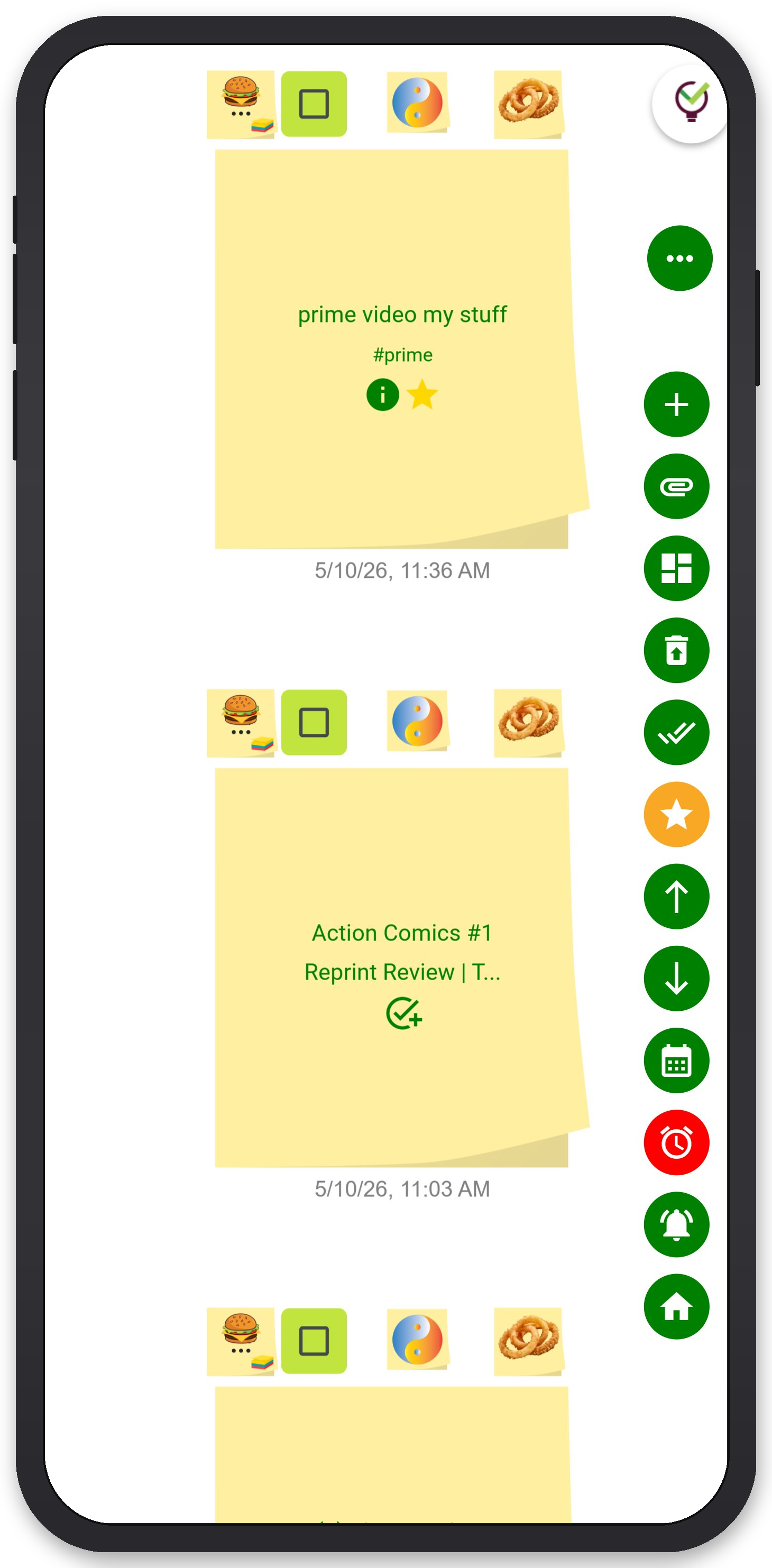
Most productivity apps are organized around projects and pipelines — which is great if you're managing a team's output but terrible for personal commitment devices, which need to be immediate, visual, and impossible to ignore. TaskLoco is built around sticky notes, which means your commitments behave the way a physical sticky note does: they're in front of you, they demand attention, and they don't disappear into a backlog.
The feature that matters most for commitment devices is TaskLoco Premium's reminder system. When a reminder fires, it doesn't just ping you — it delivers a push notification directly to your phone and computer that deep-links back to the exact note the commitment lives in. One tap and you're looking at your commitment, not hunting through an app to find what you were supposed to do. Optional email notifications are available if you want a secondary channel, and SMS is available as an add-on. But the push notification — instant, direct, linked — is what makes a TaskLoco reminder a genuine commitment trigger rather than a generic alarm.
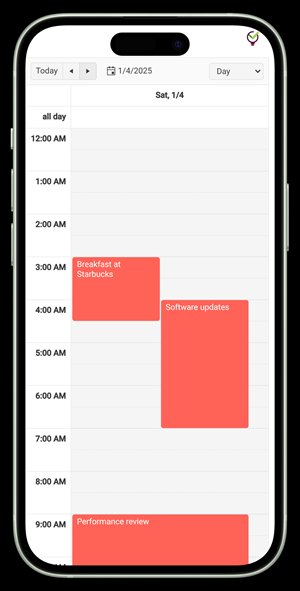
The calendar view in TaskLoco Premium turns your commitments into a timeline you actually look at. This matters because visibility is one of the three criteria that determine whether a commitment device works. When your commitment is on a calendar you open every morning, it exists in your real schedule — not in a list you'll get to eventually.
Team sharing enables the public accountability format directly inside your workflow. Share a note with a colleague. They can clone it and make it their own — no permissions setup, no access levels to manage — and now two people are watching that commitment move forward. That social layer is often the difference between a goal you keep and one you quietly shelve.
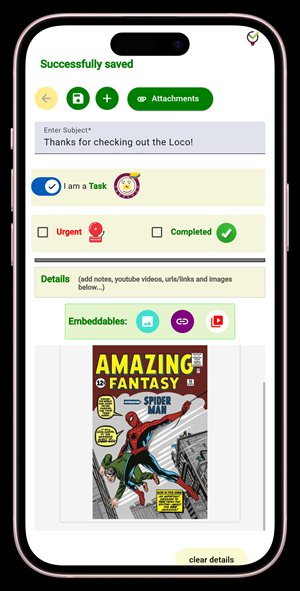
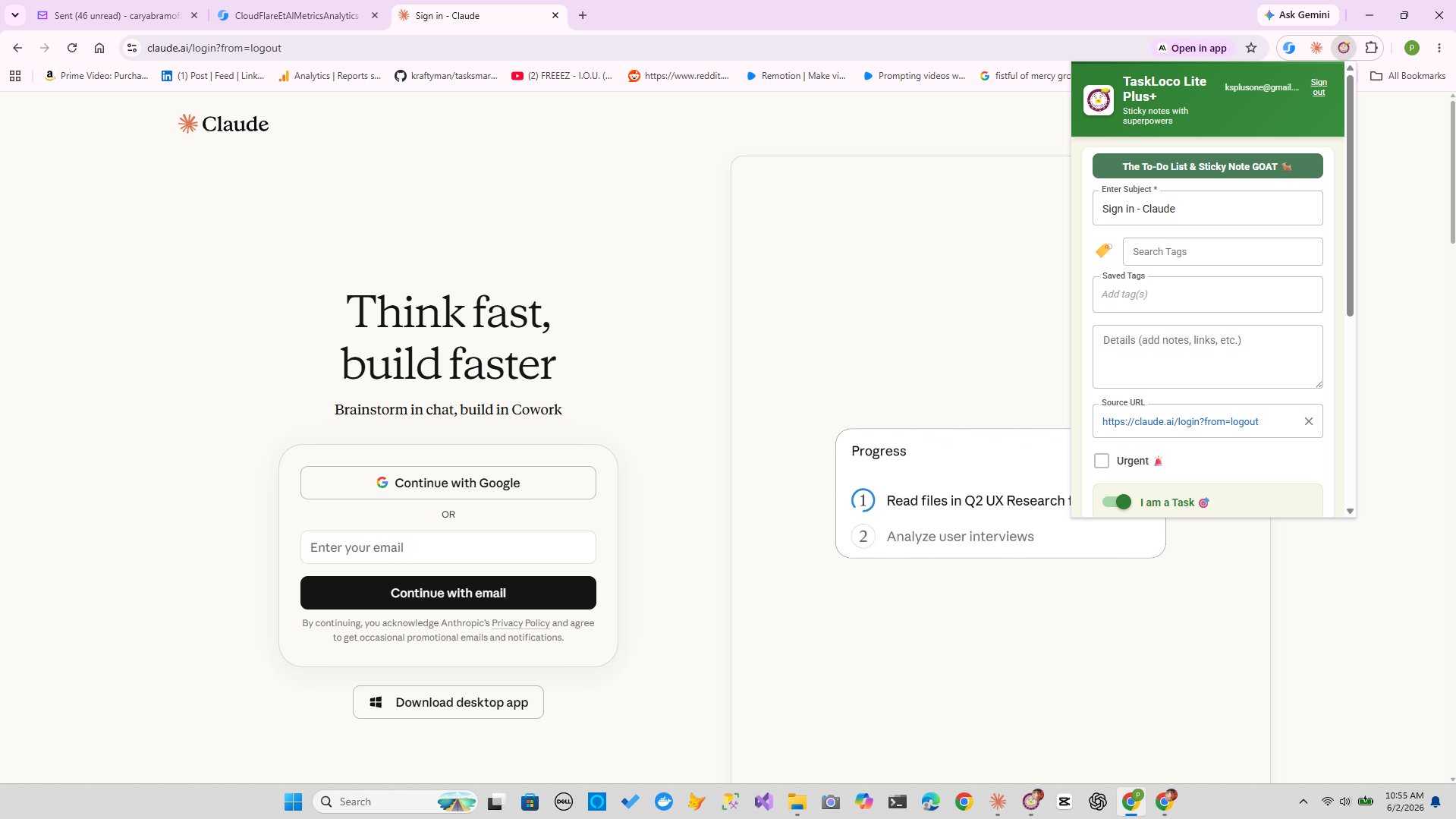
For capturing commitments on the fly, the Chrome extension lets you clip a webpage — a resource, a brief, a reference — into a note in one click. If your commitment is tied to a specific piece of content, it lives right there in the note from the start.
Putting It Together: A Commitment Device System That Actually Sticks
Here is a practical system that uses commitment devices consistently, built around TaskLoco but adaptable to any setup that gives you visibility, reminders, and accountability.
Step 1: Write the commitment as a note, not a task. A task says "finish report." A commitment note says what you're committing to, why it matters, what done looks like, and what happens if you skip it. The detail is the device — it costs you something to read a specific commitment and then deliberately choose to ignore it. Vague tasks are easy to defer; real commitments have weight.
Step 2: Attach a push notification reminder. Set it for the moment before you need to start, not the moment the deadline arrives. The reminder deep-links back to your note. When it fires, you're one tap away from everything you wrote down about why this matters.
Step 3: Put it on the calendar. In TaskLoco Premium's calendar view, block the time. Your commitment is now an appointment. It has a start time and an end time. Every morning when you open the calendar, it's already there, staring back at you.
Step 4: Add an accountability layer. Share the note with at least one other person. They see what you committed to. They can clone it, engage with it, follow it. The social cost of bailing is now real and specific, not abstract.
Step 5: Attach relevant files or context. With Premium's 10GB file storage, everything the commitment needs lives in the note itself. No hunting for docs. No friction at start time. Friction at start time is one of the most common reasons people default on commitments — eliminate it entirely.
This is not a complicated system. It is a simple one applied consistently. Commitment devices work not because they are clever, but because they are real — they impose actual structure on a future version of you who would otherwise choose the path of least resistance. The tool you use matters only insofar as it helps you make the structure visible, specific, and hard to ignore.
TaskLoco Premium is regularly $9.99/month per person. Right now, charter members can lock in 50% off the regular price — forever. That means $4.99/month per person today. And if our price ever goes up, you still pay half. Always.
Code CHARTER50 auto-applies at checkout. First 500 spots only — once they're gone, this offer is gone permanently. Act fast while spots last.
Every Premium subscription includes unlimited notes, 10GB file storage, reminders, calendar, and team sharing. Each team member requires a separate subscription. 7-day free trial — no charge until day 8. Cancel anytime.
Free Options: TaskLoco
TaskLoco Lite
- Native iPhone & Android app
- Completely anonymous — no sign-in
- Data stays on your device
- Up to 20 notes
- Free forever
TaskLoco Lite Plus+
- Web app + Chrome extension
- Sign in with Google
- Wall syncs across all devices
- Up to 30 notes
- Free forever
Lock In 50% Off — Forever
7-day free trial. No charge until day 8. CHARTER50 auto-applies at checkout.
🔒 Lock In My Charter SpotSee TaskLoco in Action
Frequently Asked Questions
What is a commitment device in productivity?
A commitment device is a pre-made decision that constrains your future behavior before willpower fails. Classic examples include paying for something in advance, making a public pledge, or setting up environmental blocks that remove the option to procrastinate. The goal is to make the desired behavior the path of least resistance at the moment it matters.
Do commitment devices actually work?
Yes — the research is consistent. Studies in behavioral economics show that people who use commitment devices follow through on goals significantly more often than those who rely on motivation alone. The key is implementation: the device must create real friction asymmetry (the good behavior is easier than the bad), be visible at the moment of decision, and carry a genuine consequence for breaking it. A commitment device you can ignore effortlessly is not a device.
What are the best apps for commitment devices?
The best app for a commitment device is one that keeps your commitment visible, sends you a direct reminder that takes you straight to the note, and gives you a way to share the commitment with an accountability partner. TaskLoco Premium does all three: sticky-note-style visibility, push notification reminders that deep-link back to your note, a calendar view that puts commitments in your daily schedule, and team sharing that creates real social accountability.
How do I use a sticky note as a commitment device?
A sticky note works as a commitment device because it is visible and specific. Write the commitment in concrete terms — what you will do, by when, and what it costs you not to. Put it somewhere you cannot avoid seeing it at decision time. In TaskLoco, a sticky note becomes even more powerful because you can attach a push notification reminder to it and share it with a colleague, adding two more layers of accountability on top of the visibility the note already provides.
What is the difference between a goal and a commitment device?
A goal is an intention. A commitment device is a structural constraint that makes following through on that intention the default outcome. "I want to finish the proposal by Friday" is a goal. "I've blocked Thursday afternoon in my calendar, set a push notification reminder for 9 a.m. Thursday that takes me directly to my proposal note, and told my manager to expect it Friday morning" is a commitment device. The goal lives in your head. The device lives in your environment.
How does TaskLoco help with commitment devices?
TaskLoco's sticky-note model keeps commitments visible and specific rather than buried in a project pipeline. TaskLoco Premium adds push notification reminders that deep-link directly back to your commitment note, a calendar view that turns your commitments into real scheduled appointments, team sharing for social accountability, and 10GB file storage so every resource your commitment needs lives in the note itself. $9.99/month per person (currently $4.99/month per person for first 500 charter members with code CHARTER50)
Can I use TaskLoco for free to test commitment device workflows?
Yes. TaskLoco Lite is a free native app for iPhone and Android — no sign-in, no account required — that stores up to 20 notes on your device. It's a good way to try the sticky-note model for commitment tracking. TaskLoco Lite Plus+ is also free, runs as a web app and Chrome extension, signs in with Google, stores up to 30 notes, and syncs across all your devices. For the full commitment device toolkit — push notification reminders, calendar view, team sharing, and file attachments — TaskLoco Premium includes a 7-day free trial with no charge until day 8. $9.99/month per person (currently $4.99/month per person for first 500 charter members with code CHARTER50)
Born in Brooklyn. Powered by AWS. Your data stays yours.
TaskLoco is available on iPhone, Android, Chrome, and every web browser.