A factory doesn't hand-build every car from raw steel. It builds a perfect template once, then stamps it out at scale. Your task list should work the same way. If you're manually recreating the same onboarding checklist, the same weekly report structure, or the same client intake form every single time — you're doing artisanal task management when you could be doing industrial-grade productivity.
Cloning tasks is the simplest, most underused lever in any productivity system. It's not a power-user trick. It's the obvious answer to a question most people never stop to ask: why am I building this again? Once you understand how to clone tasks well — and pick a tool that makes it fast — repetitive work stops being a drain and starts being a one-click operation.
What Task Cloning Actually Is — And When It Matters
Task cloning means duplicating an existing task, note, or checklist so the copy inherits everything from the original: the title, description, subtasks, labels, attached files, and any other structured content. You make one change — maybe the client name or the due date — and you're done. The scaffolding is already there.
This matters most in three situations. First, recurring processes: anything you do on a regular schedule that follows the same steps every time. Weekly standups, monthly invoicing, quarterly reviews — these are perfect cloning candidates. Second, templated deliverables: project kickoff docs, proposal structures, bug report formats. Third, team onboarding: when a new person joins and needs the same starting set of tasks, notes, and context that everyone else got.
The two or three criteria that actually determine whether a tool handles cloning well are straightforward. Does it clone the full content of a task, not just the title? Does the clone land somewhere useful — your board, your list, your workspace — without extra navigation? And can you share a cloned note with another person who can then make it their own, rather than just viewing a read-only copy? Those three questions separate tools that technically support cloning from tools that make it genuinely fast.
How TaskLoco Turns Cloning Into a First-Class Feature
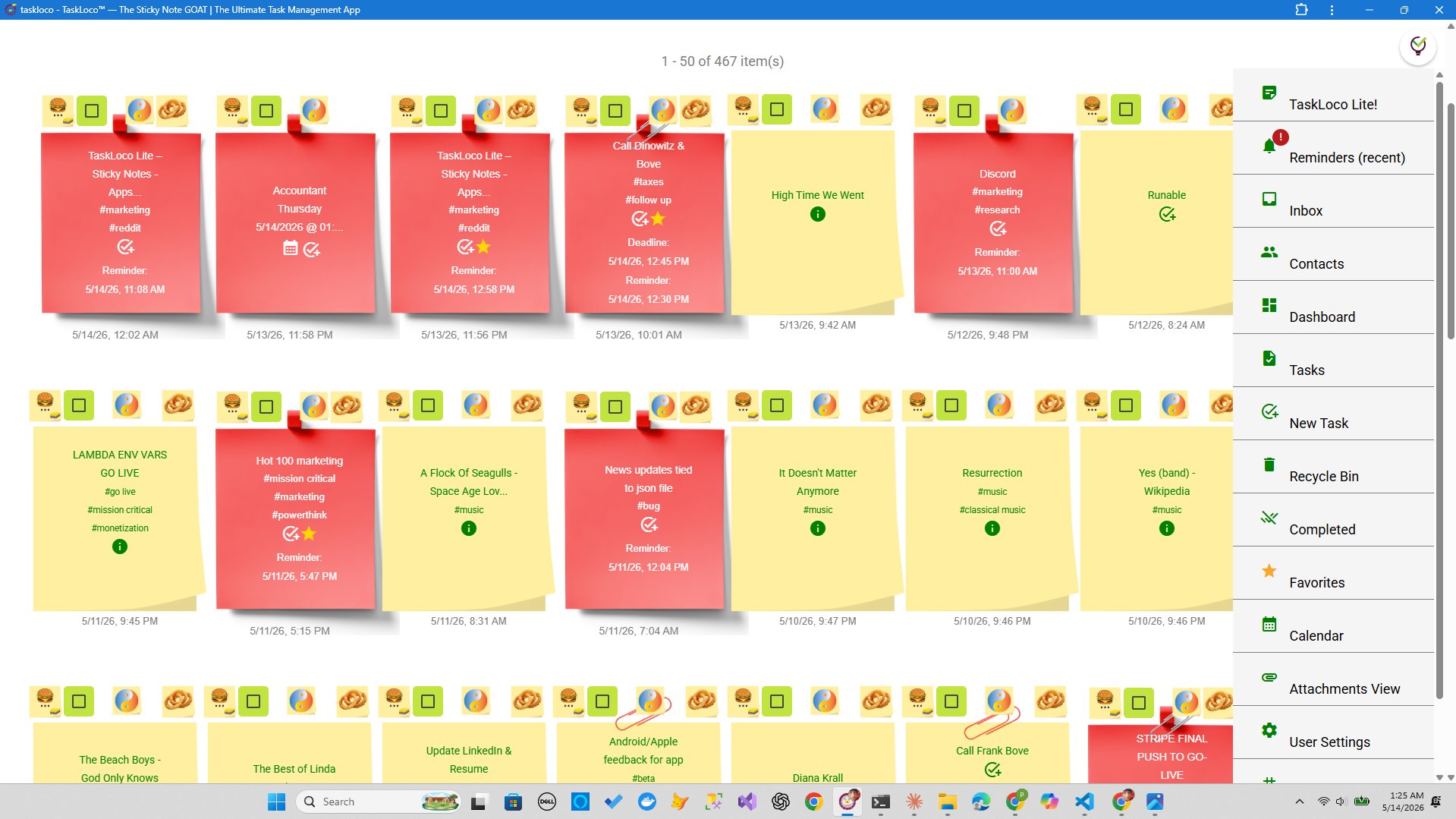
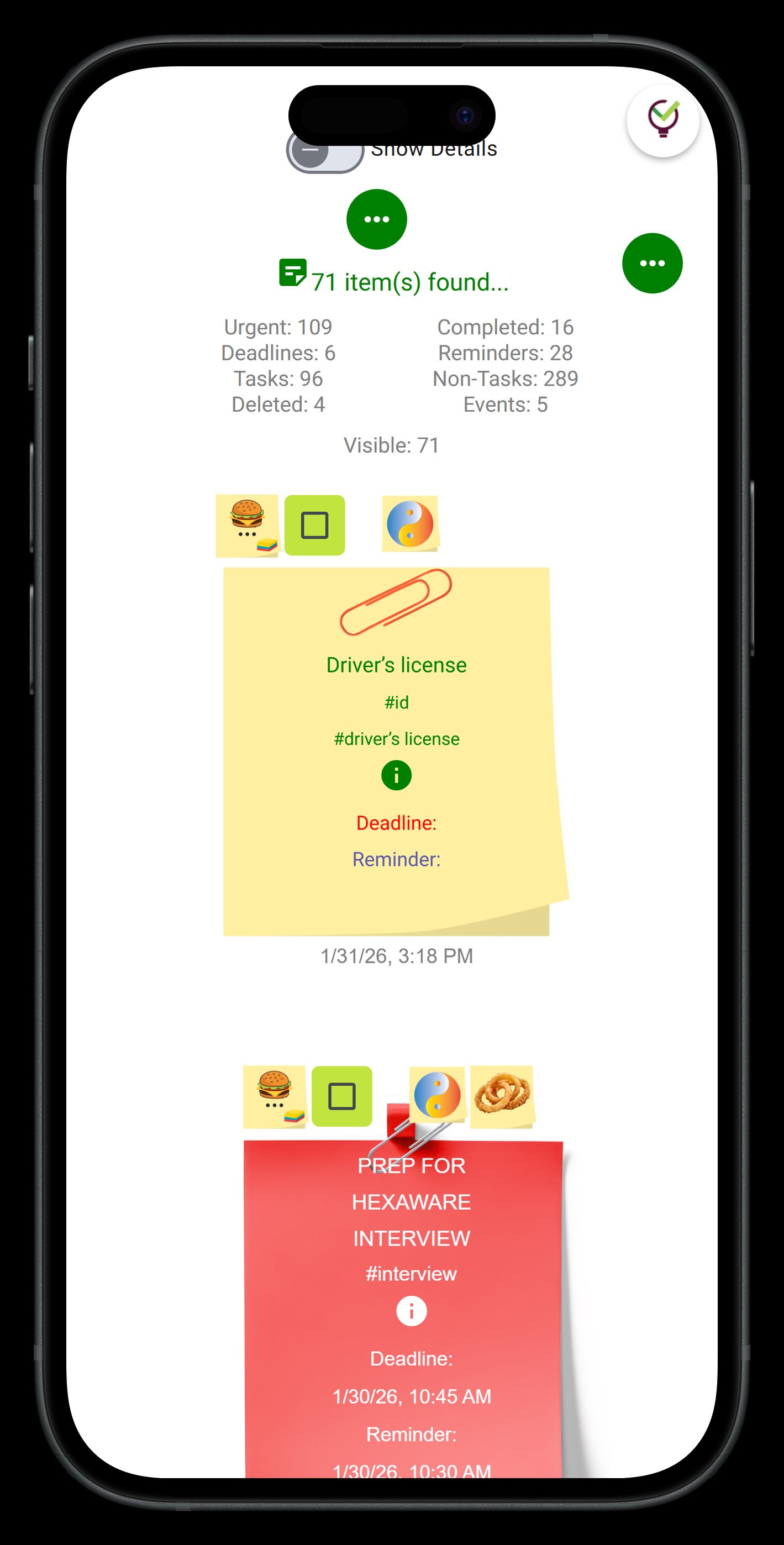
TaskLoco is built around sticky notes — cards that hold everything: text, tasks, files, images, reminders, calendar events. Because each note is a self-contained unit, cloning one means you get the whole package. Not just the title. Not just a blank copy. The full note with all its content, ready to edit.
Where TaskLoco does something genuinely different is in how sharing works. When you share a note with someone on your team, they don't get a permission-gated view of your note. They get to clone it into their own workspace — making it theirs, not yours. It works like email in that sense: you send it, they receive it, they own their copy. No access levels to configure. No permissions matrices. The note becomes a living template that propagates itself naturally across a team.
This matters for mass-production productivity because you can build one perfect version of a process — say, a client onboarding note with embedded tasks, a reminder that deep-links back to that exact note, and a file attachment for the contract template — and distribute it to everyone who needs it. Each person gets a full, editable clone. One source of truth, many working copies.
TaskLoco Premium also includes unlimited notes, so there's no ceiling on how many clones you create. Lite Plus+ gives you 30 synced notes across devices for free, which is enough to build and maintain a small library of templates. If you're running a system with dozens of active process templates, Premium is where cloning stops being a feature and starts being a workflow.
Building Your Template Library: A Practical System
The highest-leverage use of task cloning isn't the individual duplicate — it's building a template library you clone from repeatedly. Think of it as your factory floor: a set of master notes, each representing one repeatable process, that you never edit directly. You only ever clone them.
Here's how to build this in TaskLoco. Create a dedicated section of your wall — call it Templates or Master Processes — and build one note per repeatable workflow. Your weekly team sync note might include a standing agenda, a task checklist for pre-meeting prep, and an attached slide deck template. Your client proposal note might include a standard structure, a file attachment slot for the brief, and a reminder set to fire the day before the pitch — delivered as a push notification that deep-links straight back to the proposal note.
When it's time to run that process, you clone the master note, rename it with the specific client or date, and start filling in the specifics. The structure is already there. The reminder is already configured. The file slot is already open. You've gone from blank page to ready-to-execute in under a minute.
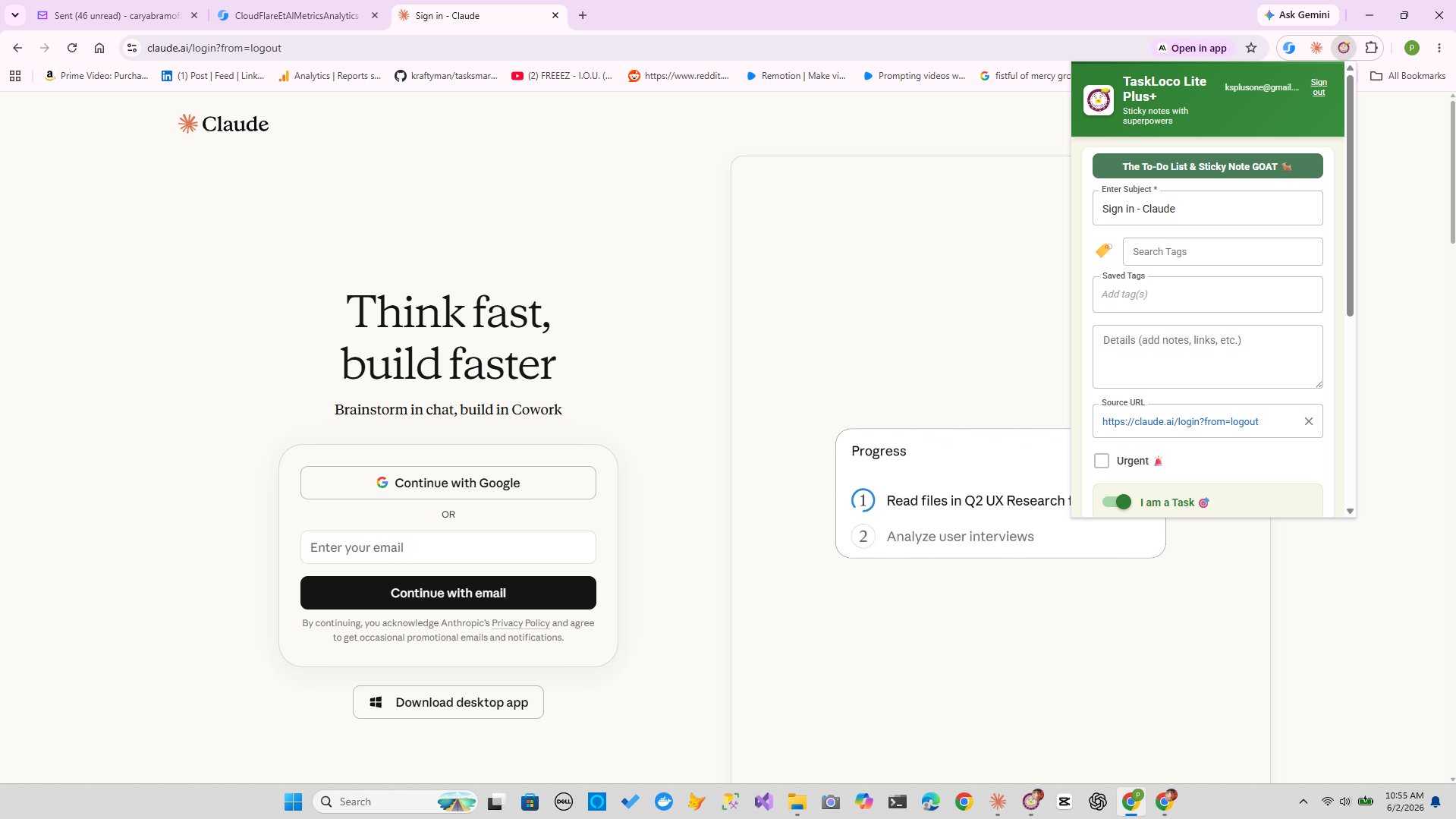
For teams, the Chrome extension adds another layer. When a team member finds a webpage — a brief, a spec sheet, a reference article — they can capture it in one click and attach it to the relevant cloned note. No copy-paste, no tab-switching, no losing the link in a Slack message. It lands directly in the note where it belongs.
- Name templates clearly — use a prefix like [TEMPLATE] so they never get confused with active notes
- Keep templates in a fixed spot on your wall so cloning is always one step away
- Review templates quarterly — a template that doesn't reflect your current process is worse than no template
- Share master templates with your team via TaskLoco's sharing so everyone clones from the same source of truth
Files, Reminders, and the Full Stack of Cloned Context
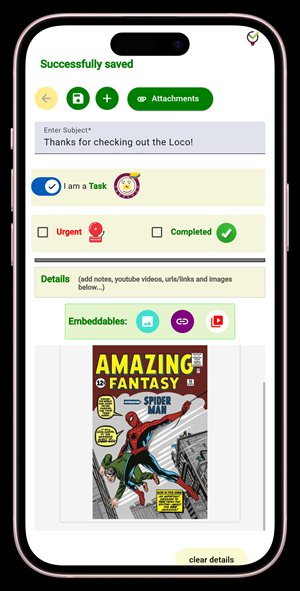
The reason task cloning is so powerful in TaskLoco Premium isn't just the duplicate action — it's what comes along for the ride. A note in TaskLoco Premium can carry 10GB of file storage, which means your template can include the actual working files: the contract draft, the brand assets, the meeting agenda doc. When you clone the note, the attachment is right there. You're not hunting through a shared drive or pasting a link that might be stale.
Reminders in TaskLoco are push notifications — delivered to your phone and computer — that deep-link directly back to the note that triggered them. That's the critical detail. When the reminder fires, tapping it doesn't just open the app; it opens the exact note you need to act on. In a cloned-task workflow, this means every process instance has its own reminder pointing straight to itself. No confusion about which version of the weekly report you're supposed to be working on. The notification tells you, and one tap takes you there. Email and SMS notifications are available as optional add-ons if you want those channels too.
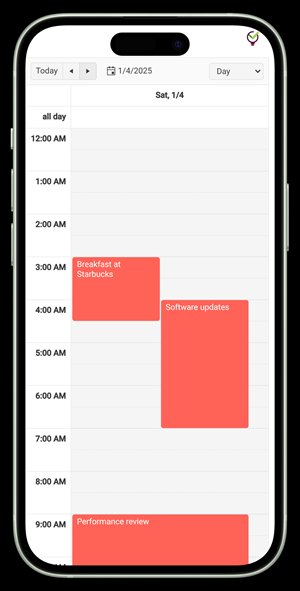
TaskLoco Premium also includes a calendar view so all your dated notes and reminders land in one visual timeline. When you're running ten cloned project notes simultaneously, the calendar tells you at a glance which ones have deadlines stacking up. It's the difference between managing a process and seeing your entire factory floor from above.
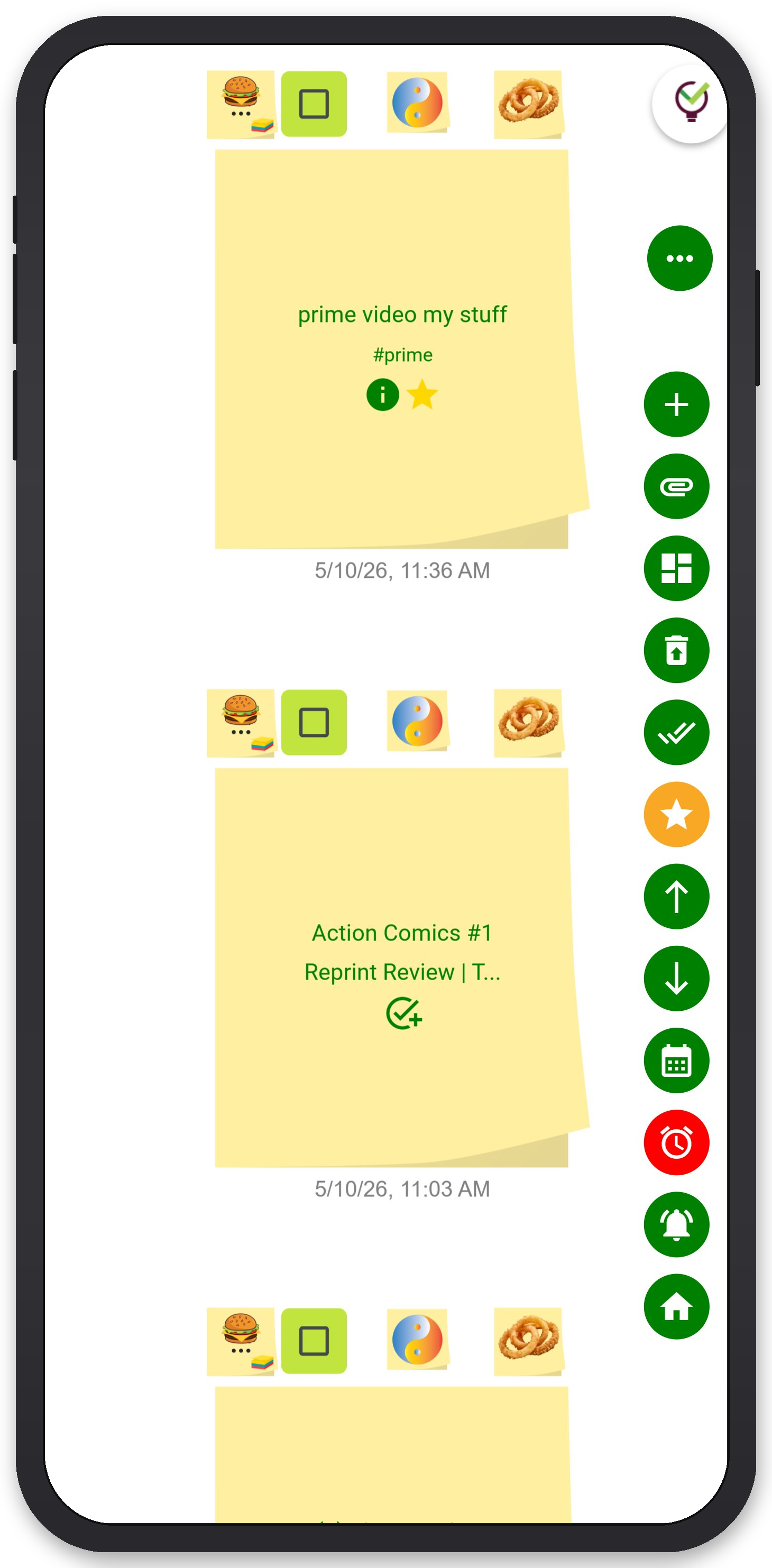
TaskLoco Premium is regularly $9.99/month per person. Right now, charter members can lock in 50% off the regular price — forever. That means $4.99/month per person today. And if our price ever goes up, you still pay half. Always.
Code CHARTER50 auto-applies at checkout. First 500 spots only — once they're gone, this offer is gone permanently. Act fast while spots last.
Every Premium subscription includes unlimited notes, 10GB file storage, reminders, calendar, and team sharing. Each team member requires a separate subscription. 7-day free trial — no charge until day 8. Cancel anytime.
Free Options: TaskLoco
TaskLoco Lite
- Native iPhone & Android app
- Completely anonymous — no sign-in
- Data stays on your device
- Up to 20 notes
- Free forever
TaskLoco Lite Plus+
- Web app + Chrome extension
- Sign in with Google
- Wall syncs across all devices
- Up to 30 notes
- Free forever
Lock In 50% Off — Forever
7-day free trial. No charge until day 8. CHARTER50 auto-applies at checkout.
🔒 Lock In My Charter SpotSee TaskLoco in Action
Frequently Asked Questions
What does it mean to clone a task?
Cloning a task means creating an exact duplicate of an existing task or note — including its content, structure, subtasks, and attachments — so you can reuse it without rebuilding from scratch. It's the productivity equivalent of a template stamp: build it once, use it endlessly.
How does TaskLoco handle task cloning?
In TaskLoco, every note is a self-contained card. You can duplicate any note instantly and the copy includes all the original content. The real differentiator is sharing: when you share a note with a teammate, they receive a clonable copy they can make their own — just like getting an email and owning the message. No permissions needed.
Can I build templates in TaskLoco and reuse them?
Yes. The recommended approach is to keep a dedicated section of your TaskLoco wall for master template notes — clearly labeled and never edited directly. When you need to run a process, clone the template, rename it, and fill in the specifics. Premium gives you unlimited notes, so your template library can grow without limits.
Does TaskLoco have a free version I can try before committing?
TaskLoco has two free tiers. Lite is a native iPhone and Android app — completely anonymous, no sign-in, stores up to 20 notes on your device. Lite Plus+ is a web app with Chrome extension — sign in with Google, up to 30 notes synced across all your devices. Premium adds unlimited notes, file attachments, reminders, calendar view, and team sharing, with a 7-day free trial. $9.99/month per person (currently $4.99/month per person for first 500 charter members with code CHARTER50)
How do reminders work with cloned notes in TaskLoco?
Reminders in TaskLoco Premium are delivered as push notifications to your phone and computer. Each reminder deep-links directly back to the specific note it belongs to — so when you're running multiple cloned process notes simultaneously, one tap takes you straight to the right one. Optional email and SMS notifications are available as add-ons.
Can I share a cloned task template with my whole team?
Yes. In TaskLoco Premium, you can share any note with team members. Recipients can clone the shared note into their own workspace and make it fully their own — they're not viewing a read-only link. Each person gets a working copy with full edit access. Every team member needs their own Premium subscription to access sharing and the full feature set.
What's the best way to organize a template library in TaskLoco?
Keep your master templates in a fixed section of your TaskLoco wall — use a prefix like [TEMPLATE] in the title so they're never confused with active notes. Only ever clone from them, never edit them directly. Review the templates periodically to make sure they reflect your current process. With Premium's unlimited notes, you can maintain as large a library as your workflows require.
Born in Brooklyn. Powered by AWS. Your data stays yours.
TaskLoco is available on iPhone, Android, Chrome, and every web browser.