There's a tax you pay every time you open a new app. Researchers call it the cost of task-switching. You might call it that sinking feeling when you realize you've spent twenty minutes hunting for a note that was, apparently, in a completely different tool from the one you just searched. Either way, it's real, it compounds, and most productivity systems are quietly built to make it worse.
The good news is that the fix isn't a new app — it's a smarter way to organize the one you're already in. Tags, applied consistently inside a single workspace, collapse that sprawl into something you can actually navigate. This piece breaks down why app-switching hurts as much as it does, what to look for in a tagging system that actually holds up, and how TaskLoco's sticky-note approach puts it all together without the learning curve.
What Context-Switching Actually Costs You
The term "changeover time" comes from manufacturing — the minutes lost when a production line switches from making one product to another. Every adjustment, retooling, and recalibration adds up. Knowledge work has the same problem, just harder to measure.
Cognitive psychologists call it "attention residue." When you leave one task to open a different app, part of your brain stays stuck on what you just left. You're physically in the new tab, but mentally you're still half-solving the previous problem. Studies at the University of California, Irvine found it can take over twenty minutes to fully return to deep focus after an interruption. And opening a different tool — with its own layout, search, and logic — is absolutely an interruption.
The math gets ugly fast. If you context-switch six times in a workday, you've potentially burned through two hours of recovery time before you've written a single meaningful sentence. Most knowledge workers switch far more than six times. Many don't even notice it happening because each individual switch feels trivial — it's just a tab.
Fragmented toolsets make this worse by design. A task lives in one app, the file it references lives in another, the note you jotted during the meeting lives in a third. Connecting those three things requires you to hold the thread in your head while you navigate between them — and that thread snaps easily.
What to Look for in a Tagging System That Actually Works
Not all tagging systems are equal. Some are cosmetic — pretty colored labels that don't filter anything. Others are so rigid that maintaining them becomes a second job. Before choosing any tool based on its tag feature, these are the criteria that separate genuinely useful from decorative.
Speed of application. If tagging requires opening a menu, clicking through a modal, and confirming a save, you won't do it consistently. A good tagging system lets you add a tag in under two seconds, ideally inline while you're writing the note itself. Friction at the point of capture is where organization systems die.
Cross-entity filtering. Tags need to work across everything — notes, tasks, calendar events, attached files — not just one content type. If you tag a project "Q3 Launch" but that tag only filters notes and not the attached brief or the deadline on your calendar, the tag is half-useless.
Full-text search that respects tags. Tags work best when they narrow a search, not replace it. You should be able to search for a keyword and filter by tag simultaneously, so you can go from "everything" to "exactly this" in two steps. If search and tags operate in separate silos, you're adding a layer of mental overhead, not removing one.
Consistency across devices. A tag you apply on your laptop needs to appear on your phone and in your browser extension without any manual sync step. If tags live only on one device, you've just created another fragmented system — this time inside the app itself.
No maintenance overhead. Tags should be free-form enough that you can create them on the fly, but structured enough that they don't turn into a jungle of slightly-different synonyms. The sweet spot is a tool that shows you existing tags as you type, so you naturally reuse rather than reinvent.
How TaskLoco Cuts the Changeover Cost
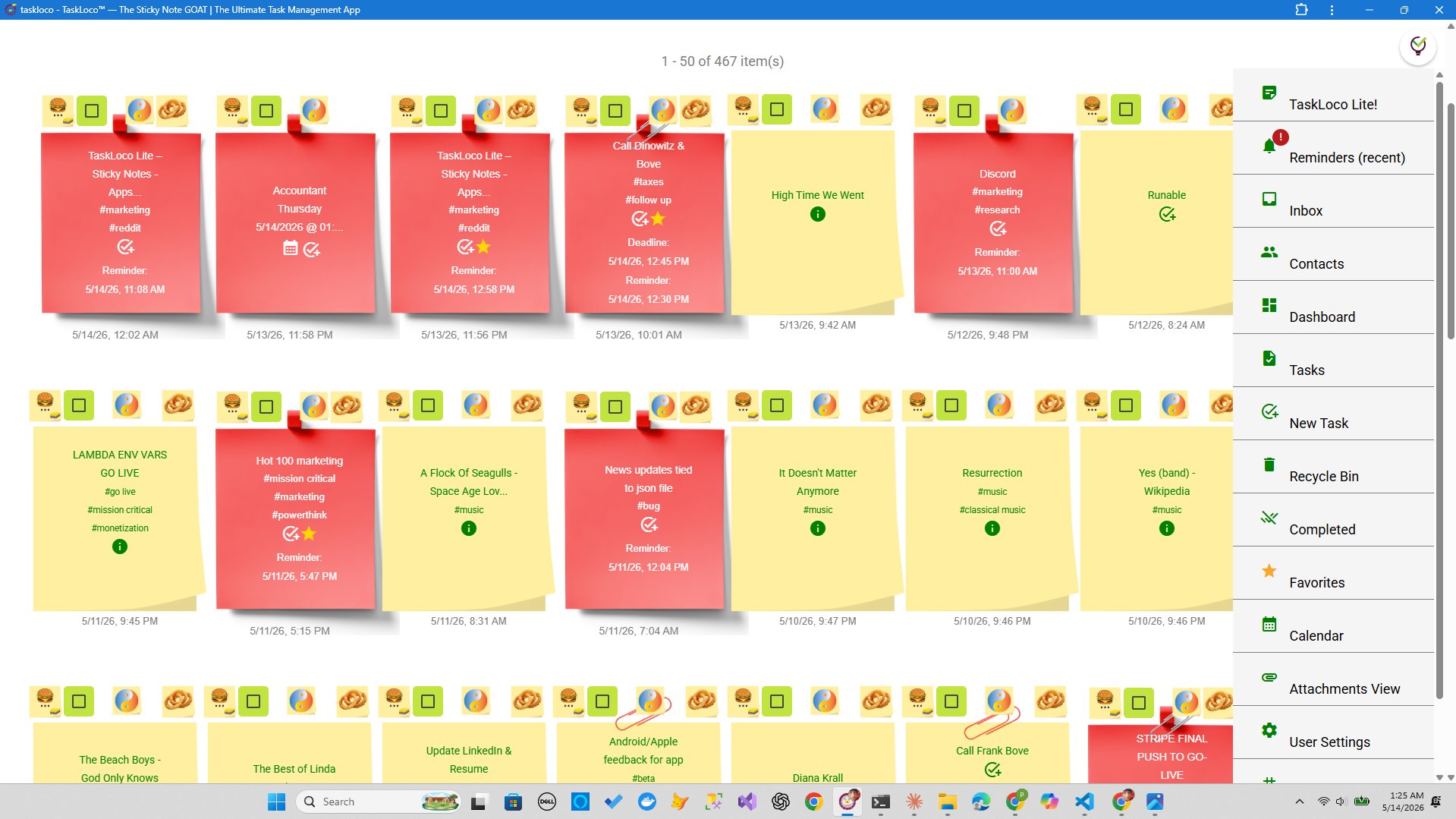
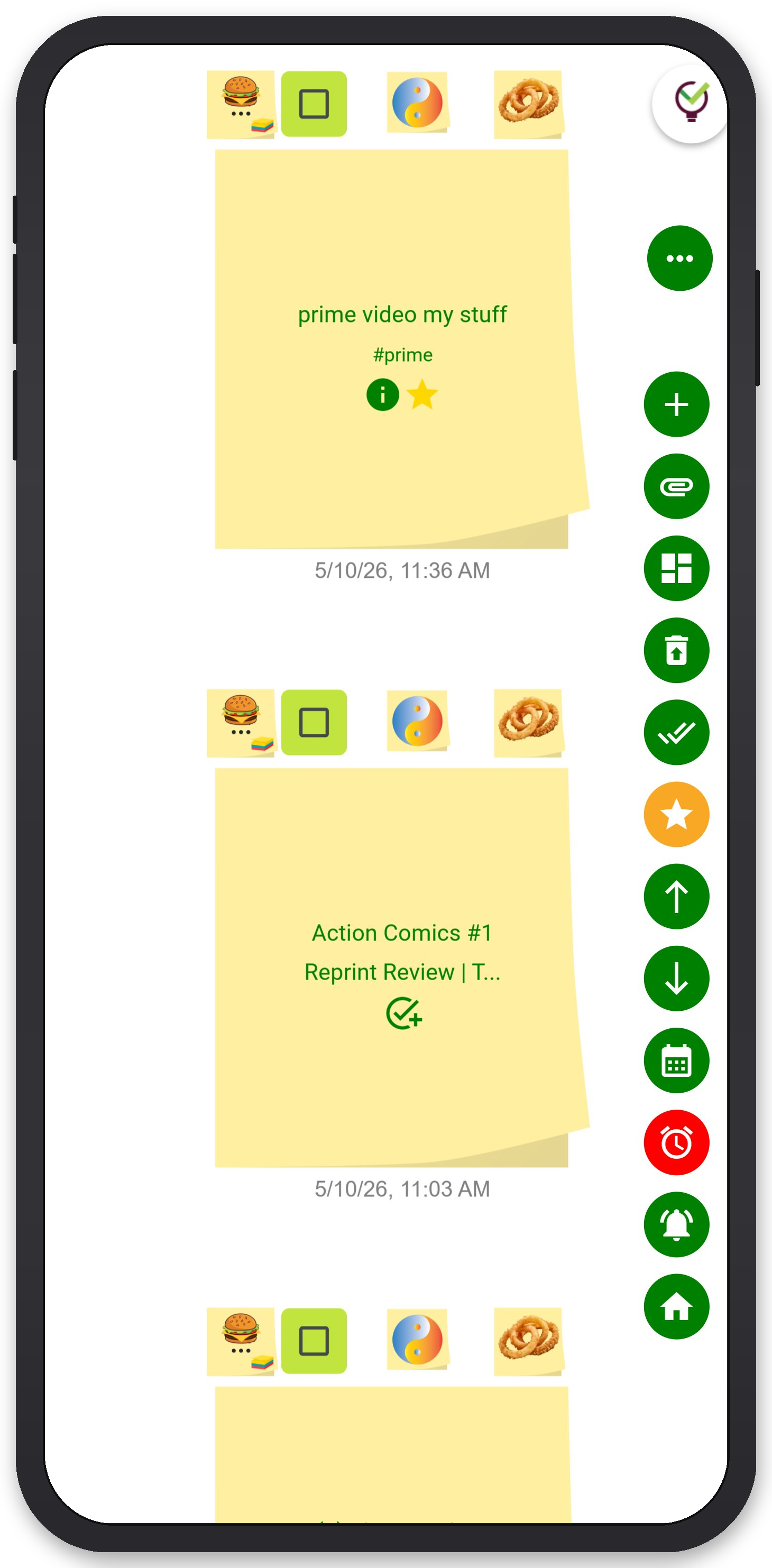
TaskLoco is built around sticky notes — a format that's deliberately lightweight and fast to capture. The wall view puts every note in front of you simultaneously, so the act of orienting yourself inside the app takes seconds, not the minutes it takes to navigate a project hierarchy. That's the first win against changeover time: the spatial layout reduces the cognitive work of "where was that thing?"
Tags in TaskLoco apply inline as you write. There's no separate tagging step, no modal to dismiss. You type a tag, and it's indexed immediately. When you filter by that tag later, the wall collapses to only the notes carrying it — whether those notes contain tasks, attached files, or reminders pointing back to them. The filter is cross-entity, which means one tag click genuinely narrows your whole workspace, not just one content type.
Full-text search works across all notes and file attachments simultaneously. Combine a keyword search with a tag filter and you can pinpoint a specific note inside a large workspace in under five seconds. That's the practical elimination of the "I know I wrote this down somewhere" problem that drives most app-switching in the first place.
Team sharing works like email, not permissions. When you share a note with a teammate, they receive it the way you'd receive a forwarded email — they can clone it and make it their own, add their own tags, and work from their own copy. There's no permission matrix to manage, no access levels to configure. The note arrives, they own their version of it, and both of you can tag and find it independently.
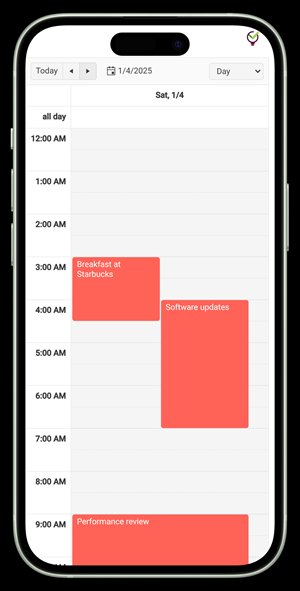
Reminders in TaskLoco deliver as push notifications directly to your phone and computer, and each reminder deep-links straight back to the original note. That means when a reminder fires, one tap takes you exactly to the note it's about — no searching, no re-orienting, no changeover cost. Optional email and SMS notification channels are available as add-ons if you want coverage across more surfaces.
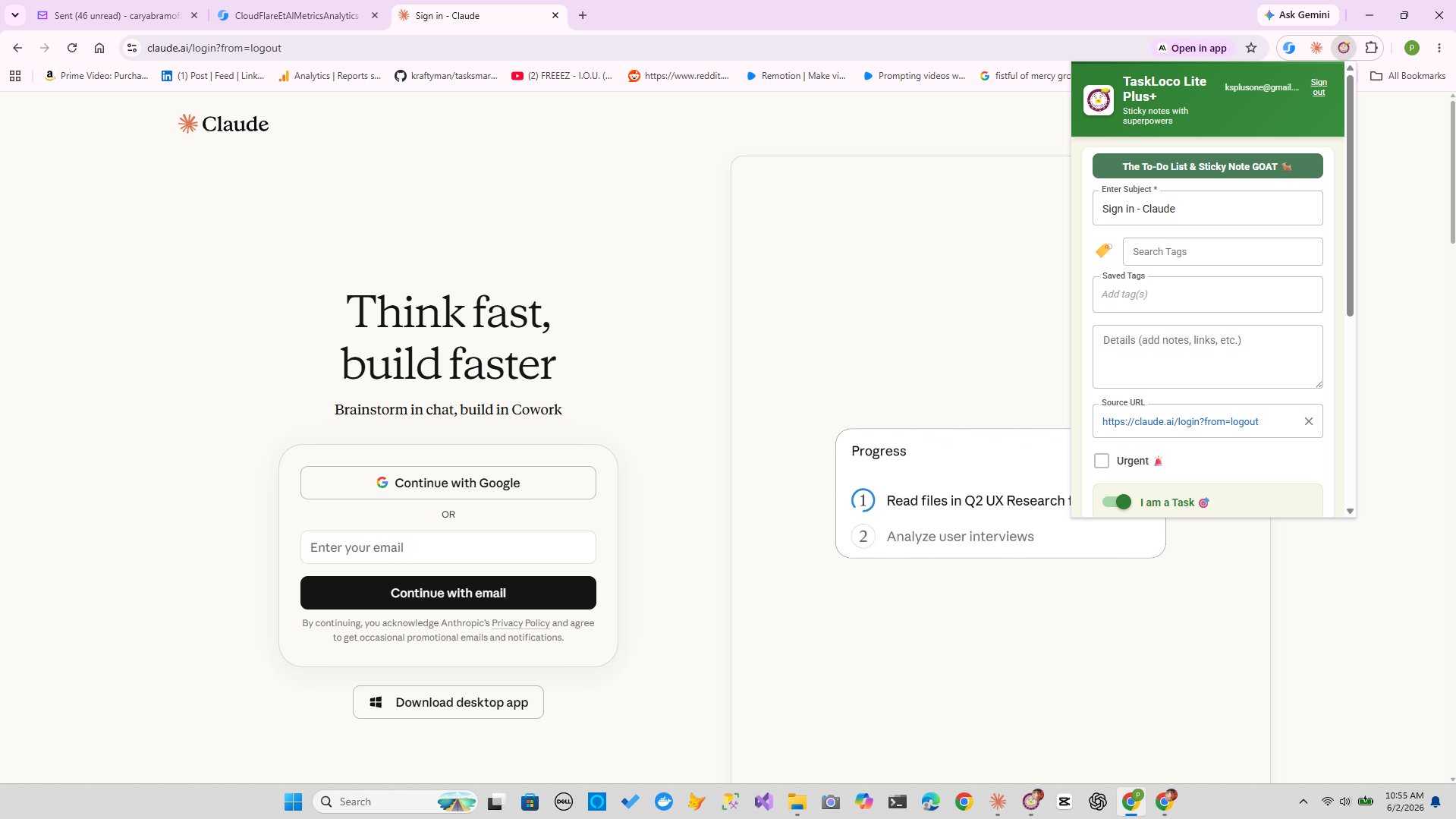
For capturing context on the fly, the Chrome extension lets you clip any webpage into a TaskLoco note in a single click. The clipped note lands on your wall already tagged with the source URL, ready to be organized. It replaces the "I'll email this to myself" workaround that creates inbox clutter and, inevitably, another app switch.
Files, Storage, and the Hidden Cost of Scattered Attachments
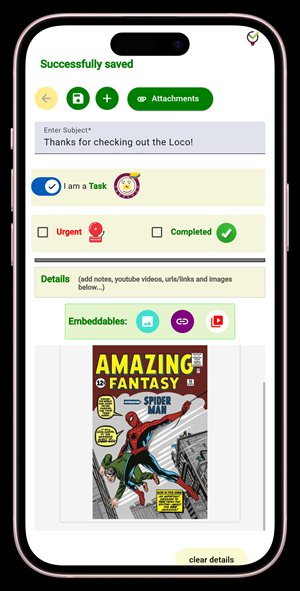
One underrated source of app-switching is file management. A meeting note lives in your notes app. The PDF it references lives in cloud storage. The action items from that meeting live in a task manager. Connecting those three things means opening three apps every time you need to act on any piece of that work.
TaskLoco Premium includes 10GB of file storage per person, with attachments living inside the note they belong to. When you open a note, the files are there — not linked from an external drive, not requiring a separate download. The note is the container for everything: text, tasks, attached files, and the reminder that will push-notify you when it's due.
Storage is expandable if 10GB isn't enough. Add-on tiers go from 10GB up to 1TB, and they're stackable to 100x if you need serious capacity. Each tier is an add-on, not a plan upgrade, so you scale storage independently of your subscription.
For teams, this changes the sharing dynamic significantly. Sharing a note shares the attached files with it. A teammate receives the note, clones it, and has the brief, the image, and the checklist in one place — no separate file share link, no permission request to a shared drive. The note is the handoff.
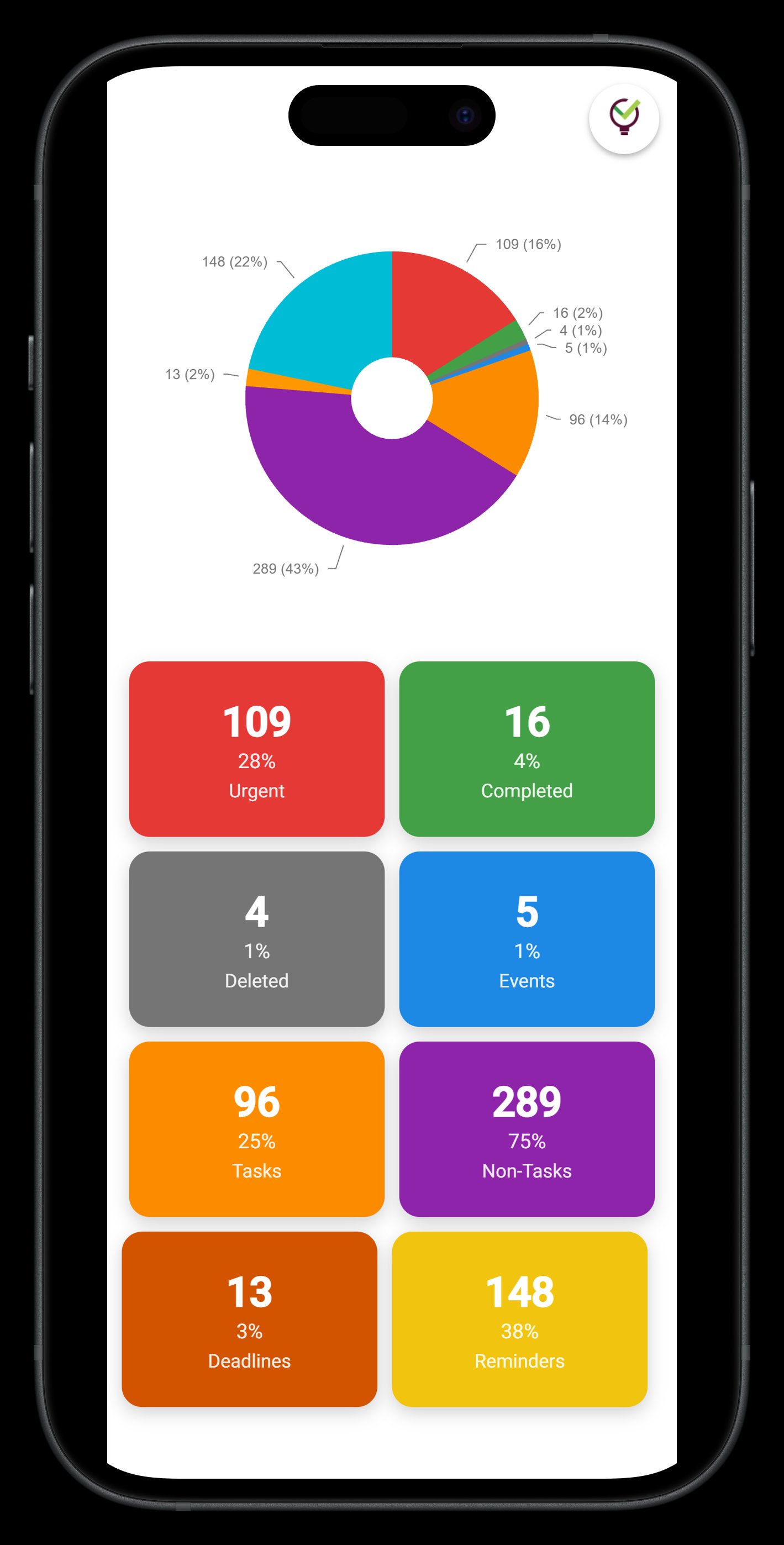
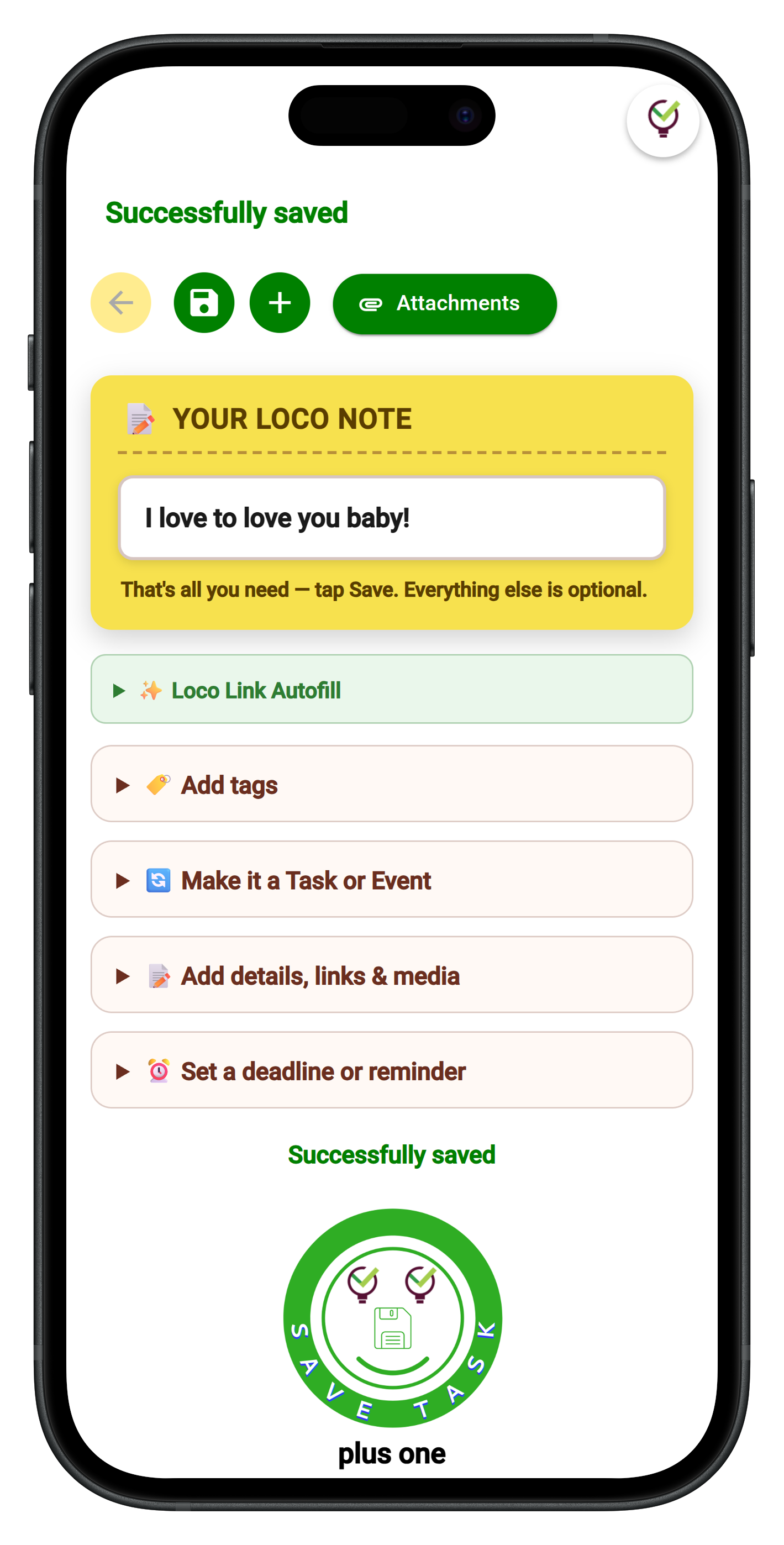
TaskLoco Lite, the free native iPhone and Android app, stores up to 20 notes locally on the device with no account required — completely anonymous. It's a fast capture tool, but it doesn't sync and doesn't support attachments or reminders. TaskLoco Lite Plus+, the free web app and Chrome extension, syncs up to 30 notes across all your devices and adds the one-click webpage capture, but likewise has no file attachments and no reminders. Premium is where the full workspace — unlimited notes, files, reminders, calendar, and team sharing — comes together.
TaskLoco Premium is regularly $9.99/month per person. Right now, charter members can lock in 50% off the regular price — forever. That means $4.99/month per person today. And if our price ever goes up, you still pay half. Always.
Code CHARTER50 auto-applies at checkout. First 500 spots only — once they're gone, this offer is gone permanently. Act fast while spots last.
Every Premium subscription includes unlimited notes, 10GB file storage, reminders, calendar, and team sharing. Each team member requires a separate subscription. 7-day free trial — no charge until day 8. Cancel anytime.
Free Options: TaskLoco
TaskLoco Lite
- Native iPhone & Android app
- Completely anonymous — no sign-in
- Data stays on your device
- Up to 20 notes
- Free forever
TaskLoco Lite Plus+
- Web app + Chrome extension
- Sign in with Google
- Wall syncs across all devices
- Up to 30 notes
- Free forever
Lock In 50% Off — Forever
7-day free trial. No charge until day 8. CHARTER50 auto-applies at checkout.
🔒 Lock In My Charter SpotSee TaskLoco in Action
Frequently Asked Questions
How much does app-switching actually hurt productivity?
Research on attention residue shows that switching between tasks — including switching between apps — can cost over twenty minutes of recovery time per interruption. In a workday with frequent context switches, that can compound into hours of lost deep-focus time. The impact is highest when each app has its own navigation logic, search, and layout, because re-orienting inside a new tool is itself a cognitive task.
What makes tags more effective than folders for organizing notes?
Folders force a single hierarchy — a note about a client project that also involves a contractor and a deadline lives in exactly one folder, even if it's genuinely relevant to three categories. Tags let you apply multiple labels to a single note, so the same item surfaces under any relevant filter. Tags also tend to be faster to apply in the moment, which means you're more likely to actually use them. The result is a system that stays organized without requiring you to pre-plan a folder structure before you've captured anything.
Does TaskLoco have a free version?
TaskLoco has two free tiers. TaskLoco Lite is the native iPhone and Android app — completely anonymous, no sign-in required, stores up to 20 notes directly on your device. TaskLoco Lite Plus+ is the free web app and Chrome extension — sign in with Google, sync up to 30 notes across all your devices, and capture any webpage in one click. Reminders, file attachments, unlimited notes, calendar view, and team sharing are Premium features.
How does TaskLoco pricing work for teams?
$9.99/month per person (currently $4.99/month per person for first 500 charter members with code CHARTER50)
How do reminders work in TaskLoco?
TaskLoco reminders deliver as push notifications directly to your phone and computer. Each reminder deep-links back to the original note, so one tap takes you exactly where you need to be — no searching required. Optional email notification and an SMS add-on are available if you want reminders to reach you across additional channels.
Can I use TaskLoco on my phone?
TaskLoco Lite is available as a native app on the App Store and Google Play — anonymous, no account needed, up to 20 notes stored on the device. TaskLoco Lite Plus+ and TaskLoco Premium run as a web app, which means you access them through your phone's browser. They are not native apps, but they are fully functional on mobile. Premium features including reminders, file attachments, calendar, and team sharing are available through the web app on any device.
What's the fastest way to capture something without breaking focus?
The TaskLoco Chrome extension lets you capture any webpage into a sticky note in a single click, without switching tabs or opening a separate app. The captured note lands on your wall with the source URL attached, ready to tag and organize. For mobile capture, the Lite app requires no sign-in and opens directly to a blank note. Both options are designed to get the thought down before the context switch kills it.
Born in Brooklyn. Powered by AWS. Your data stays yours.
TaskLoco is available on iPhone, Android, Chrome, and every web browser.