AI website builders have gotten genuinely impressive. You can describe a business, hit generate, and walk away with a five-page site that would have taken a designer three days to rough out. But impressive demos and real-world results are two different things — and the gap between them is where most people get burned.
This page breaks down how to evaluate AI website builders honestly, what actually separates the strong picks from the hype, and how to keep your website project organized from first prompt to launch day. The tools are better than ever. The planning problem hasn't gone away.
What to Look for in an AI Website Builder
Before you pick a tool, get clear on what the phrase even means. "AI website builder" covers at least three distinct product types: generative layout tools that turn a text prompt into a full site design, AI-assisted drag-and-drop editors that speed up a traditional builder with smart suggestions, and code-generation tools that write HTML/CSS/JS from natural language. Each solves a different problem, and conflating them leads to bad purchases.
When evaluating any AI website builder, three criteria actually matter:
- Output quality without heavy editing. Can you publish what the AI generates, or does every page need an hour of cleanup? The best tools produce something close to shippable on the first pass. The worst produce something that looks AI-generated in the worst possible way.
- Design control after generation. AI generates a starting point, not a finished product. If the editor makes it painful to change fonts, swap sections, or restructure a layout, you're locked into whatever the model decided. Look for tools that treat the AI output as fully editable.
- Hosting, SEO, and real-world performance. A beautiful design that loads slowly, lacks meta control, or hides your content behind JavaScript that search engines can't index is a liability. Don't evaluate the builder in isolation — evaluate the whole stack it delivers.
The Top AI Website Builders: What Each One Actually Does
Here's an honest look at the leading tools in this space. No scores, no affiliate padding — just what each one is genuinely good at and where it falls short.
Wix ADI / Wix Studio AI
Wix has been doing AI-assisted site generation longer than almost anyone. Their ADI flow asks a few questions and builds a site you can open in their full editor immediately. The output quality is solid for small business sites. The real strength is that Wix's underlying editor is excellent — so when the AI gets something wrong, fixing it is fast. Limitation: the AI layer is more template-selection than true generation.
Framer AI
Framer's AI generation is the closest thing to a genuine "describe it, get it" experience for design-forward sites. The output is visually impressive, and the editor is one of the best in the business for designers who want pixel-level control. Limitation: it skews toward portfolios and marketing pages — complex multi-page sites with dynamic content require more manual work.
Durable
Built specifically for solo service businesses. Give it your business name and type, and it generates a complete site with copy in under a minute. The sites look clean and professional out of the box. Limitation: the editor is intentionally simple, which means less control. Great for getting something live fast; not the pick if you want heavy customization.
Hostinger AI Website Builder
Combines AI generation with affordable hosting in one package. The AI produces reasonable starting points, and the editor covers the basics well. Limitation: design ceiling is lower than Framer or Wix Studio — you'll hit the edges of what's possible faster.
10Web
Uses AI to generate WordPress sites, which means you get the full WordPress ecosystem underneath. If you know you want WordPress but want a faster starting point, 10Web makes sense. Limitation: you're still managing WordPress, which has its own complexity.
The Part Nobody Talks About: Managing the Actual Build
AI website builders solve the blank-canvas problem. They do not solve the project management problem. And if you've ever built a site for a client — or even for yourself — you know the build itself is only half the job. The other half is keeping track of what goes where.
Every website project generates a pile of information before the first prompt is ever written: brand guidelines, copy drafts, image assets, competitor references, stakeholder feedback, revision notes, and launch checklists. AI builders don't have a place for any of that. They start at the editor and stop at the editor.
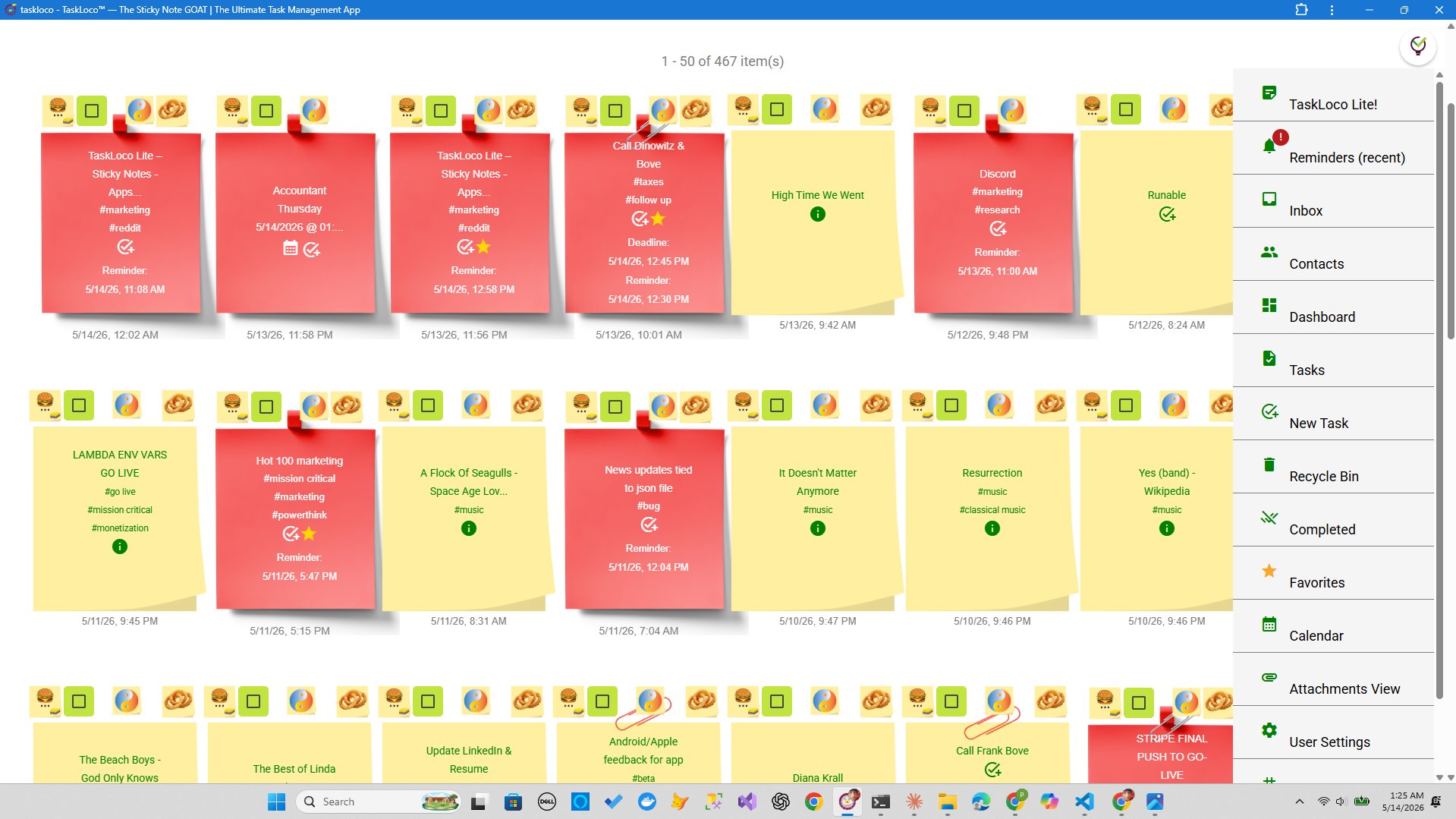
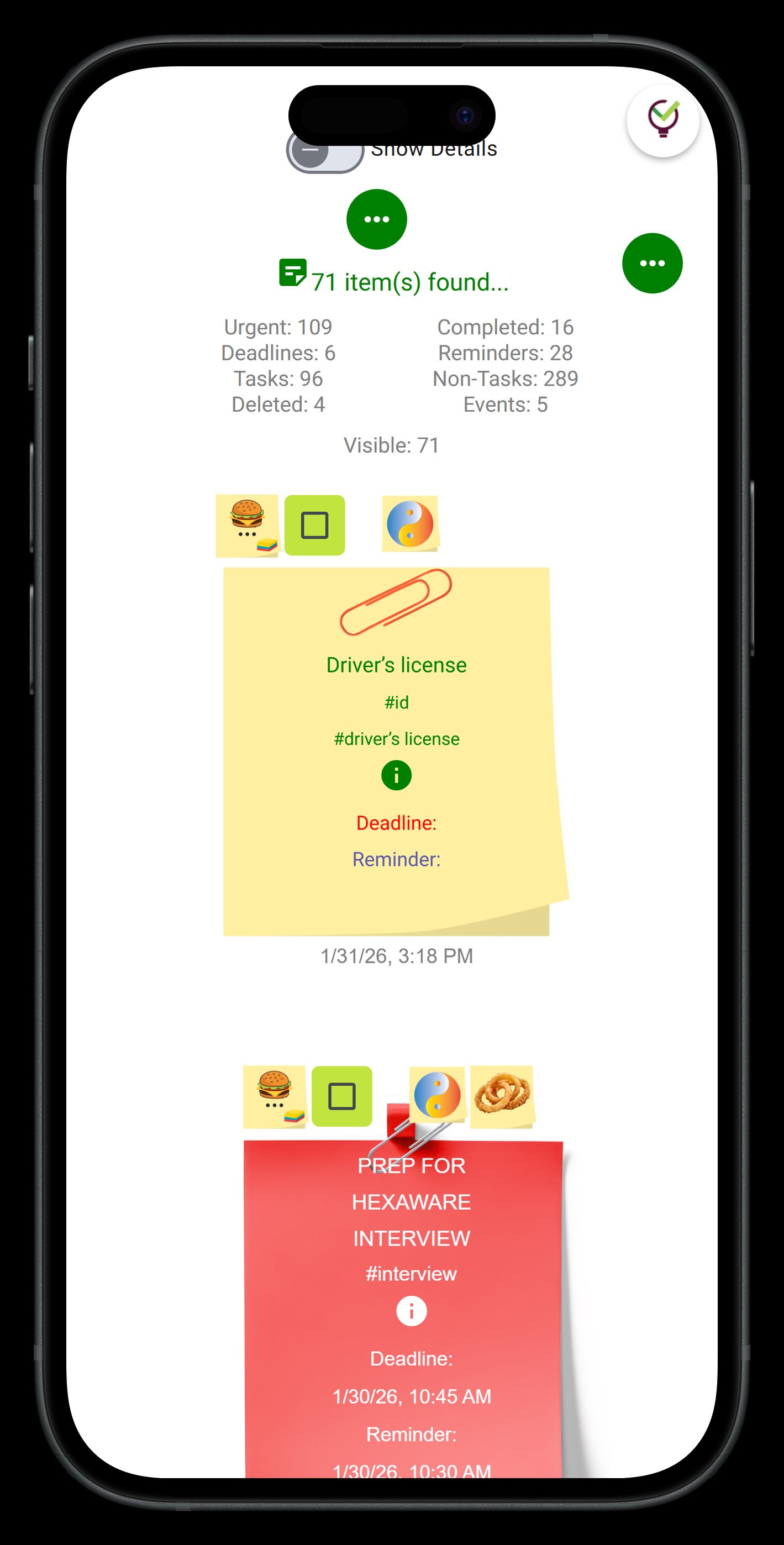
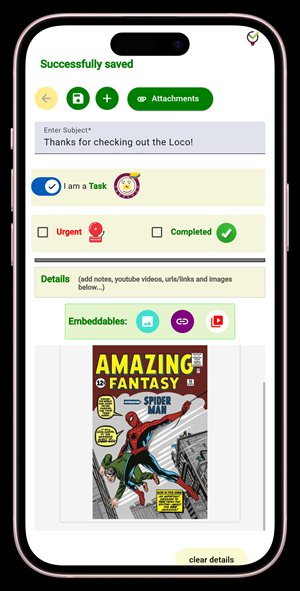
That's where TaskLoco fits. It's a sticky-note-based productivity tool built for exactly this kind of project — the kind where information keeps arriving in fragments and you need to see it all at once. You can pin a note for each page of your site, attach wireframe screenshots or brand files, set a reminder that deep-links straight back to the note when your deadline arrives, and share the whole board with a client or collaborator so they're looking at the same picture you are.
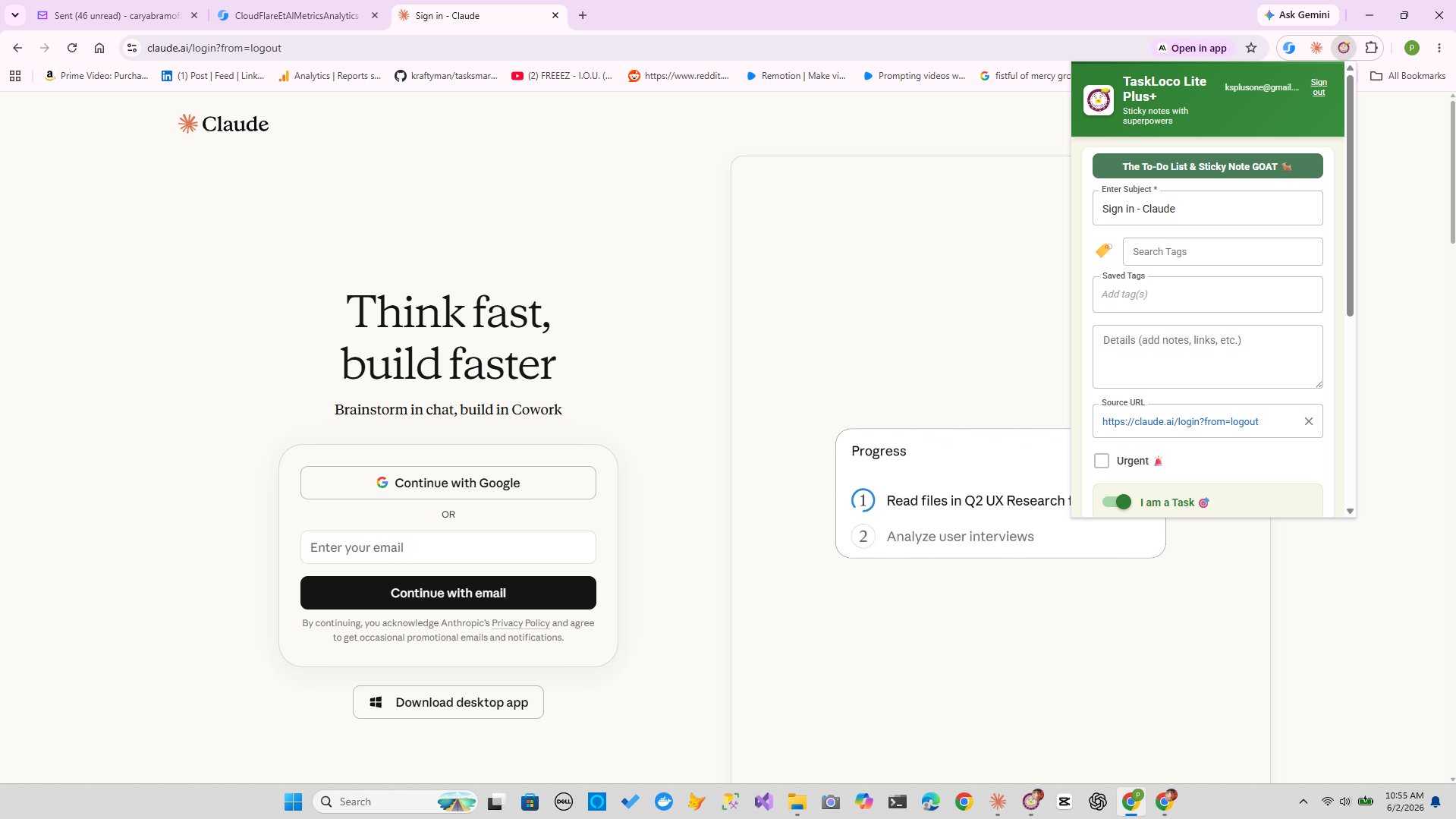
The Chrome extension is particularly useful during website planning. One click captures any webpage — competitor sites, design inspiration, copy references — as a note, with the URL attached. No more "where did I see that?" twenty minutes before a client call.
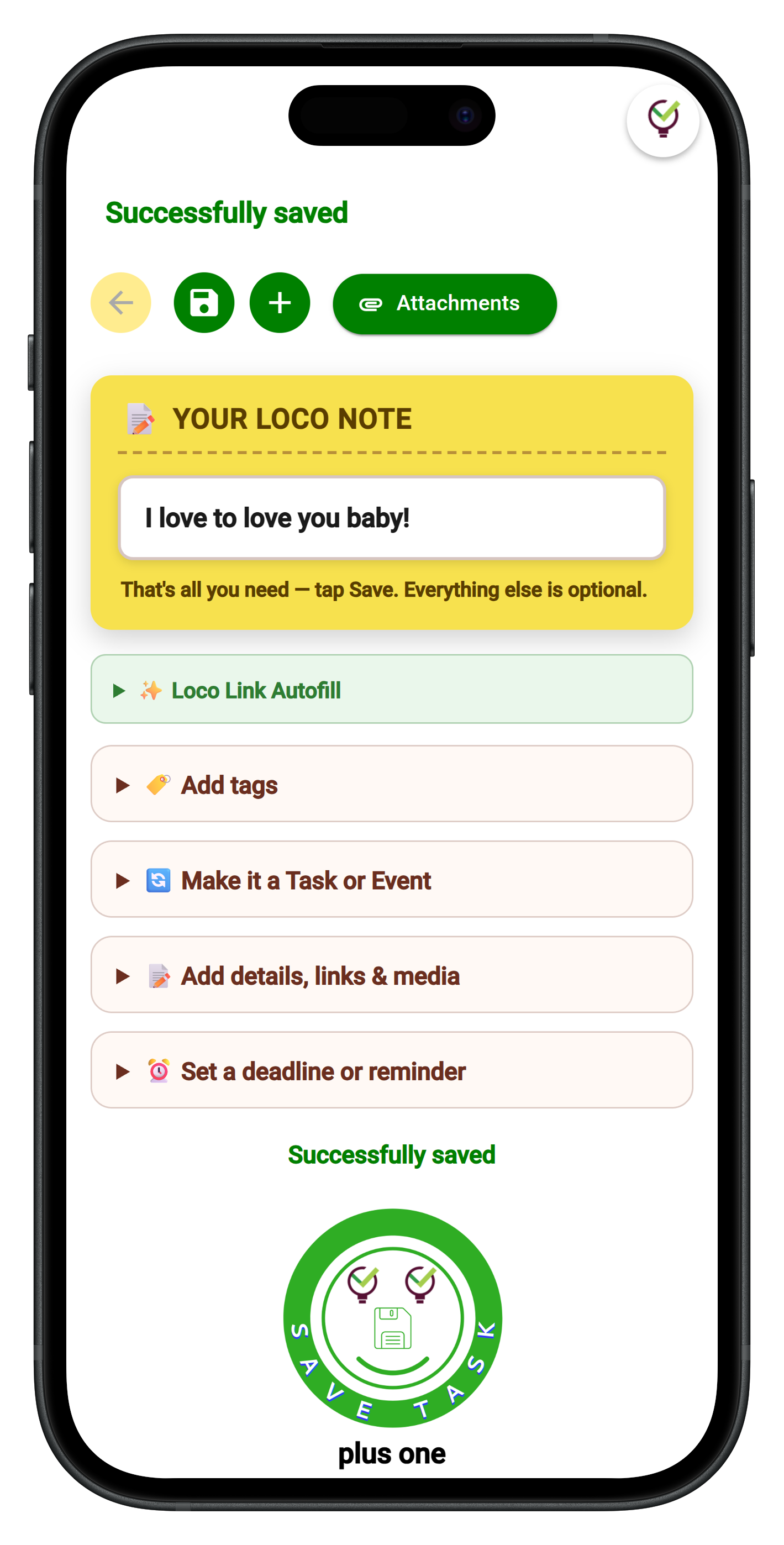
- One note per page — headline, body copy, CTA, file attachments all in one place
- Reminder delivered as a push notification deep-links back to the exact note when review day arrives
- Share notes with clients or teammates — recipients can clone the shared note and make it their own, no permissions setup needed
- Chrome extension captures inspiration pages in one click
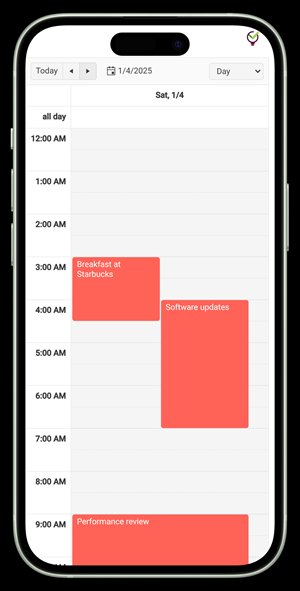
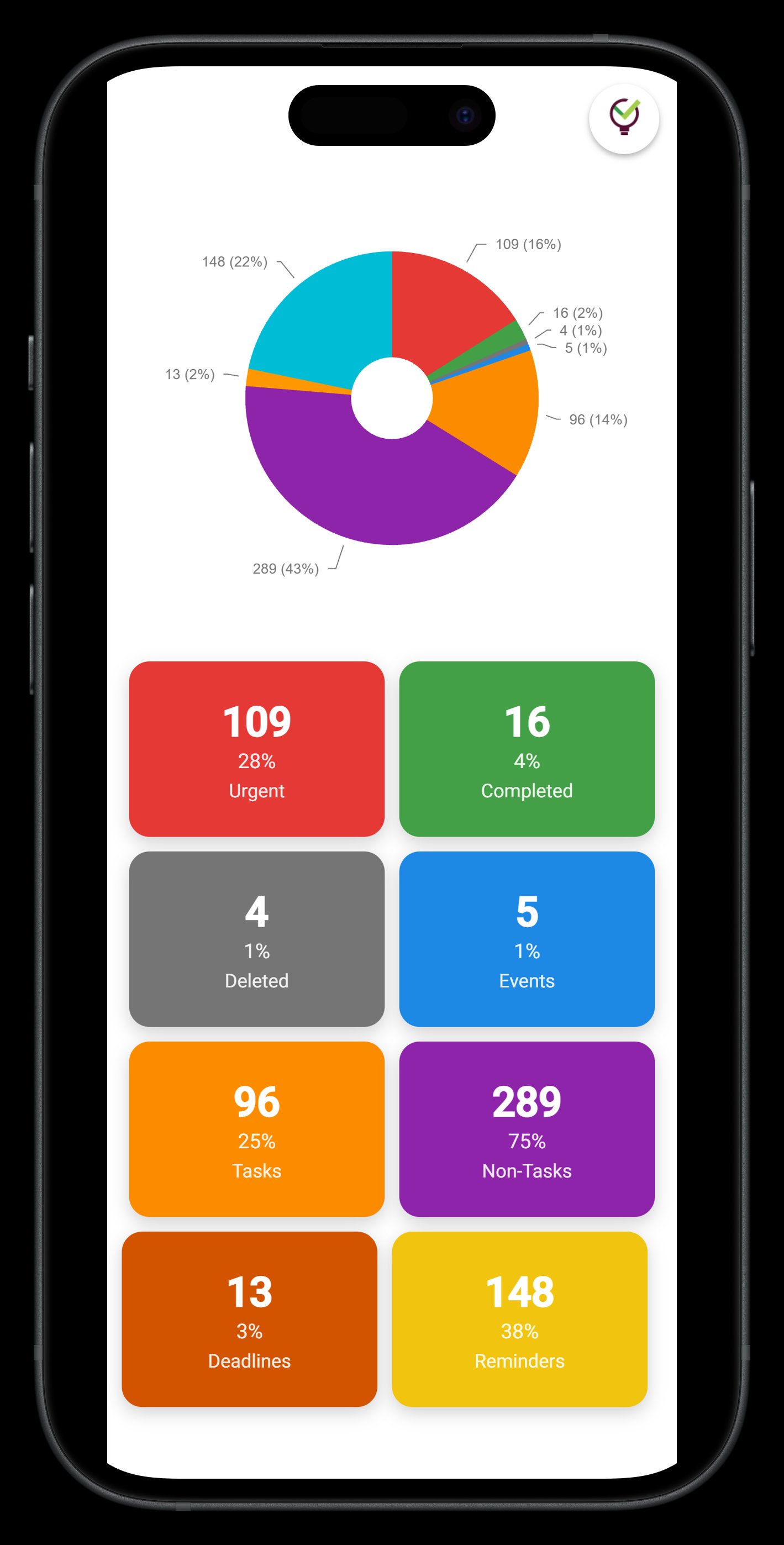
- Calendar view shows every deadline across the full project at a glance
File Attachments, Deadlines, and Keeping Clients Honest
Website projects die in the handoff gaps. The client sends brand files over email. Feedback arrives in three different Slack threads. The final copy lives in a Google Doc that hasn't been touched since the kickoff call. By launch day, nobody can find the approved logo file.
TaskLoco Premium gives every note 10GB of file storage, which means brand assets, copy documents, approved images, and signed-off wireframes can all live inside the project board — attached to the specific note they belong to, not buried in a file folder somewhere else. When you need the approved logo, you open the "Header" note. It's there.
Reminders with push notifications mean you stop relying on memory or calendar apps to stay on top of review cycles. Set a reminder on the "Client Feedback Due" note, and when the time comes, a push notification fires directly to your phone or desktop and takes you straight back to that note. Optional email or SMS notifications are available if you want a backup channel.
Team sharing works the way sharing should — like sending an email. The recipient gets the note, can clone it, and make it their own. No access levels to configure, no permissions to manage. If you're coordinating with a copywriter, a designer, and a client reviewer simultaneously, each one can work from their own copy without stepping on each other.
How TaskLoco Compares
| Feature | TaskLoco | AI Website Builders |
|---|---|---|
| Primary use case | Project organization, notes, tasks, reminders, file management | Generating and editing website designs with AI |
| Free tier available | Yes — Lite (20 notes, no sign-in) and Lite Plus+ (30 notes, synced) FREE | Most AI builders offer a limited free tier; publishing often requires a paid plan |
| Native iPhone & Android app | Yes — TaskLoco Lite is a native app (anonymous, 20 notes, no sync) FREE | Varies by builder; most are web-based with no native mobile editor |
| Chrome extension for one-click capture | Yes — capture any webpage as a note in one click, free FREE | Not available on most AI website builders |
| File attachments | 10GB per Premium user — attach files directly to notes | Asset upload for site images; not a general project file store |
| Reminders with push notifications | Push notification reminders that deep-link back to the original note; optional email and SMS | No project reminder system — deadline management is on you |
| Team sharing / collaboration | Yes — included with Premium. Each team member requires a separate subscription — currently $9.99/month per person, but TaskLoco is offering a Charter Member special: 50% off for life, currently $4.99/month per person for the first 500 subscribers with code CHARTER50. | Collaboration varies — most require paid plans and seat management |
| Calendar view | Yes — see all deadlines and events across your project in one view | No calendar or deadline view built in |
| Cross-device sync | Lite Plus+ and Premium sync across all devices FREE | Web-based builders are accessible from any browser |
| AI site generation from text prompt | Not applicable — TaskLoco is a productivity and organization tool | Core feature — generate full site layouts from a text description |
| Visual drag-and-drop site editor | Not applicable | Yes — edit generated designs visually after generation |
| Hosting included | Not applicable | Yes — most AI builders include hosting in their plans |
| Full-text search across notes and attachments | Yes — search across all notes and file attachments | Not a note or document tool — no equivalent search |
| Unlimited notes and tasks | Unlimited with Premium | Not applicable — AI builders don't manage project notes |
| No sign-in required to start | Yes — TaskLoco Lite on iPhone/Android requires no account, completely anonymous FREE | Account required to use any AI website builder |
| Custom domain support | Not applicable | Yes — most AI builders support custom domain connection |
| SEO meta control | Not applicable | Varies — stronger builders offer full meta title, description, and sitemap control |
| 7-day free trial (no charge until day 8) | Yes — full Premium trial, cancel anytime FREE | Varies — most offer free tiers but full-feature trials are not universal |
Who Should Use Each
Use the TaskLoco if…
- You're planning or managing a website project and need every page idea, asset, note, and deadline organized in one place
- You want push notification reminders that deep-link back to the exact note when a deadline hits
- You need to share project notes with clients or collaborators without configuring permissions or access levels
- You're using a Chrome extension to capture competitor sites and design inspiration in one click while you research
- You need file attachments — brand assets, copy docs, approved wireframes — attached directly to the notes they belong to
- You want a free, anonymous mobile app to capture ideas instantly with no sign-in and no friction
Use AI Website Builders if…
- You need to generate a working website from a text prompt — TaskLoco doesn't build websites
- You need a visual drag-and-drop editor to design and publish pages
- You need hosting, a custom domain, and SEO tools bundled into one product
- You want AI to write and structure your site copy automatically on first generation
TaskLoco Premium is regularly $9.99/month per person. Right now, charter members can lock in 50% off the regular price — forever. That means $4.99/month per person today. And if our price ever goes up, you still pay half. Always.
Code CHARTER50 auto-applies at checkout. First 500 spots only — once they're gone, this offer is gone permanently. Act fast while spots last.
Every Premium subscription includes unlimited notes, 10GB file storage, reminders, calendar, and team sharing. Each team member requires a separate subscription. 7-day free trial — no charge until day 8. Cancel anytime.
Free Options: TaskLoco
TaskLoco Lite
- Native iPhone & Android app
- Completely anonymous — no sign-in
- Data stays on your device
- Up to 20 notes
- Free forever
TaskLoco Lite Plus+
- Web app + Chrome extension
- Sign in with Google
- Wall syncs across all devices
- Up to 30 notes
- Free forever
Lock In 50% Off — Forever
7-day free trial. No charge until day 8. CHARTER50 auto-applies at checkout.
🔒 Lock In My Charter SpotSee TaskLoco in Action
Frequently Asked Questions
Which AI website builder is best for beginners?
For complete beginners, Durable is the fastest path to a live site — describe your business and it generates a clean, publishable site in under a minute. Wix ADI is the better pick if you want more room to customize after generation. Both are genuinely beginner-friendly without sacrificing output quality.
Do AI website builders produce SEO-friendly sites?
It varies significantly. The stronger builders — Wix, Framer, and 10Web (which runs on WordPress) — give you full control over meta titles, descriptions, heading structure, and sitemaps. Budget or speed-focused builders sometimes generate sites where SEO settings are buried or limited. Always test meta control before committing to a builder if organic search matters to your project.
Can I use TaskLoco to manage a website build project?
Yes — and it's one of the best use cases for it. TaskLoco lets you create one note per page of your site, attach brand files and copy drafts directly to each note, set push notification reminders that deep-link back when review deadlines arrive, and share notes with clients or collaborators so everyone is working from the same information. The Chrome extension lets you capture competitor pages and design inspiration in one click while you're doing research. $9.99/month per person (currently $4.99/month per person for first 500 charter members with code CHARTER50)
What's the difference between AI website builders and traditional builders with AI features?
True AI website builders generate a complete site from a text prompt — the AI makes layout, copy, and design decisions. Traditional builders with AI features (like some versions of Squarespace or WordPress block editors) use AI to assist with specific tasks like writing copy suggestions or resizing images, but the structure is still built manually. The distinction matters because true generators save dramatically more time at the start, but may produce less nuanced output than a manually crafted design.
Is Framer AI good for non-designers?
Framer's AI generation is excellent, but the editor is designed with designers in mind. Non-designers can get a great-looking site from the AI output without touching the editor — but if anything needs changing, the learning curve is steeper than Wix or Durable. If you want design-quality output with minimal post-generation editing, Framer is a strong pick. If you know you'll be making lots of changes yourself, Wix or Durable will feel less intimidating.
How do I keep a website project organized when working with a client?
The biggest failure point in client website projects is information scatter — feedback in email, files in Dropbox, copy in Google Docs, and deadlines in someone's head. TaskLoco solves this by giving you one note per page or deliverable, with file attachments, push notification reminders that link back to the note, and team sharing that lets clients clone and annotate notes without needing permissions configured. $9.99/month per person (currently $4.99/month per person for first 500 charter members with code CHARTER50)
What should I do before I start using an AI website builder?
Do the planning work first. Know your site structure, have your brand files ready, have at least a rough idea of what each page needs to say, and set yourself deadlines for content review and launch. Teams and freelancers who go into an AI builder with a clear brief get dramatically better output than those who prompt it cold. TaskLoco is purpose-built for exactly this pre-build planning phase — capture every requirement, attach every asset, and set reminders so the project stays on track before you ever open the builder.
Born in Brooklyn. Powered by AWS. Your data stays yours.
TaskLoco is available on iPhone, Android, Chrome, and every web browser.