Most productivity systems assume you already want to work. They give you a place to put your tasks, maybe a calendar, maybe some color coding — and then they wait. Behavioral activation assumes the opposite: that motivation follows action, not the other way around. You don't feel ready, so you schedule something tiny, you do it, and the doing creates the feeling. That's the whole mechanism.
The technique comes from cognitive behavioral therapy, where it was developed to treat depression by interrupting avoidance loops. But it works just as powerfully for anyone stuck in the planning-without-doing spiral that kills most productivity systems. This article explains what behavioral activation actually is, what to look for in a tool that supports it, and why TaskLoco's note-first design makes it one of the most natural fits for the method.
What Behavioral Activation Actually Is — and What to Look for in a Tool That Supports It
Behavioral activation (BA) is a structured approach to breaking the avoidance-inaction cycle. The core premise is simple: negative mood and low energy lead to avoidance, avoidance leads to fewer accomplishments, fewer accomplishments reinforce negative mood. BA interrupts that loop by scheduling specific, achievable behaviors — not goals, behaviors — and tracking whether they happened.
Three things distinguish a genuine BA practice from ordinary to-do list management:
- Activation targets are concrete and small. "Work on the report" is not a BA target. "Open the document and write one paragraph" is. The tool you use needs to make it easy to capture that level of specificity quickly, without ceremony.
- Timing is explicit. BA without a scheduled moment is just a wish list. The system needs to prompt you at the right time — and drop you directly into the task, not just send a generic ping.
- Review is built in. BA requires looking back at what you did and didn't do, without judgment but with honesty. A calendar view that shows completed vs. missed activations turns abstract intention into visible data.
When evaluating any tool for behavioral activation, ask three questions: Can I capture a micro-task in under five seconds? Will the tool remind me at the right moment and put the task in front of me instantly? Can I see a pattern of what I've done over time? If the answer to any of those is no, the tool will add friction instead of removing it.
Why Sticky Notes Are the Native Format for Behavioral Activation
Behavioral activation lives and dies on friction. The harder it is to create an activation target, the less likely you are to create one when motivation is already low — which is exactly when you need the system most. A sticky note is the lowest-friction task format that exists. One surface, one action, done.
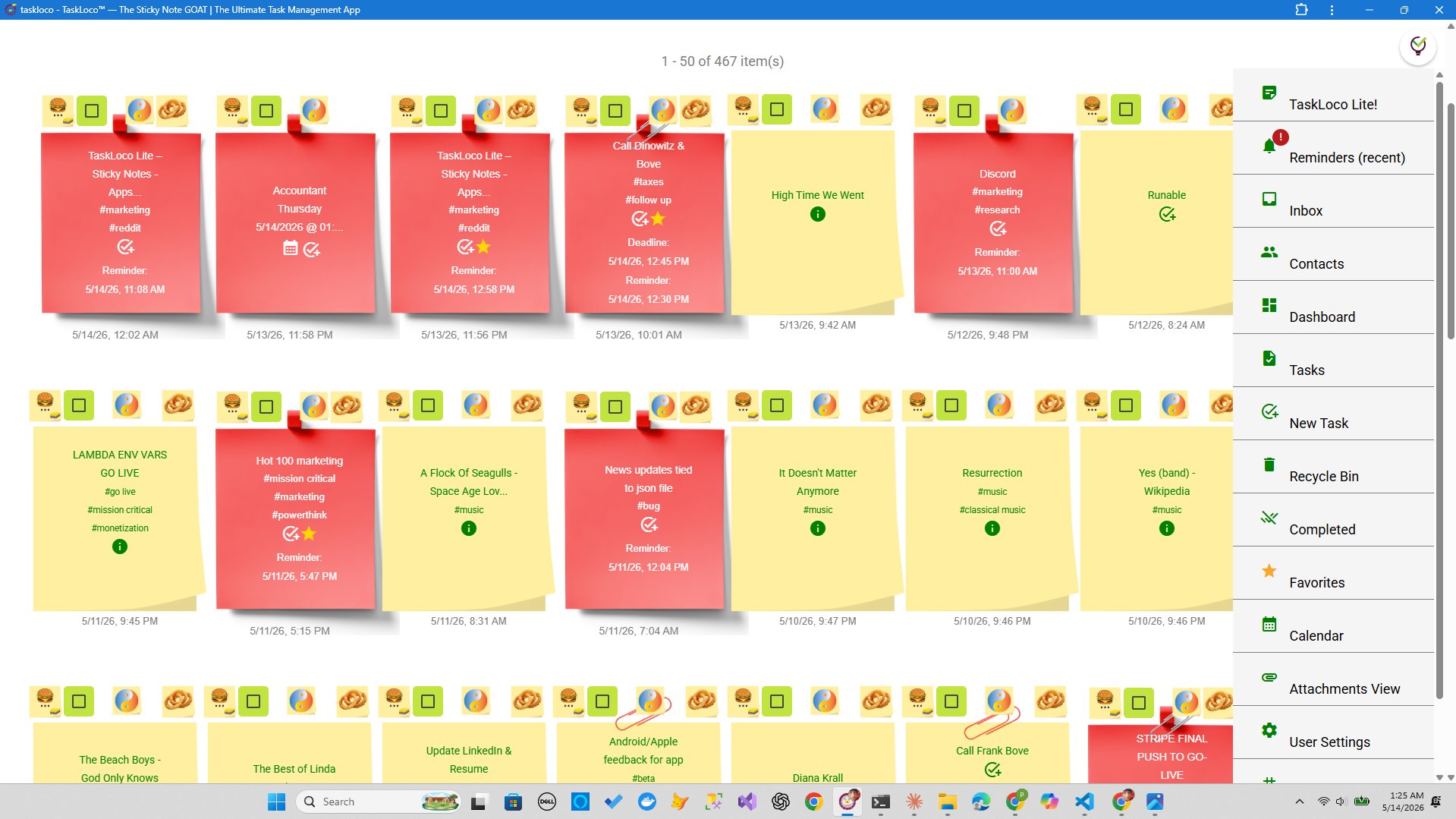
TaskLoco is built around that format from the ground up. Every note on your wall is a discrete, visible commitment. You can see your activation targets at a glance without opening a project, expanding a hierarchy, or navigating a dashboard. When the wall is full, that's useful information. When it's empty, that's also useful information.
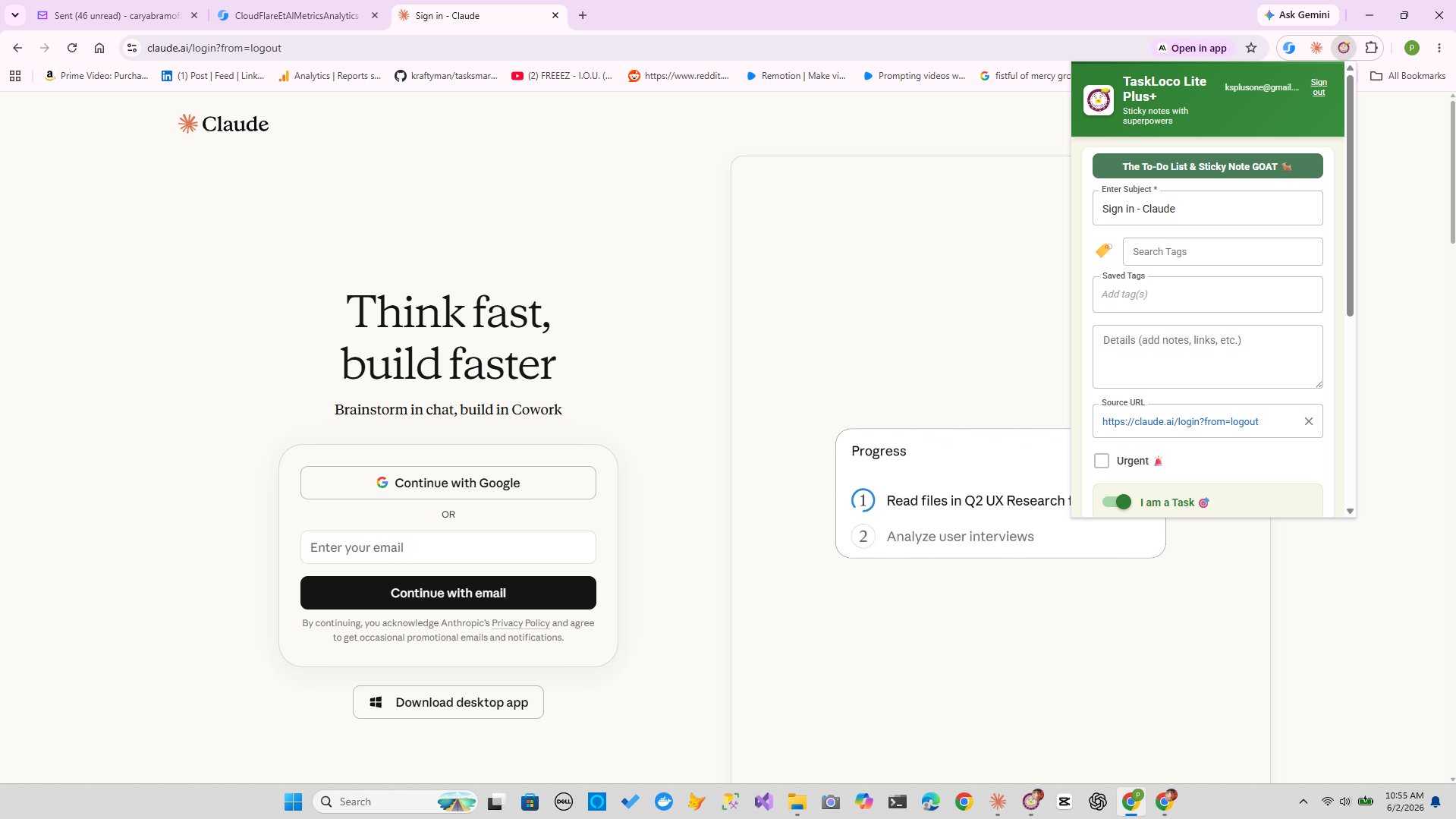
The note-capture flow matters as much as the display. TaskLoco's Chrome extension lets you clip any webpage — a research article, a form you need to fill out, a ticket you need to respond to — directly into a note in one click. That means the moment you identify an activation target while browsing, you can capture it before the impulse disappears. The note lands on your wall with the source URL attached, so when you come back to it, you're one tap away from the context.
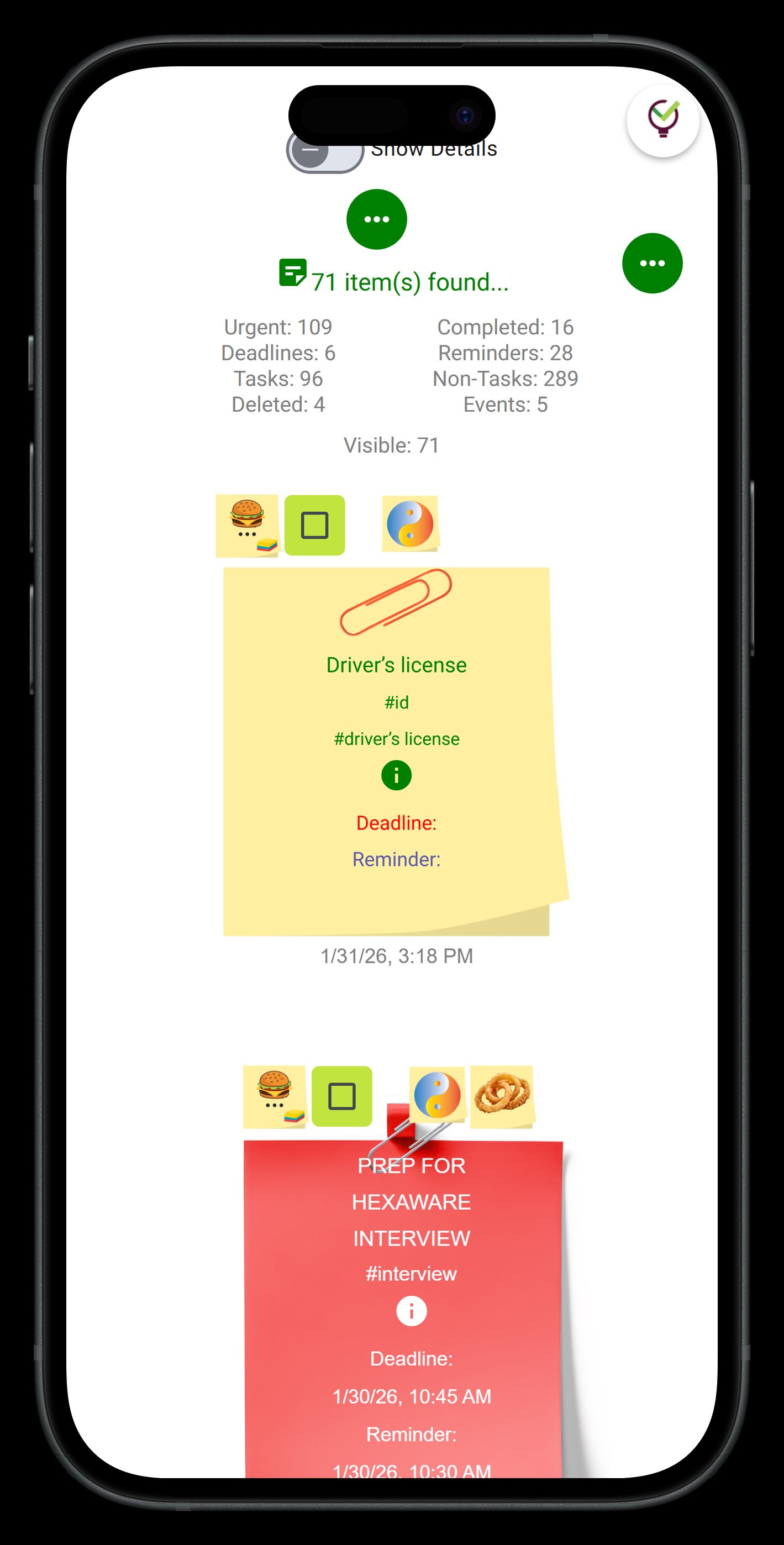
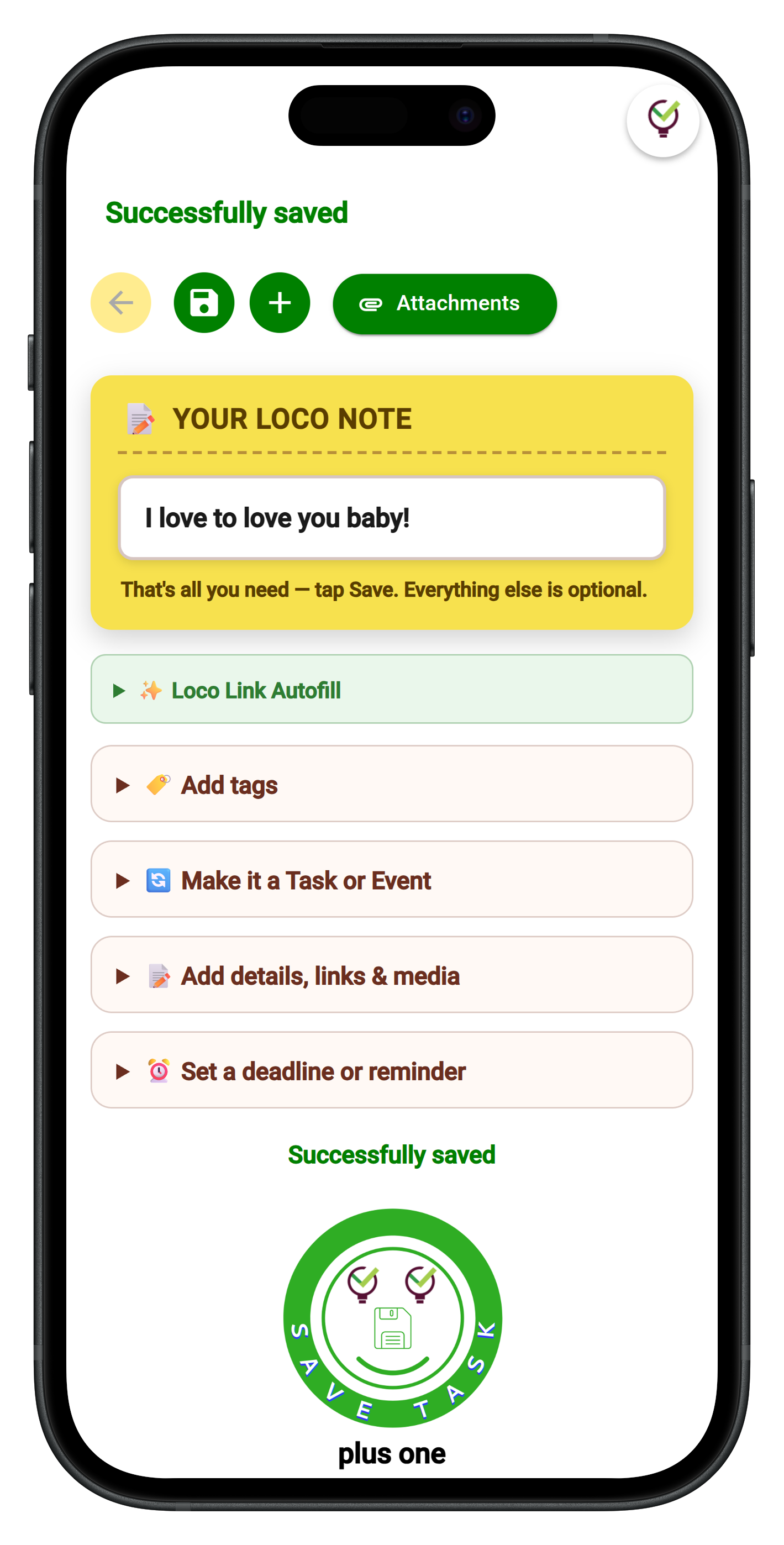
On mobile, TaskLoco runs through your phone's browser, keeping the full Premium feature set — reminders, file attachments, calendar view, team sharing — available wherever you are. The native TaskLoco Lite app (available in the App Store and Google Play) offers a zero-sign-in, anonymous scratchpad for up to 20 notes stored entirely on your device — useful for quick captures, but for full behavioral activation practice with reminders and calendar, Premium through the browser is the right setup.
Reminders That Deep-Link to the Task — The Missing Piece in Most Systems
Here's where most productivity tools fail at behavioral activation: their reminders are interruptions, not invitations. You get a notification that says "You have a task due" and then you have to navigate back to the app, find the task, remember what it was, and re-engage your motivation. By the time you've done all that, the window for activation has often closed.
TaskLoco's reminders work differently. When a reminder fires, it arrives as a push notification — to your phone and your computer — and tapping it deep-links directly to the original note. The task is in front of you immediately. No searching, no navigation, no re-orientation. You're looking at your activation target the moment the prompt arrives.
That deep-link is not a minor detail. In BA practice, the moment between intention and action is the most fragile moment in the whole cycle. Any friction in that gap is an opportunity for avoidance to reassert itself. A reminder that drops you into the note eliminates that gap almost entirely.
Optional email notifications are available as a free add-on for users who want a paper trail or work primarily from an inbox. Optional SMS notifications are available as a free-tier add-on with a monthly quota — useful when push notifications aren't practical. But for behavioral activation, push is the right channel: immediate, ambient, and actionable in one tap.
Calendar View, File Attachments, and the Full BA Loop
Behavioral activation isn't just about planning — it's about closing the loop. Did the behavior happen? What got in the way when it didn't? What patterns are emerging over days and weeks? That reflection phase is what separates BA from simple to-do tracking, and it requires a tool that can show you your history as clearly as it shows your intentions.
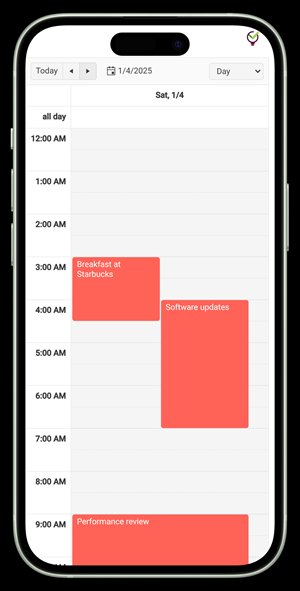
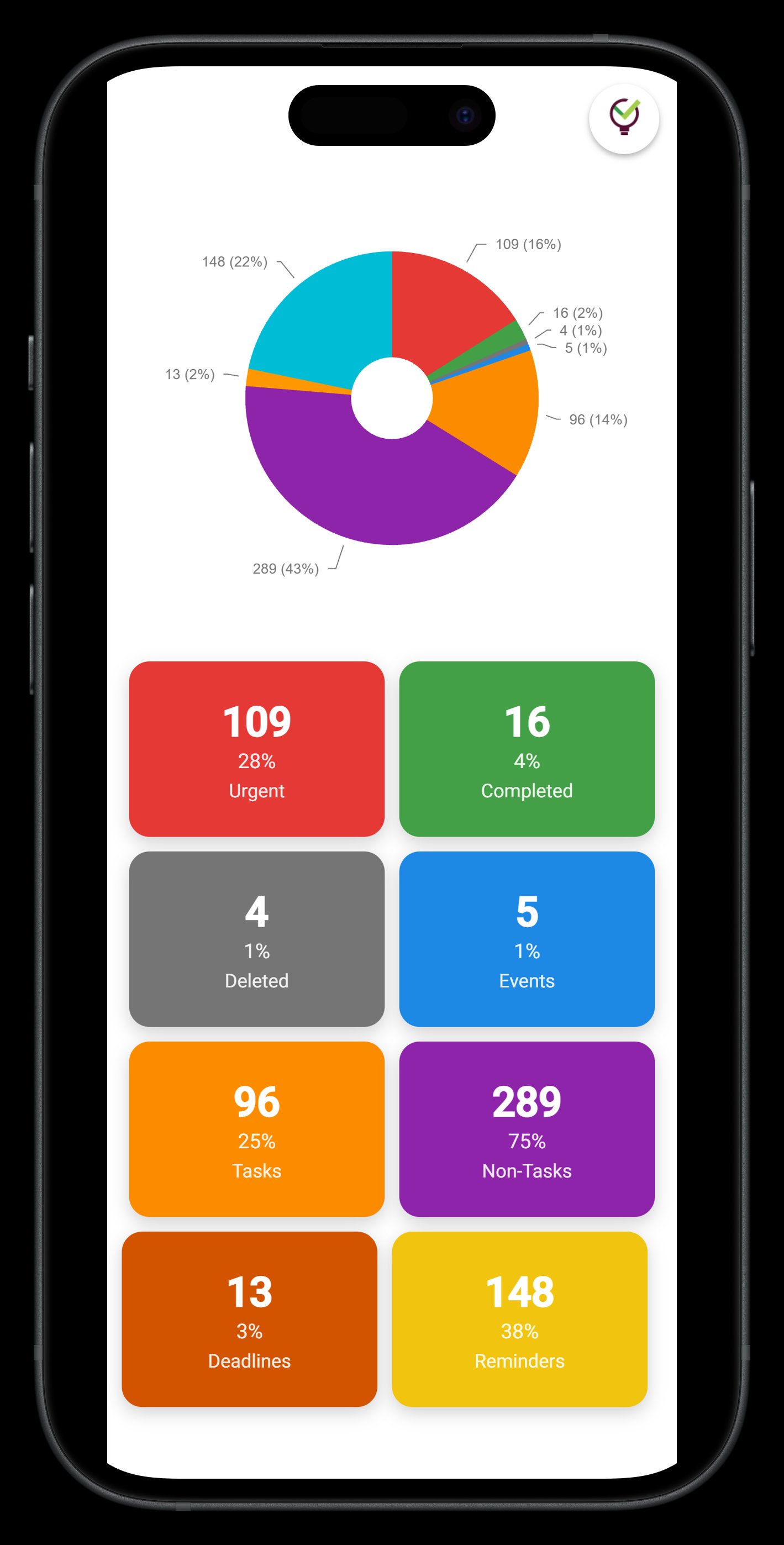
TaskLoco Premium includes a calendar view that maps your notes and completed tasks across time. For BA practice, this is the review layer: you can see which activation targets were hit, which were pushed, and which were created but never scheduled. Over time, that visual history becomes its own motivator. Streaks matter psychologically, and seeing a consistent pattern of completed activations is one of the most reliable ways to build momentum.
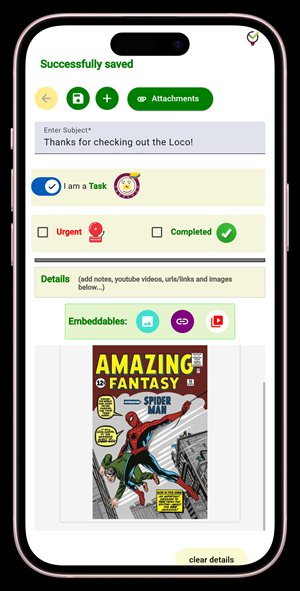
File attachments (10GB included with Premium) extend the system in a practical direction. A BA target like "review the contract and flag three questions" is more actionable when the contract is attached to the note. You're not hunting for the file — it's right there, part of the activation target itself. That's the difference between a note that says what to do and a note that makes doing it as easy as possible.
For teams, TaskLoco's sharing model works like email: you share a note, the recipient can clone it and make it their own. There are no permission tiers to configure, no access levels to manage. If behavioral activation is something a team is practicing together — a common approach in coaching and organizational psychology contexts — shared activation targets can be handed off without administrative overhead.
TaskLoco Premium is regularly $9.99/month per person. Right now, charter members can lock in 50% off the regular price — forever. That means $4.99/month per person today. And if our price ever goes up, you still pay half. Always.
Code CHARTER50 auto-applies at checkout. First 500 spots only — once they're gone, this offer is gone permanently. Act fast while spots last.
Every Premium subscription includes unlimited notes, 10GB file storage, reminders, calendar, and team sharing. Each team member requires a separate subscription. 7-day free trial — no charge until day 8. Cancel anytime.
Free Options: TaskLoco
TaskLoco Lite
- Native iPhone & Android app
- Completely anonymous — no sign-in
- Data stays on your device
- Up to 20 notes
- Free forever
TaskLoco Lite Plus+
- Web app + Chrome extension
- Sign in with Google
- Wall syncs across all devices
- Up to 30 notes
- Free forever
Lock In 50% Off — Forever
7-day free trial. No charge until day 8. CHARTER50 auto-applies at checkout.
🔒 Lock In My Charter SpotSee TaskLoco in Action
Frequently Asked Questions
What is behavioral activation in the context of productivity?
Behavioral activation is a technique originally developed in cognitive behavioral therapy to treat depression by interrupting avoidance cycles. Applied to productivity, it means scheduling specific, small, concrete behaviors — not vague goals — and tracking whether they happened. The underlying principle is that motivation follows action: you don't wait to feel ready, you act, and the action generates momentum. For productivity purposes, this means designing a system around micro-tasks with explicit timing rather than open-ended to-do lists.
How is behavioral activation different from regular task management?
Standard task management captures what you need to do. Behavioral activation focuses on the exact moment and the smallest possible unit of action that breaks inertia. A regular task might say "finish the project proposal." A BA activation target says "open the document and write the executive summary first sentence — Tuesday at 10am." The difference is specificity, timing, and scale. BA assumes you're working against avoidance, not just forgetfulness, so the bar for each item is set deliberately low to make starting easier than not starting.
What makes TaskLoco a good fit for behavioral activation?
Three things: capture speed, reminder design, and visual layout. TaskLoco's note-first format means creating an activation target takes seconds — there's no project hierarchy to navigate or template to fill out. Reminders fire as push notifications that deep-link directly to the original note, so the moment the prompt arrives you're already looking at the task. And the wall view shows all your activation targets at once, making it impossible to ignore what's pending. The calendar view closes the loop by showing you which activations you completed over time.
Can I use TaskLoco for behavioral activation on my phone?
Yes. TaskLoco Premium runs through your phone's browser and includes the full feature set — reminders with push notifications that deep-link to notes, calendar view, file attachments, and team sharing. There is also a native TaskLoco Lite app available in the App Store and Google Play, which is a free, anonymous scratchpad for up to 20 notes stored on your device — useful for quick captures but without reminders, attachments, or calendar, so it's best used alongside Premium for a complete BA practice.
How do TaskLoco's reminders support behavioral activation specifically?
The key is the deep-link. When a TaskLoco reminder fires, it arrives as a push notification to your phone and computer. Tapping it opens the exact note the reminder is attached to — you're looking at your activation target immediately, with no navigation required. Optional email and SMS channels are available for users who want them, but push is the core delivery method and the most effective one for BA because it minimizes the gap between the prompt and the behavior.
Is behavioral activation only useful for people with depression or anxiety?
No. While BA was developed as a clinical intervention, the underlying mechanism — action precedes motivation, avoidance reinforces inertia — applies to anyone who struggles with procrastination, low energy, or the gap between planning and doing. Knowledge workers, students, freelancers, and anyone managing a heavy workload can benefit from structuring their day around small, scheduled behaviors rather than large, open-ended tasks. The clinical version is more intensive; the productivity version borrows the core principle and applies it pragmatically.
How much does TaskLoco Premium cost?
$9.99/month per person (currently $4.99/month per person for first 500 charter members with code CHARTER50)
Born in Brooklyn. Powered by AWS. Your data stays yours.
TaskLoco is available on iPhone, Android, Chrome, and every web browser.