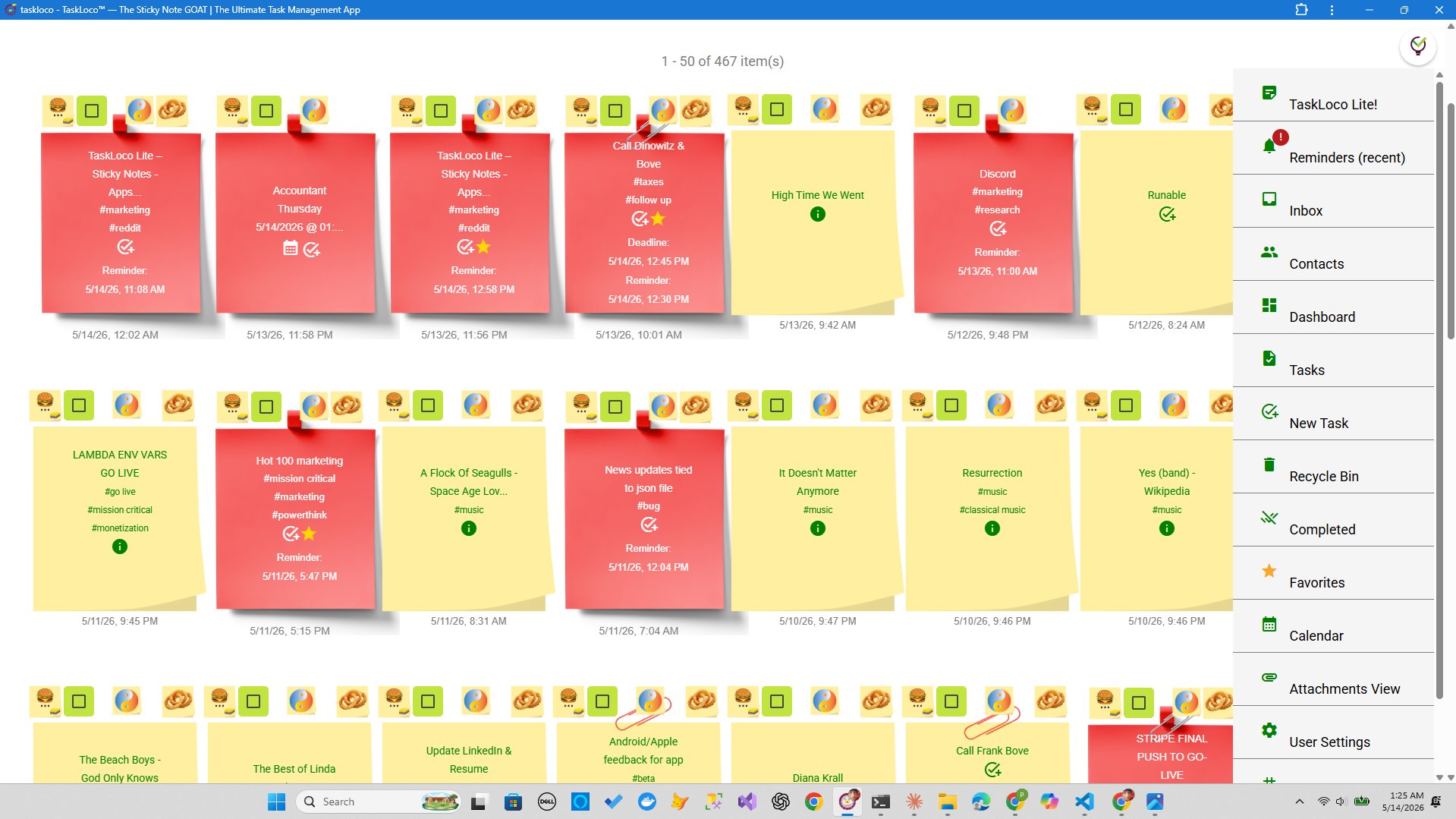
Most productivity systems have the same failure mode: you plan in one app, schedule in another, brainstorm in a third, and then spend twenty minutes every morning figuring out what you're actually supposed to be doing. A visual storyboard solves that by putting everything — tasks, events, ideas, files, reminders — on a single surface you can scan in seconds.
This page explains what a visual task storyboard actually is, the criteria that separate a genuinely useful one from a fancy wallpaper generator, and why TaskLoco's sticky-note wall has become the go-to for people who want their whole day visible at a glance without building a second career in app configuration.
What Makes a Visual Storyboard Actually Work
Before recommending any specific tool, it's worth defining what a visual storyboard for tasks, events, and ideas actually needs to do — because plenty of apps claim the label while delivering a glorified list view with a background color option.
A genuine visual storyboard has three core properties. First, spatial density: you should be able to see many items at once without scrolling or clicking through nested menus. If you have to hunt for something, the board has already failed. Second, mixed-content support: tasks, calendar events, and raw ideas are fundamentally different objects. A storyboard worth using treats each type correctly — a task has a status and a due date, an event has a time and a place, an idea has no structure at all until you give it one. Third, action proximity: the board shouldn't just display your work, it should let you act on it. Setting a reminder, attaching a file, sharing a note with a teammate — these should happen from the board itself, not through a separate workflow buried three menus deep.
When choosing a visual storyboard tool, focus on these two or three questions: Does the layout let me see enough at once without cognitive overload? Can I mix different kinds of content — tasks with deadlines, events with dates, ideas with no structure — without forcing them all into the same rigid format? And does the tool get out of the way fast enough that I'll actually use it every day?
TaskLoco's Wall: A Storyboard That Actually Thinks in Notes
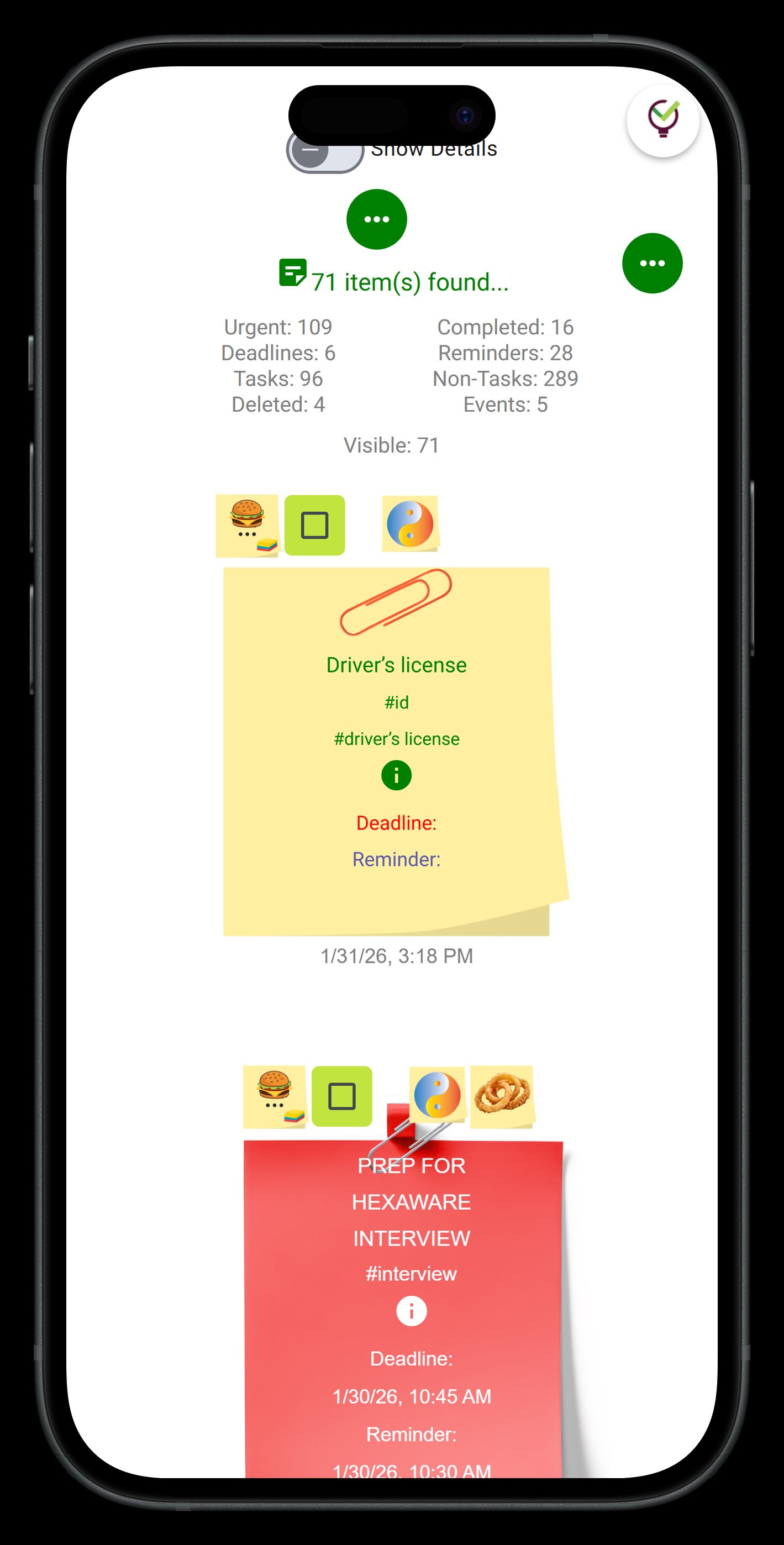
TaskLoco was designed from the ground up around one metaphor: a physical corkboard covered in sticky notes. That sounds simple, and it is — but the execution is what makes it genuinely different from apps that bolt on a board view as an afterthought.
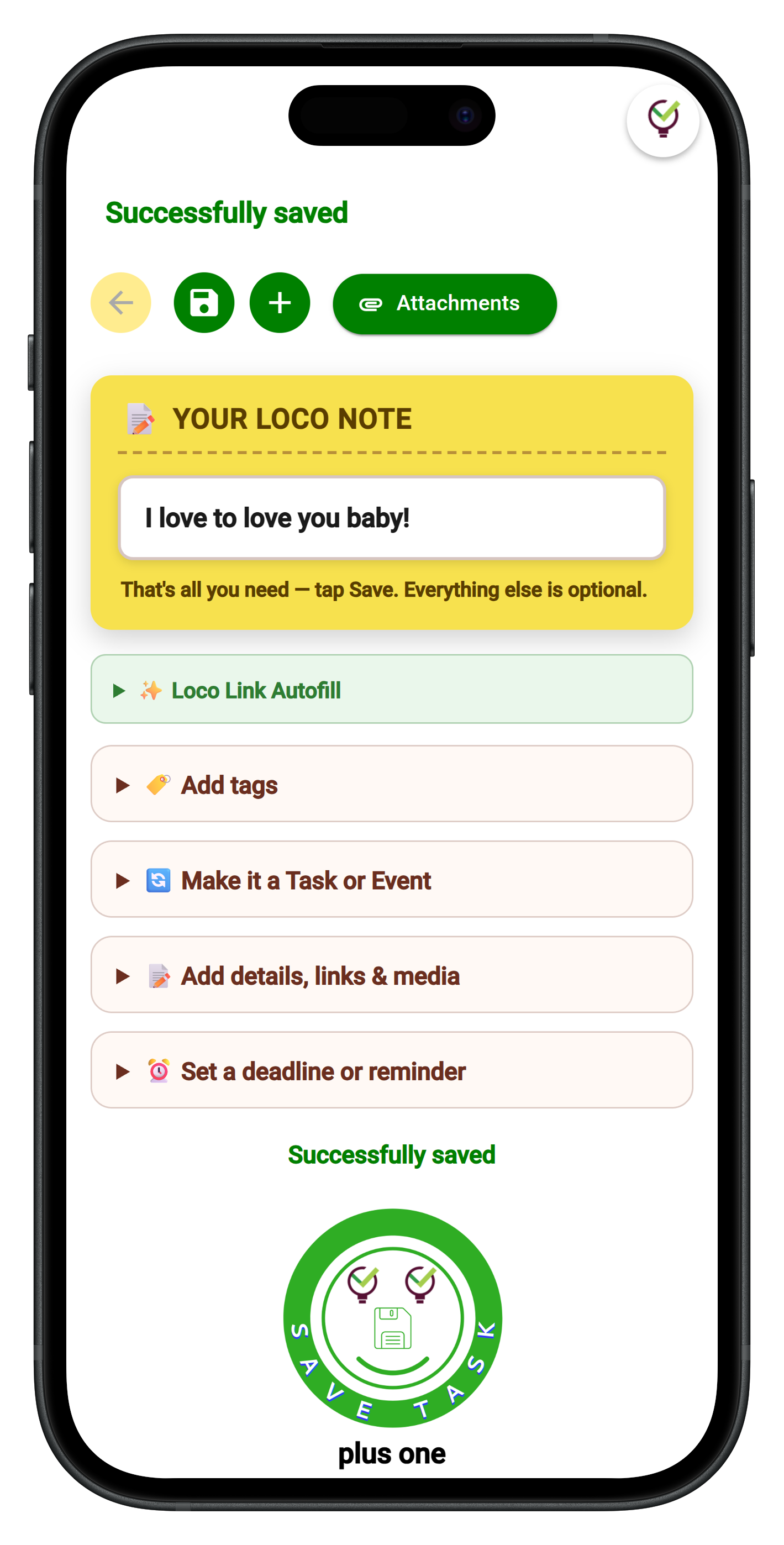
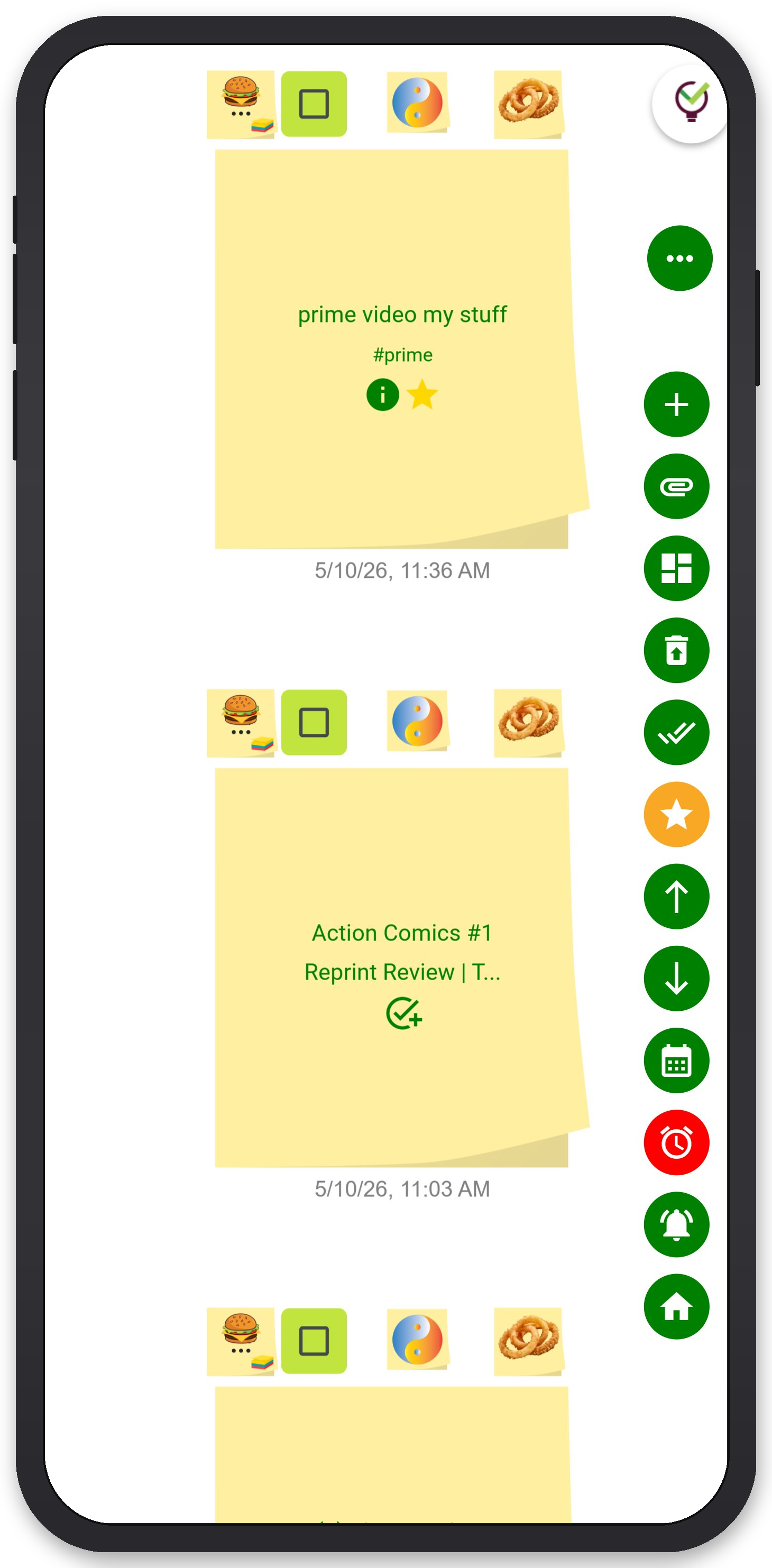
Every item on the wall is a note, and every note can be as simple or as rich as you need. Write a one-line idea and leave it. Or expand it into a checklist with subtasks, attach a file, set a reminder, drop it on the calendar, and share it with a teammate — all without leaving the note. The wall is not a separate view that mirrors data from somewhere else. The wall is the app. That distinction matters more than it sounds.
Color-coding is instant and intentional. You can visually separate work from personal, urgent from someday, client A from client B — just by glancing at the wall. Notes can be resized, pinned, grouped, and reordered. Nothing is locked into a grid you didn't choose. And because notes are the atomic unit, mixing a task, a calendar event, and a raw brainstorm on the same wall is not a workaround — it's the intended behavior.
The result is a planning surface that feels less like software and more like having a really well-organized physical desk — except your desk syncs across devices, sends you push notification reminders that deep-link straight back to the relevant note, and never runs out of space.
Files, Reminders, and Sharing — All From the Same Note
One of the quieter frustrations of most productivity setups is that context lives in a different place than action. The brief is in Google Drive, the deadline is in your calendar, the task is in your project manager, and the conversation about it is in Slack. By the time you've assembled the full picture, the meeting has started.
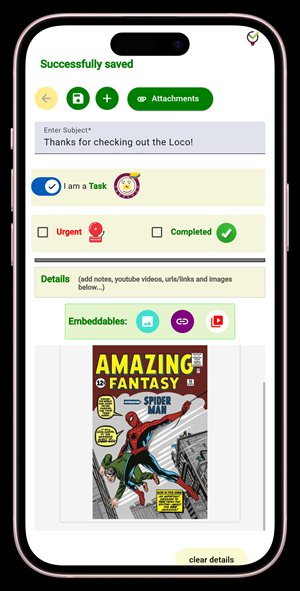
TaskLoco collapses that stack. Every Premium note can carry up to 10GB of file attachments — images, PDFs, spreadsheets, anything — stored right on the note. You don't link out to another tool. You open the note and everything is there.
Reminders work the same way. Set a reminder on a note and when it fires, the push notification deep-links directly back to that note. Not to your dashboard, not to an inbox — to the exact note the reminder is about. That single behavior eliminates an entire category of context-switching.
Team sharing in TaskLoco works the way email does: you share a note and the recipient can clone it and make it their own. No permission levels to configure, no access tiers to manage. The person you shared with gets a full copy they can work with however they need. It's the fastest onboarding experience of any collaboration feature in this category.
TaskLoco Premium is regularly $9.99/month per person. Right now, charter members can lock in 50% off the regular price — forever. That means $4.99/month per person today. And if our price ever goes up, you still pay half. Always.
Code CHARTER50 auto-applies at checkout. First 500 spots only — once they're gone, this offer is gone permanently. Act fast while spots last.
Every Premium subscription includes unlimited notes, 10GB file storage, reminders, calendar, and team sharing. Each team member requires a separate subscription. 7-day free trial — no charge until day 8. Cancel anytime.
Free Options: TaskLoco
TaskLoco Lite
- Native iPhone & Android app
- Completely anonymous — no sign-in
- Data stays on your device
- Up to 20 notes
- Free forever
TaskLoco Lite Plus+
- Web app + Chrome extension
- Sign in with Google
- Wall syncs across all devices
- Up to 30 notes
- Free forever
Lock In 50% Off — Forever
7-day free trial. No charge until day 8. CHARTER50 auto-applies at checkout.
🔒 Lock In My Charter SpotSee TaskLoco in Action
Frequently Asked Questions
What is a visual storyboard for tasks and ideas?
A visual storyboard for tasks and ideas is a single surface — usually a wall or board — where you can see all your tasks, events, and ideas at once without clicking through menus or nested folders. The key is spatial density: everything visible, everything actionable, from one screen. TaskLoco's sticky-note wall is built around exactly this concept.
How is a visual storyboard different from a regular to-do list?
A to-do list is linear — items stack in order and you work through them top to bottom. A visual storyboard is spatial. You can group ideas by project, separate urgent tasks from long-term ones by position or color, and see a calendar event sitting next to the notes that relate to it. The difference is the same as the difference between a written itinerary and a map. Both contain the same information, but one lets you see relationships at a glance.
Can I use TaskLoco as a visual storyboard for my whole team?
Yes. TaskLoco Premium includes team sharing, and it works the way email does: share a note, the recipient clones it and makes it their own. No permission levels, no access tiers. Everyone on the team keeps their own wall while being able to share relevant notes instantly. Each team member requires their own individual Premium subscription.
Does TaskLoco have reminders on its visual board?
Yes — TaskLoco Premium includes reminders on any note. When a reminder fires, it's delivered as a push notification to your phone and computer, and it deep-links directly back to the original note. Optional email notifications and an SMS add-on are also available. Reminders are a Premium feature and are not available on Lite or Lite Plus+.
What's the difference between TaskLoco Lite, Lite Plus+, and Premium?
TaskLoco Lite is a free native iPhone and Android app — anonymous, no sign-in, up to 20 notes stored on device only, no sync. TaskLoco Lite Plus+ is the free web app and Chrome extension — sign in with Google, up to 30 notes synced across all devices, one-click webpage capture, no reminders or attachments. TaskLoco Premium is the full storyboard experience: unlimited notes, 10GB file attachments, reminders, calendar view, and team sharing. There's a 7-day free trial for Premium.
How does the TaskLoco Chrome extension help with visual storyboarding?
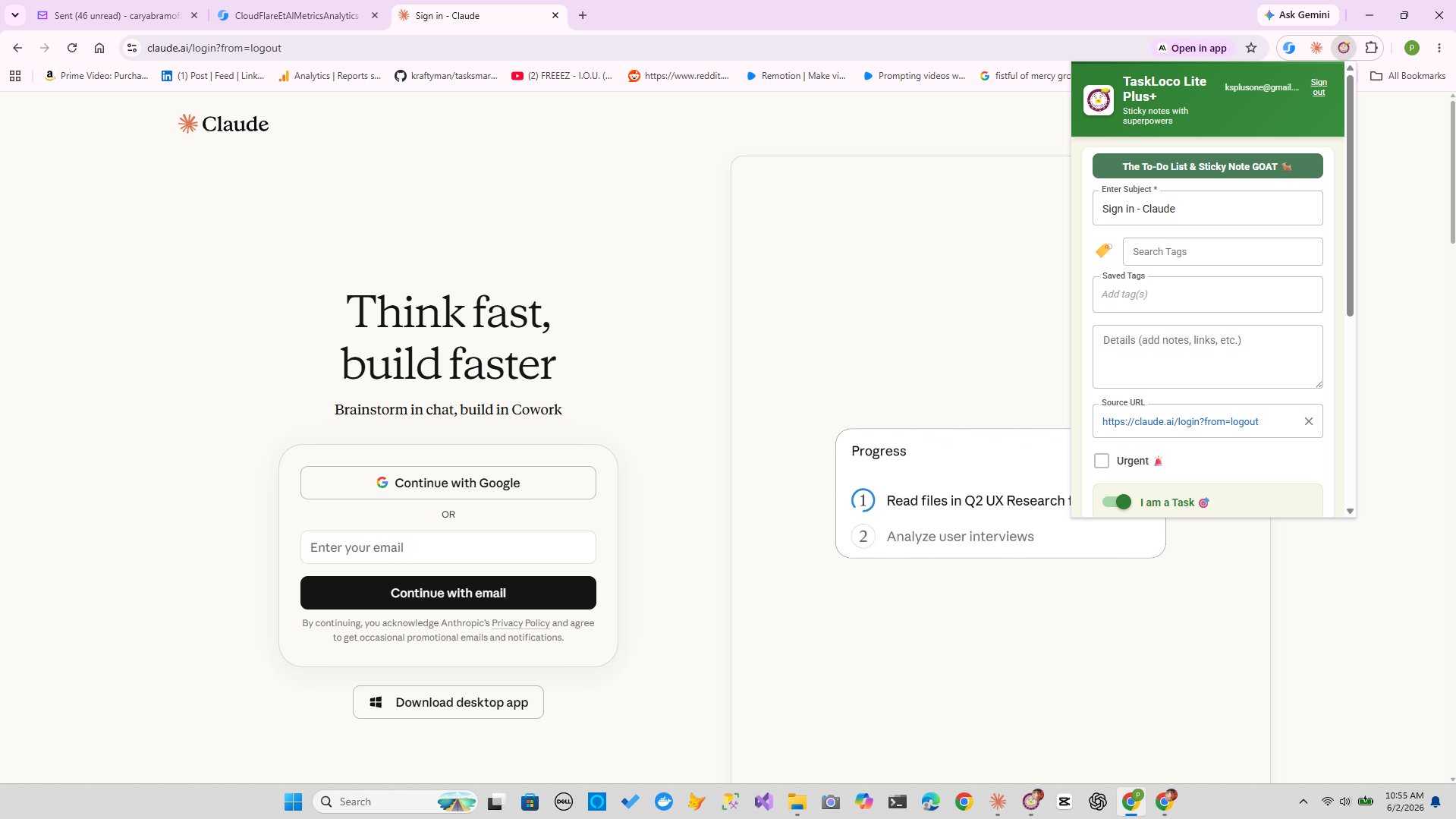
The Chrome extension lets you capture any webpage as a sticky note in one click. If you're researching a topic, reading a reference article, or spotting something you want to act on later, one click drops it onto your wall as a note — title, URL, and any text you highlighted. It's free with Lite Plus+ and Premium, and it means your storyboard grows naturally as you work on the web, without any copy-paste friction.
How much does TaskLoco Premium cost?
$9.99/month per person (currently $4.99/month per person for first 500 charter members with code CHARTER50)
Born in Brooklyn. Powered by AWS. Your data stays yours.
TaskLoco is available on iPhone, Android, Chrome, and every web browser.