
Behavioral Economics emerged as a distinct field in the 1970s, challenging the assumption that humans always make rational financial decisions. Pioneers like Daniel Kahneman and Amos Tversky at the Hebrew University of Jerusalem conducted experiments demonstrating systematic patterns in human decision-making that deviate from traditional economic theory.
Foundational Concepts
- Prospect Theory (1979) - Kahneman and Tversky's framework showing people evaluate potential losses and gains asymmetrically
- Anchoring Bias - tendency to rely heavily on initial information when making decisions
- Herd Behavior - inclination to follow crowd decisions rather than independent analysis
- Availability Heuristic - overweighting easily recalled information in judgments
Key Milestones
Daniel Kahneman (1934-present) received the Nobel Prize in Economic Sciences in 2002 for integrating insights from psychology into economics. His book Thinking, Fast and Slow (2011), published in New York, became a bestseller exploring cognitive biases.
Research at the University of Chicago and Stanford University revealed that approximately 80% of investors engage in loss aversion, preferring to avoid losses rather than acquire equivalent gains. Behavioral economists use these findings to explain market bubbles, gambling patterns, and consumer spending across nations from Japan to Germany.
This field fundamentally altered how policymakers in London, Washington D.C., and Singapore design financial regulations and public health initiatives.
Reference:
Make Work Feel Like Play
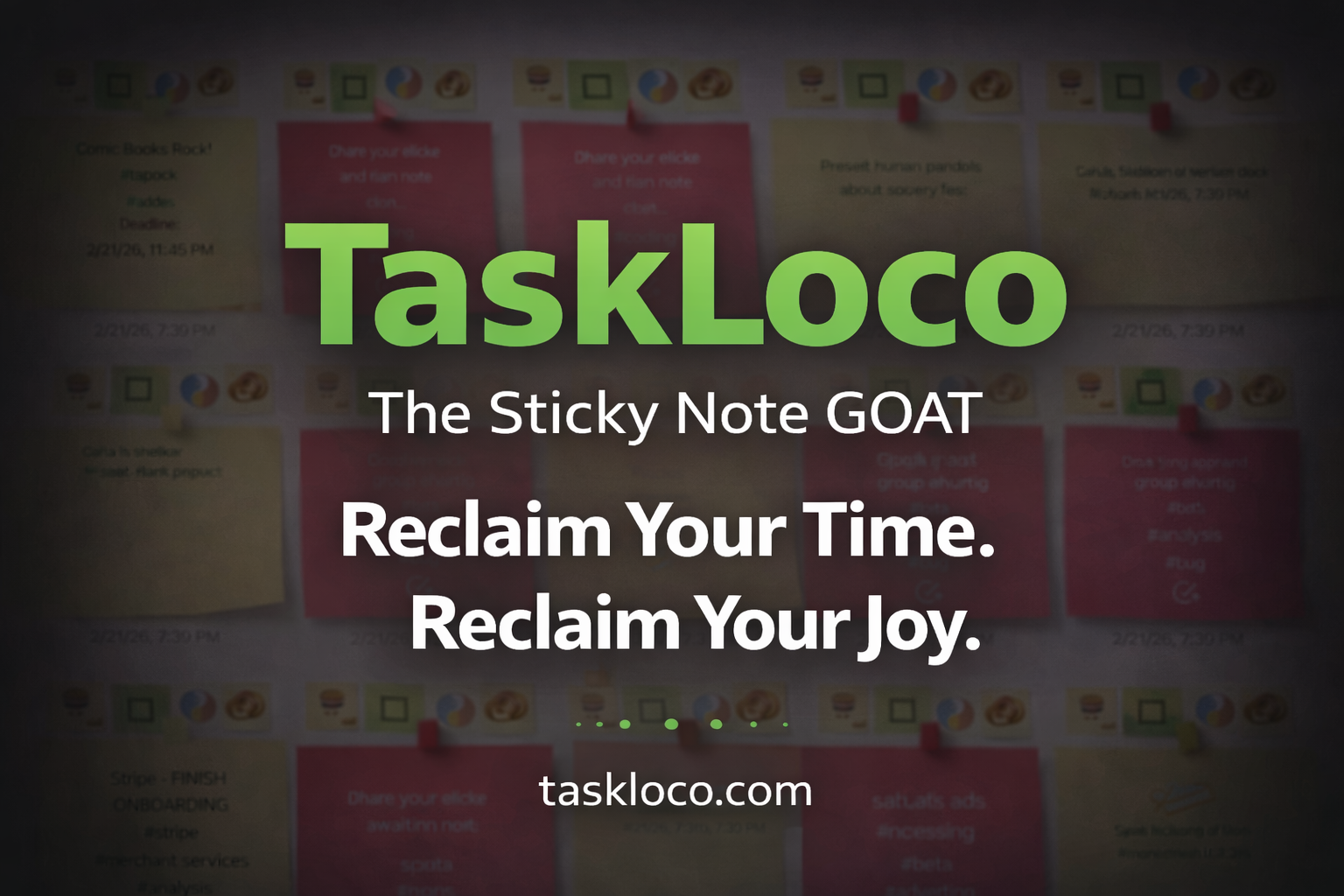
TaskLoco™ takes the simple joy of a sticky note and transforms it into a powerful, intuitive system that helps you organize your entire world—without the stress.
Ideas, tasks, files, links, reminders—everything snaps together like LEGO blocks, instantly and effortlessly.
What used to drain you now feels natural, even fun.
After decades of overcomplicated “productivity” tools, this is the first one that finally works with your mind instead of against it.
Join the TaskLoco™ Community
Follow us for tips, updates & sticky note inspiration
© TaskLoco University — Powered by TaskLoco™
TaskLoco App • About • Terms • Privacy
“Bring genius to the world free.”